This site is supported by our readers. We may earn a commission, at no cost to you, if you purchase through links.
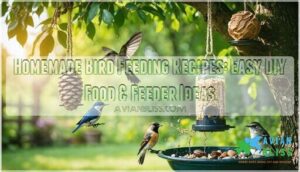 You can create nutritious homemade bird feeding recipes using simple ingredients from your kitchen.
Mix peanut butter with seeds, nuts, and dried fruits to form energy-rich suet balls.
For hummingbirds, combine one part sugar with four parts water, boiling briefly then cooling completely.
Pine cone feeders work perfectly—just coat them in melted peanut butter and roll in birdseed.
You’ll save money while providing birds with healthier alternatives to store-bought options.
These recipes attract different species based on their dietary preferences, from seed-loving finches to nectar-seeking hummingbirds.
The key lies in understanding which combinations work best for your local bird population and seasonal needs, using simple ingredients and creating energy-rich food sources to support local bird population.
Table Of Contents
- Key Takeaways
- Suet Recipes Basics
- Hummingbird Food Recipes
- Bird Feeder Crafts Ideas
- Homemade Bird Food Variations
- Bird Feeding Tips Essentials
- Frequently Asked Questions (FAQs)
- What is the best homemade bird feed?
- What is the 5 7 9 rule for bird feeders?
- How to make a simple homemade bird feeder?
- How to make homemade bird formula?
- What foods are toxic to birds?
- How often should I refill bird feeders?
- Can I use expired birdseed safely?
- Which birds prefer which food types?
- How do I prevent squirrels from feeders?
- Conclusion
Key Takeaways
- You’ll save money and provide better nutrition by making your own bird food using simple kitchen ingredients like peanut butter, seeds, and oats instead of buying expensive commercial options.
- You can attract different bird species by matching recipes to their preferences – use suet mixtures for woodpeckers, sugar water (1:4 ratio) for hummingbirds, and seed blends for songbirds.
- You’ll create effective feeders from household items like pine cones, plastic bottles, and ice cream cones, making bird feeding accessible without special equipment.
- You must maintain proper hygiene by cleaning feeders weekly, replacing food every 2-3 days (daily in hot weather), and avoiding toxic ingredients like artificial sweeteners and chocolate.
Suet Recipes Basics
Making homemade suet provides essential winter nutrition for insect-eating birds when natural food sources become scarce.
You’ll need just four basic steps: melting the fat base, combining dry ingredients, forming the mixture, and proper storage.
Melting Peanut Butter and Lard
You’ll want to combine equal parts peanut butter and lard for ideal Fat Content in your homemade bird suet recipes.
Heat this Peanut Butter Mix over low heat, maintaining a gentle Melt Temperature to prevent burning.
The ideal Lard Ratio creates perfect Suet Texture when the fats blend smoothly. Stir constantly as they melt together, ensuring even distribution for your DIY suet foundation.
Mixing Dry Ingredients
While your melted peanut butter and lard cool slightly, combine your dry components in a large bowl.
Mix two cups each of quick oats and birdseed mix with one cup yellow cornmeal and one cup flour.
These ingredient ratios create ideal seed blends that attract various bird species.
Proper mixing techniques guarantee even distribution of each dry component, preventing clumping when you add the warm mixture, which is crucial for creating the right birdseed mix.
Pressing Mixture Into Molds
After your cooled mixture reaches the right consistency, it’s time for the molding magic. Choose molds that match your feeder design—ice cube trays work perfectly for standard suet cakes.
Press the mixture firmly into each cavity, ensuring no air pockets remain. These pressing methods create dense, bird-friendly blocks that won’t crumble when woodpeckers attack.
Your homemade suet recipe transforms into professional-looking treats with proper molding tips and steady pressure. Using the right suet composition is essential for attracting various bird species to your yard with the right suet composition.
Refrigeration and Storage
Once your suet mixture has set, refrigerating extends its shelf life while freezing offers long-term storage solutions.
Store completed suet cakes in airtight containers to prevent mold growth and maintain freshness.
Properly stored suet lasts five days refrigerated or several months frozen, ensuring your feathered friends always have nutritious food available when needed, with long-term storage options and properly stored for freshness.
Hummingbird Food Recipes
Creating nutritious hummingbird food requires precise sugar-to-water ratios and proper preparation techniques to promote healthy bird health.
You’ll master the essential 1:4 sugar-water formula while learning proper boiling methods, storage protocols, and feeder maintenance practices.
Sugar and Water Ratio
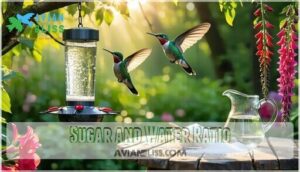
Perfect sugar-to-water ratios make all the difference in creating nutritious hummingbird nectar.
You’ll want to stick with the proven 1:4 sugar ratio—one part refined white sugar to four parts water.
This simple sugar-water recipe mimics natural flower nectar that hummingbirds crave.
Never exceed 1:3 ratios, as stronger concentrations can harm these delicate birds through dehydration and liver damage.
For best results, follow a reliable hummingbird nectar recipe to attract these birds to your feeder, using the proven 1:4 sugar ratio for a reliable outcome.
Boiling and Cooling Process

Once you’ve got your sugar and water ratio down, bring the mixture to a rolling boil in your saucepan. Heat control matters here—let it bubble away for at least five minutes to completely dissolve every sugar crystal.
This temperature management step guarantees your homemade bird feed won’t crystallize later. After boiling, cool the mixture to room temperature before filling feeders.
Proper water cooling prevents shocking delicate hummingbird systems. To guarantee the health and safety of the hummingbirds, it’s vital to use natural nectar alternatives when preparing their food, ensuring a healthy and safe environment with proper temperature management and natural ingredients.
Avoiding Artificial Sweeteners

Your feathered friends deserve pure nutrition, not chemical cocktails.
Artificial sweeteners pose serious health risks to hummingbirds, disrupting their delicate metabolism and potentially causing organ damage. Stick to natural sugar for safe, effective homemade bird feeding recipes.
Here’s what to avoid for ideal bird nutrition:
- Aspartame and sucralose – toxic compounds that birds can’t process
- Honey and brown sugar – contain harmful bacteria and excess iron
- Sugar substitutes – lack essential calories hummingbirds need for energy.
Natural sugar provides clean fuel without compromising feeder safety or healthy options.
Storage and Feeder Cleaning
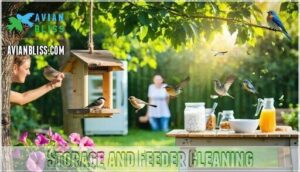
Fresh nectar spoils quickly, so proper storage keeps your hummingbird visitors healthy. Refrigerate unused nectar in airtight containers for up to two weeks, labeling with preparation dates. Replace feeder contents every 4-5 days, more frequently during hot weather.
To maintain freshness, follow ideal seed storage guidelines for all bird food.
| Storage Method | Duration | Temperature |
|---|---|---|
| Refrigerated nectar | 2 weeks | 32-40°F |
| Feeder nectar | 4-5 days | Room temp |
| Hot weather feeding | 2 days | Above 80°F |
Clean feeders with hot water and vinegar every refill. Disassemble completely, scrub ports with dedicated brushes, and rinse thoroughly before air-drying.
Bird Feeder Crafts Ideas
You can transform ordinary household items into functional bird feeders that attract various species to your yard.
These simple DIY projects let you observe bird feeding behaviors up close while recycling materials you already have at home, which can be a functional way to reuse items.
Pine Cone Bird Feeders
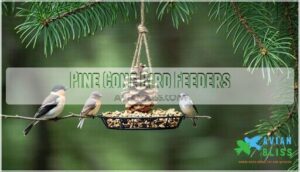
Pine cone bird feeders offer the simplest entry point into nature projects and outdoor decorations.
You’ll gather pine cones during walks, then spread peanut butter into their crevices using a butter knife. Roll each cone in birdseed until completely coated, creating homemade bird feed stations.
Tie string around the top and hang from branches, transforming basic pine cone crafts into effective DIY bird feeders that attract local species.
Using commercial pine cone feeders can also enhance your bird-watching experience.
Edible Cone Bird Feeders
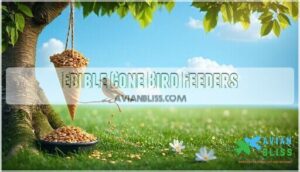
You can transform ordinary ice cream cones into delicious bird feeders using basic pantry staples.
These edible cone bird feeders offer excellent bird nutrition while serving as attractive feeder designs that birds can completely consume. The use of edible cone feeders provides a fun and educational bird feeding experience.
- Cone Crafting Technique: Spread peanut butter inside waffle cones, then roll in mixed birdseed recipes for ideal seed selection
- Cone Materials Selection: Choose sugar cones over waffle varieties as they’re sturdier for DIY bird feeders
- Assembly Method: Fill cones with homemade bird feed combinations, then hang using biodegradable twine
Hanging Gourd Feeders
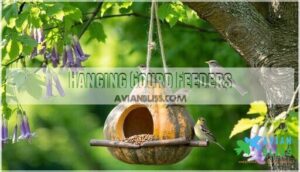
Looking beyond traditional feeders, gourds offer a rustic charm that birds love.
Clean dried gourds thoroughly, then cut entrance holes sized for your target species. Drill drainage holes in the bottom and ventilation holes near the top. Sand rough edges smooth for bird safety.
| Gourd Preparation | Feeder Designs | Hanging Methods |
|---|---|---|
| Clean interior thoroughly | Cut 1.5" holes for small birds | Use strong twine or wire |
| Sand entrance holes smooth | Create multiple feeding ports | Attach to sturdy branches |
| Drill drainage holes | Add perch dowels below openings | Secure with carabiners |
These natural materials blend seamlessly into garden integration while providing durable hanging gourd feeders that attract various species to your homemade bird feed stations.
Repurposing Household Items
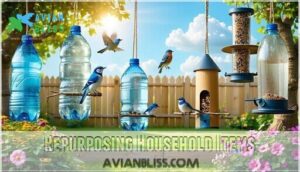
Plastic bottles become functional DIY bird feeders when you cut feeding ports and add wooden spoon perches.
Cardboard designs from milk cartons work perfectly with side windows and dowel perches. Mesh bag feeders hold suet while recycled bottles and plastic jug crafts offer weatherproof options.
These upcycled bird feeder projects transform everyday items into homemade bird feeders that rival store-bought versions. Using natural materials and small bird feeders can also attract a variety of bird species to your yard, creating a homemade bird feeder that is weatherproof.
Homemade Bird Food Variations
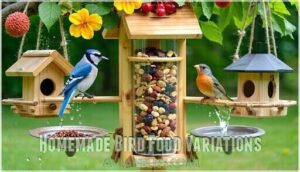
You can create countless variations of homemade bird food by experimenting with different ingredient combinations that cater to specific bird species’ dietary preferences.
These custom recipes allow you to adjust fat content, protein levels, and texture while using seasonal ingredients to keep your feathered visitors interested year-round, which is a key aspect of making custom recipes.
Peanut Butter Suet Variations
Peanut butter suet variations offer endless possibilities for bird nutrition enhancement.
You can customize your homemade suet recipes by adjusting fat-to-protein ratios and incorporating seasonal ingredients that attract different species throughout the year.
- Classic peanut butter suet recipe: Melt equal parts peanut butter and lard, then mix with oats and cornmeal
- Bird buffet suet recipe: Add dried mealworms, unsalted peanuts, and sunflower seeds for protein diversity
- Suet cake variations: Include raisins or chopped nuts for extra energy during migration periods
Fruit-Infused Hummingbird Food
You shouldn’t add fruit to hummingbird food recipes despite its appealing nature.
Observational data shows 100% rejection of fruit-infused feeders by hummingbirds, while fruit juices ferment rapidly, producing toxic alcohols.
Standard sugar water recipe remains safest for hummingbird health.
| Fruit Options | Health Impact |
|---|---|
| Berry juice | Causes digestive complications |
| Fresh fruit slices | Promotes deadly mold growth |
| Citrus additions | Erodes feeder ports |
The standard sugar water recipe is the best option to ensure hummingbird health.
Seed and Nut Combinations
Combining different seeds creates balanced nutrition that attracts diverse bird species to your yard.
Mix sunflower seeds with safflower seeds, millet, and nyjer for versatile bird seed blends.
Add unsalted peanuts, almonds, or walnuts to homemade birdseed recipes for protein-rich options.
These custom seed and nut combinations satisfy various feeding preferences across songbird species.
Using the right bird food ingredients is essential for creating effective homemade bird food recipes that cater to different bird species.
Customizing Recipes for Birds
Tailoring homemade bird food recipes to specific species preferences maximizes feeding success and bird nutrition.
Different birds have evolved distinct dietary requirements based on their natural foraging behaviors and physiological needs.
Consider these customization strategies for ideal seed blends and suet additives:
- Small songbirds – Use finely chopped ingredients like nyjer seeds and millet in your homemade bird food recipes
- Woodpeckers – Add dried insects and nuts to DIY bird food for protein-rich suet additives
- Ground feeders – Create scattered fruit mixes with cracked corn for natural foraging behavior
- Cavity nesters – Design specialized feeder designs with smaller openings for exclusive access
Observe which species visit your homemade bird feeders regularly, then adjust your bird seed recipes accordingly to attract desired visitors while deterring less welcome guests.
Bird Feeding Tips Essentials
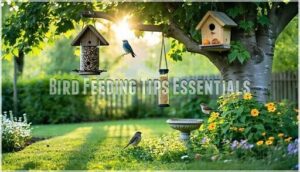
You’ll get the best results from your homemade bird food when you master proper feeder placement and maintenance techniques.
Strategic positioning combined with regular cleaning schedules guarantees healthy birds return to your feeders throughout the seasons, which is key to achieving the desired outcome with regular cleaning schedules.
Feeder Placement and Maintenance
Strategic feeder placement transforms your backyard into a bustling bird sanctuary.
Position feeders 5-10 feet from cover for escape routes while maintaining clear sightlines.
Regular maintenance prevents disease transmission and guarantees consistent bird traffic throughout seasons.
| Placement Factor | Optimal Strategy |
|---|---|
| Feeder Height | 4-6 feet for songbirds, ground level for ground feeders |
| Shade Placement | Morning sun, afternoon shade prevents spoilage |
| Wind Protection | Sheltered spots reduce seed spillage and feeder damage |
Cleaning and Disinfecting Feeders
Proper feeder sanitation prevents disease outbreaks that can devastate local bird populations.
Clean feeders weekly with warm soapy water, scrubbing away seed hulls and droppings. For mold prevention and bacteria control, disinfect monthly using a 10% bleach solution or white vinegar.
Rinse thoroughly before refilling. Replace cleaning solutions regularly, and inspect feeders for cracks where harmful microorganisms hide.
Regular use of a feeder cleaning tool is also essential for maintaining feeder hygiene and overall bird health.
Attracting Different Bird Species
Different bird species gravitate toward specific bird food recipes and homemade bird feeders based on their natural Bird Behavior.
Woodpeckers seek suet-rich bird seed mix, while finches prefer nyjer seeds.
Cardinals favor sunflower seeds in elevated feeders.
Strategic Feeder Placement attracts diverse Species Diversity – ground feeders for doves, hanging feeders for chickadees.
Understanding Bird Migration patterns helps time offerings.
Create varied Habitat Creation zones using multiple bird feeding basics to maximize visiting bird species year-round.
Seasonal Bird Feeding Strategies
Bird diversity peaks when you match homemade bird food recipes to seasonal variations.
Winter feeding with high-fat suet supports survival, while spring migration demands protein-rich options.
Adjust feeder placement seasonally – winter bird feeding tips suggest sheltered locations, but summer finds benefit from open areas.
Nutritious and seasonal offerings during each bird feeding season maximize species attraction and support year-round populations.
Frequently Asked Questions (FAQs)
What is the best homemade bird feed?
You’ll achieve great results mixing one cup each of melted peanut butter and lard with two cups oats, birdseed mix, plus cornmeal and flour.
This nutrient-rich combination attracts diverse species effectively.
What is the 5 7 9 rule for bird feeders?
Looking for precise feeder placement while wanting random bird visits?
The 5-7-9 rule isn’t a standard bird feeding guideline.
You might be thinking of general placement advice: feeders 5+ feet from shrubs, 7+ feet from ground predators, within 9 feet of cover.
How to make a simple homemade bird feeder?
You’ll create an effective feeder using common household items.
Take a plastic bottle, cut feeding holes near the bottom, insert wooden dowels as perches, fill with birdseed, and hang securely outside.
How to make homemade bird formula?
Mix one part white granulated sugar with four parts boiled water.
Let cool completely before filling feeders.
Change every two days in moderate weather, twice daily when hot.
Clean feeders regularly with soapy water to prevent harmful bacteria growth and ensure the feeders remain in good condition, which is crucial for maintaining clean feeders.
What foods are toxic to birds?
You’ll definitely want to steer clear of avocado, which contains persin that can cause heart damage and respiratory difficulty.
Other dangerous foods include chocolate, caffeine, alcohol, raw beans, onions, apple seeds, mushrooms, and excessive salt.
How often should I refill bird feeders?
You’ll want to refill feeders every 2-3 days during moderate weather, but switch to daily refills when temperatures soar above 90°F to prevent spoilage and mold growth.
Can I use expired birdseed safely?
Studies show 75% of birdseed remains viable past expiration dates.
You can safely use expired birdseed if it’s dry, mold-free, and doesn’t smell rancid.
Check for insect infestations and discard any seed that looks or smells off, ensuring the birdseed is viable.
Which birds prefer which food types?
Cardinals love sunflower seeds, while goldfinches prefer nyjer.
Woodpeckers crave suet and nuts. Chickadees enjoy peanuts and seeds.
Blue jays favor peanuts and corn. Different species have distinct dietary preferences you’ll notice, which is a key point to understand about distinct species.
How do I prevent squirrels from feeders?
Like persistent puzzle-solvers, squirrels require multi-layered deterrents.
Install baffles on poles, use weight-activated feeders that close when squirrels climb on, place feeders ten feet from launching points, and consider safflower seeds—birds love them, squirrels don’t.
Conclusion
Creating your own backyard buffet transforms ordinary kitchen staples into premium dining experiences for feathered visitors.
These homemade bird feeding recipes deliver superior nutritional density compared to commercial alternatives while reducing household expenses.
You’ll observe increased species diversity and feeding frequency when offering fresh, preservative-free options.
Strategic recipe selection based on local avian preferences guarantees maximal attraction rates.
Your consistent preparation schedule establishes reliable food sources, supporting year-round bird populations through seasonal nutritional challenges and migration periods effectively, providing fresh and preservative-free options.