This site is supported by our readers. We may earn a commission, at no cost to you, if you purchase through links.
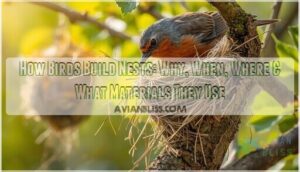
A robin perches on your windowsill with a beak full of dried grass, and you might wonder where she’s headed with her carefully selected cargo. Birds don’t just toss together random sticks and hope for the best—they’re executing an architectural plan refined over millions of years of evolution. Each species follows distinct blueprints, using everything from spider silk to shed snakeskin, and their construction methods reveal surprising intelligence.
The American Robin, for instance, reinforces her cup-shaped nest with mud glue between grass layers, while orioles weave hanging pouches that swing safely out of predators’ reach. Understanding how birds build nests reveals the intricate balance between instinct, adaptation, and problem-solving that ensures the offspring’s survival.
Table Of Contents
- Key Takeaways
- Why Birds Build Nests
- When Do Birds Build Their Nests?
- Where Do Birds Choose to Nest?
- What Materials Do Birds Use for Nests?
- How Do Birds Gather and Assemble Nests?
- Nest Building Techniques by Bird Species
- How Nest Building Impacts Bird Survival
- Frequently Asked Questions (FAQs)
- How long does it take a bird to build a nest?
- Where do birds sleep at night if they don’t have a nest?
- Does the male or female build the nest?
- How does a bird make its nest step by step?
- How long does it take for a bird to build a nest?
- How do birds build their nests step by step?
- Where do birds sleep before they build a nest?
- What triggers birds to start nesting?
- How long do birds use their nests?
- Do birds renovate or repair old nests?
- Conclusion
Key Takeaways
- Birds build nests through learned intelligence rather than pure instinct, refining their construction techniques with experience as species like zebra finches use less material in later nests while maintaining structural strength.
- Nest design directly impacts chick survival through strategic features like feather insulation that retains 40% more heat than grass alone, cavity placement that buffers temperature swings, and camouflage positioning that conceals eggs from predators.
- Timing of nest construction depends on environmental triggers including day length exceeding 11-12 hours, temperature stability above 10°C, and peak food availability, though climate change is pushing nesting seasons earlier and creating mismatches with insect hatches.
- Material selection reveals remarkable adaptation as birds incorporate everything from spider silk for expandable hummingbird nests to mud pellets mixed with saliva for swallow shelters, with urban species now weaving synthetic items into 65% of monitored nests.
Why Birds Build Nests
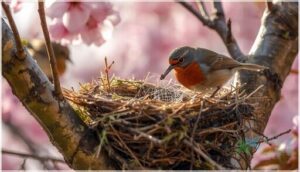
When you watch a bird weaving twigs into a cozy structure, you might wonder what drives this careful work. Nest building isn’t just instinct—it’s a survival strategy that directly impacts whether eggs hatch and chicks make it to adulthood.
From mud and moss to spider silk, the materials birds select for their nests reveal surprising adaptations shaped by millions of years of evolution.
Birds construct nests for three essential reasons that shape their chances of raising the future offspring successfully.
Protecting Eggs and Chicks
Survival drives every detail of bird nesting behavior, especially regarding keeping eggs and chicks safe from predators. Nest camouflage, brood defense, and careful site selection all work together to boost the odds that your backyard birds will raise healthy young:
- Nest concealment in dense shrubs hides eggs from predators that hunt by sight, like crows and hawks.
- Egg recognition helps host birds spot and remove foreign eggs laid by brood parasites such as cuckoos.
- Predator avoidance through cavity nesting gives woodpeckers and chickadees solid walls that shield eggs from wind and threats.
- Active nest defense involves parents diving at intruders, mobbing in groups, or using broken-wing displays to protect chick safety. During nesting season, some birds cleverly use such as fake injuries or distraction displays to ward off predators.
Regulating Temperature and Comfort
Beyond protection, nest architecture plays a key role in thermal regulation and microclimate control for your backyard birds. Nest insulation depends heavily on nesting materials—feathers and animal fur can provide up to 90 percent of a nest’s total insulation despite making up only about a third of wall thickness. These soft fibers trap air between them, retaining around 40 percent more heat than dry grass alone in cup nests, which directly affects egg viability and chick survival. Bird nesting habits reflect careful attention to ventilation systems and humidity management; parents leave small gaps between twigs in outer nest walls to allow gentle airflow that prevents overheating while limiting drafts across eggs.
Birds depend on carefully engineered to keep eggs and chicks safe from temperature extremes.
Nest Design Features for Temperature Control
| Feature | Function | Thermal Benefit |
|---|---|---|
| Feather & fur lining | Traps air between fibers | Retains 40% more heat than grass |
| Thick nest base | Increases distance heat travels | Slows cooling rate of eggs |
| Strategic gaps in walls | Allows controlled airflow | Prevents overheating and removes moisture |
| Cavity or sheltered sites | Buffers rapid temperature shifts | Maintains stable microclimate |
Nest sites in sheltered shrubs or cavities experience slower temperature changes than exposed locations, as surrounding vegetation or wood acts as thermal mass. In sagebrush habitats, temperatures can swing from minus 5 to 50 degrees Celsius, so choosing the right spot dampens this variation. Avian architecture balances insulation with ventilation—nests built with dense moss stay warmer but can hold moisture after rain, while lighter, more porous designs in hot climates trade some insulation for better cooling.
Parents actively manage egg temperature by adjusting how tightly they sit, pressing their brood patch onto eggs to warm them or lifting slightly to let them cool. Measurements show that quality nest construction can cut heat loss from brooding adults by roughly a quarter to a third compared with bare cavities.
Avoiding Predators and Environmental Threats
While insulation matters, nest placement and camouflage drive predator evasion and survival. You’ll find songbirds tuck nests deep inside thorny shrubs or tall grass where foxes and cats can’t easily spot eggs—ground nesting species choose sites among pebbles or leaf litter so mottled eggs blend with substrate.
Storm resistance depends on cavity nests or sheltered branches that shield clutches from wind and flooding rain, reducing environmental impact on birds.
When Do Birds Build Their Nests?
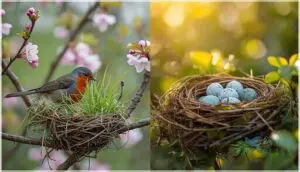
Birds don’t build nests year-round, they time construction carefully to match their breeding cycles and the conditions around them. Most species wait for warmer months when food is plentiful and weather is stable, but the exact timing varies widely depending on where they live and what kind of bird they are.
The materials they gather and where birds choose to build their nests depend heavily on their species and habitat.
Several key factors determine when you’ll see birds gathering twigs and weaving their homes.
Breeding Seasons and Climate Factors
Many songbirds wait until average daily temperatures stay above about 10 degrees Celsius before they start nest building, ensuring early insects are active for feeding chicks. Climate change is pushing nesting timelines earlier at mid and high latitudes, sometimes creating mismatches between when chicks hatch and peak food availability.
Weather patterns, including cold snaps and heat waves, can sharply reduce nest success, making environmental factors in nesting critical for breeding cycles and wildlife conservation.
Species-Specific Nesting Timelines
Bird species diversity and nesting habits create a striking calendar across breeding seasons. Great horned owls lay eggs as early as late February in the northeastern United States, while American goldfinches wait until June or July to nest, timing fledging rates with peak seed availability.
American robins raise up to four broods between May and August, demonstrating how nesting patterns reflect each species’ unique survival strategy and migration timing.
Environmental Triggers for Nest Building
You’ll notice daylight cues act as nature’s starting gun for many bird species, triggering hormones that launch nest building when days stretch past 11 or 12 hours of light. Several environmental triggers shape nesting habits and materials:
- Temperature shifts signal safe conditions, though sudden cold snaps can kill exposed eggs and chicks.
- Rainfall patterns boost insect numbers, giving parents more food for hungry nestlings.
- Food availability peaks guide timing, so caterpillar abundance often matches hatching dates.
- Climate change is pushing earlier nest building, sometimes before conditions truly stabilize.
- Urban light pollution extends perceived day length, advancing egg laying in cities.
These cues help you understand how bird species balance survival against changing conditions, underscoring why environmental conservation and wildlife conservation efforts matter for protecting nesting success.
Where Do Birds Choose to Nest?
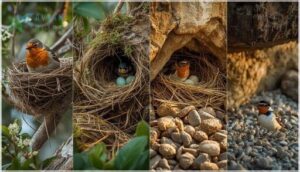
Birds don’t just pick any random spot to raise their young—they’re incredibly strategic about where they place their nests. The location needs to balance food availability, protection from predators, and shelter from wind, rain, and temperature extremes.
Let’s look at the most common nesting sites and what makes each one attractive to different bird species.
Natural Nesting Sites (Trees, Shrubs, Ground)
Birds choose nesting sites based on height, cover, and safety from predators. Tree canopy locations—sometimes 10 to 20 meters up—offer protection for warblers and orioles, while the shrub layer shelters cardinals and mockingbirds in dense foliage. Ground nesting species like killdeer rely on nest camouflage among grasses or gravel.
Tree cavities, vegetation cover, and wildlife habitat quality all shape nesting habits and building success.
Use of Human-Made Structures
When tree cavities and natural sites disappear, you’ll find birds settling on ledges, chimneys, and power poles. Rock pigeons claim building facades, while chimney swifts glue twig nests inside flues using saliva.
Nest box designs and rooftop habitats now support bluebirds and swallows in urban areas, though power line risks and building codes sometimes limit safe nesting.
Human-made structures can mimic cliffs and hollow trees if you provide the right openings.
Factors Influencing Nest Site Selection
You’ll notice nest site selection hinges on balancing safety, climate, and food access. Many birds place nests high in trees or dense shrubs to dodge ground predators, while others seek cavities that buffer temperature swings.
Proximity to feeding areas matters, since frequent trips drain energy.
Habitat selection also involves avoiding human disturbance, loud noise, and bright lights that disrupt normal nesting behavior and chick survival.
What Materials Do Birds Use for Nests?
Birds don’t just grab whatever’s nearby when they build a nest—they carefully select materials that serve specific purposes, from sturdy support to soft insulation. You’ll find that different species rely on everything from natural fibers and plant matter to surprisingly inventive items like spider silk and even human-made objects.
Let’s look at the main categories of materials birds use and why each one matters for successful nesting.
Natural Materials (Twigs, Grass, Moss, Feathers)
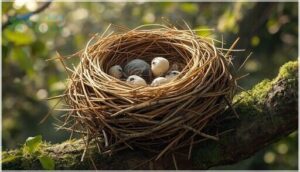
When you look at how birds source nest materials, you’ll find they rely on four main building blocks from nature. Each material brings specific benefits to nest construction, from sturdy twig structures that form the outer frame to soft feather linings that trap warmth around eggs. Material selection directly affects nest insulation and chick survival.
- Twigs create the framework: Flexible branches 5–15 centimeters long lock together at angles, forming strong bowls that support growing families
- Grass binds and cushions: Birds twist long blades around stems to cinch walls tight, then layer finer grass inside for comfort
- Moss fills gaps: This spongy material smooths rough surfaces between twigs while managing moisture during rain
- Feathers insulate best: Fluffy barbs trap air in the nest cup, keeping eggs within ideal temperature ranges even when outside conditions shift
Unusual and Adapted Materials (Cobwebs, Mud, Animal Fur)
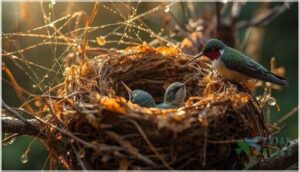
Beyond standard plant matter, you’ll see clever birds weaving cobwebs, mud, and animal fur into their nests. Hummingbirds wrap spider silk around cup edges for cobweb strength that lets walls expand as chicks grow, while swallows mix mud with saliva to create durable shells on cliffs.
Many songbirds line interiors with shed fur for insulation, recycling materials already present in their habitat—a striking example of nest adaptation and avian architecture.
Incorporation of Human-Made Items
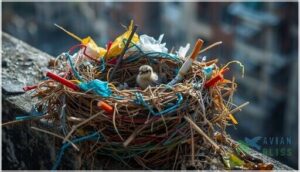
Plastic pollution now reaches into animal architecture and design, with urban nesting birds weaving shopping bags, cigarette butts, and rope into their homes.
House sparrows and storks add synthetic materials to about 65 percent of monitored nests, creating entanglement risks that trap chicks in loops of baler twine.
This human impact on avian architecture shows how wildlife gardening and nesting habits adapt to our waste.
How Do Birds Gather and Assemble Nests?
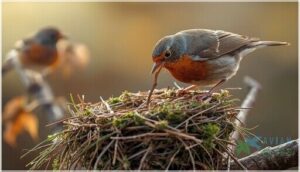
Once birds have chosen their nesting site and located the right materials, the real work begins—gathering, transporting, and weaving everything into a secure home.
Birds rely on their beaks as their primary tools, though feet and even their own bodies play important roles in shaping the final structure.
The process can take anywhere from a single day to several weeks, depending on the species and the complexity of the nest design.
Material Collection Techniques
Birds employ diverse foraging strategies when collecting nest material, and you’ll notice many species stick to short trips within 50 to 100 meters of their chosen site. Gathering methods vary widely:
- Barn Swallows make repeated low passes over puddles to scoop mud pellets with their beaks
- Weaver birds commute dozens of times daily between nesting colonies and vegetation stands
- Urban species patrol rooftops and gutters for suitable nesting resources
- Garden birds harvest twigs, moss, and dried grasses from sheltered yard corners
Use of Beaks, Feet, and Bodies
Once you understand material gathering, you’ll see how birds build nests through impressive coordination. Beaks act like pincers—weaver birds thread grass blades and pull each strand tight, while swallows mold wet mud pellets against walls.
Foot techniques matter too: burrow nesters kick soil backward, and terns scrape sand by shuffling their feet.
Body shaping completes the work, as females press their breasts into cup nests, turning in circles until the bowl fits snugly around eggs.
Timeframes for Nest Construction
Generally, small songbirds complete nest construction in two to three days under good conditions, though larger structures may require up to two weeks. Eastern bluebirds often finish cup nests in four to five days, while pileated woodpeckers spend three to six weeks excavating deep cavities.
Bad weather, limited materials, or disturbances can stretch these timeframes notably, forcing birds to pause daily work sessions or restart entirely.
Nest Building Techniques by Bird Species
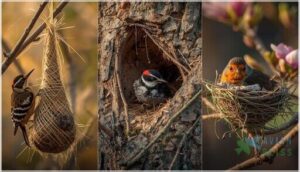
Birds don’t all build the same way, and each species has evolved techniques that match its size, habitat, and survival needs. Some craft tidy cups in shrubs, while others weave hanging pouches or excavate cavities in trees.
Here’s a closer look at the most common nest-building methods you’ll encounter.
Cup Nests, Platform Nests, and Cavity Nests
You’ll find three main architectural designs in the realm of bird nests, each reflecting unique nesting habits and avian engineering. Cup-shaped nests form snug bowls with coarse outer walls and soft inner linings, while platform nests create broad stick bases that eagles and ospreys expand yearly.
Cavity nests use enclosed tree holes or nest boxes, where woodpeckers excavate chambers and line them with minimal nesting materials for protection.
Woven and Hanging Nests
Woven nests showcase impressive avian architecture, with orioles threading fine fibers into deep sock-like pouches that hang from branch tips, while baya weavers craft retort-shaped structures featuring bulbous chambers and entrance tunnels exceeding 20 centimeters.
These hanging techniques rely on fiber selection—grass strips, palm fronds, and spider silk—knotted around support points to create flexible baskets with tightly interlaced woven patterns that shed rain and sway safely beyond predators’ reach.
Unique Construction Methods (Weaving, Knotting, Sticking)
You’ll find that avian architecture involves three precision methods: fiber knotting, where weaverbirds tie overhand-style knots using grass strips; leaf sewing, as tailorbirds pierce leaf edges and thread plant fibers through dozens of punctures; and mud sticking, with swallows pressing saliva-laced pellets onto rough surfaces.
These nest building techniques—combined with branch wrapping and tension interlocking—produce woven nests and cup-shaped nests that withstand weather and predators.
How Nest Building Impacts Bird Survival

A well-built nest can mean the difference between a thriving brood and total reproductive failure, since nest design directly affects how many chicks survive to leave the nest.
Birds face constant threats from predators, weather extremes, and resource scarcity, so their nest-building skills have evolved to address these survival challenges in remarkably specific ways.
Understanding how nest construction influences survival reveals why even small design choices matter so much in the bird world.
Nest Design and Predator Avoidance
Your backyard birds defend their eggs and chicks through clever nest design and predator protection strategies. Nest camouflage works when ground nesters place eggs among leaf litter that matches their mottled patterns, while hanging nests with narrow entrance tunnels slow climbing predators.
Colonial species gain defensive nesting advantages through group mobbing, and cup-shaped nests hidden in dense shrubs use concealment strategies that improve daily survival rates through smart nest architecture.
Adapting to Environmental Challenges
Climate adaptation shapes how birds design nests when environmental pressures shift around them. Blue Tits in northern Europe build thicker, better-insulated nests than their southern relatives, showing ecological flexibility in response to temperature differences.
Adaptive behaviors include Hawaiian Honeycreepers placing nests in sun-exposed canopy spots at higher elevations, while tropical species choose shadier locations to maintain ecological balance and nest resilience during midday heat.
Learning and Intelligence in Nest Construction
Beyond adapting to climate, birds show exceptional cognitive abilities in nest construction, refining their techniques with experience. Zebra finches demonstrate adaptive learning by using less material in later nests while maintaining strength, proving nesting strategies improve through practice.
Young weaverbirds develop bird innovation skills, testing materials with their beaks and switching to stiffer pieces that create stronger frames.
This ornithology research reveals nest architecture isn’t just instinct—it’s animal intelligence shaping avian reproductive strategies and bird behavior over time.
Nest building is not mere instinct—it’s learned intelligence that birds refine over time to improve their survival
Frequently Asked Questions (FAQs)
How long does it take a bird to build a nest?
Nest construction time varies like a stopwatch set to different speeds—sparrows finish in roughly two days, while barn swallows need ten to fourteen days as each mud pellet dries between careful applications.
Where do birds sleep at night if they don’t have a nest?
Most songbirds roost on sheltered branches, tucked into thick hedges or dense conifers near the trunk. Cavity nesters use tree hollows and birdhouses.
Waterfowl sleep floating on water, while starlings gather under bridges.
Does the male or female build the nest?
It depends on the species. In most songbirds, the female manages nest building while the male defends territory, but some pairs share construction duties equally, and certain males build alone.
How does a bird make its nest step by step?
You’ll watch a bird gather twigs and grasses, then create a foundation by wedging materials together.
Through persistent cup formation and nest shaping, the bird rotates its body to mold walls, adds soft lining, and finishes with camouflage.
How long does it take for a bird to build a nest?
You might find this surprising, but building duration varies wildly—some Bird Species Variations finish in two days, while others need weeks.
Nest Construction Time depends on Nest Complexity, Environmental Factors, and how quickly Birds Build Nests.
How do birds build their nests step by step?
You’ll see birds choosing a safe spot, then gathering twigs and grass to shape a base, weaving walls with their beaks, and finally adding soft feathers for insulation—a process reflecting intricate nesting patterns and behavior.
Where do birds sleep before they build a nest?
Before building a nest, most birds sleep at temporary roosting sites like dense shrubs, tree cavities, or sheltered branches, choosing pre-nesting perches that offer protection from predators and harsh weather while remaining near future nesting sites.
What triggers birds to start nesting?
You’d think birds wake up one morning and decide it’s nest time, but they’re actually responding to day length, temperature shifts, hormonal changes, food availability, and environmental cues that trigger their nesting habits.
How long do birds use their nests?
Most songbirds use their nests for just one breeding cycle, about three to five weeks, then abandon them after chicks fledge, though some species reuse nests for multiple broods each season.
Do birds renovate or repair old nests?
Some bird species renovate old nests, while others avoid them entirely.
Large raptors like bald eagles repair stick nests for decades, but most songbirds build fresh nests each season to reduce parasites.
Conclusion
Think of how birds build nests as nature’s master class in resourcefulness—each twig placed, each fiber woven, demonstrates millions of years of trial-and-error engineering. You’ve seen how robins reinforce with mud, how orioles suspend their cradles from branches, and how timing, location, and materials converge to protect the upcoming offspring.
These feathered architects don’t just construct shelters; they create survival systems that adapt, endure, and guarantee their species’ continuation against formidable odds.