This site is supported by our readers. We may earn a commission, at no cost to you, if you purchase through links.
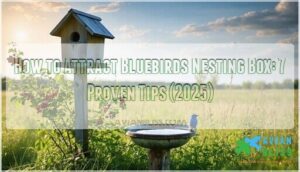 If you want to know how to attract bluebirds nesting box, start with a well-placed box in an open, grassy spot—bluebirds love a clear view, like a lookout tower.
Choose a box with a 1.5-inch entry hole to keep out bigger birds. Skip the perch, since bluebirds don’t need one and it keeps predators away.
Plant native shrubs with berries nearby, and keep water close for drinking and bathing. Clean the box each season so it feels like home.
With the right setup, bluebirds might just move in and raise a family. Curious about making your yard even more inviting?
Table Of Contents
- Key Takeaways
- Bluebird Species Overview
- Attract Bluebirds Nesting
- Creating Bluebird Friendly Habitat
- Bluebird Nesting Box Tips
- Maintaining Bluebird Safety
- Frequently Asked Questions (FAQs)
- How do you attract bluebirds to nesting boxes?
- What month do bluebirds lay their eggs?
- Why won’t bluebirds use nest boxes?
- How often should bluebird nest boxes be cleaned?
- Can bluebirds coexist with other bird species nearby?
- What time of year should nest boxes be installed?
- Do bluebirds reuse old nesting sites each season?
- How can weather affect bluebird nesting success?
- Conclusion
Key Takeaways
- Put your bluebird nesting box in an open, grassy spot about 4–6 feet high, with a 1.5-inch entry hole and no perch to keep predators out.
- Plant native berry-producing shrubs and flowers nearby to give bluebirds food and shelter.
- Space nesting boxes at least 100 yards apart and clean them after each brood to boost safety and attract repeat visitors.
- Install predator guards and keep a clean water source within 50–100 feet of the box to help bluebirds thrive.
Bluebird Species Overview
You’ll find three bluebird species across North America, each with distinct ranges and nesting preferences.
Eastern bluebirds live east of the Rockies from Canada to the Gulf of Mexico, while mountain bluebirds inhabit western mountains from Alaska to Central Mexico.
Western bluebirds occupy coastal and southwestern regions.
Eastern Bluebird Distribution
If you’ve spotted flashes of bright blue in your yard, you might be along the main route of Eastern Migration.
Eastern Bluebirds choose open spaces from southern Canada to the Gulf. Each spring, they pick Bluebird Territories for nesting sites.
Strategic bluebird nesting box placement helps attract bluebirds, support bird conservation, and fight habitat loss across expanding bluebird habitat.
To increase the chances of attracting these birds, understanding their nesting site preferences and creating an environment that meets their needs is key to support the overall bluebird habitat.
Mountain Bluebird Habitat
After learning about eastern bluebirds, let’s head west.
Mountain Bluebirds love open mountain terrain.
They look for safe nesting sites with plenty of food sources around.
Place your bluebird nesting box in open, grassy spots—this type of bluebird habitat quickly attracts bluebirds and supports their breeding patterns. You’ll find them nesting from Alaska down to New Mexico, following cool migration routes.
Attract Bluebirds Nesting
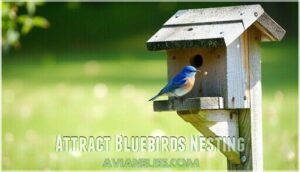
Getting bluebirds to pick your backyard as home takes some know-how. Start with a bluebird nesting box that matches their size and habits—avoid plastic or decorative boxes.
A simple, sturdy nesting box is your best bet for inviting bluebirds to stay.
Bluebird nest box placement matters; set it in open spaces, 4–6 feet off the ground, with a clear path for fledgling care. Place boxes at least 100 yards apart to reduce territorial spats.
Use basic, untreated wood for nesting box design and keep entry holes precise to suit bluebird behavior and keep predators out. Tuck a few dried pine needles or short grasses inside as nesting materials to entice first arrivals.
Match box location with nearby food preferences—insects and mealworms help. Take these steps, and you’re making room for new neighbors.
Creating Bluebird Friendly Habitat
You’ll want to create a habitat that gives bluebirds the best chance at nesting success by using open spaces, native plants, and shrubs that provide both food and shelter.
Focusing on these features makes your yard more attractive to bluebirds and helps support a healthy local population.
Native Plant Selection

Native plant selection is like rolling out a welcome mat for bluebirds. You’ll want to offer layers of native flowers, local trees, and wild vines that support insects.
A yard full of native plants brings bluebirds flocking for food, shelter, and nesting spots.
For the best results:
- Add native flowers and wild vines
- Mix in sturdy local trees
- Choose plants with floral diversity
- Lean into staghorn sumac and dogwoods
- Skip non-native ornamentals
Native plants provide essential food sources, including those found in bird friendly gardening practices, which support local trees and native flowers.
Berry Producing Shrubs
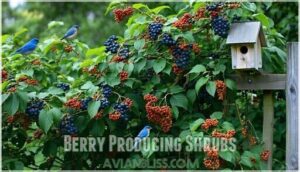
Once you’ve picked your native plants, it’s time to focus on shrub selection.
Look for native berry-producing shrubs like blueberries, black gum, Carolina cherry laurel, and American bittersweet vine.
These offer exceptional berry nutrition for bluebirds.
Fruit types matter, so mix a few varieties in your garden design for year-round food.
Native plants help bluebirds thrive.
Understanding blueberry bushes growth habits is vital for creating an ideal environment.
Open Area Requirements

After picking the right berry-producing shrubs, pay close attention to open spaces for bluebird nesting optimization.
Place your nesting box in mowed grass or short meadow, away from dense trees—less than 30% tree density is ideal.
Keep at least 100 yards from other boxes. Add a perch nearby, and you’ll see more bluebirds making nesting sites their home.
Understanding proper bluebird nesting techniques is essential for creating an effective bluebird friendly habitat.
Bluebird Nesting Box Tips
If you want bluebirds to settle in your yard, setting up the right nesting box is essential.
You’ll need to follow some specific design tips to give these birds a safe place to raise their young.
Entry Hole Size
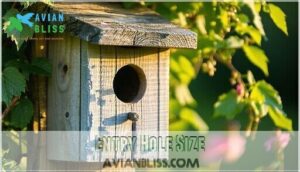
Bluebirds won’t settle just anywhere, so the right entry hole size on your nesting box matters.
Aim for a 1.5-inch hole diameter—no bigger, no smaller—for the best bluebird nesting optimization and bird safety.
A rounded entry size keeps larger birds and predators out.
Remember, your box design and nest box placement help guarantee a safe birdhouse home.
Proper nest box placement involves considering ideal nesting box heights to attract bluebirds and other species effectively.
Maintaining Bluebird Safety
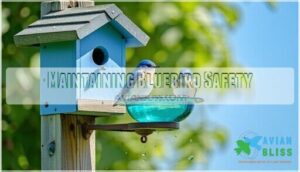
You need to keep bluebirds safe from predators and harsh conditions if you want them to nest in your box.
Focus on installing predator guards and providing clean water sources to help bluebirds thrive in your yard.
Predator Protection
After sorting out entry hole size, let’s talk predator protection. You want your nest box safe from raccoons, snakes, and cats.
Here’s what works:
- Install stovepipe baffles for Raccoon Control and Snake Protection.
- Use Noel predator guards for bird predator prevention.
- Place boxes on metal poles—Nest Box Safety and Cat Deterrents matter for real birdhouse predator guards.
To effectively protect your nest box, consider using predator prevention methods to deter common threats.
Water Source Installation
After sorting out predators, think about water supply.
Birdbath placement matters—keep it within 50–100 feet of nest boxes.
Water features like fountain installation, pond creation, or rain barrels boost bird bathing and nesting rates.
Use recirculating streams or pond edges for added safety.
Clean birdbaths often, and never use chemicals.
Here’s how options compare:
| Feature | Safety Level | Nesting Impact |
|---|---|---|
| Birdbath | High | Moderate |
| Fountain | High | Strong |
| Pond | Moderate | Strong |
| Rain Barrel | Low | Low |
| Stream | High | Strong |
Frequently Asked Questions (FAQs)
How do you attract bluebirds to nesting boxes?
Did you know bluebirds can lay up to 20 eggs a season?
To attract them, place nest boxes in open areas, 5 feet high, with proper entry holes, spaced 100 yards apart, and keep sparrows away.
What month do bluebirds lay their eggs?
You’ll spot eastern bluebirds laying eggs from January to March in the southern U.S.
While western and mountain bluebirds start nesting in April.
Timing can shift a bit depending on your region and local weather.
Why won’t bluebirds use nest boxes?
If your nest box sits like a ghost town, check its size, entry hole, and placement.
You might’ve put it too close to busy areas, used plastic, or missed cleaning.
Predators, pests, or aggressive competitors also scare them off.
How often should bluebird nest boxes be cleaned?
You’ll want to clean bluebird nest boxes after each brood leaves, usually two to three times a season.
Remove old nests, scrub with soap and water, and check for pests.
Clean boxes boost bluebird safety.
Can bluebirds coexist with other bird species nearby?
Like neighbors sharing a fence, bluebirds can live near other birds if nesting boxes are spaced apart.
You’ll want at least 100 yards between boxes to prevent fights and give each species room to thrive, which is a complete concept for maintaining harmony among the birds.
What time of year should nest boxes be installed?
You’ll get the best results installing bluebird nest boxes in late winter or early spring, before nesting season starts.
This timing gives bluebirds a chance to claim their spot and settle in before competitors show up.
Do bluebirds reuse old nesting sites each season?
Think of bluebirds as loyal tenants—if last year’s spot felt safe and cozy, they’ll often return.
You’ll boost your odds by cleaning out old nests and keeping the area predator-free each season.
How can weather affect bluebird nesting success?
Weather plays a big role in bluebird nesting success.
Cold snaps can delay egg-laying, while heavy rain floods nests and reduces insect food.
Hot spells may cause dehydration in chicks, so shelter and water nearby really help.
Conclusion
Place the box right, pick the right plants, and protect your new guests—these steps all help when you’re learning how to attract bluebirds nesting box.
Keep your entry hole at 1.5 inches, skip the perch, and clean the box each season.
Add native shrubs and a water source nearby. With careful setup and regular care, you’ll turn your yard into a bluebird haven.
Soon, you might spot bright feathers and hear cheerful songs right outside your window.