This site is supported by our readers. We may earn a commission, at no cost to you, if you purchase through links.

Most backyard birdbaths sit empty while expensive feeders get all the attention—but the truth is, birds need fresh water even more than they need food. A well-installed fountain solves both problems at once: it attracts more species with the sound of moving water and stays cleaner than stagnant basins that breed mosquitoes and algae.
The installation itself takes less time than assembling flat-pack furniture, though choosing the right materials and pump type makes the difference between a fountain that lasts decades and one that cracks after the first winter. Whether you’re working with concrete, resin, or stone, the setup follows the same basic principles—pick a stable location, match your pump to your basin depth, and protect the electrical connections from weather.
Table Of Contents
Key Takeaways
- Birds need fresh water more than food, and a moving fountain attracts more species while preventing mosquito breeding and algae growth that plague stagnant birdbaths.
- Installation success depends on three fundamentals: choosing a stable location 10–15 feet from shrubs with partial shade, matching your pump’s flow rate (80–120 GPH) to basin depth, and using GFCI-protected outlets to prevent electrocution in wet conditions.
- Material choice determines longevity—concrete fountains last 50+ years with maintenance, resin resists freeze-thaw cracking in harsh climates, and you must avoid lead or zinc that contaminate water and harm birds.
- Maintenance requires changing water every 2–3 days to disrupt the mosquito life cycle, keeping pumps fully submerged to prevent overheating, and winterizing by draining ceramic basins or running a 40–50 watt heater for year-round use.
Essential Tools and Materials for Bird Fountains
Before you start assembling your bird fountain, you’ll need to gather the right materials and tools to make the job smooth and straightforward. The choices you make here—from the basin material to the pump type—will determine how well your fountain performs and how long it lasts.
Let’s break down what you actually need to get this project off the ground.
Choosing The Right Fountain Material
Your material choice shapes durability, fountain safety, and water quality for years to come. Concrete birdbath fountains can last over 50 years when maintained, while resin models resist freeze-thaw cracking in harsh climates—ideal for year-round garden fountain use. Stone offers superior aesthetic appeal but weighs considerably more.
For solar-powered fountains or any outdoor fountain, avoid metals like lead or zinc that compromise water feature safety for visiting birds. When selecting a fountain material, consider the pros and cons of resin vs concrete to make an informed decision.
Selecting a Suitable Pump Type
Once you’ve chosen your fountain material, pairing it with the right water pump becomes straightforward. For small bird baths, look for pumps rated between 80 and 120 gallons per hour—enough flow rate to prevent mosquitoes without overwhelming tiny visitors.
Electric submerged pumps deliver consistent water pressure, while solar-powered fountains eliminate wiring hassles at lower energy efficiency. Match pump size to your basin depth and fountain nozzle height for reliable performance.
Considering the benefits of solar water pumps can also help in making an informed decision.
Required Tools for Installation
With the right pump in hand, you’ll need a few basic tools to bring your bird bath to life. Most homeowners already own a suitable shovel and cordless drills for routing tubing through basins—a 7/8-inch hole accommodates most fountain nozzle setups. Add a level tool to prevent tilting, plus a utility knife for trimming hose or tubing.
Essential installation tools include:
- Cordless drills and drill bits for creating pass-throughs
- Level tools to guarantee your birdbath fountain sits flat
- Shovel or spade for excavating stable bases
- Utility knife for cutting water pump tubing to fit
Safety Equipment for Outdoor Setup
Once you’ve gathered your tools, protecting yourself matters just as much as protecting the birds. Ground-fault circuit interrupter (GFCI) outlets prevent roughly 70% of electrocutions—a breakthrough for wet bird bath fountain setups. Wear ANSI Z87.1-rated safety glasses when drilling stone basins, and use a stable ladder with proper footing. Even modest heights pose real fall risks during outdoor fountain maintenance.
| Electrical Safety & Weatherproofing Tips | Personal Protection & Fall Prevention |
|---|---|
| Install GFCI-protected outlets for all outdoor fountain pumps | Wear impact-rated safety glasses and hearing protection |
| Use weather-resistant enclosures for electrical connections | Position ladders on stable, level ground before climbing |
| Avoid extension cords for permanent bird bath installation | Consider steel-toe boots when moving heavy basin materials |
Step-by-Step Bird Fountain Installation Guide
Installing a bird fountain doesn’t require expert skills, but getting the setup right from the start will save you time and trouble down the road. The key is tackling each phase methodically—from scouting the perfect spot to making sure your pump stays secure and functional.
Here’s how to move through the installation process with confidence and avoid the common mistakes that trip up first-timers.
Selecting The Ideal Location

Where you place your bird fountain determines whether it becomes a thriving wildlife hub or an empty decoration. Smart site planning balances bird safety, water quality, and garden layout with these essential factors:
- Position 10–15 feet from shrubs to prevent predator ambushes while allowing quick escape routes
- Aim for partial shade to slow algae growth and keep water cool
- Keep it 3+ feet high or more than 30 feet from windows to reduce collision risk
- Choose a quiet backyard spot away from heavy foot traffic for consistent bird visits
Preparing The Foundation or Base

A stable foundation prevents tilting and ensures your bird bath delivers consistent water flow for years.
Start by excavating 6–12 inches deep, then add a compacted gravel base about 6 inches thick for drainage. For larger concrete slabs, aim for 6-inch thickness with proper leveling techniques.
This layered approach distributes weight evenly and protects against frost heave in cold climates.
Assembling The Fountain Components

Stack your birdbath fountain starting with the base—most twist-lock designs need a clockwise turn to secure. Check your kit: you’ll usually find 4–8 structural pieces plus one water pump.
Thread the pump’s power cable through molded grooves in the pedestal to keep it protected.
- Set the fountain base on your prepared foundation
- Twist the bowl clockwise onto the pedestal until locked
- Stack tiers sequentially over the central housing shaft
- Route tubing up through the pump tube opening
- Verify all components align before adding water
Connecting and Securing The Pump
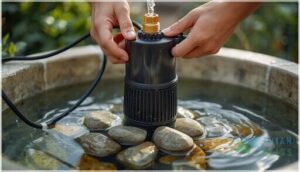
Your pump is the fountain’s engine—treat it like one. Submerge it completely, keeping the intake 1–2 inches off the basin floor to avoid debris. Snap the fountain nozzle onto the pump outlet, then bind the hose or tubing to the cord with cable ties every 18 inches—this tube management prevents snagging.
For solar-powered fountains, angle panels south. Proper pump installation ensures steady water flow and fountain stability.
Maintenance Tips for Long-Lasting Performance
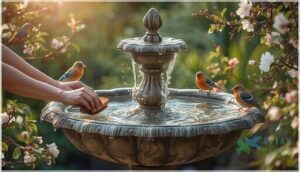
Your fountain won’t run itself—you’ll need to stay on top of a few key tasks if you want it working smoothly year after year. Regular upkeep prevents costly repairs and keeps the water safe for your feathered visitors.
Here’s what you need to do to maintain peak performance and avoid the headaches that come with neglect.
Regular Cleaning and Algae Prevention
Neglect turns your bird fountain into a breeding ground for disease and mosquitoes. Change the water every 2–3 days during warm weather—this simple routine disrupts the 7–10 day mosquito life cycle and prevents bacterial buildup.
Scrub the basin with a stiff brush to remove biofilm and algae, then rinse thoroughly. For deeper cleaning, use a 10% bleach solution monthly, followed by complete rinsing before refilling.
Checking and Adjusting Water Levels
Your fountain pump needs full submersion to avoid overheating—without it, you’re looking at premature failure.
Check water levels daily, especially in summer when evaporation can drain up to 1% of volume overnight. Maintain 1–2 inches of bird bath water depth for safe bathing, and refill whenever the pump intake risks exposure.
This simple water level monitoring protects your investment and keeps wildlife coming back.
Seasonal Care and Winterizing
When cold weather hits, winterizing protects your investment from freeze damage. Resin or plastic basins handle freeze–thaw cycles better than concrete or stone, which crack as trapped water expands.
For Winter Maintenance and Ice Prevention:
- Run a 40–50 watt birdbath heater to keep water ice-free down to −20°F
- Drain ceramic and lightweight concrete fountains before hard freezes, then store pumps indoors
- Deep-clean with 1 part vinegar to 9 parts water monthly to prevent disease transmission
Frost Management keeps birds hydrated when natural sources freeze.
Troubleshooting Common Issues
Even with proper seasonal care, you’ll face occasional hiccups. Pump failure often stems from debris clogging the impeller—disassemble and rinse under a hose to restore flow. Water leaks? Check tubing connections and basin cracks.
Algae growth slows when you scrub weekly and refresh water every few days.
For electrical issues on solar models, verify panels get six hours of direct sun. Noise reduction starts with maintaining water above the pump intake.
Top 5 Products for Easy Bird Fountain Setup
You’ve got the knowledge and the plan—now you need the right gear to bring it all together.
The products below simplify your setup, whether you’re adding a fountain to an existing birdbath or starting from scratch.
Each option balances function with ease of use, so you can focus on creating a space that works for you and your feathered visitors.
1. Drip Irrigation Compression Adapter Fitting
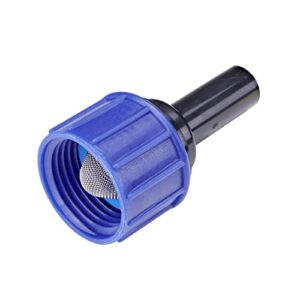
You’ll find unexpected versatility in a drip irrigation compression adapter fitting when building your birdbath fountain. These adapters connect 1/4-inch tubing to standard garden hoses, letting you control water flow with precision that traditional water pump setups can’t match.
The compression techniques create watertight seals without clamps, and the built-in swivel prevents kinking—vital for irrigation systems feeding your fountain nozzle. Look for UV-stabilized materials in adapter designs that handle outdoor conditions.
This approach delivers outstanding water efficiency, whether you’re running solar-powered fountains or electric models, giving you complete control over your bird bath’s performance.
Best For: DIY gardeners and bird enthusiasts who want a low-pressure, customizable water supply for birdbath fountains without the bulk of traditional pump systems.
- Compression seal creates watertight connections without clamps or tools—just push the tubing in about half an inch and you’re done.
- Built-in swivel and filter washer prevent kinking and screen out debris before it reaches your fountain, cutting down on maintenance headaches.
- UV-stabilized plastic holds up in direct sun, and the low 25 psi operating pressure works perfectly with regulated garden hose setups for bird features.
- Some users report leaks at the compression joint over time, especially if the original seal tears or the tubing wasn’t fully seated during installation.
- The 50 psi pressure limit means it won’t work for high-flow fountains or applications that need more forceful water delivery.
- Mixed reviews on long-term durability suggest you might need to replace seals or fittings after a season or two of outdoor use.
2. Plastic Fountain Nozzle Kit
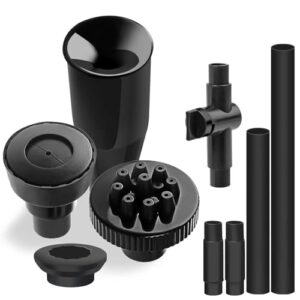
After securing your tubing connections, a plastic fountain nozzle kit transforms basic pump setups into vibrant water features with multiple spray patterns. You’ll get five interchangeable heads—fountain, rainfall, mushroom, trumpet, and water column—letting you adjust your birdbath fountain’s visual impact.
These kits fit standard 1/2-inch pump outlets and include height adjusters reaching up to 15 inches. The adjustable valve controls water flow for gentler displays or dramatic sprays.
At just over two ounces, you can swap nozzle designs quickly, optimizing pump efficiency while creating the spray patterns that draw birds in.
Best For: DIY enthusiasts and backyard birders who want flexible spray options for small garden ponds or birdbaths without spending much.
- Five different nozzle patterns let you switch between fountain, rainfall, mushroom, trumpet, and water column styles to keep your display fresh
- Lightweight at just over two ounces, so you can swap heads in seconds and experiment with different looks
- Adjustable valve and height settings give you control over spray intensity and reach, fitting pumps up to 15 inches
- Plastic parts crack easily, especially if you leave water inside during freezing weather
- The 1/2-inch connection only works with specific pump outlets, so you might need extra adapters
- Instructions are often vague, and build quality doesn’t always justify the price based on user feedback
3. Portable Water Dispenser Pump System
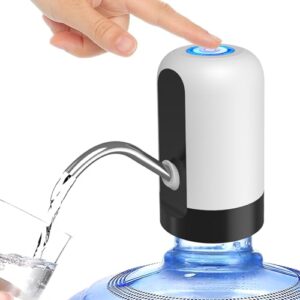
You’re not locked into permanent fountain setups—portable water dispenser pump systems offer surprising flexibility for temporary birdbath fountain installations. These rechargeable units slip onto standard 5-gallon jugs, delivering consistent water flow at roughly 2.5 liters per minute with battery life spanning 30 to 40 days between charges.
The dispenser design includes food-grade tubing that connects easily to your fountain nozzle and hose or tubing, letting you test locations before committing.
While pump efficiency can’t match solar-powered fountains for long-term reliability, you’ll control water delivery precisely when establishing new garden features.
Best For: Garden enthusiasts who want to test different birdbath fountain locations before committing to a permanent solar or hardwired installation.
- Rechargeable battery lasts 30-40 days between charges, giving you flexibility to move your fountain setup around without worrying about power outlets
- Food-grade materials and tubing make it safe for birds and wildlife while delivering steady 2.5 liter-per-minute flow rates
- Works with standard 5-gallon water jugs you probably already have, so you can set up a temporary fountain in minutes
- Leakage is the biggest complaint—about 37% of users report seal failures that can waste water and create messes
- Battery performance drops off over time, with some units stopping their charge cycle after just a few weeks of regular use
- Flow rate and consistency issues affect roughly 13% of devices, meaning you might get intermittent fountain operation
4. Solar Powered Bird Bath Fountain
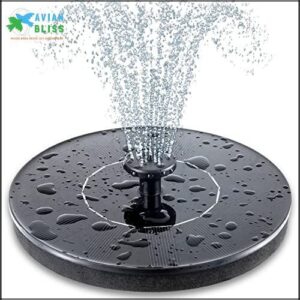
Solar-powered fountains eliminate the electrical outlet hunt entirely—Mademax’s 1.4-watt model delivers six spray patterns through direct sunlight alone, no batteries required. You’ll watch it spring to life within three seconds of water contact, drawing birds while circulating oxygen through your basin.
The built-in retainer keeps the pump centered as fountain pumps operate, though performance dips during overcast conditions.
At 9.6 ounces, this energy-efficient solution transforms any bird bath into a wildlife habitat without adding a cent to your utility bill, maximizing garden ambiance through pure solar panel efficiency.
Best For: Eco-conscious homeowners who want an easy, maintenance-free way to attract birds to their garden without running electrical wiring or increasing their power bill.
- Works automatically in direct sunlight with zero electricity costs—just place it in water and it starts pumping within 3 seconds
- Six interchangeable nozzles let you customize the spray pattern to match your bird bath size and personal aesthetic preferences
- Lightweight and portable at under 10 ounces, making it simple to move between different water features or store during winter months
- Performance depends entirely on sunlight intensity—won’t operate at night, on cloudy days, or in shaded locations
- Requires frequent cleaning to prevent algae and debris from clogging the pump and reducing its typical 2-4 year lifespan
- Can empty small bird baths quickly due to splashing, especially in windy conditions where water sprays outside the basin
5. Heavy Duty Plastic Wash Basin
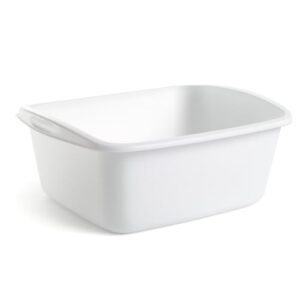
Repurposing a 12-quart heavy duty plastic wash basin gives you instant water capacity for fountain maintenance without breaking your budget. You’ll appreciate UV-resistant polypropylene that won’t crack under sun exposure—studies show stabilized plastic material selection retains structural integrity through 2,160 hours of weathering.
The 15-inch rectangular design fits standard birdbath fountain setups while basin durability manages daily refills through molded grips. This DIY bird bath fountain approach transforms water feature design into a weekend project, letting you control every aspect of your garden maintenance and care routine.
Best For: DIYers and budget-conscious gardeners who want to build their own birdbath fountain or water feature without spending much on a reservoir.
- UV-stabilized plastic holds up outdoors for years without cracking or getting brittle in the sun
- 12-quart capacity gives you plenty of water for fountain circulation while fitting neatly under most birdbath setups
- Two molded handles make it super easy to carry when you need to dump and refill
- Thin plastic construction may not support heavy decorative rocks or large water volumes compared to thicker basins
- Some buyers feel the price is high for what’s essentially a basic plastic tub
- Won’t fit large dinner plates if you ever want to use it for actual dishwashing
Frequently Asked Questions (FAQs)
How do I attract specific bird species?
Different birds respond to specific features: shallow edges with pebbles draw finches and chickadees, while gentle misters attract hummingbirds.
Plant native flowers nearby and add perching branches to create habitat zones that invite diverse species.
Can I use tap water safely for birds?
You can use tap water for birds if it meets EPA standards, though filtering reduces chlorine and heavy metals.
Change water every one to two days to prevent bacterial growth and maintain bird health.
What causes pump noise and how to fix it?
Pump vibration often stems from cavitation issues, air bubbles, or loose mounting. You’ll reduce noise by fully submerging the motor, placing a soft pad under your birdbath fountain, and cleaning the fountain nozzle regularly for flow optimization.
How far should fountains be from bird feeders?
Position your fountain at least 10 feet from bird feeders to maintain water quality and reduce debris.
This spacing promotes bird safety by dispersing wildlife activity, improving hygiene, and creating distinct zones for feeding and bathing in your backyard.
Do fountains work during freezing winter temperatures?
When temperatures drop below freezing, standard fountain pumps shut down to prevent damage—ice expansion can crack basins and rupture seals.
You’ll need a heated bird bath or de-icer to keep water flowing safely through winter.
Conclusion
Ironically, the hardest part of learning how to install a bird fountain isn’t the plumbing or the pump—it’s trusting that something so simple can transform your entire yard. You’ve done the work: leveled the base, connected the water flow, weatherproofed the cables.
Now step back and let the sound do what feeders never could. Within days, you’ll wonder why you spent years maintaining stations for seed when all they wanted was clean, moving water.
- https://www.rspb.org.uk/helping-nature/what-you-can-do/activities/make-the-perfect-bird-bath
- https://extension.psu.edu/water-for-wildlife-bird-baths-and-backyard-ponds/
- https://www.youtube.com/watch?v=msdTfKkzHOU
- https://www.airtasker.com/us/costs/water-feature-installation/water-feature-cost/
- https://homeguide.com/costs/water-fountain-cost