This site is supported by our readers. We may earn a commission, at no cost to you, if you purchase through links.
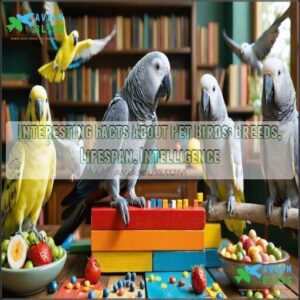 Pet birds aren’t just cute—they’re full of surprises.
Did you know some parrot species, like African greys, are as smart as a 5-year-old child? They can solve puzzles, mimic voices, and even learn tricks.
Tiny budgies, on the other hand, hold the record for the largest vocabularies!
Many birds outlive their owners—cockatoos can live over 70 years, so owning one is a real commitment.
Birds are also creatures of routine; they thrive on structure and get cranky if you skip their mealtime. Plus, their diet isn’t just seeds—they enjoy fruits, veggies, and even scrambled eggs.
Curious to learn more? Stick around!
Table Of Contents
- Key Takeaways
- Bird Population Facts
- Pet Bird Ownership
- Bird Intelligence
- Bird Diet and Health
- Parrot Species Facts
- Frequently Asked Questions (FAQs)
- What are some fun facts about birds?
- What to know about birds as pets?
- What are 5 interesting facts about parrots?
- What is the friendliest bird for a pet?
- How do birds communicate with each other?
- What toys are best for pet birds?
- How can you train a bird to perch?
- What are signs of a happy bird?
- How do birds show affection to humans?
- How do birds express affection for owners?
- Conclusion
Key Takeaways
- Parrots like African greys are as smart as a 5-year-old, solving puzzles and mimicking sounds.
- Budgies hold the record for the largest vocabularies among birds, making them great talkative pets.
- Some pet birds, like macaws and cockatoos, can live over 50 years, so owning one’s a lifelong commitment.
- Birds need diverse diets, including fruits, veggies, and occasional protein like scrambled eggs, to stay healthy.
Bird Population Facts

Did you know there are about 50 billion wild birds in the world, which means there are roughly six birds for every human?
There are 50 billion wild birds globally, meaning six feathered friends for every single person on Earth!
House Sparrows lead the pack with an astonishing population of 1.6 billion, making them one of the most common birds you’ll see, and they are a significant part of the roughly six birds for every human.
Global Bird Species
Let’s enter the fascinating world of global bird species! Did you know there are over 11,000 bird species worldwide? Their diversity is mind-blowing, from tiny hummingbirds to mighty albatrosses.
Avibase, a global bird database, scrupulously tracks over 53 million records for roughly 10,000 species. Different classification systems, such as Clements Checklist and BirdLife International, slightly vary in numbers.
Bird evolution has created stunning varieties, forming ecosystems brimming with life. Conservation efforts are essential as many species face habitat loss.
Here’s a snapshot of global diversity:
- 11,000+ species worldwide.
- Remarkable species classification diversity.
- Avibase’s tracking expertise.
- Evolution-driven bird varieties.
- Habitat preservation necessity.
Largest Bird Population
Sparrow dominance may capture your attention, but the red-billed quelea wins the wild bird populations race, soaring at an impressive 1.5 billion across Africa.
Known for its vast flocks, this species’ abundance greatly affects its habitat.
However, chickens take the crown for the largest overall bird population globally, with China and the USA leading with 9.6 billion and 8.9 billion chickens, proving their dominance in farming.
Among wild species, ring-billed gulls claim a spot in the top ranks, with population estimates nearing 1 billion.
Bird distribution highlights how some species thrive while others struggle, emphasizing unique stories in species ranking, and many birds also have specialized beak shapes to help them thrive.
Bird to Human Ratio
Did you know there are six birds for every one of us? That’s an incredible global distribution! This bird-to-human ratio teaches us a lot about nature’s balance and the challenges bird populations face.
- Pet birds are just a tiny drop in the avian bucket compared to the wild.
- Habitat loss forces many species to struggle, while others dominate.
- Conservation efforts are critical to protect unique bird species from future projections of decline.
Some birds, like the rare Kakapo, need extra care. Their quirky traits make them adorable yet vulnerable. Supporting conservation helps keep this balance thriving!
Pet Bird Ownership

Owning a pet bird means committing to a companion that can live for decades and requires daily care.
You’ll need to provide a proper environment, regular interaction, and a healthy diet to keep your feathered friend happy and thriving.
Popular Pet Bird Species
When exploring pet bird species, there’s something for every personality.
Parrots shine with their intelligence, while vibrant budgies are talkative and playful.
Finches are quiet and thrive in pairs, perfect for busy owners.
For something melodious, canaries steal the show with their songs.
Here’s a quick breakdown:
| Bird Species | Personality | Care Level |
|---|---|---|
| Parrots | Curious, Chatty | High |
| Budgies | Friendly, Active | Medium |
| Finches | Peaceful, Social | Low |
Birds bring life to any home, and with the right choice, they can be a wonderful companion, offering entertainment and affection.
Bird Longevity
Bird longevity is fascinating, with lifespans varying by species.
Small birds like budgies live 5-10 years, while large parrots, such as macaws, can surpass 50 years—sometimes outliving their owners.
Record holders include Cookie, a cockatoo who reached 82, showcasing impressive aging signs.
Understanding parrot’s life stages can help owners provide appropriate care at every age.
Captivity effects, like consistent bird care and diet, often lead to longer lifespans compared to wild birds.
Genetic factors also play a role, making your feathered friend’s long life a unique commitment filled with joy.
This commitment is based on providing the right care, which is influenced by the bird’s life stages and overall health.
Environmental Requirements
Creating a safe and comfortable bird environment is key to great bird care.
Start by setting up the right bird cage—ensure it’s large enough for wingspan stretching.
Temperature control between 65–80°F keeps your feathered friend cozy, while proper lighting needs, like natural or ultraviolet light, support their health.
Don’t forget humidity levels—birds benefit from 40–60% humidity.
Consider appropriate cage dimensions for your bird’s comfort.
It’s also essential to rotate toys and offer enrichment activities to prevent boredom.
Remember, clean air and smart bird space design help your bird thrive happily.
Bird Intelligence

You’d be surprised at how smart pet birds can be, with some showing problem-solving skills as sharp as a young child’s.
Pet birds amaze with intelligence, solving puzzles, using tools, and mimicking speech—proving they’re clever companions full of surprises.
Many parrots and crows even use tools, solve puzzles, and mimic speech, making them fascinating companions.
Intelligent Bird Species
In terms of sheer brainpower, certain birds soar to the top.
Corvids like crows and ravens, alongside African Grey parrots, showcase stunning cognitive abilities often compared to primates.
From tool use to social learning, these species impress with their bird intelligence.
Even budgies and macaws display emotional capacity and mimicry skills, making avian communication an art.
These remarkable creatures redefine what it means to be clever.
Problem-Solving Abilities
Smart birds can amaze you with their problem-solving skills—it’s like they’ve a little Einstein under their feathers! Their cognitive abilities rival primates, showing off impressive tool use, puzzle-solving, and even memory skills.
Ravens, for example, demonstrate advanced social intelligence by remembering human faces.
Here’s what they can do:
- Crows create tools like sticks to grab food from tricky spots.
- Cockatoos open intricate mechanisms, as if they’re tiny locksmiths.
- Parrots cleverly remember solutions to puzzles for years.
- African Greys tackle new challenges with creative planning ahead.
- Daily mental stimulation keeps their problem-solving sharp.
These feats highlight bird intelligence, proving our feathered friends are more than pretty faces—they’re brilliant problem solvers!
Mimicry and Speech
Parrots, mynahs, and budgies captivate with mimicry and vocal learning.
Mynahs amaze with speech accuracy, while parrots master environmental sounds and contextual usage, revealing advanced bird communication techniques.
Budgies, small yet mighty, mimic words clearly, showcasing impressive bird vocabulary.
Mimicry development deepens bonds—you’ll love teaching words and phrases.
Their mimicry evolution isn’t just entertaining; it’s a fascinating glimpse into how speech and intelligence connect.
Bird Diet and Health
Feeding your pet bird the right diet isn’t just about keeping them full—it’s key to their long-term health and happiness.
From fresh fruits to specific seeds, understanding their nutritional needs can help prevent common health problems.
Nutritional Requirements

Proper bird nutrition starts with variety. A bird nutrition guide isn’t complete without discussing balanced diets.
Birds need more than seeds—think fresh foods, seed alternatives, and water quality! Healthy bird diets should include these staples:
- Protein for feather growth and strength.
- Vitamin Needs like A and D3 for immunity and bone health.
- Mineral Sources from pellets to prevent deficiencies.
- Encourage foraging! It’s fun and keeps obesity away.
Remember, happy birds eat well! Diets should consider species-specific protein needs.
Dietary Diversity

A seed-only diet won’t cut it for your bird.
A complete bird nutrition guide includes seed variety, fruit consumption, veggies, and even insect intake or nectar diets, depending on the species.
Specialized feeding keeps their meals both nutritious and fun.
Adding dietary diversity encourages natural foraging behavior and reduces boredom.
Birds thrive on types of bird food that mirror wild diets.
So, mix it up—it’s like offering them a buffet instead of plain sunflower seeds, which supports a complete bird nutrition guide.
Health Issues and Prevention

Bird health starts with careful attention to their needs.
Keep cages spotless and avoid toxic fumes or chemical sensitivity from cleaning products.
Birds are prone to avian health issues, so routine visits for bird vet checks are a must.
Consider nutritional support options to boost their well-being.
Watch for unusual behavior, like feather plucking or signs of Parrot Fever—a zoonotic disease that can cause lung infections.
Providing mental stimulation and a balanced diet prevents common bird diseases.
Remember, a healthy bird is a happy, squawk-free companion!
Parrot Species Facts
Parrots are fascinating pet birds, known for their bright feathers, intelligence, and ability to mimic sounds.
With over 350 species, you’ll find everything from tiny parrotlets to large macaws, each with its own unique personality and care needs.
They come in a variety of sizes and colors, making them a popular choice for many bird enthusiasts.
Parrot Characteristics
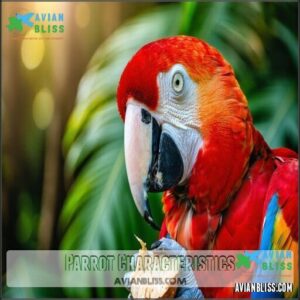
You’ll love how smart and witty parrots can be! With intelligence like a young child, they remember faces and voices, making every interaction special.
Their mimicry skills turn them into the life of the party! These social birds thrive on activity and love a nutritious mix of seeds, fruits, and veggies.
Some species, like macaws, have powerful, curved beaks adapted for cracking nuts.
- Impressive memory: They don’t forget a friend!
- Long lifespan: Some outlive generations.
- Playful behavior: Always ready for fun!
Popular Parrot Species
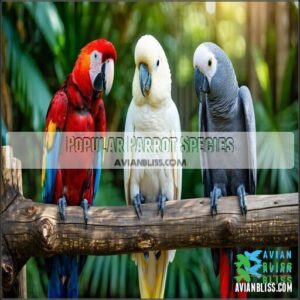
Macaws, cockatoos, and African Greys are some of the most remarkable parrot species.
Macaws captivate you with their brilliant colors and affectionate nature, forming lifelong bonds with owners. Cockatoos, known for their playful and expressive behavior, benefit from constant interaction to stay happy and avoid mischief.
African Greys stand out as geniuses of the bird world, celebrated for their advanced problem-solving skills and unmatched mimicry.
| Parrot Species | Traits | Lifespan |
|---|---|---|
| Macaws | Vibrant, loving | 50+ years |
| Cockatoos | Social, energetic | 40–60 years |
| African Greys | Smart, talkative | 50+ years |
These parrots bring personality and lasting companionship to your life, making them a wonderful addition with their unique traits.
Budgie Facts and Care

Budgies, also called parakeets or budgerigars, are lively pet birds with stunning colors and cheerful sounds.
Budgie care means offering spacious cages, colorful toys, and daily interaction.
Proper budgie training improves trust and their playful nature.
Feed them a mix of pellets, seeds, and fresh produce. Regular handling and flight time guarantee happy, energetic companions.
Frequently Asked Questions (FAQs)
What are some fun facts about birds?
Think of birds as nature’s comedians—parrots can mimic voices, crows solve puzzles, and pigeons recognize themselves in mirrors.
Some even dance to music, showing off moves that could rival your best party guest!
What to know about birds as pets?
Pet birds are intelligent companions, needing mental stimulation, social interaction, and proper care.
They can live decades, forming strong bonds with owners.
Routine vet visits, a balanced diet, and safe environments are non-negotiable for happy birds.
What are 5 interesting facts about parrots?
Parrots can mimic human speech, dance to music, and even solve puzzles.
They bond deeply with owners, live over 50 years, and use their beaks as “third hands” to climb, explore, and even play!
What is the friendliest bird for a pet?
A feathered friend can be your soulmate.
Cockatiels often top the list as the friendliest pet birds.
They’re social, love attention, and whistle charming tunes.
Plus, their gentle nature makes them great companions for families.
How do birds communicate with each other?
Birds communicate using songs, calls, body language, and behaviors like flapping or preening.
They signal danger, attract mates, claim territory, or bond socially.
Some even mimic sounds—imagine a bird imitating your ringtone! They do this to communicate in their own unique way.
What toys are best for pet birds?
Choose toys that encourage chewing, shredding, and foraging.
Think wooden blocks, paper strands, or puzzle feeders.
Rotate them often to keep things exciting and prevent boredom.
Noisy toys? They’re a hit—birds love a racket!
How can you train a bird to perch?
Don’t worry if your bird resists at first—patience wins.
Offer a treat near the perch, gently guide them with your hand or stick, and reward success.
Consistency and positive reinforcement make it fun and effective.
What are signs of a happy bird?
A happy bird fluffs its feathers, grinds its beak, or chirps cheerfully.
It might play enthusiastically, interact with you, or gently nibble to show affection.
Bright eyes and relaxed posture are also great signs.
How do birds show affection to humans?
They’ll nuzzle against you, preen your hair, or gently nibble on your finger.
Sometimes, they’ll puff up, whistle, or mimic your voice.
It’s their feathery way of saying, “You’re part of my flock!”
How do birds express affection for owners?
Birds show affection by cuddling, perching on your shoulder, or following you around.
They may mimic your voice, gently nibble, or preen you like a flockmate, showing you’re part of their inner circle.
Conclusion
Owning a pet bird is like discovering a treasure chest—you’ll find intelligence, companionship, and plenty of surprises.
Whether you’re amazed by a parrot solving puzzles or a budgie mastering words, these feathered friends are remarkable.
They live long, thrive on structure, and need diverse diets to stay healthy.
Remember, pet birds aren’t just pets—they’re a serious commitment.
Exploring interesting facts about pet birds can help you appreciate their quirks and care for them with confidence.