
This site is supported by our readers. We may earn a commission, at no cost to you, if you purchase through links.
A peregrine falcon hits 320 km/h in a dive—faster than a Formula 1 car on a straightaway. That’s not a metaphor or a rough estimate; it’s a measured, documented fact about an animal you can spot from a city rooftop.
Birds pull off feats that would seem implausible in a sci-fi film, and they do it with hollow bones, a few grams of brain tissue, and feathers held together by microscopic hooks.
From geese cruising above Everest to owls rotating their heads nearly three-quarters of the way around, these cool bird facts reveal a class of animals far stranger and more impressive than most people realize.
Table Of Contents
- Key Takeaways
- Amazing Bird Body Facts
- Incredible Flight and Movement Facts
- Cool Bird Behavior Facts
- Fascinating Bird Intelligence Facts
- Record-Breaking Bird Facts
- Frequently Asked Questions (FAQs)
- What are some fun facts about birds?
- What is the most common bird in the world?
- What do you know about 15 amazing bird species?
- What are some cool birds?
- Why are birds so interesting?
- How many cool birds are featured in this article?
- What are 5 bird characteristics?
- What was the first bird in the world?
- What is the ugliest bird in the world?
- What is the most beautiful bird in the world?
- Conclusion
Key Takeaways
- Peregrine falcons hit 320 km/h in a dive, making them the fastest animals on Earth—and you can spot one from a city rooftop.
- Birds aren’t just descendants of dinosaurs; they are dinosaurs, carrying 150 million years of theropod evolution in every hollow bone and feather.
- From vultures dissolving anthrax with stomach acid to Clark’s nutcrackers remembering thousands of seed caches months later, bird bodies and brains solve problems most animals can’t even approach.
- Whether it’s sooty terns staying airborne for months or Arctic terns logging 44,000 miles a year, birds routinely push the limits of what a living thing can physically do.
Amazing Bird Body Facts
Birds are built in ways that still catch scientists off guard. From the inside out, their bodies are packed with features that make them unlike anything else on the planet.
Every adaptation has a purpose, and bird anatomy facts you won’t find in textbooks show just how deep that engineering goes.
Here’s a closer look at what makes bird anatomy so surprisingly clever.
Efficient Lung Structure
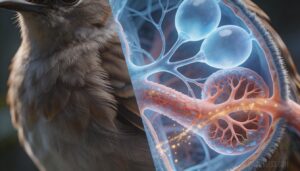
Think of the bird respiratory system as nature’s most finely tuned engine. Unlike yours, it pushes air in one constant direction, maximizing ventilation-perfusion balance and bird metabolic rate support.
Dense capillary network density wraps each air tube for rapid gas pickup, while surfactant function keeps airways open.
That’s what makes specialized anatomical features of birds — and avian physiology overall — so exceptional.
This continuous one-way flow is facilitated by thin-walled air sacs that act as bellows, ensuring fresh air reaches the lungs during both inhalation and exhalation.
Three-Fingered Wings
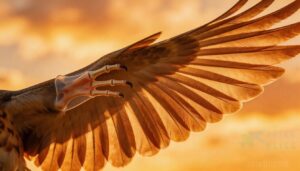
That finely tuned body doesn’t stop at breathing. Your bird’s wing hides something surprising — just three fingers.
Digit reduction from an ancestral five is a hallmark of bird anatomy and physiology, and evolutionary convergence across multiple lineages kept this three-digit blueprint. Those fingers handle camber control, thrust vectoring, and maneuverability mechanics mid-flight — making three-fingered wings one of nature’s smartest unique flight and locomotion adaptations.
Specialized Feathers
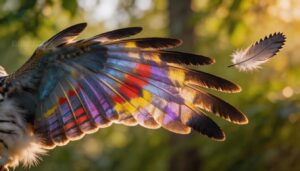
Those three fingers also carry something impressive — feathers built for specific jobs. Bird feather morphology runs deep: Primary Thrust Feathers push birds forward, Secondary Lift Feathers shape the airfoil, and Tail Rudder Feathers steer like a ship’s rudder. Wing Slot Aerodynamics cuts drag, while Owl Feather Serrations silence each wingbeat.
- Bird feather structure locks barbules together like a zipper — unhook one, and a quick preen snaps it right back
- Feather coloration isn’t just pretty — bird feather pigment biochemistry shows melanin actually strengthens barbs against wear.
- Bird feather coloration pigments like carotenoids come straight from a bird’s diet, turning reds and yellows into a living health report
- Feather coloration can even broadcast UV signals completely invisible to your eyes
Unique Beak Adaptations

Feathers shape flight — but beaks shape survival. Each bill tells you exactly what a bird eats.
Seed-cracking beaks work like pliers; nectar-feeding beaks reach deep into flowers like a straw. Fishing beaks slice water cleanly, while probing beaks dig through mud for hidden insects.
Crossbill bill tips act as levers, prying pine cones open — a perfect example of bird diet and beak morphology driving unique bird adaptations and traits.
Owls’ Head Rotation and Acute Hearing
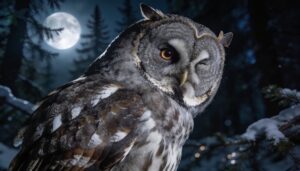
Since owls can’t swivel their eyes, their neck does all the work — and it’s built for it.
Here’s what makes this bird sensory adaptation so impressive:
- Neck Vertebrae Count & Ball-and-Socket Joint — 14 cervical vertebrae and a skull-atlas ball-and-socket joint let owls rotate their heads up to 270 degrees safely.
- Arterial Reservoirs — Arterial canals, roughly 10 times wider than the arteries themselves, act as cushions, keeping blood flowing during extreme turns.
- Asymmetrical Ears & Facial Disc Acoustics — The left ear sits higher than the right, and the heart-shaped facial disc funnels sound in — together, they pinpoint prey in total darkness.
That’s bird sensory and flight mechanisms working as one smooth system — a masterclass in bird sensory abilities such as vision and magnetoreception, shaping real-world survival.
Vultures’ Highly Acidic Stomachs
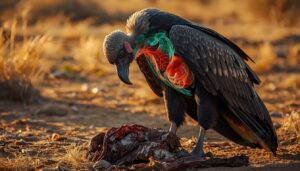
Vultures don’t just tolerate rotting meat — they’re built for it.
Their stomach pH sits around 1, enabling Digestive Enzyme Efficiency and Bone Dissolution that would dissolve your kitchen counter. This Acidic Gut Microbiome manages Pathogen Neutralization, wiping out cholera and anthrax before they spread.
It’s Scavenger Evolution at its sharpest — a masterclass in bird anatomy and physiology keeping ecosystems clean.
Birds as The Only Living Dinosaurs
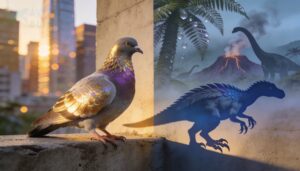
That pigeon outside your window? It’s a dinosaur.
Birds are descendants of theropod dinosaurs — a lineage 150 million years deep. Molecular Phylogeny and the fossil record of birds confirm this Theropod Heritage.
Hollow bones enable Skeletal Weight Reduction, Furcula Mechanics power each wingbeat, and Dinosaur Egg Parallels show up in shell structure.
Avian evolutionary history isn’t ancient history — you’re watching it right now.
Incredible Flight and Movement Facts

Birds move in ways that still catch scientists off guard. From record-breaking speeds to underwater sprints, the range of what they can do is genuinely hard to wrap your head around.
Here are seven flight and movement facts that show just how far birds push the limits.
Peregrine Falcon’s Fastest Flight
The fastest diving bird is the Peregrine Falcon — and it’s also the fastest animal on the planet, hitting 320 km/h during its Stooping Technique.
Its Wing Morphology shifts mid-dive, generating Vortex Lift for control.
Proportional Guidance keeps the attack precise, while High G Loads during pull-out shape the flight mechanics in birds unlike anything else you’ll find in nature.
Ostrich’s Fastest Running Speed
Can’t fly? No problem.
The ostrich — known for bird anatomical adaptations including remarkable Leg Muscle Power and Tendon Elasticity — hits 70 km/h in short bursts, covering a 5-meter Stride Length each step. Its Respiratory Efficiency and Thermal Regulation keep the bird metabolic rate in check during sustained chases.
Think of it as nature’s pogo stick on legs.
Spine-tailed Swift’s High-Speed Level Flight
Now I’ve everything I need. Let me craft this section precisely.
Meet the fastest bird in level flight — the spine-tailed swift, reportedly hitting up to 169 km/h horizontally. Its bird anatomical adaptations do the heavy lifting: Wing Camber and Tail Streamlining cut drag, while Flight Muscle Power and Metabolic Efficiency sustain that pace.
Strong Gust Stability keeps it steady mid-air — a masterclass in bird flight mechanics and bird sensory and flight mechanisms working together. The metabolic rate of birds rarely looks this impressive.
Hummingbirds Flying Backward
Speed isn’t everything — control matters too.
Hummingbirds are the only birds that can fly backward, thanks to a Wing Angle Shift that redirects thrust mid-stroke. Hummingbird hovering and backward flight share the same figure-eight mechanics, making both surprisingly smooth.
Here’s what makes it work:
- Wing Angle Shift redirects stroke thrust
- Tail Balance steadies the body lean
- Energy Efficiency — backward flight burns ~20% less oxygen than hovering
- Precision Maneuvering facilitates Nectar Navigation in tight spaces
Bar-headed Geese Crossing The Himalayas
Now if hummingbirds impress you with precision, bar-headed geese will floor you with sheer endurance.
Their bird migration and movement patterns are unlike anything else — Nighttime Climbing from sea level to 6,000 meters in hours.
Altitude Physiology, Flock Navigation, and Energy Conservation all work together, with bird migration fuels metabolism and bird adaptation to extreme environments letting them cross the Himalayas on a single, non-stop push.
Gentoo Penguins’ Fast Swimming Speed
Here’s the written section:
Bar-headed geese own the sky. But gentoo penguins? They own the water.
Penguins are flightless birds, yet their extreme physical capabilities shine underwater — reaching 36 km/h (22 mph). That’s bird adaptation to extreme environments at its finest.
Here’s what drives their speed, rooted in bird anatomy and physiology:
- Hydrodynamic Flippers push water like underwater wings
- Feathering Mechanics tilt flippers ~18° to cut drag
- Stroke Frequency of ~1 flap/second maximizes efficient Prey Pursuit
- Diving Endurance fuels multi-minute hunts for fish, squid, and krill
Sooty Terns’ Long Periods in Flight
Gentoo penguins rule the water — but sooty terns rule the sky, for months at a time. These birds stay airborne during extreme bird migration journeys, covering ~47,000 km in a single season.
Active Soaring and Wind Gradient Exploitation keep flapping minimal, while Unihemispheric Sleep lets one brain hemisphere rest mid-Continuous Gliding. That’s long-distance migration and navigation taken to a whole new level — Oceanic Fidelity included.
Cool Bird Behavior Facts

Birds don’t just look fascinating — they act that way too.
From the way they find food to how they raise their young, bird behavior covers a surprisingly wide range.
Here are some of the coolest behavioral facts worth knowing.
Woodpeckers Drumming on Trees
That banging on your roof gutter isn’t random — it’s Territory Signaling. Woodpeckers use drumming as bird communication and vocalization, the way songbirds use song.
Seasonal Drumming Patterns peak March through June. Resonant Surface Selection matters — dead wood or metal carries farther.
Drum Speed Variation is real: Downy Woodpeckers hit 16 beats per second, while the Japanese pygmy woodpecker exceeds 38.
Woodpeckers can peck really fast because woodpeckers have special shock-absorbing skulls built for impact physiology — bird anatomy and physiology do serious work.
Owls Swallowing Food Whole
Since owls can’t swivel their eyes, they rely on Rapid Swallowing Mechanics and Prey Size Selection to eat fast and move on. Their two-part Stomach Chamber Design manages the rest — Digestive Enzyme Efficiency breaks down soft tissue, while bones and fur compact into a pellet.
The Pellet Regurgitation Process is a key part of Bird anatomy and physiology, and Bird behavior and communication, revealing specialized anatomical features of birds. One study found 48 barn owl pellets held up to seven prey each.
Cooperative Breeding and Hunting
Some birds don’t go it alone — and that’s the whole point. Florida scrub jays show Helper Dynamics at their best: older offspring stay back, feed nestlings, and handle Territory Defense, boosting chick survival through Kin Selection.
Environmental Triggers, like harsh seasons, make this teamwork essential. Meanwhile, bird predation tactics mirror this — Harris’s Hawks split Hunting Roles to flush and ambush prey together.
Monogamous Mating Systems
Many monogamous birds mate for life — or close to it. Bird reproductive strategies often hinge on trust and teamwork. Here’s what makes these pair bonds work:
- Territory Defense keeps rivals out and resources secure
- Mate Guarding limits outside interference during breeding
- Parental Coordination syncs feeding, incubation, and chick protection
- Seasonal Synchrony aligns breeding with peak food availability
Evolutionary Drivers favor this when two parents simply outperform one.
Polygynous and Polyandrous Mating Systems
Not every bird plays by the same rules. Some males win big through Territory Defense and Lekking Displays, attracting multiple females — that’s polygyny. Others flip the script entirely.
| System | Key Feature |
|---|---|
| Polygyny | One male, multiple females |
| Polyandry | One female, multiple males |
| Parental Investment | Males dominate in polyandry |
| Female Competition | Drives polyandrous dynamics |
Spotted sandpipers and jacanas show polyandry perfectly — females compete while males handle the nest.
Lifelong Pair Bonds in Flamingos
Flamingos don’t just find a mate — they find a partner.
These birds form lasting bonds that stretch across breeding seasons, sometimes for life.
Through Courtship Synchrony and coordinated marching, pairs signal Mate Recognition Signals before committing.
Once bonded, Nest Building Coordination and Parental Care Division keep chicks thriving.
Long-term pairs even serve as Social Network Anchors, steadying entire colonies around them.
Kiwi’s Nocturnal Lifestyle
Unlike flamingos bonding through shared rituals, kiwis go solo — and mostly after dark.
Through Night Foraging, they probe soil using Smell Hunting, possible because the kiwi is the only bird with nostrils at the end of its beak.
Their Low Light Senses compensate for weak eyesight, while Daytime Shelter keeps them hidden.
Night Communication helps pairs stay connected — a quiet, efficient evolutionary adaptation.
Fascinating Bird Intelligence Facts
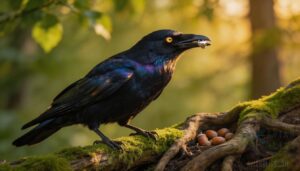
Birds are smarter than most people give them credit for. From solving puzzles to remembering thousands of hiding spots, their minds work in ways that’ll genuinely surprise you.
Here are some of the most fascinating bird intelligence facts worth knowing.
Vocal Mimicry in Parrots and Songbirds
Parrots don’t just repeat sounds — they’re running a complex internal system. Forebrain circuitry connects auditory templates to motor vocal integration, so the bird hears a sound, stores it, and matches it through real-time feedback via the syrinx anatomy.
That’s why the African gray parrot is the most talkative bird, parrots can mimic human speech, and the lyrebird can mimic chainsaws.
Bird vocal learning is genuinely impressive.
Problem Solving in Corvids
Corvid intelligence takes bird smarts to another level. Crows use causal reasoning to solve multi-step puzzles, adjusting force and timing with real precision.
Their temporal sequencing skills let them plan moves ahead — not just react. Insight speed varies by individual, with faster learners needing fewer trials.
Adaptive strategies emerge naturally, and corvids even transfer learned rules to brand-new problems.
Social Learning Among Birds
Birds don’t just learn on their own — they learn from each other.
Flock Feeding Traditions form when one bird finds food and others follow, spreading habits across generations. Alarm Call Transmission works the same way: one warning cry, and the whole group adapts.
Migratory Route Teaching, Song Dialect Transmission, and Tool Use Transmission all show how Intelligence and social learning in corvids — and birds broadly — run surprisingly deep.
Facial Recognition in Pigeons
Pigeons can recognize humans — and they remember faces even when you change your clothes. That’s Face Memory in action, driven by the Tectofugal Pathway deep in avian brain structure.
Their Face-Selective Neurons handle Viewpoint Invariance, reading faces from multiple angles.
This Human Pigeon Interaction reveals serious bird cognition — proof that avian intelligence and recognition of humans by wildlife runs far deeper than most people expect.
Communication Through Calls and Displays
Bird communication systems go far beyond simple chirping. Territory Songs carve up neighborhoods without a single fight, while Mating Calls broadcast genetic quality to any listening partner. Acoustic Adaptations shape every signal to fit the habitat — lower frequencies cut through dense forest, higher pitches ride open‑air winds.
You’ll notice three core channels at work:
- Feather Signaling — tail fans and crest raises that speak louder than words
- Ritual Duets — synchronized pair calls that lock partners into coordinated parental roles
- Alarm broadcasts — predator‑specific warnings that name the threat (raptor vs. snake) with precision
Bird vocal communication is, genuinely, a language worth learning to hear.
Tool Use and Food Retrieval Skills
Some birds don’t just find food — they engineer it.
New Caledonian crows craft Hooked Stick Tools to pull grubs from holes, while woodpecker finches deploy Cactus Spine Probes for bark‑hidden insects.
Chimpanzees aren’t alone in tool use by birds either — cognitive abilities of birds surprise researchers constantly.
| Bird | Tool | Purpose |
|---|---|---|
| New Caledonian Crow | Hooked stick | Extract deep grubs |
| Woodpecker Finch | Cactus spine | Probe bark crevices |
| Chimpanzee* | Termite fishing stick | Harvest termites |
Memory for Migration and Food Caches
Some birds carry a mental map that rivals any GPS. Clark’s nutcrackers retrieve over 80% of their 2,000–3,000 cached seeds months later — thanks to long-term cache recall and spatial reference memory.
Migratory navigation memory works similarly: white-crowned sparrow migrants outperform non-migrants in spatial tasks.
Hippocampal plasticity and seasonal neurogenesis drive these avian cognitive abilities, physically enlarging brain regions during peak caching and migration seasons.
Record-Breaking Bird Facts

Birds don’t just impress — some of them shatter expectations.
From the longest migrations ever recorded to eggs that could fit in your palm (or barely), the records they hold are genuinely hard to believe.
Here are some of the most jaw-dropping record-breakers in the bird world.
Arctic Tern’s Longest Migration
No bird on Earth travels further than the Arctic tern. Its pole-to-pole route covers roughly 44,000 miles every year — that’s nearly three trips to the Moon over a lifetime.
The Arctic tern flies 44,000 miles every year — nearly three trips to the Moon, annually, for life
Here’s what makes this long-distance migration so impressive:
- Migration Distance — Some individuals log up to 60,000 miles annually
- Seasonal Timing — Southbound journeys take ~3 months; the return north takes only 40 days
- Oceanic Stopovers — Birds refuel in productive ocean zones like the Benguela Current
- Pole-to-Pole Route — Arctic breeding grounds to Antarctic pack ice, every single year
- Life History — Living 30+ years, they experience more daylight than any other creature
Sword-billed Hummingbird’s Long Bill
swordbilled hummingbird carries a bill up to 120 mm long — nearly matching its entire body length. That extreme Bill Length Variation, shaped by Floral Coevolution, lets it reach deep corolla tubes no other bird can access.
Geographic Morphology shows the longest bills near Ecuador’s Andes.
Head Posture Balance kicks in too: it tilts its head upward just to manage the weight.
Pure Pollination Mechanics in action.
Australian Pelican’s Long Bill
Now here’s a bill that means business. The Australian pelican holds the record for the longest bill of any living bird — stretching 40 to 50 cm.
Its Bill Hook Shape helps grip slippery fish, while its Throat Pouch Capacity manages serious water volume during feeding. That’s bird anatomy built for results.
Especially, Sexual Dimorphism shows up in bill size between males and females.
Ostrich’s Largest Egg
From the pelican’s bill to the nest — the ostrich lays the biggest egg of any living bird. We’re talking Egg Size Records that hit 1.65 to 1.78 kg, with one weighing 2.589 kg in Sweden.
Shell Strength is real, too — that shell bears 127 kg.
Communal Nesting, shared incubation, and Weight Extremes make ostrich egg incubation strategies and parental care genuinely impressive.
Bee Hummingbird’s Smallest Egg
Now flip to the opposite end of the scale. The bee hummingbird is the smallest bird on Earth — and it lays the smallest egg, too. Think about that for a second:
- Each egg weighs just 0.4–0.5 grams
- Eggshell Microstructure keeps it light yet sturdy
- Nest Silk Flexibility cradles both eggs safely
Miniaturization Evolution shaped every detail here — from the 14–16‑day Incubation Duration to the notable Egg Weight Ratio relative to the adult’s tiny frame.
Archaeopteryx as The Oldest Known Bird
Meet Archaeopteryx — the crown jewel of the avian fossil record.
Living 150 million years ago, this Transitional Fossil proves birds are descendants of theropod dinosaurs.
Its Wing Bone Geometry supported powered flight, while its Tail Anatomy still showed a long bony reptile tail.
Brain Ear Adaptations and a documented Molting Pattern confirm its place in the evolutionary history of birds.
| Feature | Archaeopteryx | Modern Birds |
|---|---|---|
| Tail | Long, bony | Short, fused |
| Teeth | Yes | No |
| Flight | Short bursts | Sustained |
| Molting | Sequential | Varies |
| Brain | Bird-like | Fully avian |
Rapid Diversification of Birds
Birds didn’t just evolve — they exploded. climate-driven speciation, geographic barriers, and the brain-behavior link all worked together to spark genomic bursts across millions of years.
Plumage evolution helped species recognize each other, boosting bird species diversity worldwide. species richness of avifauna reflects deep evolutionary history of birds, shaped by bold evolutionary adaptations to extreme environments and fascinating bird evolutionary origins.
Frequently Asked Questions (FAQs)
What are some fun facts about birds?
Tiny yet mighty, birds defy expectations at every turn.
From hollow bones that keep flight smooth to owls rotating their heads up to 270 degrees, nature packed serious engineering into feathers and beaks.
What is the most common bird in the world?
domesticated chicken tops the list with around 30 billion worldwide, making it the most common bird by far.
For wild birds, the red-billed quelea wins, with population estimates reaching 5 billion across sub-Saharan Africa.
What do you know about 15 amazing bird species?
From hummingbirds to ostriches, bird species dazzle with colorful plumage, courtship displays, and vocal diversity.
The bee hummingbird is the smallest bird, while the ostrich holds the title of largest living bird.
What are some cool birds?
From the bee hummingbird, the smallest bird alive, to the Arctic tern migrating 44,000 miles yearly, birds are endlessly fascinating.
The largest living bird, the ostrich, can’t fly — but it sure can run.
Why are birds so interesting?
Birds carry an evolutionary legacy stretching back to the dinosaurs.
Their migration endurance, thermoregulation adaptations, ecological roles, and avian intelligence and problem solving make them endlessly fascinating windows into how life adapts and survives.
How many cool birds are featured in this article?
This article features 16 cool birds by name. That’s a small but fascinating slice of the planet’s bird species richness — whether you count over 9,500 or over 11,000 known species of birds worldwide.
What are 5 bird characteristics?
Birds share five key traits: feathers for Thermal Regulation, Bone Pneumatization for lightweight flight, vivid Plumage Coloration, diverse Reproductive Strategies, and Magnetic Navigation — plus birds have hollow bones and a specialized voice box called a syrinx.
What was the first bird in the world?
Archaeopteryx is widely recognized as the first bird.
It lived about 150 million years ago in what’s now Germany, showing the classic theropod avian link — feathered wings paired with teeth and a long bony tail.
What is the ugliest bird in the world?
The marabou stork takes the title. Its bare pink head, hunched posture, and dangling throat pouch make it unforgettable.
But that scavenger morphology? Pure adaptation — ugly by design, exceptional by nature.
What is the most beautiful bird in the world?
Beauty’s in the eye of the beholder — but the Iconic Peacock wins most polls.
Its vivid coloration and iridescent plumage make it a top Global Beauty Rankings pick and a celebrated National Bird Symbol.
Conclusion
Wrapping up, let’s say you’ve taken flight into the fascinating world of birds.
From impressive speeds to astonishing feats, these creatures truly are the wonders of nature.
With their extraordinary bodies, impressive flight capabilities, and intriguing behaviors, it’s no surprise you’re left in awe.
Cool bird facts like these remind us of the beauty and complexity of the natural world, inspiring a deeper appreciation for our feathered friends and their astonishing abilities always.
- https://www.theguardian.com/us-news/2019/apr/14/cassowary-attack-giant-bird-kills-owner-in-florida-after-he-fell
- https://www.nationalgeographic.com/animals/article/151003-animals-science-crows-birds-culture-brains?loggedin=true&rnd=1667589073213
- https://www.audubon.org/news/hummingbird-flight-nothing-else-bird-world
- https://www.birdwatchingdaily.com/news/science/anting-widespread-fascinating-purpose-uncertain/
- https://asknature.org/strategy/respiratory-system-facilitates-efficient-gas-exchange/