This site is supported by our readers. We may earn a commission, at no cost to you, if you purchase through links.
A hummingbird doesn’t browse your garden the way a butterfly does—it runs a precise foraging route, memorizing which flowers delivered yesterday and returning to them on a schedule tighter than most people keep.
That loyalty isn’t random. It’s built on specific floral traits: color wavelengths their eyes favor, corolla depths that match their bill length, nectar sugar concentrations hovering between 20 and 25 percent.
Plant the wrong flower—even a pretty one—and you’re invisible to them.
The native flowers hummingbirds prefer have spent thousands of years co-evolving with these birds, and that history shows in every petal and drop of nectar.
Table Of Contents
- Key Takeaways
- Native Flower Traits Hummingbirds Love
- Best Native Perennials and Wildflowers
- Best Native Shrubs and Trees
- Best Native Vines for Hummingbirds
- Bloom Seasons That Support Hummingbirds
- Regional Native Flower Picks
- Planting a Better Hummingbird Garden
- Plant Flowers in Clusters of Three or More
- Combine Perennials, Shrubs, and Vines
- Prioritize Full Sun for Stronger Blooming
- Improve Soil Drainage Before Planting
- Add Water Sources and Fine Mist
- Include Perches, Shrubs, and Safe Cover
- Avoid Pesticides That Reduce Insect Food
- Prevent Common Mistakes With Invasive Spreaders
- Top 10 Native Flower Products
- 1. KVITER Wild Bergamot Bee Balm Seeds
- 2. Native Wildflower Seed Mix Non GMO for Pollinators
- 3. Plant Good Seed Hummingbird Sage Seeds
- 4. Hummingbird Sage California Native Groundcover
- 5. Native Wildflower Seeds For Pollinator Gardens
- 6. KVITER Red Trumpet Vine Seeds
- 7. Red Lobelia Cardinal Flower Seeds
- 8. Home Grown Wildflower Seed Mix
- 9. Eastern Red Columbine Starter Plant
- 10. Mountain Valley Pollinator Wildflower Seed Mix
- Frequently Asked Questions (FAQs)
- Conclusion
Key Takeaways
- Hummingbirds aren’t browsing randomly — they run tight foraging routes back to flowers that match specific bill length, color wavelength, and nectar sugar concentrations between 20 and 25 percent, so planting the wrong species means you’re simply invisible to them.
- Native plants like Cardinal Flower, Wild Columbine, and Coral Honeysuckle outperform ornamentals because thousands of years of co-evolution have tuned their corolla depth, sugar content, and bloom timing precisely to hummingbird needs.
- season-long nectar corridor depends on staggering bloom times — early shrubs like Red Buckeye and Flowering Currant feed arriving migrants before perennials wake up, while late bloomers like California Fuchsia and New England Aster carry the last southbound birds through fall.
- Where you garden determines which natives will actually work — drought-adapted Penstemon and Agastache suit western and southwestern gardens, while moisture-loving Cardinal Flower and Bee Balm thrive in eastern landscapes with richer, consistently moist soils.
Native Flower Traits Hummingbirds Love
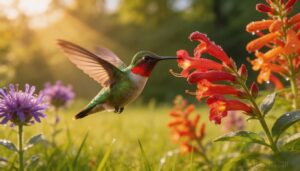
Hummingbirds aren’t random about which flowers they visit — they’re remarkably selective, and the plants that win their attention share a handful of specific traits. Once you understand what draws them in, choosing the right natives for your garden becomes much more straightforward.
Plants with tubular blooms and vivid colors top the list, and these hanging plants proven to attract hummingbirds show exactly what that looks like in practice.
Here’s what to look for.
Red, Orange, and Pink Flower Colors
Hummingbirds aren’t guessing when they zero in on red, orange, and pink blooms — their vision is literally built for it. Pigment chemistry drives the attraction: anthocyanins produce true reds, carotenoids deliver warm orange tones, and pH-influenced anthocyanin blends create pink shades.
Color intensity strengthens in full sun, while soil pH effects can deepen or shift hues.
For native plants for hummingbirds, nectar sugar correlation tracks closely with color — red, orange, and pink tubular flowers usually offer 20–25% sugar content.
Regional selection of hummingbird flowers should prioritize:
- Red flowers like Cardinal Flower for eastern gardens
- Orange-tinted natives such as Penstemon for western landscapes
- Pink bloomers bridging midseason nectar gaps in prairies
- Sunlight influence — plant in full sun for peak pigment and nectar output
Tubular and Trumpet-shaped Blooms
Color gets them to the flower — shape keeps them coming back. Tubular flowers and red trumpet-shaped flowers are built around pollinator mechanics: fused petals form a smooth corolla, stem strength holds steady during hover feeding, and nectar guides direct the bill toward deep reserves.
Some native plants even pair subtle floral scent signals with visual cues, making the invitation hard to miss.
High Nectar Volume and 20–25% Sugar Content
Shape draws them in, but fuel keeps them returning. Native plants with high nectar sugar — generally 20–25% concentration — deliver real energy density benefits, supporting the rapid wingbeat demands of active feeders.
Nectar volume drivers like morning nectar surge mean production peaks early, then tapers. Sugar concentration variability follows weather closely, so nectar rich flowers from well-matched tubular natives stay the most reliable source.
Deep Corollas That Suit Long Bills
Nectar quality matters, but structure seals the deal. Deep corolla depth — often 2.5 to 5 centimeters in native tubular flowers — creates a narrow tube entrance that guides long bills straight to the reward.
Downward curved tubes block short-tongued robbers while stamen pistil extension ensures contact during every visit.
Color gradient cues from base to mouth signal exactly where the nectar waits.
Long Bloom Periods With Repeat Nectar Production
What keeps hummingbirds returning isn’t just one standout bloom — it’s floral resource persistence across the full season.
Many native plants refresh their nectar refill cycle every 7 to 14 days, sustaining sugar concentrations between 20 and 25 percent. Sequential bloom waves and staggered flowering extend bloom duration well beyond a single flush, giving you seasonlong nectar sources for hummingbirds through continuous bloom all season.
Native Adaptation to Local Climate and Soils
Native plants don’t just survive your local climate — they’re shaped by it. Deep root systems pull moisture through dry seasons, while mycorrhizal partnerships uncover nutrients in low-fertility soils.
Five traits that make natives naturally resilient:
- Drought Tolerance Strategies — reduced leaf area conserves water during summer stress
- Deep Root Systems — anchor plants and access subsoil moisture
- Soil pH Adaptation — thrives in native plant adaptation to local soils without amendments
- Frost Hardiness Traits — delayed bud break protects blooms across plant hardiness zones and climate zones
- Mycorrhizal Partnerships — increase uptake in sandy loam or well-drained soil with low organic content
Best Native Perennials and Wildflowers
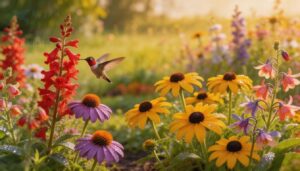
Perennials and wildflowers are where most hummingbird gardens really take shape — they come back year after year, building a reliable nectar supply without starting over from scratch each season. The eight plants below cover a wide range of hardiness zones, sun levels, and bloom times, so there’s something workable no matter where you garden.
Here’s what’s worth growing.
Wild Columbine (Aquilegia Canadensis)
Wild Columbine (Aquilegia canadensis) is one of those native plants that seems almost engineered for hummingbirds. Its nectar spur morphology — those red, backward-curving tubes — fits a ruby-throated hummingbird’s bill almost perfectly.
Growing 18–36 inches tall in zones 3–9, it tolerates rocky soils and partial shade, making it a reliable habitat restoration role player. Seed dispersal strategies via self-sowing keep colonies quietly expanding year after year.
Cardinal Flower (Lobelia Cardinalis)
Cardinal Flower (Lobelia cardinalis) is built for one job: feeding hummingbirds.
Its crimson tubular blooms, reaching 2–4 feet tall in zones 2–9, rise in sequential spires that deliver a steady nectar source from midsummer into fall.
True to its riverbank habitat roots, it thrives with moist soil preference and tolerates flood tolerant growth without complaint.
- broader pollinator network support system alongside ruby-throated hummingbirds
- Red tubular flowers for hummingbird pollination fit long bills precisely
- Seed propagation tips: it self-sows reliably in damp, bird‑friendly native‑plant gardens
Bee Balm and Wild Bergamot (Monarda Spp.)
Few plants earn their place in a hummingbird garden quite like Bee Balm and Wild Bergamot (Monarda spp.). Their tubular, mid-summer blooms deliver rich nectar through square stems rising 1–3 feet, hardy in zones 4–9.
Deadheading benefits include extended bloom and reduced self-seeding. Division propagation refreshes clumps every few years.
Watch for powdery mildew in humid spots—good spacing keeps aromatic foliage healthy.
Penstemon Species
With over 250 species adapted to nearly every corner of North America, Penstemon gives you impressive range for matching hummingbirds to habitats. Tubular red flower characteristics—especially in P. centranthifolius—drive strong flower color attraction responses in migrating birds. Approximately 20% of species have made a hummingbird pollination shift.
Key reasons to include Penstemon:
- Wildlife Habitat Value: sustained nectar production aids hummingbirds through peak migration
- Propagation Methods: division, seed, and nursery stock all work well
- Conservation Status: many species remain secure in native ranges
- Hybridization Potential: cultivars blend drought tolerance with vivid bloom color
- Medicinal Uses: some indigenous traditions used root preparations for skin ailments
Fire Pink (Silene Virginica)
Fire Pink (Silene virginica) brings something quieter than Penstemon’s bold range — a woodland edge native that slots neatly into partial shade plantings. This clump-forming perennial grows 12–24 inches tall, producing basal rosettes topped with vivid magenta blooms that hummingbirds visit reliably for nectar.
It’s susceptible to powdery mildew in humid summers, so good air circulation matters. A solid native plant pick for naturalistic borders.
Anise Hyssop (Agastache Foeniculum)
Anise hyssop (Agastache foeniculum) runs a bit differently from the shaded woodland edge — it wants full sun and rewards you with mid-to-late summer spikes that hummingbirds work on methodically.
The square stems and opposite leaves carry that unmistakable licorice scent, and the tubular flower tube shape suits long bills perfectly.
- Reaches 3–5 feet in USDA zones 4–9
- Nectar-rich blooms sustain hummingbirds through the mid-season gap
- Leaves double as herbal tea and essential oil sources
- Native plants like this one establish with minimal fuss once rooted
- Drought-tolerant after year one, cutting your watering duties down sharply
Hummingbird Sage (Salvia Spathacea)
Where anise hyssop manages the mid-season stretch, Hummingbird Sage (Salvia spathacea) fills a different gap — late winter into spring, when most native plants haven’t stirred yet.
This evergreen foliage plant carries a pleasant menthol aroma from its broad leaves and produces curved tubular blooms ideally sized for long hummingbird bills.
It spreads reliably via root cuttings, works well in rock garden settings, and helps with erosion control on slopes.
California Fuchsia (Epilobium Canum)
Where Hummingbird Sage covers early spring, Epilobium canum takes over when migration peaks in late summer.
This low-maintenance perennial pushes bright coral-red tubular flowers — ideal for hummingbird pollination — from sprawling mats that aid slope stabilization and coastal dune adaptation. Its winter resprouting ability keeps it reliable across seasons, and seed capsule persistence means you’re rarely starting from zero with these native plants.
Best Native Shrubs and Trees
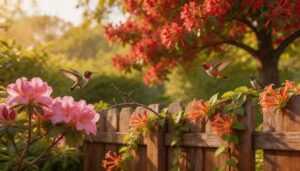
Shrubs and trees don’t get enough credit in a hummingbird garden, but they often deliver nectar earlier in the season than most perennials. They also double as perching spots and shelter, which hummingbirds need just as much as food.
Here are the native shrubs worth adding to your space.
Red Buckeye (Aesculus Pavia)
Red Buckeye (Aesculus pavia) is one of the earliest native plants to feed arriving hummingbirds each spring. This drought‑tolerant tree reaches 15–30 feet and delivers dense panicles of vivid red flowers perfectly shaped for long hummingbird bills.
It earns serious pollinator habitat value with three standout qualities:
- Tubular red blooms rich in nectar
- Late summer fruit capsules supporting wildlife
- Multiple propagation methods — seed or semi‑hardwood cuttings
Toxic Seed Warning: Keep children and pets away from the glossy brown seeds.
Red Flowering Currant (Ribes Sanguineum)
Few native species time their bloom as well as Ribes sanguineum. Its pendent clusters of red flowers open in late winter to early spring, putting nectar on the table just as the first hummingbirds arrive.
Bark texture and winter foliage add year-round structure, while fruit production feeds birds into fall.
Prune after flowering and try seed propagation to multiply this reliable hummingbird food plant.
Golden Currant (Ribes Aureum)
Golden Currant (Ribes aureum) earns its place in native garden design well before most shrubs wake up. Tubular yellow‑orange flowers open in early spring, delivering steady nectar production just when migrating hummingbirds need it most.
Hardy across hardiness zones 5–9, it offers winter hardiness, edible berries, rich fall foliage color, and dense arching growth that doubles as songbird habitat—though root sucker spread warrants occasional management.
Buttonbush (Cephalanthus Occidentalis)
Buttonbush (Cephalanthus occidentalis) thrives where most shrubs struggle—its flood tolerance and wetland habitat preference make it ideal for pond edges and low-lying moist soil spots.
Spherical white blooms draw impressive pollinator diversity, including hummingbirds seeking nectar between territorial loops.
It reaches 6–12 feet, suits zones 5–9, and poses no risk in cat-safe planting schemes.
Seed propagation tips: stratify first for best results.
When to Use Shrubs for Early Nectar
Shrubs are your best tool for early-season hummingbird fuel when migrants arrive before perennials wake up. Microclimate influence matters here—south-facing slopes and open sun exposures act as natural early bloom triggers, advancing flowering by weeks.
Soil moisture management after winter rains boosts nectar production forecast, noticeably. Aligning regional selection of hummingbird-attracting shrubs with plant hardiness zones ensures migration timing alignment and a reliable first nectar stop.
Best Placements for Shelter and Perching
Position shrubs 10 to 20 feet from nectar sources, creating a multi-level perch system with branches at varying heights. Rough bark perches between 6 and 12 feet high give hummingbirds secure footing and clear sightlines.
Thicket shelter zones, 4 to 8 feet wide, offer quick concealment from predators. shade canopy placement above perches reduces heat stress while keeping flight paths open.
Best Native Vines for Hummingbirds
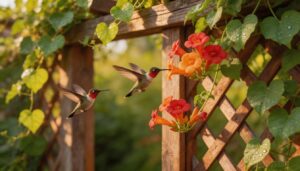
Vines bring something that shrubs and perennials can’t — vertical reach, dense coverage, and a cascading wall of blooms that hummingbirds return to all season long. A well-placed native vine on a fence or trellis can anchor your entire garden’s nectar corridor.
Here are the best native options worth growing.
Coral Honeysuckle (Lonicera Sempervirens)
Coral Honeysuckle (Lonicera sempervirens) is one of the most reliably hummingbird-friendly native plants you can grow. Its twining climbing mechanism needs no wires — stems wrap naturally around fences and trellises, reaching 15–20 feet at a moderate-to-fast growth rate.
Red tubular flowers for hummingbird pollination open from spring into summer, producing abundant nectar daily. Winter hardiness across zones 4–9, pollinator diversity support, and late-season fruit production make it a complete choice.
Trumpet Vine (Campsis Radicans)
If Coral Honeysuckle is the polite guest, Campsis radicans is the one who moves in and redecorates. This native southeastern vine climbs 40–60 feet using tenacious aerial roots — a root architecture built for permanence.
Its nectar-rich, red tubular flowers for hummingbird pollination peak mid-summer, supporting habitat connectivity across your landscape.
- Seed harvesting from woody follicles extends your planting season
- Winter dormancy is deep but reliable — it always returns
- Water use efficiency makes it genuinely low-maintenance once established
Orange Honeysuckle (Lonicera Ciliosa)
Where Campsis overwhelms, Lonicera ciliosa earns its place more quietly. This western native produces tubular orange blooms with nectar averaging 20–25% sugar concentration — well within the range that drives hummingbird foraging behavior.
It climbs slopes effectively, offering erosion control and wildlife shelter simultaneously. Pair it with penstemon for pollinator overlap across late spring.
Trellis and Fence Placement Tips
Once your vines are selected, structure makes all the difference.
Anchor trellises with proper Trellis Footing Standards — at least three ½-inch concrete footings — and choose galvanized or powder-coated frames for Trellis Material Durability.
For Fence Alignment and Wind resistance, orient sections perpendicular to prevailing winds.
Follow Trellis Plant Spacing guidelines of 12–24 inches apart, and always wear Safety Gear Requirements-compliant gloves during installation.
Managing Aggressive Spread and Pruning
Left unchecked, trumpet vine can swallow a fence in a single season.
Prune in late winter before new growth starts, using selective thinning to keep flowering stems intact. Consistent pruning timing is your best tool for invasive species management without sacrificing nectar production.
Install root barriers to contain underground runners, and lay mulch rings to suppress shallow spread.
Monthly species mapping of new shoots helps you stay ahead.
Bloom Seasons That Support Hummingbirds
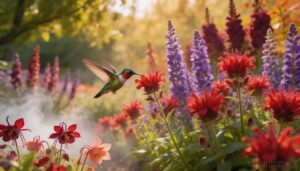
Hummingbirds don’t just show up once and disappear — they follow the nectar, moving through your garden as one plant fades and another opens. The key is making sure something is always blooming, from the first migrants in early spring to the last stragglers heading south in fall.
Hummingbirds follow the nectar, so keep something blooming from the first migrant to the last
Here’s how to match your plantings to each part of the season.
Early Spring Flowers for Arriving Migrants
When the first migrants arrive, your garden needs to be ready. Red Buckeye, Eastern Redbud, and Flowering Currant act as a migration arrival cue — their blooms, triggered by early light exposure and rising soil temperatures.
These shrubs for early-season hummingbird fuel deliver nectar sugar peaks right when energy reserves are lowest. Habitat connectivity between these native hummingbird-friendly wildflowers helps avian migration support across the landscape.
Late Spring Bloomers With Reliable Nectar
As early migrants settle into their territories, late spring delivers a wave of dependable bloomers that sharpen nectar timing right when pollinator competition intensifies.
These native wildflower seeds, once established, produce red tubular flowers for hummingbird pollination with impressive consistency:
- Cardinal flower hits 25–30% sugar concentration at peak bloom
- Bee balm cycles through flushes every two to three weeks
- Penstemon holds nectar deep in funnel-shaped corollas for four weeks
- Fire pink refills continuously from bud to full bloom
- Anise hyssop sustains 22–26% sugar through warm spells
Seasonal climate impact and habitat connectivity shape how long each plant performs, but together they build seasonlong nectar sources for hummingbirds that bridge spring into summer.
Summer Flowers for Peak Feeding
Summer is peak feeding season, and your garden needs to deliver. Heat-resistant blooms like bee balm, trumpet honeysuckle, and penstemon keep nectar concentration between 20–25% even through dry spells.
Nectar replenishment timing matters here—plants adapted through native plant landscaping refill quickly after visits. Red tubular flowers for hummingbird pollination, grouped for pollinator overlap strategies, create a hummingbird-friendly seasonal bloom corridor that carries birds through the hottest weeks.
Late Summer and Fall Nectar Sources
As temperatures peak and gardens thin out, late summer is when many nectar corridors quietly collapse. New England Aster carries blooms from August through October, bridging that gap reliably.
Black-eyed Susan sustains steady flow into September, while goldenrod’s late summer heat draws territorial birds to dense nectar pockets. Purple coneflower nectar, prairie clover drought tolerance, and native hummingbird-friendly wildflowers guarantee seasonal bloom timing for hummingbird attraction, holding strong.
Overlapping Bloom Times for Season-long Visits
Think of your garden as a relay race—each plant hands off nectar to the next. Succession planting and temporal bloom staggering eliminate nectar gap bridging failures before they start.
Bee balm overlaps with penstemon; salvias carry through where columbine fades.
This seasonal resource continuity creates seasonal resource continuity across hardiness zones, sustaining season-long bloom sequencing for continuous nectar right through fall.
Building a Continuous Nectar Corridor
A well-designed nectar corridor goes beyond timing—it’s about spatial arrangement and vertical layering. Place tall perennials like cardinal flower at the back, mid-height salvias in the middle, and low groundcovers at the edge.
This creates a seasonal color gradient that guides birds naturally.
Microclimate zones under partial canopy help sustain native hummingbird-friendly wildflowers longer, reinforcing, creating nectar corridors for hummingbirds across plant hardiness zones and climate suitability.
Regional Native Flower Picks
Where you garden determines which native plants will actually thrive and bring hummingbirds back year after year. A Cardinal Flower that flourishes in a Virginia backyard won’t do the same work in a Phoenix front yard, and that’s exactly why region matters.
Here’s a breakdown of the best native choices by area, climate, and growing conditions.
Best Native Flowers for The Eastern United States
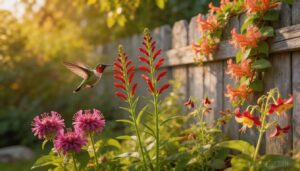
Eastern gardens have a strong lineup of native hummingbird-friendly wildflowers, each tuned to regional soil pH preferences and hardiness zones:
- Cardinal flower — vivid tubular red flower characteristics, zones 3–9
- Bee balm — bright magenta heads, strong pollinator diversity draw
- Coral honeysuckle — habitat connectivity vine, zones 4–9
- Wild columbine — seasonal color palette anchor, early spring bloom
Bird-friendly landscaping starts here.
Best Native Flowers for The Western United States
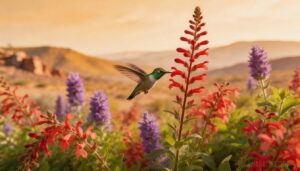
Move west, and the plant palette shifts considerably. Penstemon, California fuchsia, and agastache dominate here — drought tolerant perennials built for lean soils and intense sun.
Their tubular blooms hit that red-orange seasonal color palette that hummingbirds track instinctively, and their pollinator synergy with local species runs deep.
Soil adaptation varies by elevation, so matching high-altitude blooms to your hardiness zone matters when choosing native plants for hummingbird gardens.
Best Native Flowers for The Southwest
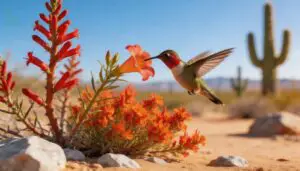
The Southwest pushes plants to their limits — long summers, arid soils, and wide temperature swings — yet that’s exactly where some of the most bird-friendly perennials thrive.
Ocotillo, Desert Willow, and Flame Acanthus all produce red tubular and trumpet-shaped flowers built for hummingbird bills. Their drought-deciduous strategy conserves water without sacrificing bloom, and their soil salinity tolerance makes choosing native plants for hummingbird gardens here genuinely straightforward.
Best Native Flowers for Canada-friendly Gardens
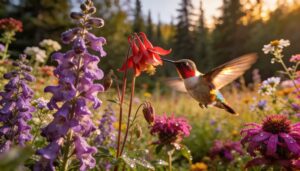
Canada’s shorter seasons don’t limit your options — they sharpen them.
Wild columbine, bee balm, and penstemon are proven hummingbird food plants that handle prairie winters and thrive across plant hardiness zones 2 through 9.
Weaving these native wildflowers into your pollinator garden builds real pollinator habitat diversity, delivers garden aesthetic balance, and keeps nectar flowing from early spring through fall migration.
Matching Flowers to Local Hardiness Zones
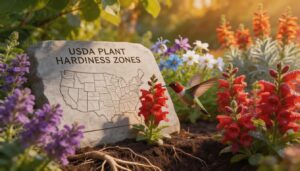
Matching flowers to your USDA zones starts with cold tolerance ratings, not color. Zone-based selection narrows your choices fast — cardinal flower survives zones 2–9, while hummingbird sage stops at zone 7a.
Regional zone maps give you the baseline, but microclimate adjustments matter too: a south-facing wall can shift your effective zone up a full step, expanding your regional selection of hummingbird-attracting flowers considerably.
Choosing Natives for Dry, Moist, or Shaded Sites
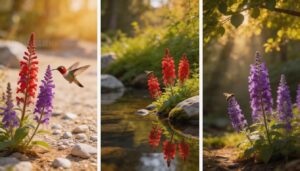
Site conditions shape your regional selection of hummingbird-attracting flowers more than any other factor.
Drought-tolerant species like native penstemon thrive in well-drained, slightly alkaline soils with deep root system strategies that tap subsoil moisture.
Moisture-loving plants such as cardinal flower need even, consistent moist soil without waterlogging.
Shade-tolerant flora, including woodland salvias, prefer organic-rich soil and bloom reliably where canopy light filters through.
Planting a Better Hummingbird Garden
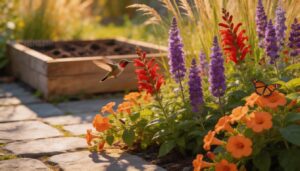
Knowing which plants hummingbirds love is only half the work — how you put them together makes the real difference. A few simple choices in layout, soil, and garden structure can turn a decent yard into a spot hummingbirds return to all season.
Here’s what to focus on.
Plant Flowers in Clusters of Three or More
Think of a cluster as a landing beacon — three or more blooms grouped together create a visual mass effect that hummingbirds spot from a distance. Cluster spacing guidelines matter here:
- Space clusters 18–24 inches apart for clear feeding corridors
- Apply perch adjacency strategy by placing clusters near branches
- Use multi-species cluster design for staggered nectar replenishment timing
Planting clusters to improve visibility works best with native hummingbird-friendly wildflowers in warm tones.
Combine Perennials, Shrubs, and Vines
Layering your garden into vertical plant layers transforms a flat bed into a working habitat.
Ground-level perennial hummingbird plants like bee balm and cardinal flower fill the 1–3 foot range, mid-height shrubs bridge shelter and staggered bloom timing, while vines and climbers for hummingbirds like coral honeysuckle reach 8–15 feet.
This multi-level structure creates habitat connectivity and seasonal nectar continuity across every migration week.
Prioritize Full Sun for Stronger Blooming
Most native hummingbird plants hit their stride in full sun — at least six hours daily drive heat, accelerating budding, tighter bloom cycles, and light-driven nectar production that keeps territorial birds coming back.
Sun optimized planting pays off in four measurable ways:
- Sunlight intensity deepens sun enhanced color in reds, oranges, and pinks
- Full sun boosts nectar sugar concentration, rewarding every hummingbird-friendly visit
- Native wildflower seeds germinate faster and establish stronger root systems in sunlit beds
- Longer daily light hours extend bloom duration across the season
Improve Soil Drainage Before Planting
Good drainage is the foundation every native hummingbird plant depends on — roots sitting in soggy soil rot faster than they establish. Before planting, check your garden soil drainage by soaking a 12-inch patch and watching how quickly it clears.
| Problem | Fix |
|---|---|
| Heavy clay soil | Compost incorporation, 2–4 inches mixed 6–12 inches deep |
| Poor surface drainage | Raised bed design, 6–12 inches high |
| Chronic waterlogging | French drain system beneath beds |
| Surface sealing | Coarse mulch to maintain airflow |
Soil texture shapes everything. Amending soil type and drainage considerations for planting early gives your natives the well-drained soil they need to thrive.
Add Water Sources and Fine Mist
Drainage sorted, your next layer is water.
Beyond soil moisture management, hummingbirds need reliable drinking and bathing spots — so provide water and an occasional misting sprinkler or special hummingbird bath nearby. A fine Misting System Design running 30–60 seconds every 30 minutes, with emitters 6–12 inches above blooms, keeps humidity around 60–70%.
Smart Reservoir Placement and drip irrigation handle soil moisture requirements for native flora without waterlogging roots.
Include Perches, Shrubs, and Safe Cover
Water sorted, now think about structure. Hummingbirds don’t just feed — they defend, rest, and watch. Perch Height Guidelines and Shrub Density Planning are critical for creating a functional habitat. Place natural wood branches at 6–15 feet for elevated sightlines or 8–12 inches above ground near low blooms. Dense, bird-friendly shrubs (4–8 feet tall) act as Predator Shield Strategies, offering layered concealment and habitat restoration.
- Set perches 4–6 inches from flowering stems for quick feeding access
- Use tree limbs at 6–15 feet to lower predation risk
- Plant dense shrubs as habitat restoration anchors and cover corridors
- Apply Cover Placement Safety rules — keep refuge at least 3 feet from foot traffic
- Practice Seasonal Perch Maintenance, replacing worn wood annually to maintain sturdy perches near native hummingbird-friendly wildflowers and shrubs for early-season fuel
Consistent upkeep ensures these elements remain effective. Prioritize sturdy perches and native blooms to provide essential early-season fuel for hummingbirds.
Avoid Pesticides That Reduce Insect Food
Perches and cover give hummingbirds a safe home base — but what fills their stomachs between nectar stops is insects.
Broad-spectrum pesticides collapse the pollinator food web fast, stripping away the insect protein for hummingbirds that fuels nestlings and migrants alike. Pesticide-free soil facilitates biological pest control naturally.
| Practice | Benefit |
|---|---|
| Beneficial Insect Habitat | Sustains natural predators |
| Pollinator Safe Practices | Protects insect food sources |
Prevent Common Mistakes With Invasive Spreaders
Some native hummingbird favorites, like Trumpet Vine and Red Trumpet Vine, carry real invasive potential if left unchecked.
Seed containment strategies — buffer zone planning around fences or wild edges, and volunteer plant monitoring throughout the season — keep self-seeding species where you want them. Controlled propagation practices, paired with accurate labeling and documentation, help you manage invasive hummingbird vines without sacrificing the nectar they reliably deliver.
Top 10 Native Flower Products
Getting the right seeds or starter plants makes a real difference when you’re building a hummingbird garden from scratch. These ten products cover a solid range of native species, bloom times, and growing zones, so there’s something here whether you’re in California or the Carolina foothills.
Here’s what’s worth your attention.
1. KVITER Wild Bergamot Bee Balm Seeds
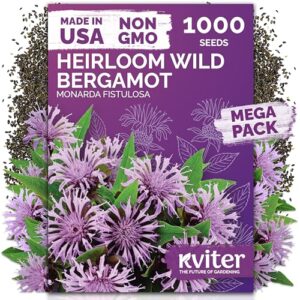
KVITER’s Wild Bergamot seeds give you 1,000 heirloom, non-GMO starts for just $7.49 — hard to beat for a perennial that earns its keep year after year. Monarda fistulosa grows 2–4 feet tall, blooms lavender-pink from midsummer into fall, and draws hummingbirds with tubular, hooded flowers built for their bills.
It’s deer-resistant, drought-tolerant once established, and spreads by rhizomes to naturalize over time. Surface-sow at 60–70°F, keep the soil consistently moist, and expect germination within 10–20 days.
| Best For | Gardeners who want a low-maintenance, pollinator-friendly perennial that pulls double duty as a culinary herb and a cottage garden showstopper. |
|---|---|
| Seed Type | Heirloom, non-GMO |
| Pollinator Appeal | Bees, butterflies, hummingbirds |
| Plant Form | Seeds |
| Maintenance Level | Low |
| Drought Tolerance | Yes, once established |
| Price | $7.49 |
| Additional Features |
|
- Incredible value — 1,000 heirloom, non-GMO seeds for $7.49 means you can fill a whole border or share with neighbors without breaking the bank.
- Once it’s established, it basically takes care of itself — drought-tolerant, deer-resistant, and self-seeding so it comes back year after year.
- The pink-purple blooms attract bees, butterflies, and hummingbirds all summer, and the citrus-scented leaves are a bonus for teas or fresh bouquets.
- Patience required — first-year growth is usually modest, and you’ll likely wait until year two to see it really bloom and hit full height.
- The rhizomes spread and can get aggressive over time, so you’ll need to divide the plant every couple of years to keep it in check.
- Germination needs consistently moist soil at 60–70°F, which can be tricky in cooler climates or early in the season when soil temps are still low.
2. Native Wildflower Seed Mix Non GMO for Pollinators
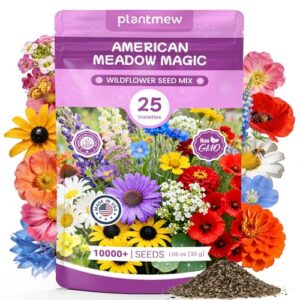
If you’re planting a hummingbird garden from scratch, PLANTMEW’s "American Meadow Magic" blend takes a lot of the guesswork out. One 30 g bag holds 10,000+ non-GMO seeds — 25 native varieties, annuals and perennials mixed — covering roughly 100 sq ft.
The blend tubular, nectar-rich blooms in red, orange, and pink, with nectar sugar content averaging 20–25%.
Scatter on prepared soil, water in, and germination kicks off within weeks.
The resealable pouch keeps leftover seeds fresh, too.
| Best For | Beginner gardeners and pollinator enthusiasts who want a low-effort, high-impact wildflower display without hand-picking individual seed varieties. |
|---|---|
| Seed Type | Non-GMO blend |
| Pollinator Appeal | Bees, butterflies, hummingbirds |
| Plant Form | Seeds |
| Maintenance Level | Low |
| Drought Tolerance | Not specified |
| Price | $7.95 |
| Additional Features |
|
- 10,000 seeds across 25 non-GMO varieties means serious flower diversity from a single bag
- Dead simple to plant — scatter, water, done; no special skills needed
- Resealable pouch keeps unused seeds fresh for later
- The 30 g bag feels small to some buyers for the $7.95 price tag
- Germination can be hit or miss depending on your soil prep and climate
- Full bloom takes weeks to months, so don’t expect instant results
3. Plant Good Seed Hummingbird Sage Seeds
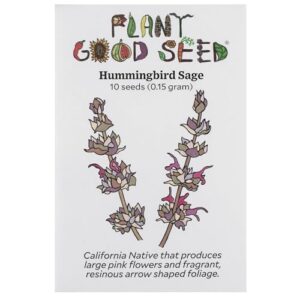
Plant Good Seed’s Hummingbird Sage packet gives you something most seed mixes don’t — a true California native with magenta flower spikes that hummingbirds can’t resist. Each packet contains at least 10 certified organic, non-GMO, heirloom seeds, grown and packaged in Ojai, CA.
It’s perennial in zones 7a and up, low-maintenance once established, and drought-tolerant. Germination takes 7–14 days at 70–85°F.
Fair warning: early growth is slow, so don’t expect fast results.
| Best For | Native plant enthusiasts and hummingbird lovers in zones 7a+ who want a low-maintenance, drought-tolerant perennial for their garden. |
|---|---|
| Seed Type | Organic, heirloom, non-GMO |
| Pollinator Appeal | Hummingbirds, pollinators |
| Plant Form | Seeds |
| Maintenance Level | Low |
| Drought Tolerance | Yes, once established |
| Price | $10.99 |
| Additional Features |
|
- True California native that reliably attracts hummingbirds and pollinators
- Certified organic, heirloom, and non-GMO — grown and packed in Ojai, CA
- Drought-tolerant and low-maintenance once it gets established
- Germination can be inconsistent — at least one tester got 0% despite ideal conditions
- Slow early growth means you’ll need patience before seeing real results
- Only 10 seeds per packet, so it’s not ideal if you’re planting a large area
4. Hummingbird Sage California Native Groundcover
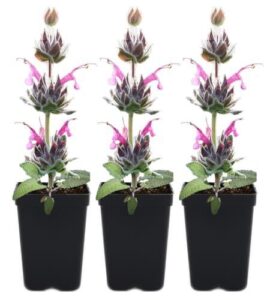
My Home Park’s Hummingbird Sage delivers what seeds can’t: three plug-grown, organically cultivated Salvia spathacea plants, rooted and ready to go in the ground.
Each plug spreads via rhizomes to form a fragrant, evergreen mat 12–18 inches tall, with magenta flower spikes rising above textured, fruity-scented foliage each spring.
It thrives in partial shade and drought-tolerant conditions once established — perfect for slopes, shaded borders, or native restoration beds.
For California-climate gardens, it’s a reliable, low-fuss perennial that hummingbirds return season after season.
| Best For | Gardeners in California and Mediterranean climates who want a low-maintenance, drought-tolerant native plant that attracts hummingbirds and pollinators — especially on slopes or in shaded spots. |
|---|---|
| Seed Type | Organically grown |
| Pollinator Appeal | Hummingbirds, native bees, butterflies |
| Plant Form | Live plugs |
| Maintenance Level | Low |
| Drought Tolerance | Yes, once established |
| Price | Not listed |
| Additional Features |
|
- Plug-grown and ready to plant — no waiting around for seeds to sprout
- Drought-tolerant once established, with fragrant evergreen foliage year-round
- Naturally draws hummingbirds, bees, and butterflies while helping control erosion
- Needs consistent watering for the first three months while it gets established
- Can spread and crowd neighboring plants if you don’t watch the spacing
- Deer may nibble on it when food gets scarce, so it’s not fully deer-resistant
5. Native Wildflower Seeds For Pollinator Gardens
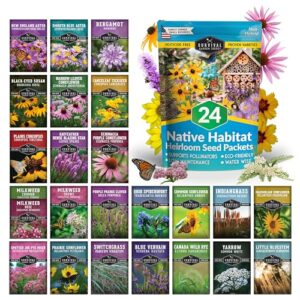
Survival Garden Seeds packs 24 labeled species — New England Aster, Purple Coneflower, Milkweed, Little Bluestem, and more — into one $34.99 collection built for zones 3–8. Every packet is non-GMO, heirloom, and open-pollinated, so you’re working with seeds that reproduce true season after season.
The mix covers full sun to light shade, is drought-tolerant once established, and staggers bloom times from spring through fall.
For a single purchase, that’s a lot of continuous nectar coverage for hummingbirds and other pollinators.
| Best For | Gardeners in zones 3–8 who want to support pollinators with low-maintenance, native plants without piecing together their own seed collection. |
|---|---|
| Seed Type | Non-GMO, heirloom |
| Pollinator Appeal | Bees, butterflies, hummingbirds |
| Plant Form | Seeds |
| Maintenance Level | Low |
| Drought Tolerance | Yes |
| Price | $34.99 |
| Additional Features |
|
- 24 labeled, non-GMO heirloom species in one kit — no guesswork on what you’re planting
- Staggered bloom times mean continuous nectar from spring through fall
- Drought-tolerant once established, so it’s forgiving if you’re not out there watering every day
- Individual packet sizes are small, so covering a large area means buying more
- Germination can be hit or miss, especially with direct outdoor sowing
- At $34.99, it costs more upfront than a generic bulk wildflower mix
6. KVITER Red Trumpet Vine Seeds
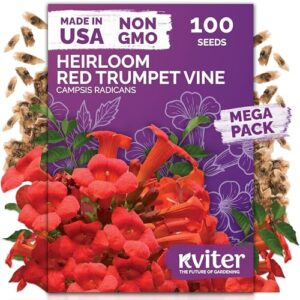
If you want something that climbs fast and brings hummingbirds in from late spring through fall, Campsis radicans is hard to beat. Vines reach 20–40 feet at maturity, covering fences or trellises with bright red trumpet blooms.
KVITER’s 100-seed pack offers up to 90% germination when soil temps hit 70°F or above. Sow just 1/16 inch deep, and seedlings normally emerge within 10–21 days.
Hardy in zones 4–10, but plan on regular pruning — this one won’t stay small on its own.
| Best For | Gardeners who want fast vertical coverage, love attracting hummingbirds, and don’t mind keeping an aggressive climber in check. |
|---|---|
| Seed Type | Non-GMO heirloom |
| Pollinator Appeal | Hummingbirds, insects |
| Plant Form | Seeds |
| Maintenance Level | Low |
| Drought Tolerance | Yes, once established |
| Price | Not listed |
| Additional Features |
|
- Up to 90% germination rate — you get a lot of plants from one $-friendly pack
- Grows like crazy, reaching 30 feet and covering fences or trellises in no time
- Comes back every year on its own, zones 4–10, no replanting needed
- It will take over if you ignore it — regular pruning is non-negotiable
- Needs warm soil (70°F) to germinate well, so cooler climates may need a heat mat
- Vines get heavy fast, so a flimsy fence or trellis won’t hold up for long
7. Red Lobelia Cardinal Flower Seeds
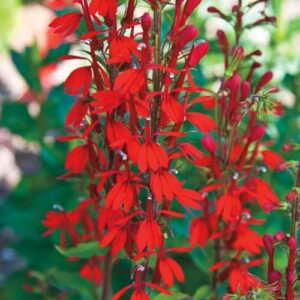
Where trumpet vine dominates with aggressive climbing habit, Cardinal Flower takes a quieter approach — and hummingbirds notice. USBRANDSEED’s 100-seed pack (about $7.99) gives you Lobelia cardinalis, a perennial reaching 2–4 feet with intense red spikes that bloom mid to late summer through fall.
Hardy in zones 2–9, it thrives in moist, partially shaded spots near water features or rain gardens.
Cold stratification for at least 45 days is non‑negotiable for reliable germination — skip that step and you’re waiting longer than necessary.
| Best For | Gardeners who want to attract hummingbirds and butterflies with a low-maintenance, water-loving perennial that fits naturally into rain gardens or pond edges. |
|---|---|
| Seed Type | Heirloom |
| Pollinator Appeal | Hummingbirds, butterflies |
| Plant Form | Seeds |
| Maintenance Level | Low |
| Drought Tolerance | Requires moisture |
| Price | $7.99 |
| Additional Features |
|
- Bright red blooms are a magnet for pollinators — hummingbirds especially love them.
- Tough and versatile: grows in zones 2–9 and works in containers, garden beds, or even water features.
- Long-lived perennial that self-reseeds, so you get more plants over time without extra effort.
- Cold stratification for 45 days is a must — skip it and germination gets unpredictable.
- Germination can be slow, so don’t expect quick results if your timing is off.
- "Deer-resistant" is more of a suggestion than a guarantee, so other browsers may still snack on it.
8. Home Grown Wildflower Seed Mix
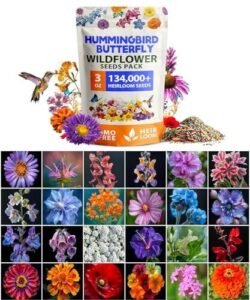
If Cardinal Flower wins on precision, the HOME GROWN Wildflower Seed Mix wins on range. For $22.99, you get roughly 134,000 non-GMO seeds across 23 native varieties — enough to cover a genuine meadow, not just a border strip.
The blend staggers blooms from spring through fall, mixing tubular reds, pinks, and oranges that hummingbirds track across a whole season. It suits full-sun and partial-shade spots equally well, with minimal care once established.
| Best For | Anyone who wants to turn a larger patch of land into a low-maintenance wildflower meadow that blooms all season and attracts pollinators. |
|---|---|
| Seed Type | Non-GMO, heirloom |
| Pollinator Appeal | Butterflies, bees, birds |
| Plant Form | Seeds |
| Maintenance Level | Low |
| Drought Tolerance | Not specified |
| Price | $22.99 |
| Additional Features |
|
- You get an insane amount of seeds — 134,000 across 23 varieties — for under $23, making it genuinely good value for bigger spaces.
- Bloom times are staggered from spring through fall, so you’re not left with a dead-looking garden after the first wave fades.
- Works in both full sun and partial shade, which takes a lot of the guesswork out of placement.
- Germination can be hit or miss depending on your soil and climate — some users plant the whole bag and get almost nothing.
- The seed mix isn’t pre-treated, so if you’re in a colder zone, you may need to scarify or stratify before sowing.
- The sheer volume of seeds can be overkill for a small garden, and without thinning, certain species tend to crowd out the others.
9. Eastern Red Columbine Starter Plant
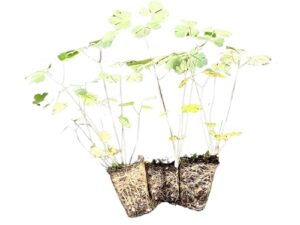
Where seed mixes give you scale, this starter plant gives you a head start. The Eastern Red Columbine (Aquilegia canadensis) arrives as a live plug, ready to settle into shaded borders, woodland edges, or containers.
Its nodding red-and-yellow spurred blooms appear spring through early summer — right when ruby-throated hummingbirds need early nectar most. The plant self-seeds without becoming a problem, tolerates rocky soils, and thrives in zones 3–9 with consistent moisture during establishment.
| Best For | Gardeners who want to attract hummingbirds and pollinators with a low-maintenance native plant that’s ready to go in the ground. |
|---|---|
| Seed Type | Native, natural |
| Pollinator Appeal | Hummingbirds, bees, butterflies |
| Plant Form | Live plug |
| Maintenance Level | Low |
| Drought Tolerance | Requires consistent moisture |
| Price | Not listed |
| Additional Features |
|
- Arrives as a live plug, so you skip the slow germination stage and get blooming sooner
- Naturally draws in ruby-throated hummingbirds, bees, and butterflies every spring
- Self-seeds on its own and spreads gently over time — less work for you
- Plant size at delivery can vary — it might show up small, dormant, or just barely sprouting
- Needs consistent moisture while it’s getting established, so it’s not fully "plant it and forget it" right away
- Self-seeding, while manageable, can take it outside your intended planting area if you’re not keeping an eye on it
10. Mountain Valley Pollinator Wildflower Seed Mix
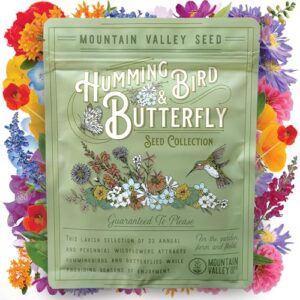
Twenty-three species in one envelope — that’s the value the Mountain Valley Pollinator Wildflower Seed Mix delivers. With 80,000+ non-GMO seeds covering roughly 250 square feet, you get a staggered bloom sequence from spring through fall, anchored by hummingbird favorites like Columbine, Butterfly Milkweed, and Zinnia.
The resealable packaging keeps leftover seeds viable season to season.
Sow after your last frost, keep soil consistently moist through germination, and skip the pesticides — your hummingbirds will do the rest.
| Best For | Beginner gardeners, families, and anyone who wants a low-effort way to bring pollinators into their yard or community space. |
|---|---|
| Seed Type | Non-GMO pure blend |
| Pollinator Appeal | Hummingbirds, butterflies, bees |
| Plant Form | Seeds |
| Maintenance Level | Low |
| Drought Tolerance | Not specified |
| Price | Not listed |
| Additional Features |
|
- 80,000 seeds covering 250 sq ft — serious value for the price
- Mix of annuals and perennials means color from spring through fall, year after year
- Resealable packaging keeps leftover seeds fresh for next season
- Larger seeds like Nasturtium can crowd out smaller species if you’re not careful
- Nasturtium also attracts aphids, which could cause headaches for nearby plants
- Some reviewers never saw blooms — germination really depends on soil, sun, and weather conditions
Frequently Asked Questions (FAQs)
Do hummingbirds return to the same garden yearly?
Yes, hummingbirds return to the same garden yearly. They show strong site fidelity, remembering reliable nectar sources, perches, and shelter.
Consistent blooms and low disturbance are what keep them coming back season after season.
Can hummingbirds survive on native flowers alone?
Mostly, yes. Native flowers fuel them with high-sugar nectar, but hummingbirds also need insects for protein, especially during breeding. A pesticide-free garden keeps both food sources intact.
Which predators pose the biggest threat to hummingbirds?
Cats, hawks, and sharp-shinned accipiters top the threat list. Praying mantises and large spiders ambush at feeders and flowers. Snakes strike near shrubs.
Keep cats indoors and design open sightlines around feeding stations.
How do temperature changes affect hummingbird migration?
Temperature shifts ripple through migration like a slow tide — earlier warmth pulls hummingbirds north sooner at lower latitudes, while mismatched bloom times along corridors force longer stopovers and unpredictable refueling windows.
Are native flowers safe for pets and children?
Most native flowers are safe, but a few — like Lily of the Valley and Red Buckeye — are toxic to pets.
Keep curious dogs, cats, and young children away from unfamiliar species.
Conclusion
A garden is like a canvas, painted with vibrant colors and textures. By choosing the right native flowers hummingbirds prefer, you’re creating a masterpiece that attracts these tiny wonders. With a thoughtful selection of plants like Wild Columbine and Cardinal Flower, you’ll be rewarded with frequent visits.
Your garden will become a haven, where hummingbirds thrive and you enjoy their beauty. Plant wisely, and let nature’s beauty unfold in your yard, season after season.