This site is supported by our readers. We may earn a commission, at no cost to you, if you purchase through links.

You know that moment when you glance out the kitchen window and catch a squirrel casually tossing freshly sprouted tomato plants aside like confetti? Yeah, that’s the breaking point for most gardeners. These fluffy-tailed acrobats don’t just visit your yard—they move in, set up shop, and treat your carefully tended beds like an all-you-can-eat buffet.
The good news? You don’t need harsh chemicals or expensive pest control services to reclaim your space. A handful of pantry staples, some strategic planning, and a bit of persistence can send squirrels packing without harming them or your plants. From fiery pepper sprays to motion-activated sprinklers, the right combination of natural deterrents turns your garden from easy pickings into territory they’d rather avoid.
Table Of Contents
- Key Takeaways
- Squirrel Behavior and Common Garden Damage
- Natural Repellents to Deter Squirrels
- Physical Barriers and DIY Deterrents
- Squirrel-Proofing Bird Feeders and Gardens
- Top 10 Products for Natural Squirrel Deterrence
- 1. Heavy Duty Spray Bottles
- 2. Mighty Mint Rodent Repellent Spray
- 3. Coyote Urine Pest Repellent Spray
- 4. Natural Rodent Repellent Spray
- 5. Peppermint Bug And Insect Repellent Spray
- 6. Nature’s Dome Pest Control Spray
- 7. Ultrasonic Pest Repellent Device
- 8. Lonyeon Electric Fogger Machine
- 9. Badia Cayenne Pepper Spice
- 10. Fairchild Organic Apple Cider Vinegar
- Frequently Asked Questions (FAQs)
- What is the best homemade squirrel repellent?
- What repels squirrels naturally?
- How do you keep squirrels away naturally?
- How long do natural deterrents remain effective?
- Are natural repellents safe around children and pets?
- What time of year works best for deterrents?
- Do natural methods work on all squirrel species?
- How often should natural deterrents be reapplied?
- How often should natural repellents be reapplied?
- Are natural deterrents safe for pets and children?
- Conclusion
Key Takeaways
- You can protect your garden using everyday pantry items like cayenne pepper, vinegar, and peppermint oil—squirrels hate strong scents and capsaicin’s burning sensation, so mixing these into sprays and reapplying every few days creates an effective barrier without chemicals.
- Physical defenses like motion-activated sprinklers, 6-foot fences buried 12 inches deep, and sealing entry points work better when layered with scent deterrents, since squirrels adapt quickly to single methods but struggle against combined strategies.
- Most natural repellents need reapplication every 3-7 days or after rain because weather washes them away fast, and rotating different deterrents (switching between pepper sprays, predator urine, and essential oils) keeps squirrels from getting used to one defense.
- Store-bought products like Mighty Mint spray and coyote urine offer convenience over DIY mixes, but they still require weekly reapplication and work best when paired with trimming tree branches, removing food sources, and planting repellent flowers like marigolds or daffodils around vulnerable areas.
Squirrel Behavior and Common Garden Damage
Squirrels aren’t just cute backyard visitors—they’re persistent foragers that can wreak havoc on your property when they decide to move in.
If you’re worried about attracting these furry bandits, choosing bird feeders designed to minimize ground spillage can help keep squirrels at bay.
Understanding why they show up, what signals they leave behind, and the real damage they cause puts you in control of the situation.
Let’s break down the behavior patterns and warning signs you need to watch for.
Why Squirrels Invade Gardens and Homes
Squirrel migration into your yard isn’t random—it’s driven by food storage needs and nesting habits tied to seasonal behavior. These urban wildlife experts scout for easy meals like bird seed, fresh produce, and cached nuts, then settle nearby in attics or tree cavities.
Cold snaps and droughts intensify their foraging, turning your garden into a convenient buffet that encourages natural deterrents and wildlife management strategies. Preventing can also protect your plants and reduce health risks.
Typical Signs of Squirrel Activity
Once they’ve moved in, you’ll notice the telltale signs. Scurrying noises at dawn and late afternoon signal peak squirrel activity overhead, while gnawing patterns on siding and vents show entry points in action.
Check for droppings—small, dark cylinders about 1/4 inch long—near feeders or attics. Piles of nesting materials, shredded insulation, and rhythmic scratching confirm you’re hosting uninvited guests who need effective squirrel repellent strategies.
For more details on fire hazard warning signs, be aware that squirrels gnawing on electrical wires can increase your home’s risk.
How Squirrels Cause Structural and Plant Damage
Now you understand why signs matter—the real trouble starts when those claws get to work. Tree damage shows up as stripped bark and chewed branch tips that stunt growth, while roof infestation begins with gnawed vents and widened gaps.
Yard erosion follows their digging, and garden destruction hits bulbs first.
Attic nesting tears through insulation, raising energy bills and fire risks from chewed wires.
Natural Repellents to Deter Squirrels

You don’t need harsh chemicals to keep squirrels at bay. Nature provides plenty of scents and substances that these persistent critters can’t stand, and most of them are sitting in your kitchen right now.
Let’s walk through the natural repellents that actually work, so you can reclaim your garden without breaking the bank or harming the environment.
Capsaicin and Hot Pepper Sprays
If you want a squirrel deterrent that really packs a punch, capsaicin is your best bet. The active compound in hot peppers triggers an intense burning sensation that squirrels absolutely hate, making it one of the most effective natural ways to protect your garden.
Capsaicin’s intense burning sensation makes it one of the most effective natural deterrents for keeping squirrels out of your garden
- Mix cayenne pepper with water and dish soap for a DIY repellent spray
- Apply pepper spray formulas around garden beds, bulbs, and entry points
- Reapply after rain since water reduces effectiveness
- Use concentrations carefully—capsaicin affects mucous membranes strongly
Essential Oils (Peppermint, Rosemary, Garlic)
You’ll love how essential oil blends work as scent repellents against squirrels. Peppermint oil delivers a sharp menthol punch they can’t stand, while rosemary adds a bright, resinous kick. Garlic oil, though pungent from oil extraction, rounds out natural deterrents perfectly.
Mix these oils with water for a DIY squirrel repellent spray—it’s one of the most natural ways to protect your space without harsh chemicals.
Vinegar and Cinnamon Applications
Vinegar sprays work as reliable scent barriers for natural pest control. Mix white vinegar with cinnamon infusions to create a powerful squirrel repellent that offers garden protection on multiple fronts. Here’s how to optimize these DIY deterrents:
- Spray windowsills and entry points in 2 to 3 passes
- Reapply after rain to maintain effectiveness
- Focus on garden borders, not directly on plants
Predator Urine and Scent-Based Repellents
Predator urine works because it mimics the scent of foxes and coyotes, triggering a natural fear response in squirrels. The deterrent effectiveness depends on reapplication after rain, since heavy moisture washes away the predator scents that make your yard feel dangerous to unwanted visitors.
You’ll apply these squirrel repellent products around garden borders and entry points, just like capsaicin or peppermint oil.
Using Coffee Grounds and Soaps
Coffee grounds work as a natural deterrent because squirrels dislike the strong smell, and you can scatter dried grounds around garden beds or entry points. Irish Spring Soap also repels squirrels when you grate bars and spread shavings near plants.
These eco-friendly methods recycle household waste into effective squirrel repellent, offering natural ways to protect your yard without harsh chemicals.
Physical Barriers and DIY Deterrents
Sometimes scents alone won’t cut it, and that’s when you need to take a more hands-on approach. Physical barriers work by blocking access or making your space less inviting, giving squirrels a reason to move along.
Here are a few tried-and-true methods that’ll help you keep those furry trespassers at bay.
Squirrel-Proof Fencing and Netting
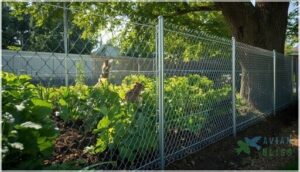
A solid squirrel-proof fence is your best defense against persistent diggers and climbers. You’ll want galvanized steel or aluminum mesh with 1-inch openings, standing at least 6 feet tall. Bury the bottom edge 12 inches deep to stop burrowing, and add a curved top bar to block jumpers.
This barrier installation approach combines fence materials and netting types for reliable garden protection and squirrel exclusion.
Sealing Entry Points and Home Maintenance
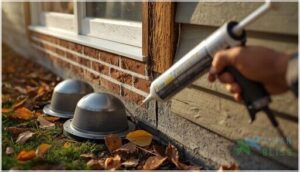
Your home’s defense starts where squirrels find their way in—tiny cracks and forgotten gaps you didn’t know existed. Grab polyurethane sealant for foundation sealing and crack repair around windows, then install door sweeps at every threshold.
Add mesh vent covers to attics and soffits, seal utility openings with expanding foam, and maintain a squirrel-proof fence perimeter.
Regular home maintenance turns squirrel prevention methods into yard maintenance you can’t skip.
Motion-Activated Sprinklers and Scare Tactics

You can upgrade your defense with motion sensors that detect squirrel behavior and trigger a startling spray. These motion-activated sprinklers offer water efficiency through 2 to 5-second bursts, covering up to 30 feet with adjustable spray patterns.
Strategic sprinkler placement near gardens and entry points turns everyday pest management into automated wildlife control—perfect natural ways to reinforce your squirrel repellent strategy without constant monitoring.
Mulching and Ground Cover Strategies

Beyond sprinklers, you’ve got mulching—a sneaky dual-purpose defense. Layer 2 to 4 inches of gravel or rock mulch around beds; squirrels hate digging through it, giving you weed suppression and erosion control in one move.
Mix in cayenne pepper, cinnamon, or garlic along the edges for extra punch. Ground covers like creeping thyme improve soil health while blocking their favorite digging zones.
Squirrel-Proofing Bird Feeders and Gardens
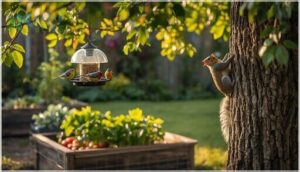
You’ve put up barriers and tried the sprays, but squirrels still see your yard as an all-you-can-eat buffet. The truth is, protecting bird feeders and gardens takes a few targeted strategies that actually work.
Here’s what you need to focus on to keep those persistent critters from raiding your space.
Squirrel-Proof Bird Feeders and Baffles
You’ll want a weight-sensitive feeder that closes seed ports when a squirrel lands, paired with a dome baffle extending at least 18 inches below. Position your bird feeders far from tree branches—squirrels can leap surprisingly far.
These squirrel proof fence tactics and squirrel baffle designs protect garden protection while keeping bird safety intact. Squirrel behavior shows they’ll quit trying once the feeder types prove too tricky.
Repellent Plants (Marigolds, Daffodils, Mint)
Plant selection matters when squirrels keep coming back—certain flowers naturally repel them with strong scents they can’t stand. Try these natural ways around garden borders:
- Daffodils release lycorine, a compound squirrels avoid when digging near bulbs
- Marigolds emit aromatic oils that create an unwelcoming barrier
- Mint spreads quickly, releasing peppermint oil that irritates their sensitive noses
- Rosemary adds fragrance while discouraging repeated visits
- Garlic planted in groups amplifies scent combinations
Consider soil preferences and growth patterns when mapping your garden layout.
Trimming Trees and Reducing Shelter
Tree pruning cuts off the highway squirrels use to raid your yard. Trim branches back at least six feet from roofs and power lines—they can’t leap that gap easily. Use the three-cut method on limbs over one inch to avoid tear damage.
Canopy thinning removes dense shelter while letting more light through. Schedule trimming techniques during late winter for healthier tree care and better garden protection.
Safe Food Storage and Clean-Up Tips
Food Storage Tips keep squirrels from sniffing out dinner invitations. Here’s how kitchen sanitation doubles as squirrel control methods:
- Store dry goods in airtight containers and keep pet food sealed separately—60 percent humidity or less blocks scent trails
- Empty trash daily with tight-fitting lids to cut odor attraction
- Clean grill grates after use and raise outdoor storage bins two feet off the ground
These waste management habits work better than most squirrel repellent techniques alone.
Top 10 Products for Natural Squirrel Deterrence
You’ve learned the techniques, now let’s talk about the tools that make them work. These products won’t break the bank, and most of them use ingredients you’d feel comfortable having around your home and garden.
Here are ten natural squirrel deterrents that actually deliver results.
1. Heavy Duty Spray Bottles
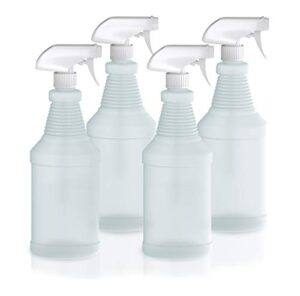
You can’t spray homemade repellents without the right tool, and that’s where heavy duty bottles come in. Look for 32 oz HDPE models with adjustable nozzles that switch from mist to stream, perfect for coating garden beds or targeting attic vents.
The key is a sturdy trigger and chemical-resistant seals—cheap bottles clog fast when you’re mixing cayenne or vinegar solutions. Transparent bodies let you monitor your blend, and ergonomic grips save your hand during those long Saturday morning spray sessions.
| Best For | Home gardeners and DIYers who need reliable spray bottles for mixing their own cleaning solutions, plant care products, or pest repellents. |
|---|---|
| Form | Spray Bottle |
| Primary Use | Multi-purpose spraying |
| Indoor/Outdoor | Both |
| Natural/Chemical | N/A (empty bottle) |
| Size | 32 oz |
| Pet Safe | N/A |
| Additional Features |
|
- Adjustable nozzle switches between mist and stream settings, giving you control whether you’re watering delicate seedlings or spraying down patio furniture
- Large 32 oz capacity means fewer refills when you’re tackling big jobs around the house or garden
- BPA-free HDPE construction handles harsh mixtures like bleach, vinegar, or alcohol-based cleaners without breaking down
- Some bottles clog easily due to the narrow internal tube, especially when using thicker homemade solutions
- Caps don’t always seal tightly even when screwed down all the way, leading to potential leaks during storage
- Uncertain long-term durability—several users questioned whether these hold up to regular heavy use over time
2. Mighty Mint Rodent Repellent Spray
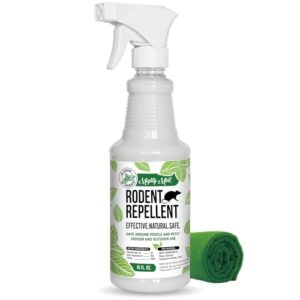
When you want ready-to-use power without mixing your own brew, Mighty Mint delivers extra-concentrated peppermint oil in a 16 oz bottle. It’s pet-safe and works indoors or out, leaving that fresh minty scent squirrels hate but you’ll actually enjoy.
The spray hits kitchens, garages, and garden beds with ease, though you’ll need to reapply every few days for best results. At $21.98, it’s not the cheapest option for large properties, but the convenience factor is hard to beat.
| Best For | Homeowners looking for a convenient, ready-to-use peppermint spray that’s safe around pets and kids but don’t mind reapplying frequently. |
|---|---|
| Form | Spray |
| Primary Use | Rodent repellent |
| Indoor/Outdoor | Both |
| Natural/Chemical | Natural |
| Size | 16 oz |
| Pet Safe | Yes |
| Additional Features |
|
- Extra-concentrated peppermint formula works indoors and outdoors without harsh chemicals
- Pet-friendly and family-safe with a fresh minty scent instead of toxic fumes
- Ready to spray right out of the bottle—no mixing or prep work required
- Needs reapplication every few days to maintain effectiveness
- At $21.98 for 16 oz, it can get expensive for large areas or long-term use
- Only contains 4% peppermint oil, which may not work for serious infestations
3. Coyote Urine Pest Repellent Spray
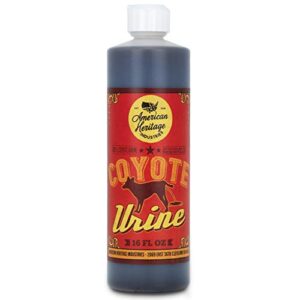
If you’re ready to tap into nature’s own alarm system, coyote urine triggers the instinct squirrels can’t ignore—the scent of danger. This 16 oz bottle from American Heritage Industries brings predator scent to your garden perimeter, fence lines, and mulch beds where pests love to dig.
You’ll need to reapply weekly or after rain, and yes, the smell is pretty strong for humans too. At around $20, it’s a natural deterrent that works best when paired with physical barriers for serious squirrel pressure.
| Best For | Homeowners dealing with persistent squirrel problems who want a natural, chemical-free solution and don’t mind regular reapplication. |
|---|---|
| Form | Liquid |
| Primary Use | Animal repellent |
| Indoor/Outdoor | Outdoor |
| Natural/Chemical | Natural |
| Size | 16 oz |
| Pet Safe | Natural product |
| Additional Features |
|
- Taps into squirrels’ natural fear response with authentic predator scent
- Non-toxic and safe alternative to chemical repellents
- Works on multiple pest types including rabbits and birds
- Strong, unpleasant odor that affects humans too
- Requires weekly reapplication and after every rainfall
- May not deter all animals like raccoons or possums
4. Natural Rodent Repellent Spray
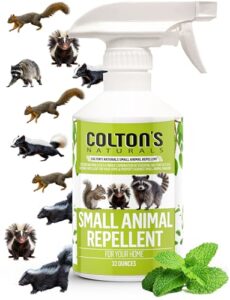
Colton’s Naturals delivers a triple-threat formula—peppermint, cinnamon, and cedarwood oils—that confuses squirrel navigation and masks the scent trails they follow back to your garden. This 32 oz spray works indoors and out, safe around kids and pets, which matters if you’re treating garage corners or trash can lids.
You’ll spend around $25 and need to reapply every 2-4 weeks, especially after rain. Some folks find the peppermint scent strong at first, but that’s exactly what sends squirrels packing.
| Best For | Homeowners looking for a safe, natural way to keep squirrels and other small pests away from gardens, garages, and outdoor spaces without harsh chemicals. |
|---|---|
| Form | Spray |
| Primary Use | Animal repellent |
| Indoor/Outdoor | Both |
| Natural/Chemical | Natural |
| Size | 32 oz |
| Pet Safe | Yes |
| Additional Features |
|
- Kid and pet safe formula made with natural peppermint, cinnamon, and cedarwood oils
- Works both indoors and outdoors on multiple surfaces like trash cans, car engines, and yard areas
- Changes animal behavior patterns so pests stop returning to treated areas
- Requires reapplication every 2-4 weeks, more often after rain, which adds up in cost
- Strong peppermint scent can be overwhelming for some people indoors
- May not work on stubborn infestations or all types of animals
5. Peppermint Bug And Insect Repellent Spray
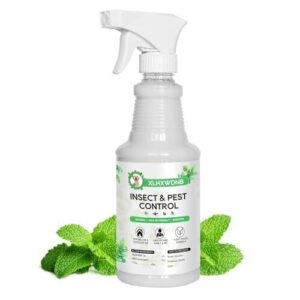
This 16-32 oz peppermint spray controls both bugs and squirrels with a plant-based formula that won’t harm your dog or cat.
You can spray it along baseboards, door frames, and garden edges to create a minty barrier that repels ants, spiders, and those pesky rodents digging up your tulips.
It runs about $15-20, works indoors and out, and leaves a fresh scent—though you’ll need to reapply every week or two to keep the deterrent effect strong.
| Best For | Pet owners who need a natural solution to keep bugs and squirrels away from both indoor spaces and outdoor gardens without worrying about harming their dogs or cats. |
|---|---|
| Form | Spray |
| Primary Use | Pest control |
| Indoor/Outdoor | Both |
| Natural/Chemical | Natural |
| Size | 16 oz |
| Pet Safe | Yes |
| Additional Features |
|
- Plant-based formula with peppermint oil is safe around pets and family members
- Works on multiple pests including ants, spiders, roaches, and even squirrels
- Ready-to-use spray bottle makes application quick and easy along baseboards, doorways, and garden areas
- Strong minty scent can be overwhelming in enclosed spaces or for scent-sensitive people
- Requires reapplication every week or two to maintain effectiveness as bugs often return
- Doesn’t work on all pest types like silverfish, limiting its versatility
6. Nature’s Dome Pest Control Spray
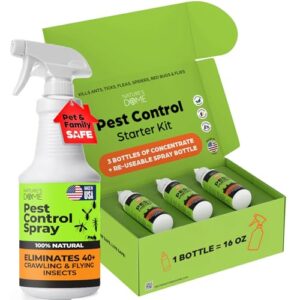
Nature’s Dome takes things a step further with geraniol, cinnamon oil, and cottonseed oil—targeting over 40 pests, including squirrels. The 16 oz spray runs around $15, works indoors and out, and is safe for pets when used as directed.
You’ll spray from 6-8 inches away along foundations, baseboards, and garden beds. It’s phenol-free and clove-free, which matters if you’ve got sensitive noses in the house, though tougher squirrel problems may need weekly reapplication.
| Best For | Families looking for a plant-based pest deterrent that’s safe around kids and pets, especially for lighter infestations indoors and outdoors. |
|---|---|
| Form | Spray |
| Primary Use | Pest control |
| Indoor/Outdoor | Both |
| Natural/Chemical | Natural |
| Size | 16 oz |
| Pet Safe | Yes |
| Additional Features |
|
- Natural formula with geraniol, cinnamon, and cottonseed oils targets over 40 pests without harsh chemicals
- Safe for use around children and pets when applied as directed, with no phenol or clove ingredients
- Versatile 16 oz spray works on foundations, baseboards, and garden beds both inside and outside
- May need weekly reapplication for persistent squirrel or heavier pest problems
- Costs around $15, which is pricier than conventional pest control sprays
- Some users found it ineffective against tougher pests like roaches or reported it didn’t work at all
7. Ultrasonic Pest Repellent Device

If sprays aren’t cutting it, the SUCGLES Ultrasonic Pest Repellent Device might fill the gap. This 6-pack runs about $30 and plugs straight into your outlets—no batteries, no mixing, just plug and wait.
It cycles between 10KHZ and 65KHZ to disrupt squirrel and rodent nervous systems without chemicals or noise you’ll hear. Results take 1-4 weeks, and some folks report a faint high-pitch on mode two, so patience and realistic expectations matter here.
| Best For | Homeowners looking for a chemical-free, pet-safe pest deterrent who can wait a few weeks for results and don’t mind testing whether ultrasonic tech works for their specific pest problem. |
|---|---|
| Form | Electric Plugin |
| Primary Use | Pest repellent |
| Indoor/Outdoor | Indoor only |
| Natural/Chemical | Electronic |
| Size | 6-pack unit |
| Pet Safe | Yes |
| Additional Features |
|
- Chemical-free and safe around kids and pets, so you’re not trading one problem for another
- Six-pack covers your whole house for around $30, which beats calling an exterminator every month
- Plug-in design means no batteries to swap or refills to buy—just set it and forget it
- Takes 1-4 weeks to see any effect, so this isn’t a quick fix if you’ve got pests now
- Some users hear a high-pitched sound on the second mode, which can get annoying fast
- Doesn’t work for everyone—you might still end up needing professional help if the infestation’s bad
8. Lonyeon Electric Fogger Machine
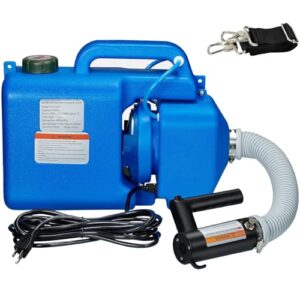
For big jobs—think barns, attics, or sprawling yards—the Lonyeon 8L Electric ULV Fogger runs about $70 and throws a fine mist 8 to 10 meters.
You fill the 8-liter tank with your homemade peppermint or vinegar solution, strap it on like a backpack, and walk while the 1200-watt motor does the heavy lifting. The 5-meter cord gives you room to roam, and the adjustable nozzle lets you dial coverage.
Just clean it after each use to avoid clogs.
| Best For | People who need to fog large spaces like barns, warehouses, or multi-room buildings where dragging a handheld sprayer gets old fast. |
|---|---|
| Form | Electric Fogger |
| Primary Use | Disinfection/pest control |
| Indoor/Outdoor | Both |
| Natural/Chemical | N/A (device) |
| Size | 8L capacity |
| Pet Safe | Chemical dependent |
| Additional Features |
|
- 8-liter tank means fewer refills when you’re covering big areas
- Backpack design keeps your hands free while the motor does the work
- Adjustable nozzle and flow rate let you control how much solution you’re using
- Some users report durability issues—it may not last through heavy, repeated use
- At nearly 10 pounds when full, it can get uncomfortable on longer jobs
- A few reviews mention burning smells or sparks, so keep an eye on it during use
9. Badia Cayenne Pepper Spice
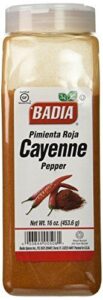
A 16-ounce shaker of Badia Cayenne Pepper runs around $5 and doubles as a kitchen spice and squirrel deterrent. Squirrels hate capsaicin’s burn, so you can sprinkle it straight around plant beds, bulbs, or entry points.
It’s gluten-free, packed in the USA, and the shaker cap makes dosing easy. Mix a tablespoon with water and dish soap for a spray, or dust it dry on soil after rain.
Reapply weekly or whenever weather washes it away, and keep it off your hands near your eyes.
| Best For | Budget-conscious gardeners looking for a dual-purpose cayenne pepper that works both in the kitchen and as a natural squirrel and rodent repellent. |
|---|---|
| Form | Powder |
| Primary Use | Pest deterrent |
| Indoor/Outdoor | Outdoor |
| Natural/Chemical | Natural |
| Size | 16 oz |
| Pet Safe | Natural product |
| Additional Features |
|
- Large 16-ounce size offers excellent value at around $5, lasting longer than smaller containers
- Versatile use as both a cooking spice and wildlife deterrent with capsaicin that squirrels hate
- Convenient shaker cap makes application easy whether dusting dry or mixing into a spray solution
- Requires frequent reapplication, especially after rain or watering, adding to maintenance time
- Effectiveness as a pest deterrent varies and may not work for all users or situations
- Can cause irritation if it contacts skin, eyes, or mucous membranes during application
10. Fairchild Organic Apple Cider Vinegar
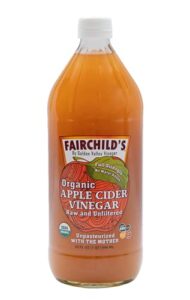
A 32-ounce bottle of Fairchild Organic Apple Cider Vinegar costs around $12 and works as both a pantry staple and squirrel repellent. You’re getting raw, unfiltered vinegar from Washington State apples, no water added, which makes it 25% stronger than diluted brands.
Mix one part vinegar with three parts water in a spray bottle, then mist around garden beds, trash cans, or entry points. Squirrels can’t stand the sharp smell, and you can reapply after rain without worrying about chemicals.
| Best For | People who want a strong, organic vinegar that works for cooking, wellness routines, and natural pest control like deterring squirrels. |
|---|---|
| Form | Liquid |
| Primary Use | Multipurpose vinegar |
| Indoor/Outdoor | Indoor |
| Natural/Chemical | Natural |
| Size | 32 oz |
| Pet Safe | Food grade |
| Additional Features |
|
- 25% stronger than diluted brands because it’s undiluted and raw with the “mother” intact
- Made from organic Washington apples and comes unpasteurized in glass bottles
- Versatile enough for cooking, fermenting, health uses, and DIY squirrel repellent sprays
- High acidity can cause tooth sensitivity if consumed undiluted
- Glass bottles require careful handling to avoid breakage during shipping
- Strong flavor may be too overpowering for some people’s taste preferences
Frequently Asked Questions (FAQs)
What is the best homemade squirrel repellent?
You’ll find that mixing one tablespoon of cayenne pepper with water and mild dish soap creates an effective spray.
Reapply after rain, and always wear gloves when handling hot pepper mixtures.
What repels squirrels naturally?
Strong scents work best—peppermint oil, garlic spray, cayenne pepper, and vinegar all discourage squirrels naturally.
Coffee grounds, cinnamon powder, and predator urine also create barriers they’ll avoid without harming your garden.
How do you keep squirrels away naturally?
You’ll want to layer tactics like capsaicin sprays, peppermint oil, and motion-activated sprinklers with physical fixes—sealing gaps, trimming branches, and planting daffodils or mint around vulnerable spots.
How long do natural deterrents remain effective?
Most scent-based repellents last two to four weeks before you’ll need to reapply, though rain and hot sun can shorten that window.
Granular options often hold up longer in dry conditions.
Are natural repellents safe around children and pets?
You’d think “natural” means harmless, right? Not quite. Capsaicin, essential oils, and predator urine can irritate eyes, skin, and lungs in kids and pets if misapplied, so always dilute properly and use outdoors.
What time of year works best for deterrents?
Apply deterrents in late winter before mating season starts, then reinforce them during early spring when new growth appears. Late summer to early fall also works well, as juveniles disperse and animals prep for winter storage.
Do natural methods work on all squirrel species?
Here’s the deal: not all squirrel species react the same way. Ground squirrels and tree squirrels respond differently to capsaicin sprays, while flying squirrels often ignore scent-based methods in elevated spaces.
How often should natural deterrents be reapplied?
You’ll want to refresh scent-based repellents every 3-5 days, especially after rain. Motion sprinklers and physical barriers need less fussing, just monthly checks to make sure they’re still working properly.
How often should natural repellents be reapplied?
Rain washes away your defense line fast—reapply capsaicin sprays every 3 to 7 days, vinegar after each storm, and oils weekly. High-traffic zones need daily touch-ups during peak squirrel season.
Are natural deterrents safe for pets and children?
Most natural deterrents are safer than chemical options, but you’ll still want to check labels carefully.
Peppermint oil and capsaicin sprays can irritate curious pets or kids, so apply them thoughtfully.
Conclusion
Think of your garden as a fortress—one that doesn’t need a moat, just smarter defenses. By layering natural ways to deter squirrels, from pepper sprays to motion sensors, you’re building a system these critters won’t bother cracking.
No single trick works forever, but rotating methods keeps them guessing and your plants thriving.
Start with what’s already in your pantry, stay consistent, and watch those furry freeloaders find easier targets elsewhere.