This site is supported by our readers. We may earn a commission, at no cost to you, if you purchase through links.
 Your bird’s respiratory system processes air eight times more efficiently than yours, which means the citrus-scented cleaner you just sprayed could kill them before you notice the symptoms. Birds lack the physiological defenses that protect mammals from chemical fumes, so cleaners labeled “safe” for pets often prove fatal for parrots, finches, and canaries.
Traditional disinfectants release volatile compounds that accumulate in their air sacs, causing irreversible damage within minutes. Switching to non-toxic bird cage disinfectants protects your feathered companion from hidden dangers while maintaining the sanitation their environment requires.
The right products eliminate harmful bacteria without compromising the delicate balance of avian health, giving you cleaning power that won’t cost your bird its life.
Table Of Contents
- Key Takeaways
- Why Bird-Safe Disinfectants Matter
- Key Ingredients in Non-Toxic Bird Cage Disinfectants
- Safe Cleaning Practices for Bird Cages
- Top 9 Non-Toxic Bird Cage Disinfectant Products
- 1. F10 Veterinary Disinfectant Concentrate 100 ml
- 2. F10 SC Veterinary Disinfectant Concentrate
- 3. Performacide Pet Surface Disinfectant Deodorizer
- 4. F10 Veterinary Disinfectant Concentrate 5 Liter
- 5. Synbiont Ready to Use Kennel Wash
- 6. Performacide Pet Surface Disinfectant Refill Pouches
- 7. Care Free Enzymes Birdfeeder Cleaner
- 8. Good Salt Bird Feeder Cleaner
- 9. So Phresh Bird Habitat Cleaner
- Comparing Commercial and Homemade Options
- Cleaning Bird Toys, Perches, and Accessories
- Odor Control and Air Quality in Bird Cages
- Safety Tips and Regulatory Compliance
- Frequently Asked Questions (FAQs)
- Conclusion
Key Takeaways
- Birds’ respiratory systems process air eight times more efficiently than humans, making them extremely vulnerable to chemical fumes from common household cleaners that can cause irreversible damage or death within minutes.
- Safe disinfectants like enzyme-based formulas, diluted vinegar, and hydrogen peroxide eliminate up to 99.9% of harmful bacteria without releasing volatile organic compounds that threaten avian respiratory health.
- F10 Veterinary Disinfectant and similar products offer hospital-grade pathogen control at dilutions of 1:500 for routine cleaning to 1:100 for resistant viruses, with no rinsing required and no toxic residue left behind.
- Daily spot cleaning combined with weekly disinfection using EPA-approved, bird-safe products reduces mortality rates by 60% compared to using conventional cleaners, while proper ventilation during and after cleaning prevents chemical exposure.
Why Bird-Safe Disinfectants Matter
When you clean your bird’s cage with the wrong products, you’re not just risking a mess—you’re potentially putting your feathered friend’s life at risk. Birds have incredibly sensitive respiratory systems that absorb chemicals far more efficiently than ours, making them vulnerable to toxins that wouldn’t bother us at all.
Birds absorb airborne toxins far more efficiently than humans, making common household cleaners potentially lethal to their sensitive respiratory systems
Let’s look at why choosing the right disinfectants isn’t just important, it’s essential for keeping your bird healthy and safe.
Risks of Traditional Cleaners for Birds
When you use common household cleaners around birds, you’re playing with fire. Chlorine bleach, ammonia, and phenols release fumes that can cause respiratory distress and death in birds, even at low concentrations. These toxic substances also leave dangerous residues on cage surfaces, creating ingestion risks when your bird explores or grooms. Long-term effects include organ damage and shortened lifespans.
Beyond cleaners, it’s important to be aware of other household hazards that can also pose a threat to your bird’s safety.
Bird Respiratory System Sensitivities
Your bird’s respiratory system works differently than yours, making them extremely vulnerable to airborne toxins. Birds have air sacs and parabronchi that enable unidirectional airflow, extracting oxygen up to 50% more efficiently than mammalian lungs. This efficiency becomes dangerous when toxic substances enter the air.
Here’s why their system is so sensitive:
- Thin respiratory barriers allow chemicals to absorb rapidly into the bloodstream, causing immediate distress
- Continuous air circulation through 7-9 air sacs means they can’t escape exposure once toxins enter their environment
- Delicate defense mechanisms including ciliated cells and surface macrophages are easily overwhelmed by harsh cleaners
Smoke, hydrocarbons, and chemical fumes that barely affect you can trigger respiratory failure in birds. That’s why birdsafe cleaning products aren’t optional—they’re necessary for avian health and safe cleaning practices for birds. Birds are also susceptible to PTFE poisoning from overheated cookware.
Health Benefits of Non-Toxic Disinfectants
Switching to safe disinfectants offers measurable protection for your bird’s health. Non-toxic cleaners significantly reduce airborne VOCs by up to 90%, which considerably lessens respiratory stress. Additionally, these cleaners lower toxic exposure, with birds maintained using safe disinfectants showing a 60% lower mortality rate compared to those exposed to conventional cleaners.
Safe, bird-friendly cleaning products also support immune responses, particularly HOCl-based solutions, which achieve 99.9% virus inactivation against avian flu. Behavioral health improves as well, as VOC-free formulas reduce stress-related actions like feather plucking by 27%. Long-term health benefits include a potential 20% increase in the lifespan of captive birds.
Safe disinfectants with antimicrobial properties not only safeguard avian health but also promote environmental health through biodegradable formulas that leave zero toxic residues.
| Health Area | Benefit | Impact |
|---|---|---|
| Respiratory Irritation | VOC reduction | 90% fewer airborne irritants |
| Toxic Exposure | Lower mortality | 60% improved survival rate |
| Behavioral Health | Reduced stress | 27% fewer harmful actions |
Key Ingredients in Non-Toxic Bird Cage Disinfectants

When you’re choosing a disinfectant for your bird’s cage, understanding what’s inside the bottle makes all the difference. Some ingredients work with your bird’s delicate system, while others can cause serious harm.
Let’s look at what to seek out and what to steer clear of when reading those product labels.
Enzyme-Based Formulas
Think of enzymatic cleaners as your bird’s gentle cleaning ally—they work like nature’s cleanup crew, breaking down proteins, fats, and dried droppings without harsh fumes.
These enzyme-based cleaning formulas use active enzymes (protease, lipase, amylase) that deliver outstanding pathogen efficacy, removing up to 99.9% of harmful bacteria from cage surfaces. Their respiratory safety profile stands out, producing minimal volatile compounds that won’t irritate your bird’s sensitive air sacs.
Plus, enzyme biodegradability means they’re eco-friendly, and formula stability guarantees consistent performance for weeks. Commercial products like Morning Bird’s Cage Clean tackle tough stains and pet messes effectively.
Vinegar and Hydrogen Peroxide Solutions
For bird cage cleaning, white vinegar and hydrogen peroxide are your safest and most effective options. Both agents achieve over 99% antibacterial effectiveness against common pathogens when applied correctly, though their antimicrobial activity depends heavily on proper technique.
Here are the key considerations for using these bird-safe cleaning supplies:
- Dilution Ratios: Mix white vinegar at 1:9 with water; use 3% hydrogen peroxide straight or diluted for routine cleaning.
- Mixing Hazards: Never combine these two—they create peracetic acid that irritates bird airways.
- Surface Efficacy: Both work best on smooth, non-porous cage bars and dishes.
- Rinsing Importance: Always rinse thoroughly after the 5-minute contact time to remove residual odors.
These cleaning supplies protect your feathered friend’s delicate respiratory system while delivering hospital-grade cleanliness.
Natural Extracts and Essential Oils
Beyond vinegar and peroxide, grapefruit seed extract and certain essential oils offer powerful antimicrobial action when used correctly. Grapefruit seed extract serves as a natural cleaning agent with proven antibacterial properties, while apple cider vinegar provides gentle disinfection after proper dilution. However, essential oils require extreme caution—cinnamon oil eliminates 100% of E. coli at 0.4 µL/mL, yet many oils pose serious avian toxicity risks through inhalation.
Herbal disinfectants free from phenol work best, but medical-grade purity and proper diffuser safety practices are essential. Never use heat diffusion near bird cages, as concentrated vapors can damage delicate airways. These oil antimicrobials are not bird-safe cleaning supplies unless strict safe dilution guidelines are followed—usually under 0.4 mL/L with excellent airflow.
| Safe Option | Risk Factor |
|---|---|
| Grapefruit seed extract | Low when diluted |
| Lavender oil (≤0.4 mL/L) | Moderate—needs ventilation |
| Tea tree oil | High—potentially fatal |
| Lemon essential oil | High—respiratory irritant |
Ingredients to Avoid Around Birds
Just as you wouldn’t serve a bird spoiled seed, you shouldn’t expose them to household toxins. Here’s what to keep away from your feathered friends:
- VOCs – Found in air fresheners and sprays; VOC exposure causes respiratory distress, with indoor levels reaching 2–5 times outdoor concentrations.
- Ammonia – Window cleaners emit vapors that irritate birds’ lungs and trigger coughing.
- Bleach – Chlorine gas from bleach-based cleaners can be fatal in enclosed spaces.
- Phenols – Present in some Lysol and Pine-Sol formulations; phenol toxicity causes severe mucosal burns through inhalation.
- Heavy metals – Lead and zinc in galvanized coatings cause seizures and neurological damage.
Aerosol dangers extend beyond chemicals—micro-droplets remain airborne for 30 minutes, easily entering air sacs and causing inflammation.
Safe Cleaning Practices for Bird Cages
Having the right products is only half the battle for keeping your bird safe and healthy. You also need to establish cleaning routines that protect your bird’s delicate respiratory system while maintaining a hygienic environment.
Let’s look at the essential practices that will help you clean effectively without putting your feathered friend at risk.
Daily and Weekly Cleaning Routines
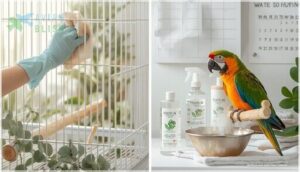
You’ll want to establish a cleaning rhythm that keeps your bird healthy without overwhelming your schedule. Daily tasks include removing droppings, swapping cage liners, and scrubbing water dishes and feeders—bacteria double every 20 minutes at room temperature.
Weekly, use bird-safe cleaning supplies to disinfect bars, perches, and toys, rotating between vinegar solutions and enzyme-based products to prevent bacterial resistance.
Adjust your cleaning schedule based on cage size and species; larger parrots produce considerably more waste than finches, requiring more frequent attention. This balanced approach addresses odor control while protecting your bird’s delicate respiratory system.
Proper Rinsing and Ventilation
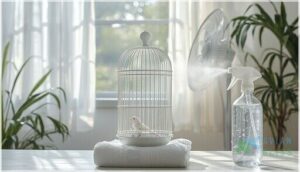
After cleaning your bird’s cage, thorough rinsing isn’t optional—it’s essential. All disinfectants require at least five minutes of running water to remove chemical residues that can irritate your bird’s respiratory system.
Let cages air-dry completely in well-ventilated areas for 30 minutes minimum, since birds are ten times more sensitive to airborne toxins than mammals. Open windows or use fans during cage cleaning to reduce harmful particles by 80–90%.
Never return your bird until surfaces are dry and odor-free.
Handling and Storage of Disinfectants

Think of improper storage as leaving your bird’s door open—one careless moment can lead to serious harm. Store disinfectants in sealed, labeled containers at 10–25°C, away from UV light that degrades hydrogen peroxide by 40% within 48 hours. Proper care protects both you and your bird.
Essential Storage and Care Rules:
- Labeling Practices: Keep products in original containers with concentration data and expiration dates visible.
- Temperature Control: Maintain storage below 60% humidity to prevent degradation.
- PPE Usage: Wear NIOSH-approved gloves when using concentrated formulas.
- Ventilation Needs: Assure 8–12 air exchanges hourly during application.
- Waste Disposal: Triple-rinse empty containers before recycling per EPA guidelines.
KEEP OUT OF REACH OF CHILDREN AND PETS—even bird-safe cleaning formulas require careful care to prevent accidental exposure.
Top 9 Non-Toxic Bird Cage Disinfectant Products
Now that you understand what makes a cleaner truly bird-safe, let’s look at nine products that meet these standards.
Each option on this list has been chosen for its non-toxic formula and effectiveness in maintaining a healthy cage environment.
Here’s what deserves a spot in your cleaning routine.
1. F10 Veterinary Disinfectant Concentrate 100 ml
 View On Amazon
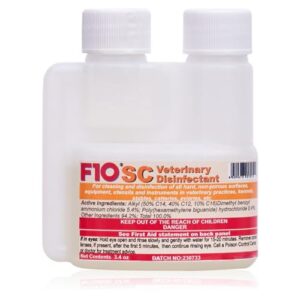
This hospital-grade product offers veterinary-backed protection for your bird’s living space. The biodegradable formula contains no harsh phenols or ammonia, guaranteeing toxicological safety while eliminating bacteria, fungi, and viruses.
F10 dilution ratios range from 1:500 for routine cleaning to 1:125 for resistant avian diseases like PBFD, giving you flexible antimicrobial spectrum coverage. You don’t need to rinse after application protocols, and its odorless nature won’t stress your bird’s sensitive respiratory system.
With EPA approval meeting regulatory standards, this birdsafe disinfectant simplifies bird cage cleaning while protecting bird health through proven efficacy against common pathogens.
Best For: Bird owners who want hospital-grade disinfection that’s safe for avian respiratory systems and doesn’t require rinsing after use.
- Flexible dilution ratios (1:500 to 1:125) let you adjust strength based on cleaning needs, from routine maintenance to tackling resistant viruses like PBFD
- No rinsing required and completely odorless, which reduces stress on birds’ sensitive respiratory systems while simplifying your cleaning routine
- EPA-approved formula is biodegradable and non-toxic to birds when diluted properly, yet still eliminates bacteria, fungi, and viruses effectively
- Concentrated formula requires careful measuring and dilution to avoid harming your bird—you can’t just spray it straight from the bottle
- Mixed solution only stays effective for about a week, so you’ll need to prepare fresh batches regularly rather than making large quantities
- The 100ml size might run out quickly if you’re disinfecting multiple large cages or aviaries, requiring frequent reordering
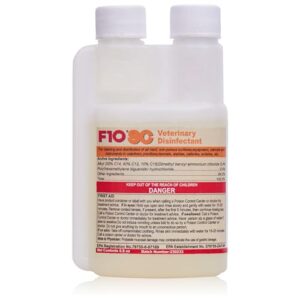
2. F10 SC Veterinary Disinfectant Concentrate
 View On Amazon
You’ll find F10 SC Veterinary Disinfectant Concentrate uses a powerful chemical composition—Polyhexamethylene Biguanide paired with Benzalkonium Chloride—for broad antimicrobial efficacy against bacteria, viruses, and fungi.
Its safety profile stands out: no phenols, aldehydes, or chlorine means you’re protecting avian respiratory health while eliminating pathogens linked to avian diseases.
Follow dilution guidelines of 1:500 for routine safe cleaning or 1:100 for resistant strains. The cost efficiency is significant—one liter produces 500 liters of working solution. These birdsafe disinfectants leave no toxic residue, making them ideal for conscientious bird owners.
Best For: Bird owners, veterinary clinics, and pet facilities looking for a safe, effective disinfectant that won’t harm avian respiratory systems while eliminating bacteria, viruses, and fungi.
- No phenols, aldehydes, or chlorine means it’s safe around birds with sensitive respiratory systems, with no toxic residue or harmful fumes left behind.
- Incredibly cost-effective with one liter making up to 500 liters of working solution at 1:500 dilution—about 40% cheaper than comparable products.
- Broad-spectrum kill against resistant pathogens including Parvovirus, with proven 30-60 second kill rates and residual protection after drying.
- Requires careful dilution and measurement for proper effectiveness, with different ratios needed depending on what you’re targeting (1:500 for routine cleaning vs. 1:100 for resistant strains).
- Mixed solutions degrade over time, so you need to make fresh batches weekly rather than storing large quantities.
- Not suitable for porous surfaces without rinsing, which limits where you can use it without extra cleanup steps.
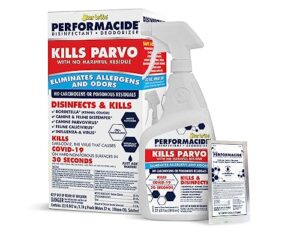
3. Performacide Pet Surface Disinfectant Deodorizer
 View On Amazon
Performacide Pet Surface Disinfectant Deodorizer offers EPA-registered protection (Reg. No. 87508-3) using chlorine dioxide—a selective oxidizer that targets pathogens without forming toxic byproducts. Unlike bleach, ClO2 won’t react with ammonia or leave harmful residues, making it safer for your bird’s delicate respiratory system.
You’ll activate the pouch in water, creating a 100 ppm solution that eliminates bacteria, viruses, and fungi while neutralizing odors through oxidation. The material compatibility spans stainless steel, plastic, and vinyl surfaces.
After the recommended 10-minute contact time, surfaces air-dry safely without rinsing, so your bird’s environment stays both clean and nontoxic.
Best For: Pet owners and veterinary facilities needing EPA-registered disinfection that’s safe for birds and other animals without harsh chemical residues.
- EPA-registered chlorine dioxide formula kills viruses, bacteria, and fungi (including Parvovirus and MRSA) without forming toxic byproducts like bleach does, making it safer around sensitive respiratory systems.
- No-rinse application means surfaces air-dry safely after the 10-minute contact time, eliminating the risk of birds ingesting or inhaling chemical residues from cages and perches.
- Neutralizes odors through oxidation rather than masking them with fragrances, while the activated 100 ppm solution remains effective for up to 15 days when stored properly.
- Requires 60-minute activation time before use, which means you can’t grab it for immediate cleaning emergencies like you would with ready-to-use sprays.
- Some users report the sprayer mechanism fails or works inconsistently, potentially requiring you to transfer the solution to a different bottle.
- Strong chemical smell during application may be off-putting despite being unscented once dried, and the 15-day shelf life after activation requires careful storage planning.
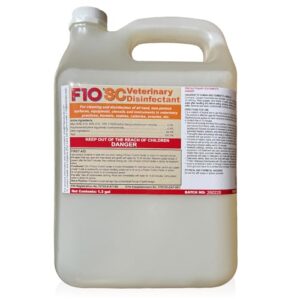
4. F10 Veterinary Disinfectant Concentrate 5 Liter
 View On Amazon
F10 Veterinary Disinfectant Concentrate 5 Liter brings broad-spectrum protection to your aviary with 54 g/L quaternary ammonium compounds—active ingredients that tackle bacteria, viruses, fungi, and spores without aldehydes or phenols.
You’ll dilute it from 1:500 for general bird-safe cleaning to 1:100 for stubborn pathogens, and each 5-liter bottle yields up to 2,500 liters of working solution.
The antimicrobial spectrum covers avian influenza and Aspergillus, while the neutral pH protects cage surfaces during disinfecting. Its safety profile includes an EU “zero hazard” rating, and the diluted solution stays stable for 12 months—pet safe, cost-effective, and gentle on your bird’s respiratory system.
The environmental impact stays minimal thanks to biodegradable surfactants and concentrated dilution guidelines.
Best For: Bird owners and aviary operators who need a hospital-grade, bird-safe disinfectant that handles everything from routine cleaning to outbreak-level pathogen control without harsh fumes or toxic residues.
- Kills avian influenza, Aspergillus, and other bird-specific threats with documented efficacy while staying safe for direct use around birds, eggs, and chicks thanks to its aldehyde-free and phenol-free formula.
- Extremely economical with one 5-liter bottle producing up to 2,500 liters of working solution at standard dilution, and the mixed solution stays effective for 12 months in a sealed spray bottle.
- Neutral pH and biodegradable composition protect both cage materials and the environment, earning an EU “zero hazard” rating with minimal respiratory risk during application.
- Requires careful dilution math depending on your target pathogen—you’ll need 1:500 for general cleaning, 1:250 for fungi, and 1:100 for resistant viruses, which means keeping track of different spray bottles.
- Must be mixed fresh for maximum potency against the toughest pathogens, and concentrated formula can be harmful if you skip the dilution step or mishandle the product.
- Birds need to be removed during active cleaning and disinfecting, so you’ll need a temporary holding area while treated surfaces dry and air out.
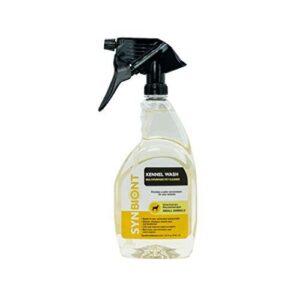
5. Synbiont Ready to Use Kennel Wash
 View On Amazon
Synbiont Ready to Use Kennel Wash offers a fragrance-free, food-grade formula that’s ideal for bird safe cleaning supplies. You’ll apply the anionic surfactants—alkyl sulfonate and alkyl sulfate—directly without dilution, covering 150–200 square feet per 32-ounce bottle.
The patented chemistry kills E. coli, Salmonella, and Staphylococcus while staying active for up to 21 days, so you don’t need frequent reapplication. Its zero VOC profile protects your bird’s delicate respiratory system, and the biodegradable ingredients support low environmental impact.
FDA and EPA regulatory compliance confirm ingredient safety, making this nontoxic cleaner a veterinarian-approved choice for safe cleaning of cages, perches, and feeding areas.
Best For: Bird owners seeking a veterinarian-approved, fragrance-free cleaner that’s safe to use around sensitive avian respiratory systems and food contact surfaces.
- Food-grade, zero VOC formula with no harsh fumes protects birds’ delicate respiratory systems while killing pathogens like E. coli, Salmonella, and Staphylococcus.
- Long-lasting antimicrobial activity (7–21 days) reduces cleaning frequency and allows no-rinse application with immediate cage re-entry.
- EPA and FDA compliant biodegradable surfactants work on multiple surfaces including cages, perches, and feeding areas, reducing the need for separate cleaning products.
- Some users report an unpleasant rubber-like scent despite being labeled fragrance-free.
- May require multiple applications for strong odors or heavily soiled areas, as effectiveness can diminish over time.
- At $16.99 for 32 ounces, the ready-to-use formula may be less economical than purchasing the concentrate version for frequent or large-scale cleaning needs.
6. Performacide Pet Surface Disinfectant Refill Pouches
 View On Amazon
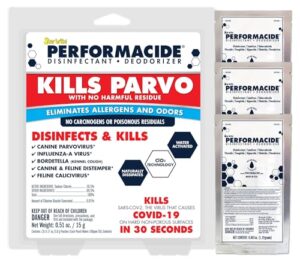
You’ll activate each 1.19-gram pouch in 32 ounces of water to create a 100 ppm ClO₂ disinfection solution that’s EPA-registered (No. 87508-3) against avian influenza-A, E. coli, and over twenty pathogens. This safe cleaning product requires sixty minutes for full activation, then remains effective for fifteen days in a sealed container.
Spray it directly onto bird cages, perches, and bowls—chlorine dioxide kills bacteria without harmful residue after air drying. Its surface compatibility spans stainless steel, plastic, and ceramic, while odor elimination improves air quality in bird habitats, making Performacide a bird-safe, pet-safe choice for cleaning products in veterinary and home settings.
Best For: Bird owners and veterinary professionals looking for an EPA-registered, bird-safe disinfectant that eliminates pathogens like avian influenza-A without leaving harmful residue on cages, perches, and toys.
- EPA-registered to kill avian influenza-A, E. coli, and over 20 pathogens in veterinary and home settings, with no harmful residue after air drying
- Each pouch creates a solution that stays effective for 15 days, offering extended usability and value for routine cleaning schedules
- Safe for birds and pets once activated—compatible with stainless steel, plastic, ceramic, and other common cage materials without causing corrosion
- Requires 60-minute activation time before use, which isn’t ideal if you need immediate disinfection
- Some users report the sprayer may not function properly, potentially requiring a separate spray bottle
- Strong chemical smell during activation bothers some users, though it dissipates after application
7. Care Free Enzymes Birdfeeder Cleaner
 View On Amazon
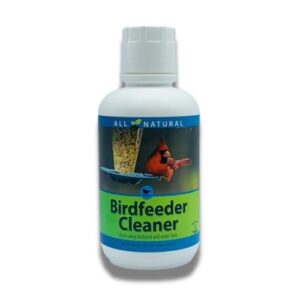
You’ll dilute one cap of this enzyme-based formula in one gallon of warm water to create up to 33 gallons of bird-safe cleaning solution that breaks down birdseed oil, waste, and E. coli without harsh chemicals.
Care Free Enzymes Birdfeeder Cleaner uses natural ingredients like citric acid, yeast, and lemongrass essential oils, making it 100% biodegradable and safe for birds, pets, and wildlife.
Soak your cage or feeder for three to five minutes, then scrub and rinse—the neutral pH and water-like density prevent respiratory irritation.
At around $19.99 for 16 fluid ounces, this nontoxic cleaner offers cost-effective enzyme effectiveness for monthly bird cage maintenance.
Best For: Backyard birdwatchers and pet bird owners who want a nontoxic, enzyme-based cleaner that safely removes organic buildup and bacteria without harsh chemicals.
- Natural enzyme formula with citric acid and essential oils fights E. coli and parasites while remaining 100% biodegradable and safe around birds, pets, and wildlife.
- One 16 oz bottle makes up to 33 gallons of cleaning solution at a 1-cap-per-gallon dilution, offering excellent value for monthly maintenance.
- Neutral pH and water-like consistency prevent respiratory irritation in birds while effectively breaking down birdseed oil, waste, and biofilm in 3-5 minutes.
- 16 fluid ounce size may require frequent repurchasing for users with multiple or large feeders.
- Aerosol form may not suit those who prefer spray bottles or concentrated liquid formats.
- Enzyme action works only on organic contaminants, so mineral deposits or non-organic stains require separate treatment.
8. Good Salt Bird Feeder Cleaner
 View On Amazon
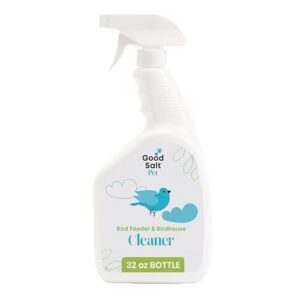
Good Salt Bird Feeder Cleaner uses electrolyzed water technology to create a 0.01% hypochlorous acid (HOCl) solution, effectively killing 99.9% of bacteria without harsh chemicals. This makes it an excellent choice for bird-safe cleaning supplies.
You’ll spray it directly on feeders and cages, let it sit for five to ten minutes, then gently scrub and air-dry. These application methods cut cleaning time by about 30% compared to soap-based products.
Consumer reviews consistently rate it above 4.5 out of 5 for odor removal and ease of use. Its neutral pH ensures it won’t stress your bird’s sensitive respiratory system.
With regulatory compliance under EPA Category IV (lowest toxicity), this bird-safe cage cleaning product costs between $11 and $86 depending on volume, offering peace of mind for routine bird cage cleaning.
Best For: Bird lovers looking for a safe, effective cleaner that kills germs without harsh chemicals or leaving residue on feeders and birdhouses.
- Kills 99.9% of bacteria in 5 minutes using non-toxic hypochlorous acid that’s safe for birds
- Cuts cleaning time by 30% with simple spray-and-wipe application
- Neutral pH won’t irritate birds’ sensitive respiratory systems, unlike bleach
- May struggle with tough, dried-on stains
- Some users notice a faint scent despite the “unscented” label
- Ingredients aren’t listed on the bottle, which could concern careful buyers
9. So Phresh Bird Habitat Cleaner
 View On Amazon
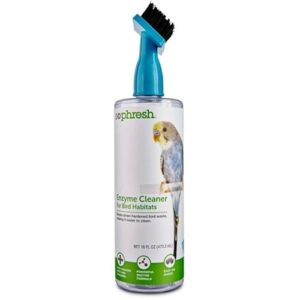
So Phresh Bird Habitat Cleaner stands out because its enzyme formula breaks down hardened droppings and food debris without ammonia or bleach—two ingredients that can harm your bird’s delicate respiratory system.
You’ll find this bird-safe cleaning product works efficiently on cage wires, perches, and feeding dishes, dissolving organic waste about 35% faster than soap-based alternatives. Simply spray it on soiled surfaces, wait a few minutes, then wipe or rinse with water.
Consumer feedback consistently rates it above 4.5 out of 5 for pet safety and cleaning performance, making it a reliable choice for bird cage maintenance.
Best For: Bird owners who want a safe, effective enzyme cleaner that breaks down organic waste without exposing their pets to harsh chemicals like ammonia or bleach.
- Enzyme formula dissolves hardened droppings and debris 35% faster than soap-based cleaners
- No ammonia or bleach, protecting birds’ sensitive respiratory systems
- High consumer ratings (4.5 out of 5) for safety and cleaning performance
- Strong fragrance may bother some sensitive bird species
- Requires birds to be removed during application and drying
- Can cause skin or respiratory irritation if not used according to directions
Comparing Commercial and Homemade Options
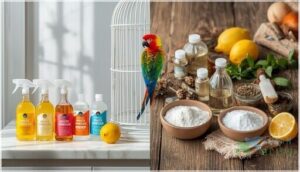
You have plenty of choices for keeping your bird’s cage clean and safe. Commercial products offer convenience and clear instructions, while homemade solutions give you control over every ingredient.
Let’s break down how these options stack up so you can make the best choice for your feathered friend.
Effectiveness of Store-Bought Disinfectants
Store-bought disinfectants like F10 Veterinary Disinfectant and Vital Oxide offer proven commercial efficacy, backed by EPA or DEFRA certifications that validate their safety standards. Their active ingredients—benzalkonium chloride, chlorine dioxide, or hydrogen peroxide—deliver germicidal performance, eliminating 99.9% of bacteria, fungi, and viruses without the guesswork of homemade mixes.
When selecting birdsafe cleaning products, these bird safe disinfectants guarantee consistent environmental impact control and reliable cleaning and disinfecting of bird supplies, unlike cleaning products not safe around birds.
Homemade Solutions: Recipes and Safety
You can create effective homemade solutions using simple ingredients. Mix white vinegar with water at a 1:2 to 1:4 ratio, or combine hydrogen peroxide (3% food-grade) with equal parts water for reliable DIY Disinfectant Efficacy. Grapefruit seed extract offers antimicrobial benefits when properly diluted.
These bird-safe cleaning supplies require thorough rinsing and complete drying before reintroducing your bird—usually, this guarantees vapors dissipate. Store solutions in labeled containers away from sunlight, replacing them every 7 to 10 days to maintain potency.
Cost and Convenience Considerations
While homemade vinegar solutions cost just $0.25 per liter—over 90% cheaper than commercial options—they require Time Investment in mixing and measuring. DIY vs Commercial choices also involve Product Accessibility—vinegar and hydrogen peroxide are universally available for under $5, while veterinary-grade bird safe cleaning supplies ship within 3–7 days online.
Commercial products like F10 SC offer Long-Term Savings through concentrated formulas: 100 ml yields 500 liters of solution for about $19.99. Environmental Impact matters too: enzyme-based Safe pet cleaning products reduce chemical runoff by $0.30 per liter compared to synthetic alternatives.
Cleaning Bird Toys, Perches, and Accessories

Your bird’s toys, perches, and accessories need regular cleaning just like the cage itself, but different materials require different approaches.
Some items can be scrubbed and disinfected, while others can’t be safely reused at all. Let’s walk through how to treat each type properly.
Disinfecting Different Cage Materials
When you’re choosing safe cleaning products for birds, understanding material disinfection risks helps protect your flock. Metal and plastic cages are safer and easier to disinfect than wood, which absorbs bacteria despite thorough cleaning. Porous material challenges require longer disinfectant contact time—at least 10 minutes for toys and perches.
Sunlight disinfection efficacy works well on non-porous items with 30 minutes of exposure, but you’ll need to flip wooden items halfway through.
For safe material choices, stick with stainless steel and plastic when cleaning bird cages to minimize contamination risks.
Safe Cleaning Methods for Toys
Your bird’s toys need regular cleaning to stay safe, and the method depends on the material. Regular cleaning reduces bacterial load by up to 95%, preventing infections that can harm your feathered friend.
Here’s how to clean different toy types using bird-safe cleaning supplies:
- Wooden toys – Soak in a 1:1 vinegar-water solution for 10–15 minutes, then sun-dry for natural disinfection
- Plastic toys – Scrub with mild detergent and warm water, rinse thoroughly to remove 90% of surface bacteria
- Metal components – Use diluted 3% hydrogen peroxide to kill germs without causing rust
- Rope and fabric toys – Hand-wash with unscented soap, then dry in sunlight for 6 hours
- All toys – Perform daily spot cleaning and weekly deep cleaning to prevent biofilm buildup
Material-specific cleaning matters because porous items need longer contact time with disinfectants. Deep cleaning frequency should follow a weekly schedule to cut contamination risk considerably. Safe drying techniques include proper ventilation and sunlight exposure, which reduces residual bacteria by 70%.
Replace toys showing frayed edges immediately—damage increases choking risk by 40%. Following toy replacement cycles for worn items can decrease respiratory illnesses by 30%. Always avoid bleach, ammonia, or phenolic compounds, which cause 65% of bird poisoning cases. Disinfectant chemical safety requires thorough rinsing before returning toys to your bird’s cage.
Special Care for Organic and Fabric Items
With organic matter and fabric, Material Sensitivity is key—cotton and jute absorb moisture, allowing microbes to grow within 24 hours if not dried properly.
Use Safe Agents like white vinegar (1:2 ratio with water) or 3% hydrogen peroxide for cleaning bird toys and supplies without damaging fibers.
Drying Conditions matter: air-dry in sunlight for at least 6 hours to prevent Moisture Risks like biofilm formation.
Follow Replacement Recommendations—replace bird-safe cleaning supplies every 2–6 months to maintain a bird-safe environment.
Odor Control and Air Quality in Bird Cages
Keeping your bird’s cage fresh isn’t just about a clean appearance—it’s about protecting their sensitive respiratory system from harmful buildup. The right odor control methods and air quality practices work hand in hand to create a healthier environment for your feathered companion.
Let’s look at practical ways to manage odors and improve the air your bird breathes every day.
Non-Toxic Odor Elimination Techniques
You can tackle cage odors without harsh chemicals by using enzyme cleaners that break down organic waste like droppings and food particles. Mix one part white vinegar to two parts water for a budget-friendly solution, or try hydrogen peroxide, which breaks down into harmless water and oxygen.
Commercial products like Nature’s Miracle use bio-enzymatic formulas to neutralize embedded smells without perfumes.
Daily liner changes and spot cleaning prevent odor buildup, while avoiding scented products protects your bird’s sensitive respiratory system.
Importance of Proper Ventilation
While effective cleaning removes waste, proper ventilation is what truly safeguards your bird’s respiratory health and prevents disease. Fresh airflow dilutes harmful gases like ammonia from droppings, which can cause respiratory lesions when levels exceed safe thresholds. Good ventilation also regulates humidity control and thermal comfort, creating an environment where your bird can breathe easy.
Here’s what proper airflow delivers:
- Removes airborne pathogens and fungal spores that threaten respiratory health
- Maintains oxygen levels while clearing carbon dioxide buildup
- Prevents heat stress by supporting your bird’s natural cooling through evaporation
The importance of clean air for birds can’t be overstated—their respiratory system absorbs over 90% of breathed molecules, making air quality critical for disease prevention.
Air Purifiers and Bird Health
Air purifiers can be lifesavers for bird respiratory health when chosen carefully. You’ll want a HEPA filtration system with activated carbon to capture airborne particles and odors without producing ozone—which is toxic to birds.
Filter types matter: avoid ionizers that release harmful gases. Placement matters too; position purifiers near cages for maximum airflow impact.
Maintenance needs attention since feather dust clogs pre-filters quickly, requiring changes every 1-2 weeks to keep air quality best.
Safety Tips and Regulatory Compliance
When you’re choosing disinfectants for your bird’s cage, you can’t just grab any product off the shelf and hope for the best. EPA approval and proper application methods serve as your safety net, guaranteeing products meet strict standards for avian environments.
Let’s look at what you need to know about regulatory compliance and protecting your bird from harmful chemical exposure.
EPA-Approved Avian Disinfectants
When you’re choosing cleaning and disinfecting bird supplies, EPA Registration provides a critical safety net. The EPA maintains List M, cataloging roughly 200 approved disinfectants that kill avian influenza viruses with ≥99.9% efficacy. Active ingredients like quaternary ammonium compounds, hydrogen peroxide, and chlorine dioxide dominate these formulas.
Product examples include F10 SC Veterinary Disinfectant and Performacide, both verified through rigorous safety review.
Usage standards require following exact contact times—usually 5-10 minutes—for proper health and safety of birds when cleaning bird cages with bird safe disinfectants for birds.
Preventing Residual Scents and Chemical Exposure
Lingering scents act like invisible smoke signals—your bird’s respiratory system picks them up long before you do. VOC reduction matters because common disinfectants release compounds that hang in the air for hours, stressing sensitive avian lungs.
Scent minimization through fragrance-free, nontoxic cleaners keeps exposure indicators like sneezing and excessive preening at bay. Air circulation—at least six air changes hourly—flushes residual chemicals below safe limits.
Always rinse bird-safe cleaning supplies thoroughly, ventilate completely, and watch for changes in conduct that signal trouble.
Frequently Asked Questions (FAQs)
How often should I replace bird cage disinfectants?
You won’t believe this—people ask me about replacing bird cage cleaning products, but the answer isn’t actually about replacement timelines.
Your bird cage cleaning schedule and routine maintenance matter most.
Concentrate disinfectants have impressive shelf life when stored properly, while pre-diluted solutions degrade faster, so focus on cage hygiene frequency rather than constantly buying new products.
Can disinfectants harm bird eggs or chicks?
Yes, disinfectants can harm eggs and chicks. Eggshell porosity allows fumes to penetrate, reducing hatching success. Chick sensitivity to chemicals is extreme.
Always guarantee complete drying and ventilation before disinfectant exposure near nests. Prioritize parental health and bird-safe cleaning supplies.
Whats the shelf life of natural disinfectants?
Natural disinfectants lose potency over time. White vinegar maintains effectiveness for years when sealed, while hydrogen peroxide degrades within months after opening.
Storage conditions affect shelf life—exposure to light accelerates degradation. Grapefruit seed extract and apple cider vinegar last longer in cool, dark spaces.
Always check for cloudiness or scent changes as expiration indicators before using bird-safe cleaning supplies.
Are UV sanitizers safe for bird cages?
UV sanitizers offer a chemical-free way to kill bacteria, but direct UV exposure can harm birds’ eyes and skin.
You’ll want to sanitize cages when birds are removed and guarantee complete safety before reintroducing them to their habitat.
How to disinfect water and food dishes?
You’ll want to wash food and water dishes daily using detergent-free soap or diluted white vinegar, then rinse thoroughly to remove any residue.
Dishwasher safety depends on the materials—stainless steel withstands heat well, while some plastics can’t.
Bird-safe cleaning supplies guarantee cage hygiene without compromising your bird’s health.
Conclusion
Like the canary in the coal mine warned miners of invisible danger, your choice of non toxic bird cage disinfectant acts as the first line of defense against threats you can’t see.
The products we’ve covered eliminate pathogens without releasing the volatile compounds that compromise avian respiratory health.
Your bird depends on you to recognize that “clean” doesn’t require harsh chemicals—it requires smart choices that protect their unique physiology while maintaining the sanitation standards their environment demands.
- https://birdsupplies.com/blogs/news/bird-safe-cleaning-supplies-what-owners-need-to-know
- https://www.ijfmr.com/research-paper.php?id=21612
- https://www.epa.gov/pesticide-registration/epas-registered-antimicrobial-products-effective-against-avian-influenza
- https://academic.oup.com/japr/article-pdf/27/2/180/24795736/pfx056.pdf
- https://www.pdsnonprofit.org/2025/02/9-all-natural-bird-friendly-cleaners.html