This site is supported by our readers. We may earn a commission, at no cost to you, if you purchase through links.
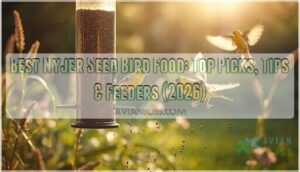
Walk past any backyard feeder in late summer and you’ll likely spot a flash of canary yellow—the American Goldfinch (Spinus tristis), drawn in by one thing: nyjer seed.
This tiny, oil-rich seed from the Guizotia abyssinica plant packs roughly 35–40% crude fat, making it one of the most calorie‑dense options you can offer wild birds.
Finches don’t just prefer it—they’re built for it, with bills narrow enough to extract seeds that larger birds ignore entirely.
Whether you’re new to backyard feeding or ready to upgrade your setup, the right nyjer seed bird food and feeder combination makes all the difference.
Table Of Contents
- Key Takeaways
- What is Nyjer Seed Bird Food?
- Which Birds Eat Nyjer Seed?
- Benefits of Feeding Birds Nyjer Seed
- Choosing The Right Nyjer Seed Feeder
- Setting Up Effective Nyjer Feeding Stations
- Tips for Storing and Handling Nyjer Seed
- Maintaining Clean and Healthy Feeders
- Top Nyjer Seed Bird Feeding Products
- 1. Goldfinch Zinnia Garden T Shirt
- 2. Gray Bunny Green Squirrel Proof Bird Feeder
- 3. DutchCrafters Large Hanging Hopper Bird Feeder
- 4. Birds Choice Hanging Tray Bird Feeder
- 5. More Birds Ruby Hummingbird Feeder
- 6. Oriole Orange Fruit Bird Feeder
- 7. More Birds Suet Cage Feeder
- 8. Wagner’s Black Oil Sunflower Bird Food
- 9. Wagner’s Safflower Seed Bird Food
- 10. Kaytee Dried Mealworms for Wild Birds
- Frequently Asked Questions (FAQs)
- How much does nyjer seed typically cost?
- Does nyjer seed attract unwanted pests or squirrels?
- Can nyjer seed grow into invasive plants?
- Why is nyjer seed sterilized before sale?
- Whats the global production volume of nyjer?
- Can nyjer seed attract birds year-round?
- Does nyjer seed work in mixed feeders?
- How often should nyjer seed be replaced?
- Is nyjer seed safe for ground-feeding birds?
- Can weather conditions affect nyjer seed quality?
- Conclusion
Key Takeaways
- Nyjer seed (Guizotia abyssinica) packs roughly 35–40% crude fat and up to 24% protein, making it one of the most calorie-dense foods you can offer small songbirds like American Goldfinches (Spinus tristis) and Pine Siskins (Spinus pinus).
- Tube and mesh sock feeders with narrow ports are your best match for nyjer—standard hoppers and mixed feeders waste up to 50% of the seed because the tiny 2mm kernels slip right through oversized openings.
- Commercial nyjer is heat-sterilized above 120°C, leaving over 99.9% of seeds sterile, so you won’t end up pulling mystery plants from your patio all season.
- Fresh nyjer should be replaced every 3–5 days depending on humidity, stored in airtight containers between 50–70°F, and discarded immediately if birds stop visiting—rancid or moldy seed can make your backyard flock sick.
What is Nyjer Seed Bird Food?
Nyjer seed — also called thistle or niger seed — comes from the Guizotia abyssinica plant and has been a go-to bird food for decades.
Its high oil content makes it a favorite among finches — explore the best bird food options for finches to see why nyjer tops the list.
It’s tiny, black, hull‑free, and packed with natural oils that small songbirds genuinely can’t resist.
Here’s what makes it worth knowing about before you fill your first feeder.
Origins and Botanical Source
Long before it landed in your backyard feeder, Nyjer seed (Guizotia abyssinica) was already ancient history. Farmers in the Ethiopian highlands were cultivating this plant before 3000 B.C. — making it one of humanity’s oldest oilseed crops. It belongs to the Asteraceae family, the same botanical tribe as daisies and sunflowers.
Nyjer seed has fed the world since before 3000 B.C., making it one of humanity’s oldest oilseed crops
- Native to East Africa’s Ethiopian and Eritrean highlands
- Now grown globally, with India as the leading exporter
- Harvested from yellow, daisy-like flower heads each season
Its high oil content seeds make it valuable for wildlife‑friendly gardens.
Common Names and Appearance
You might know it as thistle seed — that’s the most common label you’ll spot on store shelves, even though true thistles aren’t involved.
Nyjer synonyms pile up fast: niger, nyger, nug, ramtil.
Regardless of the name, the seed itself is unmistakable — a tiny, needle‑like shape with a glossy shell texture and deep black seed color, almost like a miniature grain of rice.
Its oil-rich energy source(https://storables.com/garden/what-is-nyjer-bird-seed/) provides small birds’ high metabolism.
| Common Name | Also Used By |
|---|---|
| Thistle seed label | General retail packaging |
| Niger / Nyger | International birding guides |
| Nyjer Seed | Wild Bird Feeding Institute trademark |
| Ramtil / Nug | Specialty seed importers |
Finches — American Goldfinch, Purple Finch, House Finch — zero in on that slender profile instantly.
Nutritional Profile and Benefits
That small frame packs a serious punch. Nyjer seed delivers roughly 5,150–5,500 calories per kilogram — impressive caloric density for such a tiny seed. Crude fat sits around 35%, so the fatty acid benefits keep feathers waterproof and bodies warm.
Protein levels reach up to 24%, supporting molting and muscle. Add mineral richness in calcium and iron, and bird health and nutrition practically takes care of itself.
Which Birds Eat Nyjer Seed?
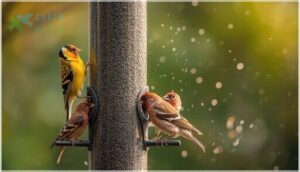
Nyjer seed doesn’t attract just any bird — it draws in a specific crowd with small beaks and big appetites for tiny, oil‑rich seeds.
If you’ve ever wondered why certain birds flock to your feeder while others ignore it completely, the answer usually comes down to beak size and seed preference.
Here are the birds most likely to show up once you put out Nyjer seed.
Finches and Small Songbirds
Nyjer Seed is a VIP pass for finches and small songbirds. Their slim, pointed bills fit perfectly into feeder ports—bill morphology matters more than most birders realize.
Flocking dynamics mean once a few birds find your finch feeders, others quickly follow. Smart feeder spacing, fresh oil content, and thoughtful seed selection keep these small songbirds coming back all season.
American Goldfinch Traits
The American Goldfinch (Spinus tristis) is a backyard celebrity worth knowing.
Its dramatic plumage cycle swings from bright lemon yellow in summer to soft buff-brown in winter — and bill color change follows suit, shifting from orange to darker tones off-season.
Set up finch feeders stocked with Nyjer seed, and you’ll catch their acrobatic mating displays.
Their lifespan range reaches up to ten years.
Purple Finch and House Finch Preferences
Both the Purple Finch (Haemorhous purpureus) and House Finch (Haemorhous mexicanus) are reliable visitors when you offer Nyjer seed — though their habits differ. Habitat influences play a real role here:
- Feeder Type Preference — Purple Finches favor tube-style finch feeders; House Finches rotate between tubes and hoppers.
- Seasonal Feeding Patterns — Purple Finches spike in winter; House Finches visit year-round.
- Social Foraging Behavior — House Finches crowd noisily; Purple Finches feed more quietly.
Pine Siskins and Mourning Doves
Two birds, two very different personalities — Pine Siskins (Spinus pinus) and Mourning Doves (Zenaida macroura) both love Nyjer seed, just on their own terms.
Siskins cling to tube feeders and arrive in unpredictable flocks during irruption years.
Doves prefer calm ground trays.
| Feature | Pine Siskins | Mourning Doves |
|---|---|---|
| Feeding Behavior | Cling, hang upside down | Walk, steady head-bobbing pecks |
| Nyjer Feeders | Tube or sock feeders | Low trays, ground platforms |
| Seasonal Habitat | Nomadic, winter irruptions | Year-round residents |
| Feeder Crowding | Assertive, chase smaller birds | Calm, prefer quiet spots |
| Disease Management | Highly salmonella-susceptible | Clean trays reduce mold risk |
Keep feeders spaced apart — it’s your best Bird Feeding Tips move for healthier, happier flocks.
Benefits of Feeding Birds Nyjer Seed
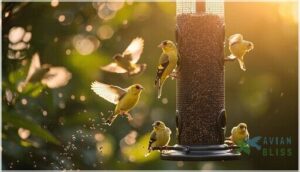
Nyjer seed isn’t just popular with finches — it’s genuinely good for them. The reasons come down to a few things that make it stand out from other bird foods.
Here’s what makes it worth keeping in your feeder year-round.
High Oil Content for Bird Health
Nyjer seed is one of the best high-energy finch foods you can offer. With roughly 35–40% fat, it delivers serious thermoregulation support and fat reserve building — helping small birds stay warm overnight in freezing temps.
That dense energy boost also fuels feather development during molting. Consistent seed quality like this genuinely has a noticeable impact for bird health.
Mess-Free Feeding Experience
One underrated perk of Nyjer seed is how little mess it actually makes. Heat-Treated Seed rarely sprouts under feeders, so you’re not pulling mystery plants from your patio all spring.
- Use Spill-Reducing Feeders with narrow ports
- Add Ground-Catch Trays to collect husks
- Choose Squirrel-resistant, Rodent-Deterrent Design feeders
- Follow Seed storage tips with Low-Dust Storage containers
Attracting Colorful Songbirds
Want a yard full of living color? Nyjer seed is your shortcut to finch attraction without the fuss. Male American Goldfinches hit their brightest plumage in late spring and summer, so colorful plumage timing matters.
Smart bird feeder placement — near habitat plantings like coneflowers — amplifies songbird visual cues. Seasonal color peaks align perfectly with consistent nyjer feeding, turning small songbirds into daily backyard regulars.
Choosing The Right Nyjer Seed Feeder
Not all feeders are created equal — and with nyjer seed, the feeder you pick can make a real difference in which birds actually show up. The right design needs to stay accessible to small beaks without spilling everywhere.
Here are the main feeder types worth knowing about.
Tube Vs. Sock Feeders
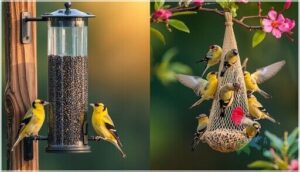
Regarding birdseed selection, tube feeders and mesh sock feeders each have real trade-offs. tube feeders offer better durability and weather resistance, with controlled port flow that limits seed waste.
Sock feeders give finches natural clinging behavior and stronger finch attraction — but wear out faster and need higher maintenance frequency.
Choose based on how much upkeep you’re willing to do.
Squirrel-Proof Feeder Options
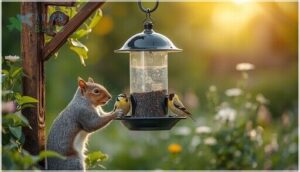
Squirrels will test every feeder you own — so picking the right defense matters. Weight-Activated Ports, like those on the Squirrel Buster Finch, use Adjustable Spring Tension to close a Metal Shroud Design when heavier animals land.
Dome Baffles and Cylinder Baffles add another layer of protection. Combined with a sturdy Tube Feeder or Mesh Feeder, your Nyjer seed stays where it belongs — with the birds.
Hopper and Tray Feeder Suitability
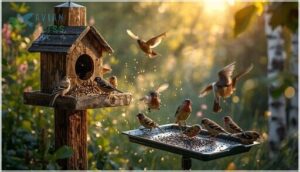
Hopper and tray feeders aren’t the best match for Nyjer seed — but they can work with a few adjustments. Here’s what to keep in mind:
- Flow control matters — standard hopper openings are too wide, letting Nyjer spill freely.
- Drainage design in tray feeders prevents soaked, clumped seed after rain.
- Seed spillage drops dramatically when you add a catch tray beneath tube feeders.
- Species access shifts on platform feeders — larger birds crowd out the finches you’re trying to attract.
- Weather protection is minimal on open trays, so Nyjer goes stale fast.
For smarter bird feeder selection, use trays as catchers, not primary feeders.
Setting Up Effective Nyjer Feeding Stations
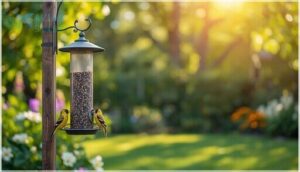
Where you put your feeder matters just as much as what you put in it. A few smart choices can turn your yard into a regular stop for goldfinches, siskins, and other small songbirds. Here’s what to keep in mind when setting up your Nyjer feeding station.
Feeder Placement for Bird Safety
Placement is everything in backyard birding. Keep nyjer seed feeders within 3 feet of windows or beyond 30 feet to minimize window collision risk. For predator distance, hang feeders 5–10 feet high, away from dense cover.
| Placement Factor | Recommendation |
|---|---|
| Window Collision | Under 3 ft or over 30 ft |
| Predator Distance | 5–10 ft high, 10 ft from shrubs |
| Weather Shelter | Leeward side, morning sun |
| Human Access | 5–6 ft for easy cleaning |
Creating a Finch-Friendly Environment
Think of your yard as a finch ecosystem, not just a feeding spot.
Native thistle planting and layered shrub shelter give small birds (Spinus tristis, Haemorhous mexicanus) safe cover between feeder visits.
A shallow birdbath — 1 to 2 inches deep — with a few pebbles encourages bathing.
Leaf litter microhabitats boost foraging, while low lighting strategies reduce nighttime stress, making Nyjer seed benefits work harder year‑round.
Winter Feeding Strategies
Winter strips away natural food sources fast, so your timing matters. Start setting out Nyjer seed in early fall — finches remember reliable spots.
Use multi feeder rotation to keep one clean and dry while another stays active outside.
Wind sheltered placement near shrubs cuts heat loss.
Calorie boosting oils in this wild bird food help small birds survive subfreezing nights.
Tips for Storing and Handling Nyjer Seed
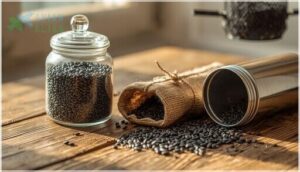
Good nyjer seed doesn’t stay good forever — and how you store it matters more than most people realize.
few simple habits can keep your seed fresh, your birds happy, and your feeders free of mold.
what you need to know.
Best Storage Practices
Storing nyjer seed the wrong way is a fast track to wasted money and hungry birds. Because this wild bird seed is rich in oils, it spoils faster than most bird food. Keep it in airtight containers, away from heat and light.
- Use metal tins or gamma-seal bins for moisture control
- Aim for cool temperature storage between 50°F–70°F
- Choose light-blocking storage like opaque containers or dark shelves
- Build a simple rotation system — label bags with purchase dates
- Keep your bird feeder stocked only with fresh nyjer seed
Shelf Life and Freshness Indicators
Fresh nyjer seed is dark black, feels slightly oily, and smells faintly nutty — trust those senses. An easy oil test: crush a pinch between your fingers; good bird food leaves a visible residue.
A color change to dusty gray or a sour odor cue means it’s past its prime. Unopened, nyjer seed lasts 6–12 months; once opened, aim to use it within six months.
Preventing Mold and Spoilage
Mold doesn’t knock — it just moves in quietly when moisture and warmth combine. Keep your nyjer seed fresh with these bird feeding tips:
- Store in airtight containers like galvanized cans or gamma-seal bins
- Use moisture barriers such as wide-roof feeders or dome toppers
- Practice thorough feeder drying before every refill
- Apply temperature control — cool, dark storage slows spoilage fast
- Choose mold-resistant materials like stainless or BPA-free plastics
Maintaining Clean and Healthy Feeders
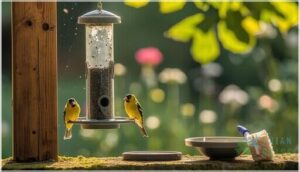
A clean feeder isn’t just nice to have — it’s what keeps backyard birds healthy and coming back.
Leftover seed and moisture can quickly turn a feeding station into a source of mold and disease, which is the last thing you want.
Here’s what you need to know to keep things fresh and safe.
Cleaning Frequency and Methods
Think of your nyjer seed bird feeders like a kitchen — you wouldn’t cook in a dirty one. Daily checks catch clumping or moisture before it turns into a real problem.
Weekly deep-clean sessions using a 10% bleach solution keep bacteria at bay. Seasonal sanitizing each spring and fall rounds out solid garden bird feeder maintenance.
Always use soft-bristled brushes as tool essentials, and air‑dry parts completely — drying techniques matter more than most people realize.
Preventing Disease in Wild Birds
Clean feeders are only half the picture — what you’re watching for matters just as much. Wild bird care means scanning your goldfinches and siskins for warning signs before problems spread.
Keep these bird feeding tips in mind:
- Swollen eyes in finches often signal mycoplasma
- Lethargic birds regurgitating seed indicate trichomonosis
- Five or more deaths near nyjer seed bird feeders warrant reporting to wildlife agencies
Sanitation protocols, mold monitoring, and consistent health screening form the backbone of real wild bird conservation.
Refilling and Maintenance Tips
Once your feeders are spotless, keeping them that way comes down to smart refill habits. Check nyjer feeders every 2–3 days during peak finch season — daily in winter. For oil freshness checks, crush a few seeds on paper; no stain means stale seed.
| Task | Timing | Why It Matters |
|---|---|---|
| Feeder Refill Timing | Every 2–4 days | Prevents stale seed buildup |
| Moisture Control | After rain or humidity | Stops mold in ports |
| Cap Thread Care | Each refill | Prevents cracking and leaks |
| Spill Prevention Techniques | Fill to ¾ capacity | Reduces waste and pests |
| Oil Freshness Checks | Every 4 weeks | Ensures nutritional quality |
Bird feeding best practices for tube-style nyjer feeders include using a funnel — simple, effective, and your patio will thank you.
Top Nyjer Seed Bird Feeding Products
You’ve got the knowledge — now it’s time to put it to work.
Whether you’re just starting out or ready to upgrade your setup, the right gear makes a real difference in how many birds you attract.
Here are some top products worth adding to your feeding station.
1. Goldfinch Zinnia Garden T Shirt
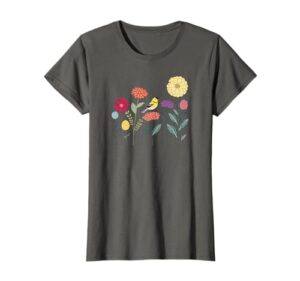
If you love goldfinches as much as they love nyjer seed, this shirt was practically made for you. Artist Trina Ansel captured a real American goldfinch (Spinus tristis) perched on a zinnia bloom — bright yellow plumage, tiny beak, the whole scene.
It’s printed on a lightweight cotton blend, available in sizes S through XXL, and ships in one to two business days. At $16.99, it’s an easy way to wear your passion for backyard birds.
| Best For | Bird lovers, backyard birders, and garden enthusiasts who want to show off their love for goldfinches and wildflowers in a casual, everyday tee. |
|---|---|
| Primary Use | Bird apparel |
| Target Birds | Goldfinches |
| Material | Fabric |
| Weight | 4.8 oz |
| Price Range | $16.99 |
| Ease of Use | Wear and go |
| Additional Features |
|
- Cute, detailed design featuring a real American goldfinch on a zinnia bloom — great conversation starter for nature lovers
- Lightweight and classic fit makes it comfortable for everyday wear or outdoor activities
- At $16.99, it’s an affordable way to rep your love of birds and gardens
- Only comes in a classic fit, so it might not work for everyone’s preferred style
- No material or care instructions listed, which makes it hard to know what you’re getting fabric-wise
- The design is pretty niche — if you’re not into birds or floral art, it probably won’t appeal to you
2. Gray Bunny Green Squirrel Proof Bird Feeder
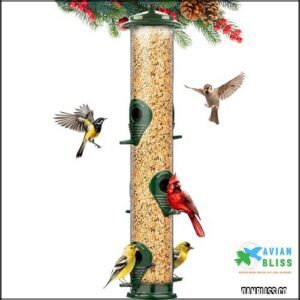
Now, if you want a feeder that actually keeps squirrels out — mostly — Gray Bunny Green Squirrel Proof Bird Feeder (Model GB-6847M6P) is worth a look.
Its steel cage surrounds the seed tube with openings sized just right for finches and chickadees, while blocking larger visitors. Six feeding ports let multiple birds eat at once, and the locking lift-lid makes refilling quick.
At 14.4 ounces, it’s lightweight but sturdy enough to handle rain and repeated use.
| Best For | Bird lovers who want to attract small birds like finches and sparrows while keeping most squirrels at bay. |
|---|---|
| Primary Use | Seed feeder |
| Target Birds | Finches, sparrows |
| Material | Metal |
| Weight | 14.4 oz |
| Price Range | Mid-range |
| Ease of Use | Lift-lid refill |
| Additional Features |
|
- Six feeding ports mean several birds can eat at the same time without crowding
- The lift-lid makes refilling and cleaning genuinely easy
- Metal build holds up well in rain and daily outdoor use
- Some users have reported rust forming on the lid and base over time
- Determined squirrels have still managed to get in for some buyers
- Seeds can fall into the gap between the plastic cylinder and the base, creating extra mess
3. DutchCrafters Large Hanging Hopper Bird Feeder
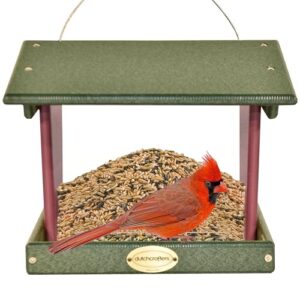
DutchCrafters Large Hanging Hopper Bird Feeder (Model LBF-3) is built to last — handcrafted by Amish woodworkers in Northern Indiana using 100% recycled poly lumber from milk jugs. It won’t crack, fade, or rot, no matter the weather.
Clear Plexiglass sides let you monitor seed levels at a glance, and the hinged roof makes refilling easy. Its aluminum mesh floor drains rainwater, keeping your nyjer seed dry and fresh.
At 11.75" square, it gives goldfinches, chickadees, and cardinals plenty of room.
| Best For | Bird lovers who want a durable, low-maintenance feeder that holds up in all weather and looks good doing it. |
|---|---|
| Primary Use | Seed feeder |
| Target Birds | Cardinals, chickadees |
| Material | Poly lumber |
| Weight | 6.25 lbs |
| Price Range | Premium |
| Ease of Use | Hinged roof refill |
| Additional Features |
|
- Built from recycled poly lumber, so it won’t crack, rot, or fade — this thing is genuinely built to last
- Easy to refill and clean thanks to the hinged roof and removable Plexiglass sides
- The aluminum mesh bottom drains rainwater well, keeping seed dry and fresh
- At 6.25 lbs, it’s on the heavier side, so you’ll need a solid hanging setup
- Costs more than your average feeder, which might give budget-conscious buyers pause
- Poly lumber looks great but doesn’t have the classic wooden charm some people prefer
4. Birds Choice Hanging Tray Bird Feeder
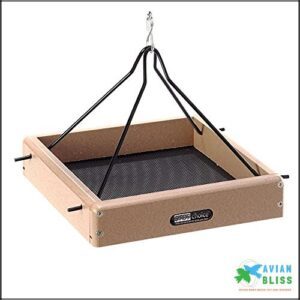
Birds Choice Hanging Tray Bird Feeder keeps things simple — and that’s exactly why it works. Built from recycled poly-lumber and stainless steel hardware, it’s tough enough to outlast a few harsh winters without cracking or rusting.
The screened bottom drains moisture well, so your nyjer seed stays fresh longer.
At roughly 11 inches square, it gives goldfinches, cardinals, and house finches (Haemorhous mexicanus) plenty of room to feed side by side.
Easy to clean, eco‑friendly, and genuinely low‑maintenance.
| Best For | Bird lovers who want a low-fuss, eco-friendly feeder that attracts a wide variety of backyard birds. |
|---|---|
| Primary Use | Seed feeder |
| Target Birds | Titmice, woodpeckers |
| Material | Recycled poly-lumber |
| Weight | 2 lbs |
| Price Range | Mid-range |
| Ease of Use | Easy fill, clean |
| Additional Features |
|
- Made from recycled poly-lumber and stainless steel — built to handle the elements without rusting or cracking
- Screened bottom drains moisture, keeping seed fresh and cleanup quick
- Roomy enough for multiple birds to feed at once, drawing species like Cardinals, Woodpeckers, and Titmice
- The hanging wires can bend or slip, making secure installation a bit tricky
- May need extra mounting hardware to feel truly stable
- Not the best pick for yards with heavy squirrel traffic — they can do a number on it
5. More Birds Ruby Hummingbird Feeder
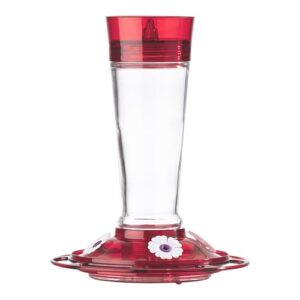
Hummingbirds aren’t finches, but they’re hard to ignore when they’re hovering at your window.
The More Birds Ruby Feeder holds 10 ounces of nectar in a clear glass bottle, so you can see exactly when it’s running low. Four flower-shaped ports with bee guards keep insects out, and the built-in ant moat does the same for crawlers. The detachable base makes cleaning genuinely easy — just a vinegar-water soak and you’re done. Red color, smart design, real results.
| Best For | Backyard birdwatchers who want an easy-to-maintain feeder that actually brings hummingbirds in close. |
|---|---|
| Primary Use | Nectar feeder |
| Target Birds | Hummingbirds |
| Material | Glass, plastic |
| Weight | 10 oz |
| Price Range | Budget-mid |
| Ease of Use | Wide bottle opening |
| Additional Features |
|
- The clear glass bottle lets you see the nectar level at a glance — no guessing games
- Built-in ant moat and bee guards on the flower ports keep most pests away from the nectar
- The detachable flat base makes hand-cleaning quick and straightforward
- Not dishwasher safe, so every clean is a manual job
- Some users have found the nectar doesn’t always reach the feeding ports properly
- Packaging has been known to arrive less than secure, which can mean a damaged feeder before you even hang it
6. Oriole Orange Fruit Bird Feeder
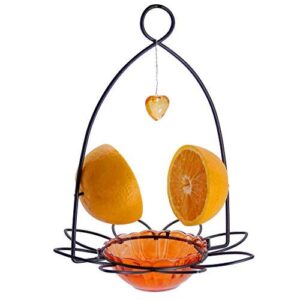
Orioles are basically the peacocks of the backyard bird world — vivid, bold, and worth every bit of effort to attract. This feeder is built around what Baltimore orioles (Icterus galbula) actually want: fresh orange halves and open perches.
Rust-resistant aluminum posts hold fruit firmly while extended perches fit two birds at once. The bright orange recycled plastic body does double duty — it’s visually attractive to orioles and built to last.
Made in the USA with a lifetime guarantee, it’s a solid long-term investment.
| Best For | Bird lovers and gardeners who want to attract Baltimore Orioles and enjoy a colorful, easy-to-clean feeder for their backyard. |
|---|---|
| Primary Use | Nectar/fruit feeder |
| Target Birds | Orioles |
| Material | Metal, plastic |
| Weight | 7.4 oz |
| Price Range | Budget |
| Ease of Use | Detached bowl |
| Additional Features |
|
- Dual-purpose design works with nectar, grape jelly, and fresh fruit — lots of flexibility
- Detached bowl makes cleanup quick and painless
- Bright orange color naturally draws orioles in without any extra effort
- Small 3 oz capacity means frequent refills, especially during busy feeding seasons
- Some users have flagged flimsy construction and poorly aligned metal tabs
- The bowl doesn’t always sit securely, which can be frustrating over time
7. More Birds Suet Cage Feeder
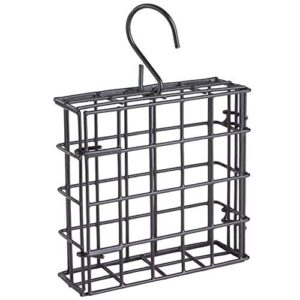
Small but mighty, this feeder punches well above its weight. The More Birds Suet Cage Feeder holds one standard suet cake inside a solid, powder-coated steel grid that resists rust and bending season after season.
Woodpeckers, nuthatches, and chickadees can cling from any angle — exactly how they’d feed on tree bark in the wild.
The double-locking closure keeps squirrels frustrated and your suet where it belongs.
Bonus: you can swap in fruit, seed cakes or nesting materials as the seasons change.
| Best For | Backyard birders who want to attract woodpeckers, nuthatches, and chickadees with a no-fuss, durable suet feeder. |
|---|---|
| Primary Use | Suet feeder |
| Target Birds | Woodpeckers, nuthatches |
| Material | Steel |
| Weight | 2.82 oz |
| Price Range | Budget |
| Ease of Use | Double-lock closure |
| Additional Features |
|
- Built tough — powder-coated steel holds up through rain, snow, and whatever else the seasons throw at it
- Double-locking closure keeps squirrels out and suet in
- Versatile enough to hold fruit, seed cakes, or nesting materials, not just suet
- Determined squirrels can sometimes pry it open, so you may need extra securing measures
- Only holds one suet cake at a time, so heavy traffic means more frequent refills
- Birds can take a while to find it — don’t be surprised if it sits ignored for a few days at first
8. Wagner’s Black Oil Sunflower Bird Food
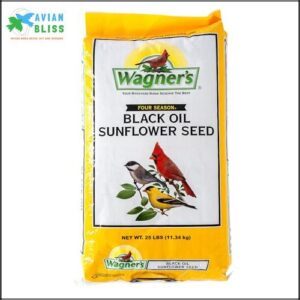
Wagner’s Black Oil Sunflower Bird Food is a reliable companion to any nyjer setup. While nyjer targets finches specifically, this 100% black oil sunflower seed widens your yard’s appeal — drawing cardinals, chickadees, nuthatches, and woodpeckers to the same station.
The thin shells make cracking easy for small-beaked birds, and with at least 24% crude fat, your backyard visitors get serious fuel.
No fillers, no wasted seed on the ground.
Made in the USA, it’s a straightforward, high-quality choice that earns repeat visits.
| Best For | Backyard bird enthusiasts who want to attract a wide variety of birds — from cardinals and chickadees to woodpeckers and nuthatches — with a single, high-quality seed. |
|---|---|
| Primary Use | Bird seed |
| Target Birds | Cardinals, finches |
| Material | Seed |
| Weight | 25 lbs |
| Price Range | Mid-range |
| Ease of Use | Ready to pour |
| Additional Features |
|
- Thin shells make it easy for small-beaked birds to crack open and eat
- High fat content gives birds serious energy, especially useful in colder months
- No fillers means less waste and more of what birds actually want
- Some bags have been reported to contain wood chips or non-seed material
- Dropped seeds can germinate, leading to unwanted sunflower plants in your yard
- Sunflower seeds alone may not satisfy birds that prefer nyjer or mixed blends
9. Wagner’s Safflower Seed Bird Food
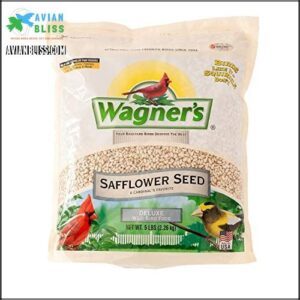
If black oil sunflower broadens your yard’s menu, safflower narrows it — in a good way.
Wagner’s Safflower Seed is a smart pick if squirrels keep raiding your feeders. They genuinely dislike the bitter taste, so most walk away.
Meanwhile, cardinals, chickadees, grosbeaks, and titmice don’t mind at all.
At 25% crude fat and 17% protein, it’s solid nutrition.
The 5-pound resealable bag keeps things fresh, and it fits standard tube, hopper, or platform feeders without any fuss.
| Best For | Bird lovers who want to attract cardinals and songbirds without turning their yard into a squirrel buffet. |
|---|---|
| Primary Use | Bird seed |
| Target Birds | Cardinals, songbirds |
| Material | Seed |
| Weight | 5 lbs |
| Price Range | Mid-range |
| Ease of Use | Ready to pour |
| Additional Features |
|
- Squirrels, grackles, and starlings tend to avoid it, so the good birds actually get to eat
- Cardinals, chickadees, and titmice love it — you’ll see real activity at your feeder
- Made in the USA with quality grains, and works in most standard feeders
- It costs more than your typical mixed seed bag
- The husks are thick and can pile up under your feeder pretty quickly
- Not every bird is into safflower, so it won’t appeal to your whole yard crowd
10. Kaytee Dried Mealworms for Wild Birds
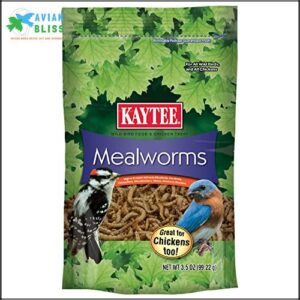
While safflower keeps the squirrels away, sometimes your birds need a real protein boost — and that’s where Kaytee Dried Mealworms come in.
Bluebirds, robins, wrens, and chickadees go absolutely wild for these. With 47% crude protein and 25% fat, they pack serious nutrition into a tiny package. Oven-dried means no mess, no live worms wriggling around, and no preservatives either.
Mix them with your Nyjer seed or offer them solo in a tray feeder. Your backyard birds won’t complain either way.
| Best For | Backyard bird enthusiasts who want to attract a wide variety of species and give their birds — especially babies and high-energy breeds like bluebirds and woodpeckers — a solid protein boost. |
|---|---|
| Primary Use | Bird food |
| Target Birds | Bluebirds, wrens |
| Material | Dried mealworms |
| Weight | 3.5 oz |
| Price Range | Budget |
| Ease of Use | Ziplock seal |
| Additional Features |
|
- Attracts a great mix of birds including bluebirds, robins, wrens, chickadees, and cardinals
- Oven-dried with no preservatives — easy to store and feed with a handy ziplock seal
- Versatile enough to mix with seed blends or serve solo in a tray feeder
- Can have a pretty strong, unpleasant smell that some people find off-putting
- A bit pricey for only 3.5 ounces — goes fast if you’ve got a busy feeder
- Easy to overfeed, which can lead to waste or cause issues for birds if they fill up on mealworms alone
Frequently Asked Questions (FAQs)
How much does nyjer seed typically cost?
you get what you pay for — and nyjer seed is no exception.
Expect to spend around $20 per pound in standard 20 lb bags, or up to $50 per pound in smaller retail packs.
Does nyjer seed attract unwanted pests or squirrels?
Squirrels mostly ignore nyjer — it’s too small and low-calorie to bother with. Spilled seed can attract rodents, so sweep up daily and use tube feeders with narrow ports.
Can nyjer seed grow into invasive plants?
No need to weed out nyjer from your garden worry list. Commercial seed is heat-sterilized at 248°F, leaving over 9% sterile — so any stray sprouts stay stunted and harmless.
Why is nyjer seed sterilized before sale?
Nyjer seed gets heat-sterilized to around 120°C before entering the U.S.
— mainly to kill dodder weed seeds that hitchhike in shipments from India and Ethiopia, where dodder can devastate entire crops.
Whats the global production volume of nyjer?
Small but mighty, nyjer punches above its weight globally. India leads production at 27,000 metric tons annually, while Ethiopia contributes roughly 305,000 metric tons — together dominating worldwide supply.
Can nyjer seed attract birds year-round?
Yes, it absolutely can. American goldfinches visit nyjer feeders across all four seasons, and in milder climates like California, you’ll see finches and house finches showing up consistently year-round.
Does nyjer seed work in mixed feeders?
Mixed feeders are practically the worst thing you can do for nyjer.
Their tiny 2mm seeds slip right through oversized ports, waste up to 50%, and leave finches frustrated while larger birds take over.
How often should nyjer seed be replaced?
Replace nyjer seed every 4 to 5 days under normal conditions. In hot, humid weather, swap it out every 3 to 4 days. Discard immediately if birds stop visiting.
Is nyjer seed safe for ground-feeding birds?
Fresh, fell nyjer is fine for ground-feeding birds like Mourning Doves. The real risk is damp, spoiled seed. Wet nyjer molds fast and can make ground foragers sick.
Can weather conditions affect nyjer seed quality?
Weather hits nyjer seed hard. Humidity above 60% triggers mold within hours, heat accelerates oil rancidity, and direct sunlight degrades nutritional value fast. Store it cool, dry, and dark.
Conclusion
Like a well-placed feeder on a quiet morning, the right nyjer seed bird food transforms your backyard into something worth watching.
You’ve got the knowledge now—which seeds pack the most nutrition, which feeders suit finches best, and how to keep everything fresh and clean.
Put it into practice, and those flashes of canary yellow won’t just pass through.
They’ll stay.
Your setup, your care, and the right seed make all the difference.