This site is supported by our readers. We may earn a commission, at no cost to you, if you purchase through links.
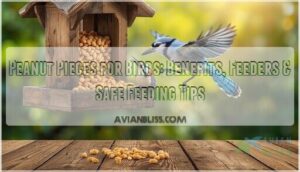
If you’ve ever watched a blue jay dart in for a snack or seen a woodpecker hammer away at a feeder, you know birds don’t waste time when peanut pieces are on the menu. These bite-sized powerhouses deliver a crunchy texture and a pure hit of energy, making them irresistible for feathered visitors.
Unlike whole peanuts, peanut pieces for birds skip the tough hulls, offering easy access to protein, fat, and essential nutrients.
When you want to support bird health and attract a vibrant mix of species to your backyard, understanding how to serve peanut pieces can make all the difference.
Table Of Contents
Key Takeaways
- Peanut pieces deliver 25-30% protein and 45-50% fat, providing essential energy for wild birds during winter months and migration periods when natural food sources are scarce.
- Choose platform or hopper-style feeders over tube feeders for peanut pieces, and place them 4-6 feet high within 3-5 meters of natural cover to boost bird visits by up to 22%.
- Store peanut pieces in airtight containers below 70% humidity and clean feeders every 1-2 weeks to prevent mold and aflatoxin contamination that can seriously harm birds.
- Limit peanut portions to 5-15% of birds’ daily energy needs and offer them strategically during cooler months to attract diverse species like woodpeckers, chickadees, and nuthatches without causing overconsumption.
What Are Peanut Pieces for Birds?
Peanut pieces are shelled, chopped peanuts designed specifically for wild bird feeding. They pack all the nutritional punch of whole peanuts in a ready-to-serve format that fits easily into feeders and mixes well with other seeds.
Here’s what makes them stand out and which birds you can expect at your feeder.
Description and Characteristics
Think of Peanut Pieces as a crunchy, energy-packed treat for wild birds. Their Peanut Texture is just right—shelled, chopped, and sized for safe Bird Feeding. Birds love the oiliness and flavor, especially in varied Feeder Designs.
Here’s what sets them apart:
- Crunchy texture
- 3–12 mm particle size
- No hulls
- Low moisture
- Pure Nutrient Profiles.
When evaluating the benefits of peanut pieces, you should take into account the overall literature review process.
How Peanut Pieces Differ From Whole Peanuts
Peanut Pieces differ from whole peanuts in ways that matter for bird feeding. The physical differences show up in texture—pieces break into 3–12 mm chunks, fitting most bird feeders without jamming ports. Whole peanuts often clog standard tubes. Oil content spreads faster in pieces, attracting wild birds quickly.
Here’s a nutrient comparison:
| Feature | Peanut Pieces | Whole Peanuts |
|---|---|---|
| Protein (%) | 25–30 | 25–30 |
| Fat (%) | 45–50 | 45–50 |
| Particle Size | 3–12 mm | 15–25 mm |
| Feeder Fit | Most feeders | Limited types |
| Mold Risk | Dries faster | Retains moisture |
Peanut piece variations suit different feeding preferences—smaller birds handle chunks easier during breeding seasons. Understanding research networks can help identify key factors in bird feeding and nutrition.
Common Bird Species Attracted
Once you’ve set up your bird feeder with peanut pieces, expect 6–8 seed-eating passerines like blue jays and chickadees to visit regularly. Woodpeckers stop by too, though less frequently—about 15–25% of total visits.
In winter, tufted titmice and other backyard birds increase feeder activity by 30–50%, drawn by peanut pieces when natural food sources dwindle.
Nutritional Benefits of Peanut Pieces
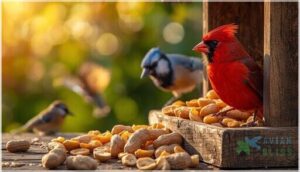
Peanut pieces aren’t just a backyard favorite—they’re a nutritional powerhouse that keeps wild birds thriving through every season. When you understand what’s inside these small, shelled morsels, you’ll see why so many species return to your feeder day after day.
Here’s what makes peanut pieces such a valuable addition to your feeding station.
Protein and Fat Content for Bird Health
Your backyard birds need more than just empty calories. Peanut pieces deliver 25-30% protein, packed with essential amino acids like leucine and lysine that fuel growth and muscle repair.
The 45-50% fat content—rich in linoleic acid—provides energy supplements for active days and fosters vibrant plumage.
This nutrient balance makes peanut pieces a powerhouse in bird nutrition and seed blends.
Essential Vitamins and Minerals
Beyond protein and fat, peanut pieces pack vitamin E—around 20–30 mg per 100 g—to support immune health and feather quality. Selenium benefits include antioxidant protection, though calcium stays low, so pair peanuts with mineral-rich supplements. Phosphorus and potassium balance fluid needs and muscle function.
This nutrient bioavailability makes peanut pieces a smart addition to your wild bird care routine, enriching their diet naturally.
Energy Value for Wild Birds
Caloric yield matters when supporting wild birds through harsh winters. At roughly 5.8 kilocalories per gram, peanuts deliver remarkable energy density—about 25–35% of total winter feed calories in mixed blends.
That fat content (45–50%) fuels migration and cold survival, while protein (25–30%) maintains muscle.
Smart feeding strategies balance nutrient profiles, ensuring bird metabolism stays strong when natural food runs scarce.
Choosing The Right Feeder for Peanut Pieces
Not all bird feeders work well with peanut pieces. The size and texture of these chunky morsels mean you’ll want to skip your standard tube feeder and opt for something more suitable.
Let’s look at the feeder types that give birds easy access while keeping the feed fresh and secure.
Recommended Feeder Types
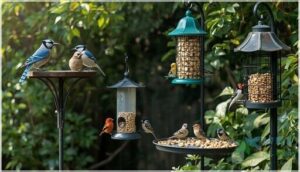
Finding the right feeder designs can transform your feeding stations into bustling hubs of activity. Here’s what works best for peanut pieces:
- Platform feeders attract jays, nuthatches, and titmice with exposed perches, boosting visits by 12–26%
- Hopper-style peanut bird feeder options show 18–32% higher traffic than generic seed dispensers
- Squirrelproof feeders with anti-squirrel cages cut theft by 60–75%
- Tray-style designs welcome ground-foraging birds
- Weather-resistant metal or coated polymer units last 15% longer
Skip tube feeders—peanut pieces are too large.
Feeder Placement for Maximum Bird Visits
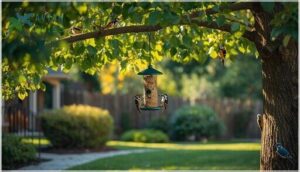
Location is everything when you want to see birds thrive at your feeders. Raise your peanut bird feeder 4–6 feet off the ground to reduce predator access and increase visits by 12–18%. Place it within 3–5 meters of shrubs or trees for 22% higher species richness.
Consistent, quiet spots yield 28% more sustained visits over two weeks.
| Placement Factor | Optimal Range/Approach |
|---|---|
| Feeder Height | 4–6 feet above ground |
| Feeder Proximity | 3–5 meters from natural cover |
| Bird Visibility | Clear sightlines from perches |
| Seed Accessibility | Low-traffic, calm routes |
| Visit Patterns | Multiple feeders 10–15 meters apart |
Tips for Squirrel-Proofing Peanut Feeders
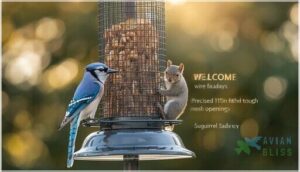
Squirrels can outsmart almost any setup, but the right feeder designs make all the difference. Weight-activated mechanisms shut out squirrels while welcoming songbirds, cutting theft by 50–70%.
- Install baffle systems and predator guards on poles to block climbing routes
- Choose caged peanut feeders with 1¼-inch mesh openings for smaller birds only
- Position your bird feeder 5–10 feet from launch points to prevent leaps
These squirrel deterrents keep peanuts where they belong.
Safe Feeding Practices and Storage Tips
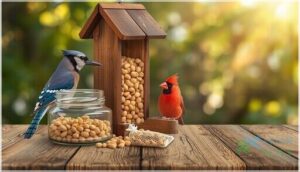
Feeding peanut pieces isn’t just about tossing them in a feeder and hoping for the best. How you store, serve, and maintain these high-fat treats makes all the difference in keeping your backyard birds healthy and safe.
Let’s walk through the essentials that’ll help you avoid common pitfalls and give your feathered friends the best experience possible.
Proper Storage to Maintain Freshness
Storing peanut pieces correctly preserves their nutritional value and keeps your feathered friends safe. Use airtight packaging and storage containers to lock in freshness—they’ll extend shelf life up to 6 months at room temperature, or 12 months refrigerated.
Keep humidity control in mind, too. Relative humidity above 60% invites mold within weeks. Store your bird seed in cool, dark spaces for ideal freshness maintenance and wildlife nutrition.
Portion Control and Moderation
Once you’ve nailed down proper storage, feeding strategies come next. Offer 2–3 peanut pieces per bird visit to support wildlife balance without causing overconsumption. Studies show small portion sizes boost backyard bird feeding success by 22% while reducing waste.
Smart feeder management includes:
- Limit servings to 5–15% of daily energy needs for ideal bird nutrition
- Rotate protein sources regularly for balanced wildlife nutrition
- Use 0.5–1 gram portions to deter mammals
- Monitor consumption and adjust peanuts accordingly
Preventing Contamination and Mold
Fresh feed matters, but moisture is mold’s best friend. Keep humidity below 70% and clean your feeders every 1–2 weeks—that slashes mold spores by 40–50%.
Choose tested, low-aflatoxin peanut pieces and store them in airtight containers below 20°C.
Humidity management and feeder sanitizing aren’t just storage tips—they’re your frontline aflatoxin control. Smart bird feeding tips protect backyard bird feeding success and wildlife nutrition year-round.
Supporting Wildlife With Peanut Pieces
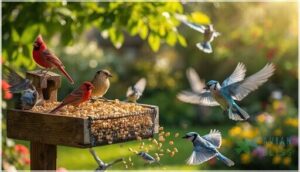
Offering peanut pieces transforms your backyard into a thriving habitat that sustains birds throughout the year. When you provide this high-energy food source thoughtfully, you’ll notice more species visiting and staying longer in your space.
Peanut pieces, offered with care, turn any backyard into a lively haven where birds gather and thrive throughout the seasons
Let’s explore how to optimize the wildlife benefits of peanut feeding in your own garden.
Enhancing Backyard Bird Diversity
Diversity is the heartbeat of backyard bird watching. When you add peanuts to your bird seed selection, you invite a broader range of bird species—woodpeckers, cardinals, and even insectivores—into your space.
Smart feeder placement and thoughtful garden layout turn simple habitat creation into a vibrant sanctuary, especially when you use seed mixtures that cater to wild birds’ varied needs.
Seasonal Feeding Recommendations
As you watch wild birds flock to your backyard, remember that peanuts play a starring role in seasonal diets. Offer peanut pieces during cooler months and peak bird migration—think late winter and early spring—when foraging patterns shift and energy needs soar.
Mind temperature control; above 90°F, peanuts spoil quickly. Smart bird feeder placement and thoughtful bird seed selection keep your backyard bird watching lively year-round.
Integrating Peanut Pieces Into Wildlife Gardens
A thriving wildlife habitat starts with smart Garden Layout and thoughtful Feeder Placement. By weaving peanut pieces into your Backyard Wildlife plan, you’ll support Bird Migration and attract up to six extra species each season.
Mix Seed Variety, add native plants, and keep water nearby—these Wildlife Gardening steps turn your space into a hub for Bird Friendly Gardening and Wildlife Conservation.
Frequently Asked Questions (FAQs)
Can peanut pieces attract unwanted pests or rodents?
Yes, peanut pieces can attract rodents and insects if feeders aren’t cleaned regularly or if spilled seed accumulates. Proper feeder sanitation, secure storage, and rodent deterrents help maintain wildlife balance while enjoying backyard birds safely.
Are roasted or raw peanut pieces better?
As the saying goes, “The proof is in the pudding”—both roasted and raw peanut pieces deliver strong protein and fat for backyard birds.
However, roasted varieties reduce mold risk, while raw options preserve more vitamins.
How long do peanut pieces stay fresh?
Peanut pieces stay fresh for six to eight weeks in cool, dry storage. Once opened, use them within two to four weeks.
Proper storage in airtight containers prevents mold and maintains quality for your backyard visitors.
Can peanut pieces harm birds if moldy?
Absolutely—moldy bird food poses serious health risks. Fungal contamination produces aflatoxins that cause liver damage in wild birds, especially small species.
Bird toxicity increases with exposure, making proper peanut spoilage prevention essential for bird nutrition and health.
Whats the cost comparison with other feeds?
Budget-conscious bird lovers find peanut pieces cost $50–$6 per pound—pricier than sunflower seed blends but more affordable than premium mixed feeds.
Seasonal market trends and bulk purchases reveal real cost savings on quality wild bird seed.
Conclusion
Like Mary Poppins’ spoonful of sugar, peanut pieces for birds transform your backyard into a place where nourishment meets delight. You’ve learned the nutritional science, feeder strategies, and safety protocols that protect your feathered guests.
Now comes the rewarding part: watching chickadees, nuthatches, and jays thrive on the energy-dense fuel you provide. Store properly, serve thoughtfully, and you’ll create a wildlife haven that hums with activity season after season.