This site is supported by our readers. We may earn a commission, at no cost to you, if you purchase through links.
You’re three miles into a coastal marsh when a flash of yellow catches your eye—probably a prothonotary warbler, but you need a closer look. You fumble through your backpack, digging past your lunch, water bottle, and rain jacket to find your binoculars tangled in their strap. By the time you extract them, the bird’s gone. Sound familiar?
The difference between a successful birding trip and a frustrating one often comes down to how well your gear travels with you. Portable birding equipment kits solve this problem by keeping your optics, guides, and accessories organized and accessible. When you can grab what you need in seconds instead of minutes, you don’t just see more birds—you actually enjoy the experience instead of wrestling with your backpack.
Table Of Contents
- Key Takeaways
- Essential Gear for Portable Birding Kits
- Benefits of Portable Birding Equipment
- Key Features to Consider in Birding Kits
- Top 8 Portable Birding Equipment Kits
- Tips for Building Your Own Birding Kit
- Frequently Asked Questions (FAQs)
- How long do birding binoculars typically last?
- Whats the best magnification for forest birding?
- Can birding equipment damage birds natural behavior?
- Should I prioritize weight or durability?
- How often should scope lenses be cleaned?
- How do I clean birding optics safely?
- What is the best way to store equipment?
- How do I protect gear from theft outdoors?
- Are there portable options for bird call playback?
- What insurance options cover birding equipment?
- Conclusion
Key Takeaways
- Packing light, weatherproof gear and compact optics keeps you nimble and ready for action in any terrain.
- Smart organization—like modular storage and quick-access harnesses—means you’ll spot more birds and waste less time fumbling.
- Field-tested essentials, from binoculars and spotting scopes to birding apps and journals, turn every outing into a story worth telling.
- Balancing durability and weight in your kit is key for wild adventures, while regular maintenance and secure storage protect your investment.
Essential Gear for Portable Birding Kits
When you’re heading out for a wild birding adventure, having the right gear can make all the difference. Let’s talk about what you’ll actually want in your kit to keep things light, practical, and ready for anything.
Here’s what you should look for when building a setup that works wherever your boots take you.
Compact Binoculars and Monoculars
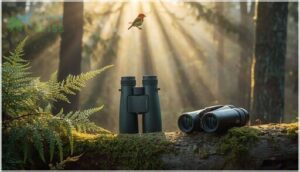
Let’s talk game-changers: Binoculars and monoculars are the backbone of any birding gear. Go for compact models—think under 200 grams—for easy weight reduction.
Prioritize Optical Clarity and Lens Coatings for crisp views, and don’t overlook Ergonomic Design for comfort. Image Stabilization is a bonus, but even a basic monocular boosts your bird watching essentials and overall optical equipment game.
Lightweight Spotting Scopes
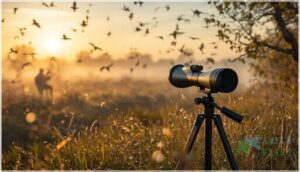
If you crave sharper views of distant birds, a lightweight spotting scope is your secret weapon. These optical equipment champs—usually under 1.2 kg—offer impressive Optical Quality and Scope Durability. Top models feature sophisticated Lens Coatings, solid Tripod Stability, and even Image Stabilization. Toss one in your birding gear, and you’ll spot lifers others only dream about.
For key performance, understanding web server issues is vital for maintaining an uninterrupted online experience.
Field Guides and Birding Apps
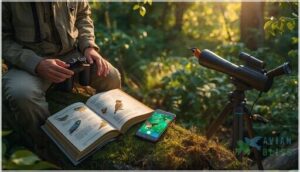
Spotting lifers through a scope is thrilling, but nothing beats a trusty field guide or the Merlin Bird ID app for Species Identification and Bird Call Analysis. Most birders weave Digital Guides and printed guidebooks together, cross-checking IDs on the fly. With Offline Access, you won’t miss a beat—even in remote habitats. App Reviews prove accuracy rivals classic field guides.
For accurate species identification, researchers rely on key research networks to inform their findings.
Weatherproof Clothing and Accessories

Once you’ve nailed your bird ID game, don’t forget your armor—weatherproof clothing and accessories keep you wild, not miserable. Waterproof Jackets with Breathable Fabrics shrug off rain while Insulation Layers trap heat. Windproof Hats and Winter Touchscreen Gloves fend off chills.
Moisture Management matters, so pair Waterproof Hiking Boots with a Birdwatching Vest and stash a Waterproof Notebook for field notes.
Benefits of Portable Birding Equipment
When you’re out chasing lifers, portable gear makes all the difference. You want equipment that moves with you and fits wherever the birds take you.
Here’s how the right kit can keep you nimble and ready for anything.
Enhanced Mobility and Convenience
Ever tried chasing a “lifer” through tangled brush with a heavy pack? That’s where Compact Optics and Lightweight Kits shine. Modular Design means you stay nimble, ready for action. Quick Access harnesses keep your binoculars at hand, while Weatherproof Gear shrugs off sudden rain. Here’s what boosts your freedom in the field:
- Compact Optics
- Lightweight Kits
- Quick Access harnesses
- Weatherproof Gear
Quick Setup and Easy Transport
You know that feeling when you’re itching to hit the trail? Rapid Deployment is your friend—most Portable Kits pack up in under ten minutes.
Modular Design means Birdwatching Gear and Binoculars are ready for action, not buried.
Easy Transport is real: lightweight Birding Accessories and Outdoor Gear and Equipment keep you moving fast, with Quick Setup that won’t slow you down.
Versatility for Different Environments
Terrain Adaptation is your secret weapon for wild Birding. With Outdoor Gear and Equipment that flexes across Habitat Diversity, you’re ready for anything—rain, sand, sun, or swamp. Here’s how portable kits tackle Environmental Factors:
- Weather Resistance layers
- Modular optics for Bird Identification
- Compact rain covers
- Humidity-resistant lenses
- Multi-habitat Wildlife Observation tools
Key Features to Consider in Birding Kits
Picking the right birding kit isn’t just about grabbing the fanciest gear. You want equipment that’s tough, light, and sharp enough to catch every detail.
Here’s what you should look for when sizing up your options.
Durability and Weather Resistance
When you’re chasing lifers in wild weather, durability isn’t optional—it’s survival. Waterproof Testing, Field Durability, and Weather Sealing matter as much as a good pair of waterproof hiking boots. Rugged birding kits shrug off rain, mud, and knocks, thanks to impact protection and corrosion resistance.
Here’s how top outdoor gear stacks up:
| Gear Type | Waterproof Rating | Field Durability |
|---|---|---|
| Binoculars | IPX7 | 87% after 100 hrs |
| Hiking Equipment | IPX6–IPX7 | 8.5/10 abrasion |
| Birding Kits | Sealed/impact | 15–25% more weight |
Weight and Packability
If you’ve ever cursed a heavy pack on a steep trail, you know why weight and packability rule the wild. Smart birding kits use packable designs and lightweight materials—think Compact Optics and Portable Cases. Here’s what to look for:
- Foldable tripods
- Ultracompact binoculars
- Ergonomic grips
- Backpack-friendly Birdwatching Essentials
- Simplified Outdoor Gear
Optical Performance and Magnification
Ever tried counting feather patterns on a warbler at dusk? That’s when Lens Quality and Light Transmission matter most. Binoculars with phase-coated prisms and a 7x–8x Magnification Limit deliver crisp Optical Resolution—even in low light.
For distant raptors, a Spotting Scope or Monocular with Image Stabilization keeps shaky hands from ruining the view. Telephoto Lenses? Birders’ secret weapon.
Storage and Organization Options
Counting feather patterns is one thing—finding your lens in a tangled mess is another. That’s why smart birders swear by Modular Storage and Waterproof Bags for gear protection. Pack Optimization is pure freedom. Cable Management? Say goodbye to knotted cords. Try these:
- Camera Backpack
- Waist Pack
- Birdwatching Vest
- Silicone-trapped cases for optical instruments and birding accessories
Top 8 Portable Birding Equipment Kits
Ready to upgrade your birding game with gear that’s built for real adventure? Here are eight portable kits that make tracking, spotting, and recording birds easier wherever you roam.
Let’s see which essentials can take your wild days to the next level.
1. Moshi Touchscreen Winter Gloves
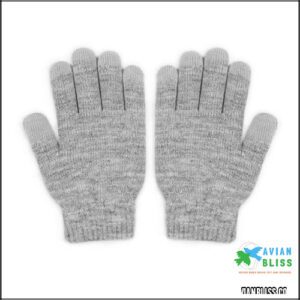
Glove Materials matter when you’re gripping binoculars or swiping through birding apps. Moshi Touchscreen Winter Gloves blend Winter Insulation with Touchscreen Tech, so you won’t freeze your fingers texting or logging lifers.
Hand Dexterity stays sharp—adjusting gear or snapping photos is no problem. These Winter Touchscreen Gloves offer Cold Weather Comfort for any Outdoor Adventure.
Sure, they’re not built for Arctic blasts, but as Birding Accessories and Gear, they keep birdwatching equipment (and you) ready for action, not fumbling in the cold.
Best For: Birdwatchers and anyone who needs to use their phone outdoors in chilly, but not extreme, winter weather.
- Touchscreen-friendly fingertips make texting and app use easy without removing gloves
- Fuzzy inner layer adds warmth and comfort for cold weather walks or birding sessions
- GripTrak pattern helps securely hold binoculars, phones, or other gear
- Not warm enough for very cold or snowy conditions
- Durability and fit can be hit-or-miss, with some users reporting issues over time
- Touchscreen sensitivity may fade and require firmer presses as gloves age
2. Portable Mosquito Repellent Device
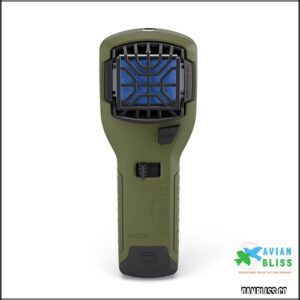
When your hands are warm but the mosquitoes are plotting, a portable mosquito repellent device is your best defense. This nifty gadget creates a 15-foot zone of protection, perfect for birding, hiking, or any outdoor adventure.
Forget sticky sprays—Device Technology here means scent-free, no-DEET, and safe for pets. It’s easy to pack, runs on a fuel cartridge, and keeps you focused on wildlife observation, not swatting bugs.
Outdoor safety and insect control, all in one pocket-sized piece of portable protection.
Best For: Outdoor enthusiasts like birders, campers, and picnickers who want quick, scent-free mosquito protection without fuss.
- Creates a 15-foot mosquito-free zone, ideal for stationary outdoor activities.
- Scent-free and DEET-free, safe for pets and people.
- Easy to use, portable, and simple to refill.
- Less effective in windy conditions.
- Refills can be pricey over time.
- Not suitable for walking or hiking due to safety concerns with the fuel cartridge.
3. Binocular Chest Harness Strap System
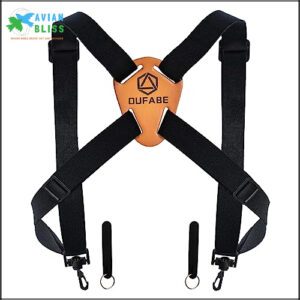
After you’ve outsmarted the bugs, it’s time to tackle the ache of lugging optics. A Binocular Chest Support Strap System is a revolutionary solution for birding and outdoor activities.
Thanks to adjustable strap designs and high-strength support materials, you get chest comfort and binocular stability all day. The ergonomic design evenly spreads weight, so neck strain won’t ruin your adventure.
Quick strap adjustments keep binoculars close, secure, and ready—whether you’re bushwhacking for a lifer or staking out a busy feeder.
Best For: Bird watchers, hikers, and outdoor enthusiasts who want hands-free, comfortable support for their binoculars or camera during long outings.
- Relieves neck and shoulder fatigue with even weight distribution.
- Fits most body types and optics thanks to adjustable, universal design.
- Keeps binoculars secure and easily accessible for quick viewing.
- Elasticity may decrease over time with heavy use.
- Some users report customer service and durability concerns.
- May not support very large or heavy binoculars or cameras effectively.
4. Waterproof Monocular Telescope For Outdoor
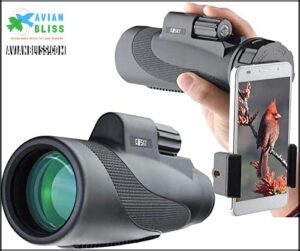
A good waterproof monocular is your ace in the hole when rain tries to crash your birding party. Outdoor optics like the Gosky QHMN02 Telescope Kit boast waterproof designs, fog-proof seals, and shockproof housing—so you won’t baby your gear in rough weather.
Twist-up eyecups and universal smartphone adapters turn every sighting into a photo op. These monocular lenses pack big power in a small frame, making them must-have birding accessories for anyone who values wild freedom and reliable outdoor equipment.
Best For: Outdoor enthusiasts who want reliable, weatherproof optics for bird watching, stargazing, and capturing nature photos with their phone.
- High power magnification and bright, clear images even in tough conditions
- Waterproof, fog-proof, and shockproof build stands up to rain and rough handling
- Universal smartphone adapter lets you easily snap photos and videos of what you spot
- May feel bulky or heavy for users with smaller hands or long hikes
- Smartphone adapter isn’t a perfect fit for every phone model
- Photo quality can be pixelated or washed out when using the adapter
5. Universal Mobile Camera Lens Kit
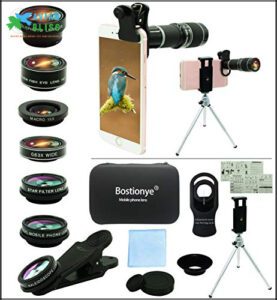
Ever tried nailing a shot of a warbler flitting through the canopy with just your phone? That’s where a universal mobile camera lens kit kicks in. With options like 20x telephoto and 15x macro, you get real Mobile Zoom and Image Enhancement—turning your smartphone into a field-ready Camera System.
Sure, Lens Quality and Camera Stabilization aren’t perfect, but over 70% of users snap identifiable bird pics within weeks. For outdoor and wildlife photography, these optics and photography tools make digital birding bold and easy.
Best For: Birdwatchers, travelers, and anyone who wants to boost their smartphone photography for outdoor adventures or creative shots.
- Wide range of lenses lets you capture distant, close-up, and wide-angle photos with your phone.
- Compatible with most smartphones and easy to carry for travel or field use.
- Great for quickly snapping clear, identifiable pictures of wildlife and scenery.
- You might need to remove your phone case to use the lenses.
- Getting the lens lined up just right can take some patience.
- Tripod and mount can be unstable, and some lenses may distort images.
6. Camera Backpack For Daily Use
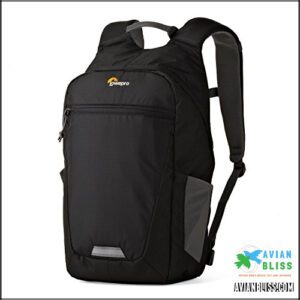
Freedom on the trail starts with a camera backpack built for daily storage and lens safety. You get storm-flap closures, padded dividers, and rain covers—real camera protection for outdoor photography.
Backpack materials like high-denier nylon shrug off woodland scrapes, while tripod integration keeps your optics and photography gear ready for action.
For wildlife photography, the minimalist design won’t scream “camera bag,” but it’ll keep your camera system organized and secure. If you’re bold enough to chase lifers, this pack’s got your back.
Best For: Wildlife photographers and day hikers who want secure, comfortable camera protection without drawing attention to their gear.
- Storm-flap closure and included rain cover keep gear safe from weather and dust.
- Removable camera compartment lets you switch between photo missions and daily carry.
- Moisture-wicking padding and lightweight build make it easy to wear all day.
- No exterior straps or fasteners for attaching tripods or extra gear.
- Lacks a real hip belt for better weight distribution on longer hikes.
- May be too small for users with larger camera bodies or multiple big lenses.
7. Weatherproof Birding Journal Notebook
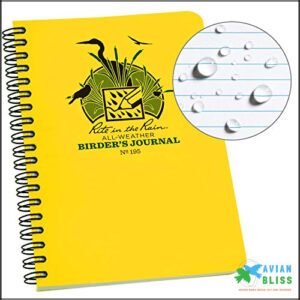
Ever tried scribbling birding logs in a downpour? That’s where a weatherproof notebook earns its stripes. With a Polydura cover and waterproof binding, this field notebook shrugs off rain, mud, and sweat—your nature observation notes stay safe.
Its wire-O spine keeps pages aligned, even when you’re flipping with cold fingers. Perfect for bird watching and field recording, the recyclable wood-based paper won’t smear under pressure.
Journal durability matters; you want your wild adventures archived, not erased by a rogue puddle.
Best For: Birders, hikers, and outdoor enthusiasts who need a reliable notebook for jotting notes or sketches in wet, muddy, or unpredictable weather.
- Tough Polydura cover and weatherproof pages protect notes from rain, sweat, and mud.
- Wire-O binding keeps pages intact and easy to flip, even with gloves.
- Works with regular pencils or all-weather pens for hassle-free writing.
- Limited to 64 pages, so frequent users may need extra notebooks.
- Larger size may not fit in smaller pockets or packs.
- Higher price than standard notebooks, especially if you need several.
8. Wildlife Trail Camera System
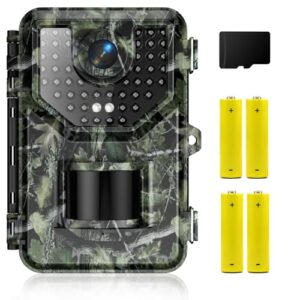
Ready to catch birds in action while you’re miles away? A wildlife trail camera system is your secret weapon for Wildlife Monitoring and Trail Surveillance. With motion detection, 4K clarity, and no-glow infrared Camera Triggers, you’ll track elusive species without spooking them.
Trail Cameras excel at Wildlife Photography and Observation, capturing lifers in low light. They’re tough—IP66 waterproof, dustproof, and built for Outdoor Adventure and Exploration.
For bold birders, it’s a revolutionary tool in Wildlife Conservation and refined Wildlife Observation Techniques.
Best For: Birders, nature lovers, and property owners who want reliable, hands-off wildlife monitoring in any weather.
- Crystal-clear 4K images and fast motion detection, even at night.
- Extremely durable—IP66 waterproof, dustproof, and ready for rugged outdoor use.
- Simple setup with long battery life makes it easy for anyone to get started.
- Foggy mornings or heavy condensation can blur your most anticipated shots.
- Only supports micro SD cards and transferring files via USB is slow.
- Small latches and controls might be tricky to use with gloves or big hands.
Tips for Building Your Own Birding Kit
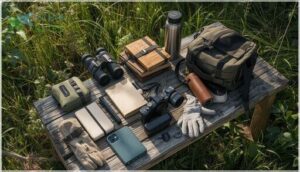
Everyone has their own style regarding birding gear, but building a kit that actually fits your wild plans makes all the difference.
Here’s what to think about before you hit the trail or the backyard. Check out these pointers before packing up your next adventure.
Choosing The Right Equipment for Your Needs
Choosing birding gear isn’t about tossing gear in a backpack—it’s an act of rebellion against “one-size-fits-all.” Dial in your Equipment Selection based on the wild spaces you crave. Swamp, hill, or woods?
Building your birding kit is a rebellion against one-size-fits-all—choose gear that matches your wild terrain and adventure
Birding Essentials like Binoculars or field guides are just the start. Gear Customization and Outdoor Preparation are your keys to nature photography, wildlife observation, and true adventure.
Must-Have Items for Beginners
Let’s talk Starter Kits that won’t weigh you down. For Birding Essentials, load up on entry-level 8×42 Binoculars, a handy Field Guide, and a bird ID app to boost those Bird Identification and Observation skills.
Add a weatherproof layer, and suddenly Bird Watching becomes pure joy—no confusion, no heavy lifting, just wild, open-air adventure.
Advanced Gear for Experienced Birders
If entry-level kit feels like training wheels, now’s the time to release real freedom. Reach for Expert Binoculars with precision lenses, field-ready monoculars, and spotting scopes built for speed and Optical Quality.
Why stop there? Toss in smart Birding Technology and camera systems—suddenly, your Field Optics become a mobile Wildlife Photography Kit primed for any wild encounter.
Packing and Maintenance Recommendations
Once you’ve got badass optics and high-tech gear, how you pack and care for everything determines real freedom in the field. Organize your kit so it’s grab-and-go, not a puzzle hunt. For maximum Kit Optimization and Gear Protection, remember:
- Waterproof storage for binoculars, camera backpack, and field journals
- Quick access to a weather sleeve for your spotting scope and tripod
- Regular maintenance checks to spot damage before adventures become rescue missions
That’s how wild stays wild—no gear left behind, and all your birding dreams within reach.
Frequently Asked Questions (FAQs)
How long do birding binoculars typically last?
Binocular Durability usually spans 5–15 years with solid maintenance. Lens Longevity drops if you skip cleaning or use them in harsh weather.
For top Optical Performance and Product Lifespan, store them dry and get periodic professional checkups.
Whats the best magnification for forest birding?
For Forest Birding, 8×42 Binoculars hit the sweet spot—enough Magnification Options for Optical Quality and Bird Species ID, yet bright in shady Viewing Conditions.
You’ll spot plumage details without the shaky hands, perfect for Bird Watching and Wildlife Photography and Observation.
Can birding equipment damage birds natural behavior?
Like a pebble tossed in a pond, birding gear can ripple through wildlife behavior—think flashes causing Bird Stress, or Habitat Disruption from noisy setups.
Practicing Equipment Ethics and Conservation Methods helps limit Wildlife Impact during Bird Watching and Photography.
Should I prioritize weight or durability?
When you’re hiking deep for birding, Weight Tradeoffs matter, but Durability Tests show rugged Outdoor Adventure Gear wins for Gear Longevity.
Kit Optimization means balancing Portable Designs—waterproof Binoculars last longer, but lighter gear boosts comfort and freedom.
How often should scope lenses be cleaned?
Did you know that 22% of birders clean their scope lenses after every trip in humid or dusty spots? For excellent Optical Health, aim for Lens Maintenance after each outing, especially in wild conditions—Field Hygiene keeps your Nature Observation Tools sharp.
How do I clean birding optics safely?
For safe Lens Cleaning, skip household sprays—use a soft brush or air for debris, then a damp microfiber cloth with approved Cleaning Solutions.
Optical Care means gentle Birding Maintenance, plus Safe Storage for your Nature Observation Tools, Camera, and Wildlife Photography Equipment.
What is the best way to store equipment?
Stash your gear in a weatherproof waist pack or birdwatching vest with padded compartments for quick access.
Use labeled organizers and toss in a waterproof notebook, portable insect repellent, and lens wipes—it keeps your kit organized and protected.
How do I protect gear from theft outdoors?
Keeping gear safe outdoors means combining Outdoor Security basics—like Equipment Locks and a personal locator beacon—with smart habits.
Use a Waterproof Waist Pack and notebook, portable insect repellent, and always consider Gear Insurance for serious Field Safety.
Are there portable options for bird call playback?
Here’s the scoop—if you want to “call” the shots in bird watching, there are Bird Call Devices, Portable Speakers, and Bird Song Apps like Merlin Bird ID, all fit for easy field use and sound playback adventures.
What insurance options cover birding equipment?
Policy coverage for birding gear includes homeowners and renters insurance, but adding insurance riders boosts equipment protection—think binoculars, cameras, or even your waist pack.
For wild trips, travel policies and risk management steps simplify the claim process.
Conclusion
Imagine a birder sprinting through tangled reeds, gear bouncing wildly—then pausing, calm and collected, as a rare heron lands nearby. That’s the power of portable birding equipment kits: they turn chaos into opportunity, letting you focus on the thrill instead of the scramble.
Whether you’re chasing lifers or savoring everyday sightings, the right kit transforms every outing into a story worth telling. So pack smart, travel light, and let curiosity lead you deeper into the wild.