This site is supported by our readers. We may earn a commission, at no cost to you, if you purchase through links.
Your backyard robin just took a cooling dip in that decorative bird bath you bought last summer, but here’s something most bird lovers don’t realize: certain materials can leach toxins into the water or harbor bacteria that put feathered visitors at serious risk. As an avian veterinarian, I’ve treated too many cases of heavy metal poisoning and bacterial infections traced back to well-intentioned but unsafe bird bath choices.
The material you select matters far beyond aesthetics—it directly impacts whether your bird bath becomes a health hazard or a safe sanctuary. From concrete’s porous surface that demands proper sealing to ceramic glazes that may contain lead, each material presents distinct advantages and potential dangers that deserve your attention before you make your next purchase.
Table Of Contents
Key Takeaways
- Material selection directly impacts bird safety, with porous concrete requiring food-grade sealing, ceramic needing lead-free glazes (under 0.5 mg/L), and metal baths demanding partial shade placement to prevent dangerous overheating above 60°C.
- Proper depth of 1-2 inches with gradual slopes prevents drowning while accommodating different species, and stagnant water becomes a bacterial hazard within 24-48 hours, requiring cleaning every 2-3 days in warm weather.
- Concrete and stone offer decades of durability when sealed and drained before freezing, while ceramic cracks under freeze-thaw cycles and plastic degrades rapidly from UV exposure, releasing microplastics birds may ingest.
- Winter maintenance requires thermostat-controlled heaters to prevent ice formation, while summer heat waves demand twice-daily water level checks and partial shade placement to slow evaporation and maintain safe bathing conditions.
Safest Bird Bath Materials for Your Feathered Friends
When you’re choosing a bird bath, the material matters more than you might think. Some options keep your feathered visitors safe and healthy, while others can pose hidden risks or require constant upkeep.
Let’s walk through the most common materials so you can make the best choice for the birds in your backyard.
Concrete and Stone Bird Baths
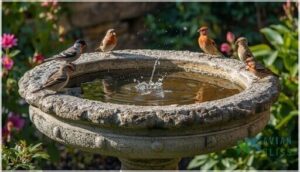
Concrete durability makes these bird baths stand the test of time, though material porosity means you’ll need to reseal them periodically to prevent freeze-thaw cracking. Stone texture provides excellent footing for your birds’ delicate feet, and both materials offer exceptional weather resistance when properly maintained.
For bird safety, choose rough-but-not-abrasive surfaces and seal with food-grade products to protect water quality while supporting long-term bird bath maintenance. Regularly checking the concrete birdbath care instructions is essential for preventing damage and ensuring the longevity of your bird bath.
Ceramic and Glazed Options
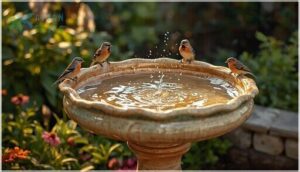
Glazed ceramic bird baths bring beauty to your yard, but ceramic material options require careful selection. Choose lead-free glazes meeting food-contact safety standards—regulatory limits hold leachable lead below 0.5 micrograms per milliliter. Ceramic durability tests show mid-fire pieces withstand weather resistance challenges, though you’ll want to drain them before hard frosts.
Glaze toxicity risks disappear when manufacturers explicitly label products lead-free, protecting your feathered visitors from heavy metal exposure. For ideal bird health, consider using fresh water sources that are safe and reliable.
Metal Bird Baths (Copper, Stainless Steel, Aluminum)
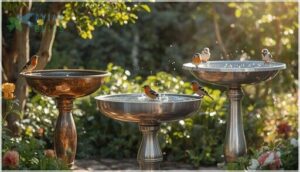
Metal bird baths offer impressive durability and weather resistance, yet thermal risks deserve your attention. Copper benefits include natural antimicrobial action, while stainless steel resists corrosion reliably. Aluminum durability makes it lightweight and rust-resistant, though dark finishes heat rapidly—surfaces can exceed 60°C in full sun.
Place your metal bird bath in partial shade to prevent overheating, and check for coating chips where metal corrosion starts.
Glass Bird Baths
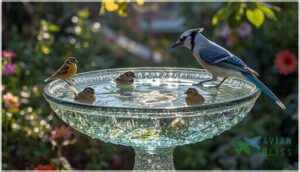
Glass bird baths bring aesthetic appeal and water clarity, which help you monitor cleanliness easily. Tempered glass remains about 4–5 times stronger than standard options. Textured surfaces improve bird visibility and grip, reducing slip risk.
Despite this durability, glass baths crack under freeze–thaw cycles and need frequent cleaning. Algae thrives in light-penetrated water within two days during summer, demanding daily scrubbing for safe use.
Plastic Considerations
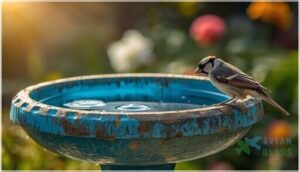
Lightweight convenience comes with trade-offs you should weigh carefully. Plastic durability declines as UV degradation causes yellowing and microcracking within days to weeks of sun exposure, releasing microplastics birds may ingest. Chemical leaching from older plastics introduces toxicity risks, particularly if you fill baths using standard garden hoses.
Consider these factors:
- Weather resistance weakens as surfaces crack
- Maintenance demands frequent scrubbing of roughened plastic
- Sustainable materials offer safer long-term alternatives
Safety Features That Protect Birds

Beyond choosing the right material, you’ll want to make sure your bird bath includes features that keep your feathered visitors safe and healthy.
The design itself plays a vital role in preventing accidents and ensuring birds of all sizes can bathe comfortably. Let’s look at the essential safety features every bird-friendly bath should have.
Proper Water Depth (1-2 Inches)
You wouldn’t let a toddler swim in the deep end, and birds need the same consideration. Keep your bird bath water depth between one and two inches—this shallow water range prevents drowning risk while allowing safe bathing and drinking.
Just as you’d keep a toddler out of deep water, birds need their bath kept to one or two inches to prevent drowning
Proper depth stability tips include daily checks during hot weather, since evaporation quickly reduces safe water levels, compromising both bird health and water safety for your feathered visitors.
Gradual Slopes and Multiple Depth Zones
A gently sloping bird bath with multiple depth zones creates safe access for different species—think of it as building a gradual beach entry rather than a pool with steep sides. Shallow water at the edges transitions to slightly deeper zones in the center, accommodating small songbirds and larger species simultaneously.
This slope design enhances bird safety by preventing slips while supporting natural bathing behaviors that promote excellent bird health across diverse flocks.
Lead-Free and Non-Toxic Glazes
When you choose a glazed ceramic bird bath, you’re trusting that the finish won’t leach heavy metals into the water your birds drink and bathe in. Glaze safety standards and toxicity testing verify ceramic formulations meet strict regulatory limits—usually under 0.5 mg/L for lead—protecting bird health from chronic exposure.
- Look for “lead-free” labels that confirm the ceramic passed leaching behavior tests for food-contact safety
- Eco-friendly options use sustainable and eco-friendly materials without copper or cadmium colorants
- Proper firing enhances durability and prevents surface crazing that increases metal migration over time
Chemical-Free Surface Materials
Unsealed natural stone and properly cured concrete are among the most trusted surfaces because they don’t introduce synthetic additives under normal garden conditions. You get authentic bird safety when you choose these sustainable materials.
Below, compare how chemical-free options stack up on durability and eco-friendly performance:
| Material | Chemical Leaching Risk | Weather Resistance & Durability |
|---|---|---|
| Natural Stone | None (chemically inert) | Excellent; tolerates freeze–thaw cycles |
| Cured Concrete | Minimal alkalinity release | Very good; withstands scrubbing & UV |
| Lead-Free Ceramic | Very low (meets food-contact standards) | Good; frost-resistant when properly fired |
| Food-Grade Plastic | Low (if certified non-toxic) | Moderate; prone to UV fading over time |
| Copper/Zinc Metal | Moderate (leaches ions in acidic water) | High durability but requires monitoring |
Sustainable, non-toxic surfaces protect your feathered friends while standing up to the elements season after season.
Top 3 Bird Bath Products
After reviewing the safety features that protect birds, you’re probably wondering which products actually deliver on those promises.
I’ve selected three bird baths that consistently meet veterinary safety standards while offering practical benefits for both you and your backyard visitors. Let’s look at options that balance material safety, proper depth design, and long-term durability.
1. Metal Bird Bath Feeder Set
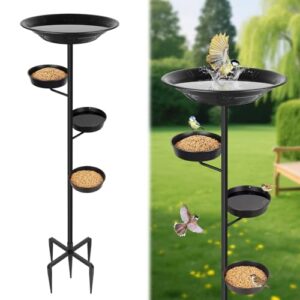
A metal bird bath feeder set combines durability with practical feeding options, giving your backyard visitors a secure place to drink, bathe, and dine. Stainless steel and powder-coated options offer excellent weather resistance and rust prevention when you maintain them properly.
These sets usually feature shallow basins paired with seed trays, attracting multiple species while providing the structural stability birds need.
With thoughtful garden placement in partial shade, metal bird baths balance thermal concerns with long-term durability, though you’ll want to scrub them regularly to prevent bacterial buildup and remove any loose rust.
Best For: Bird enthusiasts who want a durable, multi-functional station that attracts various species while serving as a decorative garden feature, and who don’t mind regular cleaning and careful placement to manage heat and rust.
- All-metal construction with rust-resistant coating provides long-term durability in outdoor conditions compared to plastic alternatives.
- Multiple feeding and bathing areas accommodate different bird species simultaneously, from small songbirds to larger visitors.
- Stable five-pronged base design with detachable bowls makes refilling and cleaning straightforward while reducing tipping risk.
- Metal surfaces heat quickly in direct sunlight, which can make rims uncomfortable for birds and discourage use during hot afternoons unless placed in partial shade.
- Some users report durability concerns and potential breakage after short-term use, suggesting inconsistent build quality despite the metal construction.
- Requires frequent scrubbing and rust removal over time, as coated steel can still corrode and harbor bacteria in standing water if not maintained properly.
2. Metal Bird Bath Fountain
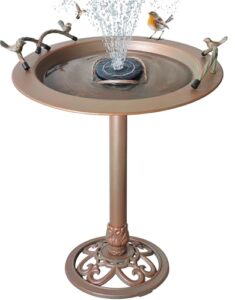
A metal bird bath fountain steps up your backyard setup by adding gentle water movement that attracts more birds while keeping the basin fresher between cleanings. Stainless steel and treated iron deliver excellent corrosion resistance and weather resistance, though you’ll need to position yours in partial shade so the metal doesn’t overheat in direct sun.
Aim for a depth of 1–2 inches with a low, bubbling spray pattern—high jets can spook smaller species—and rinse the basin every few days to maintain water quality and bird hygiene.
Best For: Bird watchers and nature lovers who want to attract more birds with moving water while managing heat and hygiene through regular maintenance.
- Gentle water movement keeps the basin cleaner between scrubs and draws in more species than a static bowl.
- Stainless steel and coated iron options resist rust and hold up well outdoors when placed in partial shade.
- Adjustable spray patterns let you dial in a low bubbler that won’t scare off smaller birds.
- Metal heats up fast in direct sun, making water uncomfortably warm and requiring shaded placement.
- Needs rinsing every few days in warm weather to prevent algae buildup and maintain safe water quality.
- Fountain pump sold separately, and some coatings on painted iron can peel or rust over time.
3. Ceramic Outdoor Bird Bath Fountain
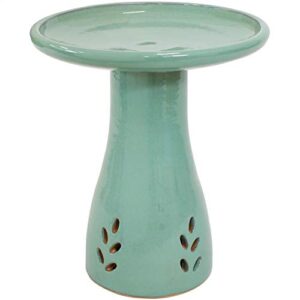
Ceramic outdoor bird bath fountains offer beautiful designs and smooth glazed surfaces that clean easily, but you’ll want to verify the glaze is lead-free—extractable lead above 0.5 mg/L poses a real toxicity risk to songbirds.
High-fired ceramic provides excellent durability in moderate climates, though freeze-thaw cycles can crack even weather-resistant pieces.
Position yours on stable ground away from heavy foot traffic, maintain 1–2 inches of circulating water for bird safety, and bring it indoors before hard freezes to protect your investment in outdoor decor and wildlife conservation.
Best For: Garden enthusiasts and birdwatchers who want an attractive, easy-to-clean water feature and can bring it indoors during freezing weather.
- Smooth glazed surface makes cleaning algae and debris quick and straightforward
- High-fired ceramic holds up well to sun, rain, and daily use in moderate climates
- Attractive designs add decorative appeal while providing a functional water source for songbirds
- Cracks easily in freezing temperatures, so you’ll need to store it indoors each winter
- Some ceramic glazes may contain extractable lead that’s harmful to birds—verify yours is tested and safe
- Heavier than plastic but more fragile than concrete, making it tricky to move without chipping
Durability and Weather Resistance by Material
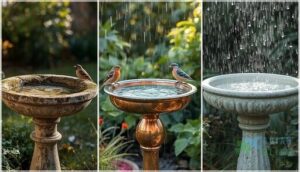
You want a bird bath that stands up to whatever nature throws its way, from summer storms to winter freezes. The material you choose determines how long your bath will last and how much upkeep you’ll need to put in.
Let’s look at how different materials perform regarding durability, weather resistance, and keeping your feathered visitors safe year-round.
Longevity and Impact Resistance
Concrete and stone bird baths stand the test of time—decades of service when properly sealed—thanks to their impact resistance and stable bases that won’t tip under the weight of your feathered visitors.
Metal options like stainless steel and cast iron offer comparable durability, resisting dents and deformation.
Ceramic looks beautiful but needs careful handling, while plastic degrades faster under UV exposure, becoming brittle and crack-prone over seasons.
Weather Resistance (Rain, Sun, Frost)
Choosing materials that survive freeze–thaw cycles matters for your feathered visitors’ safety. Concrete and stone need sealed surfaces and winter drainage—water expansion during freezing increases internal pressure by up to 9%, causing cracks. Metal manages rain and frost well when drained, while ceramic and glass require indoor storage below 0°C.
Consider these weather challenges:
- Concrete develops visible cracks within one to three winters without proper sealing
- Metal basins can warp if ice forms inside
- Glazed ceramic tolerates sun but fractures under hard frost
- Polyresin resists UV fading yet needs draining in freezing weather
Weatherproof Coatings and Rust Prevention
To protect your bird bath from the elements, you’ll want non-toxic sealants that truly deliver. Pure tung oil works beautifully on concrete and stone, reducing water absorption by 80–95% while staying food-grade safe.
For metal protection, avoid zinc-rich rust prevention products—they can leach into water. Once polyurethane or silane waterproof coatings cure fully (allow three days), they create a durable, chemical-free barrier that keeps corrosion control effective season after season.
Maintenance Requirements for Each Material
You’ll notice that Material Durability directly shapes your Cleaning Schedules and overall Maintenance Costs. Each surface requires distinct Bird Bath Maintenance and Care to preserve Water Quality and Water Safety Tips:
- Concrete: Scrub every 1–2 weeks; porous Surface Textures trap algae
- Ceramic: Weekly cleaning prevents biofilm on smooth glazes
- Metal: Biostatic copper extends intervals; check rust spots regularly
- Plastic: Scrub frequently—scratches harbor bacteria
- Stone: Expect moss; descale mineral deposits periodically
Proper Bird Bath Maintenance and Upkeep protects your feathered visitors year-round.
Seasonal Care for Safe Bird Baths
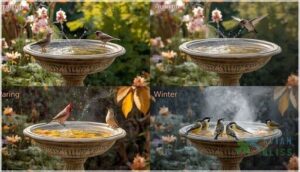
Your bird bath needs different care throughout the year to keep your feathered visitors healthy and safe. Each season brings its own challenges, from freezing winter temperatures to summer algae blooms.
Here’s how to maintain a clean, functional bird bath no matter what the weather throws your way.
Winter Maintenance and Heating Solutions
When temperatures drop below freezing, your birdbath needs extra attention to keep it safe and functional. Installing a thermostat-controlled heater—usually drawing 50 to 80 watts—prevents frozen water while maintaining temperatures just above 32°F.
You’ll want to use GFCI-protected outdoor outlets for heater safety and refresh the water several times weekly. Ice prevention keeps birds hydrated, and winter hygiene reduces disease risk at these essential gathering spots.
Summer Water Level Monitoring
During heat waves, shallow basins can lose more than half their water volume in just a few hours through evaporation and bird hydration needs. Position your bath in partial shade to slow water loss, maintain that critical 1- to 2-inch level for safe bathing, and refresh frequently—your feathered visitors depend on it. You’ll want to check water depth twice daily when air temperatures climb above 85°F.
Regular Cleaning to Prevent Bacteria
Stagnant water becomes a microbial incubator within 24 to 48 hours, so you’ll need cleaning schedules that keep your backyard haven safe.
Rinse and scrub your basin every two to three days to prevent bacterial growth, and biofilm removal becomes essential for water quality.
In hot, humid weather, daily disinfection methods using a 1:10 bleach solution followed by thorough rinsing safeguard bird health while supporting algae control and disease prevention.
Checking for Cracks and Damage
Structural risks escalate after freeze–thaw cycles, when concrete absorbs water that expands roughly 9% upon freezing and cracks the basin from within.
You should inspect your bath each spring and after hard freezes, checking for hairline fractures or rough edges that injure bird feet.
Repair minor concrete damage with food-safe sealant, but replace heavily cracked units to maintain durability and eliminate sharp hazards that compromise safety.
Frequently Asked Questions (FAQs)
Can I paint my bird bath safely?
You can paint your bird bath safely using water-based acrylic or latex exterior paints with non-toxic coatings. Choose eco-friendly paints and lead-free sealant options designed for durability, ensuring both aesthetic appeal and bird-friendly maintenance.
Do birds prefer certain colors or materials?
Yes—birds gravitate toward green and silver colors over bright red or yellow, thanks to their unique avian vision.
Material safety matters too: smooth, nonporous surfaces promote cleaner water and healthier visits.
How often should I replace my bird bath?
You’ll want to change the water every couple of days to maintain water quality.
The bath itself only needs replacement when cracks, severe weathering, or material breakdown compromise bird safety and structural integrity.
Are recycled materials safe for bird baths?
Recycled glass proves safe after testing in wildlife habitats, while recycled plastics and rubber can release toxic leachates—BPA, phthalates, zinc, and microplastics—that harm birds.
Making eco-friendly verification essential before choosing sustainable materials.
Whats the best location for a bird bath?
Choose a spot 10–15 feet from shrubs for predator avoidance and window safety, in partial shade to slow algae growth.
Stable yard layout with clear bird visibility ensures safe placement in your bird-friendly outdoor decor design.
Conclusion
Yes, safe bird bath materials for birds cost more upfront than generic options, but you’re investing in longevity and avian health—not just decorative appeal.
Every material choice you make either protects your feathered visitors from bacterial growth and toxin exposure or invites preventable illness into your backyard sanctuary.
Choose wisely, clean regularly, and watch your garden become the trusted oasis birds return to season after season. Their health depends on your informed decision.
- https://www.outdoorescape.com.au/blogs/news/the-ultimate-bird-bath-guide-do-not-buy-the-bird-bath-until-you-read-this
- https://www.birdfy.com/blogs/blogs/how-to-choose-the-best-material-for-bird-bath
- https://www.mychemicalfreehouse.net/2021/11/non-toxic-sealant-for-concrete-bird-baths.html
- https://todaysveterinarypractice.com/exotic-medicine/lead-and-zinc-toxicity-in-birds/
- https://shop.malleedesign.com.au/pages/birds-and-the-possibility-of-copper-toxicosis