This site is supported by our readers. We may earn a commission, at no cost to you, if you purchase through links.
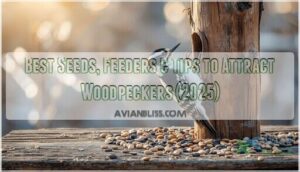
A single Downy Woodpecker can demolish 1,000 wood-boring beetle larvae in ONE winter—but only if it sticks around your yard long enough. The secret? Understanding that woodpeckers aren’t just “birds that eat bugs.” They’re high-energy acrobats burning calories at insane rates, which means they NEED calorie-dense foods to survive harsh seasons.
Black oil sunflower seeds, suet cakes, and unsalted peanuts deliver the fat and protein these remarkable birds crave. When you strategically combine the right seed to attract woodpeckers with proper feeders and habitat tweaks, you transform your backyard from a quick pit stop into woodpecker headquarters. Here’s exactly how to make that happen.
Table Of Contents
- Key Takeaways
- Best Seeds and Foods for Woodpeckers
- Choosing Feeders for Woodpeckers
- Creating a Woodpecker-Friendly Habitat
- Providing Water and Maintenance Tips
- Top 10 Products to Attract Woodpeckers
- 1. Lyric Peanut Wild Bird Seed
- 2. Picky Neb Dried Mealworms For Birds
- 3. C&S Peanut Suet Nuggets
- 4. Wildlife Sciences Suet Bird Plugs
- 5. Stokes Select Seed Cake Bird Feeder
- 6. Cedar Suet Bird Feeder Holder
- 7. Durable Peanut Bird Feeder Tube
- 8. Birds Choice Suet Log Feeder
- 9. Pine Tree Log Jammer Suet Feeder
- 10. Downy Woodpecker Bird Nest House
- Frequently Asked Questions (FAQs)
- Conclusion
Key Takeaways
- Woodpeckers need calorie-dense foods like black oil sunflower seeds (50-60% oil), unsalted peanuts (45-50% fat), and suet cakes (40-75% fat) to fuel their high-energy foraging and survive harsh winters when natural insect populations crash.
- Vertical cage-style feeders, log suet feeders, and mesh tube designs work best because they let woodpeckers cling naturally while feeding—mount them 5-8 feet high near tree trunks for maximum attraction and predator protection.
- Creating actual woodpecker habitat means leaving dead trees (snags) standing since they’re packed with beetle larvae and provide natural nesting cavities that attract 10x more insects than live trees while supporting multiple species simultaneously.
- Year-round water sources like shallow bird baths (1-2 inches deep) with rough textures are critical but often forgotten—add heated options in winter to provide liquid water when woodpeckers can’t melt snow for hydration.
Best Seeds and Foods for Woodpeckers
Want to know the secret to turning your backyard into woodpecker headquarters? It all starts with the RIGHT food!
These birds are surprisingly picky eaters, but when you nail their favorites—high-fat, protein-packed options—they’ll become your most loyal visitors.
Black Oil Sunflower Seeds
Black Oil Sunflower Seeds are POWERHOUSES for attracting woodpeckers to your Bird Feeders! With 50-60% Oil Content and 25-30% protein, these tiny champions deliver massive energy during foraging and drumming. Their thin hulls make shelling easy, even for smaller-beaked species.
Here’s why they’re essential:
- Seed Nutrition packed with vitamin E bolsters immune function and vibrant feather health
- Feeding Patterns peak in late winter when natural food disappears—keep them stocked year-round!
- Seed Storage matters: keep them cool and dry to prevent spoilage and maintain those Sunflower Benefits
Mix them with Suet for premier woodpecker attraction! Effective communication about bird feeders requires clear scientific information.
Unsalted Peanuts
Unsalted peanuts are fat-packed champions for your woodpeckers—45-50% fat content keeps them energized! You’ll attract downy, red-bellied, and even pileated woodpeckers when you offer shelled, dry pieces in your bird feeders.
Watch out for mold! Store peanuts cool and dry, refresh every 1-2 days, and NEVER use salted varieties. Here’s your Peanut Nutrition breakdown:
| Nutrient | Content | Benefit |
|---|---|---|
| Fat | 45-50% | High energy for foraging |
| Protein | 20-30% | Muscle and feather health |
| Carbs | 10-15% | Quick fuel source |
| Fatty Acids | Essential levels | Immune function boost |
| Calories | Energy-dense | Winter fat reserves |
Pair peanuts with suet for MAXIMUM attraction—especially during breeding season when Woodpecker Diet demands skyrocket! Understanding research methodology is essential for analyzing the nutritional benefits of peanuts for woodpeckers.
Suet and Suet Blends
Suet is THE premier WoodpeckerFriendly Food—40-75% Fat Content delivers explosive Energy Sources your birds crave! Look for Suet Binders like rendered beef fat mixed with Suet Additives: peanut butter, seeds, or mealworms for peak Suet Nutrition.
Place suet cakes in dedicated Bird Feeder Options near tree lines for maximum Woodpecker attraction. Pro tip: Freeze before hanging to reduce mess, and swap out every 2-3 days in warm weather!
Dried Mealworms
You want high-octane Bird Protein? Dried insect fuel packs 50% protein—IDEAL for Woodpecker Diet during nesting season! Mealworms deliver essential amino acids your birds need for feather growth and chick-rearing.
Mix them with suet in bird feeders for irresistible appeal! Critical: Use airtight Mealworm Storage in cool spots to prevent mold. Offer sparingly—too many can reduce natural foraging behavior!
Cracked Corn and Tree Nuts
Dense calories power winter survival—but caution here! Tree nuts like peanuts (no shells, never salted!) and cracked corn work as seasonal supplements, NOT daily staples. Your woodpeckers need natural wild foraging for peak health!
Smart Feeding Guidelines for nuts and corn:
- Limit portions to winter months only—preventing obesity while supporting nutrition benefits
- Choose quality seed mixes with pecans and peanuts for dietary preferences
- Keep feeders DRY—moisture creates deadly mold that harms birds fast!
Choosing Feeders for Woodpeckers
You’ve got the food sorted—now let’s talk feeders! Woodpeckers are acrobatic climbers, so they need feeders designed for their vertical lifestyle and strong clinging behavior.
Here are the best feeder styles that’ll turn your yard into woodpecker headquarters.
Suet Cake Feeders
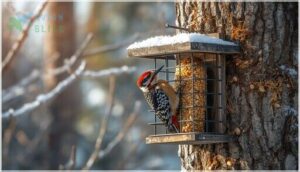
If you’re serious about attracting woodpeckers, suet cake feeders are your BEST BET! These bird feeders hold high-energy suet varieties—like the Kaytee Woodpecker Seed Cake—that woodpeckers absolutely crave during cold months.
Mount cage-style designs 6-8 feet high for ideal suet placement, and clean them weekly to prevent mold. Rotating different WoodpeckerFriendly Foods keeps visits strong while proper feeder maintenance ensures your feathered friends stay healthy and happy!
Mesh Tube and Peanut Feeders
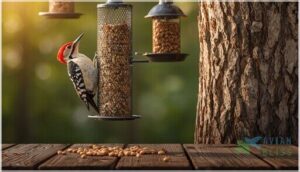
Mesh tube feeders and peanut bird feeders give woodpeckers the GRIP they need! These designs let your backyard visitors cling vertically while accessing shelled peanuts, sunflower seeds, or even mealworms through sturdy mesh materials.
Mount them 5-7 feet high near tree trunks for ideal feeder placement, and watch how tube designs with suet integration attract MORE species year-round. Remarkable!
Log-Style Suet Feeders
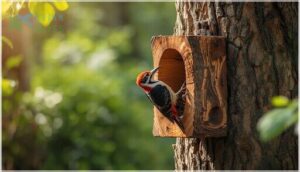
Log-style suet feeders bring the FOREST right to your backyard! These natural designs—hollowed hardwood or resin logs with suet cavities—mimic the rugged bark texture woodpeckers LOVE for gripping and drumming.
Mount yours 6-10 feet high using secure hardware (heavy pecking creates serious force!). Choose weather-resistant materials, add drainage holes, and keep suet placement consistent. Your feathered friends will thank you with year-round visits!
Placement Tips for Woodpecker Feeders
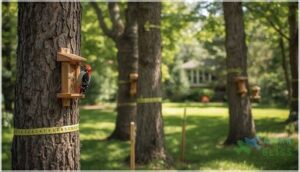
Location is KEY for successful backyard birding! You can stock the best suet feeders and still miss out if placement isn’t right.
Here’s what works:
- Feeder Height: Mount 5–7 feet up as a predator deterrent while keeping access easy for woodpeckers
- Window Safety: Position 10–15 feet from glass to prevent deadly collisions
- Feeder Spacing: Keep multiple stations 15–20 feet apart—this reduces territorial squabbles and gives shy birds confidence!
Smart yard layout = MORE woodpecker visitors!
Creating a Woodpecker-Friendly Habitat

Feeders alone won’t cut it if you want woodpeckers to truly call your yard home. These remarkable birds need trees, natural shelter, and safe nesting spots to thrive year-round.
Here’s how to transform your backyard into a woodpecker paradise that meets ALL their habitat needs.
Planting Native and Nut-Bearing Trees
Want to transform your yard into woodpecker heaven? Plant native nut-bearing trees like oaks, hickories, and pine species—they’re GAME CHANGERS!
These trees produce acorns and pine nuts that fuel woodpeckers through winter, while attracting insects that complement suet and sunflower seeds at your feeders.
You’re basically building a living buffet that backs forest regeneration AND creates sustainable habitat restoration for generations of drumming visitors!
Leaving Dead Trees and Snags
But here’s the secret most people miss: those “ugly” dead trees and snags are PRIME REAL ESTATE for woodpeckers! 蝹
Don’t rush to cut down that standing dead oak—it’s packed with beetle larvae and carpenter ants (woodpecker candy!). Plus, decay creates perfect cavities for nesting and roosting that rival any nest boxes you’d buy.
That standing dead oak is woodpecker candy—packed with beetle larvae and natural nesting cavities that beat any store-bought nest box
Here’s why snag management matters for bird conservation:
- Larger snags with varied decay stages support multiple woodpecker species simultaneously
- Dead trees attract 10x more insect prey than live trees, fueling natural foraging behavior
- Standing snags reduce territorial competition by offering alternative nesting resources nearby
- Retaining just 2-3 snags per acre dramatically increases woodpecker breeding success
- Strategic placement near live trees creates ideal habitat corridors for wildlife conservation
You’re not being lazy—you’re practicing forest ecology! Those snags become biodiversity hotspots that benefit woodpeckers AND dozens of cavity-nesting species year-round.
Providing Safe Nesting Sites
Beyond snags, you’ll need STRATEGIC nest box placement to complete your woodpecker habitat! Mount boxes 10-20 feet high on mature trees with 1.25-inch holes for Downys or 1.5-inch for Hairies. Add predator deterrents like metal guards below entrances.
Clean boxes annually between seasons—no extra nesting material needed! Site maintenance strategies prevent moisture buildup while tree snag management nearby provides natural alternatives for breeding success.
Providing Water and Maintenance Tips
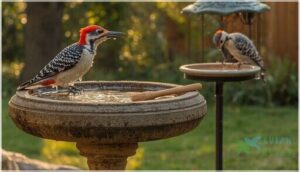
You’ve got the feeders stocked and the habitat set up—now let’s talk about the ONE thing most people forget: water! Woodpeckers need a reliable place to drink and bathe year-round, and keeping everything clean will make your yard the go-to spot for these remarkable birds.
Here’s what you need to know about water sources and maintenance to keep your woodpecker visitors happy and healthy.
Bird Baths and Water Features
A shallow bird bath transforms your yard into a woodpecker magnet! Water depth matters—keep it 1-2 inches so those clawed feet can grip easily. Here’s what works:
- Position your bath near trees but 10-15 feet from windows to prevent collisions
- Choose rough-textured concrete or stone for secure landings
- Add splash zones in dappled shade to reduce evaporation
Providing water for woodpeckers completes your wildlife gardening setup beautifully.
Heated Bird Baths for Winter
When winter bites, frozen water becomes your biggest challenge! Heated baths keep liquid water flowing at 33-35°F—critical for winter hydration when woodpeckers can’t melt snow. Energy efficiency matters: quality models use just 50-75 watts with thermostatic controls for bird safety.
| Feature | Budget Model | Premium Choice |
|---|---|---|
| Wattage | 50-75W | 100-150W |
| Basin Depth | 1.5-2 inches | 2-3 inches |
| Safety Rating | Basic GFCI | Enhanced thermostat |
| Coverage Area | Small (12″ dia.) | Large (18-20″ dia.) |
| Price Range | $30-50 | $80-120 |
Your backyard birding tips just leveled up—providing water for woodpeckers year-round transforms wildlife gardening success!
Cleaning and Refilling Feeders and Baths
Keep up your feeder sanitation game—scrub bird feeders weekly with hot, soapy water during peak bird feeding months to slash mold by 90 percent! Rotate suet, sunflower seeds, and peanuts every 1–2 weeks.
For bath maintenance, change water daily in summer heat and disinfect quarterly with diluted bleach. Clean cleaning schedules = excellent water quality and HAPPY woodpeckers year-round!
Top 10 Products to Attract Woodpeckers
You’ve got the habitat dialed in and the know-how locked down—now let’s talk gear! The right products can make ALL the difference between a quiet backyard and one that’s buzzing with downy, hairy, and red-bellied woodpeckers year-round.
Here are ten tried-and-true picks that’ll turn your feeding station into woodpecker headquarters.
1. Lyric Peanut Wild Bird Seed
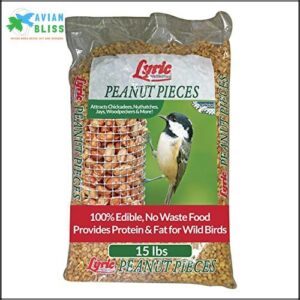
Lyric Peanut Wild Bird Seed is your secret weapon for woodpecker attraction! This 15-pound powerhouse delivers 100% edible, roasted peanut kernels—zero waste, MAXIMUM appeal.
Woodpeckers go absolutely wild for the high-protein, high-fat content that fuels their demanding lifestyle. The Stay Fresh Technology keeps seed quality excellent, preventing the dreaded mold that threatens wild bird health.
You’ll love the feeder compatibility—works beautifully in tube feeders, hoppers, and specialized peanut feeders. Downy woodpeckers, red-bellied woodpeckers, and even chickadees will become regular visitors to your backyard buffet!
| Best For | Backyard birders who want to attract woodpeckers, chickadees, and other high-energy songbirds with a protein-rich, no-waste feeding option. |
|---|---|
| Primary Use | Bird food |
| Target Birds | Woodpeckers, bluebirds, chickadees |
| Material | Pellet |
| Weight/Capacity | 15 lb |
| Made In | USA |
| Form/Type | Pellet food |
| Additional Features |
|
- 100% edible roasted peanut kernels mean zero shells or mess left behind in your yard
- High protein and fat content gives woodpeckers and songbirds the energy they need, especially during breeding season
- Stay Fresh Technology helps prevent mold and keeps the seed quality high between refills
- Can attract unwanted visitors like raccoons, opossums, and squirrels to your feeders
- Peanut pieces may be too large for smaller birds to eat without breaking them up first
- Requires regular checking and maintenance since rain and moisture can cause the nuts to spoil or mold
2. Picky Neb Dried Mealworms For Birds
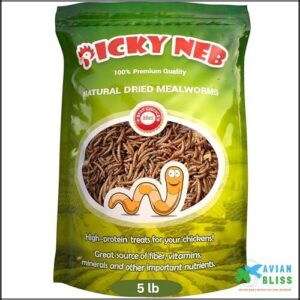
Picky Neb Dried Mealworms deliver 5 pounds of pure woodpecker GOLD! These 100% non-GMO mealworms pack a serious protein punch that fuels your feathered friends’ high-energy lifestyle.
The mealworm nutrition profile is exactly what insectivorous birds crave—essential fats and proteins that support healthy woodpecker diet requirements year-round. Store these beauties in a cool, dry place to maintain freshness and nutritional value!
You’ll notice remarkable bird attraction when you scatter these in platform feeders or specialized mealworm dishes. Downy woodpeckers, red-bellied woodpeckers, and bluebirds will transform your yard into their favorite restaurant. The reclosable seal makes mealworm storage easy!
| Best For | Backyard birders who want to attract woodpeckers, bluebirds, and other insect-eating birds with a high-protein, affordable treat that’s easy to store and use. |
|---|---|
| Primary Use | Bird food |
| Target Birds | Bluebirds, woodpeckers, mockingbirds |
| Material | Dried mealworms |
| Weight/Capacity | 5 lb |
| Made In | Not specified |
| Form/Type | Whole dried |
| Additional Features |
|
- 5-pound bulk size offers excellent value and reduces how often you need to restock
- 100% non-GMO with no preservatives or additives keeps things natural and healthy for birds
- Reclosable seal makes storage simple and keeps the mealworms fresh between feedings
- Can attract squirrels and other critters you might not want at your feeders
- Morning feeding may draw in starlings, so afternoon use works better
- Requires cool, dry storage space to prevent spoilage and maintain nutritional quality
3. C&S Peanut Suet Nuggets
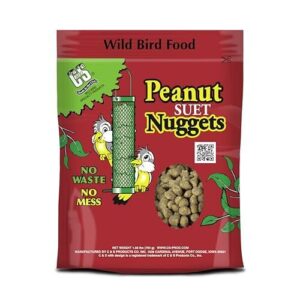
C&S Peanut Suet Nuggets transform messy bird feeding into a CLEAN, seamless experience! These 10-pound bags contain soft, round nuggets packed with roasted peanuts and rendered beef suet—delivering 40–50% fat content that woodpeckers absolutely devour.
The peanut benefits are remarkable: healthy fats, 15–20% protein, and zero waste. Suet nutrition fuels high-energy foraging behaviors year-round! Use them alone in platform feeders or mix with seed blends. Store in cool, dry conditions to prevent rancidity. Downy, hairy, and red-bellied woodpeckers will make your yard their daily stop!
| Best For | Backyard birders who want a no-melt, high-protein option that attracts woodpeckers, chickadees, and jays without the mess of traditional suet cakes. |
|---|---|
| Primary Use | Bird food |
| Target Birds | Woodpeckers, chickadees, jays |
| Material | Nugget |
| Weight/Capacity | 10.1 lb |
| Made In | USA |
| Form/Type | Soft nuggets |
| Additional Features |
|
- High fat content (40–50%) and protein (15–20%) provides essential energy for woodpeckers and other birds year-round
- Soft nugget format eliminates waste and works in standard feeders or mixed with seed blends
- Made with real roasted peanuts and rendered beef suet for a nutrient-dense, appealing food source
- Birds may need time to adjust to the new food format, especially if they’re used to traditional seed
- Squirrels can eventually learn to access the nuggets depending on feeder design
- Requires proper storage in cool, dry conditions to prevent fat from going rancid
4. Wildlife Sciences Suet Bird Plugs

Wildlife Sciences Suet Bird Plugs are GENIUS log-feeder solutions your woodpeckers will hammer into daily! Each 3.75-inch plug contains rendered beef suet, cracked corn, and pecans—providing 9 kilocalories per gram of pure fat energy.
The plug feeder designs mimic natural tree cavities, letting downies and hairies chisel away just like they would excavating bark insects! Suet composition stays firm in cool weather but soft enough for easy excavation.
Four packs deliver remarkable bird plug effectiveness. Downy, hairy, and red-bellied species dominate these stations!
| Best For | Backyard birders who want to attract woodpeckers and other clinging birds like nuthatches and chickadees with a high-energy, easy-to-use feeder option. |
|---|---|
| Primary Use | Suet plugs |
| Target Birds | Chickadees, cardinals, woodpeckers |
| Material | Beef suet |
| Weight/Capacity | 12 oz per package |
| Made In | USA |
| Form/Type | Stick plugs |
| Additional Features |
|
- High-fat suet formula with pecans provides 9 calories per gram, perfect for supporting woodpeckers during cold weather when natural insects are scarce
- Designed to fit log-style feeders that mimic natural tree cavities, encouraging woodpeckers to forage the way they naturally would
- No-melt formulation stays solid in warmer weather, so you can feed birds year-round without the suet dripping or going rancid
- Some customers report the plugs are too small for certain feeders and fall out easily
- Mixed feedback on quality and value, with occasional reports of products arriving melted or infested with insects
- Non-returnable and non-refundable if the order arrives damaged, which can be frustrating given the potential shipping issues
5. Stokes Select Seed Cake Bird Feeder
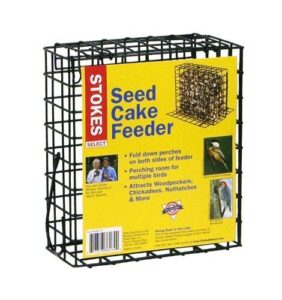
You need a feeder that manages BOTH seed cakes AND suet? The Stokes Select Seed Cake Bird Feeder (Model 38174) delivers amazing versatility your woodpeckers will LOVE!
This 7.3″ x 8.5″ x 3.5″ metal cage features fold-down perches and a grid design perfect for clinging species like downies and hairies. Seed cake benefits include less waste than loose bird seed—plus you can alternate with sunflower seed cakes or suet alternatives!
The double-locking closure keeps food secure, though some birders add zip ties for extra security. Cardinals and chickadees crowd this multi-purpose station too!
| Best For | Birders who want a flexible feeder that handles seed cakes, suet, fruit, or nesting materials while attracting clinging birds like woodpeckers, nuthatches, and chickadees. |
|---|---|
| Primary Use | Suet feeder |
| Target Birds | Woodpeckers, nuthatches, chickadees |
| Material | Glass, metal |
| Weight/Capacity | 3.2 oz |
| Made In | USA |
| Form/Type | Cage feeder |
| Additional Features |
|
- Versatile design works with multiple food types—seed cakes, suet, orange halves, or nesting material—so you can switch based on season and bird activity.
- Fold-down perches and grid pattern accommodate both perching and clinging birds, bringing in a wider variety of species from cardinals to woodpeckers.
- Compact size (7.3″ x 8.5″ x 3.5″) reduces seed waste compared to loose feeders and supports conservation with proceeds going to bird habitat programs.
- Double-locking closure doesn’t always stay secure—many users report needing zip ties or extra fasteners to keep it shut.
- Mixed feedback on build quality, with some calling it flimsy or overpriced while others find it sturdy enough for daily use.
- May not fit small suet cakes well, and birds with shorter beaks can struggle to reach food through the grid.
6. Cedar Suet Bird Feeder Holder
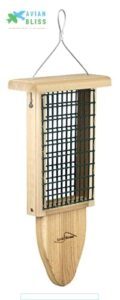
Looking for natural Cedar Durability that’ll last for YEARS? The Cedar Suet Bird Feeder Holder (Model 8316TP) combines solid cedar wood with heavy-gauge vinyl-coated wire mesh—your woodpeckers get a sturdy grip while feeding!
This 7″L x 3.5″W x 17″H beauty holds 2 standard suet cakes and features stainless steel hanging cable. Made in the USA, it attracts downies, hairies, and red-bellieds consistently.
*Not squirrel-proof, but the vertical design encourages natural Woodpecker Visitation patterns.
Quick Feeder Maintenance tip: Clean the mesh weekly to prevent mold buildup!
| Best For | Bird enthusiasts who want a durable, American-made feeder specifically designed to attract woodpeckers and other clinging birds in their backyard. |
|---|---|
| Primary Use | Suet feeder |
| Target Birds | Woodpeckers |
| Material | Cedar wood |
| Weight/Capacity | 1.39 lb |
| Made In | USA |
| Form/Type | Cage feeder |
| Additional Features |
|
- Solid cedar construction with stainless steel components means this feeder can handle years of outdoor weather without falling apart
- The vertical design with wire mesh lets woodpeckers feed naturally while holding two full suet cakes at once
- Easy to refill and clean, plus it’s made in the USA with quality materials you can actually trust
- Squirrels can damage or access the feeder since it’s not designed to keep them out
- Larger animals like bears and raccoons might need extra deterrents if they’re common in your area
- House sparrows and other smaller birds can sometimes figure out how to land and feed, which might not be what you’re going for if you only want woodpeckers
7. Durable Peanut Bird Feeder Tube
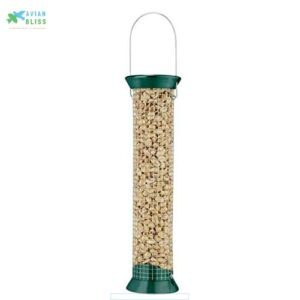
You’ll LOVE the Durable Peanut Bird Feeder Tube (6″W x 2.5″D x 17.5″H) for its stainless steel wire mesh and zinc die-cast construction—built to withstand brutal weather while attracting downy and hairy woodpeckers consistently!
This 1-lb capacity feeder accommodates shelled peanuts and black oil sunflower seeds beautifully. The internal baffle directs food to the mesh cage, so your woodpeckers cling naturally while feeding.
Made in the USA with easy slide-top filling!
Bird Feeder Maintenance reminder: Check peanuts weekly for moisture—soggy nuts = mold central.
| Best For | Birdwatchers who want a sturdy, American-made feeder that attracts clinging birds like woodpeckers, nuthatches, and chickadees without breaking the bank. |
|---|---|
| Primary Use | Seed/nut feeder |
| Target Birds | Woodpeckers, nuthatches, chickadees |
| Material | Metal |
| Weight/Capacity | 1 lb capacity |
| Made In | USA |
| Form/Type | Tube feeder |
| Additional Features |
|
- Stainless steel mesh and zinc die-cast construction holds up against weather and squirrel attempts better than plastic feeders
- Easy slide-top design makes refilling a breeze—no fumbling with screws or complicated mechanisms
- Attracts a nice variety of clinging birds, giving you front-row seats to woodpecker acrobatics
- The mesh holes can be too small for whole peanuts, making it tough for birds to grab them (stick with shelled or smaller seeds)
- Not completely squirrel-proof—persistent squirrels will still find a way to snack
- Peanuts can get soggy and moldy in wet weather, so you’ll need to check and refresh them regularly
8. Birds Choice Suet Log Feeder
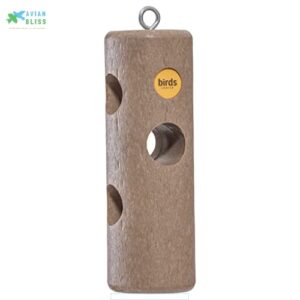
The Birds Choice Suet Log Feeder (3″W x 15″H) takes a different approach with its recycled poly lumber construction and four tapered holes designed for suet logs—mimicking the natural vertical feeding habitat woodpeckers crave!
Made in the USA with rust-resistant aluminum hinges, this brown feeder holds one suet log and features an easy-refill top. Perfect for downy and hairy woodpeckers!
But here’s the catch: some users add texture to the smooth surface so birds can grip better. Pair it with hot pepper suet to keep squirrels away!
| Best For | Woodpecker enthusiasts who want an eco-friendly vertical feeder that mimics natural tree-trunk foraging and don’t mind tweaking it for better bird grip. |
|---|---|
| Primary Use | Suet log feeder |
| Target Birds | Woodpeckers, chickadees, nuthatches |
| Material | Recycled poly lumber |
| Weight/Capacity | 1 suet log |
| Made In | USA |
| Form/Type | Log holder |
| Additional Features |
|
- Made from recycled materials with rust-resistant hardware—built to last through all seasons
- Easy top-refill design makes swapping suet logs quick and mess-free
- Works great with hot pepper suet if you’re dealing with pesky squirrels
- Smooth poly lumber surface can be slippery—some birds struggle to cling without added texture
- Tapered holes sometimes let suet slip through too easily
- No hanging chain included, so you’ll need to grab your own hardware
9. Pine Tree Log Jammer Suet Feeder
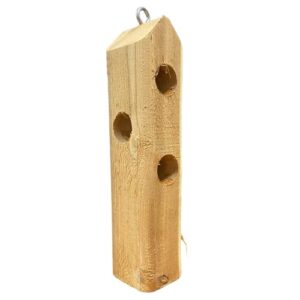
The Pine Tree Log Jammer Suet Feeder (4.75″L x 4.75″W x 18.0″H) brings Log Jammer Design right to your backyard with its natural wood construction and pre-drilled holes for suet plugs! At 1.75 pounds, this vertical feeder mimics how woodpeckers forage on pine trees in the wild.
The Suet Plug Benefits? Woodpeckers can peck naturally while clinging to the beige wood surface. Pure instinct at work!
Here’s your Feeder Maintenance reality check: some buyers report wood splitting around the hanger. For better Woodpecker Attraction, consider pairing it with black oil sunflower seeds nearby—these Suet Feeder Tips boost visits!
| Best For | Backyard birders who want to attract woodpeckers and nuthatches with a natural-looking feeder that mimics how these birds forage on real trees. |
|---|---|
| Primary Use | Suet plug feeder |
| Target Birds | Woodpeckers, nuthatches |
| Material | Wood |
| Weight/Capacity | 1.75 lb |
| Made In | Not specified |
| Form/Type | Log feeder |
| Additional Features |
|
- Natural wood design with pre-drilled holes lets woodpeckers feed using their instinctive clinging and pecking behavior
- Vertical 18-inch height provides plenty of feeding space for multiple suet plugs
- Lightweight at 1.75 pounds, making it easy to hang and reposition in your yard
- Wood can split around the hanger screw and may develop cracks or mold in wet weather
- Some buyers report the feeder doesn’t attract birds as expected, even after weeks of use
- Product appearance may differ from advertised images, leading to disappointment upon delivery
10. Downy Woodpecker Bird Nest House
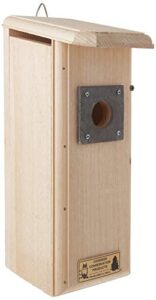
That 8.5 x 6 x 15.5-inch roosting house offers year-round shelter with smart Nest Box Design! The 1.25-inch entry works perfectly for Downy Woodpeckers’ Nesting Ecology, while the built-in Slate Guard blocks squirrels. Essential Birdhouse Maintenance made easy!
Handcrafted from 1-inch Eastern White Pine, this all-season nest box accommodates natural Roosting Behavior when trees aren’t available. Place it 6-15 feet high for Attracting Woodpeckers to Your Yard success! Wood chips inside mimic real Woodpecker Habitat—boosting Woodpecker Nesting and Breeding instincts naturally.
| Best For | Homeowners who want to attract Downy Woodpeckers and provide safe nesting or winter roosting space while keeping squirrels out. |
|---|---|
| Primary Use | Nesting box |
| Target Birds | Downy woodpeckers |
| Material | Pine wood |
| Weight/Capacity | 6.09 lb |
| Made In | USA |
| Form/Type | Roosting box |
| Additional Features |
|
- Thick 1-inch Eastern White Pine construction offers solid insulation for year-round use, keeping birds warm in winter and cool during nesting season.
- Built-in Slate Guard effectively blocks squirrels from raiding the nest box, protecting eggs and nestlings from common predators.
- Comes with wood chips that mimic natural tree cavities, making it more inviting for Downy Woodpeckers to move in and nest.
- Some customers report missing parts or construction issues right out of the box, which can delay installation.
- May not include clear assembly or mounting instructions, leaving first-time buyers guessing about proper setup.
- Durability concerns over time, with reports of broken or loose parts after extended outdoor exposure.
Frequently Asked Questions (FAQs)
Do woodpeckers prefer certain seed sizes?
Woodpeckers gravitate toward BIGGER seeds—think black oil sunflower seeds and chunky peanuts over tiny millet. That size difference matters because larger seeds pack more fat and protein per peck.
How often should I refill woodpecker feeders?
Check your feeders every 2–3 days during peak activity months—that’s breeding season magic right there!
In winter, inspect daily because woodpeckers burn serious calories staying warm. Refill when seed levels hit 60–75% empty.
What time of day do woodpeckers feed?
Woodpeckers hit feeders HARD at sunrise—that’s your peak foraging window! Morning activity dominates their daily feeding patterns, though you’ll catch stragglers through late morning when insect emergence aligns with their wild bird nutrition needs.
Can woodpeckers crack hard-shelled nuts themselves?
Red-bellied and pileated woodpeckers can crack acorns and walnuts thanks to remarkable beak strength—their reinforced skulls generate enough bite force to fracture hard shells during natural foraging.
Do different woodpecker species prefer different seeds?
Different species DO show preferences! Downys and red-bellies LOVE peanuts and sunflower seeds, while pileateds go for tree nuts.
But here’s the thing: suet and mealworms attract nearly ALL woodpecker species year-round.
Conclusion
Think of yourself as a telegraph operator for woodpeckers—sending signals that say “FUEL HERE!” Black oil sunflower seeds, suet cakes, and peanuts are your strongest messages.
When you strategically combine the right seed to attract woodpeckers with proper feeders and dead-tree habitat, you’re not just feeding birds—you’re creating a year-round refuge.
Your backyard becomes their survival station, and that Downy Woodpecker? It’ll stick around demolishing pests for YEARS.
- https://www.google.com/search?q=diy+woodpecker+nest+box&sxsrf=ALeKk02XKqnPUzC9xiDJBogOlVmkayK3BQ%3A1629132744952&source=hp&ei=yJcaYYGnN5nM5OUPu4ub0Ak&iflsig=AINFCbYAAAAAYRql2OUydGvAKhgNWCaw-X2LQzvYr2Pu&oq=diy+woodpecker+nest+box&gs_lcp=Cgdnd3Mtd2l6EAMyBggAEBYQHjIGCAAQFhAeMgYIABAWEB46BAgAEEM6CAgAEIAEELEDOgUIABCABDoKCAAQgAQQhwIQFDoLCAAQFhAKEB4QiwM6CQgAEBYQHhCLAzoFCAAQhgNQvgFY4ipguytoAHAAeAGAAZsBiAHgDZIBBDIuMTOYAQCgAQG4AQI&sclient=gws-wiz&ved=0ahUKEwiBq7W0gLbyAhUZJrkGHbvFBpoQ4dUDCAk&uact=5
- https://www.gardeningknowhow.com/garden-how-to/beneficial/how-to-attract-woodpeckers.htm
- https://www.thespruce.com/other-birds-that-visit-hummingbird-feeders-385957
- https://www.bing.com/ck/a?!&&p=91ea0db7ed266e900aee71d59dc4c5199a83b24a1e058eb320e541ee4e531319JmltdHM9MTc1NjU5ODQwMA&ptn=3&ver=2&hsh=4&fclid=1929bbe3-d37a-6178-26e5-adf9d22060e5&psq=Common+Mistakes+To+Avoid+Attracting+woodpeckers+to+your+yard+can+be+fun.+Many+people+make+mistakes+that+stop+birds+from+visiting.+Avoid+these+errors+to+see+more+woodpeckers.+This+guide+covers+two+common+mistakes%3a+using+the+wrong+seeds+and+poor+feeder+cleaning.+Fix+these+to+keep+woodpeckers+coming+back.&u=a1aHR0cHM6Ly9iaXJkZmVlZGVyaHViLmNvbS9ob3ctdG8tYXR0cmFjdC13b29kcGVja2Vycy8
- http://bna.birds.cornell.edu/bna