This site is supported by our readers. We may earn a commission, at no cost to you, if you purchase through links.
 You’ll find an incredible variety of water birds in Illinois, thanks to the state’s position along the Mississippi Flyway.
From familiar mallards and Canada geese to elegant great blue herons and trumpeter swans, Illinois hosts over 25 species year-round and during migration.
The state’s diverse wetlands, Great Lakes shoreline, and river systems create perfect habitats for everything from tiny sandpipers to massive pelicans.
Spring and fall migrations bring the most excitement, when rare visitors like common loons and various diving ducks appear.
Whether you’re a seasoned birder or just starting out, Illinois waterways offer surprises around every bend, especially when you know the secret timing tricks.
Table Of Contents
- Key Takeaways
- Iconic Waterfowl Species
- Herons and Egrets
- Other Waterbirds
- Raptor Migration
- Bird Identification
- Frequently Asked Questions (FAQs)
- What is a big white water bird in Illinois?
- What common birds live in water?
- Are there anhingas in Illinois?
- Do puffins live in Illinois?
- What kind of bird has long legs in the water in Illinois?
- Which birds stay around water?
- What are the most common water birds in Illinois?
- Are there birds in Illinois?
- Where can you see waterfowl in Illinois?
- What birds live in Chicago?
- Conclusion
Key Takeaways
- You’ll find over 25 water bird species in Illinois year-round and during migration, including mallards, Canada geese, great blue herons, and trumpeter swans, thanks to the state’s position along the Mississippi Flyway.
- You’ll have the best birdwatching success during spring and fall migrations when rare visitors like common loons and diving ducks appear, with dawn and dusk offering optimal viewing opportunities.
- You can identify Illinois water birds by focusing on plumage variations, body shapes, vocalizations, and habitat preferences – mallards quack while wood ducks squeal, and diving ducks prefer deeper waters than dabbling ducks.
- You’ll discover diverse species across Illinois’s wetlands, from tiny sandpipers to massive pelicans, with prime locations including the Mississippi River backwaters, Chain O’ Lakes, and local park ponds throughout the state.
Iconic Waterfowl Species
You’ll encounter Illinois’ most recognizable waterfowl species in nearly every wetland across the state, from the bright green-headed Mallards paddling through park ponds to the majestic Trumpeter Swans gliding across larger lakes.
These classic ducks, geese, and swans aren’t just pretty to watch—they’re surprisingly easy to identify once you know their key features, sounds, and quirky behaviors that’ll make you smile during your next birding adventure, which can be a truly birding adventure.
Ducks

Illinois ducks showcase incredible diversity across the state’s wetlands.
You’ll spot Mallards with their iconic green heads dominating ponds and rivers.
These waterfowl adapt their duck diets from aquatic plants to insects seasonally.
Duck sounds vary dramatically – Mallards quack while Wood Ducks squeal distinctively.
Several diving duck species, including the Common Goldeneye, can be found in Illinois.
- Duck plumage changes with seasons and gender
- Duck habitats include marshes, lakes, and wooded streams
- Duck behavior includes diving, dabbling, and social flocking patterns
Geese

You’ll spot these majestic Illinois geese forming V-shaped flights across prairies and wetlands.
Their strong family bonds and impressive migrations make them unforgettable sights.
Key Illinois Geese Species:
- Canada Goose: Black neck with distinctive white cheek patches
- Snow Goose: Pure white with black wingtips during migration
- Greater White-fronted Goose: Orange legs with white forehead markings
- Ross’s Goose: Smaller cousin of Snow Goose
Beyond these, you might spot other Illinois geese species.
Swans

You’ll encounter three magnificent swan species gracing Illinois waters.
Trumpeter Swans weigh up to 25 pounds and migrate through the state from October to April. Mute Swans curve their necks elegantly while swimming, though they can show aggression toward other waterfowl.
Tundra Swans join the migration mix, forming V-shaped flocks. Swan identification becomes easier when you understand their distinct swan behavior patterns and swan migration timing across various swan habitats.
Virginia also hosts swans, including tundra swan species.
Herons and Egrets
Picture yourself standing quietly beside a marshy shoreline when a magnificent Great Blue Heron suddenly unfolds its six-foot wingspan. These graceful waders represent some of Illinois’ most enchanting waterbirds, perfectly adapted to wetland life.
Witness nature’s poetry in motion as elegant herons transform ordinary wetlands into living masterpieces.
Illinois herons and egrets showcase remarkable diversity in Heron Habitats across the state:
- Great Blue Heron – Standing four feet tall, this largest wader builds massive stick nests in tree colonies called heronries
- Great Egret – Pure white with striking black legs and yellow bill, growing ornate breeding plumes called aigrettes
- Cattle Egret – Uniquely forages in fields near livestock, often perched on cattle backs hunting ticks
- Green Heron – Masters of camouflage in southern Illinois lakes and wetlands
Heron Behavior involves patient stalking through shallow waters, necks coiled like springs ready to strike. Their Egret Diets include fish, frogs, and crayfish.
Most Illinois egrets migrate south before frost, though Great Blue Herons occasionally brave winter months. Egret Conservation depends on protecting these vital wetland breeding grounds.
Other Waterbirds

Beyond the familiar ducks and herons, Illinois wetland birds offer surprises at every turn.
Diving birds like the Pied-billed Grebe disappear underwater in a flash, while Double-crested Cormorants stretch their wings to dry after fishing.
The haunting Common Loon visits during migration, and massive American White Pelicans work together to herd fish.
Illinois aquatic birds showcase nature’s ingenuity perfectly.
- Watch cormorants dive deep for wiggling fish catches
- Listen for loons’ eerie calls echoing across misty waters
- Marvel at pelicans’ impressive nine-foot wingspans soaring overhead
- Chuckle at coots’ comical waddle on marshy shorelines
- Spot grebes silently gliding through calm morning waters
Raptor Migration
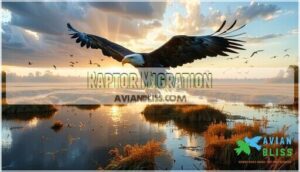
While waterfowl capture your attention at Illinois’s lakes and marshes, something spectacular happens overhead. The state sits perfectly along major migration patterns, making it a premier destination for witnessing Illinois bird migration in action. Raptors use flight adaptations like thermal riding to conserve energy during their epic journeys.
Illinois waterfowl areas provide excellent vantage points for raptor watching, especially during fall migration from August through November. These birds of prey follow the Mississippi Flyway, with prey availability around water sources drawing them close. You’ll witness nature’s incredible navigation system as these migratory birds Illinois hosts travel thousands of miles.
Prime viewing includes:
- Broad-winged Hawks forming massive "kettles" in September
- Sharp-shinned Hawks and impressive Merlins in October
- Peregrine Falcons and majestic Bald Eagles throughout fall
- Red-tailed Hawks bringing up the rear in late season
Conservation efforts have helped many Illinois bird species recover, making these Illinois bird habitats even more valuable for both residents and migrants. The habitat impact of protecting these areas benefits countless species.
Bird Identification

You’ll need the right tools to master Illinois bird identification. Start with a quality field guide and decent binoculars – they’re your best friends for birdwatching Illinois.
Focus on plumage variation first. Males often sport flashy colors while females blend in with mottled browns. Notice body shape and size too – a mallard’s stocky build differs dramatically from a great blue heron’s lanky frame.
Don’t forget your ears! Vocalizations can clinch an ID when you can’t see clearly. That distinctive mallard quack versus a wood duck’s squealing call makes all the difference.
Habitat clues matter enormously. You won’t find diving ducks in shallow marshes or dabblers in deep lakes. Watch for behavior analysis patterns – does it tip forward to feed or dive completely under? To improve your viewing experience, consider investing in specialized optics.
Size comparison helps too. Use familiar birds as references. Practice makes perfect with Illinois water birds, so grab your gear and head out!
Frequently Asked Questions (FAQs)
What is a big white water bird in Illinois?
Like a graceful giant gliding across the water, you’ll spot the American White Pelican in Illinois.
With its massive nine-foot wingspan and bright white plumage, it’s one of the state’s most impressive waterbirds.
What common birds live in water?
You’ll find mallards, Canada geese, and wood ducks splashing around most freshwater spots. These feathered swimmers have webbed feet and waterproof feathers that make them perfectly suited for aquatic life.
Are there anhingas in Illinois?
You won’t spot anhingas in Illinois waters.
These snake-necked diving birds prefer warmer southern climates year-round.
Illinois sits too far north for their comfort zone, though you might catch stragglers during rare migration events.
Do puffins live in Illinois?
Puffins don’t call Illinois home – you’ll need to venture to coastal regions like Maine or Alaska to spot these charming seabirds.
Illinois water birds include ducks, geese, and herons instead.
What kind of bird has long legs in the water in Illinois?
You’ll spot great blue herons wading through Illinois waters on their stilt-like legs.
These majestic birds stand nearly four feet tall, patiently hunting fish in shallow wetlands, rivers, and lakes throughout the state.
Which birds stay around water?
You’ll find waterfowl like mallards, geese, and swans staying near water year-round. They depend on lakes, rivers, and wetlands for food and shelter, rarely venturing far from these aquatic homes.
What are the most common water birds in Illinois?
Ever wonder which feathered friends you’ll spot most often on Illinois waters?
You’ll commonly see Mallards with their distinctive green heads, along with Canada Geese, American Wigeons, Northern Pintails, and Northern Shovelers gracing local lakes and wetlands, which are their preferred habitats.
Are there birds in Illinois?
Yes, you’ll discover over 400 bird species throughout Illinois! From songbirds in your backyard to waterfowl on lakes, the state’s diverse habitats support everything from tiny hummingbirds to majestic eagles year-round.
Where can you see waterfowl in Illinois?
Waterfront wonders await you at Illinois’ wetlands, lakes, and rivers.
You’ll find mallards, geese, and swans at spots like Chain O’ Lakes, Mississippi River backwaters, and local park ponds throughout the state.
What birds live in Chicago?
You’ll spot mallards, Canada geese, and various herons throughout Chicago’s lakefront and parks.
Look for wood ducks in Lincoln Park Zoo’s pond, plus migrating waterfowl along Lake Michigan’s shoreline during spring and fall, which includes migrating waterfowl.
Conclusion
Absolutely breathtaking diversity awaits you in Illinois’s waterways.
You’ve now got the tools to identify water birds in Illinois like a pro.
Remember, timing is everything – dawn and dusk offer the best viewing opportunities.
Don’t forget your binoculars and field guide during spring and fall migrations when rare species appear.
Whether you’re spotting your first great blue heron or tracking elusive diving ducks, Illinois’s wetlands will reward your patience with unforgettable wildlife encounters year-round.