This site is supported by our readers. We may earn a commission, at no cost to you, if you purchase through links.
Most birdhouses sit empty in spring because they went up too late, missing the narrow window when birds scout for nesting sites. Bluebirds, chickadees, and other cavity nesters begin searching for suitable homes weeks before they actually lay eggs, often in late winter when snow still covers the ground. If your birdhouse isn’t already in place when these early scouts arrive, they’ll simply move on to claim territories elsewhere.
The timing varies dramatically depending on where you live and which species you’re hoping to attract, but one principle holds true across all regions: early preparation gives you the best chance of hosting a successful nesting season.
Understanding when birds arrive in your area, how their nesting schedules differ, and what makes a birdhouse truly appealing will transform your backyard into a thriving sanctuary for feathered families.
Table Of Contents
Key Takeaways
- Install birdhouses 2-3 weeks before peak nesting season in your region (late March to early April in northern areas, late winter to early spring in the South) because early nesters like bluebirds and chickadees scout for territories in late winter, often while snow still covers the ground.
- Entrance hole size determines which species will use your birdhouse—Eastern Bluebirds need 1.5-inch openings, chickadees prefer 1.25 inches, and Purple Martins require 2.5 to 3 inches—so matching hole diameter to your target species prevents competition and ensures successful occupancy.
- Position birdhouses 25-50 feet from high-traffic areas at heights of 4-6 feet for bluebirds or 6-15 feet for wood ducks, orienting the entrance southeast to northeast for morning sun while installing predator guards on poles to protect vulnerable chicks.
- Clean birdhouses thoroughly with a non-toxic solution before each nesting season and conduct weekly inspections during breeding months to monitor occupancy and address structural damage, ensuring a safe environment that supports multiple nesting cycles across different species.
When Should You Put Up Bird Houses?
Getting your birdhouse up at the right time can make the difference between a bustling nest and an empty box. The sweet spot for installation depends on which birds you’re hoping to attract, since different species scout for nesting sites on very different schedules.
Let’s walk through the key timing considerations that’ll help you welcome your feathered friends exactly when they’re looking for a place to raise their young.
Best Timeframes for Installation
To give nesting birds the best start, you’ll want to install your birdhouse 2 to 3 weeks before peak nesting season begins in your area. Regional timing matters considerably for successful birdhouse placement:
- Northern regions: Install by late March to early April
- Southern climates: Set up in late winter to early spring
- Midwest areas: Target mid-March through early April
- Coastal zones: Adjust for local climate shifts and bird arrival patterns
Early birdhouse installation timing ensures cavities are ready when migrants scout territories. Understanding scientific study summaries can help in planning the ideal timing for birdhouse installation.
Early Nesters Vs. Late Nesters
Not all bird species follow the same nesting timeline, which affects your birdhouse installation strategy. Early nesters like bluebirds and chickadees arrive in late winter, claiming territories and starting egg-laying by early March in many regions. Late nesters, including tree swallows and purple martins, don’t begin until mid-April or later, when insect food availability peaks and temperatures stabilize for better breeding success.
Understanding the complex patterns of bird migration and nesting can be facilitated by exploring language related resources that provide insights into the behaviors of different species.
| Nesting Strategy | Arrival & Nesting Windows | Key Adaptation Benefits |
|---|---|---|
| Early Nesters | Late winter to early March | Secure prime territories, reduced competition for nesting boxes |
| Mid-Season Nesters | March to early April | Balance between resource availability and predator pressure |
| Late Nesters | Mid-April to early summer | Peak insect abundance aids fledgling growth and survival |
| Species Adaptation | Varies by migration pattern | Timing aligns with local food resources and microclimate conditions |
Understanding these nesting strategies helps you time birdhouse placement to serve multiple bird species throughout the season.
Risks of Installing Too Late
While early nesters secure ideal sites, late installation during the bird nesting season sharply reduces success. Delayed birdhouse placement pushes nesting later into predator-heavy periods, increasing predator risk and nesting failure for vulnerable chicks.
Proper bluebird house mounting height and pole placement help minimize predator threats while giving early nesters the protected environment they need to thrive.
Installing birdhouses too late in the season pushes nesting into predator-heavy periods, sharply reducing chick survival and nesting success
Occupancy rates drop as migrating species bypass unestablished sites, and shortened fledging windows leave young birds underprepared for survival, undermining your careful nesting box maintenance efforts when timing matters most.
Choosing the right box design and placement from a specialized bird house and supply store helps you match local species’ needs and seasonal rhythms.
Factors That Influence Timing
Proper timing depends on several interconnected factors, from local weather to nesting habits, and understanding these variables helps you enhance birdhouse placement for successful seasonal bird migration.
For example, choosing the right bird houses for woodpeckers means accounting for cavity depth and entrance diameter alongside your regional climate and peak nesting windows.
- Climate Shifts and Temperature Fluctuations: Warmer spring temperatures advance breeding commencement, so you’ll need to adjust installation dates as regional variations in climate patterns alter traditional nesting cycles and species arrival schedules.
- Regional Variations: Microclimate differences between urban and rural habitats create distinct nesting season timelines.
- Bird Migration Patterns: Tracking first-arrival dates in your area refines placement timing.
How Migration Affects Birdhouse Timing

Understanding migration patterns is essential if you want to time your birdhouse installation correctly, since most cavity-nesting species arrive at their breeding grounds within specific windows each spring. Different birds follow different schedules based on their wintering locations, food sources, and internal biological cues, which means you’ll need to know who’s arriving when in your area.
Climate shifts are also changing traditional arrival times, so staying informed about local patterns helps you give your feathered friends the best chance at finding and claiming their new home.
Learning to recognize which species thrive in your specific area—using tools like habitat-based bird identification guides—makes it easier to time your birdhouse setup perfectly.
Seasonal Arrival of Common Nesters
Understanding nesting patterns helps you time birdhouse placement perfectly. Different bird species follow distinct migration routes and arrival schedules, with climate impact increasingly shifting traditional seasonal timing.
Here’s when common nesters usually arrive:
| Bird Species | Typical Arrival Period |
|---|---|
| Warblers | Late March through May |
| Chickadees & Nuthatches | Early to mid-spring |
| Sparrows & Finches | April into early summer |
| Downy & Hairy Woodpeckers | Late winter to early spring |
| Coastal migrants | Earlier than interior regions |
These nesting habits directly influence your birdhouse placement strategy for the nesting season.
Regional Differences in Bird Migration
Where you live dramatically shapes when seasonal birds arrive and begin nesting. Latitudinal shifts mean southern regions see species variation weeks earlier than northern areas, while migration patterns also vary by elevation and local climate effects.
For instance, Purple Martins reach Texas in late January but won’t appear in Michigan until April, requiring different regional timing for successful birdhouse placement during nesting season.
Adapting to Changing Climate Patterns
Climate shift is reshaping when seasonal birds nest, with some populations now beginning up to a week earlier in warmer springs compared to historical patterns.
You’ll need to monitor local phenology changes—like first blooms and insect activity—rather than relying on fixed dates, since regional variability and weather extremes make flexible birdhouse timing essential for successful nesting season outcomes.
Choosing The Right Birdhouse for Nesting

Getting the timing right is only half the battle—you also need a birdhouse that actually works for the species you’re hoping to attract. The wrong entrance hole, poor ventilation, or flimsy materials can leave your birdhouse sitting empty all season long.
Let’s walk through the key features that turn a simple box into a safe, welcoming home for nesting birds.
Entrance Hole Size by Species
Think of the entrance hole as your birdhouse’s front door—it needs to fit your feathered guests just right. For cavity-nesting birds during nesting season, hole size variations determine species specificity and nesting success.
Eastern Bluebirds thrive with 1.5-inch openings, while chickadees prefer 1.25 inches. Purple Martins need 2.5 to 3 inches for comfortable access.
Proper entrance optimization in your birdhouse design welcomes the right bird species while deterring larger competitors.
Suitable Materials and Insulation
You’ll want to build your birdhouse from cedar wood or untreated, exterior-grade lumber—natural insulation that protects nesting materials without chemical exposure.
For successful thermal regulation during nesting season, consider these essentials:
- Thick walls with proper birdhouse ventilation prevent overheating
- Smooth interior surfaces avoid injuring your feathered residents
- Sustainable materials support birdfriendly habitat creation naturally
Skip metal hardware inside; it heats up fast and harms nesting birds.
Essential Features for Nesting Success
Your nest box design needs three non-negotiables: proper drainage holes at the base, ventilation systems near the roofline, and an entrance hole sized precisely for your target cavity-nesting birds. During nesting season, these features prevent moisture buildup and overheating that can doom entire broods.
| Feature | Purpose |
|---|---|
| Drainage holes | Remove rainwater, prevent mold |
| Ventilation slots | Reduce heat stress during incubation |
| Sized entrance hole | Control access for Nesting Bird Attraction |
Birdhouse materials matter less than these functional elements for bird-friendly habitat creation and supporting healthy nesting habitat for your feathered visitors.
Optimal Birdhouse Placement Strategies
Even the best-designed birdhouse won’t attract nesting birds if you put it in the wrong spot. Location matters just as much as timing for successful nesting, and a few simple placement strategies can make all the difference.
Here’s what you need to think about when choosing where to install your birdhouse.
Ideal Locations in Your Yard
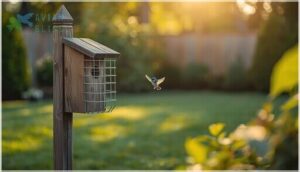
For successful backyard birding, your yard layout matters more than you might think. Position your birdhouse 25–50 feet from high-traffic areas, ensuring clear flight paths and morning sun exposure while avoiding harsh afternoon heat.
Install predator guards on poles, and create a bird-friendly environment with nearby cover and open foraging zones. These bird house placement tips establish the nesting microclimate your feathered friends need.
Height and Orientation Considerations

Once you’ve selected your birdhouse placement and timing, mounting heights and nest box angles become equally important for nesting season preparation. Different species have distinct preferences, so consider these bird house placement tips:
- Mount bluebird houses 4–6 feet high on predator-proof pole materials
- Position wood duck boxes 6–15 feet depending on cover
- Tilt entrance alignment forward 5–15 degrees to prevent rain entry
- Orient roof designs southeast to northeast for morning sun in your birdfriendly environment
Avoiding Predators and Disturbances
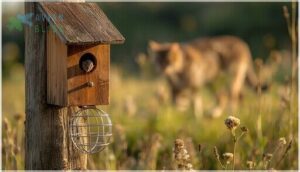
Beyond height and angle, birdhouse security depends on predator deterrents that protect nesting sites without disturbing cavity-nesting birds. Install a predator guard on each entrance hole, and position houses 20–30 feet from dense shrubs where predators lurk.
Mount boxes at least 5–10 feet high to reduce ground access, and avoid high-traffic zones—disturbance reduction through thoughtful birdhouse placement and timing helps your feathered friends raise their young safely.
Preparing and Maintaining Birdhouses for Nesting

Getting your birdhouse ready before nesting season begins is just as important as choosing the right location, and a little maintenance goes a long way in keeping your feathered friends safe and healthy. Regular upkeep ensures that each new season offers a clean, secure environment for raising young birds.
Here’s what you need to know about preparing, monitoring, and caring for your birdhouses throughout the year.
Cleaning and Pre-Season Preparation
Before your feathered friends arrive in early spring, a thorough cleaning transforms your birdhouse into a welcoming nesting site. Proper nest box sanitizing and seasonal cleaning protect bird habitat while supporting bird conservation strategies. Here’s your birdhouse maintenance checklist:
- Remove old nesting material and debris with a non-toxic solution, ensuring drainage holes stay clear
- Inspect for damage and reinforce predator proofing features
- Let everything dry completely before rehanging your freshly prepared nest box
Regular Inspections During Nesting Season
Once nesting season begins, weekly nest monitoring helps you track occupancy and spot any concerns with bird health early on. Check your birdhouse every 3–5 days during peak activity, noting clutch size and fledgling success without disturbing active nests.
Look for structural damage or predator control issues, and record observations to support bird conservation strategies while respecting natural bird nesting habits at these essential nesting sites.
Post-Season Maintenance Tips
After the breeding season wraps up, you’ll want to remove old nesting material and sanitize each birdhouse with a 10% vinegar solution to support bird conservation and prevent parasites. Inspect for structural damage, repair worn entrance holes, and store boxes in a dry location if needed.
Schedule your next birdhouse installation for late winter, keeping wildlife conservation efforts on track with proper maintenance scheduling and pest control year-round.
Frequently Asked Questions (FAQs)
Can I move a birdhouse after birds arrive?
Moving a birdhouse mid-season poses serious relocation risks, often triggering nest abandonment and heightened bird stress. Most species exhibit strong site faithfulness, so shifting occupied nesting sites disrupts established breeding behavior and territorial cues.
How many birdhouses should I install per acre?
Install 6 to 10 birdhouses per acre for mixed species, ensuring proper nest box density and birdhouse placement.
For single-species management, 4 to 5 boxes work well, supporting cavity-nesting birds and nesting success across your habitat size.
What attracts birds to a new birdhouse quickly?
Like a weary traveler seeking the perfect inn, birds quickly choose birdhouses with proper entrance holes, fresh nesting material, sheltered locations with adequate ventilation, and nearby food availability—essential elements of successful avian habitat design for attracting diverse bird species.
Should birdhouses face a specific compass direction?
You should aim for an east to southeast orientation to provide morning sun while minimizing afternoon heat.
Though local climate and shade often matter more than strict compass direction for nesting success.
Do different bird species share the same birdhouse?
Most cavity-nesting birds don’t share birdhouses during a single nesting season, as one species usually claims the nest box.
However, providing multiple boxes with varied entrance holes helps reduce competition among different bird species.
Conclusion
A birdhouse installed in February might look lonely in the snow, but by March it becomes a beacon for anxious house hunters who won’t wait for spring’s official arrival.
Knowing when to put up bird houses for nesting—and pairing that timing with proper placement and maintenance—means the difference between hosting thriving families and watching empty boxes gather dust.
Your preparation today creates safe havens for tomorrow’s fledglings.