This site is supported by our readers. We may earn a commission, at no cost to you, if you purchase through links.
You don’t need to buy bird nesting material when your yard already holds exactly what birds need. The fallen twigs beneath your oak tree, the moss growing on your north-facing fence, and even your weekend grass clippings can become the foundation of a nest.
Birds have spent millions of years perfecting their construction techniques using natural materials they find within their territories. Understanding where to find bird nesting material in your own outdoor space lets you support local bird populations while they raise their young.
The key is knowing which materials different species prefer and how to make those resources safely available throughout the nesting season.
Table Of Contents
Key Takeaways
- Your yard already contains the natural nesting materials birds prefer—twigs, grass clippings, moss, and leaf litter—eliminating the need to purchase supplies while supporting local bird populations throughout the breeding season.
- Pesticide-treated materials contaminate 100% of nests and cause nestling deaths, so only offer clippings from untreated lawns and avoid synthetic materials like dryer lint, plastic threads, and pressure-treated lumber that create entanglement hazards.
- Creating a bird-friendly habitat requires planting 50-70% native vegetation, leaving undisturbed leaf litter areas, and providing clean water sources while avoiding chemical fertilizers that directly reduce bird populations.
- Different species have distinct material preferences based on their nesting strategies—robins need mud, hummingbirds seek moss and spider silk, while jays prefer sturdy twigs—so offering varied natural materials increases nesting success by 38%.
Where to Find Natural Bird Nesting Materials
You don’t need to travel far to find what nesting birds need most. Your yard and nearby green spaces already hold the twigs, grasses, and natural fibers that birds have relied on for generations.
Let’s look at where these materials are hiding in plain sight.
Twigs and Small Sticks in Your Yard
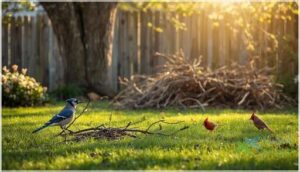
After a windy day, your yard becomes a treasure trove of twigs and small sticks—exactly what cardinals, blue jays, and house wrens need for nest construction. You’ll find fallen branches under trees and shrubs, where birds gather them for their structural framework.
Consider leaving brush piles in undisturbed corners; studies show yards with woody debris support richer bird communities and provide continuous nesting materials throughout spring.
Urban forests provide shelter for various wildlife, enhancing their role in supporting local ecosystems.
Grass Clippings and Straw From Lawns
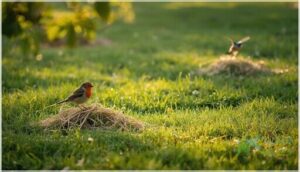
Grass clippings and straw from your lawn rank among the most accessible nesting materials for songbirds like robins and bluebirds—grass alone can make up nearly half of nest mass in many species. However, pesticide contamination poses serious risks, so only offer clippings from untreated lawns.
Keep clipping length short to prevent entanglement, and leave small piles where birds can gather these safe nesting materials throughout spring. Natural materials are generally safer for birds.
Leaves and Leaf Litter Under Trees
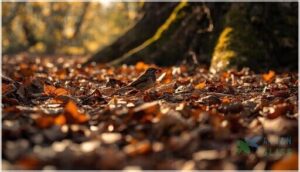
Leaves and leaf litter under trees offer outstanding nesting materials and habitat provision that ground-nesting birds like towhees and wood thrushes depend on for camouflage. One square meter can harbor 40,000 to 50,000 leaf litter insects, providing essential food for chicks.
Safe nesting materials include:
- Dried leaves for nest building and insulation
- Decomposing layers that reduce predation risk through concealment
- Seasonal dynamics supporting insects year-round
- Natural nesting resources attracting diverse species
Moss and Lichen in Shady, Damp Areas
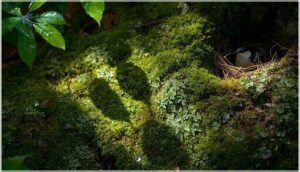
Beyond leaf litter, you’ll discover moss and lichen thriving in shady, damp woodland corners—materials that hummingbirds and chickadees prize for camouflage and nest rigidity. Blue tits incorporate moss in up to 35% of their nests, while American yellow warblers use nearly half moss by weight. These natural nesting resources absorb water efficiently, providing insulation that dries slowly after rain. Look for moss where soil moisture stays above 80% and sunlight exposure remains minimal.
| Material | Primary Benefit | Common Users |
|---|---|---|
| Moss | Hydration and insulation | Chickadees, warblers, pipits |
| Lichen | Camouflage and microclimate control | Hummingbirds, American redstarts |
| Combined Use | Nest rigidity (323% increase at base) | Blue tits, great tits |
| Habitat Requirement | 80%+ soil moisture, Pesticide-treated materials contaminate 100% of nests, causing chick deaths and unhatched eggs through chemicals like fipronil |
Pressure-treated lumber releases copper and arsenic, while flea-treated pet fur introduces harmful nesting materials that directly affect survival rates. Environmental spread continues through contaminated lawns and gardens.
Recognizing Unsafe Nesting Supplies
When you spot bright plastic threads, synthetic ropes, or dryer lint, you’re looking at materials to avoid. These hazardous nesting materials create entanglement hazards and toxicity exposure for developing chicks. Synthetic materials persist for decades while increasing camouflage risks that attract predators.
In agricultural areas, baler twine causes most injuries, and near power lines, debris creates electrocution risks for larger species.
Enhancing Your Yard for Nesting Birds
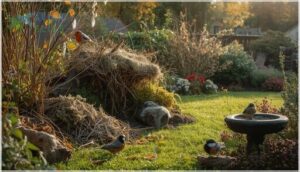
Creating a welcoming space for nesting birds starts with making thoughtful changes to your yard. You can provide natural materials while supporting the local ecosystem at the same time.
Here are several practical ways to turn your outdoor space into a haven for birds during nesting season.
Planting Native Shrubs, Trees, and Flowers
Native plants lay the groundwork for a bird-friendly yard by supporting habitat structure and natural fibers essential for bird nest construction. Aim for at least 50–70% native cover to boost nesting success.
Choose native shrubs, trees, and flowers with seasonal bloom alignment to feed hummingbirds and songbirds year-round. This diversity shapes bird community composition, drawing forest species into your space while supplying the nesting materials they instinctively seek.
Creating Undisturbed Areas With Leaf Litter
When you let autumn leaves pile up beneath your trees and shrubs, you’re unlocking a treasure trove for nesting birds. This simple habit works wonders for bird habitat:
- Insect abundance doubles as spiders and beetles thrive in undisturbed leaf litter, supplying critical food for nestlings.
- Soil health improves through moisture retention and erosion reduction, supporting the native plants birds depend on.
- Temperature regulation stabilizes microclimates, protecting ground-nesting species during extreme weather.
Leaves decompose into natural materials birds incorporate into nests, making your bird-friendly yard truly functional.
Avoiding Pesticides and Chemical Fertilizers
When chemicals coat your grass clippings and shrubs, they don’t disappear—they hitch a ride straight into nests. Research shows that 100% of sampled nests contained pesticide residues like fipronil, directly linked to unhatched eggs and nestling deaths. Choosing organic gardening and IPM techniques protects both safe nesting materials and the birds that depend on them.
| Chemical Treatment | Impact on Birds |
|---|---|
| Neonicotinoids | 3.5% annual population loss |
| Glyphosate | 25% decline in garden birds |
| Fipronil | 100% nest contamination rate |
Your bird-friendly yard thrives when you skip synthetic fertilizers and pesticides entirely, letting natural predators handle pests while habitat preservation safeguards nesting materials.
Providing Water Sources for Birds
A birdbath can transform your backyard birds’ health and nesting success. Shallow water sources with rough surfaces prevent drowning while attracting up to 65 species in some regions.
Place your birdbath at least 15 feet from shrubs to reduce predator risk, and change the water every two days to prevent disease transmission.
Fresh water fosters a thriving bird-friendly yard and strengthens your bird habitat year-round.
Seasonal Timing for Supplying Materials
You should put out nesting materials in late winter or early spring, well before the breeding season starts in April. Regional timing differences matter—northern birds may wait until May, while southern backyard birds begin earlier.
Climate change impact has shifted schedules forward by weeks in some areas, so early material benefits all species.
Spring and fall offerings support your bird-friendly yard year-round, addressing habitat-specific needs.
Supporting Bird Nesting Habits Year-Round
Supporting bird nesting habits isn’t just a springtime project. Birds rely on consistent resources throughout the year, from the materials they gather in early spring to the shelter and food sources they need during migration and winter.
Here’s how you can maintain a welcoming environment that helps birds through every season.
Seasonal Changes in Nesting Material Needs
Throughout the nesting season, birds’ material needs shift with the weather. In spring, many songbirds favor soft grasses and moss when temperatures are cool, but as warmth increases, they switch to sturdier twigs and bark.
Rainfall influence also matters—droughts limit mud supply for species like robins. Temperature impact and predation risk shape what birds collect, so your bird-friendly yard should offer variety year-round.
Maintaining a Bird-Friendly Habitat
A bird-friendly yard thrives when you keep native plant diversity high—aim for over 70% to support 50% more insect-eating species. Chemical use reduction, including skipping pesticides, protects your backyard birds year-round.
Water source safety matters too; clean birdbaths triple breeding pairs.
Habitat monitoring and community involvement help track food sources and boost bird conservation, creating lasting benefits for nesting species.
Attracting Different Bird Species With Varied Materials
Once your habitat is thriving, you can boost species diversity by matching materials to bird preferences. Offering varied safe nesting materials like fine grasses for finches and sturdy twigs for jays directly improves nesting success—studies show diverse offerings increase backyard birds by 38%.
Urban adaptation matters too; 92% of insectivorous species choose plant fibers over synthetics when available, so attracting birds to gardens means providing natural options.
Frequently Asked Questions (FAQs)
What time of year do birds start nesting?
Most bird species begin nesting in spring, usually between March and May in temperate regions. However, timing varies widely by species, geography, and whether birds are year-round residents or long-distance migrants.
How much nesting material should I put out?
How much is enough? Offer 2 to 4 cups of clean, safe nesting materials during peak breeding months.
Most songbirds need 100 to 300 pieces per nest, so replenish your supply every couple of weeks.
Do different bird species prefer different materials?
Yes, each bird species shows strong preferences—robins favor mud, catbirds lean toward woody sticks, and hummingbirds use spider silk.
Beak shape, body size, and local habitat all influence what materials your backyard birds will choose for nest building.
Can I reuse old bird nests for materials?
It’s tempting to recycle nature’s work, but old bird nests harbor parasites and bacteria that threaten both birds and humans.
Legal implications also exist—active nests are federally protected, making reuse risky and potentially harmful.
Where should I place materials in my yard?
Place nesting materials near native shrubs or dense vegetation to boost access for backyard birds—ground placement and above-ground distribution both work.
Timing adjustments and microhabitat selection with predator considerations create a bird-friendly yard supporting varied bird habitat needs.
Conclusion
Some people spend hundreds on elaborate birdhouse condos while their yards overflow with perfectly good nesting material that birds actually prefer. Your overgrown corner, that brush pile you keep meaning to clear, the moss you tried to eliminate—they’re all treasure to nesting birds.
Learning where to find bird nesting material transforms yard maintenance into conservation. Let nature stay a little messy. The birds building families in your trees will thank you for it.
- https://pmc.ncbi.nlm.nih.gov/articles/PMC10331902/
- https://www.biorxiv.org/content/10.1101/2024.04.25.591121v1.full-text
- https://backyardbirdshop.com/nesting-season-overview-chart/
- https://www.sciencedirect.com/science/article/abs/pii/S0013935124003396
- https://royalsocietypublishing.org/doi/10.1098/rstb.2022.0147