This site is supported by our readers. We may earn a commission, at no cost to you, if you purchase through links.

You crack open a sunflower seed expecting the usual dark hull, but instead find pale stripes running down the shell—almost like someone bleached them. White striped sunflower seeds throw off even experienced gardeners and bird enthusiasts because they look undercooked, unfinished, or somehow defective.
Here’s the thing: sometimes those light stripes signal a perfectly healthy confection variety bred for snacking, and other times they’re waving a red flag about harvest timing or environmental stress. The difference between a premium seed and one that didn’t quite make it comes down to genetics, growing conditions, and when you pulled those heads from the stalk.
Understanding what causes those pale patterns helps you grow better crops, choose the right seeds for your backyard birds, and spot quality issues before they end up in your pantry.
Table Of Contents
Key Takeaways
- White striped sunflower seeds are confection varieties bred for snacking with thicker shells and larger kernels than black oil types, but pale stripes can also signal immature harvesting, environmental stress, or pest damage rather than healthy genetics.
- Harvest timing makes or breaks seed quality—pulling heads before moisture drops to 14-15% or drying above 40°C destroys viability, turning what could be premium seeds into pale, lightweight rejects.
- You can spot mature seeds by checking for bold black-and-white stripe contrast, firm plump kernels, and a yellow-brown flower head back, while immature seeds show faint patterns, soft texture, and moisture above 30%.
- Both black oil and white striped varieties deliver similar protein content (16-24%), but striped seeds work better for feeding larger birds like cardinals and jays due to their thicker shells that filter out smaller species.
What Are White Striped Sunflower Seeds?
You’ve probably spotted them at the store or in your own garden—those pale, almost ivory-colored sunflower seeds that stand out from the usual dark stripes. These white striped varieties aren’t just for show, and understanding what makes them different can help you decide if they’re right for your needs.
Let’s break down what these seeds actually are, how they compare to their darker cousins, and which varieties you’re most likely to encounter.
Defining White Striped Sunflower Seeds
White striped sunflower seeds stand apart from the standard black oilseed types you’ve probably seen. These confection sunflower seeds feature light or pale hulls with contrasting dark longitudinal stripes, bred specifically for snacking and direct consumption rather than oil extraction.
Key characteristics that define white striped sunflower seeds:
- Hull patterns showcase a white or cream background with bold black stripes running lengthwise
- Seed morphology includes thicker shells (about 50% of total weight) and larger kernels than oil-type varieties
- Confection types like premium striped sunflower seed reach roughly 5/8 inch in length for commercial markets
- Sunflower classification separates these from solid-black oilseeds, with stripe genetics determining hull coloration
- Italian White sunflower and similar cultivars produce lighter-colored seeds with distinctive pale petals and dark centers
- The differences between black and white sunflower seeds are outlined in sunflower seed types, which is essential for understanding their uses.
Differences From Black and Grey Striped Seeds
Seed color variations tell you a lot about what you’re working with. Black oil sunflower seeds feature a uniformly dark hull and thin shell, maximizing oil content and kernel yield for extraction. Striped sunflower seeds, including premium striped sunflower seeds, display alternating dark and light bands with thicker shells—about 50% of total weight. White sunflower seeds show even lighter base colors with subtle stripe patterns, targeting the confection market over oil production.
The nutritional value of sunflower seeds, including their high energy content, makes them a popular choice for both humans and birds.
Common Varieties, Including Italian White
Seed selection extends beyond oil types. Italian White (Helianthus debilis ‘Italian White’) stands out as a branching ornamental sunflower, reaching 60 to 84 inches with cream petals and dark centers.
Garden planning with this variety yields 3- to 4-inch blooms over a full season, attracting pollinators while producing edible petals and bird-friendly seeds.
Other heirloom white cultivars share similar traits, favoring floral display over oil production in sunflower breeding programs.
Causes of White Stripes in Sunflower Seeds
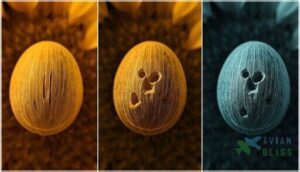
White stripes on your sunflower seeds usually mean something went wrong before harvest, and figuring out the cause helps you grow better seeds next time. The problem might be timing, the environment, or even unwanted visitors in your garden.
Let’s look at the three main reasons your seeds end up pale instead of boldly striped.
Natural Immaturity of Seeds
You’ll notice those white stripes most often when the seeds haven’t finished their maturation process—they’re still in seed development mode. During this phase, moisture levels hang around 30% or higher, way above the 15–28% you’d expect at physiological maturity.
The seed coat hasn’t darkened yet, so pale tissue shows through. Harvesting sunflower seeds before the back turns yellow-brown practically guarantees you’ll end up with lightweight, underdeveloped kernels instead of mature sunflower seeds.
Environmental and Wildlife Damage
Beyond immature timing, pest control failures let wildlife wreak havoc on your crop. Birds and insects tear into developing heads, and those wounds stall seed maturation or invite fungal disease. Environmental factors like rain during flowering open the door for pathogens that discolor kernels and ruin oil content.
- Blackbirds strip 2–5% of yield across the northern Plains, hitting edge rows hardest and costing growers millions annually.
- Moth larvae bore into seeds, cutting harvests by 30–60% when infestations run wild.
- Fungal rot enters through peck wounds, turning plump kernels into shriveled, pale rejects.
Harvest Timing and Drying Methods
Even perfect heads turn white if you yank them too soon or blast them with high heat. Seed moisture levels at harvest determine everything—combine below 15% moisture to dodge shrinkage and scuffing. Drying temperatures above 40°C wreck germination, dropping viability from 90% down to 53% at 55°C. Field drying for 1–2 weeks locks in quality, while proper storage methods at 9–10% moisture keep confection seeds shelf-stable for months.
Harvest timing and heat control make or break sunflower seeds—pull too early or dry above 40°C and viability plummets
| Harvest Scheduling | Drying Temperatures | Storage Methods |
|---|---|---|
| 30–45 days post-bloom | 35–40°C maintains 90% germination | 9–10% moisture for confection seeds |
| 14–15% moisture ideal | Above 40°C drops viability to 82% | 10% moisture for winter oil storage |
| Below 20% for combining | 50°C yields only 70% germination | 8% moisture for warm-month oil storage |
| Natural air drying 1–2 weeks | Kernel rebounds 1–2% post-drying | Airtight containers preserve freshness |
Identifying Mature Versus Immature Seeds
You don’t want to plant or eat seeds that never had a chance to finish developing. Knowing how to spot the difference between mature and immature sunflower seeds can save you time, effort, and disappointment.
Here’s what to look for when you’re checking your harvest.
Visual Cues and Stripe Patterns
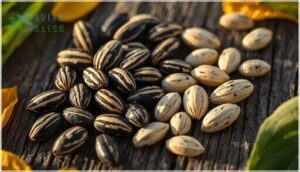
You can read a sunflower seed’s story just by looking at its stripes. Mature striped sunflower seeds show bold, high-contrast black-and-white bands running from tip to base—pattern variability tells you everything about hull development. When seed coloration remains pale or stripes look faint and patchy, you’re seeing incomplete maturation signs.
Italian white sunflower varieties display lighter backgrounds naturally, but even they shouldn’t look washed out or uniformly cream-colored.
Signs of Proper Seed Maturity

The back of the head doesn’t lie—when it shifts from green to yellow and bracts turn brown, you’ve hit physiological maturity. Here’s what signals your sunflower seeds are ready:
- Seed moisture levels drop to 30–40%, marking peak oil content
- Head coloration transitions to pale yellow or straw
- Bract changes show browning across the entire back
- Kernel development reaches a firm, plump stage
- Proper seed harvesting timing occurs 30–45 days post-bloom
Physical Characteristics of Quality Seeds
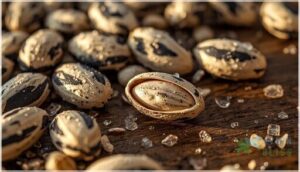
Quality sunflower seeds reveal their worth through touch and structure. You’ll notice a firm, plump kernel structure with consistent hull integrity—no soft spots or gaps. Seed sphericity around 0.50 indicates the shape is right, while moisture content below 9% protects freshness during storage. Seed texture analysis shows hardness matters: confection seeds feel denser than oil types. When your sunflower seed care hits these marks, you’ve got winners ready for planting or snacking.
| Quality Indicator | What You’re Looking For |
|---|---|
| Kernel feel | Dense, firm, fully formed |
| Hull condition | Intact stripes, no white patches |
| Moisture level | 7.5–9% for safe storage |
| Seed weight | 19.5–27 g per 100 seeds (edible types) |
Uses and Benefits of White Striped Sunflower Seeds
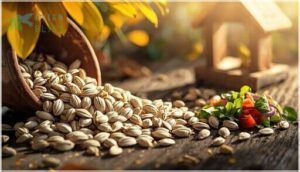
Once your sunflower seeds have matured properly, you’ll find they’re surprisingly adaptable in the kitchen and beyond. Whether you’re roasting them for a quick snack, tossing them into salads, or setting out a bird feeder in your backyard, these seeds pack a nutritional punch that’s hard to beat.
Let’s look at the main ways you can put white striped sunflower seeds to work, from your dinner table to your garden.
Edible and Culinary Applications
You can roast white striped sunflower seeds as a snack, though mature kernels bring better flavor and nutrition. These adaptable seeds open doors to plenty of kitchen uses:
- Sunflower seed roasting transforms raw kernels into crunchy snacks with 170–190 calories per ounce
- Sunflower butter production grinds roasted seeds into nut-free spreads with about 190 calories per tablespoon
- Baking applications add seeds to breads and granola bars for extra protein and healthy fats
- Culinary oils extracted from seeds handle high-heat cooking up to 450°F
Bird and Wildlife Feeding
Beyond the kitchen, white striped sunflower seeds excel at backyard wildlife attraction. Black oil sunflower seeds remain the benchmark for most seed-eating birds, but striped varieties—including mature white forms—work beautifully in feeding strategies targeting cardinals, jays, and grosbeaks.
Their thicker shells naturally filter smaller visitors, while feeder placement and high-fat bird nutrition support winter survival. Just skip salted snacks—your feathered friends need unseasoned kernels.
Nutritional Value and Health Highlights
When you snack on sunflower seeds—whether bird food varieties or confectionary whites—you’re tapping into serious nutrient density.
A one-ounce serving delivers roughly 165 kilocalories, 14 grams of fat (mostly unsaturated), and 5.5 grams of protein, plus about 90% of your daily vitamin E.
That macronutrient profile and antioxidant punch explain their cardiovascular health buzz, making seed needs both delicious and functional.
Tips for Growing and Harvesting Quality Seeds
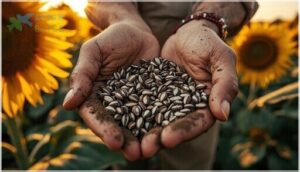
If you want seeds with bold stripes and reliable nutrition, you’ll need to treat your sunflowers right from the start. The difference between white, immature seeds and dark, viable ones comes down to how you plant, protect, and harvest.
Here’s what you need to focus on to grow sunflowers that deliver quality seeds every time.
Best Planting Practices for Sunflowers
When your sunflower seeds germinate, you’re unlocking a season of growth that starts with proper soil preparation and seedbed creation.
Plant after the last frost when temperatures clear 50°F, spacing rows 24–30 inches apart and plants 6–12 inches within rows.
Incorporate compost to boost water retention, apply nitrogen-based fertilizer management at early stages, and use consistent irrigation techniques to meet seed needs during flowering.
Protecting Heads From Pests and Damage
Once your flowers are growing strong, you’ll need to shield those developing heads from hungry visitors. Bird exclusion methods like BirdBlock netting cut damage dramatically—one trial saw losses drop to just 0.7% compared with 30% in exposed plots.
Watch for weevils and cutworms during flowering, using pest control methods that target egg-laying peaks, and consider wildlife management fencing where raccoons prowl field edges at night.
Proper Harvesting and Storage Techniques
Timing makes all the difference—you want your calyx soft and yellow, petals dry, and seeds loose before cutting the head with garden shears.
Seed moisture control starts at harvest: dry them down to 9–10% to stop mold in its tracks. Store in airtight containers in cool, dry spots, ideally below 10°C, and your seeds will keep their viability and flavor for months.
Frequently Asked Questions (FAQs)
Can white striped seeds be planted successfully?
Like planting hope in uncertain soil, white sunflower seeds can sprout—if they’re mature. Test seed germination rates first; viable seeds stored properly will grow when soil temperature warms, rewarding your gardening patience with bloom.
How does sunflower oil production vary by seed?
Black oil sunflower seeds yield more oil—around 40–45% than striped confection types, which contain just 25–35%.
Industrial crushing favors small black seeds for their thin hulls, tight kernels, and efficient extraction compared to large striped varieties.
What causes aflatoxin contamination in sunflower seeds?
Aflatoxin contamination stems from fungal infection by Aspergillus molds, which thrive when seed moisture exceeds 12–13% and storage conditions reach 24–35°C.
Inadequate harvest practices, climate factors, and poor seed storage and preservation increase risk markedly.
Which countries lead in white sunflower seed exports?
Romania, China, and Bulgaria together control nearly half of global sunflower seed exports by value. Europe dominates this trade, shipping both oil-type and confectionery varieties—including white striped seeds—across international shipping routes.
Are white striped seeds higher in protein?
No, white striped seeds don’t pack more protein than black oil types. Both deliver around 16–24% crude protein by weight.
Seed maturity and cultivar matter more than shell color for actual protein content and amino acid profile.
Conclusion
Don’t judge a book by its cover—those pale streaks on white striped sunflower seeds aren’t always a flaw. Whether you’re feeding backyard cardinals, snacking on confection varieties, or troubleshooting your harvest, you now know the difference between genetics and growing mistakes.
Check stripe sharpness, hull firmness, and kernel weight before tossing anything out. The right seeds at the right time make all the difference between mediocre results and a bin full of premium quality.
- https://en.wikipedia.org/wiki/Sunflower_seed
- https://jones-seed.com/pages/grey-stripe-sunflower
- https://www.tridge.com/intelligences/sunflower-seed/production
- https://www.heb.com/product-detail/hill-country-fare-striped-sunflower-seed/2023496
- https://www.sunflowernsa.com/magazine/articles/default.aspx?ArticleID=3932