This site is supported by our readers. We may earn a commission, at no cost to you, if you purchase through links.
You fill the feeder, hang it in what seems like the perfect spot, and then… nothing. Days pass, maybe even weeks, and the birds that flock to your neighbor’s yard won’t even glance at yours. It’s frustrating, especially when you’ve invested time and money into creating what you thought would be an avian paradise.
The truth is, birds are remarkably selective about where they feed, and their absence usually points to specific, fixable problems. Most feeder failures stem from just a handful of issues—location missteps, seed quality, cleanliness, or missing habitat elements that make birds feel safe.
Once you understand what drives their feeding decisions, you can transform your empty feeder into a bustling hub of activity.
Table Of Contents
Key Takeaways
- Birds avoid feeders due to poor placement (too exposed or hidden), stale or low-quality seed, dirty feeders that spread disease, or lack of nearby shelter and staging perches that make them feel safe from predators.
- Black oil sunflower seeds attract the widest variety of desirable songbirds, while cheap filler seeds like red milo and cracked corn repel target species and instead draw pests like starlings and grackles.
- Creating a bird-friendly yard requires native plants for shelter, fresh water sources changed daily, and predator deterrents like baffles on feeder poles positioned 10-15 feet from cover with clear escape routes.
- Consistent maintenance—monthly cleaning with diluted bleach solution, regular refills at the same time (preferably early morning), and tracking visit patterns to adjust placement or seed types—transforms empty feeders into reliable hubs of activity.
Why Aren’t Birds Visiting My Feeder?
You’ve filled your feeder, waited patiently, and still—nothing. It’s frustrating when the birds just aren’t showing up, but the good news is that most problems have straightforward fixes. If you’re starting from scratch, investing in a durable bird feeder designed for easy placement can help you test different locations until you find the sweet spot.
Let’s walk through the most common reasons your feeder might be sitting empty and what you can do about it.
Common Reasons Birds Avoid Feeders
Your feeder location might be too exposed or hidden, making birds feel vulnerable to predators. Seed quality matters—stale or moldy bird seed repels visitors, while filler ingredients like red milo attract pests instead of songbirds. Dirty feeders spread disease, and habitat loss in your area means fewer local species to attract. Poor feeder design can also discourage bird preferences you’re hoping to see.
Ensuring the use of scientific study methods can help identify these issues and improve the overall bird feeder experience.
How Bird Behavior Affects Feeder Visits
Understanding bird behavior gives you an edge in attracting consistent visitors. Birds choose feeders based on perceived threat and territorial behavior—flocking species return together, while dominant individuals defend prime perches. Their foraging strategies respond to prior experiences, visual cues, and alarm calls.
Consider these behavioral factors:
- Quieter locations reduce perceived predator risk
- Established flock dynamics encourage repeat visits
- Territorial species exhibit selective feeding patterns
- Human activity near feeders creates disturbance
- Scent from spoiled seed triggers avoidance
Seasonal and Migration Influences
Beyond daily routines, seasonal bird behavior and migration patterns dramatically reshape feeder visits. Many songbirds migrate between breeding and wintering grounds, timing travel with food availability and day length cues. Weather effects like storms delay movement, while habitat changes along migratory corridors alter stopover choices.
Seasonal shifts in energy demands mean high-fat seeds attract transients during peak migration windows, then resident species dominate between waves.
Is My Bird Feeder Set Up Correctly?
Even the best bird seed won’t attract visitors if your feeder setup is working against you. Location, feeder design, and nearby shelter all play key roles in whether birds feel safe enough to stop by. Equally important is keeping your setup clean, since safe backyard bird feeding practices can prevent disease outbreaks that threaten local flocks.
Let’s walk through three setup factors that might be keeping your feeder empty, and how to adjust them.
Feeder Placement and Visibility
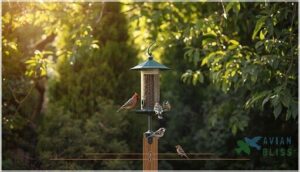
You can’t expect birds to visit if they can’t see your feeder placement from their usual flight paths. Position your bird feeder 10-15 feet from cover like shrubs, allowing safe retreat from predators while maintaining clear visibility angles from multiple directions.
Confirm proper feeder height—usually 5-6 feet—and stabilization tips include securing poles firmly in soil. For more guidance on placement and other ways to make your space inviting, check out these bird-friendly backyard tips.
Consider sun exposure: morning light attracts early foraging backyard birds during prime bird watching hours.
Choosing The Right Feeder Type
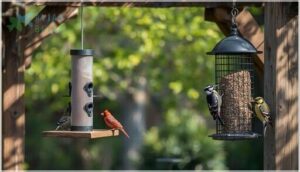
Your feeder type determines who shows up—mismatched designs repel target species. Tube feeders suit finches and chickadees, while platform styles accommodate cardinals and ground-feeders. Suet options attract woodpeckers during winter months, and squirrel-proof bird feeders prevent seed theft. If you observe birds in different locations, portable bird feeders for observation let you move your setup to capture seasonal migration patterns and compare species across multiple sites.
Consider feeder material durability: metal ports outlast plastic by 3-4 seasons. Hanging styles and feeder size impact accessibility, so match design to local feeder birds’ anatomical needs.
Using Staging Perches and Shelter
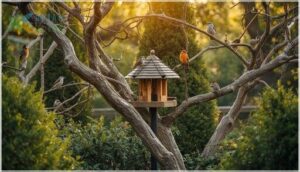
Birds won’t approach exposed feeders without nearby refuge—that’s where staging zones come in. Position elevated perches 5–15 feet from your bird feeder to create safe overlooks, and add low brush piles for quick cover during busy feeding sessions.
Bird feeding tips for effective staging zones:
- Perch placement matters: Install stable branches with rough textures within visual line of sight of feeders, ensuring clear escape routes from ground predators.
- Shelter design for multiple species: Mix open perches with covered roosts at varying heights to accommodate different backyard birds’ preferences while maintaining bird feeder maintenance access.
- Predator deterrents through smart landscaping: Use dense undergrowth to obscure feeders from aerial threats while keeping staging areas clutter-free—rotating placement seasonally matches predator activity cycles and creates a truly bird-friendly habitat.
Does My Bird Food Attract The Right Birds?
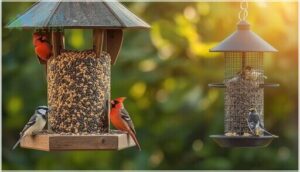
You can stock the finest feeder in the world, but if you’re filling it with the wrong food, you’ll watch squirrels feast while birds fly past. Seed quality and type matter more than most people realize, and what seems like a bargain bag at the store often works against you.
Let’s look at what actually brings the birds you want to your yard, and what sends them searching elsewhere.
Best Seed Types for Local Species
You can’t expect every seed choice to work equally well in your backyard—local foraging patterns matter. Black oil sunflower seeds remain the benchmark, attracting cardinals, chickadees, and finches across most regions.
Safflower appeals to nuthatches and grosbeaks, while Nyjer seeds draw goldfinches if fresh.
Regional bird populations drive seed preferences, so observe which species visit your area and adjust your seed choice accordingly.
Problems With Old or Low-Quality Seed
Stale seed sabotages feeder success faster than most realize—moisture, temperature swings, and poor storage degrade energy content and invite mold that produces toxins harmful to birds. Fresh bird seed smells neutral or nutty; sour odors signal spoilage.
- Store black oil sunflower seeds and Nyjer seeds in airtight containers to prevent humidity exposure and rancidity.
- Rotate your seed choice every few months for quality control and freshness testing.
- Check for visible mold, insect holes, or dusty residue before refilling feeders.
- Clean feeders before adding fresh seed to stop cross-contamination and confirm mold prevention.
Avoiding Filler Seeds and Human Food
Cheap mixes loaded with red milo and cracked corn push desirable species away—these filler seeds lack the fat and protein that songbirds need, attracting starlings and grackles instead. Table scraps pose digestive risks and invite rodents. Seed quality matters for bird nutrition needs and seed waste reduction.
| Seed Type | Bird Appeal |
|---|---|
| Black oil sunflower seeds | High—preferred by cardinals, chickadees |
| Nyjer seeds | Excellent for finches when fresh |
| Red milo (filler) | Low—discarded by most songbirds |
| Human food scraps | Harmful—causes illness, attracts pests |
Filler seed impact: Switch to premium seed types like sunflower seeds to reduce waste and meet true bird nutrition needs, ensuring consistent visits from target species.
How Can I Make My Yard More Bird-Friendly?

You’ve got the feeder placement right and the seed selection dialed in, but if your yard itself doesn’t feel safe or welcoming, birds won’t stick around long enough to discover your offerings. Think of your outdoor space as the neighborhood birds scout before deciding whether to move in—natural cover, fresh water, and minimal threats make all the difference.
Here’s how to transform your yard into a habitat that birds can’t resist.
Landscaping With Native Plants
Your yard becomes a living ecosystem when you integrate native plants—think of it as rolling out the welcome mat for local bird populations. Native plant selection increases habitat complexity by layering groundcover, shrubs, and trees, which provides shelter while supporting biodiversity through seasonal phenology that times food availability with migration.
Creating a bird-friendly environment through gardening for birds means weaving local ecosystems into your landscape, reducing irrigation needs and chemical inputs naturally.
Providing Fresh Water Sources
Once you’ve established shelter through native plantings, fresh sources of water become the next priority—birds need hydration just as much as food. A shallow birdbath with 1-2 inches of water accommodates most backyard birds, and you’ll increase visits by changing the water daily in warm weather to maintain water quality and prevent algae. Water movement, like a gentle drip or fountain, catches avian attention far more effectively than still water, transforming your bird feeding strategies into a complete habitat solution.
Create an irresistible water source by focusing on these birdbath design elements:
- Position your bird bath 4-6 feet from dense cover to reduce predator ambush while keeping escape routes accessible
- Add a shallow rock or textured platform inside for safe perching and confidence at shallow depths
- Use a submersible heater in winter to provide unfrozen water when natural sources ice over
- Clean with hot water and a brush weekly, avoiding harsh chemicals that compromise safety for your backyard birds
Reducing Predator and Pest Threats
Even the best water source won’t draw birds if predators or pests lurk nearby. Install predator guards and baffles on feeder poles to block climbing raccoons, squirrels, and outdoor cats, while keeping feeding areas clear of dense ground cover that hides threats. Motion-activated cameras help you monitor wildlife deterrents and adjust feeder security, and squirrel-proof bird feeders with weight-activated perches discourage unwanted visitors. Prompt feeder cleaning prevents pest attraction from spilled seed.
Create a safer feeding zone with these predator control strategies:
| Threat Type | Deterrent Solution |
|---|---|
| Climbing mammals (raccoons, squirrels) | Baffle installation at 4-5 feet height with 15-inch diameter |
| Ground predators (cats, foxes) | Clear 10-foot radius around feeder, remove hiding cover |
| Aerial predators (hawks) | Position feeders near escape cover within 6-8 feet |
| Rodent pests (rats, mice) | Store seed in sealed metal containers, clean spills daily |
- Choose feeders with tight-sealing lids and restricted seed ports that minimize ground spillage
- Trim shrubs within 12 feet to improve bird sightlines without eliminating nearby escape routes
- Rotate feeder types monthly if pests specialize in exploiting one design
- Monitor predator signs weekly and document patterns to guide your adjustments
What Maintenance Keeps Birds Coming Back?
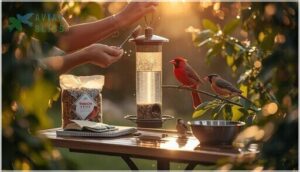
You’ve done the hard work of choosing quality seed, placing your feeder thoughtfully, and creating a welcoming habitat—but none of that matters if you don’t keep up with regular maintenance. Dirty feeders spread disease, inconsistent refills train birds to look elsewhere, and ignoring what’s actually happening at your station means you’ll miss problems before they drive visitors away.
Without regular maintenance, even the best feeder setup fails—dirty stations spread disease and inconsistent refills teach birds to search elsewhere
Here’s how to stay on top of the three maintenance tasks that make the difference between a feeder birds ignore and one they return to daily.
Cleaning and Disinfecting Feeders
Neglect transforms your bird feeder into a breeding ground for pathogens that repel even the hungriest visitors.
Regular feeder sanitation with warm, soapy water removes up to 90 percent of mold and bacteria when you clean monthly, while proper seed storage in dry containers prevents contamination before it starts.
Disinfectant methods using diluted bleach—one part to ten parts water—eliminate lingering microbes, and thorough rinsing plus complete drying guarantee mold prevention between refills.
Maintaining a Consistent Feeding Schedule
Clean feeders matter, but erratic refill intervals confuse birds that rely on predictable feeding routines. You’ll see more consistent bird visit patterns when you refill at steady times—early morning works best for most feeder birds since it aligns with natural foraging cycles.
Keep a simple log of your feeder refill times to maintain schedule optimization, and you’ll notice improved bird behavior within days.
Monitoring Feeder Activity and Adjustments
Tracking daily bird visits through activity logs or cameras reveals patterns you’ll miss by casual glancing. Record visit times, species, and weather conditions weekly—this feeder data analysis helps you spot seasonal trends and improve placement or seed choices.
When visits drop below your baseline for two weeks straight, adjust feeder height, switch seed types, or add nearby perches to restore consistent bird activity.
Frequently Asked Questions (FAQs)
Can weather patterns explain sudden feeder abandonment?
Yes—storms, cold fronts, and sudden temperature swings can disrupt foraging routines, prompting birds to seek sheltered areas or alternative food sources. This causes abrupt changes in feeder activity that mirror local weather trends.
Do nearby feeders reduce birds at mine?
Neighboring feeders can shift bird behavior and foraging patterns through feeder competition, causing modest reductions in visits as birds redistribute effort.
Feeder density affects which feeders attract the most activity, influencing overall bird redistribution patterns.
How does fledging season affect feeder traffic?
Fledgling patterns dramatically reshape feeder traffic as juvenile dispersal peaks—young birds learning foraging routes with parents temporarily boost visits, though many fledglings eventually migrate elsewhere, creating unpredictable seasonal shifts in your backyard’s bird behavior and habitat.
Should I use multiple feeder heights simultaneously?
You can introduce multiple feeder heights to accommodate different bird perching habits and foraging strategies, though managing feeder complexity and maintenance becomes more involved.
Height accessibility influences which species visit your yard consistently.
Can keeping a bird journal improve results?
Journal tracking transforms guesswork into data-driven feeder optimization. Recording species identification, visitation patterns, and weather conditions reveals which bird behavior changes correlate with seed type or placement adjustments—essential for backyard birding success and effective bird feeder troubleshooting.
Conclusion
Understanding why birds aren’t coming to your feeder means diagnosing placement, evaluating seed quality, and creating habitat they trust. The difference between an ignored feeder and a thriving one often comes down to these small, deliberate adjustments.
Fixing it means cleaning regularly, offering fresh food, and giving them cover nearby. Once you address what’s missing, you’ll shift from waiting and wondering to watching birds arrive, settle in, and return day after day.