This site is supported by our readers. We may earn a commission, at no cost to you, if you purchase through links.
North American bird populations have dropped by nearly three billion individuals since 1970—a loss so staggering it reshapes entire ecosystems. This decline isn’t just about numbers. When birds disappear, seed dispersal falters, insect populations explode, and the intricate web connecting plants, pollinators, and predators begins to unravel.
The good news? Wild bird conservation strategies have evolved dramatically, moving beyond traditional approaches to address the real culprits: habitat fragmentation, urban hazards, and climate disruption.
You don’t need a biology degree to make a difference. From redesigning your windows to supporting wildlife corridors, the most effective conservation work happens when communities, scientists, and everyday people align their efforts around solutions that actually work.
Table Of Contents
Key Takeaways
- North American bird populations have dropped by nearly 3 billion since 1970, driven primarily by habitat fragmentation, window collisions (killing up to 1 billion birds annually), and chemical exposure from pesticides like neonicotinoids that reduced grassland birds by 9.7% in affected areas.
- Effective conservation hinges on habitat connectivity—wildlife corridors can double successful dispersal rates for some species, while strategic restoration projects have increased waterbird populations by up to 315% and grassland bird abundance by 35%.
- Simple home modifications make measurable impacts: treating windows with markers spaced 2 inches apart horizontally prevents collisions, planting native vegetation (especially oaks hosting 550 caterpillar species) supports breeding populations, and reducing outdoor lighting cuts migration deaths by 60-80%.
- Citizen science initiatives like the Christmas Bird Count (83,000+ participants in 2024-2025) and policy advocacy directly shape conservation outcomes—evidence-based laws like the Migratory Bird Treaty Act protect over 1,000 species while local ordinances have reduced collisions by 70% in cities with Lights Out programs.
Major Threats to Wild Birds
Birds face a growing list of challenges that have pushed populations into steep decline across North America. From the places they nest to the everyday hazards lurking in our neighborhoods, these threats compound in ways that make survival harder each year.
Understanding what’s putting birds at risk is the first step toward protecting them effectively.
Habitat Loss and Fragmentation
Habitat destruction and fragmentation stand as the leading driver of bird population declines worldwide. Recent global assessments reveal that 61% of bird species are declining, with habitat loss at the core of this crisis. Ecosystem disruption through land conversion cuts deep into bird survival.
- Wildlife corridors connecting forest patches increase successful dispersal by up to 100% for some species
- Fragmentation effects extend 70–80 meters inward from forest edges, altering community composition
- Conservation planning shows protected areas retain 17.8% more forest cover than unprotected sites
- Habitat restoration in larger, connected blocks yields better outcomes than isolated small fragments
Bird habitat preservation requires strategic action. Species-specific needs matter—some birds won’t cross gaps wider than 40 meters, while others navigate 270-meter openings. Wildlife conservation succeeds when habitat preservation focuses on connectivity, not just total acreage. Understanding the impact of ecosystem collapse is vital for developing effective conservation strategies.
Window Collisions and Urban Hazards
While forest loss strips birds of breeding grounds, urban areas present a silent killer: windows. You’re looking at roughly 1 billion birds dying annually from window strikes in the U.S. and Canada alone—though recent studies incorporating delayed deaths push estimates past 3 billion. Birds can’t distinguish glass reflections from real habitat, making bird friendly designs and collision prevention critical. Understanding bird collision causes is essential for developing effective conservation strategies.
| Urban Hazard | Impact Scale | Effective Solution |
|---|---|---|
| Reflective glass on low-rise buildings | 56% of collision deaths | Glass patterns spaced Free-roaming cats kill up to 3.7 billion birds annually in the U.S., far exceeding window strikes |
- Unowned cats causing most bird deaths
- Cat predation exceeding power line collisions eightfold
- Indoor-only cats living safer, longer lives
- Trap-neuter-return programs rarely reducing populations
- Wildlife conservation requiring habitat preservation and predator management
Pesticides and Pollution
Chemical exposure from pesticides and pollution ranks among the deadliest threats you might overlook. Neonicotinoid insecticides reduced grassland bird populations by 9.7% in affected U.S. counties between 2008 and 2014, while toxic chemicals like DDT historically caused catastrophic reproductive failure through eggshell thinning. Environmental toxins—from mercury in wetlands to plastic ingestion in seabirds—continue poisoning birds at alarming rates. Minimizing chemical use protects entire ecosystems.
| Pollution Type | Impact on Birds | Scale of Threat |
|---|---|---|
| Neonicotinoid Pesticides | 9.7% grassland bird decline (2008–2014) | 100 kg/county exposure |
| Oil Spills | 700,000 seabird deaths (Deepwater Horizon) | 300,000–2 million range |
| Plastic Ingestion | 90.4% of seabirds affected by 2014 | Projected 99.8% by 2050 |
| Mercury Contamination | 15% reproductive decline at 0.3 ppm | Widespread wetland hotspots |
| Legacy Organochlorines | Eggshell thinning, raptor population crashes | Historical DDT damage |
Climate Change Impacts
Rising temperatures increasingly reshape bird survival across every continent. Climate shifts drive extinctions—projections suggest 400–550 landbird species could vanish by 2100 under moderate warming scenarios, while extreme weather and sea level rise compound ecosystem disruption. Temperature fluctuations cause phenological mismatch, leaving migrants arriving after peak food availability. Effective climate change mitigation through habitat preservation and environmental sustainability remains essential for wildlife conservation success in protecting vulnerable populations.
- Range contractions threaten 2,150+ species with extinction risk
- Migration timing now lags behind rapidly advancing spring conditions
- Arctic breeding failures devastate recruitment in long-distance migrants
- Smaller body sizes emerge as adaptive responses to warming
- Habitat connectivity becomes critical as suitable zones shift poleward
Habitat Protection and Restoration
Protecting and restoring bird habitats is one of the most effective ways to reverse population declines. When you safeguard critical ecosystems like wetlands and forests, you’re giving birds the space they need to thrive across their life cycles.
Here are four proven strategies that are making a measurable difference for bird populations today.
Preserving Wetlands and Forests

You can make a real difference by protecting what birds need most. Since 1970, wetlands have shrunk by 22% globally, and this habitat loss directly threatens the half of North America’s bird species that depend on these ecosystems.
Forest conservation and wetland protection deliver powerful ecosystem services—from pollination to pest control—while supporting biodiversity conservation and wildlife survival across entire landscapes.
Restoring Degraded Ecosystems

Ecosystem renewal transforms degraded landscapes into thriving bird sanctuaries. Grassland restoration in European farmlands boosted bird abundance by 35%, while wetland habitat reclamation projects have increased waterbird populations by up to 315%.
Biodiversity restoration efforts deliver measurable results—riparian meadow projects show half of focal bird species increasing over time, proving that environmental revitalization through targeted habitat restoration genuinely works.
Enhancing Habitat Connectivity

Think of habitat connectivity as nature’s highway system—when fragments reconnect, birds thrive. Smart conservation planning bridges isolated patches through landscape corridors, helping species move, feed, and breed across fragmented territories.
Wildlife Habitat Preservation Through Connectivity:
- Riparian forest corridors 50–150 m wide enable bird movement between patches in fragmented landscapes
- Wildlife crossings improve cross-road movement in 60% of cases, reducing barrier effects
- Connected hedgerows in England increased structural quality by 12 percentage points since 2007
- Habitat restoration with ecosystem engineering creates larger, linked habitat blocks
- Bird habitat preservation methods reduce species turnover in corridor-linked fragments compared to isolated sites
You’ll see real results—European data shows connectivity measures help reverse farmland bird declines targeting a 2030 turnaround.
Urban Green Spaces and Corridors

Your city’s green spaces aren’t just pretty—they’re critical lifelines for birds traversing fragmented urban habitats. Street trees nearly double bird diversity when canopy cover increases, while urban parks and green roofs provide essential foraging and breeding sites.
Riparian corridors along waterways create natural highways through concrete jungles. Smart urban planning that connects these green corridors transforms hostile cityscapes into bird-friendly spaces that genuinely support wildlife conservation.
Bird-Friendly Urban and Home Practices
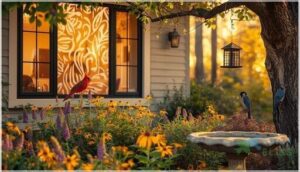
You don’t need a backyard sanctuary to make a real difference for wild birds. Simple changes around your home and neighborhood can prevent millions of bird deaths each year while creating healthier spaces for both people and wildlife.
Let’s look at four practical ways you can turn your property into a safer haven for our feathered neighbors.
Preventing Window Strikes
Windows pose a deadly threat—up to 1 billion birds die each year after striking glass in the United States and Canada alone. You can prevent these window collisions with proven glass treatment options. Bird Friendly Design solutions deliver real results for Urban Bird Safety:
- Apply external markers 2 inches apart horizontally, 4 inches vertically
- Install window film solutions or screens over problem glass
- Position feeders within 3 feet of windows or beyond 30 feet
- Support collision prevention through bird-friendly building retrofits
These Wildlife Conservation steps protect birds while preserving your view. Habitat Preservation starts at home, and every treated window matters for Bird Conservation.
Reducing Light Pollution
Beyond treating glass, your outdoor lights can help or harm migrating birds. Light pollution draws millions of birds off course each night, especially during peak migration. Switch to smart lighting with downward-facing fixtures and motion sensors. Support “Lights Out” programs in your city—they’ve cut bird deaths by 60–80% during migration seasons.
| Light Reduction Strategy | Conservation Benefit | Implementation Ease |
|---|---|---|
| Motion-sensor controls | Reduces nighttime exposure | Simple retrofit |
| Amber LEDs (590 nm) | Minimizes bird disorientation | Moderate cost |
| Shielded, downward fixtures | Limits skyglow attraction | Professional install |
These nighttime conservation steps protect migrants while saving energy.
Planting Native Vegetation
Your yard can become a conservation powerhouse with native plants. Research shows properties with 70% native vegetation support sustainable bird populations—oaks alone host 550 caterpillar species that fuel breeding chickadees.
Native plant benefits extend beyond bird food sources: deep roots boost climate resilience while creating biodiversity hotspots.
Replace lawn with local ecosystems, and you’ll support habitat preservation through ecofriendly gardening that delivers measurable results.
Sustainable Gardening and Landscaping
Sustainable gardening practices transform your space into a functional ecosystem. Garden water management draws 43 bird species to simple features like shallow basins. Even modest tree cover slashes pest damage by 60% while supporting ecosystem services.
Cutting pesticides boosted farmland birds by 177% on demonstration sites—proof that bird-friendly design works.
Native plant selection anchors these sustainable landscaping strategies, creating ecofriendly gardening that benefits both birds and your local habitat preservation methods through measurable, science-backed results.
Community and Citizen Science Initiatives

You don’t need a PhD to make a real difference for birds in your community. Citizen science puts conservation power directly in your hands, from annual counts that help scientists track population trends to hands-on projects that transform neighborhoods into safe havens.
Here are four practical ways you can join the effort and help protect the birds that share your local landscape.
Participating in Annual Bird Counts
You can make a tangible difference in bird conservation by joining annual bird counts like the Christmas Bird Count, which engaged over 83,000 participants in 2024-2025. These citizen science initiatives use standardized bird count methods to track species monitoring across migration patterns, feeding data analysis tools that conservation organizations use for conservation tracking. Your observations—whether you’re a beginner or expert—help scientists detect population trends and shape bird conservation policies.
- The Great Backyard Bird Count welcomed 838,113 global participants in 2025
- Volunteers collectively contributed over 147,265 checklists documenting species across continents
- This data directly informs habitat protection decisions and recovery strategies
Supporting Local Conservation Projects
Joining local conservation projects amplifies your impact far beyond backyard observations. Community engagement through volunteer training programs empowers you with skills to restore habitats, monitor nesting sites, and conduct bird surveys—while conservation partnerships with organizations like local Audubon chapters connect you to funded initiatives.
These community-based conservation efforts blend citizen science with hands-on stewardship, and some regions even generate eco-tourism opportunities that support both birds and local economies.
| Grant Program | Annual Funding | Project Focus |
|---|---|---|
| Urban Bird Treaty | ~$250,000 | Habitat restoration & education |
| Pacific Birds Partnership | $5,000–$15,000 per project | Collaborative monitoring |
| State Wildlife Stamps | $1.5+ million per biennium | Game & nongame bird habitat |
| Local Communities Act (2025) | $1,000,000 proposed | Urban conservation projects |
Conservation organization support through local grants makes participation accessible—you don’t need deep pockets to protect the birds that depend on your region’s unique ecosystems.
Creating Bird-Friendly Communities
Transforming your neighborhood into a bird haven starts with community engagement and smart urban planning. You can champion bird habitat design through local zoning boards, advocating for eco-friendly gardens and wildlife-friendly spaces in parks and developments.
Community-based conservation thrives when neighbors collaborate on bird conservation strategies—planting native species, reducing hazards, and embracing sustainable living practices that support wildlife preservation across interconnected landscapes.
Educational Outreach and Advocacy
You’ll boost bird conservation by sharing knowledge through structured education programs. School-based bird education drives measurable gains in species identification and pro-conservation attitudes, especially among children with limited nature exposure. Conservation messaging backed by compelling data—like the 94% reduction in window strikes with proper film patterns—transforms public awareness into action.
- Design curricula aligning bird observation with academic standards and field-based learning
- Highlight concrete advocacy strategies using collision statistics and habitat loss data
- Launch community engagement campaigns that connect local stakeholders to citizen science projects
- Train educators in bird identification to strengthen conservation biology teaching outcomes
- Frame environmental sustainability messaging around quantified threats like urban sprawl and pesticide impacts
Policy, Legislation, and Organizational Support
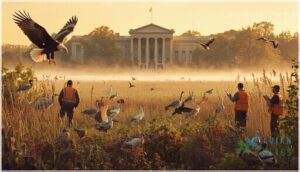
Bird conservation doesn’t happen in a vacuum—it needs the backbone of strong laws, dedicated organizations, and real funding to make a lasting impact. Over the past few decades, strategic legislation and partnerships have protected millions of acres and countless species across the Americas.
Let’s look at the key policies, organizations, and programs that are driving meaningful change for wild birds today.
Key Bird Conservation Laws and Treaties
Strong bird conservation laws and treaties form the legal backbone protecting species across borders. The Migratory Bird Treaty Act safeguards over 1,000 species in the U.S., while the Endangered Species Act has achieved a 78 percent recovery rate for mainland bird populations. Internationally, agreements like the Ramsar Convention and AEWA coordinate habitat protection across flyways.
| Law/Treaty | Coverage | Key Impact |
|---|---|---|
| Migratory Bird Treaty Act (U.S.) | 1,093+ species | Secured $100M for Gulf oil spill restoration |
| Endangered Species Act (U.S.) | Listed bird species | 78% recovery success rate |
| EU Birds Directive | 460+ species | Protected 18% of EU land through Natura 2000 |
| Ramsar Convention | 2,400+ wetland sites | 250M+ hectares of waterbird habitat protected |
These international agreements and wildlife protection frameworks create enforceable standards that guide conservation biology efforts. Treaties like CITES regulate trade in 1,500 bird taxa, while regional pacts coordinate species conservation across multiple countries. When nations commit to these legally binding habitat protection measures, migratory birds gain safe passage and breeding grounds throughout their journeys.
The Role of Conservation Organizations
Conservation organizations work as the connective tissue between policy and practice, turning bird conservation laws into on-the-ground results. The American Bird Conservancy has protected 1.1 million acres across 100 reserves, while BirdLife International’s NGO networks coordinate action at over 1,000 critical sites annually.
These partnership models combine community engagement with conservation funding and policy advocacy, making ecosystem management and conservation biology work at scale.
Funding and Grant Programs
Financial support fuels bird conservation, and you can tap into multiple funding streams to make your efforts sustainable. The Neotropical Migratory Bird Conservation Act has provided over $94.2 million since 2002, while Global Environment Facility grants leverage impressive co-financing ratios for habitat projects.
Smart budget planning and donor engagement transform grant applications into lasting conservation biology outcomes, with resource allocation reaching threatened species across continents.
Advocacy for Bird-Safe Policies
Beyond writing checks, you can push policy reform that saves birds. Bird legislation gains traction when you voice support—New York City’s lighting law protecting migrating birds started with advocates like you demanding change. Three powerful moves you can make today:
- Contact representatives about the Bird-Safe Buildings Act pending in the Senate
- Support local ordinances requiring bird-friendly urban planning in new construction
- Join conservation advocacy groups amplifying community engagement on wildlife conservation efforts
Your participation shapes conservation biology and ecosystem management through environmental sustainability and conservation policies. Community-based conservation works when citizens speak up—that’s how over 45 cities launched Lights Out programs, cutting collisions by 70% in Philadelphia alone.
Frequently Asked Questions (FAQs)
How do birds contribute to pollination services?
Birds provide essential pollination services through nectar feeding, with over 900 species worldwide supporting plant diversity and ecosystem services.
Their contributions strengthen biodiversity preservation, boost native plants’ reproduction, and help guarantee critical seed dispersal for healthy ecosystems.
What are adaptive management strategies in conservation?
Think of adaptive management as learning by doing. You monitor ecosystem resilience through biodiversity metrics, adjust conservation strategies using data from management cycles, then improve habitat protection approaches until sustainable practices consistently deliver measurable results.
How does birdwatching benefit local economies?
Birdwatching drives substantial economic benefits through birding tourism, creating local jobs and supporting rural development. In 2022, birders generated $5 billion in output, sustaining 4 million jobs nationwide while strengthening community growth.
Which bird species face the greatest extinction risk?
Ironically, paradise islands hold the deadliest traps. Hawaiian honeycreepers face Critically Endangered status from avian malaria and habitat loss.
Seabird decline accelerates through fisheries bycatch, while forest fragmentation pushes endemic species toward extinction risk.
How do birds function as ecosystem engineers?
Through seed dispersal, pollination services, pest control, and nutrient cycling, these creatures shape entire ecosystems.
They maintain ecological balance, boost biodiversity preservation, and strengthen ecosystem resilience—proving their role as true ecosystem engineers.
Conclusion
The ball’s in your court now. Wild bird conservation strategies don’t require heroic gestures—just informed choices that ripple outward. When you prevent window strikes, restore native plants, or join a citizen science count, you’re not just helping individual species.
You’re reinforcing the ecological threads that hold entire systems together. Birds need landscapes that work, policies that protect, and communities that care. Start where you’re, and watch what follows.
- https://www.bto.org/our-work/science/impact/protected-areas
- https://pmc.ncbi.nlm.nih.gov/articles/PMC7163781/
- https://www.allaboutbirds.org/news/explainer-whats-at-stake-in-the-2020-rollback-of-migratory-bird-treaty-act-protections/
- https://www.epa.gov/wetlands/migratory-bird-initiatives
- https://data.pointblue.org/partners/fedadc/index.php/bird-conservation-plans/