This site is supported by our readers. We may earn a commission, at no cost to you, if you purchase through links.
Most people walk past active bird nests dozens of times each spring without realizing it. Birds don’t advertise their locations—they hide them—but they leave behind a quiet trail of clues if you know where to look.
A repeated flight path between two shrubs, a smear of fresh mud on a brick wall, droppings clustered beneath a single branch: each one tells a story. These spring bird nest location tips go beyond the basics, covering how to read wild behavior, identify nest types by structure, and support nesting birds without disturbing them.
Table Of Contents
- Key Takeaways
- Spring Bird Nest Location Clues
- Check Common Nesting Habitats
- Identify Nest Types Safely
- Top 8 Nesting Support Items
- 1. Birdfy Smart Bamboo Bird Feeder with Camera
- 2. Kaytee Wild Bird Mealworm Food
- 3. Black Oil Sunflower Seeds for Wild Birds
- 4. Heath Orange Burst Bird Suet Cakes
- 5. Audubon Park Berry Wild Bird Suet
- 6. Antique Bronze Polyresin Pedestal Bird Bath
- 7. Cedar Wood Wren and Chickadee House
- 8. Alpaca Fiber Bird Nesting Material Holder
- Protect Nests While Birdwatching
- Frequently Asked Questions (FAQs)
- Conclusion
Key Takeaways
- Birds leave reliable clues like repeated flight paths, stationary alarm calls, and fresh droppings that point you straight to an active nest if you slow down and pay attention.
- Every species has a preferred nesting setup—whether it’s a cup nest in a branch fork, a scrape near water, or a mud nest under your eaves—so knowing those patterns turns nest-finding from guesswork into skill.
- Supporting nesting birds is straightforward: fresh water, protein-rich food like mealworms, and a cedar nest box placed near dense shrubs give local birds exactly what they need through spring.
- The most important rule in birdwatching is also the simplest—keep your distance, hold off on mowing, and don’t touch the nest box, because even small disturbances can cause a nesting pair to abandon their eggs.
Spring Bird Nest Location Clues
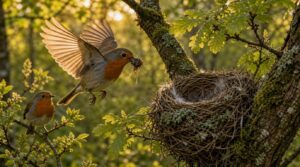
Birds leave more clues than most people realize — you just have to know what to look for. A few simple patterns in their behavior and surroundings can point you straight to an active nest. Here are the key signs worth watching for this spring.
Knowing which species are nesting near you — like the common black birds found across Pennsylvania — makes it much easier to spot the right clues.
Repeated Parent Flight Paths
One of the most reliable clues that a nest is nearby is a repeated parent flight path. Birds naturally follow the same corridors day after day, tracing familiar routes between foraging spots and their nest.
Watch for a parent landing on the same branch repeatedly — that consistent, unhurried return flight almost always leads somewhere important.
Stationary Alarm Calls
A bird’s alarm call from a fixed spot is a dead giveaway. When a parent calls repeatedly from one location, it’s almost certainly defending a nearby nest from a perceived threat.
Stand still, listen closely, and trace the sound back to its source — you’ll often find the nest just a few feet away.
Fresh Twigs and Moss
Fresh twigs and moss are two of the clearest signs that active nest construction is nearby. When you spot bright green, pliable moss disturbed from a shaded patch, or notice freshly snapped twig ends with light-colored wood and faint sap, a bird has likely been there recently. Spring’s damp mornings make these materials easy to gather within about 50 to 100 meters of the nest.
Droppings Below Branches
Once you’ve spotted fresh twigs and moss, look down. Droppings below branches are a reliable nest clue during the spring nesting season.
Small, smooth-edged pellets usually signal caterpillar activity above, while irregular shapes suggest beetle or moth larvae. Fresh dark droppings mean something’s active up there right now — bird or insect — and that branch is worth watching closely.
Quiet Observation Spots
Finding the right spot matters as much as knowing what to look for.
A clearing edge near a pond puts you within 15 meters of perching birds without crowding them. A low woodland understory softens wind noise and reveals subtle songs naturally. Try a shaded cedar hollow to block city sounds, or a marsh boardwalk for steady, undisturbed spring nest observation.
Check Common Nesting Habitats

Birds aren’t random about where they build — every species has a preferred setup, and knowing those patterns makes all the difference. Once you understand the logic behind their choices, spotting a nest shifts from luck to skill. Here are the most common nesting habitats worth checking this spring.
Every bird species builds by instinct, not chance — learn their logic, and finding nests becomes skill, not luck
Dense Trees and Shrubs
Dense trees and shrubs are nature’s first choice for spring nesting season shelter. A mature canopy can block 60 percent of light, creating the cool, humid microclimate small birds prefer. This dense bush growth provides essential shelter and nesting sites for wildlife.
- Dense canopy benefits predator concealment through interlocked branches
- Shrubs at 1–3 meters form a protective shrub layer habitat
- Vegetation structural diversity enables far more nesting species
Look up — your answer is usually hidden in plain sight.
Ground Nests Near Water
Some of the most easily overlooked nests sit right at the water’s edge. Waterfowl and killdeer favor shallow scrape nests lined with dry grass, feathers, and debris — blending seamlessly into muddy shorelines. Soft soil makes digging easy, and shoreline camouflage does the rest.
Nesting kicks off in early spring, when invertebrate prey peaks near the water.
Cavities in Tree Trunks
A hollow trunk is basically a ready-made apartment for cavity-nesting birds. Cavity formation usually begins when fungi and moisture attack a wound, slowly opening the interior over years.
Woodpeckers seek these spots first, but owls and smaller songbirds follow. Tap a suspect trunk — a hollow thud signals a potential cavity nest worth watching from a respectful distance.
Eaves, Bridges, Buildings
Man-made structures quietly rival any forest canopy as urban nesting sites. Eaves overhanging 18 to 24 inches create sheltered ledges birds treat like natural cliffs.
- Barn swallows favor mud nests under eaves
- Pigeons colonize bridge beams and girders
- Sparrows tuck into building gaps near rooflines
Watch the shelter lines where eaves meet walls — that’s prime real estate.
Riverbank Burrow Entrances
Few birds master hidden riverbank nesting quite like the kingfisher. It digs burrow entrances roughly 12 to 25 centimeters wide into clay-rich banks, where cohesive soil holds firm after digging.
Shaded by overhanging vegetation, these openings stay cool and concealed. A slight access ramp angled 15–25 degrees channels water away, keeping eggs dry even when spring floods rise.
Identify Nest Types Safely
Not all bird nests look like the classic twig bowl you picture in a tree. Birds are surprisingly creative builders, and the style of nest often tells you exactly which species called it home. Here are the main nest types you’re likely to spot this spring.
Cup Nests in Branches
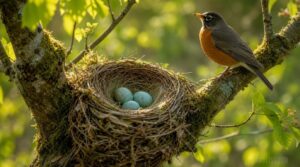
Cup nests are some of the most elegant spring nests you’ll find tucked into trees and shrubs. Outer walls of twigs, grasses, and bark strips get bound together with spider silk or mud, while the inner lining uses soft moss and fine fibers for nest insulation. Construction materials reflect smart choices — sturdy outside, cozy inside.
Branch placement matters for predator avoidance. Most species wedge their cup nest into a branch fork, usually two to eight meters up, hidden under leafy cover. Robins, warblers, and goldfinches all favor this setup. Building timeline runs two to six days, then eggs follow within a day or two.
Scrapes in Gravel
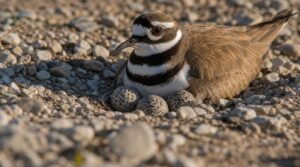
Not every nest sits in a tree. Some birds skip the branches entirely and scrape a shallow hollow straight into gravel or bare ground. These simple depressions, usually just 6 to 12 centimeters across, make surprisingly effective nests.
Killdeer are classic examples. Their scrape reuse patterns mean they often return within 50 to 150 meters of last season’s site.
Mud Nests Under Eaves
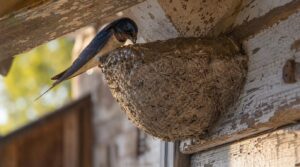
While ground scrapers stay low, barn swallows and cliff swallows build upward — plastering mud nests under eaves using a paste of soil, clay, grass, and their own saliva.
Key things to know:
- Saliva adhesive bonds mud firmly to brick, stucco, and wood
- Nests appear light gray when fresh, darkening as they dry
- Annual reuse is common; birds add fresh mud each spring
- Heavy rain causes nest weathering, prompting partial repairs
- Eave nest longevity spans several seasons on sheltered surfaces
Platform Nests on Ledges
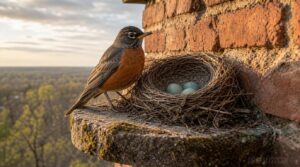
Move from the eave to the open ledge, and you’ll find a different kind of setup entirely. Platform nests on ledges mimic cliff habitats — flat, minimal, and fully exposed to the horizon.
Robins and phoebes favor these spots, stacking twigs and grasses across a shallow, stable base that keeps eggs from rolling. South-facing ledges attract early nesters because warmth speeds incubation along.
Woven Hanging Nests
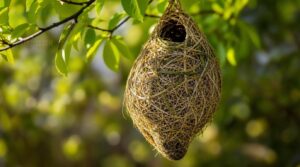
Hanging like a tiny purse from a swaying branch, woven hanging nests are among the most notable structures in the bird world. Orioles build them by interlacing grasses, palm fibers, and plant strands into a teardrop-shaped pouch roughly 8 to 16 centimeters wide.
- Narrow entrance openings deter snakes and predators naturally
- Tapered bottoms channel rain away, keeping chicks dry
- Seasonal reuse is common — birds add fresh lining each spring
Top 8 Nesting Support Items
Once you know where birds are nesting, you can make your yard genuinely worth staying in. A few well-chosen items go a long way toward supporting nesting birds through the busy spring season. Here are eight products worth keeping on hand.
1. Birdfy Smart Bamboo Bird Feeder with Camera
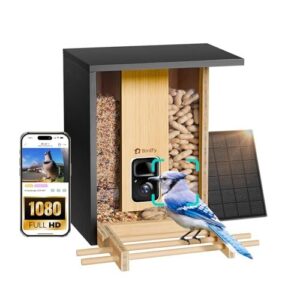
The Birdfy Smart Bamboo Bird Feeder brings a whole new layer to backyard birdwatching. Its integrated 2K camera gives you a 135° wide-angle view, so you don’t miss a thing. Solar charging keeps it running without fuss, and the AI-powered app identifies species on the spot — no subscription needed.
Built from FSC-certified carbonized bamboo, it blends naturally into your garden while holding 3.5 liters of seed across dual compartments.
| Best For | Bird lovers, families, and nature enthusiasts who want a low-maintenance, tech-savvy way to watch and identify backyard wildlife from their phone. |
|---|---|
| Primary Use | Smart bird feeder |
| Target Species | Backyard songbirds |
| Main Material | Carbonized bamboo |
| Product Weight | 5.85 kg |
| Bird Benefit | Monitoring and feeding |
| Setup Method | Mount with WiFi setup |
| Additional Features |
|
- No subscription fees for AI bird ID — you get the smarts without the ongoing cost
- Solar charging means you’re rarely scrambling to swap batteries
- 2K wide-angle camera with live streaming makes it easy to catch (and share) great moments
- Bamboo can warp or crack over time if your weather gets rough
- Only works on 2.4GHz WiFi, so newer router setups might need some adjusting
- At nearly 6kg, it needs a solid mount — a flimsy pole won’t cut it
2. Kaytee Wild Bird Mealworm Food
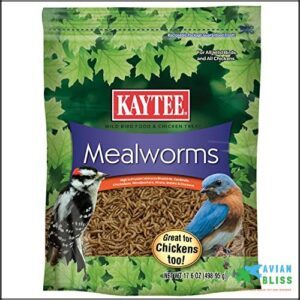
During nesting season, parent birds need protein-rich food to fuel both themselves and their growing nestlings. Kaytee Wild Bird Mealworm Food delivers exactly that — oven-dried mealworms with at least 47% crude protein and 25% fat, no additives needed.
Bluebirds, robins, wrens, and woodpeckers are all regulars at mealworm feeders. Offer them alone or mixed with seeds in a tray feeder.
The resealable 1.1 lb bag stays fresh and fits easily in any pantry.
| Best For | Backyard birders who want to attract bluebirds, robins, wrens, and woodpeckers — especially during nesting season when birds need extra protein. |
|---|---|
| Primary Use | Bird food supplement |
| Target Species | Bluebirds, wrens, robins |
| Main Material | Dried mealworms |
| Product Weight | 1.1 lbs |
| Bird Benefit | High-protein nutrition |
| Setup Method | Fill into feeder |
| Additional Features |
|
- Pure dried mealworms with no additives — just one ingredient, nothing extra
- Works year-round and stores easily; way less hassle than dealing with live mealworms
- Versatile enough to use solo in a feeder or mixed in with your regular seed blend
- Pricier per ounce than most seed or nut mixes, so it can add up fast
- The 1.1 lb bag might be overkill if you only feed birds occasionally
- Not a complete diet on its own — birds still need seeds or other food sources to stay healthy
3. Black Oil Sunflower Seeds for Wild Birds
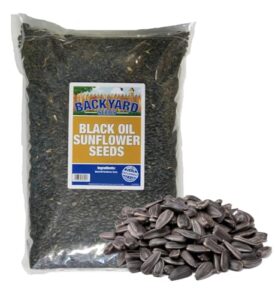
Few seeds do more heavy lifting than black oil sunflower seeds. With a fat content between 40 and 50 percent, they deliver serious calories to breeding birds when energy demands peak. Cardinals, finches, chickadees, and woodpeckers all flock to them reliably.
The thin shells make feeding efficient — birds crack them fast and move on, spending less energy, gaining more nutrition. This 25-pound, USA-sourced bag is filler-free and fits tube, hopper, and platform feeders equally well.
| Best For | Backyard birdwatchers who want to attract a wide variety of birds — cardinals, finches, woodpeckers, and more — without wasting money on filler seeds. |
|---|---|
| Primary Use | Bird seed feed |
| Target Species | Cardinals, finches, woodpeckers |
| Main Material | Black oil sunflower seeds |
| Product Weight | 25 lbs |
| Bird Benefit | Energy and nutrition |
| Setup Method | Fill into feeder |
| Additional Features |
|
- Thin shells mean birds spend less energy cracking and more time eating, so your feeder stays busy
- Works with tube, hopper, and platform feeders, so no need to swap equipment
- USA-sourced and 100% edible — every pound in the bag actually gets eaten
- Squirrels love these seeds just as much as the birds do, so expect some uninvited guests
- 25 pounds is a lot — you’ll want an airtight container handy to keep things fresh
- Bulk storage needs a cool, dry spot, which not everyone has easy access to
4. Heath Orange Burst Bird Suet Cakes
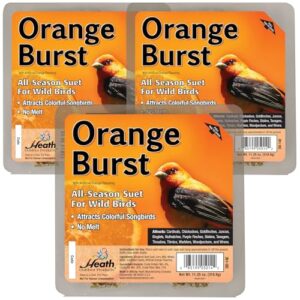
Suet is basically a calorie bomb for birds — and that’s exactly what they need during nesting season. The Heath Orange Burst Suet Cake packs rendered beef suet with corn, millet, and sunflower seeds into an 11.25-ounce block that won’t melt on warm days. Cardinals, woodpeckers, and orioles visit it consistently.
The citrus flavor broadens its appeal, drawing in species that might ignore plain suet. Store it somewhere cool and dry, and pair it with a standard suet cage for best results.
| Best For | Backyard bird enthusiasts who want to attract a wide variety of songbirds, woodpeckers, and orioles year-round — especially during migration and winter. |
|---|---|
| Primary Use | Suet bird food |
| Target Species | Woodpeckers, cardinals, orioles |
| Main Material | Suet and seed blend |
| Product Weight | Not specified |
| Bird Benefit | High-energy feeding |
| Setup Method | Place in suet cage |
| Additional Features |
|
- No-melt formula holds up in warm weather, so you’re not stuck with a greasy mess in the feeder
- The citrus flavor pulls in birds that typically skip plain suet, giving you more variety at the feeder
- Made in the USA with a blend of corn, sunflower, and mixed seeds for solid nutritional value
- Not every bird is into citrus — some may flat-out ignore it depending on their taste
- Needs a cool, dry storage spot, which can be a minor hassle if you buy in bulk
- Works best with the Heath S-1-8 Suet Cage specifically, so you may need to grab that separately
5. Audubon Park Berry Wild Bird Suet
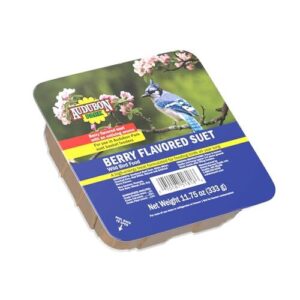
Berry suet pulls in a surprisingly wide crowd. The Audubon Park Berry Wild Bird Suet blends rendered beef suet with millet, cracked corn, and artificial berry flavoring — a combination that attracts nuthatches, cardinals, wrens, and warblers. At 11.75 ounces, it fits any standard suet basket feeder without fuss.
The sweet berry scent works like a welcome sign for birds that might skip plain suet entirely. Store it cool, hang it about five feet up, and watch the activity pick up fast.
| Best For | Backyard birders who want to attract a wide variety of songbirds year-round, especially during cold months when birds need extra calories. |
|---|---|
| Primary Use | Suet bird food |
| Target Species | Mixed songbirds |
| Main Material | Rendered beef suet |
| Product Weight | 11.75 oz |
| Bird Benefit | High-calorie feeding |
| Setup Method | Requires suet basket |
| Additional Features |
|
- The berry scent draws in birds that usually ignore plain suet — think cardinals, wrens, and warblers
- Packed with protein and calories, so it’s genuinely useful during nesting season and harsh winters
- Fits any standard suet basket with no hassle — no special gear needed
- Can melt and get messy in hot weather, so summer use is tricky
- Squirrels will absolutely notice it and help themselves if given the chance
- The berry flavoring is artificial, which might be a dealbreaker for folks who prefer all-natural options
6. Antique Bronze Polyresin Pedestal Bird Bath
Birds need fresh water just as much as food during nesting season. The Antique Bronze Polyresin Pedestal Bird Bath stands 28 inches tall with a 20-inch bowl — wide enough for robins and jays alike.
Its sloped edges and rim grip holes help smaller birds perch and drink safely. The hollow pole lets you add sand or gravel for stability in wind. Lightweight at 4.4 pounds, you can move it easily as your garden needs change.
| Best For | Backyard birders and garden enthusiasts who want a low-maintenance, good-looking water feature that’s easy to move around and keep clean. |
|---|---|
| Primary Use | Nesting material |
| Target Species | Chickadees, finches, wrens |
| Main Material | Raw alpaca fleece |
| Product Weight | 8 oz |
| Bird Benefit | Nest insulation |
| Setup Method | Place in feeder or shrubs |
| Additional Features |
|
- The 20-inch bowl with sloped edges and perch holes is genuinely bird-friendly — smaller birds can drink without struggling
- Super easy to clean since the bowl just unscrews, no tools needed
- Lightweight enough to reposition anytime, and you can add sand or gravel to the pole if wind’s an issue
- At only 4.4 pounds, it can tip in strong winds if you skip the added weight
- The included ground stakes might not hold well in loose or rocky soil
- Polyresin means you’ll want to bring it inside during hard freezes to avoid cracking
7. Cedar Wood Wren and Chickadee House
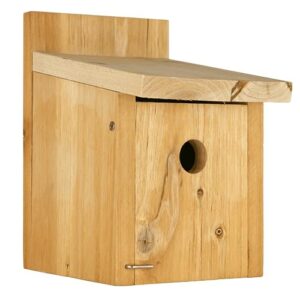
Fresh water draws birds in, but a proper nest box keeps them coming back. The Cedar Wood Wren and Chickadee House is built from rot-resistant cedar, so it holds up through rain, frost, and summer heat without warping.
Its 1 1/8-inch entrance hole is just right for wrens and chickadees while keeping larger birds out. Mount it 5 to 15 feet high, near dense shrubs, and you’ll give nesting pairs exactly the shelter they’re looking for.
| Best For | Backyard birdwatchers who want to attract wrens and chickadees with a low-maintenance, weather-resistant nest box. |
|---|---|
| Primary Use | Garden bird bath |
| Target Species | Birds and butterflies |
| Main Material | Polyresin |
| Product Weight | 4.4 lbs |
| Bird Benefit | Hydration and bathing |
| Setup Method | Tool-free pole assembly |
| Additional Features |
|
- Built from rot-resistant cedar, so it handles harsh weather without warping or falling apart
- The 1 1/8-inch entrance hole keeps larger birds out, giving smaller species a safe place to nest
- Clean-out door makes end-of-season maintenance quick and easy
- Mounting screws aren’t included, so you’ll need to grab those separately
- Some users may need to add extra ventilation holes on the sides for better airflow
- Joints and panels can arrive damaged from shipping, so inspect it carefully when it shows up
8. Alpaca Fiber Bird Nesting Material Holder
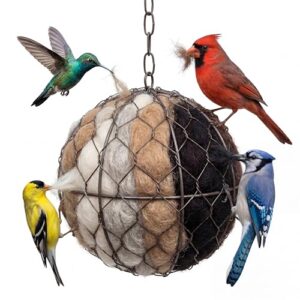
Once wrens and chickadees have a home, they still need soft material to line it. The Alpaca Fiber Bird Nesting Material Holder fills that gap. It’s packed with 100% natural alpaca fiber — warm, moisture-wicking, and chemical-free — which hummingbirds, robins, and chickadees will pull strand by strand for their nests.
Hang it from any branch or hook using the built-in loop. At just over five inches wide, it’s compact but refillable, so you can keep supporting local birds all season long.
| Best For | Bird lovers and backyard gardeners who want to actively support local nesting birds with a natural, eco-friendly solution. |
|---|---|
| Primary Use | Bird nesting box |
| Target Species | Wrens and chickadees |
| Main Material | Cedar wood |
| Product Weight | 1.06 lbs |
| Bird Benefit | Shelter and nesting |
| Setup Method | Mount to post or tree |
| Additional Features |
|
- Made with 100% authentic Peruvian alpaca fiber — warm, moisture-wicking, and chemical-free, so birds get quality nesting material
- Refillable design means you can keep topping it up all season without buying a new one
- The weighted, spherical cage holds steady in the wind and gives birds easy access from any angle
- You’ll need a hook or branch to hang it — nothing’s included for mounting
- The nesting fibers can get a little messy as birds pull strands out
- How well it attracts birds really depends on your location and the time of year
Protect Nests While Birdwatching
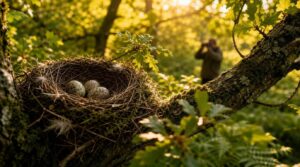
Watching birds is genuinely rewarding, but even small, well-meaning actions can disrupt a nesting pair at the worst possible moment.
The good news is that protecting nests doesn’t require much effort — just a few thoughtful habits that become second nature quickly. Here’s what to keep in mind when you’re out observing this spring.
Use Binoculars From Distance
A good pair of binoculars is your best friend in ethical birdwatching. Choose optics with fully multi-coated lenses — they increase light transmission and make plumage details pop, even at dawn.nn| Technique | Why It Matters |n|—|—|n| 10x magnification setting | Brings nests into clear view without moving closer |n| Brace elbows against torso | Steadies image during wildlife observation |n| Use a tripod | Eliminates shake for precise finding bird nests |nnScan from behind a hedge, move laterally — never straight toward the nest.
Delay Trimming and Mowing
Put down the trimmer for now. During nesting season — roughly March through August — your lawn equipment can do real harm near active nests.
Delaying mowing also lets roots deepen and reduces soil compaction, keeping your turf healthier. A short pause protects backyard birds and your lawn at the same time.
Keep Pets Indoors
Your cat or dog can become a real threat to ground-nesting birds without meaning any harm.
Keep pets indoors during peak nesting season to protect vulnerable eggs and chicks from disturbance. Use baby gates or window screens to limit access near active nesting zones, and offer puzzle feeders and rotating toys to keep them happily occupied inside.
Avoid Touching Nest Boxes
Nest boxes deserve a hands-off approach during active breeding. Avoid touching the exterior as even transferring your scent can cause parents to abandon eggs. Instead, rely on remote monitoring cameras to observe activity without direct contact.
Follow local wildlife regulations when scheduling inspections — timing them after fledging keeps disturbance minimal and gives every clutch the best possible start.
Stay Quiet Near Thickets
Thickets are where birds feel safest — disturb them carelessly, and you undo everything.
Wear soft footwear with flexible soles, adopt a low stance, and use the fox walk technique: roll your foot’s outer edge down first.
Choose mossy ground over dry leaves, breathe steadily, and let silence do the work.
Frequently Asked Questions (FAQs)
Can bird nest help with phlegm?
Traditional Chinese Medicine has used edible bird nests for centuries to soothe throats and clear phlegm. Rich in sialic acid and proteins, they may ease dry coughs, though they complement — never replace — medical care.
When do birds typically begin nesting each spring?
Most birds begin nesting in early spring, usually March to April, driven by longer daylight hours and rising temperatures. Species like robins and bluebirds often start building just weeks after migratory arrival timing.
What triggers birds to start building their nests?
Lengthening daylight triggers a hormone surge that signals birds to start building. Pair bonding and food abundance seal the deal — when conditions align, nest construction begins fast.
How long does nest construction usually take?
Most small songbirds wrap up a simple cup nest in 4 to 7 days. Larger platform nests can take 1 to 2 weeks, especially when wet or cold weather slows things down.
Do birds reuse the same nest year after year?
Some species do. Eagles and ospreys renovate the same platform nest annually. Small songbirds usually rebuild from scratch. Prior nesting success is the biggest driver of whether a pair returns.
Which bird species nest latest into the summer?
Some birds stretch nesting well into summer. American goldfinch breed from late June through August, while osprey may nest into July. Arctic terns and high-latitude warblers follow suit when conditions peak.
Conclusion
Spring into action—but do it quietly. These spring bird nest location tips train you to read the small clues birds leave without even knowing it: the worn path through the grass, the mud smear on a brick wall, the branch where droppings cluster every single morning.
Once you see those signs, you really can’t unsee them. Watch from a safe distance, protect what you find, and let this whole season unfold as it should.