This site is supported by our readers. We may earn a commission, at no cost to you, if you purchase through links.
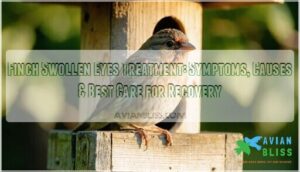 When you discover your finch with swollen, crusty eyes, you’re likely dealing with House Finch eye disease caused by bacterial infection.
Unfortunately, there’s no specific finch swollen eyes treatment for wild birds, as antibiotics aren’t generally effective and capturing birds causes additional stress.
Your best approach involves supportive care: provide fresh, clean water and food daily, maintain spotless feeders using a 10% bleach solution, and temporarily remove feeders if you notice multiple affected birds.
This gives their immune systems the best chance to fight the infection naturally, and most finches recover within weeks when stressors are minimized, though some strategies can substantially improve their recovery odds.
Table Of Contents
- Key Takeaways
- Finch Eye Disease
- Treating Finch Eye Infection
- Finch Eye Infection Signs
- Home Care for Finches
- Veterinary Treatment Options
- Frequently Asked Questions (FAQs)
- How do you treat a swollen bird’s eye?
- Can finches survive eye disease?
- What does finch eye disease look like?
- How to treat bird eye infection at home?
- Can finch eye infections spread to other bird species?
- How long does finch eye treatment typically take?
- Are there natural remedies for finch conjunctivitis?
- Can finches develop immunity after recovering from infection?
- Conclusion
Key Takeaways
- You can’t directly treat wild finches with swollen eyes – there’s no effective home treatment since antibiotics aren’t practical and capturing birds causes harmful stress
- Clean your feeders weekly with a 10% bleach solution and provide fresh water daily to prevent the spread of Mycoplasma gallisepticum bacteria that causes finch eye disease
- Remove feeders temporarily if you spot multiple infected birds – this reduces congregation and gives their immune systems the best chance to fight the infection naturally
- Most finches recover within weeks when stressors are minimized – focus on maintaining spotless feeding stations and reducing environmental stress rather than attempting direct intervention
Finch Eye Disease
If you’ve noticed your finch’s eyes looking red, swollen, or crusty, you’re likely dealing with finch conjunctivitis caused by a bacterial infection called Mycoplasma gallisepticum.
This common disease spreads quickly through bird feeders and affects house finches most often, though goldfinches and purple finches can catch it too, which is why it’s a significant concern for bird owners and enthusiasts of Mycoplasma gallisepticum.
Causes of Finch Eye Disease
When bacterial infections strike your finch, Mycoplasma gallisepticum is usually the culprit behind finch conjunctivitis.
When tiny bacteria invade your finch’s eyes, swift action prevents a small problem from becoming blindness.
Environmental factors like contaminated feeders spread this finch eye disease rapidly among flocking birds.
This ailment was first identified as house finch eye disease in 1994.
While viral causes and genetic predisposition play smaller roles, nutritional deficiencies can worsen swollen finch eyes, making your bird more vulnerable to finch eye problems.
Symptoms of Finch Eye Disease
Recognizing finch eye disease symptoms helps you act quickly when your feathered friend needs help.
Watch for these telltale signs that indicate a finch eye infection:
- Eye Swelling – Red, puffy eyelids that may completely close
- Discharge Appearance – Watery or crusty secretions around eyes
- Feather Matting – Sticky discharge clumping facial feathers together
- Vision Impairment – Birds bumping into objects or staying at feeders longer
You’ll notice Listlessness as infected finches become unusually approachable and less active than healthy birds.
The infection is often caused by Mycoplasma gallisepticum bacteria.
Diagnosis of Finch Eye Disease
Once you notice those telltale finch eye symptoms, getting an accurate diagnosis becomes your next priority.
Visual inspection reveals red, swollen eyelids and crusty discharge, but PCR testing confirms Mycoplasma gallisepticum presence. Swab collection from affected eyes enables microscopic exam and differential diagnosis to rule out other causes.
The disease is caused by Mycoplasma gallisepticum bacteria.
| Diagnostic Method | What It Detects | When to Use |
|---|---|---|
| Visual Assessment | Swelling, discharge, crusting | Initial field observation |
| PCR Testing | M. gallisepticum DNA | Laboratory confirmation |
| Microscopic Exam | Bacterial presence, cell types | Detailed pathogen analysis |
| Symptom Severity Scoring | Disease progression stage | Monitoring outbreak spread |
| Differential Diagnosis | Alternative causes | Ruling out trauma, irritants |
Professional labs use standardized scales to measure symptom severity, tracking finch avian conjunctivitis from mild inflammation to severe finch eye swelling that causes blindness.
Treating Finch Eye Infection
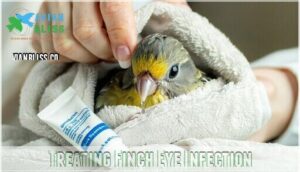
When your finch shows signs of eye infection, prompt finch eye treatment can make all the difference. You’ll need veterinary-prescribed finch eye antibiotics, typically gentamicin-based finch eye ointment, for effective results.
Looking at the paragraph’s tone and content about finch eye treatment, here’s a short, engaging blockquote:
**Quick treatment with the right antibiotics saves your finch’s sight.
Ointment Application requires gentle restraint—wrap your bird in a soft towel and carefully apply the medication to the affected eye’s inner corner. Dosage Guidance varies, but most finch eye drops need application 2-3 times daily. Your vet will specify exact amounts.
Treatment Duration typically spans 7-14 days, even after symptoms improve. Don’t stop early—incomplete treatment often leads to Preventing Relapse issues. Supportive Care includes keeping your bird warm, reducing stress, and ensuring easy access to food and water.
Monitor progress daily. If finch avian conjunctivitis worsens or doesn’t improve within 48 hours, contact your veterinarian immediately. Some birds need stronger medications or different treatment approaches for complete recovery.
Finch Eye Infection Signs
You’ll recognize infected finches by their red, swollen eyelids and crusty discharge that often mats the feathers around their eyes.
Affected birds become unusually approachable and may linger at feeders longer than normal, struggling with impaired vision that makes them vulnerable to predators.
Visible Symptoms of Finch Eye Infection
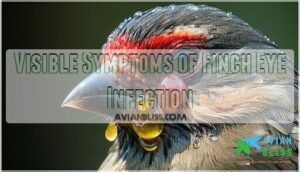
When eye swelling appears, you’ll spot red, puffy eyelids that may completely shut.
Watery or crusty discharge creates sticky feather matting around the eyes, making your finch look disheveled.
This discharge can range from clear to thick and yellowish, and vision impairment becomes obvious as birds struggle to navigate or locate food properly, requiring immediate finch eye care attention, which demands immediate action.
Behavioral Changes in Infected Finches
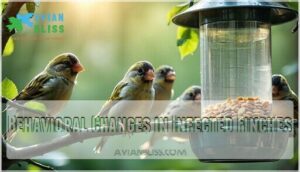
When a finch’s vision becomes compromised, you’ll notice dramatic shifts in their daily routines.
Their natural instincts get disrupted, making simple tasks feel like uphill battles.
Here are three key behavioral changes to watch for:
- Foraging Difficulty – Infected birds struggle to locate seeds and spend excessive time at feeders, often appearing clumsy or disoriented while searching for food.
- Social Isolation – Sick finches gradually withdraw from flocks, becoming less responsive to other birds’ calls and avoiding normal group activities they once enjoyed.
- Reduced Mobility – Birds with finch blurry eyes or finch watery eyes become hesitant to fly, preferring to stay in one location rather than risk navigation errors that could lead to injury.
Transmission can occur through contaminated surfaces.
Seasonal Variations in Disease Prevalence
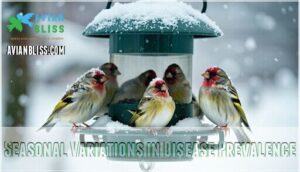
During migration season, you’ll notice dramatic spikes in finch eye inflammation cases.
Winter peak outbreaks dominate northern regions, while summer outbreaks plague southeastern populations.
Regional differences create distinct patterns—southern areas experience threefold higher prevalence rates.
Environmental factors like cold weather help mycoplasma survive longer on feeders, creating perfect conditions for transmission when hungry birds congregate seeking food, which is a key factor in the transmission of the disease.
Home Care for Finches
When caring for a finch with swollen eyes at home, you’ll need to create a stress-free recovery space.
While maintaining strict hygiene to prevent spreading the infection is crucial, your bird’s comfort and your cleaning routine will make the difference between a quick recovery and a prolonged illness.
That could affect your entire flock, emphasizing the importance of a clean and comfort environment for recovery.
Providing a Safe Environment
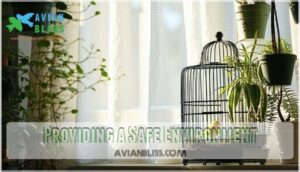
Create a comfortable space where your infected finch can recover without stress. Position their cage away from high-traffic areas, other birds, and potential predators like cats.
Remove or cover nearby windows to prevent collision injuries during episodes of impaired vision. Check for toxic plants in the surrounding area and relocate them immediately.
Ensuring that your finch has access to finch safe plants is essential for their well-being. Maintain stable lighting and temperature while ensuring adequate ventilation for ideal finch eye health and recovery from finch eye inflammation.
Hygiene and Sanitation Measures
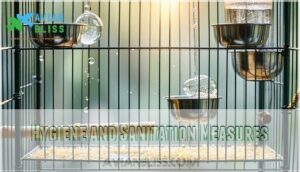
Clean feeders weekly with 10% bleach solution to prevent finch eye remedy needs.
Replace water daily and scrub baths thoroughly for proper water quality.
Disinfect perches regularly since finches with crusty eyes contaminate surfaces easily.
Maintain cage hygiene by removing droppings promptly.
Regular cleaning of birdhouses, especially using those with removable side panels, can also help prevent the spread of disease.
These steps protect finch eye health and prevent sick bird eyes from spreading through your flock.
Nutrition and Hydration for Recovery

Proper nutrition supports your finch’s recovery from eye infections. Birds with compromised vision need easily accessible, nutrient-rich foods to maintain strength during healing.
- Soft Foods: Offer millet spray, soaked seeds, and cooked quinoa for easy consumption
- Electrolyte Balance: Provide fresh water daily with occasional electrolyte supplements for hydration. Consider using a finch electrolyte supplement to aid recovery.
- Vitamin Supplements: Add vitamin A-rich foods like leafy greens to boost immune function
Veterinary Treatment Options
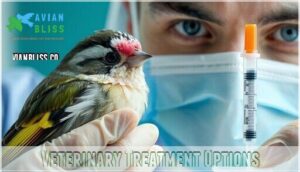
When your finch shows signs of eye infection, you’ll need professional veterinary care to guarantee proper treatment and prevent complications.
A veterinarian can prescribe specific antibiotic ointments like gentamicin that target the Mycoplasma gallisepticum bacteria causing the swollen eyes.
Antibiotic Ointments for Finch Eye Infection
When treating finch crusty eyes or finch sick bird eyes, veterinary-prescribed antibiotic ointments like Terramycin provide effective finch eye remedy options.
Apply these bird treatment ointments 2-4 times daily following dosage guidelines, with treatment duration typically lasting until symptoms resolve.
You can find Terramycin products online.
Monitor for side effects like local irritation, and consider ointment alternatives such as gentamicin if initial treatments fail.
Always consult your veterinarian for proper ointment application techniques and to ensure the best course of treatment for your finch, using effective finch eye remedy options.
Preventing Transmission and Outbreaks
Prevention centers on breaking the transmission cycle through strategic feeder hygiene and bath sanitation practices.
You’ll need to establish quarantine protocols for sick birds while managing population density at feeding stations.
Regular habitat management reduces salmonella infections and other finch sick bird eyes conditions.
Clean feeders weekly with bleach solution, replace contaminated water daily, and space multiple stations apart.
When finch crusty eyes appear, immediately remove affected feeders for thorough disinfection.
This finch eye remedy approach protects your entire backyard flock from spreading infections; fresh water importance is also critical for bird health.
Frequently Asked Questions (FAQs)
How do you treat a swollen bird’s eye?
Immediately consult an avian veterinarian for proper diagnosis and prescription antibiotic eye drops like gentamicin. You’ll need professional treatment since finch conjunctivitis spreads rapidly through flocks.
Can finches survive eye disease?
Sure, your feathered friend can beat the odds!
With quick veterinary care using antibiotic ointments like gentamicin, finches often recover from eye infections.
However, untreated cases may lead to starvation or predation due to impaired vision.
What does finch eye disease look like?
You’ll notice red, swollen eyelids that look puffy and irritated, often with watery or crusty discharge around the eyes.
The infection can cause eyes to swell completely shut, making birds appear listless.
How to treat bird eye infection at home?
Like a bird trapped behind cloudy glass, infected finches can’t see clearly through swollen, weepy eyes.
You’ll need veterinary antibiotic ointments like gentamicin for proper treatment – home remedies won’t cure bacterial conjunctivitis effectively.
Can finch eye infections spread to other bird species?
Yes, finch eye infections can spread to other bird species. Mycoplasma gallisepticum primarily affects house finches but also infects goldfinches, purple finches, and grosbeaks through contaminated feeders and surfaces.
How long does finch eye treatment typically take?
Treatment duration for finch eye infections varies between 7-14 days with prescribed antibiotic ointments like gentamicin.
You’ll notice improvement within days, but complete healing requires consistent application throughout the full treatment period.
Are there natural remedies for finch conjunctivitis?
Natural remedies aren’t recommended for finch conjunctivitis caused by Mycoplasma gallisepticum bacteria.
You’ll need veterinary-prescribed antibiotic treatments like gentamicin ointment since bacterial infections require proper medication, not home remedies, for effective treatment.
Can finches develop immunity after recovering from infection?
Finches can develop some immunity after recovering from mycoplasma conjunctivitis, but you shouldn’t count on complete protection.
Reinfection remains possible since immunity levels vary between individual birds and may weaken over time.
Conclusion
Remember that patience is your greatest ally when dealing with finch swollen eyes treatment—rushing the process won’t help your feathered friends recover faster.
You can’t cure wild finches directly, but you’ll give them their best fighting chance by maintaining clean feeders, providing fresh water, and reducing stress factors in their environment.
Most finches recover naturally within several weeks when you follow proper hygiene protocols and temporarily remove feeders during outbreaks.
- https://extension.psu.edu/house-finch-conjunctivitis/
- https://audubonportland.org/blog/patient-of-the-week-house-finch-can-see-clearly-now-the-conjunctivitis-is-gone/
- https://pubmed.ncbi.nlm.nih.gov/11310874/
- https://www.petmd.com/bird/conditions/eyes/conjunctivitis-birds
- https://www.chewy.com/education/bird/health-and-wellness/eye-injuries-in-birds