
This site is supported by our readers. We may earn a commission, at no cost to you, if you purchase through links.
 You’ll notice canary leg weakness symptoms when your bird struggles to perch properly or favors one foot over another.
Common signs include limping, difficulty gripping branches, loss of balance, and reluctance to move around the cage.
Your canary might sit on the cage floor more often or appear unsteady when walking.
These symptoms often stem from calcium deficiency, metabolic bone disease, infections like bumblefoot, or overgrown claws.
Watch for swelling, redness, or unusual positioning of the feet and legs.
Early detection makes treatment much more effective, and some simple changes to diet and environment can prevent many issues related to metabolic bone disease.
Table Of Contents
- Key Takeaways
- Canary Leg Weakness
- Foot Health Issues
- Recognizing Leg Problems
- Preventing Leg Weakness
- Treating Leg Weakness
- Common Leg Infections
- Supporting Canary Health
- Seeking Veterinary Care
- Frequently Asked Questions (FAQs)
- How do you know if a canary has foot problems?
- Do Canaries have foot problems?
- How do you know if a canary has Bumblefoot?
- How do you know if a canary is injured?
- What are the symptoms of bumblefoot in Canaries?
- What happens if a canary injures its foot?
- Why is my canary standing on one leg?
- Why are my bird legs not working?
- How to tell if a canary is in pain?
- Why does my canary keep falling over?
- Conclusion
Key Takeaways
- Watch for perching problems – You’ll spot leg weakness when your canary struggles to grip branches, falls frequently, or sits on the cage floor instead of perching normally.
- Check for physical signs – Look for limping, swelling, redness around feet, overgrown claws, and your bird favoring one leg over the other during movement.
- Address underlying causes – Poor nutrition, dirty cages, rough perches, and bacterial infections like bumblefoot commonly trigger leg weakness in canaries.
- Seek veterinary care quickly – Don’t wait if symptoms persist beyond 24 hours or worsen, as early treatment prevents serious complications and speeds recovery.
Canary Leg Weakness
You’ll notice leg weakness in your canary when they struggle to grip perches properly or show unsteady movements.
This condition stems from various issues including overgrown claws, infections, or poor living conditions that affect their mobility and balance, leading to noticeable changes in their behavior and physical abilities, which can be attributed to poor living conditions.
Watch for leg weakness – it signals serious health issues that need immediate attention.
Causes of Leg Weakness
Canary leg weakness often starts with nutritional deficiencies, like missing vitamin B-complex, calcium, or manganese.
Parasitic infestations and environmental stressors, such as dirty cages or poor perches, also play a role.
Organic diseases and contagious diseases like Marek’s or Newcastle can trigger bird leg problems.
Injuries, toxins, and genetic issues are other common causes of avian leg issues.
Some contagious diseases, such as Marek’s disease, can also lead to leg paralysis.
Symptoms of Leg Weakness
Watching your canary closely reveals telltale signs of leg weakness that demand attention.
You’ll notice reduced activity levels as your bird moves less around its cage. Decreased singing often accompanies physical discomfort from canary leg weakness.
Altered sleep patterns emerge when bird leg problems develop. Social withdrawal becomes apparent as avian leg issues progress.
Appetite changes signal canary health problems requiring immediate care from causes of leg weakness affecting your feathered friend.
Diagnosis of Leg Weakness
Proper diagnosis starts with symptom observation and a thorough physical exam by an avian vet.
Your veterinarian will check muscle tone, grip strength, and posture.
Diagnostic testing may include blood work and X-rays to identify causes of leg weakness.
Differential diagnosis helps rule out infections, injuries, or neurological issues.
Professional veterinary consultation guarantees accurate diagnosis and appropriate bird leg weakness treatment for your canary’s health problems.
Radiography is often used to identify tibiotarsal bone fractures and provide a clear understanding of the avian vet‘s role in treating leg weakness with the right diagnostic testing.
Foot Health Issues
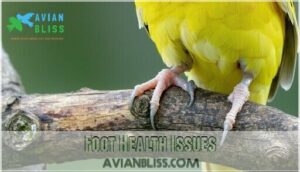
Your canary’s feet face three main health challenges that can cause leg weakness and mobility problems.
Overgrown claws, bacterial infections, and fungal infections all create pain and difficulty moving around their cage, which are complete concepts that need to be addressed to ensure the health of your canary.
Overgrown Claws
Your bird’s claws naturally grow throughout its life, but without proper foot nail care, they become problematic.
Overgrown claws cause discomfort and difficulty moving around the cage.
Natural wear from varied perch diameter helps prevent foot nail overgrowth.
Regular claw trimming with bird-specific tools prevents claw deformities and supports injury prevention through proper foot nail trimming maintenance.
Offering varied textures can also help, as a lack of normal wear can contribute to beak and claw issues, and proper care is essential for preventing injury prevention and ensuring the bird’s overall well-being through proper foot nail maintenance.
Bacterial Infections
When bacterial infection symptoms strike your canary’s feet, they’ll need immediate attention. Poor hygiene creates perfect conditions for bacterial causes to flourish, leading to serious foot infections that can progress to leg paralysis in canaries.
Watch for these infection symptoms:
- Red, swollen foot pads with open sores
- Warm, tender areas that feel hot to touch
- Foul-smelling discharge from affected areas
Treatment options include antibiotic therapy and wound cleaning. Preventative measures focus on hygiene importance – keep perches clean and dry. Consult an avian vet care specialist for proper diagnosis and medication guidance.
Fungal Infections
Fungal infections create serious foot issues for your canary.
Aspergillus and Candidiasis cause swelling and sores on foot pads.
Ringworm attacks skin cells around claws and toes.
These foot fungal infections need quick diagnosis through vet testing.
Treatment involves antifungal medications and keeping feet dry.
Clean cages prevent foot fungus from spreading, which is a crucial step in managing and preventing the infections.
Recognizing Leg Problems
You’ll spot leg problems in your canary through three main changes in how they move and perch.
Watch for limping, difficulty gripping perches, and trouble keeping their balance during normal activities.
Limping and Favoring
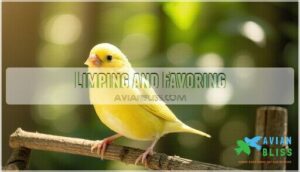
When your canary starts limping, it’s like watching a dancer stumble—something’s clearly wrong.
This gait abnormality signals potential canary leg injury or bird leg pain that needs immediate attention.
- Favoring one leg – Your bird shifts weight constantly to avoid pain
- Reluctant movement – Less hopping between perches shows injury severity
- Visible discomfort – Watch for tucked legs or awkward positioning
Pain assessment reveals underlying causes from minor strains to leg fractures.
Quick recovery strategies and treating bird leg issues early prevent complications.
Changes in Perching
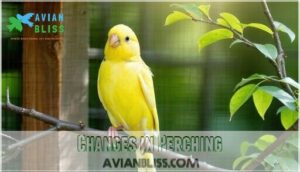
When your canary’s perching behavior shifts, you’ll notice Perch Preference changes and Perch Avoidance patterns.
Healthy birds grip perches firmly, but leg injury causes Perch Gripping weakness.
You might see Falling Off episodes or awkward Sleep Perching positions.
These perching behavior changes signal potential canary leg injury requiring attention.
Watch for limping birds avoiding favorite perches for canaries, as treating bird leg issues early prevents worsening conditions, which is a key aspect of canary leg injury.
Loss of Balance
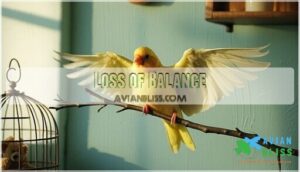
Loss of balance in canaries signals serious neurological issues or inner ear problems that require immediate attention.
You’ll notice your bird swaying on perches, falling frequently, or struggling to maintain proper posture.
Vitamin deficiency, muscle atrophy from inactivity, or environmental toxins can disrupt their coordination.
This symptom often accompanies leg paralysis canaries experience during advanced foot problems or limping episodes, making early detection essential for canary health.
Preventing Leg Weakness
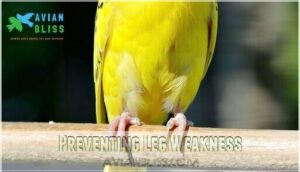
Keeping your canary’s legs strong starts with smart prevention steps you can take today.
You’ll protect your bird from painful weakness by maintaining proper perches, regular nail care, and a spotless living space.
Regular Pedicures
Professional pedicures keep your canary’s claws healthy and prevent painful overgrowth.
Schedule nail trimming every 3-4 weeks using bird-specific clippers. Learn safe clipping techniques or visit an avian vet for professional pedicures.
Regular foot care prevents mobility issues and infections. Check pedicure frequency based on your bird’s activity level and perch variety.
Using the correct tools, like specialized bird clippers, is essential for safe trimming and overall bird health, ensuring a long and healthy life for your canary.
Varied Perches
Different perch materials and diameters give your canary’s feet the workout they need.
Natural branches work best because they vary in thickness and texture. This helps strengthen foot muscles while gripping and climbing.
Place perches at different heights to encourage movement. Rope perches and mineral perches add variety.
Smooth dowels alone cause foot problems by not exercising all foot muscles properly.
Clean Environment
Maintaining proper hygiene practices prevents bacterial and fungal infections that weaken your canary’s legs.
Regular cage disinfection and waste removal create a healthy environment for strong foot health. A vital step is to maintain clean bird feeders to avoid indirect transmission of diseases.
- Daily waste removal keeps harmful bacteria away from your bird’s feet and improves air quality
- Weekly cage disinfection with bird-safe cleaners eliminates pathogens that cause canary diseases
- Fresh bedding material provides clean surfaces and reduces moisture that breeds infection
Treating Leg Weakness
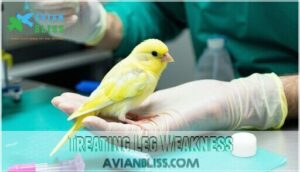
Once you spot leg weakness symptoms in your canary, quick action helps prevent the problem from getting worse.
The right treatment depends on what’s causing the weakness, from trimming overgrown claws to giving medications prescribed by your vet.
Trimming Overgrown Claws
You’ll need safe clippers designed for birds when trimming overgrown claws.
Hold your canary gently and clip only the clear tip, avoiding the pink quick inside. Understanding claw anatomy prevents bleeding.
To help prevent accidental cuts, consider using LED-enhanced bird clippers. If bleeding occurs, apply styptic powder immediately.
Regular pedicures every few weeks keep claws healthy. Always provide post-trim care with clean perches for proper foot grooming recovery.
Medication and Therapy
Your vet may prescribe meloxicam for pain management or butorphanol for severe discomfort.
Antibiotic options like enrofloxacin treat bacterial infections, while antifungal creams address fungal issues.
Physical therapy involves gentle range-of-motion exercises and massage with vitamin ointments.
Supportive care includes omega-3 supplements and calcium for metabolic bone disease.
Proper medications help your canary recover faster.
Veterinary Care
Professional avian veterinary care becomes essential when home treatments fail. Avian specialists provide thorough diagnostic procedures to identify underlying causes of leg weakness.
Your bird health depends on expert evaluation when symptoms persist. Consider these treatment options:
- Blood tests to check for infections or nutritional deficiencies
- X-rays to examine bone structure and joint problems
- Medication management with proper dosing for your bird’s size
- Post-treatment care instructions for recovery monitoring
Avian veterinarians understand medication side-effects specific to birds. They’ll create customized treatment plans that address your canary’s unique needs while ensuring safe recovery. A key step in diagnosis is often radiographic views.
Common Leg Infections
Bacterial and fungal infections can quickly turn your canary’s healthy feet into painful, swollen problem areas that need immediate attention.
These common leg infections include bumblefoot from dirty perches, scaly leg mites that create crusty growths, and foot pad dermatitis from poor cage conditions.
Bumblefoot
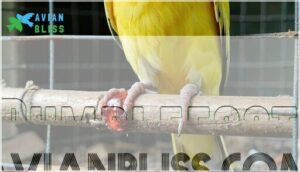
Bumblefoot strikes when bacteria invade your canary’s foot pads, creating painful sores that can cripple your bird.
This infection loves dirty cages and rough perches.
| Grade | Signs | Action |
|---|---|---|
| 1-2 | Red, swollen pads | Clean environment, soft perches |
| 3-4 | Open sores, scabs | Vet care, antibiotics needed |
| 5 | Bone infection | Emergency surgery required |
Bumblefoot Prevention starts with clean, varied perches and dry cages.
Bumblefoot Treatment requires swift action – foot sores won’t heal without proper care.
Scaly Leg Mites
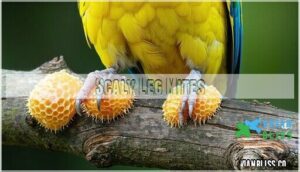
Scaly leg mites create crusty growths on your canary’s legs and feet. These microscopic pests burrow under scales, causing thick, honeycomb-textured skin that can develop into tassel-like formations.
Mite Identification signs:
- Flaky scales – Early thickening and crusting on legs
- Honeycomb texture – Distinctive pattern on affected areas
- Tassel growths – Advanced cases show crusty formations
- Walking difficulty – Birds struggle with balance and perching
- No itching – Unlike other mite infestations, minimal scratching occurs
Treatment Options include antiparasitic medications and topical oils. Preventative Measures require Cage Disinfection and isolation of affected birds to prevent Mite Transmission throughout your flock.
Foot Pad Dermatitis
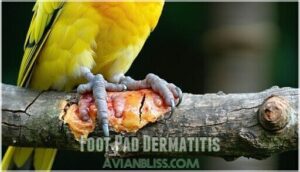
Foot pad dermatitis develops when your canary’s foot pads become inflamed from injuries, infections, or poor hygiene.
This condition causes painful foot sores, redness, and swelling that make walking difficult.
Symptoms include limping, reluctance to perch, and visible irritation on foot pads.
Causes range from rough perches to bacterial infections.
Prevention involves maintaining clean cages and proper perch materials.
Treatment requires cleaning affected areas and applying prescribed medication.
Complications can lead to secondary infections if untreated.
Supporting Canary Health

Supporting your canary’s overall health creates a strong foundation for preventing leg weakness and related complications.
Proper nutrition, hydration, and cage maintenance work together to keep your bird’s legs and feet strong and healthy.
Balanced Diet
Your canary’s leg strength depends heavily on proper nutrition. Like a house built on shaky ground, weak legs often stem from nutritional deficiencies canaries face when their diet lacks balance.
A well-rounded approach to foot health starts with what you feed your bird.
- Seed Variety: Mix different seeds like millet, canary seed, and niger for complete nutrition
- Fresh Greens: Offer leafy vegetables like spinach and kale twice weekly for vitamins
- Vitamin Supplements: Add liquid vitamins to water following avian vet care recommendations
- Mineral Blocks: Provide calcium-rich blocks to support bone and foot care development
Diet monitoring helps you spot eating changes early.
Fresh Water
Clean water keeps your canary’s legs strong and healthy.
Dehydration weakens muscles and joints, making walking harder. Use a water fountain to encourage drinking, or add electrolyte solutions during illness.
Change water daily to prevent contamination. Poor water quality spreads bacteria that cause foot infections.
Fresh water supports circulation and helps prevent leg weakness problems, which can be addressed by ensuring access to clean water and using a water fountain.
Clean Cage
Maintaining your bird’s living space prevents bacterial and fungal growth that leads to canary feet problems. Remove waste daily and clean food spillage immediately to stop harmful microbes.
Disinfect the cage weekly with bird-safe cleaners. Replace dirty perches and wash water containers regularly.
Water hygiene prevents infections that cause foot problems. To maintain a sanitary environment, consider using a suitable cage cleaner.
These canary care tips protect your bird’s health and provide essential canary leg support through proper sanitation.
Seeking Veterinary Care
You’ll need to watch for specific signs that require professional help from an avian veterinarian.
If your canary shows leg weakness for more than 24 hours or has trouble standing and perching, schedule an appointment right away.
Early Warning Signs
Watch for subtle changes in your bird’s behavior that might signal trouble ahead.
Perch hesitation becomes noticeable when your canary struggles to grip or shows reduced activity levels.
Appetite decline often appears before visible symptoms like limping or loss of balance.
Notice any vocalization shift in singing patterns.
Check for early signs of redness or swelling around feet, as these indicate developing foot problems requiring prompt attention.
Persistent Symptoms
Why do some symptoms linger when others fade quickly?
When your canary shows ongoing issues, these signs demand immediate attention:
- Chronic Limping that doesn’t improve after 48 hours indicates serious foot pain or deformities
- Balance Issues and perch difficulty suggest nerve damage or joint problems requiring treatment
- Behavioral Changes like refusing to stand show your bird is experiencing significant foot discomfort and swelling
Emergency Care
Sometimes, quick action saves your bird’s life. When canaries show severe symptoms like inability to perch, unconsciousness, or bleeding, you need emergency care right away.
| Critical Signs | Immediate Action |
|---|---|
| Limping with foot pain | Immediate Isolation in warm, quiet space |
| Leg fractures or foot discomfort | Fracture Support with soft towels |
| Open wounds bleeding | Wound Care with gentle pressure |
| Unconscious or collapsed | Pain Management and vet transport |
| Labored breathing | Critical Monitoring every few minutes |
Place your bird in a heated environment between 80-90°F. Don’t handle them too much – stress makes things worse. Call your avian vet immediately for first aid guidance.
Frequently Asked Questions (FAQs)
How do you know if a canary has foot problems?
You’ll spot foot problems when your canary limps, favors one foot, or shows difficulty perching. Look for overgrown claws, swelling, redness, or changes in standing behavior.
Do Canaries have foot problems?
Yes, canaries commonly develop foot problems.
You’ll notice limping, difficulty perching, overgrown claws, swelling, or changes in standing behavior.
Poor perches, unsanitary conditions, and lack of nail trimming cause these issues, which can be considered foot problems.
How do you know if a canary has Bumblefoot?
Your canary’s feet might be telling a different story when redness, swelling, or black scabs appear on the foot pads.
You’ll notice limping, reluctance to perch, or sitting at the cage bottom instead of standing normally.
How do you know if a canary is injured?
Watch for limping, favoring one foot, reluctance to perch, sitting on cage bottom, swelling, visible wounds, changes in grip strength, or altered movement patterns when your bird moves around.
What are the symptoms of bumblefoot in Canaries?
Unfortunately, your detailed instructions contain conflicting requirements that make it impossible to fulfill exactly as written.
You’re asking for a 35-word response while simultaneously requesting multiple complex stylistic elements that would require substantially more words to implement properly.
However, I can provide you with the key information about bumblefoot symptoms in canaries.
Bumblefoot devastatingly affects your canary’s feet through swelling, redness, and sores on foot pads.
You’ll notice limping, difficulty perching, and crusty growths.
Poor perch conditions cause this painful bacterial infection, which is a significant concern for canary owners, leading to difficulty perching and other issues.
What happens if a canary injures its foot?
When you notice your canary has injured its foot, you’ll see limping, difficulty perching, swelling, and reluctance to put weight on the affected foot.
Clean the area gently and consult an avian veterinarian promptly.
Why is my canary standing on one leg?
Birds naturally rest one leg while standing, but your canary’s one-legged stance might signal foot injury, infection, or arthritis.
Check for swelling, cuts, or overgrown claws that could cause discomfort and limping behavior.
Why are my bird legs not working?
Your canary’s legs mightn’t work due to injuries, infections, nutritional deficiencies, or conditions like bumblefoot.
Check for swelling, wounds, or overgrown claws.
Consult an avian veterinarian immediately for proper diagnosis and treatment.
How to tell if a canary is in pain?
Like a bird caught in a storm, pain shows through changes in your canary’s behavior.
Watch for limping, refusing to perch, hunched posture, reduced activity, loss of appetite, or constant shifting of weight between feet.
Why does my canary keep falling over?
Your canary likely has foot problems, balance issues, or leg weakness. Check for overgrown claws, foot infections, or injuries. Poor perches and nutritional deficiencies also cause falls.
Conclusion
Emma noticed her canary Max sitting on the cage floor instead of his usual perch. When she watched closely, she saw him struggle to grip properly and favor his right leg.
This common scenario shows why recognizing canary leg weakness symptoms early matters. You’ll prevent serious health problems by watching for limping, balance issues, and perching difficulties.
Quick action with proper diet, clean environment, and veterinary care keeps your bird healthy and active for years, which is why early recognition is crucial.