This site is supported by our readers. We may earn a commission, at no cost to you, if you purchase through links.
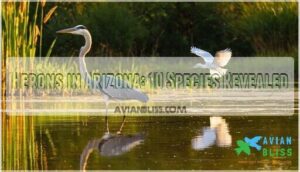 Arizona’s diverse landscapes might surprise you with the variety of herons that call it home.
From the towering Great Blue Heron, gracefully stalking fish in rivers, to the tiny Least Bittern, hiding in dense marshes, these wading birds thrive in wetlands, riparian areas, and even reservoirs.
You’ll find year-round residents like the Snowy Egret alongside seasonal visitors such as the Black-crowned Night-Heron.
Their hunting strategies are fascinating—some strike with lightning speed, while others lure prey with clever tricks.
Arizona’s herons also adapt to its dry climate and play a critical role in these fragile ecosystems.
Curious about their unique habits?
Table Of Contents
- Key Takeaways
- Diverse Heron Species in Arizona’s Landscapes
- Great Blue Heron: Arizona’s Majestic Wader
- Elegant Egrets: White Beauties of Arizona Wetlands
- Green Heron: Small but Mighty Hunter
- Night Herons: Nocturnal Waders of Arizona
- Bitterns: Elusive Marsh Dwellers in Arizona
- Rare Heron Sightings in Arizona
- Heron Habitats: Arizona’s Diverse Wetland Ecosystems
- Seasonal Heron Activity in Arizona
- Conservation and Protection of Arizona’s Herons
- Frequently Asked Questions (FAQs)
- Are herons native to Arizona?
- What birds are mistaken for herons?
- What is the difference between a heron and a Great Blue Heron?
- Did I see a crane or a heron?
- What are the best herons in Arizona?
- Where can you see a great blue heron in Arizona?
- Are Lons good water birds in Arizona?
- Where can you see Condors in Arizona?
- How to deter herons from backyard ponds?
- What do herons eat in Arizona?
- Conclusion
Key Takeaways
- You can spot diverse heron species in Arizona’s wetlands, like Great Blue Herons, Green Herons, and Snowy Egrets, thriving in rivers, lakes, and marshes.
- Seasonal visitors, such as the Black-crowned Night-Heron and migratory herons, bring activity to Arizona’s ecosystems depending on climate and food availability.
- Herons showcase remarkable hunting techniques, from Green Herons using bait to Great Blue Herons striking with precision, adapting perfectly to their habitats.
- Habitat loss, pollution, and climate change threaten herons, but conservation efforts like wetland restoration and citizen science play a key role in their survival.
Diverse Heron Species in Arizona’s Landscapes

You’ll discover a wide range of heron species in Arizona, from common year-round residents to seasonal visitors and migrants.
As you explore Arizona’s diverse landscapes, you’ll find herons inhabiting various wetland ecosystems, including rivers, lakes, and marshes.
Common Year-Round Residents
As you explore Arizona’s diverse landscapes, you’ll discover several heron species that call the state home year-round.
These adaptable waders thrive in various habitats, from urban ponds to serene wetlands. To spot them, look for:
- Great Blue Herons in shallow waters
- Green Herons near dense vegetation
- Black-crowned Night-Herons roosting in trees
- White-faced Ibises in freshwater marshes
Arizona’s Resident Heron ID is made easier by the state’s stable habitats, ensuring food availability for urban herons. The great blue heron and black-crowned night heron are common sightings, showcasing the state’s rich arizona birds and heron species diversity.
Seasonal Visitors and Migrants
While year-round residents stay put, you’ll see Arizona’s waterways burst with seasonal visitors. Get ready for a show as migratory herons land for rest and refueling.
Let’s peek at their travel itinerary:
| Species | Behavior |
|---|---|
| Sandhill Crane | Roosts at Whitewater Draw |
| Black-necked Stilt | Summer breeding |
| Green-winged Teal | Winters in wetlands |
| White-faced Ibis | Forages in shallow waters |
These feathered globetrotters bring new energy. Keep your binoculars handy!
Witness heron migration, seasonal behavior, and migration triggers affecting arizona birds.
Understand stopover ecology, breeding grounds, wintering habitats, climate impacts, and the lives of migratory birds.
Rare and Accidental Sightings
You might spot rare herons in Arizona, like the Tricolored Heron or Reddish Egret, with unusual migration patterns, posing identification challenges.
Citizen science reports and photographic evidence help track these accidental heron species, making arizona birding exciting, with rare sightings of arizona birds, including arizona herons and arizona wildlife.
Arizona is also home to the Great Blue Heron, which benefits from wetlands created by beavers, providing a unique example of arizona birding.
Great Blue Heron: Arizona’s Majestic Wader
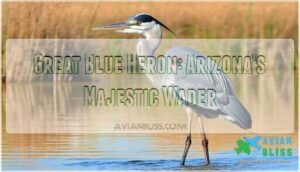
You’ll get to know the Great Blue Heron, a large, grayish-blue bird with a long neck and distinctive black stripe over its eye.
As you learn about this species, you’ll discover its habitat preferences, unique hunting techniques, and diet, which set it apart as Arizona’s majestic wader.
Physical Characteristics and Identification
Arizona’s herons offer a majestic sight. Spotting a Great Blue Heron is easy.
Spotting a Great Blue Heron in Arizona’s wetlands is a breathtaking experience, revealing nature’s elegance and the beauty of persistence.
You’ll notice its blue-gray plumage, a white head, and a black crown stripe. Its massive yellow bill is perfect for catching fish. You can’t miss its S-shaped neck and quick strikes.
Understanding Great Blue Heron ID can be very helpful. Here’s what to look for:
- Plumage Variations
- Size Differences
- Bill Morphology
Keep watching for those piercing yellow eyes. It’s a key part of bird identification!
Habitat Preferences and Distribution
You’ll find Great Blue Herons in various Arizona wetlands. They thrive in freshwater and saltwater habitats.
| Habitat | Description |
|---|---|
| Wetlands | Freshwater |
| Rivers | Saltwater |
| Lakes | Urban |
They adapt to altitude preferences and foraging range, but face habitat loss, impacting herons in Arizona wetlands and rivers.
Hunting Techniques and Diet
You’ll observe Great Blue Herons using
- stealth
- speed
- strategy to catch prey.
Their diet includes fish, frogs, and small mammals, showcasing adaptability in foraging habitats and prey selection, a key aspect of Arizona wildlife and heron diet, highlighting their efficient hunting techniques.
Elegant Egrets: White Beauties of Arizona Wetlands
You’ll explore the realm of Elegant Egrets, Arizona’s white herons, and learn about their unique characteristics.
As you read on, you’ll discover the differences between Great Egret and Snowy Egret, their breeding habits, and the conservation efforts in place to protect these beautiful birds, specifically focusing on conservation efforts.
Great Egret Vs. Snowy Egret
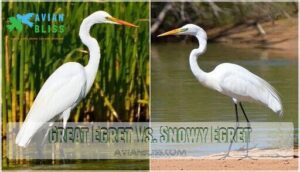
You’re now comparing two elegant egrets in Arizona: Great Egret and Snowy Egret.
- Plumage differences
- Bill color
- Foot differences
- Foraging behavior
- Habitat overlap, noting Great Egrets are larger, with orange bills, while Snowy Egrets have black bills and yellow feet, and both egrets exhibit unique characteristics in Arizona’s herons.
Their breeding plumage includes aigrettes, showy plumes that enhance their elegance.
They can be found in Arizona, with breeding plumage includes aigrettes, and both have unique characteristics.
Breeding Plumage and Courtship Displays

You’ll witness herons’ dramatic plumage changes during breeding season.
Males showcase elaborate courtship displays, stretching necks and shaking feathers, as part of their mating rituals, displaying variations in their breeding plumage to attract mates.
Arizona’s wetlands, home to various heron species.
Conservation Status and Threats
After those amazing courtship displays, what’s next for elegant egrets?
Here’s what they face:
- Habitat Loss
- Pollution Impacts
- Climate Change
Egrets aren’t in the clear yet.
You’ll see their conservation status is stable, but habitat loss and pollution impacts threaten them.
They’re often found near freshwater and saltwater.
Human impact and disturbance pose risks.
Support local conservation efforts and habitat preservation.
See them on your next wetland visit.
You’re helping them thrive through human coexistence!
Green Heron: Small but Mighty Hunter

You’re about to learn about the Green Heron, a small but skilled hunter.
As you explore this species, you’ll discover its unique fishing methods and habits in Arizona, making it a fascinating bird to study.
Unique Fishing Methods
Green Herons display remarkable Tool Use and Bait Manipulation skills along Arizona Rivers and Arizona Lakes.
Green Herons astound with their clever tool use, dropping twigs or insects to lure fish in Arizona’s rivers and lakes.
You’ll witness these Herons Arizona cleverly dropping insects, twigs, or leaves to attract fish within striking distance.
Their Stealth Hunting approach involves patient waiting near dense vegetation.
When standard techniques fail, they’ll resort to Underwater Diving, completely submerging to capture elusive prey—showcasing adaptability that sets them apart from other wading birds.
Nesting Habits in Arizona
While Green Herons master fishing with tools, their Nest Site Selection reveals equal ingenuity among heron species in Arizona.
These solitary nesters choose nesting sites 5-30 feet high in shrubs or trees near water, unlike colonial heronries.
During breeding season, males initiate construction using twigs and sticks as Nest Building Materials, then females complete the platform while males gather supplies.
Clutch Size Variation typically ranges from 3-5 pale blue eggs.
Arizona birds like Green Herons show remarkable Nesting Seasonality flexibility, sometimes ground-nesting when necessary.
Parental Care Duration involves both parents sharing incubation duties for roughly three weeks, demonstrating their adaptable nature.
Seasonal Behavior and Migration Patterns
Migration Triggers prompt Green Herons to shift their Arizona routines dramatically.
During Breeding Season, you’ll spot them establishing territories near water sources.
As temperatures drop, Climate Impacts drive southern migration to Central America.
Winter Roosting occurs in warmer regions, while some Arizona populations remain year-round.
Foraging Changes adapt to seasonal prey availability.
These migratory herons showcase remarkable adaptability, making birdwatching rewarding across seasons in Arizona’s diverse heron species habitats.
Night Herons: Nocturnal Waders of Arizona
You’ll find Arizona’s night herons are fascinating nocturnal hunters that become active when other wading birds settle down for the evening.
These stocky, compact birds with their distinctive hunched posture and thick necks have adapted perfectly to low-light foraging in wetlands across the state.
Black-crowned Night-Heron Characteristics
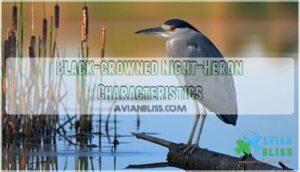
The Black-crowned Night-Heron stands out among Arizona’s heron species with its distinctive appearance and nocturnal lifestyle.
These compact birds showcase remarkable nocturnal adaptations that make them successful hunters in Arizona’s diverse heron habitat.
Blackcrowned NightHerons demonstrate impressive global distribution and thrive in urban habitats across Arizona’s wetlands, showing remarkable wetland abundance.
Here are four key characteristics that make nightherons extraordinary:
- Piercing red eyes that glow like embers in moonlight
- Stocky, hunchbacked silhouette perfect for patient hunting
- Distinctive black crown contrasting sharply with gray wings
- Adaptable feeding habits from fish to urban scraps
Yellow-crowned Night-Heron: Rare Arizona Visitor
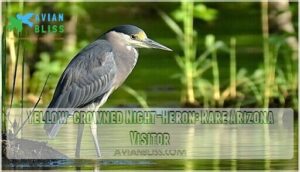
Across Arizona’s wetlands, the Yellow-crowned Night-Heron represents one of the state’s rarest heron species.
These southeastern coastal natives occasionally appear as vagrants during migration, creating exciting opportunities for arizona birdwatching enthusiasts.
Identification challenges include distinguishing their distinctive yellow crown and white cheek patches from other arizona fauna.
Key facts about this elusive visitor:
- Sighting frequency: Extremely rare, mostly during migration periods
- Habitat specifics: Prefers wooded wetlands and riparian zones
- Conservation status: Stable nationally but vulnerable to habitat disturbance
Diet variations include crustaceans and fish.
Crepuscular and Nocturnal Adaptations

When darkness blankets Arizona’s wetlands, you’ll witness nature’s most specialized nocturnal hunters in action.
Night herons possess extraordinary Sensory Adaptations that transform twilight into prime hunting time.
Nocturnal Vision enhancement
Silent flight Hunting Strategies
Cryptic plumage Roosting Behavior camouflage
These Activity Patterns make Blackcrowned Nightheron and Yellowcrowned NightHeron masters of moonlit hunting techniques.
Bitterns: Elusive Marsh Dwellers in Arizona

You’ll rarely spot bitterns in Arizona’s marshes because these secretive herons are masters of camouflage, blending perfectly with cattails and reeds.
Their cryptic behavior and specialized adaptations make them some of the most challenging wading birds to observe in the state’s wetland habitats.
American Bittern Camouflage Techniques
While night herons hunt under darkness, American Bitterns showcase Arizona’s most impressive Habitat Camouflage techniques.
These secretive birds employ sophisticated Coloration Strategies and Posture Mimicry in marshy heron habitat. Their Behavioral Adaptations include freezing motionless with bills pointed skyward for Predator Avoidance.
When threatened, they’ll sway like cattails in Arizona wetlands, making camouflage detection nearly impossible during foraging. Their camouflage is a key survival and predation technique.
Here’s what makes their camouflage so effective:
- Streaked plumage perfectly matches dried marsh vegetation
- Vertical posture mimics cattail stalks swaying in wind
- Motionless stance can last hours until danger passes
- Strategic positioning among dense reeds provides maximum concealment
Least Bittern: Arizona’s Smallest Heron
You’ll spot the Least Bittern, Arizona’s smallest heron, in dense marshes, using camouflage expertly.
| Habitat | Size | Conservation |
|---|---|---|
| Marsh | 11-14 inches | Vulnerable |
| Wetlands | Small | Protected |
| Rivers | Tiny | Endangered |
Vocalization and Breeding Behaviors
You’re now exploring heron vocalization and breeding behaviors.
Males produce deep, foghorn-like calls to attract mates and establish territories, playing a key role in mating rituals, using unique heron calls as territorial songs, an essential behavior among heron species in Arizona.
Especially during breeding, these behaviors are crucial, highlighting the importance of heron species in understanding these patterns.
Rare Heron Sightings in Arizona
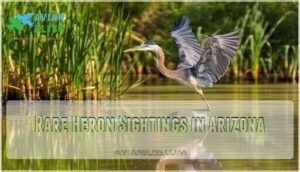
You’re about to explore the rare heron sightings in Arizona, where you’ll discover species like the Tricolored Heron and Reddish Egret.
As you read on, you’ll learn more about these uncommon visitors and what makes them unique to the state’s wetland ecosystems.
Tricolored Heron: Accidental Visitor
As you venture into Arizona’s wetlands, you might stumble upon a rare visitor, the Tricolored Heron. This accidental migrant boasts striking blue-gray plumage, a white belly, and a rusty-red neck.
Their diet consists primarily of small fish, but they also consume crustaceans and insects.
- Rarity Explained: uncommon sightings
- Identification Tips: slender body, long bill
- Habitat Mismatch: coastal birds in Arizona
- Future Sightings: possible at Gilbert Water Ranch
- Conservation Impact: protecting heron species in Arizona nature, specifically Herons like the Tricolored Heron.
Reddish Egret: Near-Threatened Species
Though rare in Arizona, the Reddish Egret is a fascinating addition to heron species in Arizona.
Famous for its shaggy plumage variations and two-toned bill, this coastal specialist faces challenges from habitat loss and climate change.
Its erratic hunting dances add charm but mask serious struggles tied to population decline.
| Threat | Impact | Solution Needed |
|---|---|---|
| Habitat Loss | Severe | Conservation Efforts |
| Climate Change | Growing Concern | Protective Legislation |
| Breeding Challenges | Limited Success | Restored Wetland Habitats |
Protecting the Reddish Egret guarantees its place in Arizona’s rich birdlife tapestry.
Little Blue Heron: Uncommon Arizona Guest
The Little Blue Heron is one of the rarer heron species in Arizona, making birdwatchers keen to spot its elegant presence.
Juveniles are entirely white, often mistaken for egrets, but their plumage changes to a stunning slate-blue as they mature.
Known for their methodical foraging style, these birds wade in shallow waters with careful, deliberate movements.
Arizona sightings happen near wetlands like the Gila River or Saguaro Lake.
Keep an eye on ebird for migratory patterns—they’re uncommon here, but their unique transformation and striking appearance make them a highlight among herons in Arizona.
Heron Habitats: Arizona’s Diverse Wetland Ecosystems
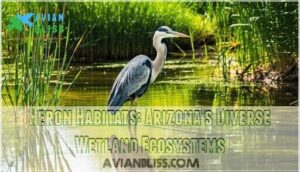
Arizona’s wetlands are a valuable haven for herons, offering riparian areas, lakes, and ponds teeming with life.
These ecosystems provide both shelter and abundant food, making them essential for heron survival.
Riparian Areas and River Systems
Arizona’s riparian areas, essential lifelines for wetland ecosystems, support abundant fish, lush vegetation, and prime heron nesting sites.
River health depends on water quality and habitat connectivity, which sustain these rich environments.
You might spot a great blue heron gracefully foraging or a green heron cleverly baiting fish nearby, which are key aspects of these areas being perfect for heron survival.
These important wetlands close to water sources provide herons in Arizona the perfect balance of food and nesting proximity, ensuring their survival amidst changing ecosystems.
Lakes, Ponds, and Artificial Water Bodies
Creating havens for herons in Arizona, lakes, ponds, and artificial wetlands are essential for this stunning wildlife.
Herons often visit local urban ponds or golf course reservoirs, drawn to areas rich in fish. Keep an eye out near Phoenix’s stocked parks or quieter spots like Alamo Lake.
Plan your visit using Arizona birding resources for the best experience. Here’s where you’ll find herons:
- Urban ponds in city parks.
- Artificial wetlands with rich vegetation.
- Golf course reservoirs offering prime habitat.
- Reservoir habitats like Lake Powell or Lake Havasu.
Coastal Habitats for Migratory Species
Coastal habitats, while distant from Arizona’s core wetlands, are essential for migratory herons.
These habitats act like roadside diners for wetland birds traversing key migration routes. Herons depend on these stops to rest, refuel, and plan their next flight.
Here’s what makes these spots essential for herons during migration:
- Tidal flats: Packed with crustaceans, offering quick, high-energy snacks.
- Estuaries: Fish-rich waters, a heron’s ultimate buffet.
- Sheltered coves: Calm and secure spaces to recover energy.
However, climate change and habitat loss threaten these critical resting areas. Conservation efforts are key to preserving food availability and ensuring herons thrive year after year.
Seasonal Heron Activity in Arizona
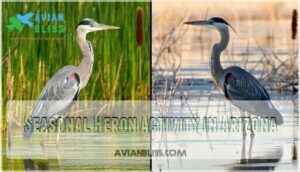
You’ll notice herons in Arizona shifting their activities with the seasons, relying on wetland habitats to breed in summer and forage in winter.
These changes, influenced by temperature and food availability, highlight their remarkable adaptability.
Summer Breeding and Nesting Patterns
Summer marks a bustling time for herons in Arizona’s wetlands as breeding and nesting take center stage.
Nest site selection varies, with nests tucked in treetops, shrubs, or even the ground, often near water. Clutch size variation depends on species, and parental care duration can span weeks.
Chick rearing strategies focus on maximizing fledgling success rates. Arizona also hosts desert-adapted birds, showcasing unique survival tactics.
While some herons nest in groups, others stay solitary, ensuring their young thrive in Arizona’s diverse ecosystems.
| Trait | Description | Example Locations |
|---|---|---|
| Nest Site Selection | Treetops, shrubs, or ground | Wetlands, riverbanks |
| Clutch Size Variation | Species-dependent | Great Blue Heron: 3-5 eggs |
| Parental Care Duration | Weeks until fledging | Great Egret: ~3-4 weeks |
| Chick Rearing Strategies | Focused on survival | Feeding prey daily |
| Fledgling Success Rates | Depends on food availability | Rich wetland areas |
Winter Foraging Strategies
When temperatures drop, herons in Arizona adapt their winter foraging strategies to survive.
Their Cold-Weather Diet includes fish, crustaceans, and even small mammals, all dependent on Prey Availability.
They favor ice-free water for Habitat Selection, using stealthy Foraging Adaptations like slow stalking and patience.
Some migrate, but others defend prime spots, ensuring efficient Energy Conservation.
Watching herons in winter reveals their incredible ability to thrive, balancing effort and reward with remarkable precision.
Impact of Climate on Heron Behavior
Arizona’s herons face significant challenges as climate change affects their behavior.
Temperature effects and rainfall changes influence habitat shifts, migration patterns, and breeding success.
Drought can reduce water levels in wetlands, making food scarce and delaying nesting.
Herons in Arizona adapt by seeking new foraging areas, but even their resilience has limits.
Shifting habitats leave them vulnerable, while conservation efforts aim to protect these wetlands.
Imagine herons confronting unpredictable weather—it’s a test of survival instincts.
By understanding these challenges, we can support heron populations and guarantee their habitats remain viable.
We must consider the impact of climate change and habitat shifts on these birds to ensure their well-being.
Conservation and Protection of Arizona’s Herons

Protecting Arizona’s herons means preserving their wetlands, which are essential for nesting and feeding.
By understanding your role in habitat conservation and participating in monitoring efforts, you can help guarantee their survival.
Habitat Preservation Efforts
Preserving herons in Arizona starts with protecting their habitats.
Contribute by joining these efforts:
- Wetland Restoration: Restore essential wetland ecosystems to support herons and other wildlife.
- Pollution Reduction: Keep waterways clean for thriving habitats.
- Protected Areas: Advocate for reserves safeguarding wetland ecosystems.
- Citizen Involvement: Participate in habitat monitoring and conservation programs.
Together, we guarantee herons in Arizona flourish.
Human Impact and Coexistence Strategies
Human impact, like habitat loss and pollution, challenges herons in Arizona.
Supporting conservation efforts can help these striking birds thrive. Small steps, like practicing responsible tourism or protecting nesting sites, make a big difference.
Avoid noisy disruptions near wetlands and maintain clean water sources. Urban coexistence relies on balance—sharing spaces while respecting herons’ needs.
| Impact | Solution | Example |
|---|---|---|
| Habitat Loss | Restoration Projects | Wetland Replanting |
| Pollution Effects | Reducing Waste | Clean-Up Initiatives |
| Urban Development | Creating Buffers | Protected Nesting Areas |
Citizen Science and Heron Monitoring Programs
You can actively support Arizona wildlife by joining citizen science.
Track herons in Arizona through structured data collection, learning from volunteer training sessions.
Use reporting platforms to monitor Arizona’s wetlands and enhance impact assessment efforts.
Find heron citizen science related products to support your monitoring activities.
Your participation strengthens community engagement while preserving avian diversity.
Together, we can protect these stunning birds and their essential habitats for future generations.
Frequently Asked Questions (FAQs)
Are herons native to Arizona?
Herons aren’t exclusive to Arizona, but many species, like the Great Blue and Green Herons, are native residents.
These graceful birds thrive in wetlands, rivers, and ponds, playing an important role in local ecosystems.
What birds are mistaken for herons?
Birds like egrets, ibises, and cranes are often confused with herons due to similar tall, slender shapes and wading habits.
Look for differences in neck posture, coloring, and bill shape to identify correctly.
What is the difference between a heron and a Great Blue Heron?
A Great Blue Heron stands out with its impressive size, blue-gray plumage, and S-shaped neck.
While “heron” refers to the broader bird family, the Great Blue Heron is one of its most iconic members.
Did I see a crane or a heron?
You likely saw a heron if it had a long neck, S-shaped posture, and pointed bill.
Cranes are taller, with straighter necks and shorter bills.
Habitat helps—herons frequent wetlands, cranes prefer open fields.
What are the best herons in Arizona?
Picture a painter’s palette—Arizona’s herons provide striking variety.
The majestic Great Blue Heron dominates wetlands, while Green Herons cleverly hunt by luring prey.
Black-crowned Night-Herons bring intrigue, thriving in habitats from rivers to urban parks, showcasing the striking variety of herons in Arizona.
Where can you see a great blue heron in Arizona?
You can spot a Great Blue Heron along Arizona’s rivers, lakes, and wetlands, especially the Salt and Verde Rivers.
Their tall, striking figure patiently stalking prey in shallow waters is an unforgettable sight.
Are Lons good water birds in Arizona?
Imagine a ballerina elegantly gliding through water—loon species, like the common loon, excel at diving and fishing.
While not native here, they occasionally appear in Arizona’s reservoirs during migration, showcasing remarkable aquatic adaptations and haunting calls.
Where can you see Condors in Arizona?
You can see California Condors in Arizona at the Vermilion Cliffs National Monument or the Grand Canyon.
These massive birds, with wingspans up to 10 feet, are often soaring high above these breathtaking landscapes.
How to deter herons from backyard ponds?
To deter herons from your backyard pond, use netting, floating decoys, or motion-activated sprinklers.
Add tall plants for cover, offer deeper water, and make certain fish hideouts.
Herons prefer shallow hunting spots with easy access.
What do herons eat in Arizona?
Herons in Arizona eat fish, frogs, reptiles, amphibians, small mammals, insects, and crustaceans.
They stalk prey in shallow water with extreme patience, using sharp bills for lightning-fast strikes.
Some even use clever tricks, like baiting fish.
Conclusion
It’s ironic how Arizona, known for its deserts, hosts such a thriving range of herons.
These remarkable birds, from the stately Great Blue Heron to the elusive Least Bittern, highlight the importance of conserving wetlands in this arid state.
By exploring their unique behaviors and habitats, you’ll better appreciate how herons in Arizona adapt and contribute to diverse ecosystems.
Safeguarding their habitats makes certain these elegant waders remain a key part of Arizona’s natural heritage.