
This site is supported by our readers. We may earn a commission, at no cost to you, if you purchase through links.

Arizona hosts over 550 bird species—more than almost any other state in the country. That number stops most people cold when they first hear it, and for good reason: you’re talking about everything from thumb-sized hummingbirds stitching nests together with spider silk to Gambel’s Quail sprinting across sun-baked desert floors in arrow-straight lines.
The Sonoran Desert alone harbors species that shouldn’t, by any reasonable logic, thrive in that kind of heat—yet they do, brilliantly.
Whether you’re tracking a Gila Woodpecker hammering into a saguaro at dawn or watching warblers funnel through riparian corridors each May, Arizona rewards you like few places can.
Table Of Contents
- Key Takeaways
- Most Common Birds in Arizona
- Unique Arizona Bird Habitats
- Top Arizona Birdwatching Locations
- Bird Migration and Seasonal Patterns
- Conservation and Birdwatching Impact
- Frequently Asked Questions (FAQs)
- What are the common birds in Arizona?
- Where do birds sleep when it rains in the winter?
- What kind of birds do you see in Arizona?
- How do I identify a bird in my backyard?
- What is the most common bird in Phoenix Arizona?
- What is the speckled bird in Arizona?
- What kind of birds does Arizona have?
- What rare birds can you see in Arizona?
- What are the noisy birds in Phoenix?
- What is the tiny GREY bird in Tucson?
- Conclusion
Key Takeaways
- Arizona’s 550+ bird species span radically different habitats—from Sonoran Desert floor to sky island forests—meaning where you stand shapes everything you’ll see.
- A handful of species like the House Finch (90% of feeder sites) and Mourning Dove (75%) dominate backyards, but desert specialists like the Gila Woodpecker and Curve‑billed Thrasher are just as reliable if you know where to look.
- Timing your visit around spring migration (late April–May) or winter feeder season unlocks entirely different bird communities, so Arizona rewards you differently depending on when you show up.
- Habitat loss and rising temperatures are already shrinking urban bird occupancy—native plant yards, riparian restoration, and citizen science programs like eBird are actively pushing back.
Most Common Birds in Arizona
Arizona is home to a surprisingly diverse mix of birds, from tiny desert specialists to bold, noisy year-rounders, you’ll spot right in your backyard. Some show up at nearly every feeder across the state, while others have carved out a niche in specific landscapes.
Whether you’re just starting out or fine-tuning your setup, this guide to backyard birds of Arizona covers the regulars you’re most likely to see week after week.
Here are the most common birds you’re likely to encounter in Arizona.
House Finch
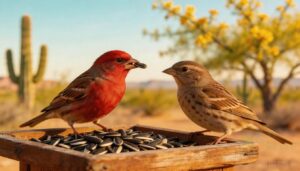
The House Finch tops Arizona feeder counts, showing up at 90% of surveyed sites. Plumage sexual dimorphism makes identification easy — males flash red on the head and breast, females stay brown and streaked.
Watch for courtship feeding, where males pass seeds directly to females.
Their cheerful vocalization patterns ring out at most birdwatching hotspots, and feeding preferences lean heavily toward seeds.
They also readily visit hummingbird feeder visits for sugar water.
Mourning Dove
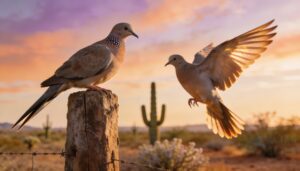
Mourning Doves show up at 75% of Arizona feeder sites — second only to House Finches. You’ll recognize them by soft gray-brown plumage, long pointed tail, and that quiet, mournful cooing.
Birdwatching trends in Arizona confirm year-round constants. Their mating rituals, egg incubation of 14–15 days, and short fledging period of 13–14 days make them rewarding to observe.
Gila Woodpecker
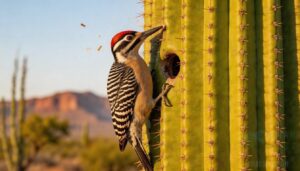
Where doves leave off, the Gila Woodpecker takes over — loud, bold, and built for the desert. Showing up at 55% of Arizona feeder sites, it’s a birdwatching trend in Arizona, a staple.
Its drumming foraging technique pulls insects from saguaro bark with precision.
Nesting in saguaros, defending space through territorial vocalizations, joining mixed-species flocking along washes — this bird owns the Southwest.
Curve-billed Thrasher
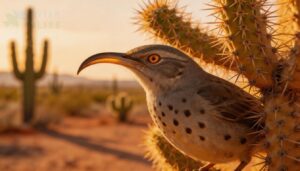
Meet the Curve-billed Thrasher — Arizona’s sharp-eyed desert forager, spotted at 53% of state feeder sites. Its bill morphology tells the whole story: the long, curved tool probes soil and leaf litter with ease.
Four things that define this year-round resident:
- Cholla nesting in chain-fruit cactus, 3–5 ft up
- Territory song — variable, unscripted, persistent
- Dietary seasonal shift toward fruit when available
- Permanent lowland desert range near Tucson and Phoenix
Gambel’s Quail

Gambel’s Quail shows up at 44% of Arizona feeder sites — a covey communication specialist you’ll recognize by that bold black plume curving forward from the crown.
Watch for their predator avoidance tactic: they run, not fly.
Dust bathing ritual, tight nesting microhabitat under dense scrub, and dietary preferences shifting seasonally between seeds and insects make this chunky desert bird a highlight of Arizona birding destinations.
Verdin
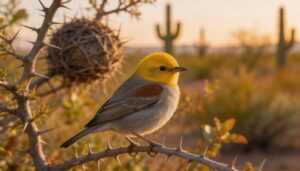
Verdin is one of the unique birds of Arizona you won’t forget once you’ve spotted it — 4.5 inches of gray, with a yellow head and chestnut shoulder patch. Its nesting architecture stands out: thorny, sphere-shaped structures oriented for airflow.
Territory calls are loud and sharp across desert scrub. Feeding strategies favor outer branches, gleaning insects while hanging upside down.
Habitat preferences stay low — below Arizona’s Mogollon Rim.
Cactus Wren

Arizona’s official state bird, the Cactus Wren adds bold character to bird diversity in Arizona. Spot it by its white supercilium, spotted breast, and harsh vocalizations — that loud, scratchy rattle carries far across desert scrub.
- Nest Architecture — bulky, football-shaped, tucked deep in cholla
- Cactus Association — cholla and saguaro define its habitat preferences
- Territory Defense — year-round, no migration
- Water Independence — moisture sourced entirely from food
Anna’s Hummingbird
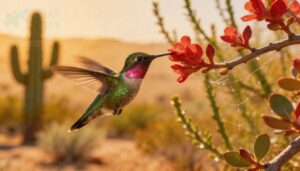
One of the most striking examples of bird diversity in Arizona, the Anna’s Hummingbird packs a lot into 3.5 inches. Males flash iridescent green and rose-pink throats, while their Courtship Dives reach 130 feet.
Wingbeat Aerodynamics keep them precision‑hovering at Nectar Sources like manzanita and feeders. They’re fiercely territorial year‑round.
Nest Construction uses spider silk and plant fibers — remarkably engineered for birdwatching and bird identification alike.
Lesser Goldfinch
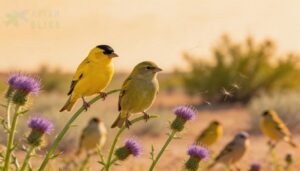
Don’t overlook the Lesser Goldfinch — it’s one of the smallest true finches you’ll spot across Arizona birding destinations and trails, measuring just 9–12 cm.
- Plumage Variation: Males show bright yellow with a black cap; females run olive-green — key for bird identification
- Seed Preference: Favors sunflower-family composites and thistle patches
- Flock Behavior: Forages in small groups, often mixing with other finches
Its Vocalization Types — wheezy, chiming twitters — make it easy to track through scrub. Nesting Habitat includes outer shrub branches, usually mid-to-late summer. Species distribution across US states spans west to South America.
Unique Arizona Bird Habitats
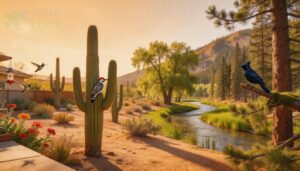
Arizona doesn’t do "one size fits all" regarding bird habitats.
From scorching desert flats to cool mountain forests and busy city backyards, each zone attracts its own cast of species.
Here’s a look at the four main habitat types where Arizona’s birds actually live.
Desert-Adapted Birds
Desert birds have cracked the code on survival. Species like the Curve-billed Thrasher and Gambel’s Quail rely on thermoregulation strategies — staying active at dawn and dusk, seeking shade midday.
water conservation comes naturally here; many birds pull moisture from insects and seeds.
Thorny nesting in cholla cactus delivers both camouflage plumage cover, and predator avoidance, making Arizona’s desert scrub a true birding hotspot.
Riparian and Wetland Birds
Swap desert scrub for shady cottonwoods and willows, and you’re suddenly in a completely different Arizona.
Riparian migration corridors like the San Pedro River draw Fish-eating Herons, Insectivorous Riparian specialists, Yellow-rumped Warblers, and White-crowned Sparrows in impressive numbers.
The Gilbert Riparian Preserve alone hosts over 300 species.
Wetland Restoration efforts keep these birding hotspots thriving — critical stops along bird migration routes through Arizona.
Mountain and Forest Birds
Head up into Arizona’s sky islands, and the birdlife shifts dramatically. Mountain Chickadees, Dark-eyed Juncos, and Yellow-rumped Warblers work the pines using Elevational Migration Corridors to move with the seasons.
Forest Structure Diversity — deadwood, mixed ages, hollow snags — facilitates Cavity Nesting Strategies for Northern Flickers.
Alpine Plumage Adaptations keep residents warm, while Cone Seed Dependence shapes where crossbills and finches settle.
Urban and Suburban Birds
From pine forests to city blocks — Arizona’s urban birds are just as fascinating.
Three adaptations make them thrive:
- Feeding Adaptations — House Finches and Curve-billed Thrashers broaden their diets using backyard bird feeding stations year-round.
- Nesting Materials — Species incorporate synthetic fibers alongside natural ones, nesting within 20–40 meters of homes.
- Noise Acclimation — Vocalizations shift pitch to cut through traffic.
FeederWatch citizen science data analysis confirms strong bird species prevalence at feeders across Arizona’s neighborhoods.
Top Arizona Birdwatching Locations

Arizona has no shortage of spots where birds practically come to you. Whether you’re chasing a life list or just want to see something cool on a weekend hike, knowing where to go makes all the difference.
Here are five state parks worth putting on your radar.
Red Rock State Park
Red Rock State Park sits along Oak Creek just outside Sedona — one of Arizona’s most rewarding birding hotspots.
Walk the Eagle Eye Loop or Apache Fire Trail and you’ll spot songbirds, hummingbirds, and riparian species year-round.
Oak Creek Overlooks reveal bird migration patterns in real time.
Guided nature walks and habitat restoration efforts make it ideal for sharpening your bird identification skills.
Patagonia Lake State Park
Tucked along Highway 82, Patagonia Lake State Park ranks among Arizona’s finest birding hotspots. Its 265‑acre lake draws wading birds and raptors year‑round, with Seasonal Wildlife Tours helping you track bird migration patterns and wintering bird species along Sonoita Creek.
Lake Fishing Opportunities, Camping Amenities Overview, and Boating Regulations make it a full‑experience destination — and the Historical Railroad Trail nearby adds unexpected character.
Dead Horse Ranch State Park
Along the Verde River in Cottonwood, Dead Horse Ranch State Park delivers serious birding at 3,300 feet. River kayaking reveals waterfowl along cottonwood-lined banks, while trail loops thread through riparian habitat built for avian population monitoring in the Southwest.
- 423 acres of diverse desert-river habitat
- Seasonal bird visitation patterns peak during winter bird occurrence
- Educational programs highlight Western United States birds
- Group camping across 150+ sites
- Scenic river views frame bird migration corridors
Kartchner Caverns State Park
Kartchner Caverns State Park isn’t just about what’s underground. The cave microclimate and speleothem preservation efforts keep human impact minimal, but step outside and you’re walking desert habitat trails through classic Sonoran scrub — prime territory for species distribution observations.
Guided tour experience aside, birders find real value here: night sky programs double as quiet dawn watch windows, making it one of the Southwest’s quieter birdwatching hotspots.
Lyman Lake State Park
Lyman Lake State Park sits at 6,000 feet in northeastern Arizona — and that elevation shift changes everything you’ll observe on your species list.
- Scout the Marsh Birding Spot near the ranger station road for egrets and sandhill cranes
- Walk the Petroglyph Trail during migration for mountain bluebirds overhead
- Fish the Reservoir at dawn, when osprey are most active
- Book Camping Cabins for early winter birding sessions
The No-Wake Zone on the west end keeps water calm — exactly where waterfowl concentrate. Cross-reference your sightings with eBird citizen science data and bird identification guides to track species distribution across US states and winter bird occurrence by state. Lyman ranks among Arizona’s quieter birdwatching hotspots.
Bird Migration and Seasonal Patterns

Arizona’s birdlife doesn’t stay put — it shifts with the seasons in ways that can genuinely surprise you.
Whether you’re watching warblers push through in April or spotting wintering ducks at a local marsh, timing your visit makes all the difference.
Here’s what to expect across each season.
Spring Migration Highlights
Spring in Arizona hits like a switch flipped. Late April through May, warbler flocks—sometimes 20 to 40 species in a single day—sweep through riparian corridors and canyon migration corridors. Vireo arrival peaks along riverine thickets, while the Indigo Bunting surge brightens desert scrub edges. eBird citizen science data shows sharp spikes confirming this seasonal bird activity.
In late April, Arizona’s skies erupt with warbler flocks of up to 40 species sweeping through riparian corridors in a single day
| Species | Peak Window | Habitat |
|---|---|---|
| Prothonotary Warbler | Mid-May | Riparian woodlands |
| Indigo Bunting | Late April–May | Desert scrub edges |
| Swainson’s Thrush | May | High elevation shift zones |
Watch for the high elevation shift as bird migration pushes species upslope into oak and conifer forests. Backyard birding opportunities spike during these weeks—native plantings make a real difference for species distribution across US states passing through.
Summer Breeding Birds
Summer turns Arizona into a breeding hotspot. Desert specialists like the Cactus Wren and Curve-billed Thrasher — species are residents year-round — ramp up Territorial Songs by early June.
Clutch Size usually runs 3–5 eggs, hatching within two weeks. The seasonal Insect Surge fuels rapid chick growth, though Heat Stress pushes Nesting Timing into shaded microhabitats.
Birding tours in Arizona during this breeding season of birds reward patient observers.
Fall Migration Routes
Fall migration reshapes Arizona’s skies from late August through November. Birds pour through the Desert Corridor, using cactus scrub as fuel stops. Riparian Stopovers along the Verde River and San Pedro teem with warblers and flycatchers.
Watch for:
- Raptors riding Thermal Soaring Paths along ridgelines
- Broad-winged hawks following Raptor Ridge Flows south
- Songbirds threading Urban Greenway Links through Phoenix
Winter Birding Opportunities
When fall’s last migrants clear out, Arizona’s winter birding quietly takes over. Desert feeders draw House Finches and Verdins showing Cold-Weather Plumage, while Winter Feeding Stations reveal shifting Feeder Bird Community Composition.
Riparian corridors host Migratory Stopover Timing, overlapping well into January.
Nighttime Vocalizations from Great Horned Owls carry through cold canyon air — worth every early wake-up.
Conservation and Birdwatching Impact

Arizona’s birds don’t exist in a vacuum — they’re shaped by the world around them, and that world is changing fast. From shifting climates to shrinking habitats, the pressures are real, but so are the solutions.
Here’s a closer look at what’s affecting Arizona’s birds and how birdwatching itself plays a surprising role in their future.
Climate Change Effects
Rising Temperatures and Drought Intensification are quietly reshaping Arizona’s skies. As heat waves grow more frequent, Habitat Shifts push species distribution across US states toward higher elevations — disrupting avian population trends and seasonal bird visitation patterns.
Phenology Mismatch desynchronizes food availability for migrants. Wildfire remakes woodland habitats fast.
Winter bird occurrence by state is already changing, and citizen science’s impact on ornithology helps track it all.
Habitat Loss and Urbanization
Climate change set the stage — now urbanization is finishing the act. Urban Heat Islands are squeezing birds out of neighborhoods they’ve called home for generations.
Bird population monitoring in Phoenix tells a hard story:
- Riparian Fragmentation cut abundance by 50%+ in some corridors
- Neighborhood bird occupancy dropped from 46.7% to 37.8%
- Six of 11 desert species declined in residential zones
- Native Plant Yards still support verdins, wrens, and hummingbirds
Land Sparing protected areas and Native Plant Yards work together for real avian habitat conservation.
Birdwatching Tourism Benefits
Birdwatching quietly drives a local economy boost that many overlook. Every birding tour in Arizona — from Patagonia to the San Pedro — puts real money into hotels, restaurants, and guide services. Birding festivals spark seasonal job creation and cultural exchange programs that connect visitors with local heritage.
| Benefit | Who Gains | Example |
|---|---|---|
| Lodging & dining revenue | Local businesses | Peak migration stays |
| Seasonal job creation | Guides & park staff | Festival tour bookings |
| Community cultural funding | Towns near hotspots | Birding event proceeds |
| Destination branding | Regional tourism boards | Top-tier birding destination marketing |
| Ecotourism and birding growth | Conservation groups | Citizen science funding |
Arizona’s bird diversity makes it a genuine draw. That reputation keeps travelers returning — and communities thriving.
Conservation Programs in Arizona
Arizona doesn’t leave bird conservation to chance. Programs like the Arizona Wildlife Conservation Strategy and community land partnerships guide real, on-the-ground action — from native plant reforestation to barrier removal projects that reconnect fragmented waterways.
Habitat restoration grants fund riparian recovery, while citizen science initiatives and annual bird census efforts power population monitoring for rare and endangered birds.
The Tucson Bird Alliance keeps locals plugged into every citizen science project worth joining.
Frequently Asked Questions (FAQs)
What are the common birds in Arizona?
Think every backyard is just birds eating seeds? Think again.
House Finch tops Citizen Science Data at 90% of feeder sites, with Feeder Species Rankings shifting fast due to Climate-Driven Range Changes.
Where do birds sleep when it rains in the winter?
On rainy winter nights, birds rely on Cavity Roosts, Thicket Shelters, Urban Eaves, and Riparian Overhangs for cover. Feather Insulation keeps them warm while they wait out the storm.
What kind of birds do you see in Arizona?
You’ll spot over 550 species here — from the vivid Anna’s Hummingbird hovering at feeders to the House Sparrow nesting nearby.
Desert specialists, riparian wanderers, and mountain forest birds all share this landscape.
How do I identify a bird in my backyard?
Start with size comparison and bill shape, then note plumage patterns and song identification.
Behavior clues seal the deal — ground foragers, shrub hoppers, and tree drummers each tells their own story.
What is the most common bird in Phoenix Arizona?
The House Finch tops citizen science data as Phoenix’s most common backyard bird.
Feeder bird observations confirm its year-round presence, with urban feeder impact driving strong population density mapping across neighborhoods.
What is the speckled bird in Arizona?
Ever wondered which speckled bird hides best in Arizona’s scrub?
The Verdin tops the list — its gray body, subtle wing speckling, and camouflage patterns make it a master of desert concealment.
What kind of birds does Arizona have?
Arizona is home to an astounding diversity of birds — more than 500 species, from endemic Arizona species like the Cactus Wren to high altitude raptors, insectivorous songbirds, and nocturnal desert birds.
What rare birds can you see in Arizona?
Rare birds show up in surprising corners of Arizona.
You might spot Desert Rarities like the California condor, High Elevation Specialists like the spotted owl, or Riparian Rarities like the yellow-billed cuckoo.
What are the noisy birds in Phoenix?
Phoenix has its own soundtrack.
Great-tailed grackles dominate Urban Roost Calls at dusk, while curve-billed thrashers hit Peak Vocal Hours at dawn — prime time for Acoustic Identification across Noise Hotspots, Phoenix birders know well.
What is the tiny GREY bird in Tucson?
That tiny grey visitor is likely the Blue-gray Gnatcatcher.
Watch for its tail flicking behavior, soft grey plumage, and 5-inch frame — a hallmark of riparian habitat preferences during migration timing windows.
Conclusion
Imagine a vintage camera capturing Arizona’s avian wonders. As the lens focuses, over 550 bird species come into view.
From hummingbirds flitting like tiny clockwork mechanisms to raptors soaring on thermals, each snapshot reveals a unique story.
Your journey through Arizona’s diverse landscapes—deserts, mountains, and wetlands—unfolds with every click.
With this guide, you’re equipped to explore and appreciate the state’s impressive birdlife, including the fascinating world of birds in Arizona.