This site is supported by our readers. We may earn a commission, at no cost to you, if you purchase through links.

Most winter birds burn through 30% of their body weight in fat reserves overnight—just to survive until morning. That’s not a small ask when temperatures drop below freezing and natural food sources disappear under snow. The seed mix sitting in your feeder can mean the difference between a bird making it through January and one that doesn’t.
Not all blends earn their place on the place on the shelf, though. Many store-bought mixes bulk up with millet and filler grains that birds scatter to the ground and ignore. Knowing which ingredients actually deliver the calories and micronutrients winter birds need changes how you shop—and who shows up at your feeder.
Table Of Contents
- Key Takeaways
- Factors to Consider for Winter Bird Seed Mixes
- Top 9 Bird Seed Mixes for Winter Feeding
- Matching Bird Seed Mixes to Local Birds
- Best Practices for Storing Bird Seed in Winter
- Bird Feeder Placement and Maintenance Tips
- Frequently Asked Questions (FAQs)
- Why put a potato in your bird feeder?
- How often should I refill winter bird feeders?
- Can bird seed mixes attract unwanted wildlife?
- What feeder types work best for winter weather?
- Do birds need water sources during winter months?
- Should I stop feeding birds in early spring?
- How do I attract rare winter bird species?
- Can I make homemade bird seed mixes?
- Are bird feeders safe for sick birds?
- How often should I refill my feeder?
- Conclusion
Key Takeaways
- Black oil sunflower seeds pack 25–28% fat and belong in every winter feeder because birds burn through 30% of their body fat overnight just to survive.
- Most store-bought mixes are padded with millet and cracked corn that birds scatter and ignore, so aim for a blend that’s at least 70% premium seeds like sunflower, safflower, and peanuts.
- Regional blends consistently outperform generic mixes because cardinals, finches, and woodpeckers each have specific seed preferences shaped by beak size and local foraging habits.
- Airtight container below 60°F with moisture kept under 50% humidity is just as important as the seed itself — stale or moldy seed loses nutritional value fast.
Factors to Consider for Winter Bird Seed Mixes

Not all bird seed mixes are created equal, especially when temperatures drop and birds need every calorie they can get. A few key factors can mean the difference between a feeder that birds actually use and one they ignore.
Fat-rich options like suet are especially worth adding to your setup—suet bird feeders for beginners are a great way to give winter birds the dense calories they need most.
Here’s what to look for before you buy.
Nutritional Value and Energy Content
Think of fat as birds’ winter fuel — and fat delivers 9 kcal per gram, more than twice what carbohydrates offer at 4 kcal per gram. That Fat Protein Ratio matters enormously when temperatures plummet.
Fat is birds’ winter fuel, delivering 9 kcal per gram — more than twice what carbohydrates offer
Here’s what to prioritize in high-energy bird seed blends:
- Energy Density — Black oil sunflower seeds hit 25–28% fat, making them the cornerstone of any high-calorie bird food.
- Carbohydrate Sources — Dried fruits and whole grains add quick and sustained energy.
- Micronutrient Balance — Calcium, zinc, and vitamin E support immunity and bone health.
- Fiber Impact — Balanced fiber aids digestion without diluting nutrient balance.
The energy values are derived using Atwater factors calculation.
Seed Freshness and Quality
Fat-rich seeds only help birds if the seeds are actually fresh. Stale seeds lose nutritional punch fast — moisture content above 12 percent accelerates mold and spoilage, leaving birds with empty calories at best.
Good seed freshness starts with how you store and check your supply:
- airtight containers kept below 60°F for proper temperature management and storage integrity
- Practice freshness testing weekly — sniff for musty odors, look for clumping or darkened kernels
- packaging integrity and label dates; vacuum-sealed bags with harvest lot numbers signal reliable purity testing and vigour assessment
Moisture control isn’t optional. It’s what keeps your feeder a lifeline.
Regional Bird Species Preferences
Your backyard birds don’t match your cousin’s three states over — and that gap matters.
High-latitude finches chase conifer seed crops up north, while mid-latitude cardinals cluster in dense shrublands through December. Coastal sparrows stay put year-round, and mountain woodpeckers ramp up feeder visits during cold snaps. Even urban blue jays follow local food patterns.
Regional seed blends matched to these regional bird species simply work better.
Seed Variety and Composition
Once you know your local visitors, matching the right seed blend becomes straightforward.
A good winter mix centers on fat-protein ratio — black oil sunflower seeds hit roughly 25% fat and 20% protein, making them the anchor of any high-energy seed blend. Seed oil content, hull types, and seed size distribution all determine which birds actually eat what you offer.
- High-fat seed blends with 50–70% premium seeds deliver the calories birds burn overnight
- Seasonal fatty acids in nyjer and flaxseed support feather condition through cold months
- Nutrient balance means pairing fat-rich seeds with protein sources like peanuts
- Regional seed blends outperform generic mixes by reflecting local species preferences
- Antioxidant levels in fresh seeds help birds maintain immune function all winter
Minimizing Waste and Fillers
Cheap mixes look like a bargain until you see millet piling up under your feeder. That’s filler elimination in reverse — you’re paying for seeds birds won’t touch.
Aim for a premium seed ratio of 70% or more, black oil sunflower and peanuts.
Air screening removes hulls and chaff before mixing.
Batch testing small blends helps with waste tracking, and waste-free mixes keep your feeding station cleaner all winter.
Top 9 Bird Seed Mixes for Winter Feeding
Not all seed mixes are created equal, especially when temperatures drop and birds need real fuel to survive the night. These nine blends stand out for their nutritional value, seed quality, and ability to attract a wide range of winter visitors.
Let’s walk through each one.
1. Kaytee Southern Wild Bird Blend
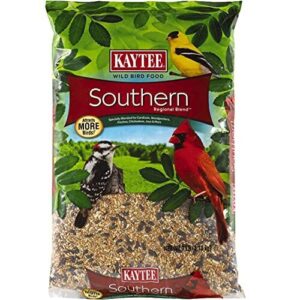
If you live in the Southern U.S., your backyard birds have specific tastes — and a generic mix often misses the mark. That’s where Kaytee Southern Wild Bird Blend earns its place at your feeder.
This 7-pound bag ($16.95) packs sunflower hearts and chips, red and white millet, safflower, peanut hearts, and golden safflower into one regionally matched formula. Fat content runs around 30–34%, which is exactly what birds need to stay warm when temperatures dip. Protein sits near 15–16%, supporting healthy feathers through the season.
What makes it stand out? Independent university field testing showed it pulls in more birds than plain black oil sunflower or generic blends. Cardinals, finches, chickadees, and woodpeckers all respond well to it.
The coarser seed size also helps in wind — less scatter, less waste, less cleanup for you.
| Best For | Southern U.S. bird enthusiasts who want to attract a wider variety of native species to their backyard feeders without the hassle of mixing their own blend. |
|---|---|
| Bag Weight | 7 lbs |
| Price | $16.95 |
| Sunflower Seeds | Yes |
| Cardinals Attracted | Yes |
| Squirrel Risk | High |
| Feeder Compatibility | Hopper/Platform |
| Additional Features |
|
- University-tested formula that genuinely outperforms generic mixes at drawing in cardinals, finches, chickadees, and woodpeckers
- Coarser seeds mean less scatter in the wind, so you’re cleaning up less and wasting less
- Low dust, mold-free mix keeps your feeder cleaner and cuts down on maintenance time
- Squirrels love it too, so be ready to deal with some uninvited guests
- At $16.95 for 7 lbs, it costs more per pound than bulk seed — adds up fast if you’re filling large or multiple feeders
- Results can vary depending on your local habitat, bird migration patterns, and the season
2. Kaytee Wild Bird Seed Blend
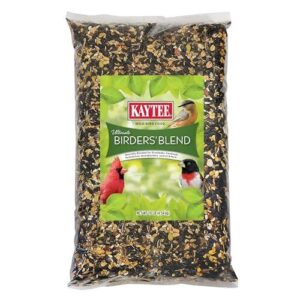
Kaytee’s Wild Bird Seed Blend is one of those workhorse options that quietly does its job all winter long. At 10 pounds for $19.01, it’s a reasonable investment for anyone who wants to keep a steady supply going without overthinking it.
The mix brings together sunflower seeds, safflower, peanuts, millet, and cracked corn — a solid lineup that covers a good range of backyard visitors. Chickadees, sparrows, finches, and cardinals all find something worth staying for. The fat content, boosted by sunflower and peanuts, helps birds fuel up fast when temperatures drop overnight.
One thing to note: the mix does include milo and cracked corn, which some birds tend to pass over. That can mean a ground litter more than you’d like. Still, the premium seeds make up enough of the blend to keep your feeders active and your birds well-fed.
| Best For | Backyard bird enthusiasts who want to attract a wide variety of songbirds — cardinals, finches, woodpeckers, and more — without spending a lot of time curating a custom mix. |
|---|---|
| Bag Weight | 10 lbs |
| Price | $19.01 |
| Sunflower Seeds | Yes |
| Cardinals Attracted | Yes |
| Squirrel Risk | Moderate |
| Feeder Compatibility | Tube/Hopper/Platform |
| Additional Features |
|
- Covers a solid range of species with sunflower seeds, safflower, peanuts, and millet all in one bag
- The fat from sunflower and peanuts gives birds a real energy boost, especially useful during cold snaps or migration
- At $19.01 for 10 lbs, it’s an easy, affordable way to keep feeders stocked consistently
- Milo and cracked corn tend to get ignored by pickier birds, which means more ground mess to clean up
- The 10-lb bag is a bit awkward to store unless you’ve got a dedicated bin or container handy
- Contains artificial flavor, which may be a turn-off for buyers looking for a more natural, additive-free option
3. Wagners Eastern Wild Bird Food
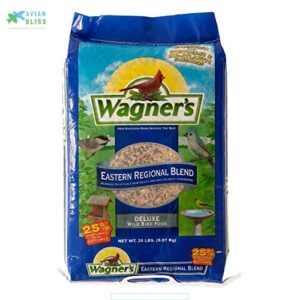
Wagner’s Eastern Wild Bird Food is built around what eastern backyard birds actually want. The 20-pound bag — priced at $24.99 — packs white millet, black oil sunflower, safflower, cracked corn, and striped sunflower into one blend.
Cardinals, chickadees, blue jays, and finches all show up reliably. It works in tube, hopper, platform, or ground-scatter setups, so you’re not locked into one feeder style. The milo and cracked corn add some filler, but the premium seeds carry the nutritional weight where it counts most.
| Best For | Backyard bird enthusiasts in the eastern US who want to attract a wide variety of songbirds and prefer a flexible, high-quality seed blend in bulk. |
|---|---|
| Bag Weight | 20 lbs |
| Price | $24.99 |
| Sunflower Seeds | Yes |
| Cardinals Attracted | Yes |
| Squirrel Risk | High |
| Feeder Compatibility | Tube/Hopper/Platform/Ground |
| Additional Features |
|
- Draws a solid mix of popular eastern birds — cardinals, blue jays, chickadees, and finches show up consistently
- Works with almost any feeder style, including tube, hopper, platform, and ground scatter
- The 20-pound bulk bag is great if you’re running multiple feeders and don’t want to restock every week
- At $24.99, it runs a bit pricier than similar bulk options on the market
- The big bag can be awkward to store if you’re short on space
- Squirrels and other backyard visitors love it too, so a squirrel-proof feeder is worth considering
4. Lyric Wild Bird Food Mix
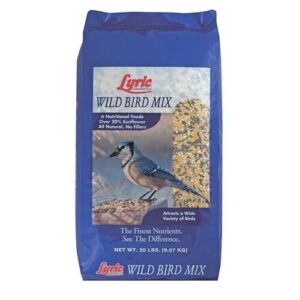
Lyric Wild Bird Food Mix earns its spot on this list for one simple reason: it doesn’t cut corners. The 20-pound bag ($24.99) skips fillers entirely and leads with over 20% sunflower seeds — both black oil and striped varieties — backed by shelled peanuts, safflower, white proso millet, and cracked corn.
That covers a lot of ground. Cardinals go for the safflower. Jays and woodpeckers work the peanuts. Finches and sparrows pick through the millet. You’re basically running a buffet that suits everyone at the table.
It fits tube, hopper, tray, and window feeders, so whatever setup you already have, this blend slides right in. One heads-up: the larger corn kernels can jam narrow feeder ports, so check your tube feeder opening before filling. Otherwise, it’s a solid, no-fuss choice for a busy winter feeding station.
| Best For | Backyard bird enthusiasts who want a premium, filler-free seed mix that attracts a wide variety of species all at once. |
|---|---|
| Bag Weight | 20 lbs |
| Price | $24.99 |
| Sunflower Seeds | Yes |
| Cardinals Attracted | Yes |
| Squirrel Risk | Moderate |
| Feeder Compatibility | Tube/Hopper/Tray/Window |
| Additional Features |
|
- No fillers — every ingredient actually brings birds to your feeder
- Attracts a solid range of species, from cardinals and jays to finches and sparrows
- Works with tube, hopper, tray, and window feeders right out of the bag
- Large corn kernels can clog narrow tube feeder ports
- Pricier per pound than most generic seed mixes
- Some users find it draws fewer cardinals than expected
5. Wild Bird Food Variety Blend
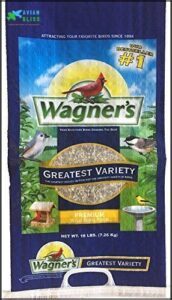
Eleven ingredients. That’s not a marketing number — it’s a real signal that this blend was built to feed a crowd. Wagner’s Wild Bird Food Variety Blend packs over 40% sunflower content into a 16-pound bag, covering black oil sunflower seeds, safflower, nyjer, white and red millet, peanut pieces, cracked corn, and more.
Cardinals, chickadees, finches, juncos, and woodpeckers all find something worth staying for.
It works in tube, hopper, and platform feeders, so you don’t need to rethink your whole setup.
One honest note: the bag isn’t resealable, and moisture can sneak in fast during winter. Transfer the seed into an airtight container right away. Do that, and you’re giving your backyard birds a consistent, high-energy food source through the coldest months — without constantly second-guessing what to buy next.
| Best For | Backyard bird enthusiasts who want to attract a wide variety of songbirds without juggling multiple seed types. |
|---|---|
| Bag Weight | 16 lbs |
| Price | Not listed |
| Sunflower Seeds | Yes |
| Cardinals Attracted | Yes |
| Squirrel Risk | High |
| Feeder Compatibility | Tube/Hopper/Platform |
| Additional Features |
|
- 11-ingredient blend draws in a huge range of birds — cardinals, finches, woodpeckers, juncos, and more
- Works with tube, hopper, and platform feeders, so no feeder swap needed
- Made in the USA with high-quality grains and over 40% sunflower content
- Bag isn’t resealable, so you’ll need an airtight container to keep seed fresh
- Peanuts in the mix can attract squirrels and may be a concern for those with nut allergies
- Pricier than bulk seed options, and some users have reported occasional clumping or mold issues
6. Wild Harvest Bird Food Blend
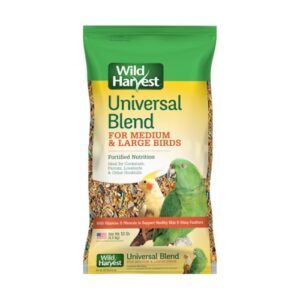
If variety feeds the crowd, this one feeds the whole household. Wild Harvest’s 10-pound blend centers on black oil sunflower and safflower seeds — both high in fat and protein — then adds fortified vitamins to support feather condition and skin health. It’s built for medium to large hookbills like cockatiels, but backyard songbirds take to it too.
One heads-up: transfer it to an airtight container immediately. Some batches run moist, and wet seed spoils fast in winter.
| Best For | Bird owners with medium to large hookbills — cockatiels, parrots, lovebirds — who want a single blend that covers multiple birds and simplifies daily feeding. |
|---|---|
| Bag Weight | 10 lbs |
| Price | Not listed |
| Sunflower Seeds | Yes |
| Cardinals Attracted | Yes |
| Squirrel Risk | Low |
| Feeder Compatibility | Outdoor/Indoor |
| Additional Features |
|
- Packed with sunflower and safflower seeds, plus added vitamins that support feather health and skin condition
- One daily refill works across multiple bird species, so feeding stays simple and consistent
- Gentle enough for sensitive stomachs, and it pulls double duty at outdoor feeders too
- Some batches have excess hulls, dust, or lighter seeds — you may need to sieve before serving
- Picky cockatiels might turn their beaks up at it depending on the mix
- Needs proper storage right away; a moist batch can spoil quickly if left in the original packaging
7. Wagner’s Songbird Wild Bird Food
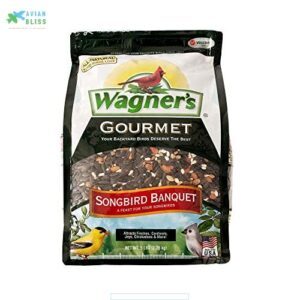
After all that variety in the Wild Harvest blend, sometimes simpler wins. Wagner’s Songbird Wild Bird Food keeps it focused — black oil sunflower, striped sunflower, peanuts, safflower, and tree nuts packed into a tidy 5-pound bag for $12.98.
That combination hits something important. Fat and protein work together here, fueling both small-beaked chickadees and larger cardinals through freezing nights. Chickadees can drop up to 10% of their body weight overnight, so every calorie counts. This blend covers that gap well.
You’ll notice cardinals, jays, titmice, and finches showing up regularly. No corn, no milo — just seeds that birds actually eat. Less waste on the ground means a cleaner feeder and a longer-lasting bag.
One thing worth knowing: squirrels love this mix too. A metal baffle on your feeder pole goes a long way.
| Best For | Backyard bird enthusiasts who want to attract a wide range of songbirds — from small chickadees to bigger cardinals and jays — with a clean, no-filler seed mix. |
|---|---|
| Bag Weight | 5 lbs |
| Price | $12.98 |
| Sunflower Seeds | Yes |
| Cardinals Attracted | Yes |
| Squirrel Risk | High |
| Feeder Compatibility | Tube/Hopper/Platform |
| Additional Features |
|
- Covers both small and large-beaked birds with one well-balanced blend
- No corn or milo means less waste and a cleaner feeding area
- High fat and protein content keeps birds fueled through cold nights and migration
- Black-oil sunflower dominates the mix, so variety is more limited than it looks on paper
- At $12.98 for 5 lbs, it costs more than generic blends — that adds up if you’re filling feeders constantly
- Squirrels are big fans too, so a baffle or squirrel-proof feeder is basically a must
8. Midwest Regional Wild Bird Food Blend
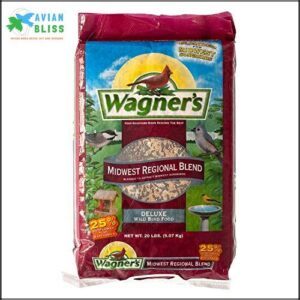
If you want to feed more birds without switching feeders, this 20-pound bag fits right in.
Wagner’s Midwest Regional blend pairs black oil sunflower and safflower with cracked corn and millet — a mix that works in tube, hopper, or platform feeders.
Cardinals, chickadees, and finches show up reliably.
At $21.48, the cost per pound is solid for a regional formula.
Store it sealed in a cool spot, and it’ll stay fresh through several weeks of winter feeding.
| Best For | Backyard bird enthusiasts in the Midwest who want to attract a wide variety of songbirds without juggling multiple feeder types. |
|---|---|
| Bag Weight | 20 lbs |
| Price | $21.48 |
| Sunflower Seeds | Yes |
| Cardinals Attracted | Yes |
| Squirrel Risk | High |
| Feeder Compatibility | Tube/Hopper/Platform |
| Additional Features |
|
- Pulls in a great mix of birds — cardinals, chickadees, finches, blue jays, and even mourning doves show up regularly.
- Works with tube, hopper, and platform feeders, so you don’t need to swap anything out.
- At $21.48 for 20 lbs, you’re getting solid value for a regionally formulated blend.
- The cracked corn can get messy fast — expect some cleanup around the base of your feeder.
- Squirrels love it too, so you might need a baffle if that’s a concern.
- Not the best pick if you’re trying to attract one specific species — it’s built for variety, not precision.
9. Black Oil Sunflower Bird Seed
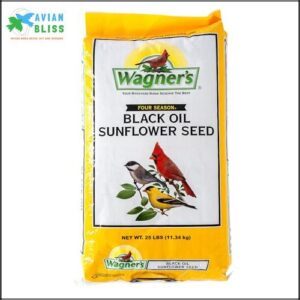
Sometimes the simplest option is the strongest one.
Wagner’s 25-pound Black Oil Sunflower (Model 76027, $41.98) skips the blending and delivers one thing birds genuinely compete for. These seeds carry roughly 28–30% fat and 15–20% protein — exactly what cardinals, chickadees, nuthatches, and woodpeckers need to stay warm overnight. A chickadee can lose up to 10% of its body weight on a freezing night, so every high-calorie bite counts.
The thin shells make cracking easy for small-beaked birds, which means less effort and more energy gained per seed. Use it in a tray or hopper feeder and expect busy visits all day.
One bag lasts about six weeks with daily filling. Store it in an airtight container below 60°F to keep the fats fresh. Check for debris before filling — some batches are inconsistent.
| Best For | Backyard bird enthusiasts who want to attract a wide variety of wild birds — especially small-beaked species like chickadees, finches, and nuthatches — with a single, high-energy seed. |
|---|---|
| Bag Weight | 25 lbs |
| Price | $41.98 |
| Sunflower Seeds | Yes |
| Cardinals Attracted | Yes |
| Squirrel Risk | High |
| Feeder Compatibility | Tray/Hopper |
| Additional Features |
|
- Thin shells make cracking easy for small birds, so they spend less energy and get more out of every seed
- Attracts a solid range of species including cardinals, woodpeckers, and goldfinches — great variety without mixing seeds
- One 25 lb bag lasts about six weeks with daily feeding, so you’re not restocking constantly
- No resealable closure on the bag, so you’ll want to transfer it to an airtight container right away to avoid moisture and spoilage
- Some batches have contained wood chips or debris that can clog feeders — worth checking before you fill
- At $41.98, it’s pricier than mixed-seed blends, which might give budget-conscious buyers pause
Matching Bird Seed Mixes to Local Birds
Not every bird eats the same thing, and that’s actually good news for you. local visitors prefer makes it easy to stop wasting seed on the wrong mix.
match what’s in your feeder to the birds showing up in your yard.
Preferences of Cardinals, Chickadees, and Sparrows
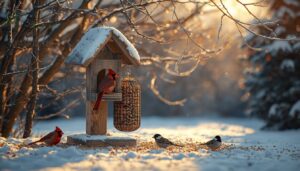
Not all birds eat the same way — and that difference matters more in winter than any other season.
Cardinals, chickadees, and sparrows each follow distinct winter foraging patterns shaped by beak strength, feeder height choice, and energy needs. Here’s what draws each one in:
- Cardinals crack safflower seeds and black oil sunflower seeds easily thanks to their thick beaks — hull thickness preference is a real factor here.
- Chickadees need a strong protein‑fat balance and gravitate toward high‑fat oil‑rich seeds and peanut halves for warmth.
- Sparrows are ground foragers that favor white proso millet and cracked corn, rarely competing for elevated feeders.
Bird species‑specific seed preferences mean one sunflower‑dominant mix can satisfy all three — less waste, more visitors.
Attracting Finches, Woodpeckers, and Blue Jays
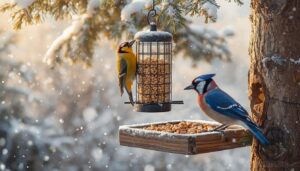
Each of these three species rewards a little extra thought.
Finches flock to nyjer seed in colorful feeder designs fitted with weight-activated perches — these quietly block larger birds while letting finches feed in peace. Woodpeckers thrive on peanut-rich mixes and suet when temperatures drop. Blue jays need open tray feeders stocked with whole peanuts and sunflower seeds.
Keep a seasonal water source nearby, and add squirrel-resistant baffles to protect your high-energy bird seed blends all winter.
Choosing Mixes for Ground Feeders

Ground feeders like sparrows, juncos, and towhees spend their days foraging low — so your mix needs to meet them there. Choosing winter bird seed mixes with smart oil ratio optimization matters most here: aim for 70–85% high-energy seed ingredients like black oil sunflower and white millet.
Safflower works as a squirrel deterrent seed naturally.
shallow trays with proper ground tray spacing — about 10–15 feet apart — and prioritize seed freshness.
non-moldy fillers like milo that birds simply ignore.
Adjusting Blends for Your Region

Your backyard birds aren’t the same as your neighbor’s two states over — and your seed blend shouldn’t be either. Cold inland regions need Climate‑Based Fat Levels with 50–70% black oil sunflower. Humid climates call for Humidity‑Resistant Seeds in smaller, fresher batches.
Consider these regional adjustments:
- Coastal areas: add Coastal Caloric Boost with higher-fat seeds
- Windy zones: choose Wind‑Proof Mix Design to reduce scatter
- Southern US: prioritize Regional seed blends for Southern and Eastern US birds with millet and safflower
- Northern regions: increase high-energy seed ingredients like peanuts
- Local Supplier Sourcing: fresher Regional seed blend preferences, less waste
Best Practices for Storing Bird Seed in Winter
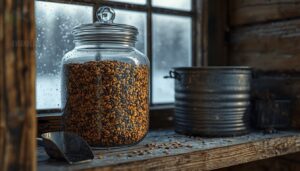
Good seed storage is just as important as choosing the right mix. Winter conditions — cold, moisture, and fluctuating temps — can quietly ruin a batch before you even notice.
Here’s what you need to keep your seed fresh and your backyard birds well-fed all season.
Airtight Storage Solutions
Think of your seed container as a little life‑support system for the birds counting on you. Airtight containers made from BPA‑free polypropylene or borosilicate glass are your best bet — non‑porous surfaces resist oils and odors better than bare metal. Seal Material Selection matters too: silicone gaskets outlast rubber ones, usually lasting one to five years, but check them each season for cracks. A few Gasket Longevity Tips: wipe the seal clean and apply food‑safe silicone lubricant annually.
- Cool Dry Placement — Store below 60°F; basements and garages are ideal.
- Modular Stackable Design — Use stackable containers to save space without stressing the seals.
- Label everything — Mark purchase dates to rotate seed properly and maintain seed freshness.
Some lids include Ventilation Pressure Relief vents — useful during temperature swings. These seed storage best practices keep your feed nutritious all winter long.
Preventing Spoilage and Mold
Mold doesn’t knock before entering — it slips in through humidity. storage humidity below 50 percent using desiccants inside your airtight containers, ideally holding relative humidity around 30–40 percent.
Temperature regulation matters too: a steady 50–70°F prevents condensation that accelerates seed spoilage, prevention failures.
Moisture barrier packaging adds another layer of defense for bulk blends.
Practice rotation scheduling — oldest seed goes first, always.
Monitoring Seed Freshness
Even with airtight containers doing their job, freshness still needs your attention. Use odor assessment first — fresh seed smells mild and nutty, never sour.
Try the float test procedure: drop seeds in water, and sinkers are keepers.
Watch for color change indicators like darkening hulls, which signal oxidation.
Moisture metering and shelf-life tracking round out your routine.
Date every bag, rotate stock, and check every two weeks.
Discarding Old or Clumped Seed
Freshness testing catches most problems early, but sometimes seed goes bad anyway. When you spot moisture clumping, fuzzy patches of mold, or rancid odor detection kicks in—that sharp, sour smell—pull it immediately.
Don’t mix it with fresh stock. Contamination spreads fast.
Watch for these clear discard signals:
- Fuzzy white, green, or black patches signal mold identification
- Hard clumped blocks mean moisture got in and spoilage has started
- Pest infestation signs like webs or small larvae mean the whole batch goes bad
- A sour smell demands safe disposal methods without hesitation
Bird Feeder Placement and Maintenance Tips
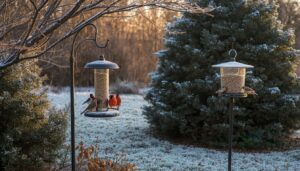
Even the best seed mix won’t do much good if your feeder is in the wrong spot or hasn’t been cleaned in weeks. Where you place it — and how you maintain it — makes a real difference in how many birds actually show up.
Here’s what to know before winter gets serious.
Ideal Feeder Locations for Winter
Where you place your feeder changes everything for winter bird feeding success. Wind-shielded sites near dense shrubs create sheltered microclimates that keep birds calm and warm.
Raise feeders 5–6 feet for elevated predator‑free zones, and keep your window sightline distance between 10–15 feet. Space multiple feeders apart to ease crowding.
| Placement Factor | Recommendation | Why It Matters |
|---|---|---|
| Height | 5–6 feet | Deters ground predators |
| Window distance | 10–15 feet | Safe visibility, fewer collisions |
| Feeder spacing | 10–15 feet apart | Reduces competition |
Cleaning and Hygiene Routines
Good feeder placement sets the stage — but daily feeder cleaning keeps that stage safe. Dirty feeders spread disease fast among winter birds, and a sick flock is the last thing you want on your conscience.
Here’s your practical feeder hygiene and maintenance routine:
- Wash feeders with soap and water every day during winter
- Sanitize with bleach weekly — one part bleach to nine parts water, then rinse completely
- Dry all parts fully before refilling; moisture control measures prevent fungal growth
- hand hygiene practices before handling seed or feeder components
- Clear spilled seed promptly — pest prevention cleaning starts on the ground
Regular cleaning and seed spoilage prevention go hand in hand.
Protecting Feeders From Pests and Weather
Winter storms and squirrels don’t take breaks — so your feeder protection can’t either.
Weatherproof Roofing with overhangs of at least 4 inches keeps seed dry, while a Drainage Tray System prevents puddling and mold. UV-Resistant Coatings stop housing cracks before they start. Squirrel Baffle Design and Ant Guard Installation round out your pest and rodent prevention strategy.
| Protection Feature | Target Threat | Key Benefit |
|---|---|---|
| Weatherproof Roofing | Rain and snow | Keeps seed dry |
| Squirrel Baffle Design | Squirrels | Blocks feeder access |
| Drainage Tray System | Standing water | Prevents mold growth |
| Ant Guard Installation | Ants and insects | Stops port colonization |
| UV-Resistant Coatings | Sun and cold | Extends feeder lifespan |
Ensuring Consistent Food Supply During Storms
Storms can cut off a bird’s foraging window fast — sometimes for days. Stock Emergency Seed Reserves before bad weather arrives using these four steps:
- Fill airtight containers with high-energy seed ingredients like black oil sunflower.
- Add High-Fat Supplemental Feed such as suet or peanut blends.
- Apply a Feeder Spacing Strategy — spread feeders across sheltered spots.
- Set a Manual Refill Schedule to stay consistent.
Moisture-Resistant Storage keeps proper storage and freshness of bird seed intact, avoiding mold and spoilage in bird feed all season.
Frequently Asked Questions (FAQs)
Why put a potato in your bird feeder?
Cooked potato offers birds a quick carbohydrate boost between seed feedings. Its easy peckable texture suits sparrows and chickadees perfectly.
Think of it as a seasonal energy supplement — simple, plain, and surprisingly effective for winter nutrition.
How often should I refill winter bird feeders?
Refill your feeders daily in winter. Birds burn through food fast just to stay warm. During cold snaps, check twice a day — high-traffic feeders empty quickly when temperatures drop.
Can bird seed mixes attract unwanted wildlife?
Yes, bird seed mixes can attract unwanted wildlife. spilled cracked corn invites mice and raccoons.
filler seeds like milo draw pests over songbirds.
smart feeder placement and squirrel deterrents help keep things balanced.
What feeder types work best for winter weather?
Not all feeders pull their weight when temperatures tank. Hopper feeders hold large seed reserves, while wind-resistant tube and heavy-duty metal housing designs stay standing through ice and snow.
Do birds need water sources during winter months?
Absolutely — liquid hydration is just as critical as food. Birds lose body moisture eating dry seeds all day, and frozen puddles vanish overnight.
A heated birdbath keeps water accessible when nothing else does.
Should I stop feeding birds in early spring?
Not necessarily. Gradually reduce feeding over two to six weeks as temperatures climb and insects return. Stopping abruptly can stress birds mid-migration or during a surprise late frost.
How do I attract rare winter bird species?
Spotting seldom-seen species starts with strategy. Use targeted seed types, specialized feeder designs, and supplemental water sources.
Seasonal migration cues guide timing. Match your setup to bird species’ preference, and rare visitors will follow.
Can I make homemade bird seed mixes?
Yes, you can. Start with 50–70% black oil sunflower seeds as your high-energy base, then blend in safflower, peanuts, and millet for solid nutritional balance and broad species appeal.
Are bird feeders safe for sick birds?
Not exactly. As the saying goes, "an ounce of prevention is worth a pound of cure."
If you spot sick birds, stop feeding immediately, clean feeders with diluted bleach, and wait three to four weeks before resuming.
How often should I refill my feeder?
Check levels daily. Most feeders need refilling every one to three days in winter.
High bird visitation spikes during cold snaps can empty a feeder overnight, so don’t wait too long.
Conclusion
What’s the difference between a feeder that gets ignored and one that draws a crowd? The right bird seed mixes for winter feeding.
Birds burning fat reserves overnight don’t have room for millet filler—they need dense calories from black oil sunflower, safflower, and nyjer.
You’ve got the species knowledge, the storage tips, and the top blends.
Stock your feeder with intention this winter, and the birds will find you.