This site is supported by our readers. We may earn a commission, at no cost to you, if you purchase through links.
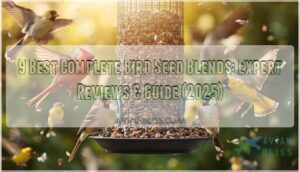
You don’t need a PhD in ornithology to know that tossing cheap birdseed into a feeder won’t attract the vibrant species you’re hoping to see. Many backyard birders waste money on low-quality mixes filled with millet and corn that most desirable birds ignore, leaving behind a mess of discarded hulls and unwelcome pests.
A complete bird seed blend changes that equation by combining nutrient-dense ingredients that appeal to cardinals, finches, chickadees, and dozens of other species while minimizing waste. These premium formulations deliver the proteins, fats, and essential nutrients birds need for strong feathers, successful breeding, and year-round energy.
The right blend transforms your yard into a thriving habitat where you’ll see more species, healthier birds, and far less cleanup.
Table Of Contents
Key Takeaways
- Premium bird seed blends with high-fat sunflower, safflower, and nuts deliver the protein, fats, and nutrients that attract desirable species like cardinals and finches while minimizing waste compared to cheap mixes filled with millet and corn that birds ignore.
- Filler-free, no-waste formulations reduce mess under feeders by up to 40 percent and prevent rancidity when stored properly in airtight containers between 40-60°F with humidity below 60 percent.
- Seasonal adjustments matter—switch to higher-fat blends with sunflower and safflower in fall and winter to fuel migration and cold-weather survival, then rotate to moisture-tolerant seeds in spring and simpler mixes in summer heat.
- Matching seed types to your local birds’ preferences and feeder compatibility (tube feeders for small seeds, hopper feeders for wet climates, squirrel-proof designs for pest control) transforms your yard into a thriving habitat that attracts diverse, healthy species year-round.
What Makes a Complete Bird Seed Blend
You can’t just toss any seed mix in your feeder and expect results. A complete bird seed blend needs the right nutritional balance, fresh ingredients, and variety that actually appeals to the birds in your area.
Here’s what separates premium blends from the cheap stuff that ends up scattered on the ground.
Essential Nutrients for Wild Birds
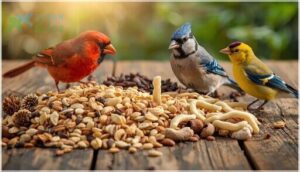
Wild bird nutrition hinges on balanced carbohydrate sources for flight energy, protein intake for feather growth, and vitamin balance for immune defense. You’ll want seed mix quality that delivers amino acid needs through nuts and legumes, plus mineral supplements like calcium for strong eggshells.
Bird health and nutrition depend on these essentials working together—carbs fuel daily activity, while proteins repair tissue and support reproduction in your backyard visitors. Ensuring the quality of seed blends is vital, much like conducting scientific study audits to verify the methodological rigor of research findings.
Ingredient Diversity and Attractiveness
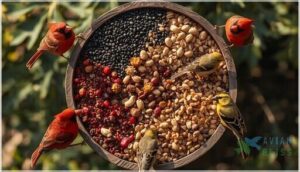
You need a seed blend selection that speaks to multiple bird preferences at once. Diverse wild bird seed blends with varied seed texture pull in more species—think cardinals choosing sunflower while finches pick smaller morsels. Foraging behavior shifts when you offer: Pairing your no-mess mix with fruit and seed options for birds adds extra nutrition that attracts orioles, waxwings, and other fruit-loving visitors.
- High-fat sunflower seeds for insectivores
- Colorful fruit pieces for visual appeal
- Varied sizes reducing selective feeding
- Textured nuts engaging tactile exploration
- Balanced components supporting nutrient balance
This species appeal keeps your feeders bustling year-round.
Filler-Free and No-Waste Options
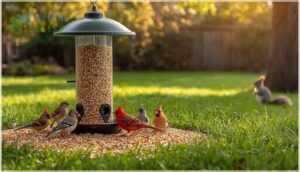
You want filler-free benefits that won’t end up scattered across your lawn. No-waste mix options skip millet and corn—inert fillers birds toss aside—delivering seed quality control through energy-dense sunflower and safflower instead.
Studies confirm waste reduction when you choose bird-friendly seeds over low-grade blends. Hot pepper blends add eco-conscious feeding by deterring squirrels while your target species feast without mess. A quality mix like these bird seeds for attracting songbirds delivers the sunflower-and-peanut combo that keeps waste low and brings more species to your feeder.
Seed Freshness and Quality
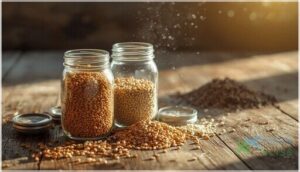
Beyond choosing no-waste options, seed storage and freshness testing protect your bird seed selection. Fresh seed with intact oil quality—identifiable by a clean scent and vibrant color—prevents rancidity.
Keep your seed mix in airtight containers at 50–70°F with moisture control below 10% to maintain seed composition. Check the freshness date and rotate stock regularly for consistent seed quality and rancidity prevention.
Factors to Consider When Choosing Bird Seed
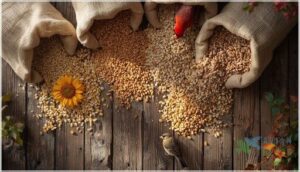
Choosing the right bird seed isn’t just about grabbing the first bag you see on the shelf. Different birds have different needs, and factors like your local climate, feeder setup, and how you store your seed all play a role in keeping your backyard visitors happy and healthy. High-quality seeds like black oil sunflower varieties offer the healthy bird seed options that support strong feathers and overall vitality throughout the year.
Let’s walk through the key considerations that’ll help you make the best choice for your feathered friends.
Bird Species Preferences
Different bird species preferences matter because your backyard visitors won’t all eat the same thing. Cardinals and chickadees go straight for black oil sunflower seed, while goldfinches prefer Nyjer.
If you’re trying to attract diverse regional bird species, your seed selection needs variety—think safflower for doves, peanuts for woodpeckers, and millet for ground-feeders. Matching wild bird seed mixes to local bird diet habits makes all the difference.
Feeding Environment Compatibility
Your feeder design and local climate shape which seed blends actually work. Tube feeders need smaller seeds like Nyjer for finch-friendly access, while platform styles handle mixed kernels better. Choosing seed blends without fillers cuts waste and attracts more desirable species to your feeders.
In humid regions, safflower resists mold more effectively than soft sunflower hearts. Matching seed type variance to your setup—and regional bird species diversity—ensures you’re not just filling feeders, but creating wildlife-friendly feeding strategies that birds actually use.
Seasonal Feeding Needs
Cold weather feeding demands high-fat winter bird care essentials—think black oil sunflower and nyjer—to fuel bird energy needs when temperatures drop.
Seasonal migration patterns shift what you’ll see at your feeder, so climate adaptation matters. Switch your seed blends from protein-rich summer mixes to calorie-dense options that support wild bird nutrition through harsh conditions, ensuring your bird feeding strategies match nature’s calendar.
Packaging and Storage Tips
Proper seed packaging and storage tips protect your bird seed investment from ruin. Moisture control is critical—keep seed quality high by storing bird seed mixes in airtight, moisture-resistant containers in cool spots below 70°F. To extend shelf life and guarantee fresh seed:
- Use sealed, pest-proof bins to enable pest prevention
- Rotate stock with first-in, first-out methods
- Check monthly for spoilage signs in NoWaste blends
Top 9 Complete Bird Seed Blends Reviewed
You’ve done your homework on what makes a quality bird seed blend, so now it’s time to see how the top options stack up.
Each of these nine blends brings something different to the table, whether it’s specialty ingredients, specific nutritional profiles, or targeted appeal to certain bird species.
Here’s what you need to know about the best complete bird seed blends available in 2025.
1. Wild Bird Nut And Fruit Blend
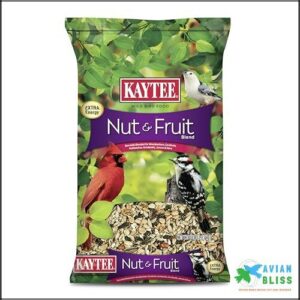
When you’re looking for a wild bird seed mix that goes beyond basic sunflower, the Kaytee Nut and Fruit Blend delivers. This 5-pound mix combines black oil sunflower seeds, peanuts, raisins, and cherries to create an excellent nutrient balance for cardinals, chickadees, and woodpeckers.
The fruit variety adds natural sugars for energy, while the nuts provide essential fats and protein.
The blend’s seed freshness matters here—proper storage in airtight containers keeps oils from going rancid and maintains bird attraction throughout the season.
| Best For | Backyard birders who want to attract a diverse mix of songbirds like cardinals, chickadees, and woodpeckers with a nutrient-rich blend that goes beyond standard seed mixes. |
|---|---|
| Weight | 5 pounds |
| Brand | Kaytee |
| Form | Chunk |
| Age Range | All Life Stages |
| Country | USA |
| Primary Ingredient | Sunflower Seeds |
| Additional Features |
|
- Combines high-energy nuts and fruits with sunflower seeds to provide balanced fats, protein, and natural sugars that keep birds coming back.
- Attracts a wider variety of species than plain seed mixes, especially fruit-loving birds and woodpeckers drawn to the peanuts.
- Backed by Kaytee’s 150 years of experience in formulating bird food that appeals to multiple species year-round.
- Some customers find the price higher than expected, especially given that sunflower seeds make up the bulk of the mix.
- Fruit content can be inconsistent from bag to bag, with some buyers reporting fewer raisins and cherries than anticipated.
- May attract squirrels and other wildlife in addition to birds, requiring vigilant feeder management or squirrel-proof equipment.
2. Songbird Nut And Fruit Blend
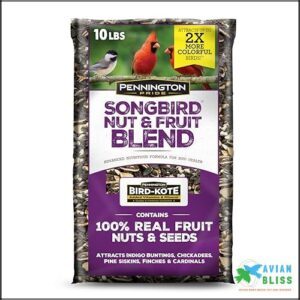
You’ll notice Pennington Pride Songbird Bird Seed stands out with its BIRD-KOTE technology—vitamins A and D-3 are enriched directly onto the seed mix for enhanced nutrient balance. This 10-pound blend combines black oil sunflower, safflower, peanuts, raisins, and dried cherries, creating strong bird attraction across species.
The fruit variety delivers natural sugars while nuts supply concentrated fats, making it effective for both seed mixing versatility and energy-dense feeding strategies.
However, some users report straw debris and lack of resealable packaging, so transfer it to airtight storage immediately.
| Best For | Backyard birders who want a vitamin-enriched, high-energy blend that attracts a wide variety of songbirds year-round, especially during migration and colder months. |
|---|---|
| Weight | 10 pounds |
| Brand | Wagner’s |
| Form | Seed |
| Age Range | All Life Stages |
| Country | USA |
| Primary Ingredient | Black Oil Sunflower |
| Additional Features |
|
- BIRD-KOTE technology adds vitamins A and D-3 directly to seeds for better nutrition than standard mixes
- Combines energy-rich nuts and fruit with sunflower and safflower to pull in diverse species
- Works in multiple feeder types—hopper, gazebo, or tray—so you don’t need specialized equipment
- Bag lacks a resealable closure, so you’ll need to transfer it to an airtight container right away
- Some batches contain straw pieces or debris that require cleaning before use
- Results can vary by region and season, meaning attraction rates aren’t always consistent
3. Wagner’s Wild Bird Food Mix

Wagner’s Wild Bird Food Mix offers a year-round sunflower and nut combination that works well across common backyard feeders. This 5-pound, filler-free blend delivers healthy proteins and fats, supporting high energy needs while minimizing waste on your deck or patio.
You’ll attract cardinals, chickadees, and jays with the sunflower seeds, while fruit content can draw non-seed eaters like bluebirds. Seed freshness matters—store it in airtight containers.
Wildlife management gets trickier since squirrels love nuts too, so consider your feeder compatibility and placement carefully.
| Best For | Backyard birders who want a high-energy, filler-free mix that attracts a wide variety of songbirds year-round with minimal mess. |
|---|---|
| Weight | 5 pounds |
| Brand | Wagner’s |
| Form | Seeds |
| Age Range | All Life Stages |
| Country | USA |
| Primary Ingredient | Sunflower |
| Additional Features |
|
- High-quality sunflower and nut blend provides healthy proteins and fats for sustained bird energy
- Filler-free formula means less waste on decks and patios compared to cheaper mixes
- Attracts diverse species including cardinals, chickadees, jays, and even non-seed eaters with fruit content
- No squirrel deterrent included, so you’ll likely need additional measures to protect feeders
- Limited details on which specific bird species are most attracted to this particular blend
- At 5 pounds, smaller quantity may require frequent restocking for active feeding stations
4. Clean Wild Bird Seed Mix
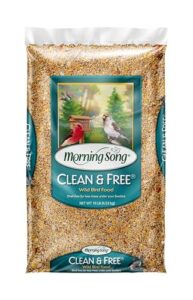
Morning Song’s no-waste blend confronts mess head-on with 100% edible ingredients—sunflower chips, peanuts, and canary seed—so you won’t find hulls littering your patio. This shell-free seed mix offers high-energy nutrition that attracts finches, chickadees, and cardinals to tube, tray, and platform feeders.
Seed quality and mix composition matter for bird attraction, and proper storage methods in airtight containers keep freshness intact. Some buyers note mixed results with seed quality, and the millet content can be higher than expected, but feeder compatibility remains solid across most setups.
| Best For | Backyard birdwatchers who want to eliminate feeder mess and attract a variety of songbirds without dealing with hulls and shells. |
|---|---|
| Weight | 10 pounds |
| Brand | Morning Song |
| Form | Seeds |
| Age Range | All Life Stages |
| Country | USA |
| Primary Ingredient | Sunflower Chips |
| Additional Features |
|
- 100% edible shell-free blend means no waste under feeders and easy cleanup on patios and decks
- High-energy ingredients like sunflower chips and peanuts attract finches, chickadees, cardinals, and nuthatches
- Works with multiple feeder types including tube, tray, hopper, and platform setups
- Mixed customer reviews on actual messiness—some still find it creates debris despite marketing claims
- High millet content may not appeal to all bird species and can lead to selective feeding
- Higher price point at $17.99 for 10 pounds compared to standard birdseed mixes
5. Wild Bird Food Supreme Blend
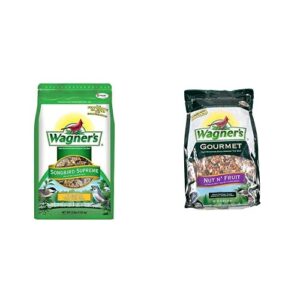
Wagner’s Premium Blend combines 50% black oil sunflower seeds with safflower, millet, and cracked corn in this 13-pound bundle, creating a flexible wild bird food that works across tube, hopper, and platform feeder types.
You’ll attract cardinals, jays, and chickadees with this USA-made bird seed mix while supporting year-round nutrition through diverse blend recipes.
Seed quality stays fresh in airtight containers stored in cool, dry spaces, and the mix’s minimal waste keeps your deck clean.
At $28.96, you’re investing in reliable bird attraction backed by Wagner’s nutritional expertise.
| Best For | Backyard birders who want to attract a wide variety of songbirds year-round without dealing with messy feeders or wasted seed. |
|---|---|
| Weight | 13 pounds |
| Brand | Wagner’s |
| Form | Seeds |
| Age Range | All Life Stages |
| Country | USA |
| Primary Ingredient | Sunflower Blend |
| Additional Features |
|
- High 50% sunflower content brings in popular birds like cardinals, chickadees, and jays consistently
- Works with multiple feeder types (tube, hopper, platform) so you don’t need special equipment
- USA-made with soy-free and wheat-free ingredients, plus the Nut ‘N Fruit blend adds nutritional variety
- 13-pound quantity might be too much if you have a small yard or only feed birds occasionally
- $28.96 price point could add up quickly if you’re feeding multiple stations or large flocks
- You’ll need dry storage space to keep the seeds fresh and prevent spoilage
6. Black Oil Sunflower Bird Seed
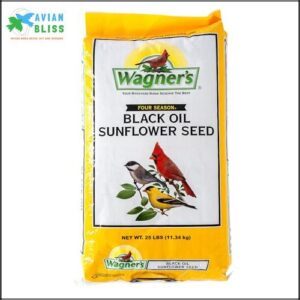
Black oil sunflower seed offers 40-50% oil content and 20-30% protein, delivering fatty acids that support feather health during molt periods.
This 25-pound Wagner’s option attracts cardinals, chickadees, finches, and woodpeckers with its thin shells that small-beaked birds crack easily, reducing husk waste under your feeder.
Store the seed in airtight containers in cool, dry spaces to maintain freshness through seasonal shifts.
At around $30, you’re getting high-energy nutrition that keeps your backyard visitors thriving year-round.
| Best For | Bird enthusiasts who want to attract a wide variety of songbirds with a high-energy, protein-rich seed that’s easy for small-beaked species to crack open. |
|---|---|
| Weight | 25 pounds |
| Brand | Wagner’s |
| Form | Seed |
| Age Range | All Life Stages |
| Country | USA |
| Primary Ingredient | Black Oil Sunflower |
| Additional Features |
|
- Thin shells make it accessible for cardinals, chickadees, finches, and woodpeckers while reducing messy husk waste under feeders.
- High oil content (40-50%) and protein (20-30%) support healthy plumage and energy needs during molt and cold weather.
- A 25-pound bag offers solid value at around $30, keeping feeders stocked longer for year-round backyard visitors.
- Some customers report finding debris like wood chips and twigs mixed in with the seed, indicating inconsistent quality control.
- The large bag lacks a velcro closure, making it prone to spills and harder to store without transferring to airtight containers.
- May attract squirrels and other unwanted wildlife to your feeding area.
7. Wagner’s Striped Sunflower Bird Seed
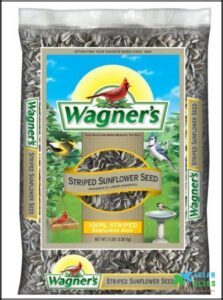
Striped sunflower seed comes with thicker shells than black oil varieties, which means you’ll attract larger songbirds like jays, cardinals, and grosbeaks that have the beak strength to crack them open. The thicker husks also slow down smaller birds and squirrels, helping your seed last longer.
Wagner’s 5-pound bag works well in tray, hopper, or platform feeders, giving you flexibility based on your setup.
Store it in airtight containers to maintain seed quality, and you’ll notice how bird preferences shift toward these heartier kernels during colder months.
| Best For | Backyard birders who want to attract larger songbirds like cardinals, jays, and grosbeaks while naturally deterring smaller birds and squirrels. |
|---|---|
| Weight | 5 pounds |
| Brand | Wagner’s |
| Form | Seed |
| Age Range | All Life Stages |
| Country | USA |
| Primary Ingredient | Striped Sunflower |
| Additional Features |
|
- Thicker shells slow down squirrels and smaller birds, making your seed supply last longer
- Attracts a specific group of larger, colorful songbirds with strong beaks
- Works in multiple feeder types (tray, hopper, or platform) and made in the USA
- Not suitable for smaller songbirds that can’t crack the thick shells
- Some customers report dusty seeds or shells that are too small for larger pet birds like parrots
- May still attract squirrels and other wildlife to your yard despite the harder shells
8. Wild Bird Sunflower Seed Mix
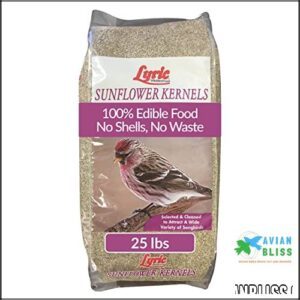
A sunflower seed mix balances black oil sunflower seeds with smaller grains to deliver both fat and protein, attracting cardinals, chickadees, and finches to your yard. The thinner shells on black oil varieties make them easier for songbirds to crack, while the blend’s ingredient diversity keeps different species coming back.
You’ll want to store your wild bird sunflower seed mix in airtight containers away from sunlight—this prevents rancidity and preserves the energy-rich fats birds need during breeding and migration.
| Best For | Backyard birders who want to attract a variety of songbirds while minimizing waste and providing high-energy nutrition year-round. |
|---|---|
| Weight | 25 pounds |
| Brand | Lyric |
| Form | Kernels |
| Age Range | All Life Stages |
| Country | USA |
| Primary Ingredient | Sunflower Kernels |
| Additional Features |
|
- High fat content from black oil sunflower seeds supports birds during cold weather, breeding, and migration periods
- Thin shells make seeds easier for smaller songbirds to crack, increasing feeding efficiency and attracting diverse species like finches, chickadees, and cardinals
- No-waste formula keeps feeding areas cleaner and reduces mess under feeders
- Price can be higher than standard seed mixes and may fluctuate based on crop availability and production shortages
- Packaging may arrive damaged during shipping, potentially affecting seed freshness
- Requires proper airtight storage away from sunlight to prevent the high-fat seeds from becoming rancid
9. Safflower Seed Wild Bird Food
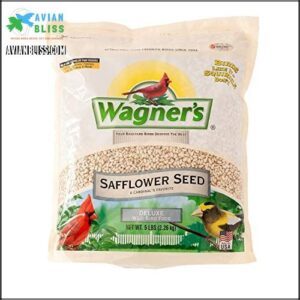
Safflower seeds pack 40–50% crude fat and roughly 30–40% protein, making them a nutrient-dense wild bird food for cardinals, chickadees, and grosbeaks. The hard hull naturally discourages squirrels and house sparrows while attracting songbirds with stronger beaks—a clever feeding behavior advantage.
You’ll notice safflower nutrition meets energy needs during cold snaps, and proper seed storage in airtight containers prevents rancidity and mold.
This wild bird seed blend shifts foraging patterns toward larger species, promoting wild bird health without the mess of traditional sunflower mixes.
| Best For | Backyard birders who want to attract cardinals, chickadees, and grosbeaks while naturally discouraging squirrels and pest birds like grackles and starlings. |
|---|---|
| Weight | 5 pounds |
| Brand | Wagner’s |
| Form | Seed |
| Age Range | All Life Stages |
| Country | USA |
| Primary Ingredient | Safflower Seed |
| Additional Features |
|
- High-energy nutrition with 40–50% fat and 30–40% protein supports songbirds during cold weather
- Hard hull selectively attracts birds with stronger beaks while reducing squirrel raids and unwanted species
- Creates less mess than sunflower seeds and can be used in multiple feeder types with proper storage
- Some bird species may refuse safflower or need weeks to adapt to the unfamiliar seed
- Requires airtight storage in cool, dry conditions to prevent mold and rancidity
- Customers report mixed results depending on local bird populations and occasional packaging damage
Benefits of Using Premium Seed Mixes
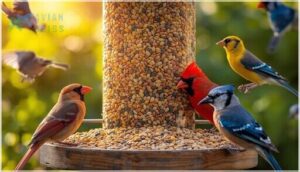
Premium seed mixes do more than just fill your feeders—they transform your backyard into a thriving bird sanctuary. You’ll notice healthier, more colorful visitors while dealing with less waste and fewer unwanted guests at the feeder.
Let’s break down the three main advantages that make quality blends worth the investment.
Attracting Diverse Backyard Birds
You want a backyard that’s buzzing with variety—chickadees, goldfinches, cardinals, and more. Premium Bird Seed blends make it happen. Seed Type Variance and ingredient diversity naturally boost Bird Species Diversity because different Wild Birds prefer different foods.
Combine this with smart Feeder Placement near trees and shrubs, Water Source Proximity for drinking, and Native Habitat Integration with native plants.
This complete approach transforms your yard into a Wild Bird Attraction hotspot that welcomes multiple Backyard Birds year-round.
Supporting Bird Health and Nutrition
Quality Bird Seed Mix delivers more than full feeders—it fuels real Wild Bird Wellness. Protein sources support feather health and muscle development, while calcium-rich ingredients strengthen bones and eggshells during breeding. Fat content provides energy during cold snaps, and antioxidants enhance immune function.
Quality bird seed mixes deliver protein for feather health, calcium for strong bones, fats for energy, and antioxidants that fuel real wild bird wellness year-round
Smart Bird Diet Planning with diverse ingredients aligns Avian Nutrition Science with Nutrition for Birds needs, ensuring your backyard visitors thrive year-round.
Reducing Mess and Squirrel Intrusion
Premium blends with hulled seeds and lower hull-to-meat ratios deliver Mess Reduction you’ll appreciate.
Squirrel Deterrents like safflower seeds paired with SquirrelProof Feeders create an effective Seed Barrier. Smart Feeder Placement—10 feet from trees, 4–5 feet high with baffles—aids Wildlife Management.
No Waste Mix options and consistent Bird Feeder Maintenance guarantee your Waste Free feeding station stays clean while attracting target species.
Tips for Effective Bird Seed Feeding
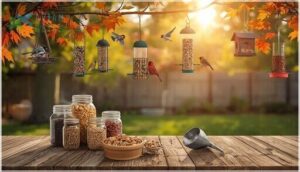
You’ve picked the perfect seed blend, but your success doesn’t stop there. The feeder you choose, how you store your seed, and when you adjust your offerings all play a vital role in keeping birds healthy and your yard buzzing with activity.
Let’s walk through three practical strategies that’ll help you get the most out of your bird feeding setup.
Choosing The Right Feeder
Your bird feeder choice shapes how well your seed blends perform. Shallow tray designs cut spillage by up to 40 percent, while hopper feeders protect seed from moisture and reduce spoilage by 25 percent in wet climates.
Consider these feeder types:
- Tube feeders – Best for small seeds; limit perches to deter larger pests
- Squirrel-proof feeders – Weighted perches block squirrels without stopping songbirds
- Tray feeders with baffles – Reduce predation by 20–50 percent
Maintaining Seed Freshness
Your feeder setup won’t matter if your seed goes rancid. Store bird seed mix in airtight containers between 40 and 60 degrees Fahrenheit to slow lipid breakdown. Keep humidity below 60 percent to block mold growth.
Check your wild bird seed for off-odors or discoloration before refilling feeders—fresh seed blends deliver the bird nutrition your backyard visitors need, while spoiled batches can harm their health.
Adjusting Blends for Seasonal Changes
Birds don’t eat the same mix year-round. In late fall and winter feeding periods, switch to higher-fat blends with sunflower and safflower to fuel bird migration and cold-weather survival.
Come spring, rotate to moisture-tolerant seasonal seed that won’t clump in humidity. Summer calls for simpler wild bird seed selection—fewer oils mean less spoilage in heat.
Climate adaptation matters for proper nutrient balance and regional blends.
Frequently Asked Questions (FAQs)
How often should I clean my bird feeder?
Like a kitchen sponge, your feeder needs regular attention. Clean it every two weeks during peak season, switching to weekly in humid climates.
Proper feeder maintenance prevents mold and promotes bird health through consistent sanitation.
Can moldy bird seed harm visiting birds?
Yes, mold toxins like aflatoxins can seriously threaten avian health by damaging liver function and causing bird respiratory issues. Seed contamination from fungal growth makes wild bird seed dangerous, so you’ll want to discard any questionable batches immediately.
Do different birds prefer specific feeder heights?
You’ll notice ground-foragers like sparrows prefer feeders near soil level, while songbirds such as finches favor mid-height perches around 1-2 meters, and woodpeckers seek elevated platforms matching their natural foraging behaviors.
Should I stop feeding birds during summer months?
You don’t need to hit pause on summer feeding—just keep your bird seed mix fresh and your feeders spotless.
Hot weather demands more feeder maintenance to protect wild bird health and prevent spoilage.
What attracts hummingbirds besides seed blends?
Hummingbirds thrive on nectar sources with 12–25% sugar content, red flowers, shallow baths for hydration, and insect availability for protein.
Bird friendly plants supporting wildlife gardening and nature conservation create ideal habitats for these extraordinary visitors.
Conclusion
The proof is in the pudding—when you stock your feeders with a complete bird seed blend, you’ll notice the difference within days. More species, healthier plumage, less wasted seed scattered across your lawn.
You’ve invested time learning what works, so don’t settle for cheap filler that disappoints both you and your feathered visitors. Choose quality ingredients, match blends to your local birds, and watch your backyard transform into the vibrant sanctuary you’ve been dreaming of.
- https://pmc.ncbi.nlm.nih.gov/articles/instance/9553038/bin/pone.0275964.s005.docx
- https://arxiv.org/html/2507.17948v2
- https://onlinepubs.trb.org/onlinepubs/nchrp/cd-22/manual/v1appendixb.pdf
- https://x.com/godofprompt/status/1990526288063324577
- https://www.linkedin.com/posts/bohdanlukianets_tasks-study-research-activity-7373377539521667072-UTEi