This site is supported by our readers. We may earn a commission, at no cost to you, if you purchase through links.

A parrot that sits hunched on its perch, feathers puffed, ignoring food and interaction, isn’t necessarily sick—it may simply be running on empty. Birds have extraordinarily high metabolic rates, and even subtle nutritional gaps can suppress aerobic metabolism enough to drain the vitality from an otherwise healthy animal.
The difference between a bird that engages, vocalizes, and moves with purpose and one that merely exists often comes down to what’s in the food dish and whether it’s getting absorbed. Knowing how to boost energy levels in pet birds means understanding nutrition at the level of amino acids, coenzymes, and cellular fuel—not just switching seed brands.
Table Of Contents
Key Takeaways
- A bird’s energy levels hinge far more on specific nutrients—amino acids, B vitamins, iron, and healthy fats—than on simply switching to a "better" seed mix.
- Transitioning to high-quality pellets as the dietary foundation (roughly 80% of intake) prevents the selective eating that quietly strips birds of essential micronutrients over time.
- Hydration is a hidden energy lever: subtle signs like dull droppings, sunken eyes, or a tacky mouth often signal fluid deficits long before a bird looks obviously unwell.
- Daily movement, foraging enrichment, and varied perch design aren’t optional extras—they’re metabolic necessities that directly sustain cardiovascular health, muscle strength, and mental sharpness.
Energy-Boosting Bird Diet
What your bird eats directly shapes how much energy it has throughout the day. Getting the balance right isn’t complicated, but it does require knowing which nutrients actually move the needle. Here’s what to focus on.
A solid starting point is understanding which nutrients birds need daily — because the right mix fuels everything from feather quality to mood.
Balanced Pellets and Seeds
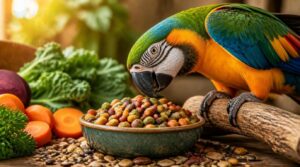
The foundation of avian energy management starts with high-quality commercial pellets, which are formulated to deliver consistent vitamins, minerals, and macronutrients without the selective-eating pitfalls of seed-heavy diets. For large parrots, target 80% pellets, 10–15% vegetables, reserving seeds as a minor supplement.
Shift gradually over 7–10 days, and match pellet size to beak size to guarantee reliable acceptance. This dietary approach helps prevent fatty liver disease.
Protein for Muscle Support
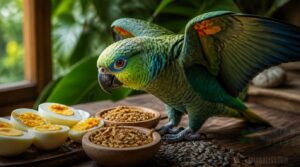
Once pellets are dialed in, protein becomes the next lever to pull. Amino acid profiles determine whether your bird rebuilds muscle after daily activity or slowly loses lean mass.
Prioritize eggs or quality formulated diets where protein quality matters, supplying complete amino acids consistently throughout the day to support tissue repair and prevent protein deficiency from quietly eroding your bird’s strength.
Healthy Fats for Stamina
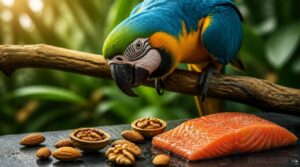
Protein keeps lean mass intact, but fat is what sustains output over time. Dietary fat delivers more than twice the energy per gram compared with carbohydrates, making it one of the most efficient energy-yielding nutrients in your bird’s diet.
Fat outlasts protein as fuel, delivering more than twice the energy per gram of carbohydrates
Small servings of fatty fish, walnuts, or almonds supply essential fatty acids and omega-3s that support cell membrane integrity and cardiovascular function—both foundational to steady, lasting stamina.
B Vitamins and Iron
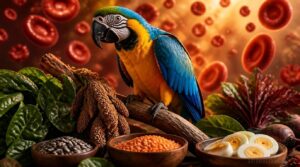
Fat sustains output, but B vitamins and iron are what convert that fuel into usable cellular energy.
Vitamin B12 promotes red blood cell formation through DNA synthesis, while folate works alongside it to maintain steady oxygen delivery. B6 participates in hemoglobin production pathways, and riboflavin drives iron utilization through FAD-dependent enzymes.
Iron deficiency alone can cause measurable fatigue by reducing oxygen transport to tissues.
Safe Fruits and Greens
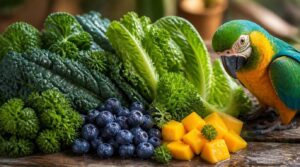
Few dietary additions deliver as much metabolic value as dark leafy greens and carefully portioned fruit. Kale, romaine, and parsley function as leafy powerhouses, supplying antioxidants and micronutrients that support aerobic metabolism without the glycemic burden of seed-heavy diets. Rotate greens every few days rather than defaulting to one type, and always wash produce thoroughly under running water before serving.
| Produce | Benefit | Caution |
|---|---|---|
| Kale | Iron, vitamins A and C | Rotate; don’t overfeed |
| Romaine lettuce | Hydration, fiber | Remove wilted leaves promptly |
| Parsley | Flavor variety, nutrients | Feed in small amounts only |
| Mango | Natural sugars, vitamin A | Limit to small treat portions |
| Blueberries | Antioxidants, low sugar | Remove after 1–2 hours |
Tropical fruits like mango qualify as vitamin-rich foods for birds, but fruit portion size must stay modest — sugar accumulates quickly. Never offer avocado, onion, or apple seeds, as toxic plant avoidance is non-negotiable. Discard any uneaten produce within two hours to prevent bacterial contamination.
If you’re unsure whether your bird is getting enough nutrients despite a varied diet, knowing the signs of malnutrition in birds can help you catch deficiencies before they become serious.
Hydration for Lasting Vitality
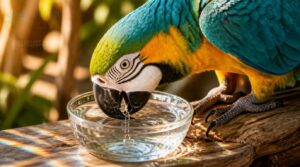
Water does more for your bird than most owners realize — it keeps digestion running, circulation steady, and body temperature in check. When hydration slips, energy drops fast, and the signs aren’t always obvious at first. Here’s what to watch for and how to keep your bird drinking well.
Fresh Water Placement
Where you place your bird’s water container matters more than most owners realize. Position the bowl near the bird’s main perch, set at a comfortable reach height so your bird doesn’t strain its neck to drink.
Choose a heavy, stable bowl that won’t tip during routine movement, and keep it away from perches above to prevent droppings from contaminating the water. Change fresh water daily.
Dehydration Warning Signs
Dehydration doesn’t announce itself loudly — it builds quietly through subtle physical shifts that are easy to miss until the problem becomes serious. Here are five warning signs to watch for:
- Fluffed or hunched posture — a dehydrated bird sits puffed up, lower on the perch, and less responsive than usual
- Sunken eyes and dull skin — facial tissue looks tight, dry, and less vibrant
- Dark droppings and reduced urination — concentrated urates signal dangerously low fluid balance
- Dry, sticky mouth — the oral lining loses its glossy moisture, and the tongue looks tacky
- Rapid heartbeat and labored breathing — elevated heart rate and visible respiratory effort indicate the body is compensating for fluid loss
Catching these dehydration symptoms early gives you a real window to correct water intake before organ function is compromised.
Water-rich Produce Choices
Fresh produce isn’t a luxury addition to your bird’s diet — it’s a meaningful contributor to daily fluid balance. Romaine lettuce, zucchini, and broccoli each carry 94 percent water content, delivering hydration alongside vitamins A, C, and K with every bite. For fruit-based variety, watermelon, strawberries, and cantaloupe offer 90 to 92 percent water, making them effective hydrating treats when portioned appropriately.
Serve produce fresh, chilled, and unseasoned, cut into bite-sized pieces, and remove any uneaten portions promptly to prevent bacterial growth.
Droppings and Hydration Clues
Your bird’s droppings are a surprisingly reliable hydration report. Healthy urates appear creamy and moist — excessively dry or powdery urates signal insufficient water intake. Monitor droppings color changes alongside water consumption frequency:
- Darker, compact droppings suggest dehydration
- A dry cage tray indicates concentrated waste output
- Reduced drinking precedes drier urates within hours
- Consistent abnormalities across multiple days warrant veterinary attention
Top 5 Bird Energy Supplements
Even a well-balanced diet can leave gaps, and that’s where a targeted supplement steps in. The right one promotes energy metabolism at the cellular level, filling in what food alone might miss. Here are five worth knowing about.
1. Vitofarma Multi Vitamin Bird Supplement
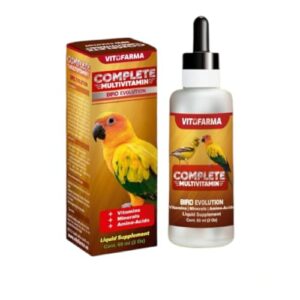
Vitofarma Multi Vitamin Bird Supplement delivers a liquid-format blend of vitamins A, B complex, C, D, and E alongside key minerals including calcium, phosphorus, and magnesium — all formulated to support metabolism, immunity, and feather quality across life stages.
The liquid base makes dosing straightforward: administer directly into the beak or mix it into drinking water. For picky eaters, the water-integration method works reliably. Use it during moulting, illness recovery, or periods of stress, following manufacturer dosage guidelines precisely to avoid nutrient imbalances.
| Best For | Bird owners looking for an easy, all-in-one vitamin boost for their feathered companions — whether they have young chicks still developing or older birds needing extra support. |
|---|---|
| Product Form | Liquid |
| Administration Method | Water or Direct |
| Species Suitability | All Sizes |
| Vitamin Content | Vitamins & Minerals |
| Feather Support | Shiny Plumage |
| Weight | 2.89 oz |
| Additional Features |
|
- Liquid formula makes it simple to administer, either straight to the beak or mixed into drinking water
- Covers all life stages, so you don’t need separate supplements as your bird grows
- Supports immune health, feather quality, and appetite all in one bottle
- Color can vary batch to batch, which might catch you off guard if you’re used to a consistent look
- Results aren’t always obvious right away — it takes time to notice the difference
- Picky birds may resist direct beak dosing, so you’ll need to get creative with the water method
2. Oasis Vita Drops Small Bird Multivitamin
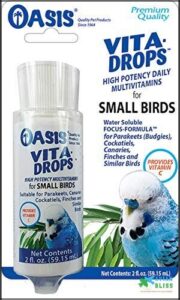
Where Vitofarma uses a broad-spectrum mineral profile, Oasis Vita Drops takes a more targeted approach — a water-soluble multivitamin built specifically for small species like parakeets, budgies, canaries, and other small hookbills. Its formula covers vitamins A, B complex, C, D3, and E, supporting aerobic metabolism, immune function, and feather integrity.
Simply add the drops to drinking water or mist them over fresh produce. Sanitary water bottles are non-negotiable, as debris contamination can compromise both efficacy and safety.
| Best For | Small bird owners — especially those with parakeets, finches, budgies, or cockatiels — who want an easy, no-fuss way to fill nutritional gaps in their bird’s diet. |
|---|---|
| Product Form | Liquid Drops |
| Administration Method | Water or Food |
| Species Suitability | Small Species |
| Vitamin Content | Complete Multivitamin |
| Feather Support | Color & Sheen |
| Weight | 3.47 oz |
| Additional Features |
|
- Covers the key vitamins (A, B complex, C, D3, and E) that small birds need for energy, feather health, and a strong immune system
- Super easy to use — just add to drinking water or drizzle over fresh fruit and veggies
- Great for molting season or anytime your bird needs a little extra nutritional support
- The bottle is small, so if you’ve got several birds, you’ll go through it faster than expected
- Requires a clean, sanitary water bottle — skip that step and you risk contamination
- Works best alongside a solid diet, not as a standalone fix
3. Lafeber Avi Era Powdered Bird Vitamin
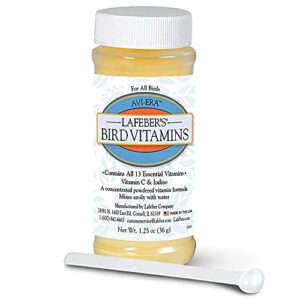
Where Oasis Vita Drops focuses on liquid delivery, Lafeber Avi-Era shifts to a powdered format — one you can mix into drinking water or sprinkle over soft foods.
Its formula covers all 13 essential vitamins, including the full B complex, vitamins A, D3, and E, plus iodine to address common seed-diet deficiencies. Formulated by avian veterinarians, it’s built for daily supplementation, particularly during molting or breeding cycles when metabolic demands peak.
| Best For | Bird owners whose pets are on seed-heavy diets and need reliable daily vitamin support, especially during molting or breeding seasons. |
|---|---|
| Product Form | Powder |
| Administration Method | Water |
| Species Suitability | All Species |
| Vitamin Content | 13 Vitamins |
| Feather Support | Plumage Brightness |
| Weight | 1.28 oz |
| Additional Features |
|
- Covers all 13 essential vitamins, including A, D3, and the full B complex — plus iodine to fill the gaps a seed diet leaves behind
- Formulated by avian vets and nutritionists, so it’s built with real bird health in mind
- Flexible to use — mix it into drinking water or sprinkle it over soft foods
- Some birds are picky and may reject the taste, which can make consistent dosing a challenge
- Results take time — don’t expect overnight changes in feather quality or energy levels
- The powder can be slow to dissolve in water, and the dosing scoop is occasionally missing from the package
4. Nekton-S Multi-Vitamin Supplement for Birds
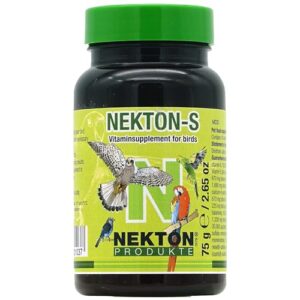
Lafeber Avi-Era takes care of molting and breeding cycles well, but when you need broader metabolic coverage, Nekton-S steps in with a more extensive profile. Manufactured in Germany, it delivers 13 vitamins and 18 L-form amino acids — including L-lysine, L-arginine, and DL-methionine — alongside minerals like zinc, iron, and iodine.
Simply dissolve 1g per 250ml of drinking water daily. During stress periods like transportation or introduction of new birds, you can safely double the dose temporarily.
| Best For | Bird owners and zoo professionals who want comprehensive daily vitamin and amino acid support for all cage bird species, especially during high-stress periods. |
|---|---|
| Product Form | Powder |
| Administration Method | Water or Food |
| Species Suitability | All Cage Birds |
| Vitamin Content | 13 Vitamins + 18 Amino Acids |
| Feather Support | Feather Quality |
| Weight | 2.65 oz |
| Additional Features |
|
- Covers a wide nutritional base with 13 vitamins and 18 amino acids, so you’re not leaving gaps in your bird’s diet
- Super easy to administer — just mix into drinking water or soft food once a day
- Flexible dosing lets you safely bump it up during stressful events like travel or flock introductions
- Strict storage requirements (no fridge, no sunlight, specific temperature range) mean you need to be a bit thoughtful about where you keep it
- Can’t exceed 5% of the daily ration, so dosing discipline matters
- At 75g, it’s a relatively small quantity — frequent reordering if you’re managing a large flock
5. Hagen Prime Parrot Vitamin Mineral Supplement
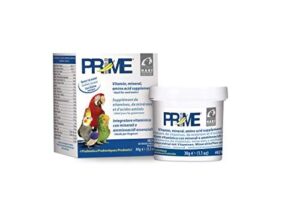
Where Nekton-S relies on amino acid density, Hagen Prime takes a broader preventive approach — 14 vitamins, 9 minerals, plus micro-encapsulated probiotics and digestive enzymes that actively improve nutrient absorption rather than simply delivering nutrients. Lysine and methionine address the protein gaps common in seed-heavy diets, while acidifiers maintain stomach pH for steadier metabolic efficiency.
Sprinkle the ultra-fine powder over fruit or soft foods daily. Your bird won’t notice it’s there — but its energy levels will.
| Best For | Bird owners who feed seed-heavy diets and want a simple, all-in-one supplement that covers vitamins, minerals, and gut health in one daily sprinkle. |
|---|---|
| Product Form | Loose Powder |
| Administration Method | Water or Food |
| Species Suitability | Companion Birds |
| Vitamin Content | 14 Vitamins + 9 Minerals |
| Feather Support | Color & Length |
| Weight | 1.1 oz |
| Additional Features |
|
- Covers a huge nutritional base — 14 vitamins and 9 minerals plus probiotics and digestive enzymes in a single product
- The micro-encapsulated probiotics and acidifiers actually help your bird absorb nutrients, not just consume them
- Ultra-fine powder blends easily into soft foods or fruit without birds noticing it
- The container is pretty small, so you’ll be reordering more often than you’d like
- The scent can be strong — some birds (and owners) aren’t fans
- You have to mix it in consistently every day, which adds a small but real step to your routine
Daily Activity and Species Needs
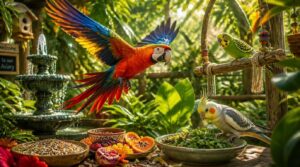
What your bird eats matters, but how it moves and lives matters just as much. Different species have wildly different energy demands, and meeting those needs starts with the right daily habits and environment. Here’s what you should focus on to keep your bird active, sharp, and thriving.
Cage-free Exercise Time
Think of cage-free time as controlled aerobic exercise that directly enhances bird metabolism and cardiovascular conditioning. Supervised exercise sessions should follow a predictable schedule, ideally at consistent times to reinforce circadian rhythms.
Keep the space free of ceiling fans and dangling cords, and provide stable perches at varied heights so safe landing practice becomes part of every session.
Foraging for Mental Energy
Foraging isn’t just feeding — it’s cognitive work that directly burns mental energy and reduces stress-related hormones.
Rotate puzzle types weekly to prevent habituation, and vary textures like crunchy seeds, soft fruits, and leafy greens to sustain searching behavior. Scent cue enhancement, such as slightly warming foods, increases discovery effort and keeps your bird engaged far longer than a single static food source.
Perches for Climbing Strength
Perch design directly influences climbing strength and avian skeletal health in ways most owners underestimate.
Dowel diameter variation forces different toe-spacing patterns across grips, engaging the flexor tendons repeatedly throughout the day. Pair these with rope climbing surfaces that shift under body weight, demanding constant neuromuscular adjustment.
Flat landing perches offer necessary rest intervals, while natural wood texture and secure mounting stability guarantee safe, effective muscle-building sessions.
Macaw and Eclectus Diets
Macaws and Eclectus parrots sit at opposite ends of the dietary spectrum:
- Macaws need higher-fat seed and nut mixes alongside fortified pellets
- Eclectus thrive on high-fiber, low-fat produce and legumes
- Both benefit from portion-controlled seeds to prevent obesity
- Pellets support consistent micronutrient delivery for both species
Matching diet to species isn’t optional — it’s foundational to metabolic health.
Lories, Toucans, Hummingbirds
Three species — lories, toucans, and hummingbirds — push avian metabolism to its physiological limits.
Lories use their brush-like tongue papillae to sweep nectar and pollen, supplemented by small insects for protein. Toucans draw energy from fruit sugars while their chambered bill doubles as a thermoregulatory surface. Hummingbirds must access nectar almost continuously, making interrupted feeding immediately costly.
Frequently Asked Questions (FAQs)
Can stress lower my birds energy levels?
Yes — chronic stress directly drains your bird’s energy through glucocorticoid-driven catabolism, appetite suppression, and disrupted sleep, creating a measurable energy deficit that reduces stamina, metabolic efficiency, and day-to-day behavioral vitality.
How does molting affect a birds energy?
Molting triggers a 32% surge in daily energy expenditure, with nighttime metabolic demands rising up to 60%. Your bird’s body redirects calories toward feather synthesis, breaking down protein reserves while naturally reducing activity to compensate.
Do seasonal changes impact bird activity levels?
Seasonal rhythms act like an internal thermostat for birds — daylength hormonal effects trigger shifts in metabolic rate, energy levels, and behavior across every season, from spring migration patterns to winter activity decline.
Can illness cause sudden drops in bird energy?
Illness can cause sudden energy drops in pet birds—often overnight. The body diverts fuel toward fighting infection, leaving little for normal activity, while anorexia and lethargy compound the decline rapidly.
How does sleep quality affect bird energy?
Sleep quality governs energy recovery more directly than most keepers realize. Fragmented sleep disrupts circadian rhythm alignment, impairing metabolic regulation and leaving birds visibly sluggish, with diminished foraging drive and compromised avian health throughout the day.
Conclusion
Like a finely tuned engine that stalls without quality fuel, your bird’s energy depends entirely on what you place in that food dish each morning. Knowing how to boost energy levels in pet birds means deliberately layering the right nutrients, clean water, targeted supplements, and purposeful movement into a consistent daily routine.
When those elements align correctly, you won’t just see a bird that merely survives—you’ll share your space with one that unmistakably thrives.
- https://www.merckvetmanual.com/exotic-and-laboratory-animals/pet-birds/management-of-pet-birds
- https://lafeber.com/pet-birds/inside-pepperbergs-lab-getting-parrots-exercise
- https://ask.ifas.ufl.edu/publication/VM067
- https://squawkboxes.com/blogs/news/best-foods-to-feed-your-pet-bird-a-comprehensive-guide-for-healthy-eating
- https://spcatampabay.org/feed-your-pet-bird