This site is supported by our readers. We may earn a commission, at no cost to you, if you purchase through links.
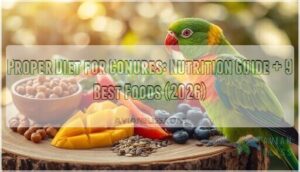
Most conure owners don’t realize they’re slowly starving their birds—not from lack of food, but from nutritional imbalance. I’ve examined countless conures suffering from obesity, vitamin deficiencies, and metabolic disorders, all traced back to well-intentioned but misguided feeding practices.
A seed-only diet might seem natural, but it’s roughly equivalent to you eating nothing but French fries for every meal. Your conure needs a carefully balanced combination of pellets, fresh produce, and controlled treats to thrive—hitting specific macronutrient targets that mirror what they’d forage in their native South American habitats.
The good news? Once you understand the proper diet for conures, you’ll notice dramatic improvements in feather quality, energy levels, and lifespan within just a few weeks.
Table Of Contents
- Key Takeaways
- Essential Nutritional Needs for Conures
- Building a Balanced Daily Conure Diet
- Safe and Healthy Treats for Conures
- Foods and Ingredients to Avoid
- Top 9 Foods and Products for Conures
- 1. ZuPreem FruitBlend Bird Pellets Food
- 2. Kaytee Conure Food Blend
- 3. Lafeber Classic Nutri Berries Bird Food
- 4. RoudyBush Daily Bird Food
- 5. ZuPreem Pure Fun Bird Food Blend
- 6. Lafeber Avi Cakes Bird Food
- 7. LaFeber’s Avi Cakes Bird Food
- 8. Kaytee Bird Greens Chia Sweet Potato
- 9. Kaytee Conure And Lovebird Food
- Adapting Diets for Life Stages and Health
- Frequently Asked Questions (FAQs)
- What is the best diet for a conure?
- What vegetables can conures not eat?
- What is toxic to conures?
- How often should I rotate fresh food varieties?
- Can conures eat eggs or other animal proteins?
- What portion sizes prevent obesity in conures?
- Do conures need grit for proper digestion?
- How long can prepared fresh food stay uneaten?
- Conclusion
Key Takeaways
- A seed-only diet causes severe nutritional imbalances in conures—the proper foundation is 60-70% high-quality pellets, 20-40% fresh vegetables, and only 10% fruit to mirror their natural South American foraging patterns and prevent obesity, vitamin deficiencies, and metabolic disorders.
- Essential nutrients include 12-16% protein from pellets and legumes, 5-15% healthy fats (keeping seeds as treats only), plus critical vitamins like Vitamin A for respiratory health and calcium paired with Vitamin D3 or UVB lighting to prevent egg-binding in hens.
- Toxic foods that can kill your conure include avocado (persin damages heart and lungs), fruit pits containing cyanide, onions that destroy red blood cells, chocolate causing seizures, and moldy foods with liver-damaging aflatoxins—even tiny amounts prove fatal.
- Transitioning from seeds to pellets requires a gradual 4-week plan with daily weight monitoring (never allow more than 5% loss), separate bowls to prevent selective eating, and professional avian vet checkups annually to catch deficiencies before they escalate into serious health problems.
Essential Nutritional Needs for Conures
Your conure’s body is a finely tuned machine that needs the right fuel to thrive. Just like you wouldn’t run a car on orange juice, your feathered friend can’t stay healthy without specific nutrients in the right amounts.
If you notice unusual breathing patterns like heavy panting, it’s often a sign that diet adjustments are needed—proper nutrition for cockatiels with breathing issues can make a significant difference in recovery.
Your conure’s body is a finely tuned machine that needs the right fuel to thrive
Let’s break down exactly what your conure needs to stay vibrant, active, and healthy for years to come.
A balanced diet of pellets, fresh vegetables, and occasional fruits—paired with proper environmental enrichment—forms the foundation of excellent conure care.
Protein, Fat, and Carbohydrate Requirements
Your conure’s macronutrient balance shapes their entire health journey. Aim for 60–70% complex carbohydrates from grains and veggies, 12–16% protein from quality pellets and legumes, and 5–15% fat—keeping seeds as treats, not staples.
While conures and peafowl differ significantly in size and natural diet, understanding how peafowl balance their wild foraging habits can offer surprising insights into the role of protein-rich insects and seeds in avian nutrition.
This balanced diet for conures mirrors avian nutrition principles used in parrot diets worldwide, fueling energy needs without tipping into obesity or deficiency. To learn more about the essentials of a balanced avian nutrition plan, review expert recommendations for a safe and healthy diet.
Key Vitamins and Minerals for Conure Health
Vitamin A Benefits your conure’s respiratory lining and immune defense—you’ll see it in bright eyes and glossy feathers!
If your parrot isn’t eating well and seems lethargic, a vitamin A deficiency could be the culprit—check out signs your bird may need dietary changes to catch problems early.
Calcium Supplements like cuttlebone paired with Vitamin D3 Sources (full-spectrum UVB lighting or enriched pellets) keep bones strong and prevent egg-binding in hens. Trace minerals support Electrolyte Management and enzyme function.
Quality parrot nutrition pellets deliver this balanced nutrition automatically, making avian nutrition straightforward for your flock! To further guarantee your bird receives optimum care, learn about essential vitamins and minerals every pet bird needs for ideal health.
Importance of Fresh Water Daily
Fresh Water isn’t just another item on the care list—it’s the foundation of bird nutrition and parrot health! Your conure needs clean drinking water changed at least once daily to prevent bacterial growth and Dehydration Risks.
Hydration Tips for ideal avian nutrition:
- Check Water Quality (avoid distilled; use filtered or bottled)
- Monitor Daily Intake (conures drink after eating pellets)
- Replace immediately if contaminated with food or droppings
Building a Balanced Daily Conure Diet
Now that you understand what your conure needs nutritionally, it’s time to put that knowledge into action. Building a balanced diet isn’t complicated once you know the right proportions and feeding rhythms.
Let’s break down the pellet-to-fresh food ratio, show you how to incorporate fruits and veggies effectively, and give you a practical feeding schedule you can start using today.
Ideal Pellet-to-seed Ratio
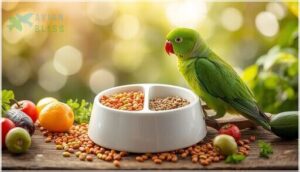
Your conure’s health hinges on getting the pellet-to-seed ratio right! Most avian vets recommend a mix of 60–75% pellets and the rest from seeds and other bird food.
Beyond pellets and seeds, make sure you’re avoiding foods that can harm conures, since some common snacks are surprisingly dangerous.
Many keepers settle on 70% pellets and 30% seeds, adjusting for each bird’s weight. Pellet introduction with gradual seed reduction ensures nutrient balance—measure portions daily and monitor your conure’s body condition closely!
Incorporating Fresh Fruits and Vegetables
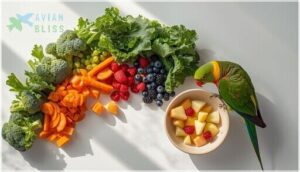
Veggies should make up 20–40% of your conure’s daily intake, while fruits stay around 10% to avoid excess sugar.
Offer colorful options like broccoli, carrots, kale, and bell peppers for nutrient balance, plus safe fruits like apples (no seeds!), berries, and melon.
Wash thoroughly, chop into pea-sized pieces, and serve fresh food prep once or twice daily—meal planning strategies help track portions!
Sample Daily Feeding Schedule
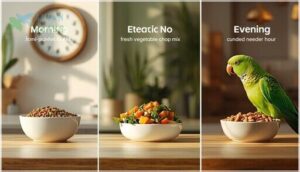
Most conure owners feed three times daily: a morning pellet meal (7–10 AM), a midday veggie chop, and an evening variety dish (4–7 PM).
Portion control matters—start with 1/8 cup pellets plus 15–30 grams total food, adjusting by body weight.
Food rotation keeps nutrient balance strong while proper meal timing prevents screaming. Remove moist foods after 1–2 hours for safety!
Safe and Healthy Treats for Conures
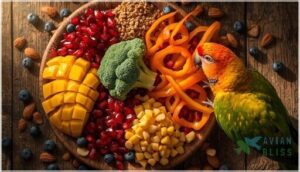
Treats aren’t just a fun bonus for your conure—they’re essential for mental stimulation and nutritional variety. When you offer the right treats, you’re encouraging natural foraging behaviors and keeping your feathered friend engaged and happy.
Let’s explore the safest, most nutritious treats that’ll make your conure’s day while supporting their health.
Nutritious Fruits and Vegetables to Offer
Your conure’s menu gets a serious upgrade when you add colorful produce! Dark leafy greens like kale deliver vitamin A for sharp vision, while orange veggies—sweet potato, carrot, bell peppers—boost immunity with beta carotene.
For healthy treats, offer berries, apple slices (seeds removed!), and mango in moderation. This vegetable variety and fruit nutrition creates the nutrient balance your feathered friend needs for ideal conure diet and nutrition!
Sprouts, Beans, and Whole Grains
Power-packed sprouts and whole grains transform your conure’s bowl into a nutrient goldmine! These plant-based extras deliver digestible protein, enzymes, and complex carbs that support feather growth and steady energy throughout the day.
Here’s how to safely boost bird nutrition with legume safety in mind:
- Sprout mung beans, lentils, and chickpeas until tails reach 0.5–1 cm for maximum sprout nutrition and bean benefits
- Cook kidney beans thoroughly to eliminate harmful lectins before serving
- Offer quinoa, brown rice, and oats as whole grain bases in your morning chop mix
- Rinse sprouting seeds twice daily during grain preparation to prevent mold and keep healthy treats for birds fresh
Serve 1 teaspoon to 1 tablespoon of these parrot nutrition boosters once or twice daily alongside pellets, and remove uneaten portions after two hours to maintain ideal conure care!
Foraging Treats and Mental Stimulation
Turning mealtime into a treasure hunt keeps your conure sharp and engaged! Foraging toys—from DIY paper parcels to commercial treat dispensers—transform snack time into interactive feeding that mimics wild behavior.
| Toy Type | Difficulty | Best For |
|---|---|---|
| Paper parcels | Beginner | First-time foraging |
| Puzzle feeders | Intermediate | Daily mental stimulation |
| Acrylic boxes | Expert | Extended bird puzzles |
Rotate foraging setups weekly to maintain parrot nutrition interest and support healthy treats for birds alongside complete conure bird care!
Foods and Ingredients to Avoid
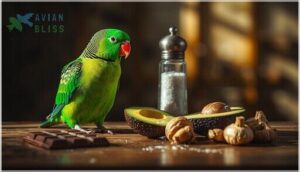
You love your conure and want to keep them safe, but certain foods can be seriously harmful—or even deadly.
Some ingredients that seem harmless to us are actually toxic to birds, while others cause long-term health problems you won’t notice right away.
Let’s walk through the foods you need to avoid and what warning signs to watch for.
Toxic Foods for Conures (avocado, Apple Seeds, Etc.)
Avocado toxicity is a real killer—persin damages your conure’s heart and lungs within hours.
Fruit pit risks from apple seeds, cherries, and peaches release cyanide if chewed. Onion poisoning destroys red blood cells, while chocolate dangers trigger seizures.
Moldy foods carry liver-damaging aflatoxins. These threats demand your attention because even tiny amounts can turn fatal fast for your bird.
Harmful Human Foods and Additives
Salty Foods like chips and pretzels disrupt your conure’s electrolyte balance in just a few bites, straining kidneys and heart. Sugary Treats—cookies, soda, candy—trigger obesity and fatty liver disease fast.
Artificial Sweeteners, especially xylitol in sugar-free gum, cause deadly hypoglycemia within minutes! Caffeine Risks from coffee or energy drinks spark seizures, while Toxic Additives in processed snacks add zero nutrition. Skip the table scraps—your bird’s health depends on it.
Signs of Food-related Health Issues
Even with the best intentions, something can go wrong. Watch for these red flags that signal your conure’s diet needs immediate attention:
- Digestive Issues – Watery or unformed droppings, undigested seeds in feces, or drastically fewer droppings than usual (normally one every 20–30 minutes).
- Vomiting Signs – Head shaking that sprays food, matted face feathers, or lethargy after new treats.
- Weight Changes – Losing more than 10% body weight quickly or developing fat pads around the chest.
- Feather Problems – Dull, ragged plumage or abnormal color fading from vitamin deficiencies.
- Behavioral Alerts – Sudden quietness, fluffed posture, loss of appetite, or drinking much more water than normal.
Catch these early and you’ll protect your bird’s long-term health and wellness!
Top 9 Foods and Products for Conures
Now that you know what to avoid, let’s talk about what your conure SHOULD be eating! I’ve put together a list of nine trusted foods and products that’ll keep your feathered friend healthy and happy.
These options cover everything from daily pellets to tasty treats that’ll make mealtime exciting.
1. ZuPreem FruitBlend Bird Pellets Food
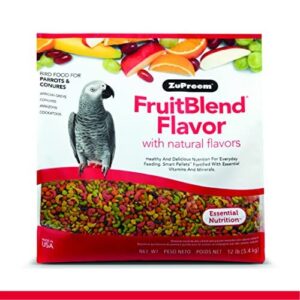
ZuPreem FruitBlend stands out as a complete daily pellet option designed specifically for medium parrots like your conure. This bird food delivers 14% protein, essential amino acids, and fortified vitamins A, D3, and E—everything your feathered friend needs to thrive.
The medium-sized pellets come in fun fruit shapes with natural flavors from oranges, apples, grapes, and bananas that encourage even picky eaters to dig in. Feed your conure about ¼ to ½ cup daily as the foundation of their balanced diet.
| Best For | Medium to large parrots like conures, caiques, African Greys, and small cockatoos who need a complete daily nutrition base with added vitamins and appealing fruit flavors. |
|---|---|
| Brand | ZuPreem |
| Age Range | All Life Stages |
| Form | Dry Pellets |
| Weight | 12 lb |
| Omega Support | Yes |
| Primary Ingredients | Fortified pellets with fruit |
| Additional Features |
|
- Fortified with essential vitamins (A, D3, E), minerals, and amino acids to support immune health, strong bones, and vibrant feathers
- Bright colors and natural fruit flavors (orange, apple, grape, banana) help convert picky eaters from seed-only diets
- Made in the USA with a balanced 14% protein formula that reduces reliance on high-fat seed mixes
- Some birds may be selective and refuse certain colors or flavors, leading to waste
- Can be pricey, especially for owners whose birds toss pellets out of the cage
- Storage and freshness issues reported by some users who received stale or near-expired products
2. Kaytee Conure Food Blend
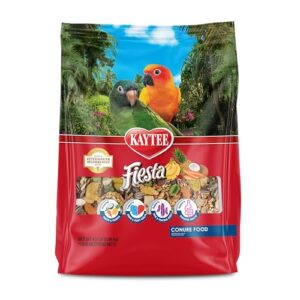
Kaytee Fiesta Conure Food offers your bird a fun, colorful mix of seeds, grains, and real fruit pieces like pineapple, carrot, and coconut that tap into natural foraging instincts. With 14% protein and 10% fat, this complete diet promotes your conure’s muscle health and energy levels while providing omega-3s for vibrant feathers.
The blend includes probiotics at 90,000 CFU/gram to promote digestive wellness. Feed about ⅛ cup daily and adjust based on your bird’s body condition—those visible chunks keep mealtime interesting!
| Best For | Conure owners who want a complete daily diet that combines nutrition with enrichment through varied textures and natural foraging opportunities. |
|---|---|
| Brand | Kaytee |
| Age Range | Adult |
| Form | Chunk |
| Weight | 4.5 lb |
| Omega Support | Omega-3s |
| Primary Ingredients | Seeds, grains, fruits, vegetables |
| Additional Features |
|
- Includes probiotics and omega-3s to support digestive health, feather quality, and overall vitality
- Real fruit and vegetable pieces like pineapple and coconut add variety and keep birds engaged at mealtime
- Complete nutritional formula with 14% protein means you don’t need to supplement with additional staple foods
- Contains artificial colors and preservatives that some bird owners prefer to avoid
- Some customers have reported receiving bags with torn or damaged packaging
- Higher price point compared to basic seed mixes, though it’s designed as a complete diet rather than a supplement
3. Lafeber Classic Nutri Berries Bird Food
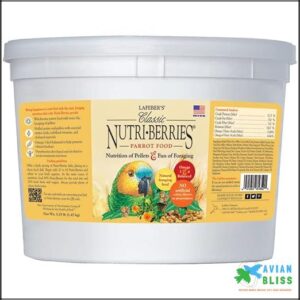
Lafeber Classic Nutri-Berries give your conure a complete daily diet wrapped into round, grippable clusters that turn every meal into a foraging adventure. With 12.5% protein and 8% fat plus balanced omega 3 & 6 fatty acids, these non-GMO berries support vibrant feathers and healthy skin.
Start with about ten berries per feeding and watch your conure hold, twist, and nibble each piece—natural beak exercise that fights boredom and feather picking!
| Best For | Conure owners who want a nutritionally complete food that keeps their birds busy foraging and reduces boredom-related behaviors like feather picking. |
|---|---|
| Brand | LAFEBER’S |
| Age Range | All Life Stages |
| Form | Nutri-Berries |
| Weight | 3.25 lb |
| Omega Support | Omega 3&6 |
| Primary Ingredients | Seeds, grains, pellets |
| Additional Features |
|
- Each berry delivers balanced nutrition (12.5% protein, 8% fat, omega fatty acids) so your conure gets everything they need in every bite
- Designed to be held and pulled apart, giving your bird natural beak exercise and roughly twice the foraging time compared to standard pellets
- Made in the USA with non-GMO, human-grade ingredients and no synthetic preservatives like BHA or BHT
- Berries sometimes arrive crumbled from shipping instead of staying in solid clusters
- Price point runs higher than basic seed or pellet options, though many owners feel the enrichment value justifies the cost
- Conures can be messy eaters and may waste pieces while pulling the berries apart
4. RoudyBush Daily Bird Food
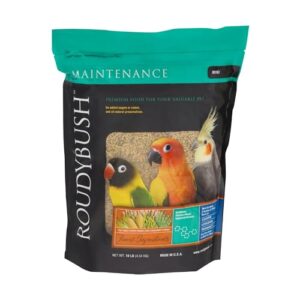
RoudyBush Daily Maintenance brings clean-label pellet nutrition to your conure’s bowl with absolutely no artificial colors, added sugars, or synthetic preservatives. The mini pellets deliver 11% protein and 6% fat from ground corn, soybean meal, and wheat—perfect for small species like conures.
Start with about 1/8 cup daily and adjust based on your bird’s droppings and body weight. You’ll love the 100% edible formula (no hulls or waste!) and the simple conversion plan for seed-eating birds!
| Best For | Bird owners who want a clean-label, all-natural daily diet for small parrots like conures, cockatiels, and lovebirds without artificial additives or fillers. |
|---|---|
| Brand | RoudyBush |
| Age Range | All Life Stages |
| Form | Dry Pellets |
| Weight | 10 lb |
| Omega Support | Omega 3&6 |
| Primary Ingredients | All-natural mini pellets |
| Additional Features |
|
- 100% edible mini pellets with no hulls or waste, making it easy to track how much your bird actually eats each day
- Clean formula with no artificial colors, added sugars, or synthetic preservatives—just plant-based ingredients and natural preservation
- Great value in the 10-pound bag with clear transition instructions for switching seed-eating birds to pellets gradually
- The 11% protein level may be too low for breeding birds, chronic egg-layers, or conures with higher energy needs
- Picky eaters may resist the transition from seeds, requiring careful weight monitoring during the switch-over period
- Mini pellet size works well for small conures but larger species might need the Small or Medium pellet options instead
5. ZuPreem Pure Fun Bird Food Blend
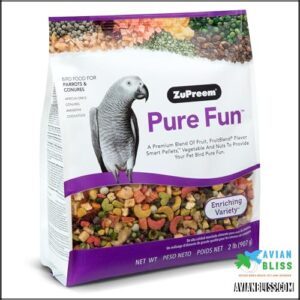
Variety keeps your conure excited at mealtime! Pure Fun blends FruitBlend pellets with dried pineapple, apples, carrots, peas, nuts, and seed mixtures—all fortified with vitamins A, D3, E, and B-complex for parrot health and wellness. This enrichment activity delivers 10–12% protein and smart fun feeding in every scoop!
Remember: Pure Fun should make up no more than 30% of your bird’s weekly intake. Pair it with a core pellet variety for complete avian nutrition advice and ideal bird nutrition!
| Best For | Parrot and conure owners who want to add enriching variety and foraging fun to their bird’s diet while still providing fortified nutrition through a pellet-seed-fruit blend. |
|---|---|
| Brand | ZuPreem |
| Age Range | All Life Stages |
| Form | Pellet Blend |
| Weight | 2 lb |
| Omega Support | Not specified |
| Primary Ingredients | Seeds and pellets |
| Additional Features |
|
- Combines FruitBlend pellets with dried fruits, veggies, nuts, and seeds to keep birds mentally engaged and reduce boredom at mealtime.
- Fortified with essential vitamins (A, D3, E, B-complex) and minerals that plain seed mixes often lack, supporting immune function, feather quality, and overall health.
- Right-sized pieces designed for medium bird beaks make it easy for conures and parrots to grasp and enjoy without excessive waste.
- Should not exceed 30% of weekly food intake, so it requires pairing with a complete pelleted diet rather than serving as a standalone meal.
- Contains added artificial colors (Yellow 5, Red 40, Yellow 6, Blue 1) which some bird owners may prefer to avoid.
- Lower protein content (10-12%) compared to some specialty diets, meaning it’s best used as a supplement rather than a primary nutrition source.
6. Lafeber Avi Cakes Bird Food
![Lafebercares Avi Cakes [Set of 2] B00M49R51W](https://avianbliss.com/wp-content/uploads/2026/01/lafebercares-avi-cakes-set-of-2-b00m49r51w-191x300.jpg)
Looking for a complete meal that doubles as a brain teaser? Lafeber Avi Cakes Bird Food blends 50% premium seeds with 50% fortified pellets—creating that ideal pellet seed ratio for balanced avian nutrition advice! Each chewy square delivers 12.5% protein, omega 3 & 6 fatty acids, and essential vitamins for parrot health and wellness.
Your conure will LOVE pulling apart the molasses-bound texture, turning every bite into an enriching foraging adventure. Perfect for bird food variety and smart conure feeding tips, Avi Cake Nutrition enhances avian diet planning that keeps feathers glossy and minds sharp!
| Best For | Conure owners who want to transition their birds from seeds to pellets or add enrichment to mealtime with a nutritionally complete food that encourages natural foraging behavior. |
|---|---|
| Brand | LAFEBER’S |
| Age Range | All Life Stages |
| Form | Seeds |
| Weight | 0.5 lb |
| Omega Support | Omega 3&6 |
| Primary Ingredients | Seeds and molasses |
| Additional Features |
|
- Combines 50% premium seeds with 50% fortified pellets in one chewy square, delivering complete nutrition with protein, omega fatty acids, and essential vitamins without needing separate supplements.
- Turns feeding time into mental stimulation since conures have to pull, chew, and work apart the molasses-bound texture rather than just picking through loose seeds.
- Works as a bridge food for picky eaters or sick birds who won’t touch plain pellets, making diet transitions smoother while still providing balanced nutrition.
- Dries out and hardens quickly once exposed to air, so you’ll need to store it carefully or your bird may lose interest in the stale texture.
- Price point runs higher than basic seed mixes, which can add up if you’re feeding multiple birds or using it as a primary food source.
- Some birds may still pick around certain bits despite the bound format, and the half-seed formula might not satisfy breeders who prefer 100% pellet-based diets.
7. LaFeber’s Avi Cakes Bird Food
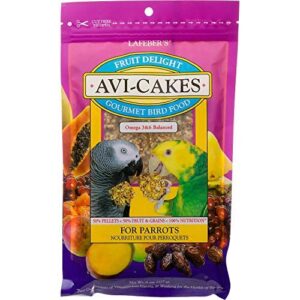
Want the exact same trusted Avi Cake Nutrition your conure already craves? LaFeber’s Avi Cakes Bird Food delivers that perfect Pellet Seed Ratio—50/50 blend—packed with 12.5% protein, omega fatty acids, and zero artificial junk.
This powerhouse of Bird Food Quality turns Avian Diet Management into pure joy, combining premium Nutrition with mental enrichment your Conure deserves. Smart Bird Food Options like Lafeber’s squares transform ordinary meals into exciting Parrot Food and Treats sessions.
Follow these Conure Feeding Tips: offer 2-3 cakes daily alongside veggies for ideal health!
| Best For | Conure owners who want a nutritionally complete food that doubles as mental enrichment, combining quality pellets and seeds in one convenient square. |
|---|---|
| Brand | LAFEBER’S |
| Age Range | All Life Stages |
| Form | Avi-Cakes |
| Weight | 8 oz |
| Omega Support | Omega 3&6 |
| Primary Ingredients | Seeds, grains, fruits |
| Additional Features |
|
- 50/50 pellet-seed blend delivers balanced nutrition (12.5% protein, omega fatty acids) while encouraging natural foraging behavior that prevents boredom
- Made with non-GMO, human-grade ingredients and naturally preserved without artificial colors, flavors, or synthetic preservatives like BHA or BHT
- Hand-inspected, lab-tested batches ensure consistent quality, and the chewy square shape promotes beak exercise while slowing eating for healthier digestion
- Some customers report receiving broken or crumbled squares instead of intact cakes, which reduces the foraging value
- Not suitable for all bird species (budgies may struggle with the size), so you’ll need to verify it matches your specific parrot type
- Subscription orders have reliability issues, with some users receiving only seeds instead of complete cakes, and no return policy exists for defective products
8. Kaytee Bird Greens Chia Sweet Potato
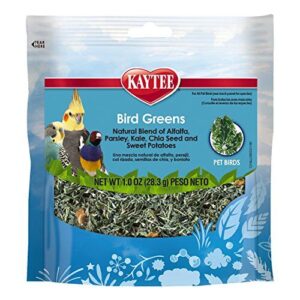
Think beyond standard Bird Food Options—your Conure Nutrition toolkit needs leafy variety, and that’s exactly what Kaytee Bird Greens Chia Sweet Potato brings! This finely chopped blend packs 21% protein from alfalfa, kale, parsley, chia seeds, and Sweet Potato into every 1-ounce bag.
Unlike Complete Diets, it’s designed as a foraging supplement—sprinkle 1 tablespoon daily over pellets or tuck it into Foraging Toys for mental stimulation. The Chia Benefits? Omega-3s, calcium, and digestive fiber that round out your bird’s Nutrition perfectly!
| Best For | Conure owners who want to add natural greens and variety to their bird’s diet while encouraging healthy foraging behavior. |
|---|---|
| Brand | Kaytee |
| Age Range | All Life Stages |
| Form | Bag |
| Weight | 4 oz |
| Omega Support | Not specified |
| Primary Ingredients | Alfalfa, kale, sweet potato |
| Additional Features |
|
- High protein content at 21% from nutrient-dense greens like alfalfa, kale, and parsley that support overall health
- Chia seeds provide omega-3 fatty acids, calcium, and minerals that promote immune function and strong bones
- Finely chopped texture works great in foraging toys or sprinkled over pellets to keep birds mentally stimulated
- Packaging isn’t resealable, so you need to refrigerate after opening and use within 7 days to maintain freshness
- Manufactured in a facility with peanuts and tree nuts, which could be a concern for birds with sensitive owners
- Small 1-ounce bag size may run out quickly if you have multiple conures or larger parrots
9. Kaytee Conure And Lovebird Food
 View On Amazon
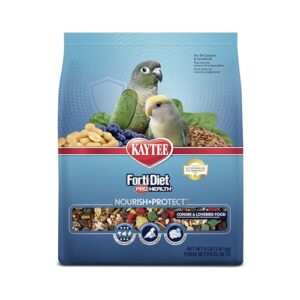
After those greens, let’s talk about a classic Seed Blend Nutrition favorite: Kaytee Forti-Diet Pro Health Conure and Lovebird Food. This 4-pound mix delivers 15% protein and 10–12% fat with prebiotics, probiotics, and omega-3s from flaxseed—great Bird Food Variety when you’re working on Pellet Conversion.
Use it as a transitional tool or occasional supplement, not your Complete Diets base. Pair 1/8 cup daily with high-quality pellets and fresh veggies to keep Nutrient Balance on point!
| Best For | Bird owners transitioning conures or lovebirds from an all-seed diet to pellets, or as a supplemental foraging mix alongside a pellet-based staple. |
|---|---|
| Brand | Kaytee |
| Age Range | Adult |
| Form | Chunk |
| Weight | 4 lb |
| Omega Support | Omega-3s |
| Primary Ingredients | Flaxseed, peanuts, blueberries |
| Additional Features |
|
- Contains prebiotics, probiotics, and omega-3s from flaxseed to support digestive health, skin, and feather condition
- Varied seed and grain textures encourage natural foraging behavior and keep birds mentally engaged at mealtime
- Works well as a gradual transition tool when mixed with higher-quality pellets over 7–10 days
- Seed-heavy formula can lead to selective eating and obesity if used as the sole diet without portion control
- Contains artificial colors (FD&C Yellow No. 5, Red No. 40, Blue No. 1) that some owners prefer to avoid
- Should not replace high-quality pellets long-term, so requires pairing with other foods for complete nutrition
Adapting Diets for Life Stages and Health
Your conure’s nutritional needs aren’t set in stone—they shift as your bird grows from a curious youngster to a wise senior.
You’ll also face the challenge of converting seed-loving birds to healthier pellet diets, which takes patience and the right approach. Let’s explore how to adjust feeding strategies across life stages and recognize when it’s time to bring in professional guidance.
Dietary Needs for Young, Adult, and Senior Conures
Your conure’s nutrition needs shift dramatically as they age. Young birds under one year need higher calories and up to 20 percent protein to fuel rapid growth.
Healthy adults thrive on 10 to 15 percent protein with steady calorie intake from quality pellets.
Senior conures benefit from modestly reduced calories to prevent obesity while maintaining muscle and feather health through balanced, age-appropriate bird diet choices.
Transitioning to a Pellet-based Diet
Shifting your conure from seeds to pellets takes patience—but it’s worth it. Spread the change over four weeks to avoid refusal.
Here’s your game plan:
- Place pellets in a separate bowl in a different cage spot
- Monitor weight daily and slow down if they drop over 5 percent
- Keep offering fresh veggies alongside pellets for variety
- Never mix seeds with pellets or they’ll cherry-pick
- Use seeds only as training rewards after week one
Track droppings and weight to verify your bird’s thriving during this nutrition upgrade!
When to Consult an Avian Veterinarian
Even if you nail the diet switch, your bird’s appetite or weight can shift overnight. Emergency signs like fluffed feathers, labored breathing, or sudden food refusal mean same-day veterinary care.
Schedule annual health checks with an avian veterinarian for weight tracking and nutrition advice—avian experts catch deficiencies before they escalate. Bird health isn’t guesswork; professional conure care and feeding guidance keeps your companion thriving!
Frequently Asked Questions (FAQs)
What is the best diet for a conure?
A healthy conure thrives on a varied menu where pellets form roughly 50 to 70 percent of daily intake, fresh vegetables add another 20 to 40 percent, and fruit rounds out about 10 percent for balanced nutrition.
What vegetables can conures not eat?
In the context of vegetables, not everything is fair game. You’ll want to avoid the allium family (onions, garlic), raw beans, nightshade plant parts, avocado, rhubarb leaves, and high oxalate greens like spinach.
What is toxic to conures?
Toxic foods like avocado, chocolate, and caffeine are deadly household poisons for your conure.
Human hazards include Teflon fumes, lead, and zinc—common avian toxins that demand vigilant conure care and pet bird care to prevent exposure.
How often should I rotate fresh food varieties?
Picture your conure’s morning bowl brimming with colorful vegetables—today’s rainbow of vegetables keeps their diet exciting.
Rotate fresh fruits and vegetables daily, mixing two to three different produce items each feeding to guarantee a balanced nutrient intake and prevent selective eating habits.
Can conures eat eggs or other animal proteins?
Yes, conures can eat cooked eggs once or twice weekly! Eggs deliver high-quality protein and amino acids for muscle health.
Always serve plain—boiled or scrambled—and remove uneaten portions within two hours.
What portion sizes prevent obesity in conures?
Keep pellet rations around 3 to 5 teaspoons daily for healthy weight management—that’s your foundation! Add 1 to 2 teaspoons of vegetables and limit fruit to pea-sized pieces for perfect caloric balance.
Do conures need grit for proper digestion?
No, conures don’t need grit for digestion. Their powerful beaks hull seeds before swallowing, and their muscular gizzard grinds food effectively without gravel.
Grit can actually cause dangerous impactions in your bird’s digestive tract.
How long can prepared fresh food stay uneaten?
Remove fresh fruits and vegetables from your conure’s cage after 1 to 2 hours at room temperature. Bacterial growth accelerates on moist foods, risking spoilage and digestive upset if left longer.
Conclusion
Think of your conure’s bowl as their passport to vitality—every bite shapes their future. The proper diet for conures isn’t complicated once you’ve nailed the pellet foundation, rotated fresh produce, and ditched those seed-heavy habits.
You’ll witness the transformation: brighter plumage, sharper minds, longer lives. Start today with one dietary swap, then another. Your feathered companion depends on you to get this right, and honestly? They’re worth every effort.