This site is supported by our readers. We may earn a commission, at no cost to you, if you purchase through links.

Your backyard chickens don’t need to cross paths with wild waterfowl to contract avian influenza. A single contaminated boot stepping into your coop can introduce viral threats that persist on surfaces for weeks.
Backyard flocks face constant exposure to viral disease risks—from respiratory infections spread through shared feeders to neurological conditions transmitted by common insects. Understanding how these pathogens move through your environment transforms abstract worry into concrete action.
Disease prevention starts with recognizing transmission routes you control: the equipment you touch, the quarantine protocols you skip, and the biosecurity gaps that invite infection. Your flock’s health depends on blocking viral entry points before symptoms appear.
Table Of Contents
- Key Takeaways
- Common Viral Diseases in Backyard Birds
- How Viral Diseases Spread Among Birds
- Risk Factors for Backyard Bird Infections
- Signs of Viral Illness in Backyard Birds
- Prevention and Control of Viral Disease Risks
- Frequently Asked Questions (FAQs)
- Do backyard birds carry diseases?
- Do I need to worry about bird flu with my backyard chickens?
- What virus affects birds?
- Are backyard bird feeders a risk for bird flu?
- Can backyard birds transmit viruses to humans?
- Should I vaccinate my backyard poultry flock?
- How long do viruses survive on surfaces?
- Are certain bird species more susceptible to viruses?
- When should I quarantine new birds before introduction?
- Conclusion
Key Takeaways
- Viral diseases like avian influenza and Newcastle disease can devastate backyard flocks within 48-72 hours, spreading through contaminated boots, shared feeders, and wild bird contact before you notice any symptoms.
- Your daily biosecurity measures—scrubbing waterers, quarantining new birds for 30 days, and using dedicated coop-only boots—create the only reliable barrier between routine care and losing your entire flock.
- Overcrowding above 4-5 birds per square meter triggers chronic stress that weakens immune defenses by 1.4 percentage points per additional bird, turning social pressure into disease vulnerability.
- Early warning signs like respiratory distress, green watery droppings, or sudden deaths demand immediate veterinary contact and flock isolation to prevent catastrophic outbreaks from spreading further.
Common Viral Diseases in Backyard Birds
Your backyard flock faces several viral threats that can spread quickly and cause serious illness. Some viruses are more common than others, but each poses unique risks to your birds’ health.
Understanding how to prevent avian viruses starts with recognizing that both backyard and commercial settings have distinct vulnerabilities requiring tailored biosecurity approaches.
Understanding the most prevalent diseases helps you recognize symptoms early and take action before your entire flock is at risk.
Proper nutrition plays a key role in disease prevention, so reviewing best practices for feeding doves can strengthen your birds’ immune systems naturally.
Avian Influenza (Bird Flu)
Avian influenza, or bird flu, tops the list of viral threats to backyard poultry. These influenza A viruses spread naturally through wild bird migration and can devastate your flock within 48 to 72 hours. Public health risks exist for anyone handling infected birds without protection, making avian influenza prevention essential for your safety and your flock’s survival.
With its ability to infect both wild and domestic species, understanding the importance of avian influenza biosecurity measures is vital for effective prevention.
- Sudden deaths across your coop with no warning signs
- Swollen heads and respiratory distress in previously healthy birds
- Egg production dropping to near zero overnight
- Contaminated water dishes spreading virus particles between chickens
- Vaccine development efforts ongoing but limited for backyard flocks
Newcastle Disease
Just as deadly but less recognized, Newcastle disease tears through backyard poultry with alarming mortality rates—some strains kill nearly every unvaccinated bird. You’ll spot twisted necks, gasping breaths, and green diarrhea before sudden death sweeps your coop.
Newcastle disease rips through unvaccinated flocks with near-total mortality, killing birds within days of showing twisted necks and gasping breaths
Virus transmission happens fast through shared feeders and contaminated shoes, making biosecurity measures and flock vaccination your strongest shields against this ruthless disease. For more in-depth information, you can learn about virus transmission routes affecting your flock.
| What You’ll See | What It Means |
|---|---|
| Twisted necks, paralysis | Neurotropic strain attacking nervous system |
| Sudden flock deaths | Velogenic virus with near-100% kill rate |
| Dropped egg production | Hens too sick to lay normal eggs |
| Gasping, nasal discharge | Respiratory infection spreading fast |
| Green watery droppings | Gut damage from viscerotropic strain |
Infectious Bronchitis
While Newcastle brings sudden death, infectious bronchitis virus transmission quietly dismantles your flock’s health through coughing birds and contaminated waterers.
Recognizing early signs of viral bird diseases like lethargy or labored breathing can mean the difference between losing one bird and losing your entire flock.
You’ll hear rattling breaths within 36 hours of exposure, then watch egg production plummet 70 percent as hens lay wrinkled, pale shells.
Vaccine strategies targeting local strains, combined with biosecurity measures like quarantining new arrivals, protect backyard poultry from permanent oviduct damage and persistent disease symptoms.
Other Emerging Viruses
Beyond the familiar threats, fowl pox and avian metapneumovirus now challenge your flock’s defenses through viral mutations and rapid spread.
Minnesota’s 2023 metapneumovirus outbreak infected nearly every turkey flock within 90 days, killing over 2 million birds.
Implementing strong biosecurity measures to prevent wild bird contact can significantly reduce the risk of similar outbreaks in backyard and commercial flocks.
Fowl adenovirus liver disease hits fast-growing chickens hardest, while coronavirus risks grow as H5N1 crosses species barriers—zoonotic transmission from poultry to cattle proves biosecurity lapses threaten more than just your birds.
How Viral Diseases Spread Among Birds

Viral diseases don’t just appear out of nowhere—they travel through your flock in very specific ways. Understanding these transmission routes helps you close the gaps where viruses slip through.
Let’s break down the four main pathways that put your birds at risk.
Direct Bird-to-Bird Contact
When birds huddle at feeders or preen each other’s feathers, they’re not just socializing—they’re creating pathways for avian influenza and other viruses.
Direct touch through beak transmission, feather contact, and social grooming allows pathogens to jump between backyard poultry and wild birds. Strong biosecurity means understanding that every flock interaction carries infection potential, especially during crowded feeding times.
Indirect Transmission via Surfaces
Your boots, feeders, and egg baskets don’t look dangerous—but they can carry avian influenza for hours or even days on their surfaces. This fomite transmission happens when virus-laden droppings or secretions stick to equipment, then touch healthy birds.
Strong cleaning protocols matter: scrub off visible manure first, then apply surface disinfection with approved products. Biosecurity measures like dedicated coop-only boots and personal protective equipment cut the chain of zoonotic disease transmission before backyard poultry ever get exposed.
Contaminated Water and Feed
Water pollution and fecal contamination turn your backyard poultry’s drinkers into viral hotspots—avian influenza can survive 8 to 48 hours in contaminated drinking systems.
Feed safety fails when wild bird droppings land on open feeders. Biofilm control matters: scrub waterers daily and dose chlorine to 0.5–1.0 ppm for bird flu prevention. Cover feed, use nipple drinkers, and keep flocks away from puddles to protect poultry health and safety.
Vector-Borne Transmission (Insects)
Mosquitoes and biting flies don’t just annoy your flock—they shuttle West Nile virus and avian pox between wild birds and your backyard chickens. Here’s how insect vectors spread avian influenza and other viruses:
- Culex mosquitoes bite infected wild birds, then inject virus into your poultry.
- Biting flies transfer poxvirus particles from skin lesions during blood feeding.
- House flies and beetles mechanically carry bird flu on contaminated legs and mouthparts.
- Standing water near coops boosts mosquito populations and virus transmission risk.
- Dense vegetation and clutter shelter infected insects, increasing contact with your flock.
Effective insect management means emptying water containers weekly, installing fine mesh screens on coop vents, and removing wet litter. Good sanitation disrupts breeding sites for flies that shuttle avian influenza between manure and feeders. Place coops away from stagnant ditches and wetlands to lower mosquito control challenges. These biosecurity and disease control steps protect poultry health and safety while reducing virus transmission in your backyard flock management routine.
Risk Factors for Backyard Bird Infections
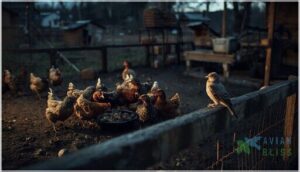
Your backyard flock doesn’t exist in isolation. Certain conditions and exposures dramatically increase the likelihood of viral infections taking hold in your birds.
Understanding these risk factors helps you identify vulnerabilities before disease strikes.
Wild Bird Interactions
When wild birds drop into your backyard, they’re bringing more than just songs and color. Waterfowl migrating through your area can carry highly pathogenic avian influenza without showing any signs, turning shared spaces into contact zones for disease transmission.
Starlings and sparrows visiting feeders create direct avian contact opportunities that enable viruses to jump from wild birds to your flock with surprising ease.
Poor Biosecurity Practices
Skipping quarantine measures for new birds invites viruses straight into your flock—many keepers house newcomers just feet away from their main coop, not the 10 to 12 yards experts recommend for flock isolation.
Equipment sharing without disinfection turns feeders and crates into fomites carrying viral particles between properties. Poor carcass handling, like leaving dead birds exposed, attracts scavengers that spread disease.
Without biosecurity planning, daily routines stay inconsistent and zoonotic disease prevention falls apart when you need it most.
Overcrowding and Stress
Tight quarters push your birds into constant conflict, and that chronic stress hammers their immune defenses against avian influenza risks and other poultry health risks. Research shows:
- Stocking density above 4 to 5 birds per square meter triggers severe feather pecking and pacing.
- Respiratory disease jumps from 4 percent at 8 birds per square meter to 28 percent at 18.
- Each extra bird per square meter raises disease prevalence by roughly 1.4 percentage points.
- Overcrowded hens show reduced antibody responses and weakened macrophage activity.
- High-density coops accumulate ammonia and airborne viral particles that spread infection faster.
Backyard flock owners who ignore proper coop design and stress management expose their backyard birds to relentless social pressure. Aggressive chasing forces weaker hens away from feeders, leaving them nutritionally depleted and vulnerable. Poor flock behavior—constant squabbles, bare feather patches, birds struggling for access—signals that your stocking density has crossed into dangerous territory. When birds can’t escape dominant flock mates, repeated conflicts trigger ongoing stress responses that gradually undermine their ability to fight off viral disease.
Giving each standard hen at least 2 to 4 square feet of indoor space, plus a spacious outdoor run, reduces crowding stress and protects backyard poultry safety. Adding perches and visual barriers inside the coop gives lower-ranking birds retreat areas, cutting chronic stress that weakens immunity. Monitoring these crowding signs helps you adjust flock size before stress leads to outbreaks, safeguarding bird welfare and your peace of mind.
Environmental Contamination
Beyond social stress, your coop’s physical environment can harbor viral threats for weeks. Litter management failures let avian influenza and Newcastle disease viruses survive in moist bedding, especially below 10 to 15 degrees Celsius.
Water pollution from wild bird droppings, soil contamination under runs, and equipment sanitization gaps all fuel poultry health risks. Human transmission occurs when contaminated boots, tools, and clothing move virus‑laden dust between flocks unnoticed.
Signs of Viral Illness in Backyard Birds
Recognizing illness early can make the difference between a manageable outbreak and losing your entire flock.
Viral infections don’t always announce themselves with obvious symptoms, but your birds will show warning signs if you know what to look for. Watch for these key indicators that something’s wrong.
Respiratory Symptoms
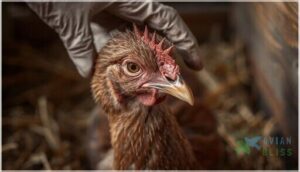
Respiratory trouble often shows up first when your birds are fighting viral infections like avian influenza. Watch for these warning signs in your backyard poultry:
- Coughing sounds and repeated sneezing that spread quickly through the flock
- Nasal discharge ranging from watery to thick mucus around the beak
- Labored breathing with open-beak gasping and neck stretching
- Sinus swelling creating puffy, rounded areas below the eyes
- Respiratory failure signs including bluish combs and sudden collapse
Use personal protective equipment when handling sick birds.
Digestive Issues (Diarrhea, Loss of Appetite)
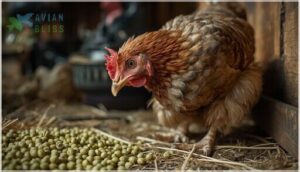
Viral infections disrupt gut health in backyard poultry, causing green, watery diarrhea that soils vent feathers. Your birds may eat less, lose weight, and produce foamy droppings even when feed appears untouched.
Avian diseases like Newcastle disease and infectious bronchitis trigger these digestive issues, threatening flock nutrition and backyard poultry safety. Isolate affected birds immediately, maintain dry litter, and strengthen biosecurity measures. Consult a veterinarian if multiple backyard flock owners notice sudden appetite loss across your birds.
Neurological Signs
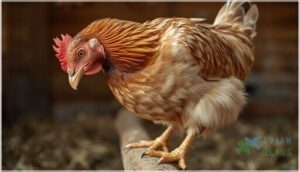
Brain infections from avian diseases like avian encephalomyelitis and Newcastle disease cause visible neurological damage in backyard poultry, signaling serious viral threats.
Watch for these urgent signs:
- Loss of coordination – birds stagger, fall, or can’t perch properly
- Muscle tremors – head shaking or whole-body vibrations
- Twisted neck posture – holding the head at odd angles
- Leg paralysis – dragging limbs or splay-leg stance
Neurological signs demand immediate veterinary attention to protect your flock from avian influenza and other zoonotic diseases.
Sudden Death in The Flock

Losing multiple birds within 24 to 72 hours signals a critical outbreak. High-path avian influenza and virulent Newcastle disease kill fast—sometimes before you notice sick poultry symptoms.
Death patterns showing sudden flock mortality, often with bleeding visible on bird autopsy, demand emergency response. Contact your veterinarian immediately. Isolate remaining backyard birds, stop all movement, and await testing to confirm virus transmission routes and protect your flock.
Prevention and Control of Viral Disease Risks
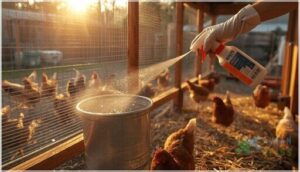
Protecting your flock from viral diseases doesn’t require complicated protocols. A handful of consistent practices can reduce your birds’ exposure to harmful viruses and stop outbreaks before they start.
Here’s what you need to focus on to keep your backyard birds healthy.
Effective Biosecurity Measures
Strong biosecurity plans act like invisible fences that keep viral threats outside your flock. Backyard birds thrive when you combine daily sanitation practices with quarantine procedures for new arrivals, reducing exposure to avian influenza and other diseases.
- Limit flock access to essential caretakers only
- Establish clear lines of separation with dedicated boots
- Exclude wild birds from runs using tight netting
- Quarantine new chickens for 14–30 days minimum
- Disinfect housing after removing all organic matter
Safe Handling and Hygiene Practices
Every time you step into the coop, you’re either building immunity or inviting illness—the difference comes down to hand hygiene and protective gear. Washing hands for 20 seconds after touching backyard birds removes germs that threaten both bird health and public health, while dedicated coop boots prevent tracking virus particles indoors.
| Practice | Purpose |
|---|---|
| Wash hands 20+ seconds | Remove viruses and bacteria from skin |
| Use alcohol-based sanitizer | Temporary option when soap unavailable |
| Wear dedicated coop boots | Prevent tracking manure into home |
| Don gloves for sick birds | Avoid direct contact with infectious material |
| Change soiled clothing promptly | Eliminate dried secretions carrying viruses |
Keep a handwashing station near your run so disease prevention becomes automatic. When handling sick or dead birds, you’ll need personal protective equipment—gloves, N95 respirators, and eye protection block contaminated dust from reaching vulnerable entry points. Bird isolation starts with your biosecurity plans, but your hygiene practices determine whether those plans actually work.
Cleaning Feeders and Equipment
Contaminated feeders transform into viral reservoirs faster than most backyard flock owners realize. Clean all bird feeders and equipment every 1 to 2 weeks using warm water, stiff brushes, and poultry-approved disinfectants—feeder sanitation directly enhances bird health and biosecurity measures.
Rinse thoroughly, air dry completely, and replace cracked components where pathogens hide. Proper equipment disinfection and cleaning schedules prevent disease spread before symptoms appear.
Monitoring Flock Health and Reporting Illness
Check your backyard poultry daily for signs of sick poultry—ruffled feathers, breathing changes, or sudden drops in activity flag early illness. Keep health records noting behavior, egg counts, and droppings to spot disease trends fast.
Contact your vet or state animal health office immediately if you see severe respiratory signs or deaths; prompt disease reporting protects public health and triggers avian influenza testing when bird flu is suspected.
Frequently Asked Questions (FAQs)
Do backyard birds carry diseases?
Yes—backyard poultry and wild birds alike harbor avian pathogens, from salmonella to avian influenza.
Zoonotic diseases don’t announce themselves, making biosecurity measures and vigilant flock management your best defense against disease transmission.
Do I need to worry about bird flu with my backyard chickens?
Bird flu poses real risks to backyard poultry. Your chickens can contract H5N1 through wild bird contact or contaminated surfaces.
Strong backyard biosecurity and daily flock management reduce avian influenza threats substantially.
What virus affects birds?
You’re right to be concerned. Influenza A viruses, including H5N1 Bird Flu, alongside Newcastle disease, Infectious Bronchitis, and Avipoxvirus, pose serious threats to your flock’s health.
Are backyard bird feeders a risk for bird flu?
Backyard bird feeders carry some avian influenza risk through shared surfaces, but typical feeder visitors like songbirds show low susceptibility.
The main concern is attracting waterfowl near poultry or during regional outbreaks.
Can backyard birds transmit viruses to humans?
Your feathered friends can harbor unwelcome guests. Avian influenza and psittacosis spread from sick or healthy-looking birds through direct contact, contaminated surfaces, or airborne droppings—raising real public health concerns about zoonotic disease and human virus transmission.
Should I vaccinate my backyard poultry flock?
Vaccination lowers mortality from Mareks disease, Newcastle disease, and infectious bronchitis, but it works best alongside strong biosecurity measures. Weigh vaccine benefits, costs, and your flock’s disease risk before deciding.
How long do viruses survive on surfaces?
Virus survival on surfaces varies widely by material and temperature. On steel and plastic, influenza viruses persist one to two days at room temperature, but cold conditions extend their half-life to weeks or months.
Are certain bird species more susceptible to viruses?
Yes. Species immunity, host genetics, and viral receptors determine susceptibility.
Wild birds like waterfowl carry avian influenza more often than songbirds. Bird behavior and ecological factors—crowding, migration, shared water—affect wildlife disease management outcomes.
When should I quarantine new birds before introduction?
Think of quarantine as a firewall protecting your flock. Keep new birds separate for at least 30 days, ideally 40, before introduction. Monitor health daily and use strict biosecurity protocols throughout.
Conclusion
Your birds won’t announce an outbreak before it spreads. Viral disease risks for backyard birds don’t wait for convenient timing—they exploit every gap in your defenses.
The protocols you implement today determine whether your flock thrives or succumbs tomorrow. Clean equipment daily. Separate new birds for thirty days minimum. Watch for respiratory changes. Report sudden deaths immediately.
Your vigilance creates the barrier between routine care and catastrophic loss. Act before symptoms force your hand.
- https://www.aphis.usda.gov/livestock-poultry-disease/avian/defend-the-flock/resources
- https://gcc02.safelinks.protection.outlook.com/?url=https%3A%2F%2Fagriculture.vermont.gov%2Fagency-agriculture-food-markets-news%2Fhpai-confirmed-backyard-flock-non-commercial-birds-windsor&data=05%7C02%7CAHS.VDHMedia%40vermont.gov%7C8632ef71a31f4c0527ec08dd6b98c788%7C20b4933bbaad433c9c0270edcc7559c6%7C0%7C0%7C638785026118454036%7CUnknown%7CTWFpbGZsb3d8eyJFbXB0eU1hcGkiOnRydWUsIlYiOiIwLjAuMDAwMCIsIlAiOiJXaW4zMiIsIkFOIjoiTWFpbCIsIldUIjoyfQ%3D%3D%7C0%7C%7C%7C&sdata=dMXMXBL6nkxYrKFsXTFDE6r7eScX330DuBpaESPJyB0%3D&reserved=0
- https://dwr.virginia.gov/media/press-release/red-fox-tests-positive-for-highly-pathogenic-avian-influenza-in-loudoun-county/
- https://pubmed.ncbi.nlm.nih.gov/41099079/
- https://www.medrxiv.org/content/10.1101/2025.11.21.25340167v2?%3Fcollection=