This site is supported by our readers. We may earn a commission, at no cost to you, if you purchase through links.
A bird without perches isn’t just uncomfortable—it’s a bird on its way to serious health problems. Wild birds spend their lives gripping branches of varying sizes and textures, and that constant variation keeps their feet strong, their joints flexible, and their minds engaged. Remove that, and you’ve removed something their bodies depend on.
Most bird owners focus on cage size or diet, but perch selection quietly shapes everything from foot health to stress levels. The wrong perch—or too few of them—can lead to painful conditions like bumblefoot, poor circulation, and chronic boredom. Understanding why birds need perches in their cage goes deeper than giving them somewhere to stand. The right setup works like a tailored fitness and wellness plan, built right into their environment.
Table Of Contents
Key Takeaways
- Varying perch sizes and textures distributes pressure across your bird’s feet, preventing painful conditions like bumblefoot and arthritis over time.
- Natural wood perches — such as manzanita or applewood — passively wear down your bird’s beak and nails while giving their feet a more engaging, realistic grip.
- Where you place perches matters as much as which ones you choose, since poor positioning can contaminate food, restrict movement, and raise your bird’s stress levels.
- Most wooden and rope perches should be fully replaced every 6 to 12 months, and inspected daily for splinters, fraying, or mold that could quietly harm your bird.
Why Do Birds Need Perches in Their Cage?
Perches aren’t just accessories — they’re a core part of how birds live and stay healthy. Without the right setup, your bird can develop real physical and behavioral problems over time.
Choosing the right setup starts with understanding what makes a perch material safe or harmful for birds.
Here’s what perches actually do for your bird and why getting them right matters.
Natural Behaviors and Instincts
Birds are wired by their wild roots to perch — it’s not a preference, it’s a drive. In their natural branches and wild bird habitat, they climb, roost, forage, and socialize on elevated surfaces all day. Here’s what that looks like:
- Roosting habits keep them elevated and feeling safe
- Bird climbing builds strength and coordination
- Foraging behaviors happen along perches, not on floors
- Social perching lets flock bonds form naturally
- Perch selection reflects mood, comfort, and security
Understanding bird behavior and psychology helps you build a cage that truly enhances avian welfare. Choosing perches made of is important for maintaining foot health and overall well-being.
Health Benefits for Feet and Legs
Beyond instinct, perches are doing real physical work for your bird. Varying perch sizes keeps foot health in check — different diameters shift grip angles, giving joints, tendons, and muscles a daily workout. That natural foot exercise improves circulation benefits throughout the legs and lowers the risk of bumblefoot. Without that variety, chronic pressure builds fast, leading to painful foot problems over time. Choosing perches made from can further improve your bird’s comfort and safety.
Psychological Well-being and Enrichment
Physical health matters, but your bird’s mental world matters just as much. Perches play a quiet role in emotional support and mental stimulation — giving birds a safe place to retreat, observe, and feel in control. Good environmental enrichment through varied perches fosters natural bird behavior and overall bird welfare.
- Rotating perch styles adds novelty, reducing anxious pacing
- Elevated spots support social bonding between cage mates
- Stable perches act as behavioral therapy for stress-prone birds
How Perches Promote Bird Health

A good perch does more than give your bird a place to stand — it’s one of the simplest ways to protect their long-term health. The right setup can prevent painful conditions like bumblefoot and arthritis, keep your bird active, and even cut down on stress.
For older birds especially, pairing the right perch with toys designed for elderly birds helps keep them moving without putting extra strain on aging joints.
Here’s how perches make a real difference in three key areas.
Preventing Foot Problems (Bumblefoot, Arthritis)
One of the most preventable threats to your bird’s foot health is something hiding in plain sight: the wrong perch. Bumblefoot — a bacterial infection of the sole — often starts when constant pressure from a single perch diameter wears down skin, letting bacteria in. Varying perch diameters shifts that pressure around, protecting vulnerable tissue. Dirty perches make things worse fast.
The wrong perch silently destroys your bird’s feet — variety is the simplest protection
| Foot Problem | Perch-Related Cause |
|---|---|
| Bumblefoot | Single perch diameter, dirty surfaces |
| Arthritis | Perches too wide or too narrow |
| Pressure sores | Uniform perch size, lack of variety |
| Skin abrasions | Sandpaper or damaged perch surfaces |
| Joint strain | Perches forcing flat foot position |
Arthritis prevention works the same way — joints that move through different grip angles each day stay more flexible over time.
Enhancing Circulation and Exercise
Think of your bird’s perch setup as a daily gym circuit. Perch hopping between heights drives circulation exercise by pushing blood back toward the heart. Wing flapping from a stable perch builds muscle strengthening in the chest and shoulders. Here’s what consistent movement aids in avian health:
- Improved heart function through regular bird exercise
- Better foot health via varied perch placement
- Stronger legs from balance training on swing perches
- Reduced obesity risk with daily climbing
- Healthier breathing during wing flapping sessions
Reducing Stress and Boredom
Boredom is one of the quieter threats in pet bird care. Without environmental enrichment, birds often turn stress into feather-plucking or constant screaming.
Even something as simple as choosing the right bird perch placement can make a real difference in keeping your bird calm and mentally stimulated.
Varied perch placement promotes natural foraging by giving your bird mini routes to travel between food, toys, and water. Adding swings encourages mental stimulation through balance shifts.
These bird cage setup choices directly address avian health issues tied to inactivity and social interaction gaps.
Choosing The Right Perch Types and Materials
Not all perches are created equal, and the material you choose can make a real difference in your bird’s daily comfort and long-term health. From natural wood branches to rope and cement options, each type brings something different to the cage.
Here’s what you need to know about the most common perch materials and how to pick the right ones.
Natural Wood Vs. Synthetic Perches

Not all perch materials are created equal, and your bird’s feet will feel the difference. Natural wood perches offer bark, knots, and irregular surfaces that give birds real grip and gentle nail wear. Synthetic options are easier to clean but often lack texture.
- Natural wood: varied grip, safe chewing surface
- Plastic: durable but slippery, minimal nail wear
- Cement/ceramic: good for nail filing, use sparingly
- Rope: soft and cushioned, but replace when frayed
Importance of Varying Perch Sizes and Textures
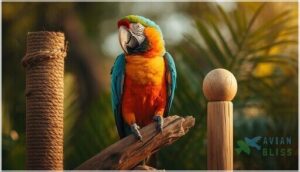
Your bird’s feet aren’t meant for just one surface. Perch Diameter Variety matters because using at least three to four perch sizes distributes pressure across different contact points, giving your bird real Pressure Point Relief throughout the day.
Varied perches with Textured Surface Benefits, like natural branches or rope perches, promote Foot Muscle Exercise and Grip Stability Techniques by encouraging constant small adjustments across different perch diameters.
Safe Materials for Beak and Nail Care
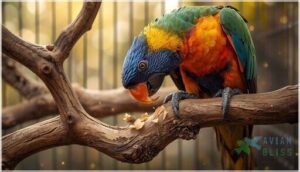
Natural woods like manzanita, applewood, and dragonwood quietly do double duty in your bird’s cage. As your bird grips and chews, these perch textures gently handle beak trimming and nail filing without any intervention from you.
For beak health and foot health, stick to nontoxic materials free of paint or sealants. Skip sandpaper covers entirely — they cause sores, not nail trimming.
Proper Perch Placement and Cage Design
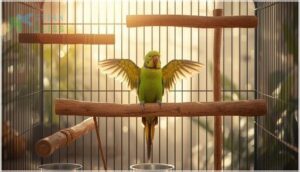
Where you place perches inside the cage matters just as much as which perches you choose. Poor placement can lead to contaminated food, injuries, or a bird that simply can’t move comfortably.
Here’s what to keep in mind when setting up your bird’s space the right way.
Ideal Heights and Locations Within The Cage
Think of your bird cage as a three-story building — every level fulfills a purpose. A smart perch setup uses vertical space from low to high, giving your bird clear movement paths.
Keep bar clearance in mind: high perches shouldn’t press against the ceiling. Good cage mapping and perch leveling guarantee bird visibility across the room while supporting confident, comfortable movement.
Avoiding Contamination of Food and Water
Once your perch heights are sorted, where you place food and water dishes matters just as much. Bowl placement in your cage design directly affects food safety and water hygiene.
Perch orientation above bowls means droppings fall straight into them — a real risk for bacterial illness. Keep dishes offset to the side, below main perches, for a cleaner cage environment overall.
Ensuring Safe Movement and Wing Stretching
Safe movement starts with smart cage layout. Your bird needs clear flight paths — a straight horizontal runway between perches so it can hop or glide freely.
Wing clearance matters too: both wings should fully extend without hitting bars or toys. Aim for a cage interior that’s 1.5 to 2 times your bird’s wingspan, and keep perch spacing comfortable without overreaching.
Perch Maintenance and Safety Tips
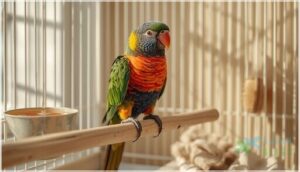
Even the best perch setup won’t do much good if the perches are dirty or falling apart.
Keeping them clean and in good shape is a simple part of your bird’s daily care routine. Here are two key maintenance habits every bird owner should know.
Cleaning and Disinfecting Perches
Perch maintenance isn’t complicated, but it does matter. Daily sanitizing keeps bacteria from building up between deeper cleans, and a quick wipe with a damp cloth goes a long way.
For full perch disinfection, follow these cleaning techniques weekly:
- Scrub with warm water and bird-safe cleaning products
- Rinse natural sanitizers like diluted white vinegar thoroughly
- Dry completely before returning to the cage
Bird safety depends on it.
Monitoring for Wear and Damage
Beyond cleaning, regular perch inspection catches problems before your bird gets hurt. A quick look once or twice daily, during food changes, fits easily into any routine.
| Warning Sign | Action to Take |
|---|---|
| Splinters or cracks | Replace immediately |
| Frayed rope fibers | Trim or remove |
| Loose hardware | Tighten or swap out |
| Slick, worn surface | Replace for grip safety |
| Mold or damp spots | Discard and disinfect cage |
Damage prevention through consistent safety checks and maintenance schedules keeps your cage design safe and your bird steady.
Frequently Asked Questions (FAQs)
Why do birds need perches?
Birds balance, grip, and climb on perches just as they would on wild branches, keeping their feet, posture, and beak in good shape — all essential pillars of pet bird health.
Should bird cages be covered at night?
Covering your bird cage at night isn’t always required, but it can genuinely help. Nighttime cage covers support bird sleep patterns by blocking light, reducing night fright risks, and creating a calm, dark environment for restful sleep.
How often should perches be replaced entirely?
Most wooden and rope perches need full replacement every 6 to 12 months. If you notice cracks, fraying, or persistent odor after cleaning, don’t wait — replace them immediately to protect your bird’s health.
Can birds sleep comfortably on rope perches?
Yes, rope perches can offer real comfort during sleep. Their soft, cushioned surface reduces pressure on feet, making them a smart choice for resting birds, especially older ones with sore joints.
Do perches affect a birds molting process?
Yes, perches directly affect molting. Comfortable perch texture and varied foot health support reduce molting stress, letting your bird direct energy toward feather growth instead of constant balance and grip effort.
Should perches be removed during cage cleaning?
Yes, removing perches during cage cleaning makes a real difference. It allows thorough cage sanitization and better perch disinfection methods, and reduces bird stress by returning them to a fresh, familiar setup quickly.
Are store-bought perches safe right out of the box?
Like a new pan that needs washing before cooking, store-bought perches aren’t always cage-ready. Factory residues, toxic coatings, and hardware flaws make a quick inspection and rinse essential before use.
Conclusion
Think of your bird’s perches as the foundation of a house—without the right base, everything built on top becomes unstable. Understanding why birds need perches in their cage helps you see that perch selection isn’t a minor detail; it’s core to their physical and mental health.
Vary the sizes, choose safe materials, and place them thoughtfully. Your bird’s feet, joints, and overall well-being depend on decisions you make before they ever step inside.
- https://www.revivalanimal.com/learning-center/choosing-a-perch-for-your-bird
- https://www.thebirdband.com/post/must-have-perches-for-your-bird
- https://www.phoenixlanding.org/perches.html
- https://pmc.ncbi.nlm.nih.gov/articles/PMC10812542/
- https://www.wingdom.com/the-importance-of-pet-bird-perches-and-stands/