This site is supported by our readers. We may earn a commission, at no cost to you, if you purchase through links.
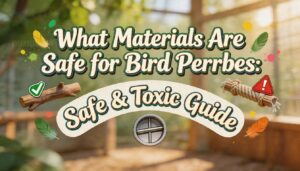
A wooden dowel seems harmless—smooth, sturdy, easy to clean. But that simple perch could quietly be damaging your bird’s feet, lungs, or nervous system, depending on what it’s made from.
Some woods release toxic oils. Certain metals leach zinc. Even rope can become a hazard once it starts to fray.
Most bird owners focus on cage size, diet, and toys, but the perch material your bird grips for most of its waking hours deserves equal attention.
Knowing what materials are safe for bird perches—and which ones to avoid entirely—can protect your bird from preventable, often serious health problems.
Table Of Contents
- Key Takeaways
- Why Perch Material Safety Matters
- Safe Materials for Bird Perches
- Safe Hardwoods Like Maple, Birch, Elm, and Manzanita
- Safe Untreated Branches From Apple and Willow
- When Softwoods Like Pine, Spruce, and Fir Are Acceptable
- Balsa Wood for Chewable Perches
- Bird-safe Plastics Such as PP and HDPE
- Acrylic and BPA-free Plastic Perch Guidelines
- Safe Metals Including Stainless Steel and Aluminum
- Natural Rope Materials Like Cotton, Hemp, Sisal, and Jute
- Unsafe Perch Materials to Avoid
- Toxic Woods Such as Avocado, Cedar, and Cypress
- Risks From Apricot, Peach, Plum, and Fresh Cherry Wood
- Why Pressure-treated Wood and Plywood Are Dangerous
- Painted, Sealed, or Chemically Treated Wood Concerns
- Unsafe Metals That May Contain Zinc or Lead
- Why Nylon and Polyester Rope Are Poor Choices
- Fabric Perches With Dyes, Coatings, or Fraying Hazards
- Perch Design for Foot Health
- Cleaning and Replacing Perches
- Weekly Cleaning by Material Type
- Sanitizing Natural Branches Before Cage Use
- Drying Perches Fully to Prevent Mold and Bacteria
- Daily Checks for Cracks, Splinters, Rust, and Fraying
- When to Replace Wood, Rope, Plastic, or Metal Perches
- Safe Perch Placement Inside The Cage
- Rotating Perches to Maintain Hygiene and Enrichment
- Frequently Asked Questions (FAQs)
- What not to put in a budgie cage?
- What wood is toxic to parrots?
- Can wild-caught branches carry parasites or disease?
- How many perches does one bird need?
- Are perch covers or booties ever recommended?
- Do perch materials differ by bird species or size?
- Can birds develop allergies to specific perch materials?
- Conclusion
Key Takeaways
- Safe perch materials include untreated hardwoods like maple and manzanita, food-grade plastics (PP and HDPE), 304-grade stainless steel, and natural fiber ropes like cotton and sisal.
- Avoid cedar, avocado wood, pressure-treated lumber, galvanized metals, and synthetic rope—this can cause respiratory damage, zinc toxicity, or deadly digestive blockages.
- bird’s perch diameter should let its toes wrap about two-thirds around it, and rotating between varied widths and textures daily prevents bumblefoot and joint strain.
- Clean each perch weekly using material-appropriate methods, inspect daily for cracks, fraying, or rust, and replace immediately when damage appears—damp or broken perches breed bacteria fast.
Why Perch Material Safety Matters
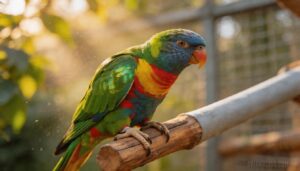
The perch your bird stands on matters more than most people think. What it’s made of can affect its feet, breathing, and overall health.
Getting the details right — from material to diameter — is exactly why understanding how perches affect bird foot health can make such a real difference in your bird’s daily comfort.
Here’s what you need to know before choosing any perch material.
How Perch Materials Affect Bird Health
The material under your bird’s feet does more than just hold weight. Perches made from safe materials for bird perches directly support avian foot health, keeping circulation normal and reducing stress hormone levels that can suppress the immune system.
Poor materials may cause chemical leaching from plastics or splinters that trigger pain.
Good perch choices even support behavioral enrichment benefits and feather quality effects over time.
Providing diverse perch textures stimulates tendon activity and reduces arthritis risk.
Common Risks From Toxic or Damaged Perches
Damaged or toxic perches create real hazards quickly. Chemical off-gassing from pressure-treated wood and chemical leaching from plastics can harm organs over time. Metal with lead or zinc causes zinc toxicity and nerve damage.
Here’s what to watch for:
- Respiratory irritation from cedar or treated wood fumes
- Foot injuries from splinters, cracks, or sharp metal
- Bacterial and mold growth on perches that stay damp
- Toxic chemicals absorbed through daily foot contact
Why Birds Chew, Grip, and Wear Perches Differently
Not all birds interact with perches the same way. Foot morphology influences plays a big role — toe length and claw curve change grip force variation between species.
Species’ chewing habits also matter; parrots strip natural bark perches aggressively, reshaping the surface over time. This wear pattern evolution affects traction.
Texture preference is real — rougher surfaces simply give claws more to hold onto.
The Link Between Perch Materials and Foot Problems
bird stands on every day shapes its foot health more than most owners realize. Hard, smooth surfaces concentrate footpad pressure into tiny contact points — a setup for bumblefoot and keratin overgrowth.
warning signs:
- Swollen, reddened footpads from unrelieved footpad pressure
- Cracked toe scales caused by material hardness and slip risk
- Uneven nail wear signaling poor pressure distribution
Natural bark perches reduce all three.
Safe Materials for Bird Perches
Picking the right perch material doesn’t have to feel overwhelming. Some options are genuinely safe, and once you know what to look for, the choices become pretty clear.
Here are the materials that work well for your bird.
Safe Hardwoods Like Maple, Birch, Elm, and Manzanita
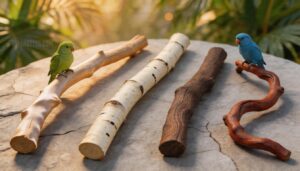
Four hardwoods stand out as the safest natural wood options for bird perches: maple, birch, elm, and manzanita. These nontoxic hardwoods contain no harmful resins or oils.
| Wood | Key Strength | Special Feature |
|---|---|---|
| Maple | Abrasion-resistant | Antimicrobial Properties |
| Birch | Smooth grain texture | Gentle on feet |
| Elm | 640 kg/m³ density | Excellent Steam Bending |
| Manzanita | Extreme durability | Lasts years under chewing |
Each offers unique Durability Factors. Elm’s interlocked Grain Texture improves grip naturally. Maple accepts Natural Finish Techniques like tung oil beautifully. Always leave these hardwoods untreated.
Safe Untreated Branches From Apple and Willow
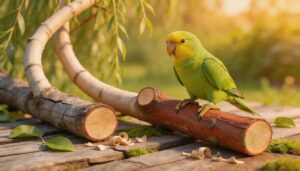
Apple and willow branches are among the best natural wood options for bird perches when sourced carefully. Both offer Bark Texture Benefits that keep feet active and claws naturally worn. For Pesticide-Free Harvest, collect only from trees never sprayed with chemicals.
- Choose firm apple wood with no soft spots or fungal marks
- Look for Tree Health Indicators like clean bark and no insect holes
- Use Branch Flexibility Advantages of willow for easy shaping
- Dry branches fully before cage use to prevent mold
When Softwoods Like Pine, Spruce, and Fir Are Acceptable
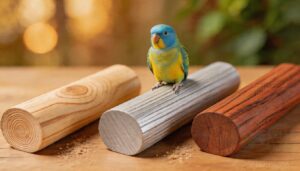
Pine, spruce, and fir can work well as safe wood material — but only when fully dried. Kiln-dried softwoods are the safest choice because curing reduces low resin content risks that sticky fresh-cut wood creates.
For more on choosing and maintaining safe perch materials, bird perch setup tips for indoor bird rooms covers what to look for and how to keep them clean between uses.
Chewable softwoods suit Small Bird Fit perfectly, especially for light chewers needing Moisture-Free Perches.
| Softwood | Best Use |
|---|---|
| Pine | Light chewing, small perches |
| Spruce | Shaped cage accessories |
| Fir | Mixed setups with harder wood |
| All three | Avoid fresh-cut, resin-heavy stock |
Balsa Wood for Chewable Perches
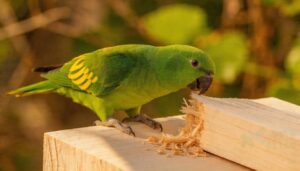
Balsa is one of the softest safe wood materials available — and that’s exactly its strength. Its low density variability means texture stays consistent, making it easy for small birds to grip and chew.
Use it for enrichment rotation, not as a main perch.
- Choose untreated block sizing for longer chewing duration.
- Swap pieces often for debris management.
- Great for beginner chewers exploring natural wood options.
Bird-safe Plastics Such as PP and HDPE
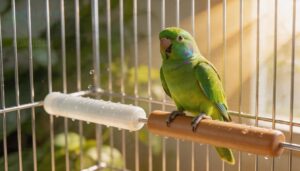
Not all plastics are created equal — but two are consistently safe for your bird’s perch.
Polypropylene (PP) and high-density polyethylene (HDPE) are the approved safe plastic types for avian perches. Both are polyolefins, free of BPA and phthalates, and resist chemical leaching from plastics that could harm your bird.
| Feature | PP & HDPE |
|---|---|
| Resin Identification | Food-grade codes |
| Heat Resistance | Endures routine washing |
| Surface Texture | Low porosity, easy to clean |
| Durability Limits | Replace if cracked or gouged |
| Design Checks | Thick walls, corrosion-resistant hardware |
Acrylic and BPA-free Plastic Perch Guidelines
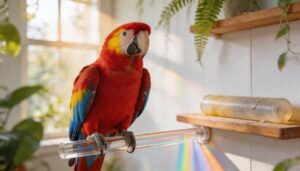
Acrylic can work well as a perch material — but only when it’s done right. Look for BPA and phthalates-free labeling, since chemical leaching from plastics and health impact in birds is a real concern.
Check for stress cracks, cloudy spots, and Acrylic Wear Signs before use. UV Degradation weakens plastic over time, so inspect often.
Molded Texture improves grip, and Size Matching to your bird’s foot keeps things comfortable.
Safe Metals Including Stainless Steel and Aluminum
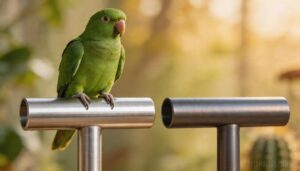
Beyond plastics, metals offer real durability.
Stainless steel — especially 304 grade stainless steel — is a top pick. Its non-porous surface hygiene makes cleaning straightforward.
Aluminum works too, though anodized aluminum benefits include a harder surface that resists scratching better than raw aluminum.
Keep different metals separated to avoid galvanic corrosion prevention issues.
Inspect weekly for sharp edges or rust.
Natural Rope Materials Like Cotton, Hemp, Sisal, and Jute
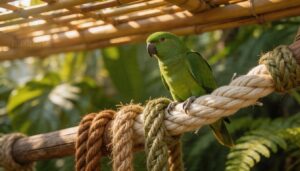
Natural ropes give your bird something soft and graspable — a real change from hard wood or metal.
- Cotton rope — soft, gentle, and flexible; great for comfort-focused perches
- Hemp rope — firm with natural Fiber Strength and good Moisture Resistance
- Sisal rope — coarse Grip Texture; ideal for birds needing extra traction
- Jute — softer but less durable; avoid wet areas
- Sustainable Sourcing — choose untreated, natural-only fibers
Follow rope and fabric perch safety guidelines: replace any fraying rope immediately. Durability factors vary — cotton rope wears fastest, sisal longest. All safe rope materials must stay dry and chemical-free.
Unsafe Perch Materials to Avoid

Not every wood, metal, or rope belongs in your bird’s cage — some materials cause real harm, even in small amounts. Knowing what to avoid is just as important as knowing what’s safe.
Here’s what to keep off your shopping list.
Toxic Woods Such as Avocado, Cedar, and Cypress
Some woods look harmless but can seriously hurt your bird. Avocado wood carries persin toxicity throughout the whole plant — bark, sap, and all. Even brief chewing can trigger collapse or sudden death.
Cedar and cypress aren’t safe either. Aromatic oil effects and dust inhalation risk cause respiratory irritation quickly in enclosed cages.
Identifying toxic wood species for birds before buying any perch keeps your bird safe.
Risks From Apricot, Peach, Plum, and Fresh Cherry Wood
Apricot, peach, plum, and cherry all belong to the Prunus family — and that matters. Their cambium layer and sap residue carry cyanide glycosides, which can break down into cyanide if your bird chews and swallows.
Fresh cherry is especially risky.
Drying requirements and debarking necessity aren’t optional steps.
Identifying toxic wood species for birds means skipping these unless fully dried and bark-free.
Why Pressure-treated Wood and Plywood Are Dangerous
Pressure-treated wood and plywood don’t belong anywhere near your bird’s cage. Both carry serious risks:
- Chemical preservatives like arsenic in treated wood leach onto surfaces, your bird grips and chews daily
- Dust inhalation from cutting or sanding releases toxic particles that settle on feathers and food
- Skin dermatitis and splinter injuries can result from prolonged foot contact
- Adhesive toxicity in plywood breaks down with moisture, exposing harmful resins
Stick to solid, untreated wood instead.
Painted, Sealed, or Chemically Treated Wood Concerns
Even a beautiful painted perch can quietly harm your bird. Paint traps moisture inside wood — sealant moisture trapping leads to cracking and flaking. Your bird then ingests those chips daily.
VOC off-gassing from sealants lingers in enclosed spaces. Preservative leaching and treated wood dust reach your bird through chewing and grooming.
Always choose safe wood material that meets material safety standards for pet accessories.
Unsafe Metals That May Contain Zinc or Lead
Galvanized hardware risks are easy to overlook. Cage bars, clips, and bolts coated with zinc can cause zinc toxicity when your bird chews or licks them.
Cheap zinc alloys and lead alloy contamination from low-cost fasteners are real threats.
Rustproof coating hazards apply too — a shiny finish isn’t a safe finish.
For metal perch safety, always choose stainless steel or aluminum.
Why Nylon and Polyester Rope Are Poor Choices
Rope perches look cozy, but nylon and polyester can quietly put your bird at risk. Unlike cotton and sisal ropes, these synthetics don’t break down safely.
- Fiber fraying creates loose strands that cause entanglement risk around toes and claws
- Digestive blockage can occur when swallowed synthetic strands don’t break down
- Static buildup makes fibers cling to feathers uncomfortably
- Heat deformation weakens the weave faster than natural rope
Stick to natural fibers instead.
Fabric Perches With Dyes, Coatings, or Fraying Hazards
Fabric perches can look harmless, but dye bleeding onto wet feathers or chewed edges is a real concern. Some coatings contain PFAS, which release harmful compounds as the fabric wears.
Frayed threads wrap around toes and cut off circulation. Fiber ingestion builds up quietly in the digestive tract.
Always check for safety labeling and choose nontoxic materials without chemical treatments.
Perch Design for Foot Health
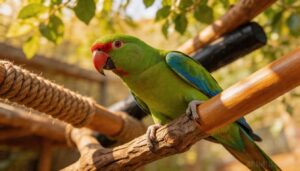
A perch isn’t just somewhere your bird stands — it’s where their feet spend most of their life.
A bird’s perch is not a fixture — it is the ground beneath their feet for a lifetime
The right design can prevent serious foot problems before they start.
Here’s what to look for when choosing perches that keep your bird comfortable and healthy.
Choosing The Right Perch Diameter
Perch size matters more than most bird owners realize. The right fit lets your bird’s toes wrap about two-thirds around the perch — not too tight, not too loose.
Use this Species Diameter Guide as a starting point:
- Small birds like finches: ⅜–⅞ inch
- Parakeets and cockatiels: ½–1 inch
- African greys and amazons: 1–2 inches
Multi-Size Perches and Adjustable Perch Options help meet your bird’s Weight-Based Sizing needs within a safe Grip Comfort Range.
Why Varied Widths and Shapes Matter
Sizing alone won’t protect your bird’s feet. Varied widths and shapes are just as important for Pressure Distribution, Muscle Exercise, and Circulation Boost.
| Perch Benefit | What It Does |
|---|---|
| Pressure Distribution | Shifts weight across different foot areas |
| Muscle Exercise | Forces varied gripping actions |
| Balance Coordination | Mimics natural branch irregularities |
| Circulation Boost | Prevents blood flow restriction |
| Joint Flexibility | Reduces repetitive strain and stiffness |
Different perch shapes work together for complete foot health benefits.
Natural Bark and Textured Surfaces for Grip
Natural bark takes grip a step further than shape alone. Bark Roughness and Micro Ridges create dozens of Claw Anchor Points across the surface, giving your bird’s feet something real to hold onto. With an Irregular Branch Shape, pressure shifts constantly — that’s natural Pressure Distribution at work.
Here’s why textured surfaces for grip matter:
- Natural bark engages claws without forcing a tight grip
- Uneven surfaces support foot health benefits of natural bark perches by reducing repetitive strain
- Best natural wood options for bird perches — maple, manzanita, apple — offer built-in texture for foot injury prevention
Avoiding Overly Smooth Dowel Perches
Smooth dowel perches look tidy, but they shortchange your bird’s feet. The same contact point, same pressure, same grip — every single day. That’s how foot pad soreness starts.
| Feature | Smooth Dowel | Textured/Adjustable Perch |
|---|---|---|
| Grip Pressure Management | Poor — uniform load | Good — shifts naturally |
| Foot Pad Relief | Minimal | Consistent |
| Adjustable Perch Shapes | None | Built-in variation |
| Rotating Perch Textures | Not possible | Easy to alternate |
| Chewable Wood Inserts | Incompatible | Fully supported |
Swap dowels for options that support real perch ergonomics — irregular shapes, bark surfaces, or chewable wood inserts. That small change makes a big difference in foot injury prevention and long-term comfort.
Sturdy Construction and Secure Hardware
Even the best perch fails if the hardware doesn’t hold. Use 304-grade stainless steel — not galvanized steel — for screws, washers, and wing nuts.
Stainless steel washers spread the load and protect cage wire. Hanger bolt length matters too: at least 1–1.5 inches anchor securely into wood.
Wing nut locking and bracket load distribution prevent wobble. Check for looseness weekly.
Using Multiple Perch Types for Pressure Relief
Think of your bird’s cage like a gym—one machine isn’t enough. Mixed Material Rotation keeps feet working differently throughout the day.
- Alternating Perch Heights shifts weight naturally between rest periods.
- Adaptive Shape Switching promotes Foot Muscle Variation across textures.
- Pressure Relief Scheduling means rotating perches weekly for balance.
- Enrichment through varied perch types reduces strain on repeated contact points.
Preventing Bumblefoot With Better Perch Variety
Preventing bumblefoot starts with giving your bird’s feet something different to grip each day. Variable Diameter Rotation — switching between small, medium, and large perches — stops pressure from building in one spot.
Pair that with Irregular Shape Training and Texture Gradient Perches using Foot Massage Bark from safe wood material like manzanita.
Height Variation Strategy and Enrichment through varied perch textures keep feet genuinely healthy using non-toxic and chew-safe materials.
Cleaning and Replacing Perches
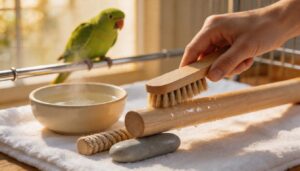
Keeping perches clean isn’t complicated, but it does require consistency. Each material has its own care routine, and knowing the difference can protect your bird from bacteria, mold, and hidden damage.
Here’s what you need to stay on top of it all.
Weekly Cleaning by Material Type
Each perch material needs its own cleaning approach.
Start wood perches with wood scraping to remove droppings before any wiping — water alone won’t cut through dried waste.
Plastic perches? Plastic dishwasher cycles make disinfecting simple if the material is heat-safe.
For rope, rope brushing removes surface debris before hand-washing.
Cement needs cement bleach solution — half a cup per gallon.
Always do drying checks before returning any perch to the cage.
Sanitizing Natural Branches Before Cage Use
Natural branches carry hidden risks — bacteria, mold spores, and insects can hitch a ride right into your bird’s home.
Before any branch earns a spot in the cage, it needs this three-step process:
- Branch Selection and Surface Scrubbing: Scrub thoroughly with water and a stiff brush to clear debris.
- Liquid Disinfection: Soak in diluted vinegar or carefully mixed bleach solution, then rinse several times.
- Heat Sanitizing: Bake at 250°F until fully sanitized, watching for cracks.
Proper cleaning and disinfecting perches prevent bacterial contamination before it starts.
Drying Perches Fully to Prevent Mold and Bacteria
damp perch is a welcome mat for mold and bacteria.
After cleaning, wipe off standing water first, then focus on hidden moisture spots — bark grooves, rope fibers, and screw holes stay wet long after the surface feels dry.
Use airflow optimization with a fan, or try sunlight drying outdoors.
rotating storage keeps spare perches fresh between uses.
Daily Checks for Cracks, Splinters, Rust, and Fraying
A quick daily scan takes less than a minute and can save your bird from a serious injury. Run your finger along wood surfaces for splinter inspection — especially at cut ends and knots.
Crack detection means checking grain lines after drying. Rust spotting starts at welded joints.
For rope fraying and wear pattern checks, tug gently; loose strands must go immediately.
When to Replace Wood, Rope, Plastic, or Metal Perches
Once daily checks flag damage, replacement becomes the next call.
Wood hits its Chewing Damage Threshold when splinters appear or the surface roughness increases beyond safe handling. Rope goes when weaving breaks apart.
Watch for Material Fatigue Signs in plastic — sharp edges mean it’s done. Metal follows Weight-Specific Wear patterns; rust or bending ends its use.
Seasonal Replacement Schedule keeps everything fresh.
Safe Perch Placement Inside The Cage
Where you place perches shape your bird’s daily life as much as what they’re made of.
Follow these cage design and placement basics:
- Multiple Levels — set perches at different heights so your bird can climb, hop, and choose
- Clear Flight Paths — leave open space for short flights between perches
- Wall Clearance — keep perches away from bars to protect tail feathers
- Food Safety Zones — never position perches directly above food or water
- Secure Mounting — fasten every perch firmly so it won’t shift on landing
Rotating Perches to Maintain Hygiene and Enrichment
Rotating perches do double duty — it refreshes hygiene and adds enrichment. Moving a perch to a new cage spot gives your bird fresh footing choices, which encourages Balance Exercise and Foot Muscle Activation through small grip adjustments.
It also improves Hygiene Inspection Access, letting you catch hidden debris around joints. Watch for grinding or sticking — that signals Joint Wear Monitoring is overdue.
Frequently Asked Questions (FAQs)
What not to put in a budgie cage?
What’s silently harming your budgie?
Avoid mirrors, nest boxes, loose bells, sharp toys, toxic paints, unsafe wood, treated plastics, corroded metals, and glue-coated materials — all pose serious toxicity or injury risks.
What wood is toxic to parrots?
Avocado, cedar, oak, yew, and cherry are toxic to parrots. Holly toxicity and boxwood toxicity are real risks. Avoid pressure-treated wood entirely — arsenic in treated wood is lethal.
Can wild-caught branches carry parasites or disease?
Yes, they can. Natural branches may carry hidden fungal spores, insect egg reservoirs, and moisture-driven microbes. Always wash, heat-treat, and fully dry any branch before use.
How many perches does one bird need?
Three perches are a solid starting point for one bird. But species-specific count, cage size ratio, and activity level all matter.
more active bird needs more variety, spacing, and height tiering.
Are perch covers or booties ever recommended?
Perch covers irritate, abrade, and wound — they don’t protect. Booties aren’t a veterinary recommendation for healthy birds.
For foot soreness prevention, natural textured perches beat any abrasive cover risks every time.
Do perch materials differ by bird species or size?
Yes, they do. Larger birds need thicker, sturdier perches for weight support, while small species like budgies need narrower diameters.
Foot shape compatibility and chewing behavior both guide species-specific diameter and size-driven material choices.
Can birds develop allergies to specific perch materials?
True allergies are rare in birds. What you’ll usually see is contact dermatitis — skin irritation from chemical toxicity or material sensitivity, not a classic immune reaction.
Watch for redness or foot-biting after introducing new perches.
Conclusion
Like a safe nest, choosing the right materials for your bird’s perches is essential. What materials are safe for bird perches is key to their health.
Opt for safe woods, metals, and ropes.
Regularly clean and replace perches to prevent harm. By doing so, you’ll help your bird thrive, just like a tree grows strong with proper care, providing a happy home.
- https://beautyofbirds.com/plastic-perches-are-bad-for-budgies/
- https://vcahospitals.com/know-your-pet/perches-for-birds
- https://substack.freerangeparrots.org/p/ultimate-list-of-safe-and-toxic-plants-to-birds
- http://www.riverlandingsanimalclinic.com/news/2021/1/26/keep-pet-birds-away-from-these-household-toxins-teflon-avocados-lead-and-zinc
- https://vetmed.illinois.edu/pet-health-columns/bird-toxins-teflon-avocado-lead-zinc/