This site is supported by our readers. We may earn a commission, at no cost to you, if you purchase through links.
Woodpeckers don’t care about your schedule, but they’ll show up the moment you hang a suet feeder—and your kids will notice. There’s something about watching a downy woodpecker grip a wire cage and peck away that stops children mid-sentence, phones forgotten.
Suet feeders work faster than seed feeders at drawing in that kind of activity because suet is pure fuel: high-fat, calorie-dense food that birds seek out hard, especially when temperatures drop. For families, that translates into a backyard that earns its keep.
Choosing the right suet bird feeders for families with kids means balancing bird appeal with designs that are safe, easy to clean, and built to survive curious hands.
Table Of Contents
- Key Takeaways
- Benefits of Suet Feeders for Families
- Choosing Kid-Friendly Suet Bird Feeders
- Safety and Hygiene Tips for Families
- Top 10 Suet Bird Feeders for Families
- Brome Squirrel Buster Squirrel Proof Suet Feeder
- 1. More Birds Double Suet Feeder
- 2. More Birds Double Caged Suet Bird Feeder
- 3. Kingsyard All Metal Double Suet Bird Feeder
- Nature’s Way Cedar Upside Down Suet Feeder
- Kettle Moraine Cedar Tail Prop Suet Bird Feeder
- 4. C S Suet Bird Feeder Basket
- 5. Cedar Suet Plug Log Feeder
- 6. Woodlink Large Premier Bird Feeder
- 7. Birds Choice Pileated Woodpecker Suet Feeder
- Placement Strategies for Family Yards
- Encouraging Kids’ Interest in Birdwatching
- Seasonal Suet Feeding Tips for Families
- Frequently Asked Questions (FAQs)
- What is the 5 7 9 rule for bird feeders?
- How to make kid friendly bird feeders?
- Why should I sprinkle coffee grounds around my bird feeder?
- Where is the best place to put a suet bird feeder?
- Which birds are easiest for children to identify?
- How do you keep squirrels away from feeders?
- What should families do if a bird gets injured?
- Conclusion
Key Takeaways
- Suet feeders draw in woodpeckers, nuthatches, and chickadees faster than seed feeders because suet’s high fat content gives birds exactly the fuel they need, especially in cold weather.
- Choosing a feeder with childproof latches, BPA-free materials, and a squirrel-resistant cage makes feeding time safer and far less messy when kids are involved.
- Hanging your suet feeder 5 to 6 feet off the ground, at least 10 feet from play areas, and away from dense shrubs protects both your kids and the birds visiting your yard.
- Simple habits like cleaning feeders every two weeks, storing suet in airtight containers, and always wearing gloves when handling suet keep your family and the birds healthy over the long run.
Benefits of Suet Feeders for Families
Suet feeders do more for your backyard than just feed birds — they give your whole family something to look forward to each morning. From drawing in woodpeckers and chickadees to sparking your kid’s curiosity about the natural world, the benefits add up fast.
Picking the right setup matters too — a quick look at the best suet feeders for attracting woodpeckers and nuthatches can help you get more action at your feeder from day one.
Here’s a closer look at what makes suet feeders such a good fit for families.
High-Energy Nutrition for Birds
Think of suet as a bird’s version of a power bar — packed with about 9 calories per gram, it’s one of the most energy-dense foods you can offer. During winter, bird energy needs skyrocket just to stay warm. Suet nutrition facts show why it works so well:
- Promotes feather health benefits through essential fatty acids
- Fuels winter foraging strategies when insects disappear
- Optimizes avian diet with concentrated fat birds metabolize fast
Attracting Diverse Bird Species
One suet feeder can quietly become a front-row seat to real bird species diversity. Different suet cake varieties and feeder placement strategies draw surprisingly varied visitors — from attracting woodpeckers drilling methodically to nuthatches creeping headfirst down the cage. Seasonal migration patterns bring new faces throughout the year too.
| Bird Species | Feeder Type | Suet Preference |
|---|---|---|
| Downy Woodpecker | Cage or tail-prop | Insect-enriched suet |
| White-breasted Nuthatch | Upside-down feeder | Peanut butter mix |
| Black-capped Chickadee | Standard cage | Berry or nut suet |
| Tufted Titmouse | Tail-prop design | Sunflower seed suet |
| Red-bellied Woodpecker | Large cage feeder | Suet with corn |
Woodland bird attraction improves noticeably when you match the feeder style to the species. That’s the quiet magic of backyard birding — small choices, big rewards.
Family Bonding Through Birdwatching
Watching bird behavior together quietly does something to a family — it slows everyone down. Backyard birding turns ordinary afternoons into genuine family outings built around curiosity.
- Kids develop patience observing birds at the suet feeders
- Nature exploration sparks real conversations about wildlife conservation
- Outdoor education happens naturally, without anyone noticing
That’s the quiet win of bird feeding: connection sneaks up on you.
Choosing Kid-Friendly Suet Bird Feeders
Not all suet feeders are created equal, especially when little hands are nearby. The right design can make feeding time safer, cleaner, and a lot more enjoyable for everyone in the family. Here are the key things to look for before picking one.
Safe Feeder Designs for Children
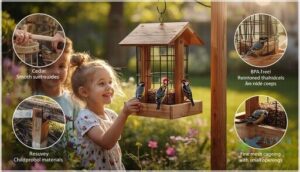
Not all suet feeders are built with little hands in mind — but the right bird feeder design makes a real difference. Kid Friendly Feeders often use Suet Cage Safety features like childproof latches, smooth BPA-free Bird Feeder Materials, and squirrelproof caging that keeps curious fingers out. Easy Refill Designs with reinforced hanging points and easy-to-clean interiors round out a smart, family-safe setup.
| Feature | Why It Matters | Family Benefit |
|---|---|---|
| Childproof Latches | Prevents kids from opening feeders | Reduces spoiled suet contact |
| BPA-Free Plastic/Cedar | Non-toxic, splinter-free surface | Safe for accidental touches |
| Squirrel Control Cage | Small openings deter animals | Less wildlife conflict near kids |
| Reinforced Hanging Points | Prevents accidental falls | Safer yard environment |
| Easy to Clean Design | Smooth interiors limit residue | Faster, safer maintenance |
Mess-Free Suet Handling
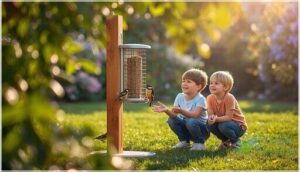
Greasy hands and sticky clothes don’t have to come with the territory. The right suet feeder designs make mess reduction genuinely easy — here’s what to look for:
- Choose easy to clean, squirrelproof cages with smooth interiors
- Use rigid holders over plastic mesh for safer Suet Cake Storage
- Prioritize Bird Feeder Cleaning with quick-release clips
- Select feeders with drip trays for Suet Placement control
- Schedule regular Feeder Sanitizing and bird feeder maintenance every two weeks
Age-Appropriate Feeder Placement
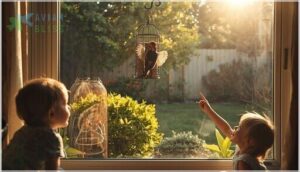
Where you hang your suet feeders matters more than most people realize. Aim for 5 to 10 feet off the ground — high enough for bird safety and low enough for kids to actually see what’s happening.
When you’re topping up or cleaning feeders, gloves are a smart habit — especially if you spot anything unusual, since recognizing early signs of avian parasites can help you act before small problems become bigger ones.
Think about your yard layout too: position feeders near a window for feeder visibility, keeping backyard wildlife in easy view. That’s the sweet spot for real kid engagement with bird watching.
Safety and Hygiene Tips for Families

Keeping a suet feeder clean isn’t complicated, but it does matter more when kids are around. A few simple habits can protect both your birds and your family from bacteria and mold. Here’s what you need to know to stay ahead of it.
Proper Cleaning and Maintenance
A clean feeder is a safe feeder — full stop. For bird health, aim for cage cleaning every two weeks, or weekly during heavy use.
Start by emptying old suet completely, then scrub with warm soapy water and rinse well. Regular feeder inspection catches wear before it becomes a problem.
Fresh suet replacement and consistent bird feeder maintenance keep every visit worthwhile.
Preventing Mold and Bacteria
Mold doesn’t wait for an invitation — warm, humid air is all it needs. When humidity climbs above 70% and temperatures rise, your suet feeder becomes a bacteria hotspot fast.
For solid bacteria control and mold prevention, follow these steps:
- Soak feeders in a 1:9 bleach-water solution for 10–15 minutes during feeder cleaning.
- Choose metal feeders for better suet sanitizing — they don’t trap moisture like wood does.
- Practice consistent humidity management by moving feeders to shadier spots in summer.
Safe Suet Storage and Handling
Store suet cakes in airtight metal or heavy-duty plastic containers, labeled with the date so you’re never guessing about freshness. Keep them somewhere cool and shaded — suet spoilage prevention starts long before the feeder.
Always wear gloves when handling suet, and wash hands after. These simple hygiene practices and storage solutions protect both avian health and your family’s wellbeing near the feeder.
Top 10 Suet Bird Feeders for Families
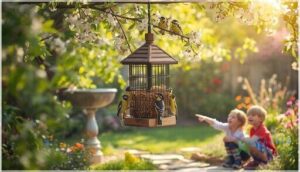
Finding a suet feeder that works well for your family doesn’t have to be a guessing game. The right one balances safety, easy cleaning, and bird appeal all at once.
Here are ten feeders that consistently deliver on all three.
Brome Squirrel Buster Squirrel Proof Suet Feeder
The Brome Squirrel Buster lives up to its name. Its weight-activated squirrel proof mechanism closes off suet access the moment a squirrel climbs on, while birds feed freely.
Holding two standard suet cakes with crumb ports to catch falling pieces, this suet feeder design keeps backyard birding mess-free and family-friendly.
The lifetime warranty makes long-term feeder maintenance practically worry-free.
1. More Birds Double Suet Feeder
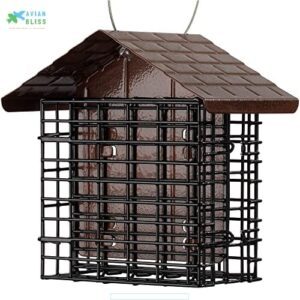
If squirrel-proofing isn’t your top priority, the More Birds Double Suet Feeder keeps things simple and practical. It holds two standard suet cakes, so you’re not refilling every other day — a small but real relief for busy families.
The solid steel build and powder-coated finish handle whatever weather comes, and the easy-open double-locking closure means you can swap cakes out quickly without a mess.
Birds like woodpeckers and nuthatches can cling right to the cage grid and feed naturally.
| Best For | Casual backyard birders who want a low-fuss feeder that attracts woodpeckers and nuthatches without a lot of maintenance. |
|---|---|
| Material | Metal |
| Suet Capacity | 2 cakes |
| Weather Resistant | Yes |
| Bird Target | Woodpeckers, Nuthatches |
| Easy to Clean | Yes |
| Made in USA | No |
| Additional Features |
|
- Holds two suet cakes, so you’re not constantly refilling
- Solid steel with a powder-coated finish that holds up in rough weather
- Cage grid lets clinging birds like nuthatches and woodpeckers feed naturally
- Not squirrel-resistant — the large grid makes it easy for them to raid
- Some birds may have trouble accessing the suet depending on placement
- Not a great fit for areas with bear activity
2. More Birds Double Caged Suet Bird Feeder
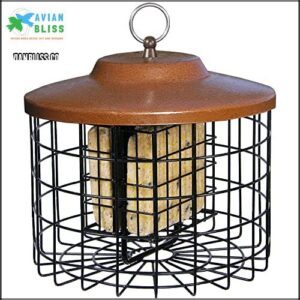
If you have kids who love watching backyard birds, the More Birds Double Caged Suet Bird Feeder adds a layer of protection you’ll appreciate. Its double cage design keeps squirrels out and limits access for larger, pushier birds — so smaller species like chickadees and nuthatches actually get to eat.
The powder-coated steel holds up through rain and cold, and the latch is easy for adults but not for little hands, which helps keep things clean and safe.
| Best For | Families with kids who love watching backyard birds and want to keep squirrels and pushy birds away from the feeder. |
|---|---|
| Material | Metal |
| Suet Capacity | 2 cakes |
| Weather Resistant | Yes |
| Bird Target | Woodpeckers, Chickadees |
| Easy to Clean | Yes |
| Made in USA | No |
| Additional Features |
|
- Double cage design blocks squirrels and large birds, giving smaller species like chickadees a fair shot at the suet
- Powder-coated steel holds up in rain, snow, and cold — no babying required
- Fits two suet cakes at once, so you’re not refilling it every other day
- Larger birds like woodpeckers may have trouble accessing the suet without modifications
- The lid and threads can wear out over time with regular use
- Needs occasional cleaning to stay effective, which adds a little upkeep to your routine
3. Kingsyard All Metal Double Suet Bird Feeder
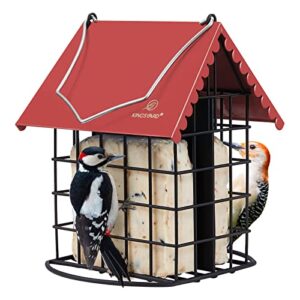
If you want something that’ll last through every season without showing signs of wear, the Kingsyard All Metal Double Suet Bird Feeder is worth a close look. Its powder-coated finish resists rust, and the weatherproof roof keeps suet fresh longer — which matters when you’re teaching kids about responsible feeding.
It holds two standard suet cakes, has a removable roof for easy refilling, and attracts woodpeckers, chickadees, and nuthatches. Simple to maintain, and sturdy enough to become a permanent fixture in your yard.
| Best For | Bird lovers, parents with kids, and anyone who wants a low-maintenance feeder that holds up year-round. |
|---|---|
| Material | Alloy Steel/Aluminum |
| Suet Capacity | 2 cakes |
| Weather Resistant | Yes |
| Bird Target | Small clinging birds |
| Easy to Clean | Yes |
| Made in USA | No |
| Additional Features |
|
- Built to last — all-metal construction with a rust-resistant powder-coated finish
- Weatherproof roof keeps suet fresh and makes it easy to refill and clean
- Attracts a great variety of clinging birds like woodpeckers, chickadees, and nuthatches
- No latch or lock, so determined critters can get in
- Squirrels can still access the suet without extra deterrents
- Only fits two standard suet cakes, so it needs refilling more often in busy yards
Nature’s Way Cedar Upside Down Suet Feeder
Nature’s Way Cedar Upside Down Suet Feeder brings something genuinely different to your yard. The upside-down feeding design naturally filters out larger bully birds, so the birds you actually want — woodpeckers, nuthatches, chickadees — get first access.
- Cedar Durability — rot-resistant wood with a protective stain
- Upside Feeding — deters starlings and grackles naturally
- Suet Capacity — holds 2 standard cakes
- Feeder Maintenance — lightweight at under 1.5 lbs, easy to rehang and clean
Kettle Moraine Cedar Tail Prop Suet Bird Feeder
Woodpecker families will feel right at home with the Kettle Moraine Cedar Tail Prop Suet Bird Feeder. The tail prop design gives clinging birds a stable foothold — no awkward scrambling.
Northern white cedar durability means it withstands rain and frost without rotting. It holds standard suet cake sizes, and feeder maintenance is simple with the slide-up roof.
Solid bird attraction, season after season.
4. C S Suet Bird Feeder Basket
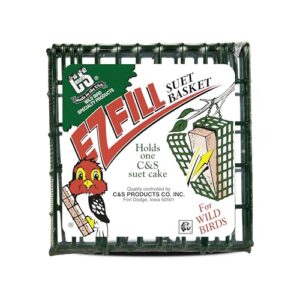
The C S Suet Bird Feeder Basket keeps things simple — and sometimes simple is exactly what your family needs. It’s built with vinyl-coated wire, so bird feet stay safe from temperature extremes, and ten feeding perches mean chickadees, woodpeckers, and nuthatches can all crowd in at once.
The side-opening design makes refilling easy enough for older kids to help. At just under four ounces, it hangs anywhere without hassle. One heads-up: it’s not squirrel-proof, so placement matters.
| Best For | Families and backyard birders who want an easy, no-fuss way to attract a variety of wild birds year-round. |
|---|---|
| Material | Metal |
| Suet Capacity | 2 cakes |
| Weather Resistant | Yes |
| Bird Target | Woodpeckers, Chickadees |
| Easy to Clean | Yes |
| Made in USA | No |
| Additional Features |
|
- Ten perches let multiple birds feed at the same time, so you get more action at once
- The side-opening design makes refilling quick and simple — even kids can handle it
- Vinyl-coated wire protects birds’ feet and holds up through all seasons
- Not squirrel-proof, so where you hang it makes a big difference
- The chain can be flimsy and may need replacing over time
- Suet needs swapping every 7–10 days, and the feeder requires regular cleaning to stay safe for birds
5. Cedar Suet Plug Log Feeder
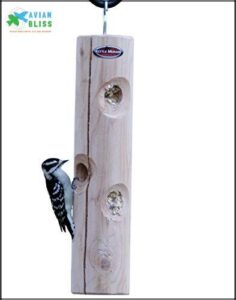
This cedar log feeder feels like something you’d find nailed to a tree in the deep woods — and that’s exactly what makes it work. Carved from solid Northern White Cedar, it holds four suet plugs in pre-drilled holes that woodpeckers, nuthatches, and chickadees naturally gravitate toward. Kids can help press the plugs in without making a mess.
At 16 inches long, it hangs easily and blends right into any backyard tree. Just keep an eye on the holes after rain to prevent moisture buildup.
| Best For | Backyard bird lovers who want to attract woodpeckers and other clinging birds with a natural, low-fuss feeder that looks great hanging in a tree. |
|---|---|
| Material | Cedar Wood |
| Suet Capacity | 1 cake |
| Weather Resistant | Partial |
| Bird Target | Woodpeckers, Chickadees |
| Easy to Clean | Yes |
| Made in USA | No |
| Additional Features |
|
- Made from solid Northern White Cedar in the USA — sturdy, natural, and built to last outside
- Four suet plug holes make refilling easy, and kids can help without any mess
- Blends right into a wooded backyard and works with suet plugs, peanut butter, or nuts
- The holes aren’t drilled all the way through, so you can only pack in so much suet at a time
- Open holes can collect rainwater, which may lead to mold or mildew if you’re not checking it regularly
- Cedar will crack as it dries — totally normal, but worth knowing upfront
6. Woodlink Large Premier Bird Feeder
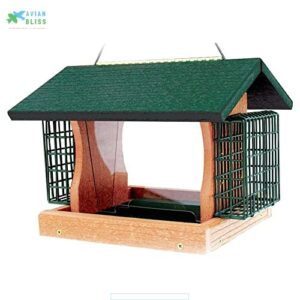
If you’re looking for a feeder that does more than just hold suet, the Woodlink Large Top-Tier Bird Feeder pulls double duty. It holds two suet cakes alongside up to 5.5 pounds of mixed seed, so you’re attracting a wider mix of birds in one spot.
Built from 90% recycled plastic, it resists rot and moisture without extra upkeep. The hinged roof makes refilling easy, and the powder-coated screen base keeps things draining cleanly — less mess, less fuss for busy families.
| Best For | Bird lovers who want to attract a variety of species and don’t mind a larger feeder that needs regular refilling. |
|---|---|
| Material | Cedar Wood |
| Suet Capacity | 1 cake |
| Weather Resistant | Yes |
| Bird Target | Woodpeckers |
| Easy to Clean | Yes |
| Made in USA | Yes |
| Additional Features |
|
- Holds both mixed seed and two suet cakes, so you get more bird variety without needing multiple feeders
- Made from 90% recycled plastic — durable, rot-resistant, and easy on the conscience
- Hinged roof and draining screen base make filling and cleanup pretty painless
- Some users have run into small quality control hiccups, like off-center hinges or suet holders that won’t latch properly
- Suet holders aren’t removable, so washing them is a bit awkward
- Between wind, squirrels, and birds tossing seed around, it can empty out faster than you’d expect
7. Birds Choice Pileated Woodpecker Suet Feeder
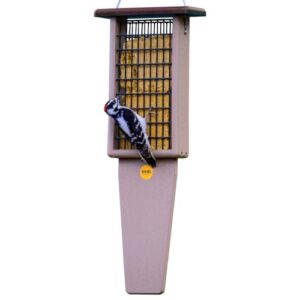
If you’ve ever watched a Pileated Woodpecker work a tree, you know they need serious support. That’s exactly what the Birds Choice Pileated Woodpecker Suet Feeder delivers. Its extra-long tail prop keeps large birds stable while they eat, so there’s no awkward slipping.
It holds two suet cakes, resists weather with recycled poly lumber, and cleans up easily. Made in the USA with stainless-steel screws and a vinyl-coated grid, it’s built to last through seasons of heavy use.
| Best For | Bird lovers who want to attract large woodpeckers and other clinging birds like nuthatches, chickadees, and jays with a feeder built to handle serious use. |
|---|---|
| Material | Wire |
| Suet Capacity | 1 cake |
| Weather Resistant | No |
| Bird Target | Wild birds |
| Easy to Clean | Yes |
| Made in USA | No |
| Additional Features |
|
- The extra-long tail prop gives big birds like Pileated Woodpeckers real stability while they eat
- Built from recycled poly lumber with stainless-steel screws, so it holds up through rough weather season after season
- Easy to load, clean, and maintain — no fuss
- No built-in squirrel deterrent, so you’ll need hot pepper suet or another workaround
- Only fits two suet cakes at a time, which means more frequent refills if you get heavy traffic
- Needs regular cleaning to keep birds healthy and the feeder in good shape
Placement Strategies for Family Yards
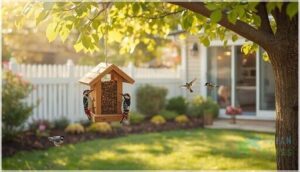
Where you hang your suet feeder matters just as much as which one you buy. A few smart placement choices can keep things safer for your kids, better for the birds, and a lot less stressful for you.
Here’s what to think about before you pick your spot.
Optimal Feeder Height
Getting feeder placement right makes all the difference for bird visibility and a safer yard. For most families, hanging suet feeders at 5 to 6 feet hits a sweet spot — birds can spot the food easily, and it aids squirrel deterrence when paired with baffles.
Here’s why height variations matter:
- 5–6 feet keeps feeders visible from windows for easy backyard birding
- 15 feet from trees cuts squirrel access dramatically
- Under 3 feet or over 15 feet from windows helps improve window safety and reduces bird collisions
- Multiple heights attract more species, enriching your bird feeding tips routine
Safe Distance From Play Areas
Height sets the stage, but distance keeps the peace. For solid play area safety, keep suet feeders at least 10 feet from where kids run and play — it’s one of the simplest yard layout choices you can make.
This distance guideline protects children from messy droppings and accidental contact while still keeping your wildlife-friendly garden visible and active from the patio.
Protecting Birds From Predators
Keeping birds safe adds another layer to smart feeder placement. Position your suet bird feeders at least 10 feet from dense shrubs where cats can stage surprise attacks.
Feeder guards and baffles block climbing predators, while a caged suet feeder manages squirrel deterrents naturally.
For solid wildlife protection and predator control, spacing multiple feeders around your yard also reduces crowding that makes birds vulnerable.
Encouraging Kids’ Interest in Birdwatching

Getting kids genuinely curious about birds doesn’t take much — just the right starting point. A suet feeder in the yard is honestly one of the best tools you’ve got, because the birds come to you.
Here are a few simple ways to turn those feeder visits into something your kids will actually look forward to.
Bird Identification Activities
Turn your suet feeder into a classroom. Watch how woodpeckers hammer for grubs, chickadees dart in and out, and cardinals take their time.
Point out beak shapes built for different foods, feather types suited to weather, and clues about nesting habits nearby.
Apps like Merlin Bird ID make identifying backyard birds fast and fun, even for young kids just starting to notice migration patterns and bird calls.
Birdwatching Journals and Checklists
Once kids start recognizing visitors at the feeder, a simple nature notebook gives that curiosity somewhere to land. Encourage them to log each sighting — date, weather, behavior — on a bird log sheet.
Species tracking over weeks reveals real patterns, like which birds show up after a cold snap. Birdwatching journals, bingo cards, and backyard birding checklists make wildlife recording feel less like homework and more like discovery.
Teaching Respect for Wildlife
Respect is the quiet foundation of wildlife conservation. Teach kids early that birds are guests in your yard, not entertainment — watching without chasing, touching, or disturbing nests is real bird ethics in action.
Teach kids early that birds are guests in your yard, not entertainment
This nature education builds eco awareness that sticks for life. A wildlife-friendly garden thrives when children understand that backyard bird conservation means the yard belongs to the birds first.
Seasonal Suet Feeding Tips for Families

Suet feeding looks a little different depending on the time of year, and knowing those differences makes a real impact on the birds visiting your yard.
A few simple adjustments each season can keep your feeder safe, fresh, and packed with the right birds-eye visitors.
Here’s what your family should know as the seasons change.
Winter Feeding Best Practices
Winter is when suet feeders earn their place in your yard. Cold weather strategies start with suet placement — hang feeders in a shaded spot at least 5 feet up, away from drifting snow.
Chickadees and woodpeckers ramp up visits as temperatures drop, signaling real winter nutrition needs.
Keep up with feeder sanitation and refresh winter bird food regularly so every visit counts.
Summer Suet Selection and Care
Summer brings a real challenge with suet melting, but no-melt suet blends — made with cornmeal or extra beef fat — hold up past 90°F. Bird preferences shift too, so try fruit-based suet cakes to pull in tanagers and orioles.
Feeder sanitizing becomes more urgent in heat, so clean your suet feeders every two weeks. Summer nutrition matters more than most people realize.
Adapting to Changing Bird Populations
Bird populations shift with the seasons, and your suet feeder can shift with them. Migration brings new visitors you won’t see any other time of year, so try different suet blends to welcome them.
- Swap to fruit-based suet during fall migration
- Track species diversity in a simple notebook
- Space multiple feeders 15–20 feet apart to reduce competition
- Adjust feeder placement to match habitat adaptation patterns
- Share sightings with local wild bird conservation groups
Climate impact is changing migration timing, so backyard birding observations genuinely matter. Your feeder data bolsters population trends research more than you might expect.
Frequently Asked Questions (FAQs)
What is the 5 7 9 rule for bird feeders?
Think of it as a three-part shield for your feeder. Mount it 5 feet high, keep 7 feet from cover, and stay 9 feet from windows — blocking squirrels, predators, and deadly bird collisions.
How to make kid friendly bird feeders?
Pinecone feeders rolled in suet and seeds are a classic DIY Projects starting point.
For simple Bird Feeder Crafts, try toilet rolls spread with nut-based Suet Recipes, then rolled in birdseed — quick, fun, and mess-friendly.
Why should I sprinkle coffee grounds around my bird feeder?
Sprinkling coffee grounds around your suet bird feeders works as a natural squirrel repellent — deterring squirrels effortlessly while giving the earth a nitrogen soil boost and handling garden pest control without harsh chemicals.
Where is the best place to put a suet bird feeder?
Like a lantern guiding travelers home, the right suet placement draws birds in. Hang your feeder 5 to 10 feet high, near trees for cover, away from dense shrubs where predators hide.
Which birds are easiest for children to identify?
Cardinals are a great starting point for bird recognition — that bold red color is impossible to miss.
Chickadees are tiny and friendly, and woodpeckers announce themselves with their drumming before kids even spot them.
How do you keep squirrels away from feeders?
Hang your suet feeder at least five feet up and eight feet from trees. Add a baffle, choose weight-activated or cage designs, and squirrels won’t stand a chance.
What should families do if a bird gets injured?
If a bird gets injured near your feeder, observe it from a distance first. Gently contain it in a dark, ventilated box, then contact your local wildlife rescue for proper emergency care guidance.
Conclusion
The right feeder quietly does the heavy lifting—holding birds in your yard and holding your family’s attention longer than any screen ever could. When you choose suet bird feeders for families with kids, you’re not just feeding wildlife; you’re building a front-row seat to nature in your own backyard.
Clean it, fill it, and step back. The woodpeckers will show up, and your kids won’t forget the moment they do.
- https://birdsinthetree.com/where-to-hang-suet-bird-feeder/
- https://www.birdsandblooms.com/birding/attracting-birds/feeding-birds/how-to-clean-suet-bird-feeder/
- https://www.kingsyard.com/blog/bird-feeder-cleaning-guide-how-to-keep-your-feeders-safe-and-hygienic/
- https://www.audubon.org/news/three-easy-important-ways-keep-your-bird-feeder-disease-free
- https://featheredguru.com/how-to-prevent-mold-in-bird-feeders/