This site is supported by our readers. We may earn a commission, at no cost to you, if you purchase through links.
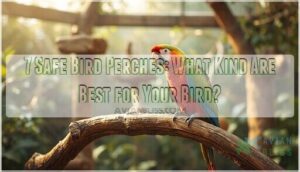
A wrong perch can quietly damage your bird’s feet over months—and most owners never connect the two. Foot problems like bumblefoot often trace back to perches that are too smooth, too wide, or made from materials that shouldn’t be anywhere near a bird’s beak.
The perch sitting in your bird’s cage right now does more than give it a place to rest—it shapes posture, foot strength, and long-term joint health. Knowing what kind of perches are safe for birds isn’t complicated, but the details matter. The right choices come down to material, texture, size, and placement.
Table Of Contents
- Key Takeaways
- Safe Materials for Bird Perches
- Key Perch Features for Bird Safety
- Perch Types and Their Benefits
- Proper Perch Placement and Upkeep
- Top 7 Safe Bird Perches to Consider
- Frequently Asked Questions (FAQs)
- What perches are safe for birds?
- What is the best material for a bird perch?
- What wood is safe for bird perches?
- How often should bird perches be rotated?
- Can birds share perches safely with others?
- Do perch colors affect bird stress levels?
- Should perches differ between indoor and outdoor aviaries?
- How do perches impact a birds sleep quality?
- Conclusion
Key Takeaways
- Natural hardwoods like manzanita, maple, and apple are your safest bet — they’re non-toxic, durable, and give your bird’s feet the varied grip they need.
- Plastic and treated wood can quietly harm your bird over time, releasing toxins and raising the risk of foot problems like bumblefoot.
- Perch size matters: your bird’s toes should wrap about two-thirds around the perch, and offering different diameters keeps feet strong and healthy.
- Even the best perch becomes a health hazard if it’s dirty or worn out, so clean perches weekly and replace them when you spot cracks, fraying, or persistent odors.
Safe Materials for Bird Perches
The material your bird stands on every day matters more than most people think. Some options keep feet healthy and safe, while others can cause real harm over time.
Getting the placement right is just as important as the material—proper bird perch placement in the cage can make a real difference in your bird’s daily comfort and long-term foot health.
The perch your bird stands on daily can either protect its feet or quietly cause harm over time
Here’s what you should know before picking a perch.
Natural Hardwoods (Maple, Oak, Manzanita, Apple)
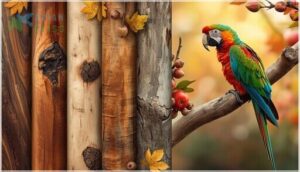
Hardwoods like maple, oak, manzanita, and apple are some of the safest perch materials you can choose. Their natural texture benefits your bird’s foot health by varying grip and reducing pressure sores.
Manzanita leads in hardwood durability, resisting chewing for years. Perch material safety depends on sourcing untreated wood — always confirm it’s pesticide-free before placing it in the cage.
For more detailed guidance on safe and dangerous woods, consult expert recommendations before choosing materials.
Untreated Branches From Safe Trees
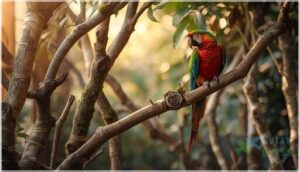
Beyond milled hardwoods, natural branches bring real Bird Enrichment — irregular Natural Textures keep feet active and healthy. Safe Harvesting matters, though. Stick to these Branch Preparation steps:
- Choose safe Tree Species like apple, willow, birch, or elm
- Avoid toxicity risks — skip cherry, peach, or plum branches
- Scrub branches clean with water or diluted vinegar
- Bake at 175°F for 30 minutes to kill hidden germs
Safe materials don’t have to be complicated. To learn more about the importance of, see this detailed resource.
Rope Perches (Cotton, Sisal)
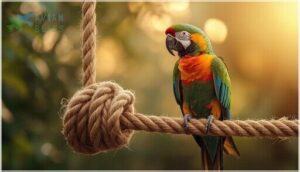
Rope perches offer something wood can’t — a soft, cushioned surface that’s easy on your bird’s feet. Cotton rope feels gentle but frays over time, and loose threads can wrap around toes.
Sisal rope durability makes it a safer pick; its stiffer fibers break rather than tangle. Check rope perches weekly and replace them at the first sign of fraying.
Stainless Steel and Aluminum Perches
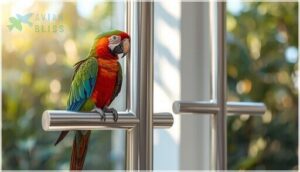
Metal perches are a solid option when wood and rope don’t fit your needs. For Bird Perch Safety, stick to 304-grade stainless steel — it’s non-toxic, resists rust, and manages heavy chewers well. Stainless Steel Finishes with a brushed surface improve grip. Aluminum Durability makes it a lighter choice for travel setups. Both score high for Metal Perch Hygiene since they clean up fast.
Materials to Avoid (Plastic, Treated Wood)
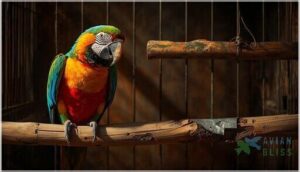
Some materials can quietly hurt your bird. Toxic plastic perches are slippery, forcing birds to grip harder and raising bumblefoot risk. Birds that chew plastic swallow dangerous shards.
Treated wood leaches copper, arsenic, or formaldehyde into their systems over time. Galvanized metal and coated hardware carry zinc poisoning risks.
Stick to safe materials — material toxicity from the wrong perch adds up fast.
Key Perch Features for Bird Safety
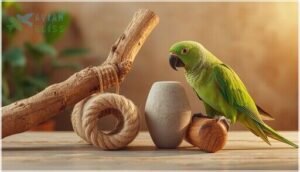
Not every perch is built the same, and the details matter more than you’d think. A few key features separate a safe perch from one that could hurt your bird over time.
Here’s what to look for before you buy.
Proper Diameter and Width
Getting perch size right is one of the best things you can do for your bird’s foot health. Follow perch size guidelines based on your bird’s species — your bird’s toes should wrap about two-thirds around the perch width.
Offer varying diameters so feet stay active and strong. Different bird species need different perch materials and perch length to stay comfortable.
Textured Surfaces for Grip
Texture is the unsung hero of your bird’s foot health. The right surface keeps toes gripping naturally — without strain or slipping. Here’s what works:
- Natural Bark on wood perches gives toes real ridges to flex against.
- Rope Texture from cotton or sisal lets claws catch gently.
- Pumice Surfaces trim nails without harsh scraping.
- Ceramic Grips add firm traction for landing spots.
- Abrasive Materials like sandpaper? Avoid them — they damage feet.
Non-Toxic and Chew-Safe Materials
Birds chew on everything — and that’s perfectly normal. The problem starts when the perch itself is the hazard. Stick with bird-friendly woods like manzanita, maple, and apple.
These are natural wood perches that won’t splinter dangerously or release toxins. Skip plastic and avoid anything with non-toxic coatings that crack or flake.
Safe perch options use clean, untreated wood — no finishes, no surprises.
Sturdiness and Weight Support
A wobbly perch is a safety hazard, plain and simple. Your bird needs solid perch stability every time it lands, climbs, or shifts its weight. Good load capacity means the perch supports two to three times your bird’s weight without bending.
- Wood perches — dense hardwoods offer strong structural integrity
- Metal perches — stainless steel delivers top material strength and durability
- Rope perches — check weight limits by bird size
- Perch materials — avoid hollow plastic; it cracks under load
Easy Cleaning and Maintenance
A dirty perch is a health risk your bird can’t avoid. Stick to a daily routine — spot-clean droppings every couple of days and do a full wash weekly with mild soap and warm water.
For disinfecting methods, diluted bleach (1:10) works well on hard perch materials. Safe materials like hardwood and stainless steel make perch sanitation and overall cage maintenance much easier.
Perch Types and Their Benefits
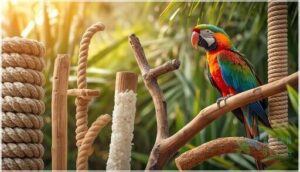
Not all perches are built the same, and that actually works in your favor. Different types serve different needs, from foot health to beak maintenance to just giving your bird a fun place to hang out.
Here’s a look at the main perch types and what each one brings to the table.
Natural Wood Perches
Natural wood perches are one of the best choices for your bird’s foot health. Wood types like manzanita, apple, and java wood offer uneven surfaces that shift your bird’s grip throughout the day.
That variety in perch materials matters more than most owners realize — it strengthens foot muscles and reduces sores.
Smart wood selection and proper wood treatment before cage use keep things safe.
Rope and Cotton Perches
Rope perches offer something wood can’t — a soft, cushioned landing spot your bird will actually rest on. Cotton and sisal are the top fiber types here. Cotton feels gentle on tender feet, while sisal provides better grip.
Just check both regularly for fraying. Loose threads can wrap around toes, so perch installation and routine checks aren’t optional — they’re just smart bird safety.
Conditioning Perches (Ceramic, Cement)
Soft perches handle comfort well, but conditioning perches — ceramic or cement — handle something different: nail and beak maintenance. Their rough texture naturally files your bird’s nails with every step, cutting down on stressful trims.
Ceramic bird perches and cement bird perches also resist bacteria and clean up fast. Just limit use to one per cage for healthy foot health.
Metal and Acrylic Perches
Metal perches and acrylic perches round out your perch materials options nicely. For metal safety, stick with stainless steel or aluminum — they won’t rust or flake.
Acrylic durability means easy cage hygiene, since droppings wipe right off. Unlike plastic perches or PVC perches, quality acrylic won’t release toxins.
Both support bird footcare well, though neither should be your bird’s only perch.
Perch Platforms and Swings
Platforms and swings bring real variety to your bird cage design. A flat platform lets your bird rest with toes fully spread — great for older birds or sore feet.
Swings add swing motion that builds balance and bird exercise, mimicking shifting branches in the wild.
Mix both into your cage layout for smart perch variety. Just check rope perches and hardware often for wear.
Proper Perch Placement and Upkeep
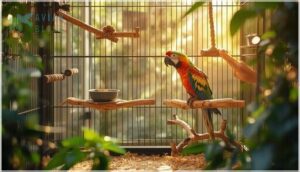
Even the best perch won’t do much good if it’s placed in the wrong spot or left unchecked for months. Where you put perches — and how you care for them — makes a real difference in your bird’s health.
Here’s what you need to know about placement and upkeep.
Height and Spacing in Cages
Where you place perches shapes your bird’s whole cage environment. Think of it like setting up a home — every level fulfills a purpose. Good perch placement facilitates natural bird behavior and keeps the cage design safe.
- Top perches work best for sleeping, with vertical clearance for head and wing room.
- Mid-level perches facilitate daytime activity and flight path optimization between perch level variations.
- Lower perches give tired birds a quiet retreat.
Space perches apart so your bird hops rather than sidesteps.
Avoiding Food and Water Contamination
Never put perches directly above food or water dishes — droppings fall straight in. That’s a real contamination risk for your bird’s health. Keep dishes to the side, well outside the fall zone.
For good hygiene practices and pet bird care, clean perches near food daily with warm soapy water, then rinse fully. Perch sanitation protects your bird’s cage environment and overall avian health.
Regular Inspection for Damage
Check your perch maintenance at least once a week — it’s one of the simplest perch maintenance tips you can follow. Run your fingers along the surface to catch perch damage signs early, like cracks deeper than 1/8 inch or frayed rope strands.
These create real bird injury risks. Consistent inspection schedules and damage prevention habits protect perch safety and your bird’s welfare before problems start.
Cleaning and Disinfecting Perches
Daily sanitizing is one of the best bird safety tips you can follow. Wipe perches with a damp cloth each day, then do a deeper clean with mild dish soap weekly.
For perch disinfection, a diluted bleach solution works well on hard surfaces — just rinse thoroughly and air dry fully. Always move your bird to another room before using any cleaning solutions.
When to Replace Worn Perches
Even a favorite perch has a lifespan. Watch for perch wear signs like deep cracks, smooth surfaces, fraying rope, or a sour smell that won’t go away after cleaning. These signal real bird injury prevention concerns.
As part of your Bird Perch Maintenance routine, follow replacement schedules — rope perches every few months, hard wood perches yearly. Your bird’s foot health depends on it.
Top 7 Safe Bird Perches to Consider
Now that you know what to look for, choosing an actual perch gets a lot easier. There are some solid options out there that check all the right boxes for safety, comfort, and durability.
Here are seven worth putting on your radar.
1. Natural Wood Bird Perch Stand
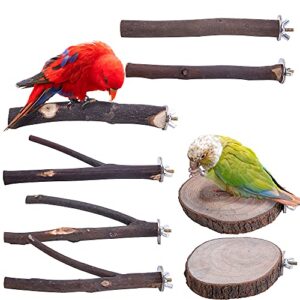
This 8-piece set is a solid starting point for most bird owners. It’s made from natural hardwood, so your bird gets real texture and varied grip — not a flat, slippery surface. The built-in bolts and wing nuts make setup simple.
One heads-up: a few users noticed a chemical smell right out of the box, so rinse it and let it air dry first. It fits parakeets, cockatiels, and budgies well, but won’t suit larger birds.
| Best For | Bird owners with small to medium-sized birds like parakeets, cockatiels, or budgies who want a natural perching setup that’s easy to install. |
|---|---|
| Material | Natural wood |
| Bird Compatible | Yes |
| Easy Install | Yes, built-in bolts |
| Foot Health | Exercises feet |
| Cleaning Required | Rinse before use |
| Size Limitations | Small birds only |
| Additional Features |
|
- Real hardwood gives birds varied texture and grip, which is great for healthy feet
- Comes with 8 pieces, so you’ve got options for different spots in the cage
- Simple setup — bolts and wing nuts are already built in
- Can have a chemical smell out of the box, so you’ll need to rinse and air it out first
- Some users had stability issues due to washer sizing problems
- Too small for larger bird species
2. Borangs Wood Bird Perch Platform
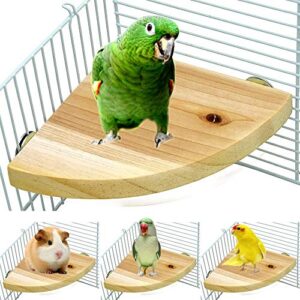
If your bird needs more than just a rod to grip, the Borangs Wood Bird Perch Platform is worth a look. It’s a flat, 17.5 cm square of natural fir wood — giving small birds like budgies and lovebirds a place to fully rest their feet. That’s a real plus for birds with foot fatigue.
It mounts easily to cage bars with included screws. Clean it regularly, and replace it once chewing wears it down.
| Best For | Small bird owners — especially those with budgies or lovebirds — who want to give their pet a flat, comfortable spot to rest their feet and take a break from gripping. |
|---|---|
| Material | Natural wood |
| Bird Compatible | Yes |
| Easy Install | Yes, corner mount |
| Foot Health | Provides activity |
| Cleaning Required | Regular cleaning needed |
| Size Limitations | Small animals only |
| Additional Features |
|
- Made from natural fir wood, so it’s non-toxic and safe for your bird to chew on
- Smooth, polished surface is gentle on little feet — great for birds dealing with foot fatigue
- Fits into corner spaces, which helps save room inside the cage
- Can take up a decent chunk of cage space, which might feel cramped in smaller setups
- The wood color may look different from product photos since it’s a natural material
- Needs regular cleaning and will eventually need replacing once your bird chews it down
3. Penn Plax Natural Wood Bird Perch
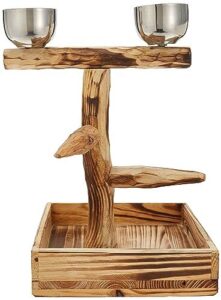
For birds that love to climb and explore, the Penn Plax Natural Wood Bird Perch is a solid pick. It’s built from real, untreated hardwood — safe for chewing and gentle on feet. The tapered design gives your bird different diameters to grip, which helps exercise those foot muscles naturally.
It includes two stainless steel cups for food and water, plus a drop tray for easy cleanup. Works well for parakeets, cockatiels, and conures.
| Best For | Small to medium bird owners looking for a natural, functional perch that doubles as a feeding station for species like parakeets, cockatiels, lovebirds, and conures. |
|---|---|
| Material | Natural wood |
| Bird Compatible | Yes |
| Easy Install | Yes, assembles easily |
| Foot Health | Exercises gripping muscles |
| Cleaning Required | Natural wood stains |
| Size Limitations | Small/medium birds |
| Additional Features |
|
- Real hardwood with a tapered design helps exercise your bird’s grip and naturally keeps nails trim
- Comes with two stainless steel food and water cups plus a drop tray, so feeding and cleanup are simple
- Easy to assemble and take apart, making it handy for travel or moving between rooms
- The bowls feel a bit flimsy compared to the sturdy perch, which might be frustrating over time
- Natural wood can stain and needs regular cleaning to stay hygienic
- No instructions included, so getting it assembled can take some trial and error
4. KandH Heated Bird Perch
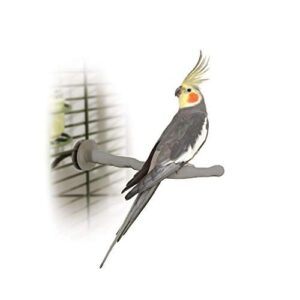
What if your bird could stay warm without you worrying about overheating? The K&H Thermo Perch does just that. It uses a low 12-volt current and a built-in thermostat to keep surface temps at a safe, steady level — perfect for older birds or cold drafty rooms.
The faux woodgrain texture gives decent grip, and it runs continuously without spiking heat. Just remember to check it daily with your hand, and never wrap anything around it.
| Best For | Older, sick, or cold-sensitive birds living in drafty rooms or air-conditioned spaces. |
|---|---|
| Material | Plastic |
| Bird Compatible | Yes |
| Easy Install | Yes, cage mount |
| Foot Health | Reduces pressure sores |
| Cleaning Required | Daily temp checks |
| Size Limitations | Small/medium birds |
| Additional Features |
|
- Thermostatically controlled so temps stay steady without spiking
- Low 12V current makes it safe for daily use around birds
- Unique shape helps reduce foot cramping and pressure sores
- Cage attachment can be unreliable and may need monitoring
- Size and texture won’t work well for every bird
- Requires daily hand-checks to make sure it’s not overheating
5. Polly’s Window And Shower Bird Perch
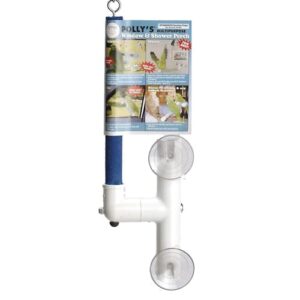
Want your bird to enjoy shower time or soak up some window sun? Polly’s Window and Shower Bird Perch makes both easy. It mounts to glass, mirrors, or tile using three oversized suction cups — no tools needed.
The sandy textured surface helps your bird grip safely while also gently conditioning nails and beak. It comes in two sizes, so smaller birds like parakeets and larger ones like African greys both get a proper fit.
Just make sure your surface is smooth and clean for the best hold.
| Best For | Bird owners who want to give their feathered friend a safe spot to shower or catch some window sun without a lot of fuss. |
|---|---|
| Material | Plastic |
| Bird Compatible | Yes |
| Easy Install | Yes, suction cups |
| Foot Health | Textured for grip |
| Cleaning Required | Suction cups maintenance |
| Size Limitations | Small/large options |
| Additional Features |
|
- Mounts easily to glass, mirrors, or tile — no tools, no mess
- Textured surface keeps birds steady while naturally trimming nails and beak
- Folds flat and travels well, so it’s handy at home or on the go
- Suction cups can lose grip over time, especially if the surface isn’t perfectly clean and smooth
- The rough texture might be too harsh for birds with sensitive feet
- Birds may chew on the suction cups, which could become a safety concern
6. Bird Bungee Climbing Swing Toy
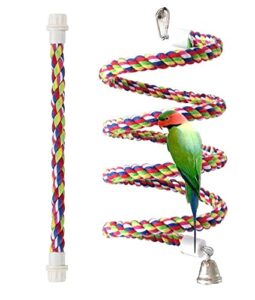
The Bird Bungee Climbing Swing Toy is a favorite for active birds like Conures, Senegals, and Small Cockatoos. Soft, flexible, and full of movement, it encourages climbing, balancing, and play.
Made from 100% cotton rope, it’s gentle on your bird’s feet. You can twist or bend it into different shapes, and the adjustable length makes setup easy.
Just keep an eye out for frayed threads, and hand wash it regularly to keep things clean and safe.
| Best For | Active birds like Conures, Senegals, Small Cockatoos, and Mini Macaws who love to climb, swing, and stay entertained. |
|---|---|
| Material | Cotton |
| Bird Compatible | Yes |
| Easy Install | Yes, adjustable |
| Foot Health | Builds coordination |
| Cleaning Required | Hand wash only |
| Size Limitations | Not for large birds |
| Additional Features |
|
- Soft 100% cotton is easy on your bird’s feet and safe for all life stages
- Bendable and adjustable, so you can shape it however works best for your setup
- Keeps birds moving and engaged, which is great for balance and coordination
- Hand wash only, so it takes a little more effort to keep clean
- Not a great fit for larger or heavier bird species
- Fraying over time means you’ll need to check it regularly for wear
7. Luonfels Bird Perch And Swing Set
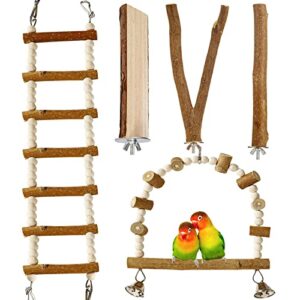
The Luonfels Bird Perch and Swing Set is a solid all-in-one option for parakeets, cockatiels, conures, and even African greys. It includes three perches, a ladder, and a swing — all made from untreated apple tree branches.
Varying diameters help distribute pressure across your bird’s feet, which is great for long-term foot health. Hardware is stainless steel, so no toxic metals to worry about.
Easy to install, easy to wipe down. A practical pick that covers exercise, enrichment, and safety in one set.
| Best For | Bird owners with parakeets, cockatiels, conures, or African greys who want one set that covers perching, climbing, and swinging without buying separate accessories. |
|---|---|
| Material | Natural wood |
| Bird Compatible | Yes |
| Easy Install | Yes, active hook |
| Foot Health | Distributes pressure |
| Cleaning Required | Hand wash only |
| Size Limitations | Various species |
| Additional Features |
|
- Comes with three perches, a ladder, and a swing — solid variety in one package
- Varying branch diameters help keep your bird’s feet healthy over time
- Made from apple tree wood, so it’s safe for chomping and gnawing
- Bells can be a hazard — a bird’s beak can get stuck, so worth keeping an eye on
- Hand wash only, which gets old if your bird is messy
- Wood wears down with heavy chewers, so it may need replacing sooner than expected
Frequently Asked Questions (FAQs)
What perches are safe for birds?
Safe perches come down to material and design. Natural hardwoods like maple, manzanita, and apple are solid choices. Rope perches made from cotton or sisal work well too. Just steer clear of plastic and treated wood.
What is the best material for a bird perch?
Natural hardwood is your best bet. Woods like maple, manzanita, and apple are non-toxic, durable, and easy on your bird’s feet.
They’re tough enough to resist chewing and safe enough for daily use.
What wood is safe for bird perches?
Some woods are fine; others are quietly dangerous. Maple, birch, apple, and manzanita are safe choices. Skip oak, walnut, and any treated lumber. Always use clean, untreated branches only.
How often should bird perches be rotated?
Rotate your bird’s perches every one to two weeks. This keeps their feet healthy, reduces bacteria buildup, and adds fresh stimulation to their environment. Small changes go a long way.
Can birds share perches safely with others?
Yes, birds can share perches, but it depends on size and temperament. Never pair large and small birds together. Watch for biting or chasing — those are clear signs the birds need their own space.
Do perch colors affect bird stress levels?
Perch colors can affect your bird’s stress levels. Bright or neon colors may cause anxiety, while natural wood tones tend to keep birds calmer. Gradual color changes help your bird adjust without added stress.
Should perches differ between indoor and outdoor aviaries?
Absolutely — outdoor perches face a thousand times more wear than indoor ones. Rain, UV rays, and temperature swings demand tougher, weather-resistant materials, while indoor perches mainly need to handle droppings and chewing.
How do perches impact a birds sleep quality?
The right perch makes a real difference in how well your bird sleeps. A comfortable, properly sized perch lets your bird relax fully, stay settled, and wake up rested.
Conclusion
It’s no coincidence that birds with the right perches move more, grip better, and show fewer foot problems over time. The perch isn’t background furniture—it’s daily contact your bird can’t avoid.
Knowing what kind of perches are safe for birds puts you in control of something that matters every single day. Small choices add up. The right perch, chosen with care, gives your bird a foundation it can stand on—literally and for years to come.