This site is supported by our readers. We may earn a commission, at no cost to you, if you purchase through links.
Somewhere between 4 and 5 billion birds cross North America twice a year—and most people sleep straight through it. Migration happens largely at night, driven by stars and magnetic fields, and concentrates into windows so narrow that missing them by a day can mean missing everything.
A cold front drops overnight, winds shift, and suddenly a quiet marsh at dawn holds more warblers than you’d normally see in a month.
Knowing the best time to watch migrating birds isn’t about luck—it’s about reading weather patterns, understanding daily rhythms, and knowing where the geography funnels movement into something you can actually witness.
Table Of Contents
Key Takeaways
- Most migration happens at night, so your best window is the 30–60 minutes around sunrise — that’s when nocturnal migrants are freshly grounded and still active.
- Weather drives everything: a passing cold front in fall or a high-pressure system in spring can concentrate more birds in one morning than you’d otherwise see all season.
- May is the standout month for spring watching, with warbler diversity peaking sharply and hotspots like Magee Marsh and Cape May delivering extraordinary variety in a single outing.
- Tools like BirdCast and eBird take the guesswork out of planning — pairing real-time radar migration maps with local checklists lets you show up on the right day, at the right place.
Best Seasons for Migrating Birds

Bird migration doesn’t follow a single schedule — it shifts with the seasons, the species, and where you happen to be standing.
Each species follows its own timeline and route, as explored in this breakdown of how different bird species approach migration.
Knowing when to look is half the battle. Here’s how the calendar breaks down across North America.
Spring Migration: March Through Mid-June
Spring migration unfolds like a slow tide moving north — starting along the Gulf Coast Launch zone in early March and pushing inland through mid-June. Magee Marsh, Ohio, functions as the Warbler Capital of the World during peak migration.
Three waves define the season:
- March: waterfowl and early raptors
- April: shorebirds and Southern Stopovers
- May: peak Warbler Surge and Neotropical Songbirds
Use BirdCast’s Live Migration Maps and 3-day migration forecasts to track Migration Wave Timing in real time.
Peak Spring Birdwatching in May
May is the month everything converges. Warbler diversity peaks sharply—up to 20 species in a single eastern habitat on a good morning. Coastal Lifer opportunities stack up fast at spots like Cape May and the Lake Ontario Stopover corridor. Use BirdCast alongside eBird for a sharp spring migration forecast.
| Date Window | Key Species | Best Habitat |
|---|---|---|
| May 1–7 | Early warblers, vireos | Forest edges |
| May 8–14 | Thrushes, sparrows | Coastal scrub |
| May 15–21 | Peak warbler waves | Inland canopy |
| May 22–28 | Shorebirds, flycatchers | Marsh edges |
| May 29–31 | Late Neotropical migrants | Riparian corridors |
Insect abundance drives everything—warmer mornings push feeding activity higher. Habitat restoration impact shows clearly here; restored stopover sites hold birds longer and increase your count windows greatly.
Fall Migration: August Through October
Fall migration stretches August through October—a slower burn than spring, but rich in its own way. Species wave patterns shift week by week: Arctic shorebirds lead the charge in August, warblers and flycatchers peak in September, and October delivers coastal diversity.
Stopover nutrition becomes critical here—birds are fueling long Neotropical songbirds’ routes southward. Track nocturnal migration using BirdCast’s 3-day migration forecasts and set migration alerts for your county.
- August — shorebird departure timing kicks off the season early
- September — warbler and flycatcher waves peak along coastal corridors
- October — highest species diversity at estuarine and wetland stopover sites
- All season — apply conservation lighting strategies to protect nocturnal migrants near buildings
Early Shorebird Migration in Late June
Don’t pack up your binoculars when spring winds down. Late June quietly opens a new migration window — one most birders miss entirely. Adult Least Sandpipers and Greater Yellowlegs are already heading south, making mudflat foraging along coastal estuaries surprisingly productive.
Tidal timing matters here: low tide exposes the invertebrate-rich flats these birds depend on. Watch for a juvenile surge through late June, when younger birds join adults at stopover sites.
Disturbance effects hit hard at this stage — human pressure on tidal flats cuts feeding time and delays migration progress noticeably.
Regional Timing Differences Across North America
Migration timing isn’t one-size-fits-all — regional bird migration patterns shift noticeably depending on where you are. Gulf Coast windows open weeks before the Great Lakes peak, while the Appalachian spring shift funnels birds southward through mountain corridors. The Pacific Northwest lag and Rocky Mountain pulse follow their own rhythms.
Clear, low-humidity mornings along these corridors also sharpen your views considerably — worth understanding how far binoculars can see birds clearly before heading out at dawn.
BirdCast tracks these regional variations in migration windows, so you always know exactly what’s moving near you.
Best Time of Day to Watch

Knowing the season gets you halfway there — knowing the hour closes the gap. Migrating birds follow a tight daily rhythm, and catching them means working with that schedule, not against it.
Here’s what to know about the best windows throughout the day.
Sunrise Birdwatching Window
That 30-to-60-minute migration window just before sunrise is where the magic happens. Dawn chorus cues kick in early — warblers, sparrows, and small passerines signaling the day before traffic noise drowns everything out.
Low-light binoculars (8–10x) help you catch silhouettes against the brightening sky. Temperature-driven activity peaks here, so silent observation pays off.
Micro-habitat cues — dew on vegetation, warming understory edges — tell you exactly where to look.
Why Early Morning is Most Productive
Early morning isn’t just convenient — it’s biologically optimized for birdwatching. A cortisol surge naturally sharpens your alertness at dawn, while cool morning temperatures keep fatigue low. Here’s why the first hours dominate:
Early mornings aren’t just convenient — they’re biologically optimized for birdwatching, with cortisol sharpening your alertness exactly when the birds are most active
- Low ambient noise lets you hear distant calls clearly
- Dawn light clarity sharpens silhouettes and plumage contrast
- Pre-dawn flight activity brings fresh migrants to feeders fast
- Migration timing peaks before 10 a.m., then drops sharply
Watching 30 Minutes Before Sunrise
That half-hour before sunrise? It’s where the magic quietly happens. Nocturnal bird migration winds down precisely at dawn — birds remain active, and BirdCast’s real-time migration monitoring confirms this window captures peak activity.
Dawn offers ideal conditions: low light levels sharpen silhouette contrast against the brightening horizon, while calm air amplifies acoustic cues. Temperature effects keep the air still, enhancing sound propagation.
| What to Do | Why It Works |
|---|---|
| Scan open sky with wide binocular techniques | Spot movement before full light |
| Listen for soft contact calls | Temperature effects keep the air still, amplifying sound |
| Check local migration alerts beforehand | Know whether migration timing peaks that night |
| Observe silhouettes against the horizon | Low dawn light levels sharpen contrast |
Why Sightings Drop After 10 A.M
By 10 a.m., the window closes fast. Insect Decline kicks in as warmth suppresses arthropod activity, pulling feeding birds deeper into cover. Sun Glare flattens sightlines, while Heat Stress drives migrants to shaded refuges. Human disturbance from trail traffic further silences birds, compounding the challenges.
These conditions force a shift to Resting Behavior, replacing movement and making detection difficult. The urgency underscores the importance of an early start, aligned with nocturnal migration’s natural rhythm.
Evening Observation Opportunities
Don’t write off dusk just yet. As evening breezes settle and insects thin out over open water, wetland roosts come alive with rails, bitterns, and shorebirds silhouetted against shoreline silhouettes.
Dusk lighting softens glare, making low-flying species easier to track.
Bring red-light gear to protect your night vision, then check BirdCast for real-time migration alerts before nocturnal bird migration and nighttime migration peaks.
Weather Conditions That Boost Sightings
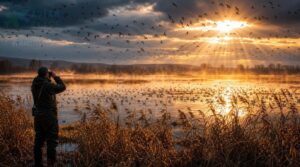
Weather isn’t just background noise when you’re out birding — it’s often the deciding factor between a quiet morning and something truly memorable. Knowing which conditions to look for can shift the odds dramatically in your favor.
Here’s what actually moves the needle.
Cold Fronts During Fall Migration
Cold-front timing is your best friend in fall migration. When a front sweeps through, wind-shift pulses flip from southerly to northwesterly — and birds move hard. Watch for these four triggers:
- Temperature drops of 5–15°C within hours
- Gust-driven flight concentrations along ridges and coastlines
- Feeding pauses as birds reorient after landing
- Species front response — raptors, warblers, and shorebirds all react differently
BirdCast’s real-time bird migration monitoring tracks exactly these moments.
Tailwinds and High-Pressure Systems
After a cold front clears, watch what replaces it — a high-pressure system that’s basically a green light for birds. Anticyclone Flight Corridors form as clockwise winds align with coastal flyways, creating Coastal Tailwind Funnels that push birds efficiently northward.
Jet Stream Alignment supercharges this, delivering Tailwind Speed Gains of 10–20%.
Track barometric pressure and migration forecasts — High-Pressure Timing is everything.
Rain, Storms, and Migration Pauses
Not every weather front is a launchpad. Heavy rain effects hit hard — reduced visibility, disrupted wind patterns, and temperature effects that spike energy demands.
Birds read these cues instinctively; rain-cued departure shifts occur when skies clear. Pause durations vary from hours to days, depending on storm severity.
Storm-shelter habitats like wetlands become temporary refuges. Expect a post‑storm migration surge once conditions settle.
Fallout Conditions for Concentrated Birds
Sometimes a storm does you a favor. When bad weather forces nocturnal migrants down suddenly — a phenomenon called fallout — thousands of birds can concentrate in one spot overnight. It’s real-time bird migration monitoring at its most dramatic. Watch for these conditions:
- Predator influx and scavenger attraction spike around dense fallout sites
- Dehydration stress and energy exhaustion push birds to forage aggressively — making them easier to observe
- Habitat fragmentation nearby shortens how long grounded birds stay
- BirdCast migration alerts and migration intensity data help you identify peak migration dates when fallout is likeliest
Checking Forecasts Before You Go
Before you pack your binoculars, run a pre‑trip weather scan — it takes five minutes and saves a wasted morning. Check BirdCast’s 3‑day migration forecasts and pull an hourly dawn outlook to time your arrival right.
Sign up for migration alerts at least 24 hours ahead. This ensures you stay updated on sudden changes in bird activity.
Don’t skip microclimate forecast reviews — coastal fog or ridge winds can flip local conditions fast. Monitoring these nuances helps avoid unexpected disruptions.
Best Places to See Migration

Where you stand matters just as much as when you show up. Birds don’t spread out evenly across the landscape — they funnel through specific corridors, rest at particular spots, and pile up where geography gives them no other choice.
Here are the places worth putting on your radar.
Peninsulas and Barrier Islands
Barrier islands act as natural funnels, shaped by longshore currents that run parallel to the shore. Migrating birds instinctively follow this coastal geometry, creating predictable pathways for observation.
Where inlets cut through barriers, funnel migration corridors emerge, concentrating avian species at specific crossing points. This inlet-driven flow enhances opportunities to observe diverse birds in focused areas.
Dune stabilization provides sheltered refuges, while spillover overwash events expose vital mudflats. These dynamic processes create irresistible habitats for shorebirds, offering critical resources during migration.
Such barrier island refuges serve as essential stops along the U.S. bird migration corridor, supporting survival through strategically located feeding and resting grounds.
Mountain Flyways and Ridge Lines
Along mountain ridges, orographic lift and ridge thermals transform steep crest lines into natural highways for raptors and songbirds alike. Elevation species shifts mean what you spot at 2,000 feet differs noticeably from the valley below.
Ridge stopover habitats refuel tired migrants between flights.
Track migration altitude and seasonal migration patterns using BirdCast’s realtime monitoring. Always follow safety observation tips near exposed cliff edges.
Coastal Stopover Habitats
Coastlines are migration goldmines — if you know what you’re looking at. Intertidal foraging zones, estuarine creeks, and artificial salt ponds all concentrate shorebirds during southward passage. Even levee-created habitats and managed wetlands attract surprising numbers.
That said, habitat fragmentation can break these stopover sites into disconnected patches.
Cross-referencing birdwatching strategies with bird migration alerts helps you find intact coastal corridors before seasonal migration patterns shift.
Freshwater Sources and Refueling Sites
Fresh water is a migrant’s lifeline — and knowing where it pools can make or break your outing. Stopover sites built around water level management and prey emergence cycles draw warblers, shorebirds, and thrushes when food sources peak.
BirdCast helps you time visits against seasonal migration patterns, while habitat connectivity corridors link wetlands into reliable refueling chains.
Look for spots with:
- Shallow mudflat edges where invertebrates concentrate
- Buffer zone design that limits human disturbance
- Community wetland stewardship supporting long-term habitat restoration
Famous Migration Hotspots Like Cape May
Cape May is where migration becomes undeniable. The coastal funnel effect concentrates hundreds of thousands of shorebirds along Delaware Bay during shorebird staging, while raptor kettling draws crowds to the hawk watch platform each fall.
Volunteer hawk counts here build long-term records scientists rely on.
Check BirdCast’s Migration Dashboard before you visit — marsh refueling sites peak quickly, and seasonal migration timing waits for no one.
Using Migration Forecasting Tools
Good timing and a great location will only get you so far — knowing what’s actually happening in the sky overnight is where things get interesting.
Luckily, modern forecasting tools take a lot of the guesswork out of planning a birding trip. Here’s what you should know about using them effectively.
How BirdCast Migration Maps Work

BirdCast pulls realtime radar data from 143 weather stations, applying Radar Signal Processing to filter rain from actual bird movement. That signal becomes a live migration map — refreshed constantly via Real-Time Data Refresh — showing flight direction and Altitude Band Mapping across the Lower 48.
Ground-Truth Calibration with eBird sightings feeds Species Likelihood Modeling, giving the Migration Dashboard its 3-day migration forecasts and making realtime bird migration monitoring genuinely actionable.
Using County-Level Migration Intensity

County-level stats take that radar picture one step further. Migration intensity data maps where birds concentrate relative to local geography — think of it like a heat map for your planning decisions.
- Spot high-activity corridors near freshwater refueling sites
- Align your timing with seasonal migration patterns in your region
- Cross-reference housing demand and infrastructure allocation zones where birding access is strongest
It’s genuinely useful fieldwork intelligence.
Signing Up for Migration Alerts

Once you’ve spotted high-activity zones on the map, setting up alerts keeps you ahead of the next big flight night. Sign up on BirdCast using a verified email — account verification takes minutes.
From there, customize your alert preferences: choose notification channels like email or SMS, filter by region, and adjust privacy settings to your comfort.
Real-time migration updates land right in your inbox.
Combining BirdCast With EBird Checklists
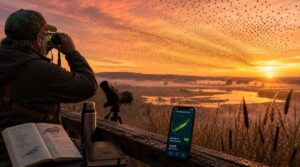
Alerts are just step one. The real power comes from pairing BirdCast with the eBird database — think of it as Checklist Calibration in action. BirdCast’s 3-day migration forecasts guide your Predictive Site Selection; eBird confirms what actually showed up.
- Submit complete checklists after high-intensity nights to support the Data Feedback Loop
- Log effort details — duration, distance — for Effort Standardization
- Cross-reference bird migration alerts with local eBird hotspot reports
- Contribute to Citizen Science Collaboration by posting observations after BirdCast-predicted pulses
Planning Trips Around Peak Migration Nights

Once you’ve got your 3-day migration forecasts lined up, the real planning begins. Target a 2–4 week window around peak migration timing and phenology for your region, then stay flexible — a Flexible Itinerary beats a rigid one every time.
| Planning Element | What to Do | Why It Matters |
|---|---|---|
| Accommodation Proximity | Stay within 20 minutes of your site | Lets you chase early dawn windows |
| Backup Site Planning | Map two or three county alternatives | Covers weather-driven access issues |
| Night Gear Essentials | Pack red headlamp, thermals, bins | Pre-dawn hours are cold and dark |
Local Guide Insights can sharpen your timing around expected nocturnal migrants — ask before you go.
Frequently Asked Questions (FAQs)
When to go bird watching?
Spring and fall are your golden windows. Migration peaks stack up fast — plan around 3-day migration forecasts.
Factor in personal stamina considerations, and align with habitat bloom cycles for the richest sightings.
What is the 60/40 rule for birds?
The 60/40 rule describes caregiver preference in bird handling. One person leads about 60% of interactions for bond distribution, while the other maintains a 40% interaction ratio to promote training balance and stress mitigation.
Which binoculars work best for spotting migrants?
Think of binoculars as your eyes, but sharper. For birding, 8×42 hits the sweet spot — solid magnification balance, wide field of view, and enough light for dawn’s dim start.
How do I identify warblers from a distance?
Focus on wing bar patterns, head plumage markings, and silhouette outline first. Watch for tail-flick behavior and habitat cueing. A Prothonotary Warbler’s golden head is unmistakable even without optics.
Can beginners join local birdwatching groups easily?
Yes — completely. Local clubs welcome beginners with free or low-cost membership fees, gear lending programs, and introductory walks led by experienced birders. Online directories make finding your nearest group straightforward.
What clothing should I wear while birdwatching?
Wear neutral colors like olive or tan, layer up for shifting temperatures, protect your head from glare, and pick waterproof boots.
Quiet fabrics and smart layering keep you comfortable and hidden.
Do migrating birds follow the same routes yearly?
Most species do.
Birds rely on migration memory and topographical navigation to retrace seasonal migration patterns year after year — though route plasticity allows adjustments when wind corridors shift or conditions change.
Conclusion
The theory holds: timing isn’t luck—it’s a skill you build. The best time to watch migrating birds isn’t a single date circled on a calendar. It’s a cold front arriving overnight, winds turning favorable, and you standing at the marsh edge thirty minutes before sunrise—because you checked the forecast.
Birds have been making this journey for millions of years. With the right knowledge, you finally get to witness it.
- https://www.audubon.org/magazine/how-harness-spring-weather-spectacular-birding
- https://www.allaboutbirds.org/news/when-will-spring-bird-migration-hit-its-peak-birdcast-has-answers/
- https://www.perkypet.com/advice/bird-watching/bird-migration-facts/timing?srsltid=AfmBOorSOjK2BjBsZHKkX1T316hOvEqii4ox-CC0PNaAgjWGM4hqXHB8
- https://www.scientificamerican.com/article/the-spring-migration-of-birds-is-peaking-heres-how-to-watch/
- https://coldspringcoop.com/blog/69655/bird-migration-schedule