This site is supported by our readers. We may earn a commission, at no cost to you, if you purchase through links.
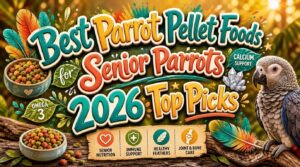
Your parrot has been with you through decades of morning routines, inside jokes, and quiet Sunday afternoons—and somewhere along the way, those vibrant feathers softened, the acrobatics slowed, and the appetite shifted. Senior parrots, generally those past 15–20 years depending on species, carry nutritional needs that their younger selves never did: more calcium for aging bones, targeted omega-3s for inflammation, and lower fat to protect a metabolism that no longer burns as hot.
Most commercial pellets aren’t built for that. The parrot pellet foods for senior parrots reviewed here are—formulated with the specific nutrient ratios aging birds actually need, from liver-supportive botanicals to bioavailable minerals that generic blends routinely skip.
Table Of Contents
Key Takeaways
- Senior parrots need pellets with higher calcium, omega-3s, and lower fat — most commercial blends simply aren’t built for that.
- Seed-heavy formulas quietly work against aging birds by spiking calories and encouraging selective eating that leaves nutritional gaps.
- How you feed matters as much as what you feed — portion timing, weekly weight checks, and a slow transition all make a real difference.
- Watch your bird’s droppings, appetite, and energy during any diet change; those signals tell you faster than anything else whether a formula is working.
Best Senior Parrot Pellet Foods
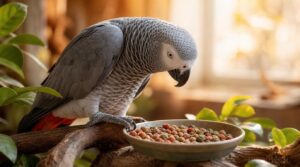
Not every parrot food labeled "senior" actually delivers what an aging bird needs. The right pellet makes a real difference in how your bird feels, moves, and thrives through their later years.
Softer options like these premium bird food pellets for aging parrots help seniors get full nutrition without the struggle of tougher textures.
Here are the top picks worth knowing about.
Lafebers Senior Bird Nutri Berries Review
Lafeber’s Senior Bird NutriBerries stands out for more than just senior bird nutrition — it’s built around how parrots actually eat. The Berry Shape Mechanics encourage natural Foraging Design, keeping older birds mentally engaged.
Milk thistle, dandelion, and ginger deliver real Herb Benefits for liver and joint support. Natural Preservation through tocopherols maintains freshness, while the Fruit Blend Impact from cranberries and plums adds fiber without excess sugar — creating nutrient-dense pellets your senior parrot will actually want to eat.
The formula also provides a balanced omega‑3 to omega‑6 ratio for peak health.
RoudyBush Senior Bird Food Pellets Review
The Roudybush Senior Diet takes a quieter, clinical approach — and that’s exactly what some aging birds need. Steam pelleting locks in nutrients while cutting dust, ensuring a cleaner, more nutrient-dense option.
The grain blend delivers reliable calcium and protein enrichment for aging parrots, addressing key nutritional needs without complexity.
Batch consistency means no surprises, offering dependable quality. User testimonials frequently highlight strong palatability, proving its appeal to older birds.
The price per ounce is fair for veterinarian-recommended quality, balancing affordability with expert-backed standards.
How Senior Formulas Differ From Adult Pellets
Adult pellets fuel active birds. Senior formulas work differently — they are built around metabolic tailoring, with lower caloric density, added dietary fiber, and enhanced digestibility to match an older bird’s slower pace.
Bioavailable vitamin forms improve absorption where aging bodies may fall short.
Senior bird nutrition also prioritizes calcium and protein enrichment for aging parrots, directly addressing calcium deficiency and supporting bone health maintenance in senior parrots.
Which Product Suits Picky Senior Parrots
Picky seniors often reject new foods based on smell alone. That’s why aroma consistency and flavor retention matter so much — your bird’s nose decides before its beak does.
Roudybush Senior Diet earns trust here with its low additive profile and batch familiarity that keeps refusals low.
Its soft bite also suits birds with reduced chewing strength, making it a solid veterinarian-recommended choice.
Best Option for Low-fat Senior Diets
When calorie density becomes a concern, Kaytee Senior Parrot Food stands out for low-fat and sugar-conscious senior bird diets. Its fat source reduction keeps energy distribution steady without the spikes that seed mixes cause.
Lean protein balance promotes aging muscle, while added fiber satiety helps your bird feel full longer.
For senior parrots on a low-fat diet, this formula delivers complete low-fat bird food formulations without compromise.
Best Option for Calcium and Mineral Support
Bone health maintenance in senior parrots hinges on mineral form matters as much as mineral amount. Roudybush Senior Diet excels here, delivering calcium citrate-sourced nutrients alongside vitamin D3 synergy to ensure true chelated mineral bioavailability. This foundation supports optimal nutrient absorption for aging birds.
Its ideal Ca:P ratio, selenium immune-boosting properties, and enrichment of calcium and protein directly address the needs of aging parrots. These elements work together to maintain trace-mineral balance and provide truly reliable calcium deficiency prevention, safeguarding skeletal integrity over time.
Key Nutrients for Aging Parrots
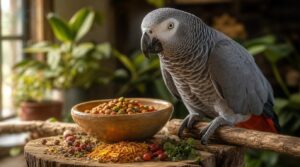
What your senior parrot eats now shapes how well they age. The right pellet formula isn’t just about filling a bowl — it’s about giving aging bodies exactly what they need to stay strong.
The right pellet doesn’t just fill a bowl — it shapes how well your senior parrot ages
Here’s what to look for in every bag.
Ideal Protein Levels for Muscle Maintenance
Muscle loss sneaks up quietly on senior parrots. That’s why protein density matters so much — aim for pellets delivering 15–18% protein with true amino acid completeness, not just adequate numbers.
Quality protein sources like egg or whole grains support daily protein distribution across two to three meals.
Consistent protein enrichment in a senior avian diet keeps your bird strong and moving well.
Calcium and Phosphorus for Bone Health
Think of your senior parrot’s skeleton as a structure under constant renovation. Calcium phosphate balance drives this process — and when it slips, bone remodeling hormones like parathyroid hormone compensate by pulling calcium from bones instead.
Senior pellets should deliver ≥1.5% calcium with a 2:1 calcium-to-phosphorus ratio. This dietary foundation is critical for maintaining skeletal integrity in aging birds.
However, absorption efficiency matters as much as intake. Phosphorus bioavailability and vitamin D interaction determine how effectively your bird utilizes nutrients from its food.
Calcium supplementation through quality pellets is essential for bone health maintenance in senior parrots — don’t leave it to chance.
Low-fat Formulas for Obesity Prevention
Fat is calorie-dense — nine calories per gram versus four for protein or carbs. That gap adds up fast in less active senior birds. Low-fat bird food formulations support obesity prevention through energy density reduction without sacrificing nutrition.
Satiety fiber inclusion slows digestion, helping weight management feel natural rather than restrictive.
Pair low-fat diet pellets with caloric portion tailoring and metabolic rate support to keep your senior parrot thriving.
Omega Fatty Acids for Immune Support
Your senior bird’s immune system relies on balance, not just quantity. EPA/DHA balance within nutrient-dense pellets shapes membrane fluidity in immune cells, directly influencing how they respond to threats.
Omega-3s generate pro-resolving mediators — resolvins and protectins — that actively resolve inflammation rather than merely suppressing it. The eicosanoid competition between omega ratios also matters, as it impacts immune cell function.
Optimizing omega ratios in quality parrot pellet formulations provides genuine immune support for senior birds by addressing these critical mechanisms.
Antioxidants, Vitamin E, and Aging Support
Oxidative stress builds quietly in aging birds — and vitamin E is one of your best tools against it. Look for pellets with mixed tocopherol isoforms, since alpha- and gamma-tocopherol each work differently.
Antioxidant recycling keeps protection active longer. Antioxidant-enriched bird nutrition paired with synergistic antioxidants aids oxidative stress mitigation.
Vitamin E bioavailability depends on dietary fat, so low-fat formulas need careful balancing.
Vitamins A, D, and B-complex Needs
Vitamin E isn’t the whole story. Your aging parrot also needs vitamins A, D, and B-complex working together. Vitamin A promotes healthy skin, mucous membranes, and vision — including low-light vision. Vitamin D drives calcium absorption for strong bones. B-complex vitamins keep energy metabolism and nerve function steady.
However, vitamin balance risks are real. Fat-soluble vitamins accumulate, so senior bird nutrition and health depend on precise, vitamin-fortified feed, not guesswork.
Trace Minerals for Senior Parrot Immunity
Beyond vitamins, trace minerals quietly holds your senior bird’s immune system together.
Zinc immune support keeps disease-response enzymes working. Selenium’s antioxidant role reduces oxidative stress that weakens aging birds.
Copper enzyme function regulates inflammation, while manganese immune regulation keeps immune cells performing properly.
The iodine thyroid link aids metabolic immune readiness.
Quality parrot pellet diet formulations deliver these trace minerals, making senior bird nutrition and health genuinely complete.
Choosing Safe Senior Pellets
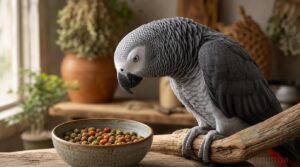
Not every pellet on the shelf is worth your senior bird’s trust. Knowing what to look for — and what to walk right past — makes the difference between a diet that promotes healthy aging and one that quietly causes harm.
Here’s what to check before you buy.
Ingredient Lists to Prioritize
Reading a pellet label feels overwhelming at first — but a few things matter most. Look for whole grain sources like brown rice or oats listed early, alongside deboned protein names. These indicate quality ingredients prioritized in the formula.
Explicit vitamin forms, such as cholecalciferol, and named mineral chelates for calcium and trace minerals, signal transparency in nutrient sourcing.
Digestive fiber additives like inulin provide gut support, promoting healthy digestion.
Fillers, Artificial Colors, and Sugars to Avoid
Some labels look clean on the front but tell a different story on the back. For senior birds, these five ingredients are red flags:
- Synthetic dyes or colorant codes like FD&C Yellow No. 5
- Hidden sugars, including high-fructose corn syrup
- Textural fillers with no nutritional value
- Artificial preservatives
- Vague sweetener detection blockers like "natural flavor"
Low fat and sugar are most important in senior bird nutrition.
Seed-free Versus Seed-heavy Formulas
For senior birds, seed-heavy formulas can quietly work against you. Seeds spike calorie density and invite selective eating — your parrot picks favorites, skips the rest, and misses key nutrients.
The table below highlights why seed-free pellets are superior for elderly parrots:
| Factor | Seed-Free Pellets |
|---|---|
| Nutrient uniformity | Consistent per bite |
| Calorie density | Lower, easier to manage |
| Selective eating | Minimal risk |
| Digestive consistency | More predictable |
These advantages ensure consistent nutrition, easier calorie control, and reliable digestion, making seed-free wins for elderly parrot care.
Moisture Content and Shelf Stability
Moisture plays a critical role beyond initial perception. Roudybush Senior Diet maintains approximately 12% moisture—balancing palatability with shelf stability. However, true stability depends on water activity, not just moisture content.
Internal moisture migration can gradually soften pellets, even in sealed bags. This underscores the importance of proper storage to prevent degradation over time.
Always store low-moisture bird food in original factory packaging with solid moisture barrier packaging. Keep it away from humidity and temperature fluctuations to preserve quality.
Pellet Size by Parrot Species
Pellet size functions as a beak fit guideline, not merely a packaging detail. Cockatiels require small pellets under 3mm; conures thrive with medium sizes; while African greys, Amazons, and large parrots like macaws demand bigger pieces tailored to their chewing patterns.
Species-specific dietary guidelines are critical here. Mismatched sizes often lead to refusal, scatter, or gulping, which quietly undermines even the most carefully formulated parrot pellet diets.
Beak-friendly Texture and Chewing Benefits
Texture matters more than most people realize. A crumble-friendly texture lets your senior bird break pellets apart without straining.
Consistent pellet shape means predictable biting — less fatigue, more food eaten.
Warm water softening works well for birds with reduced chewing fatigue.
Brands like Harrison’s High Potency Senior and Kaytee Senior Parrot Food design smooth beak edges intentionally. Your bird notices the difference.
When to Ask an Avian Veterinarian
Your senior parrot can’t tell you something’s wrong — but their body does. Appetite loss, abnormal droppings, lethargic behavior, or respiratory distress are signals that need prompt veterinary guidance, not a wait-and-see approach. Weight loss despite eating is especially telling.
Regular vet visits help establish baselines for nutrition in senior birds, so subtle shifts in their special dietary needs don’t go unnoticed.
Feeding Senior Parrot Pellets Properly
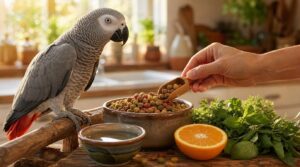
Feeding your senior parrot the right pellets is only half the equation — how you serve them matters just as much.
Getting the portions, timing, and food balance right can make a real difference in your bird’s energy and long-term health. Here’s what you need to know to build a daily feeding routine that actually works.
Recommended Pellet Percentage Per Day
Most senior birds thrive when pellets constitute 60–80% of their daily diet, though this range is not absolute. Several variables influence the optimal percentage for individual birds:
- Activity Level Adjustments — Less active seniors require fewer pellet calories.
- Health Issue Modifiers — Kidney concerns or weight management may necessitate ratio adjustments.
- Gradual Percentage Ramp — Begin with 25–40% pellets if transitioning to this diet.
- Climate-Driven Ratios / Seasonal Intake Variations — Colder months might warrant slightly higher pellet proportions.
Brands such as Roudybush Maintenance Diet for Seniors and Harrison’s High Potency Senior provide label-based starting guidelines to help tailor these ratios effectively.
Balancing Pellets With Fresh Vegetables
Pellets do the heavy lifting, but fresh foods fill the gaps. A simple vegetable rotation — dark greens one day, orange vegetables the next — gives your senior bird carotenoid balance and fiber integration without overloading any single nutrient.
| Vegetable | Benefit | Prep Tip |
|---|---|---|
| Kale | Calcium, vitamin A | Steam lightly |
| Carrots | Beta-carotene | Cut small |
| Broccoli | Fiber, vitamin C | Offer raw or steamed |
Portion timing matters too. Offer fresh foods at consistent meal times, then remove uneaten pieces within a few hours.
Limiting Fruits, Treats, and Sugary Foods
Fresh vegetables set a great foundation, but fruit frequency and treat portion limits deserve the same care.
Sweet snacks add up fast for senior birds.
- Keep fruit under 5% of daily intake
- Choose low-sugar alternatives like berries over bananas
- Apply sugar snack restrictions to dried fruit and juices
- Practice sweet intake monitoring through weekly weight checks
Portion Control by Body Weight
Just like trimming sweet treats helps manage weight, knowing how much to serve matters just as much as what you serve. Weight based scaling keeps your bird’s nutrition for senior birds right on target — aim for 10–15% of body weight daily.
Gram precision feeding beats eyeballing every time. Use a kitchen scale, track weekly trends, and make incremental adjustments only when weight shifts confirm a real pattern.
Feeding Schedules for Older Parrots
Older parrots thrive on routine — think of it as their internal clock for good digestion.
- Morning Pellet Timing: Serve pellets at dawn when appetite peaks.
- Evening Fresh Produce: Offer vegetables in the early evening, removing them within 2–4 hours.
- Meal Spacing Interval: Two to three meals daily suit the special dietary needs of older birds.
- Hydration Integration: Refresh water twice daily alongside meals.
- Seasonal Schedule Adjustments: Shift timing slightly with daylight changes.
Weekly Weight Checks and Diet Adjustments
Weight monitoring is one of the most reliable Early Warning Indicators your senior bird’s diet is working—or isn’t. Weigh your bird at the same time weekly, using Scale Consistency Tips: employ the same scale, maintain a calm setting, and log results with dates.
Focus on Weight Trend Benchmarks across multiple weeks rather than isolated readings. Implement Incremental Portion Changes when adjusting parrot pellet diet formulations to avoid abrupt shifts.
Treat Appetite Refusal Signals as potential health flags, not mere pickiness. Promptly investigate persistent disinterest in food, as this may indicate underlying health concerns.
Toxic Foods Senior Parrots Must Avoid
Some foods are not just unhealthy for senior birds — they’re genuinely dangerous. Chocolate Toxicity and Caffeine Hazards top the list, causing seizures and cardiac problems even in small amounts.
Avocado Poisoning from Persin can be fatal, and Alcohol Intoxication hits aging avian pets especially hard. Mold Mycotoxins from spoiled pellets or nuts adds another layer of risk.
Keep these Toxic Foods and Potential Poisons for Parrots completely out of reach.
Transitioning Older Parrots to Pellets
Switching an older parrot to pellets takes patience — most birds don’t warm up to change overnight. The good news is that with the right approach, even the pickiest senior can make the shift without much drama.
Here’s what to keep in mind as you work through the adjustment period.
Gradual Pellet Conversion Timeline
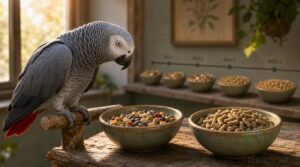
Think of the shift as a slow dial, not a light switch. On Day One Intro, just set pellets in a separate bowl — no pressure. By the Two-Week Ratio mark, shift toward 75% familiar food.
Four-Week Stabilization locks in pellets as the base. Apply an Adjustment Pause whenever weight dips. Progressive Ratio Steps keep senior birds steady throughout.
Mixing Pellets With Familiar Foods
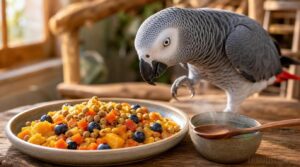
Mixing pellets with familiar foods is one of the smartest diet shift strategies you can use. The key is balance — not drowning pellets in your bird’s favorites.
- Flavor Integration: Coat pellets lightly with mashed fruit or vegetables
- Water Softening: Add a splash of warm water; cool before serving
- Mix Consistency: Keep the texture moist but intact — never soupy
- Food Temperature: Serve at room temperature to encourage interest
- Selective Picking: Use shallow dishes so pellets don’t get buried
Keep familiar foods at 20–25% of the mix so pellets stay the nutritional backbone.
Encouraging Picky Senior Parrots to Eat
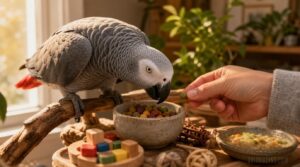
Some senior parrots simply need a little coaxing — and that’s completely normal. Morning offerings work best, since appetite peaks early. Try pureed mixing to sneak in unfamiliar textures without alarming them.
Clicker training builds trust, one small bite at a time. Puzzle feeders and social feeding during your own meals spark curiosity.
Consistent, patient exposure is the key here.
Monitoring Droppings and Digestion Changes
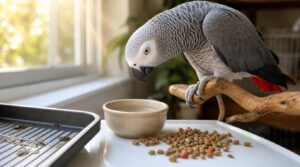
Your parrot’s droppings are a daily health report — don’t ignore them.
Watch for these digestion signals during any pellet switch:
- Dropping Color Shifts — green or yellow tones signal bile changes
- Stool Consistency Trends — loose or watery stools warrant a vet call after 48 hours
- Urate Hydration Signs — thick, crusty urates indicate checking water intake
- Undigested Pellet Detection — visible chunks suggest poor digestibility of senior bird foods
- Frequency Variation Tracking — sudden increases or drops reflect senior bird nutrition adjustments
Trust what you see daily.
Preventing Stress During Diet Changes
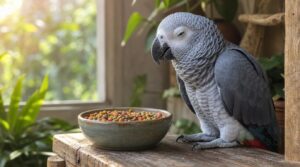
Stress is the quiet saboteur of any diet change.
Maintain consistent feeding times, the same bowl, and the same corner of the room—your bird notices everything. Moistened pellets ease texture resistance. Minimize handling in the first few days.
| Strategy | Why It Helps |
|---|---|
| Gradual ratio increase | Reduces digestive shock |
| Stable environment | Lowers anxiety during change |
Calm routines make acclimating parrots to pellet-based diets far smoother.
Signs a Pellet Formula is Not Suitable
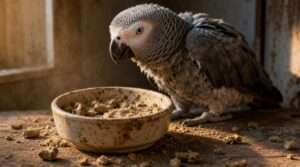
Even with calm routines in place, some formulas simply won’t work. Watch for excessive fine debris collecting in the bowl — that signals poor pellet integrity and uneven nutrient coverage.
Sharp pellet shards or an off-season odor mean spoilage or oxidation.
Rapid feeding slowdown paired with dropping changes can quietly accelerate calcium deficiency, weakened bones, and reduced immune function in aging birds.
When Veterinary Guidance is Necessary
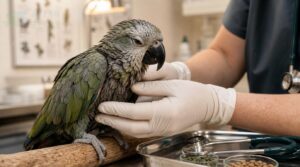
When a formula isn’t working, your bird’s body often speaks first. Respiratory distress, acute weakness, or rapid appetite loss during a pellet switch aren’t just adjustment hiccups — they’re signals worth acting on.
Call your avian vet if you notice:
- Open-mouth breathing or wheezing
- Sudden collapse or loss of balance
- Abnormal droppings lasting more than a day
- Persistent pain signs like foot-guarding or trembling
- Appetite drop with no improvement after 24 hours
Frequently Asked Questions (FAQs)
What are the healthiest pellets for parrots?
The healthiest pellets prioritize nutrient bioavailability, formulation safety, and traceable sourcing — no fillers, no guesswork.
Look for balanced vitamins and minerals, calcium and protein enrichment, and veterinary-recommended diets your bird will actually eat.
Can senior parrots eat pellets with arthritis?
Senior parrots with arthritis can eat pellets. Choose nutrient-dense pellets with omega-3s and glucosamine to support joint health.
Pellet softening helps birds with jaw discomfort, making them easier to consume. Always consult your vet for tailored dietary guidance, as they can address specific needs for aging avian pets.
How do joint supplements benefit aging parrots?
Glucosamine benefits aging joints by slowing cartilage breakdown, while chondroitin support keeps joints cushioned through better water retention.
Together, their anti-inflammatory action improves mobility enhancement and keeps your senior bird moving more comfortably day to day.
Do senior parrots need liver support ingredients?
Not every senior parrot needs liver support ingredients. A liver health evaluation by your vet matters most.
Milk thistle use and targeted liver support only help when there’s an actual issue.
What role does selenium play in older birds?
Selenium powers glutathione peroxidase activity, aids thyroid hormone metabolism, maintains feather pigmentation, and regulates stress hormones.
It also boosts reproductive performance and strengthens immunity — essential for immune system support as parrots age.
How does glucosamine help senior parrot mobility?
It helps rebuild cartilage, promotes synovial fluid, and reduces joint inflammation — keeping older birds moving more comfortably. Your avian vet can guide safe dosing based on your bird’s weight.
Conclusion
Funny how we obsess over every ingredient label at the grocery store for ourselves, then toss any old pellet bag into our senior parrot’s bowl. Your bird’s decades of loyalty deserve better than that afterthought. Choosing the right parrot pellet foods isn’t complicated—it just requires the same care you’d give yourself.
The right formula protects aging bones, boosts immunity, and keeps those quieter years genuinely comfortable.
- http://www.thebirdschool.com/parrot-diet/pellets-food-for-thought/
- https://bestfriends.org/pet-care-resources/best-parrot-diet-and-toxic-foods-avoid
- https://www.phoenixlanding.org/nutrition.html
- https://www.avi-sci.com/TECHNICAL/Avi-Sci_INGREDIENTS.html
- https://www.dvm360.com/view/performing-a-health-exam-on-geriatric-parrots