This site is supported by our readers. We may earn a commission, at no cost to you, if you purchase through links.

Across North America, over 85 native bird species depend entirely on tree cavities to raise their young—but old-growth trees with natural hollows are disappearing faster than forests can replace them.
Woodpeckers, bluebirds, and chickadees don’t nest on open branches. They need enclosed spaces, and without them, whole local populations quietly collapse.
A well-built wooden bird house doesn’t just add charm to your backyard. It fills a critical gap in the breeding cycle that nature can no longer reliably provide.
Understanding what makes wooden bird houses effective for wildlife conservation changes how you choose, place, and care for them.
Table Of Contents
Key Takeaways
- native bird species depend on tree cavities to nest, and wooden bird houses directly replace the old-growth hollows that urban development keeps erasing.
- Entrance hole size is the single most important design choice — a 1½‑inch hole fits bluebirds, while a 1‑inch hole works for wrens, and getting it wrong invites invasive competitors.
- Cedar lasts 10–15 years outdoors and naturally resists rot, making it the most practical wood choice for anyone who doesn’t want to rebuild every few seasons.
- Monitoring your boxes every 3–7 days and cleaning them after each breeding season — or at minimum each fall — directly improves chick survival and keeps your data useful for broader conservation efforts.
Role of Wooden Bird Houses in Conservation
A wooden bird house does more than decorate your yard — it actively helps the wildlife around you.
From attracting cavity-nesting species to reducing pest insects, natural wood bird house feeders can transform your backyard into a thriving habitat.
From helping native species find safe nesting spots to filling gaps left by shrinking natural habitats, these simple structures carry real conservation weight.
Here’s a closer look at the key roles they play.
Supporting Native Bird Populations
When natural hollows disappear, native birds lose their best nesting spots overnight. That’s where native bird houses step in.
Conservation products and species‑specific wildlife habitats help cavity nesters like bluebirds, chickadees, and wrens keep breeding in areas they’d otherwise abandon. With smart birdhouse design offering predator protection, habitat connectivity stays intact — and citizen science and community outreach efforts help monitor which species are actually moving in.
Following detailed predator-proof birdhouse plans can further safeguard nesting birds.
Mitigating Habitat Loss in Urban Areas
Urban development quietly strips away the old trees where cavity nesters once thrived. Wooden bird houses fill that gap — and when enough neighbors participate, Community Nest Networks form Microhabitat Corridors that connect fragmented green spaces.
- Green Roof Integration places nesting sites above street noise
- Noise Buffering Design shields birds during sensitive breeding periods
- Light Pollution Mitigation keeps cavities darker than exposed urban trees
- Strategic corridor placement links gardens into connected wildlife conservation zones
- Sustainable wildlife solutions counter ongoing urban habitat loss year-round
These houses also support natural pest control benefits.
Enhancing Biodiversity in Gardens and Parks
Wooden bird houses do more than shelter birds — they reshape entire backyard ecosystems. Installing boxes at different heights creates Vertical Habitat Layers, supporting species with varied nesting preferences.
Pair them with Native Plant Corridors and Mixed Species Plantings, and you’ve built Seasonal Food Resources that keep wildlife active year‑round. Citizen Science Programs can help you track which natural nesting habitats are thriving in your ecological gardening products setup.
Contribution to Broader Wildlife Conservation Efforts
Your backyard box doesn’t stop at your fence line. Each nest recorded feeds into Community Science Data that shapes real Policy Influence — helping planners protect green corridors and strengthen Habitat Connectivity across entire regions.
- Climate Resilience: Nest records support Climate Resilience planning for shifting bird ranges
- Public Education: Public Education programs grow from neighborhood box trails
- Wildlife conservation: Wildlife conservation products fund broader nature habitat preservation
- Ecological gardening: Ecological gardening products boost sustainable wildlife products networks
- Bird conservation: Bird conservation data guides habitat restoration priorities
Key Features of Conservation-Grade Bird Houses
Not all bird houses are built equal — and for wildlife conservation, the difference really matters.
A good conservation-grade house does specific things: it fits the right bird, holds up over time, and keeps predators out. Here are the key features to look for.
Species-specific Entrance Hole Sizes
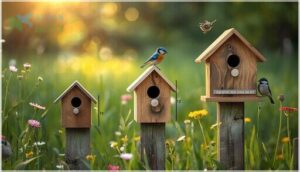
The entrance hole is the gatekeeper of your birdhouse. Hole Size Guidelines exist for a reason — a 1⅛‑inch opening welcomes chickadees but blocks house sparrows, which is Competition Reduction in action.
Getting the hole size right also protects against stress inside the nest — learn how Carolina chickadees defend their eggs and brood once the right birds move in.
Bluebirds need 1½ inches; wrens do fine with 1 inch. Species Size Matching directly affects occupancy rates, and getting entrance size appropriateness right is one of the clearest Conservation Metrics you can track.
Durable, Sustainable Wood Materials
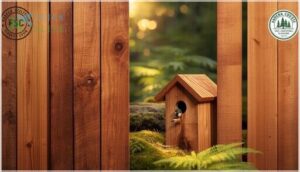
The wood you choose matters more than you’d think. Western red cedar is the benchmark — its Wood Grain Density naturally repels rot and insects, giving boxes 10–15 years outdoors. FSC Certification confirms your sustainably sourced wood came from responsibly managed forests.
- Natural Oil Finishes like linseed or tung oil extend durability without harmful vapors near nestlings.
- Thermal Insulation from thick cedar walls buffers temperature swings, protecting eggs and chicks.
- Life Cycle Assessment favors weather‑resistant natural wood — it composts cleanly, unlike plastic.
Eco‑friendly materials mean fewer replacements, less waste.
Ventilation and Moisture Control
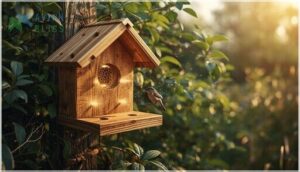
Good ventilation separates a bird house that works from one that doesn’t. Small Roof Ventilation Gaps under the eaves let trapped heat escape, while a smart Airflow Path Layout moves fresh air through without cold drafts hitting the nest.
Floor Drainage Design — generally four 3/8‑inch holes — keeps rain from soaking nesting material.
Humidity Balance stays steady when Weather Orientation faces entrances away from prevailing winds.
| Design Feature | Conservation Benefit |
|---|---|
| Roof Ventilation Gaps | Releases heat, prevents overheating |
| Floor Drainage Design | Removes moisture, protects eggs |
| Airflow Path Layout | Circulates air without chilling nest |
| Weather Orientation | Blocks wind‑driven rain intrusion |
Predator-resistant Design Elements

A smooth metal pole already stops most climbers — but pairing it with smart Baffle Placement seals the deal.
A 60 cm stovepipe baffle on pole materials like galvanized steel or PVC creates surfaces predators can’t grip.
Add Entrance Guards with metal plates to prevent chewing, follow Height Guidelines of 1.5–3 meters, and your weatherproof, predator‑resistant design gives nesting birds a real fighting chance.
How Wooden Bird Houses Benefit Wildlife
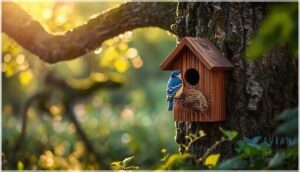
A wooden bird house does more than fill a gap in a tree — it actively helps the wildlife around you. From giving birds a safe place to nest to helping keep invasive species in check, the benefits run deeper than most people realize.
Here’s a closer look at exactly how these simple structures make a real difference.
Providing Safe Nesting Sites
A well‑placed bird house is more than décor — it’s a lifeline. Safe nesting comes down to smart design and thoughtful setup:
- Height Guidelines: Mount boxes 5–15 feet up to deter ground predators.
- Predator Guards: Cone‑shaped baffles boost daily nest survival by roughly 7%.
- Ventilation Openings: Top‑wall gaps prevent dangerous heat buildup inside.
- Drainage Design: Four small floor holes keep nests dry and mold‑free.
- Human Disturbance Reduction: Place boxes away from busy foot traffic areas.
Entrance size appropriateness, weatherproof wood, and solid insulation round out a truly safe home.
Reducing Competition With Invasive Species
Invasive species are the uninvited guests that never leave — and they’re aggressive. Here’s how smart bird house design keeps them out:
| Strategy | Why It Works |
|---|---|
| Metal Plate Barriers | Stops invasive species from widening entrance holes |
| Height-based Placement | Away from buildings discourages house sparrows |
| Separate Sparrow Boxes | Redirects sparrows from priority conservation boxes |
| Food Source Management | Less spilled grain means smaller starling flocks |
Species‑specific wildlife habitats with entrance size appropriateness do most of the heavy lifting naturally.
Supporting Breeding Success and Fledgling Survival
Once you’ve blocked out invasive species, the next win is helping chicks actually survive.
Microclimate Management matters here — nesting boxes with ventilation and moisture control keep temperatures stable so nestlings grow faster. Shade Orientation reduces heat stress. Add predator guard optimization and Food‑Water Proximity, and fledgling survival climbs noticeably.
Predator protection combined with entrance size appropriateness gives each brood a real fighting chance.
Complementing Natural Habitats for Other Wildlife
Bird houses do more than shelter birds. They quietly support a whole web of life.
Droppings beneath boxes enrich soil with nitrogen, boosting plants that become Pollinator Corridors for bees and hoverflies.
Dense vegetation creates Insect Habitat, Reptile Refugia, and Mammal Shelter for mice and ground beetles.
In short, one well‑placed birdhouse becomes a small wildlife habitat all on its own.
A single well-placed birdhouse quietly becomes an entire wildlife habitat
Top Wooden Bird Houses for Conservation
Not all bird houses are built with conservation in mind, but a few genuinely stand out. The options below were chosen for their design quality, species-specific features, and real-world usefulness for wildlife.
Here’s what’s worth knowing before you pick one.
1. ONKO Large Wooden Owl Nesting Box
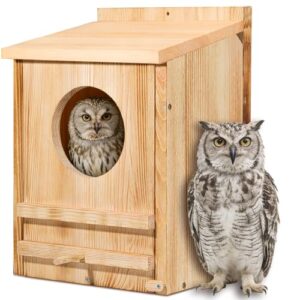
The ONKO Large Wooden Owl Nesting Box is built with owls in mind — literally.
The interior runs 13.78 inches long, 10.24 inches wide, and 22.83 inches tall, giving great horned owls and barn owls real room to settle in.
It’s made from weatherproof pine with a wildlife-safe carbonized finish, so it holds up outdoors year-round. Assembly takes under 30 minutes, and the predator-resistant walls and overhanging roof keep nesting pairs genuinely safe.
| Best For | Backyard birders and wildlife enthusiasts who want to attract and support owls like barn owls, screech owls, or great horned owls in a natural outdoor setting. |
|---|---|
| Material | 100% natural pine wood |
| Color | Brown |
| Outdoor Use | Yes |
| Assembly Required | Yes, with hardware kit |
| Weight | 2.5 Pounds |
| Bird Compatibility | Owls (barn, screech, horned) |
| Additional Features |
|
- Made from natural pine with a wildlife-safe carbonized finish that holds up in all weather
- Spacious interior gives owls real room to roost, nest, and raise young comfortably
- Easy to assemble with included hardware and a step-by-step guide — done in under 30 minutes
- May run small for some larger owl species despite the "large" label
- Wood can crack if you’re not careful during assembly
- No mention of mounting hardware, so installation setup may need extra planning
2. Make Market Unfinished Wood Birdhouse
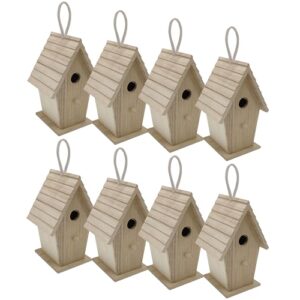
If owls aren’t your target species, the Make Market Unfinished Wood Birdhouse takes a different approach — and it comes in a pack of 8.
Each house measures 5.51 by 4.72 by 8.46 inches, a solid fit for chickadees and wrens. The 1.25-inch entrance hole is sized right for small cavity nesters. Made from lightweight paulownia wood, it’s splinter-free and unfinished, so you can seal it with linseed oil to extend outdoor life up to five years.
| Best For | Families, teachers, and craft lovers who want a fun painting or decorating project — or a simple nesting box for small backyard birds. |
|---|---|
| Material | Paulownia wood and plywood |
| Color | Natural |
| Outdoor Use | Yes |
| Assembly Required | Minimal |
| Weight | 4.62 Pounds |
| Bird Compatibility | Small birds |
| Additional Features |
|
- Comes in a pack of 8, great value for group projects or classrooms
- Light paulownia wood is easy to paint, decorate, and handle
- Right size for small birds like chickadees and wrens
- Not moisture-resistant, so it won’t hold up well outdoors without sealing
- Entrance hole may be too small for some bird species like sparrows
- May need extra reinforcement to keep parts from coming loose
3. ONKO Large Wooden Owl Box

For larger species, the ONKO Large Wooden Owl Box steps things up considerably.
It’s built from solid pine and measures 23 by 14 by 10 inches — roomy enough for barn owls and screech owls to nest comfortably.
The entrance is sized to keep competitors out while letting target species in easily.
You’ll appreciate the secure latch for seasonal cleaning and the ventilated design that controls moisture.
It assembles in about ten minutes and weighs just 8 pounds for flexible mounting.
| Best For | Backyard birders and wildlife enthusiasts who want to attract large owl species like barn owls and want something durable, easy to maintain, and simple to set up. |
|---|---|
| Material | Wood |
| Color | Wood |
| Outdoor Use | Yes |
| Assembly Required | Yes, step-by-step |
| Weight | 8 Pounds |
| Bird Compatibility | Large owl species |
| Additional Features |
|
- Roomy 23x14x10 inch interior gives large owl species plenty of space to nest comfortably
- Ventilated, moisture-resistant design with a secure latch makes cleaning fast and easy
- Lightweight at 8 pounds and quick to assemble, so you can mount it just about anywhere
- Some users have reported the wood can come apart after heavy rain, so extra sealing is a smart move
- Assembly may need a second pair of hands depending on your mounting location
- Placement and height really matter — put it in the wrong spot and owls may never show up
Tips for Maximizing Conservation Impact
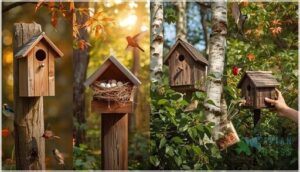
Putting up a bird house is just the beginning. How you place, maintain, and monitor it makes all the difference for the wildlife you’re trying to help.
Here are four practical ways to get the most out of your conservation efforts.
Strategic Placement for Target Species
Where you mount a box matters as much as which box you choose. Each specific species has different needs for mounting height, sun orientation, and habitat proximity.
- Bluebirds: 5–6 feet high, open fields, spacing rules of 250–300 feet between boxes
- Chickadees: 6–15 feet, woodland edges, shaded placement and access
- Screech owls: 10–30 feet, forest edges, away from busy areas
- Wood ducks: 6–25 feet over water, smooth poles with predator baffles
- All species: east-facing entrances, size and species fit, predator protection from climbing animals
All species require east-facing entrances, appropriate size and species fit, and predator protection from climbing animals.
Regular Cleaning and Maintenance
Keeping a cleaning schedule is one of the simplest ways to protect the birds you’re housing. Clean most boxes once a year after breeding season — late October works well.
Multi-brooded species like bluebirds need maintenance and cleanout after each brood.
Use a 1:9 bleach disinfection method, rinse thoroughly, and let it air dry.
Wear protective gear — gloves, a dust mask.
Check ventilation, drainage, and weatherproof seams during every structural inspection.
Monitoring Occupancy and Wildlife Activity
what moves in and out of your boxes tells you more than any guesswork can. birdhouse monitoring turns quiet observation into real data.
- Check boxes every 3–7 days using citizen science protocols — record species, egg counts, and nest stage each visit.
- Add infrared camera use or temperature loggers to track seasonal occupancy patterns without disturbing nesting birds.
- Note scratch marks or chewed wood — reliable predator detection methods that guide where baffles are needed.
Using Eco-friendly Installation and Care Practices
Every choice you make — from wood type to mounting method — either helps or hinders the birds you’re trying to support.
| Practice | What to Do | Why It Matters |
|---|---|---|
| Non-toxic Materials | Use untreated cedar or pine | Avoids toxins near nests |
| Low-Impact Mounting | Mount on waxed metal poles | Predator protection without tree damage |
| Sustainable Cleaning | Warm water and diluted vinegar | Safe maintenance and cleanout |
| Weather Protection | Drill floor drainage holes | Keeps boxes weatherproof and rot-free |
| Disturbance Minimization | Clean outside nesting season | Protects eggs and reduces abandonment |
Eco-friendly materials, ventilation and moisture control, and thoughtful care compound over time into real conservation gains.
Frequently Asked Questions (FAQs)
Do bird houses protect birds from predators?
Yes, bird houses do protect birds from predators — but design matters. Predator-resistant design features like entrance extenders, baffles, and correct hole sizing give nesting birds a real fighting chance.
Do wild birds use birdhouses?
Wild birds absolutely use birdhouses — at least 46 North American species do.
Seasonal usage patterns shift between breeding and roosting. Entrance size impact, habitat preference, and birdhouse placement all determine whether birds move in or move on.
What wood types are safest for nesting birds?
Untreated softwoods like kiln-dried pine and rot-resistant cedar are your safest bets. Avoid pressure-treated lumber entirely. Interior finish safety matters too — keep the inside bare natural wood, always.
How do bird houses support bat populations?
Bird houses act as a lifeline for bats.
Rough wood and narrow chambers create design overlap with bat roosting needs, supporting temporary bat roosts and broader bat population aid where natural cavities disappear.
Can bird houses attract endangered species nearby?
Absolutely — the right birdhouse designs draw endangered bird species in.
Blue-throated macaws fledged 93 chicks from species-specific wildlife habitats since 2005, representing 25% of their wild population.
Nesting success metrics like these prove habitat connectivity works.
When should wooden bird houses be replaced?
Replace your birdhouse when you spot wood rot signs, structural damage signs, or pest infestation clues. Cedar lasts 10–15 years; untreated pine just 3– Don’t wait until wildlife suffers.
Do painted bird houses harm wildlife health?
Yes, paint can harm wildlife.
Paint toxicity, heat stress from dark colors, off-gassing risks, and predator visibility are real concerns.
Natural, untreated wood stays the safest, most paint-friendly choice for nesting birds.
Conclusion
Think of your yard as a small village. Every empty lot is a family without shelter.
Wooden bird houses for wildlife conservation work the same way — they turn unused space into thriving homes. You’re not just hanging a box on a post.
You’re filling a gap that shrinking forests can’t close on their own. Place it well, keep it clean, and that little wooden house becomes something worth far more than its weight.
- https://birdingoutdoors.com/whats-the-best-wood-type-for-building-bird-houses/
- https://www.birdfy.com/blogs/blogs/birdhouse-hole-size-chart-by-species
- https://canadianwoodworking.com/project/birdhouse-dimensions/
- https://conservingcarolina.org/spring-cleaning-bird-baths-feeders-and-houses/
- https://www.ncbi.nlm.nih.gov/pmc/articles/PMC3335799/