This site is supported by our readers. We may earn a commission, at no cost to you, if you purchase through links.
Most people walk past dozens of birds every day without hearing a single one. Not because the birds aren’t singing—they almost always are—but because the ear hasn’t learned to listen yet.
That’s a trainable skill, not a gift.
A White-throated Sparrow repeats the same whistled phrase so reliably you could set a clock to it, while a Northern Mockingbird strings together borrowed melodies like a DJ who never runs the same set twice.
Learning to identify songbirds by singing comes down to understanding those patterns—pitch, rhythm, repetition—and knowing where to start.
The tools and techniques ahead make that first step a lot less overwhelming than it sounds.
Table Of Contents
- Key Takeaways
- How to Identify Songbirds by Singing
- Understanding Song Structure and Variation
- Using Apps and Tools for Birdsong ID
- Tips for Improving Birdsong Identification Skills
- Top Products for Learning Bird Songs
- Frequently Asked Questions (FAQs)
- How can I find out what bird is singing?
- What is the app that identifies birds by song?
- What is the website that identifies bird songs?
- How do I identify birds by their sound free on my iPhone?
- Can weather affect how songbirds vocalize?
- Do songbirds sing differently during mating season?
- How do young birds learn their species songs?
- Can the same species sound different across regions?
- Do songbirds ever mimic other species calls?
- Conclusion
Key Takeaways
- Birdsong recognition is a learnable skill built on three core patterns — pitch, rhythm, and repetition — not an innate talent reserved for naturalists.
- Free apps like Merlin Bird ID and BirdNET use spectrogram analysis and neural networks to identify species in real-time, making the learning curve far less steep for beginners.
- Short, consistent daily practice — ten to fifteen minutes at dawn, focusing on one species per week — builds ear recognition faster than any intensive study session.
- Every species carries a unique acoustic fingerprint in its pitch range, syllable timing, and phrase structure, which means even regional dialects preserve enough of the core pattern to make reliable identification possible.
How to Identify Songbirds by Singing
Identifying a bird by its song feels like cracking a secret code — and once it clicks, you’ll never hear a walk in the woods the same way again.
This guide on identifying birds by song and calls breaks down the process in a way that actually makes it stick.
Learning a bird’s song is like cracking a secret code that transforms every walk in the woods forever
The good news is that your ears are more capable than you think, and a few simple things can sharpen them quickly.
Here’s what to focus on when you’re just getting started.
Key Features of Bird Songs
Every bird song is basically a layered acoustic fingerprint.
Pitch range, syllable shape, timbral quality, and motif structure combine into something as distinctive as a voice.
A spectrogram — think of it as acoustic visualization of sound — reveals these features visually.
Regional dialects add variation, but the core pattern holds.
That consistency is exactly what makes bird song recognition and using a birdsong identifier so reliable.
Understanding relative pitch changes helps pinpoint species.
Recognizing Melody, Rhythm, and Repetition
Once you’ve got a feel for pitch, melody becomes your next anchor. Think of a song’s contour — the way notes rise, fall, or hold steady — as a simple sketch your ear can trace. Pair that with rhythm (those temporal gaps between notes matter), and repetition clicks into place.
- Contour sketching maps melodic shape without memorizing exact pitch
- Mnemonic phrases mirror a song’s rhythm and motif mapping
- Spectral visualization via spectrogram adds a visual layer to what you hear
- Short daily loops sharpen your birdsong identifier instincts fast
Understanding melodic contour types(https://study.com/academy/lesson/melodic-contour-definition-examples.html) helps you map the shape of birdsong.
Differentiating Songs and Calls
Songs and calls are easy to mix up, but they serve different jobs. Birdsong — like an American Robin’s caroling — is long, layered, and mostly a male’s way of saying “this is my yard.”
Call is shorter, sharper, more utilitarian. Think of the Chickadee’s quick chirp under one second as a text message, not a speech.
| Feature | Song | Call |
|---|---|---|
| Temporal Length | Several seconds | Under 1 second |
| Acoustic Complexity | Multi-note, rhythmic | Single tone |
| Sexual Dimorphism | Mostly males | Both sexes |
Dialect variation and acoustic analysis sharpen your bird call identification techniques, making species recognition far more reliable.
Step-by-step Process for Beginners
Now that you can tell a song from a call, let’s put that knowledge to work.
Pick a quiet listening spot set up at least ten meters from road noise. Arrive near sunrise, record for ten seconds on your phone, and jot one descriptive note‑taking line about pitch or rhythm.
Back home, use those notes to match what you heard with online bird song identification tools with audio and visuals, which let you cross-reference pitch and rhythm descriptions against real recordings.
Run it through BirdNET.
That daily practice schedule, kept short and consistent, builds real bird song identification faster than any textbook.
Understanding Song Structure and Variation
Every bird song is built from a few basic ingredients — pitch, timing, and repeated phrases — and learning to hear those ingredients changes everything.
Once you start noticing the patterns, a song stops being random noise and starts working like a name tag.
Here’s what to listen for.
Pitch, Rhythm, and Phrasing Patterns

Think of birdsong as a musical signature built from three interlocking parts: pitch contour, tempo variability, and phrase repetition. Pitch contours — those rising or falling glides across frequencies — give each species its basic shape.
Rhythm syncopation adds personality, while spectral glides link notes smoothly. Acoustic analysis via a spectrogram actually shows these patterns visually, turning bird song recognition from guesswork into something you can genuinely see and hear.
Species-specific Song “fingerprints”

Every species carries what scientists call acoustic fingerprint — a unique combination of pitch range, syllable timing, and phrase structure encoded through genetic song templates and sharpened by cultural dialects.
- Frequency range narrows your candidates fast
- Syllable duration reveals species-level rhythm
- Phrase repetition patterns act like a vocal ID card
- Regional dialects add cultural layering atop the core fingerprint
- Individual signature variability still preserves the species blueprint
Examples of Common Songbird Variations
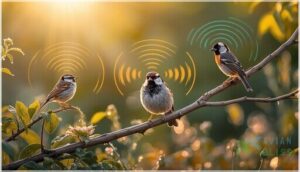
White-throated Sparrow — its clear whistles sound almost identical coast to coast, yet regional dialects create subtle variations your ear eventually learns to catch.
Repertoire size matters too: nightingales manage around 250 distinct songs, while song sparrows carry just eight to ten.
Seasonal shifts also reshape what you hear, since male birdsong intensifies during breeding season.
Using Apps and Tools for Birdsong ID

Your ears can only catch so much on their own, and that’s exactly where technology steps in.
A few smart tools have made birdsong identification far more accessible, even for complete beginners.
Here’s a look at what’s worth knowing about.
Merlin Bird ID and BirdNET Overview
Two apps rise above the rest for bird song identification: Merlin Bird ID and BirdNET. Both use audio analysis to match bird calls against massive species databases, but they serve slightly different needs.
- Merlin Bird ID covers ~2,066 species, with offline pack management built in
- BirdNET offers broader app coverage comparison, reaching 3,000+ species globally
- User data sharing differs too — BirdNET leans into citizen science contributions.
How Sound ID Technology Works
Sound ID works a bit like your brain — but faster.
Your phone’s mic captures live audio, converts it into a spectrogram (a visual map of sound frequencies over time), then runs MFCC extraction to pull out tonal "fingerprints."
A neural network architecture scans those patterns against thousands of known songs.
Metadata filtering — your location, date — narrows the results.
Confidence scoring tells you how sure BirdNET actually is.
Offline Identification Options
No signal? No problem. Merlin’s regional song packs download over Wi‑Fi beforehand, so your phone keeps identifying bird calls deep in the woods.
A few solid offline options worth knowing:
- Regional song packs cover roughly 1,300 species across North America and Europe
- Printed song charts and field guide mnemonics like "tea-kettle, tea-kettle" work without any battery
- Offline audio quizzes via Larkwire sharpen your bird song recognition between outings
Recording and Comparing Bird Songs
Recording a bird well is half the battle. Point your microphone directly at the singer, set your gain so peaks land around -12 dB, and use a furry windscreen for noise reduction on breezy days. That’s your field recording workflow sorted.
Afterward, run the clip through BirdNET or pull up a spectrogram in Audacity — the visual pitch shapes make bird song recognition surprisingly natural.
Tips for Improving Birdsong Identification Skills

Getting better at birdsong ID is mostly about building small, consistent habits over time.
It’s less about having a perfect ear and more about knowing where to focus your attention.
These four practices will move you along faster than almost anything else.
Building Your Listening Practice Routine
Building a habit is really the whole game.
timed listening sessions of just 10 to 15 minutes each morning — no phone, no scrolling, just bird calls and birdsong and nature sounds around you.
mindful breathing to clear your head first.
progress checklist and habitat note-taking to track where and when you hear each species.
Focusing on One Song Per Week
Your weekly listening schedule works like a language immersion course — one song at a time. Pick a species, say the robin or wren, and spend seven days with just that voice. Use your progress tracking journal to note pitch and rhythm.
Mnemonic sound pairings help too: link the Great Tit’s teacher-teacher call to a squeaky bike pump. Focused field sessions seal it.
Taking Advantage of Dawn and Dusk Choruses
Once you’ve locked in a species or two, timing becomes your secret weapon. Dawn is peak hour — robins kick off roughly two hours before sunrise, with blackbirds and song thrushes joining as light builds. These Chorus Timing Strategies sharpen your Bird Identification Techniques fast:
- Arrive before sunrise for maximum Species Arrival Order
- Note Seasonal Song Peaks — May is the UK’s richest month
- Use calm dawn air, since light conditions impact how far Bird Song carries
- Try Habitat Listening across woodlands, wetlands, and urban parks
- Revisit at dusk — fewer overlapping Bird Calls makes identification cleaner
Creating a Personal Audio Archive
Think of your personal archive as a field journal that never loses a page. Save recordings as WAV files at 48 kHz and 24‑bit depth — that’s your Ideal Format for clean Bird song identification later.
Good Metadata Tagging, like species, date, and GPS location, makes retrieval painless. Smart Folder Organization by date and site, solid Backup Storage on two drives, and Equipment Selection that captures clear Bird Calls keeps everything analysis‑ready.
Top Products for Learning Bird Songs
At some point, apps alone won’t scratch the itch — you’ll want something tangible to sit with while you learn. A few dedicated products make it easier to connect sounds to species at your own pace, whether you’re at home or out in the field.
Here are some worth having in your kit.
1. Identiflyer Lyric Bird Song Kit
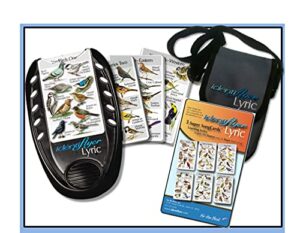
The Identiflyer Lyric Bird Song Kit is one of the most beginner-friendly tools out there. It comes with the Identiflyer machine, three Super SongCards covering 60 birds, and a fabric carrying case with a belt loop — so you’re ready to go right out of the box.
The Lyric Mode announces each bird’s name, shows a picture, and plays a crystal-clear song. Most people learn ten distinct songs in about ten minutes.
That’s not marketing fluff — over 350,000 units sold backs it up.
| Best For | Beginner birdwatchers who want a fun, hands-on way to learn bird songs without staring at a phone screen. |
|---|---|
| Price Range | Premium ($50+) |
| Format | Physical device |
| Bird Content | 40 birds included |
| Use Case | Bird identification |
| Audience | All ages |
| Expandability | Yes, via add-on cards |
| Additional Features |
|
- Plays crystal-clear bird songs and shows the bird’s name and picture all at once — no guessing
- You can learn up to ten songs in about ten minutes, which is genuinely fast
- Comes ready to go with batteries, cards, and a carrying case included
- The price is steep compared to free or cheap birding apps
- You’ll need to buy extra card sets if you want more than the 60 birds included
- Using recorded bird calls in the field has some ethical guidelines worth reading up on first
2. Identiflyer Lyric 3 Super SongCards
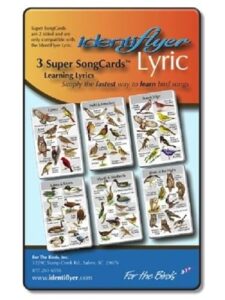
Once you have the Lyric device, these three Super SongCards are what actually expand your library.
Each card is double-sided, and together they cover 60 species across six distinct habitats — forest, field, meadow, marsh, lakes and rivers, and even birds of the night.
That last one is surprisingly fun; not many beginners think to learn owl calls.
The whole set runs $36, which works out to 60 cents per bird. Hard to argue with that math.
| Best For | Bird watchers and nature lovers who already own an Identiflyer Lyric and want to expand their knowledge of bird calls across a wider range of habitats. |
|---|---|
| Price Range | Mid-range ($20+) |
| Format | Physical cards |
| Bird Content | 60 birds included |
| Use Case | Bird identification |
| Audience | All ages |
| Expandability | Standalone expansion |
| Additional Features |
|
- Covers 60 species across six habitats, so you get solid variety in one set
- Double-sided cards pack in a lot without taking up much space
- At around 60 cents per bird, it’s genuinely good value for what you get
- Only works with the Identiflyer Lyric — useless without one
- 60 species sounds like a lot until you realize how many birds are out there
- Made in China, which might matter to some buyers
3. The Free Birds Song

Sometimes the best practice tool costs less than a cup of coffee. The Free Birds Song runs just $1.29 and gives you a layered nature recording — real bird voices mixed with wind and ambient forest sounds — that mirrors exactly what you’d hear stepping outside at dawn.
At around two minutes long, it’s short enough to replay several times in a single session. Try loading it into Merlin while it plays and see which species the app picks out from the chorus.
| Best For | Anyone who loves birdsong and wants a relaxing, nature-inspired audio track for under a buck. |
|---|---|
| Price Range | Budget ($1.29) |
| Format | Digital |
| Bird Content | Not applicable |
| Use Case | Entertainment |
| Audience | General listeners |
| Expandability | No |
| Additional Features |
|
- Super affordable at just $1.29 — less than most gas station coffees
- Great for unwinding, meditating, or just blocking out background noise
- Easy addition to your personal music library you can revisit anytime
- Digital only, so no physical copy if that’s your thing
- Might not play nicely on every device or platform
- Not much info out there about the artist or genre
4. Songbirds Nature Soundtrack Audio

If you want something you can leave running for hours, Songbirds Nature Soundtrack Audio is worth a look. These long-play recordings — many running 60 to 120 minutes — capture layered forest choruses recorded during early morning sessions, right when bird activity peaks.
You get close-up calls blended with distant ambience, wind, and rustling leaves, so it sounds like the real thing. It’s a low-effort way to train your ears passively, whether you’re working, winding down, or just sitting still.
| Best For | Anyone who wants to relax, focus, or passively sharpen their ear for birdsong without putting in any effort. |
|---|---|
| Price Range | Budget ($1.29) |
| Format | Digital |
| Bird Content | Not applicable |
| Use Case | Entertainment |
| Audience | General listeners |
| Expandability | No |
| Additional Features |
|
- Long-play recordings mean you can set it and forget it for hours
- Layered sounds — calls, wind, leaves — make it feel like you’re actually outside
- Great for background listening while working, reading, or winding down
- Only one track, so it can get repetitive over time
- At $1.29, it’s fine for personal use but not practical if you need multiple recordings
- No details on recording quality or species featured before you buy
Frequently Asked Questions (FAQs)
How can I find out what bird is singing?
A single bird song can reveal an entire hidden world. The quickest way to find out who’s singing is to open the free Merlin Bird ID app, tap Sound ID, and let it listen.
What is the app that identifies birds by song?
Merlin Bird ID is the go-to app. It listens in real time, shows species suggestions instantly, and works offline — covering over 2,000 species across North America, Europe, and beyond.
What is the website that identifies bird songs?
Picture yourself sitting at a laptop, dawn light coming through the window — Cornell Lab of Ornithology’s website, AllAboutBirds.org, lets you search and hear thousands of verified bird songs instantly.
How do I identify birds by their sound free on my iPhone?
Your best free option is Merlin Bird ID from Cornell Lab.
Just open the app, tap Sound ID, and hold your iPhone toward the bird. It identifies songs in real time, even offline.
Can weather affect how songbirds vocalize?
Yes, weather calls the tune. Cold air narrows a bird’s vocal range, wind above 5 m/s silences many singers, and humidity actually helps songs travel farther.
Do songbirds sing differently during mating season?
Absolutely. During mating season, male songbirds sing more often, more precisely, and with greater complexity. Think of it as their resume on full volume — louder, longer, and harder to ignore.
How do young birds learn their species songs?
Young songbirds learn by listening first. Around 20 days old, they silently absorb their father’s song, building an internal template. By 90 days, that blueprint shapes everything they’ll ever sing.
Can the same species sound different across regions?
The same species can sound surprisingly different depending on where it lives. White-crowned Sparrows, for example, sing distinct regional dialects — birds just a few miles apart may use noticeably different melodies.
Do songbirds ever mimic other species calls?
Some songbirds are basically nature’s con artists.
The Northern Mockingbird alone imitates over 200 songs from at least 20 species — sometimes mid-song — making it one of the trickiest birds to pin down by ear.
Conclusion
What if the most rewarding part of learning to identify songbirds by singing isn’t the identification itself—but the world gets louder? That robin you’ve ignored for years suddenly has something to say.
The pre-dawn chaos starts sounding like individual voices in a conversation you’re finally fluent enough to follow. You don’t need a perfect ear or years of field experience. You just need to start listening.
The birds haven’t stopped talking.
- https://www.allaboutbirds.org/news/how-to-learn-bird-songs-and-calls/
- https://www.audubon.org/magazine/how-start-identifying-birds-their-songs-and-calls
- https://www.rspb.org.uk/birds-and-wildlife/identifying-birds/bird-song-identifier
- https://journal.afonet.org/vol93/iss2/art6/
- https://merlin.allaboutbirds.org