This site is supported by our readers. We may earn a commission, at no cost to you, if you purchase through links.
A single oak tree can support over 500 species of caterpillars alone—more than most entire suburban landscapes combined. That’s not a nature trivia fact; it’s a glimpse into how much wildlife depends on the plants you choose.
Swap one ornamental Bradford pear for a native serviceberry or hackberry, and you’ve quietly reopened a food chain that was quietly starving.
Regional native plants for wildlife do something exotic cultivars simply can’t: they fit into the local web of life like a key into its lock. From cavity-nesting woodpeckers to migrating waxwings to native bees, the right plants make your yard a working habitat.
Table Of Contents
- Key Takeaways
- Best Native Trees for Regional Wildlife Support
- Top Native Shrubs That Attract Birds and Pollinators
- Native Wildflowers and Perennials for Pollinator Gardens
- Native Grasses and Sedges That Support Ground-Level Wildlife
- Native Vines That Create Habitat and Food for Wildlife
- Frequently Asked Questions (FAQs)
- Conclusion
Key Takeaways
- A single oak tree supports over 500 caterpillar species, making it the most powerful plant you can choose for feeding local birds and rebuilding a healthy food web.
- Native shrubs, wildflowers, and grasses work together across seasons — spring blooms feed bees, summer berries feed birds, and standing seed heads carry finches through winter.
- Matching plants to your region’s soil, moisture, and climate zone isn’t optional — it’s what separates a pretty yard from one that actually functions as wildlife habitat.
- Most native plantings take just two to three years to fully establish, and once they do, they need far less water, fertilizer, and upkeep than traditional garden plants.
Best Native Trees for Regional Wildlife Support
Trees do more for wildlife than most people realize — they’re the backbone of any healthy habitat. The right native tree can feed insects, shelter birds, and support an entire food web from the ground up.
For a closer look at which trees pull the most weight, this guide to best plants for bird gardens breaks down top native choices by the wildlife they support.
Here are the best native trees to explore, broken down by what they do and where they grow.
Oaks and Their Role in Supporting Insect Food Webs
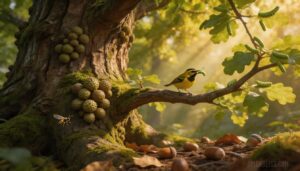
If you plant one tree for wildlife, make it an oak. A single mature oak provides caterpillar diversity spanning hundreds of species — insects your local songbirds depend on during nesting season.
Plant one oak and feed hundreds of species — it’s the single most powerful tree you can choose for wildlife
Leaf chewer phenology aligns perfectly with bird breeding cycles. Oak gall communities shelter predators, while sap-feeder honeydew draws oak canopy predators like wasps.
For food web support and habitat restoration, oaks are unequaled biodiversity anchors. They supply extensive bird food, which many species rely on.
Fruit-Bearing Trees That Feed Birds Year-Round
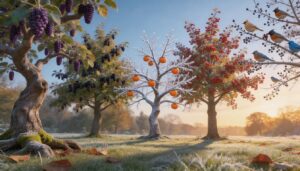
Oaks keep birds fed through nesting season, but what carries them through winter?
Fruit-bearing native trees do that work.
- Mulberry – produces Continuous Bird Food from late spring into early fall
- Serviceberry – offers Multi-Season Fruit with berries persisting into winter
- American Persimmon – Winter Fruit Persistence keeps orange fruits on branches through cold months
- Crabapple – Extended Fruit Availability into winter fills gaps when other food disappears
- Hackberry – Native Fruit Diversity in small drupes that birds rely on through freezing temperatures
Native Trees for Nesting and Roosting Habitat
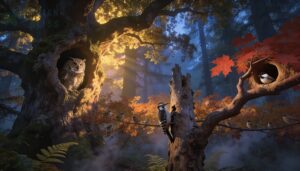
Feeding birds is one thing — giving them a safe place to raise their young is another. Mature native trees do both.
As they age, Tree Age Succession drives Cavity Development Dynamics: hollows form naturally in oaks and maples, ranging from 2 to 6 inches wide — perfect for chickadees, woodpeckers, and owls. Deadwood Habitat Importance can’t be overstated either. A standing snag isn’t an eyesore; it’s a condominium.
Branch Density Effects matter too. Dense branching gives small birds Winter Roosting Cover when temperatures drop. Think of thick canopies as windbreaks that keep sparrows and wrens alive through cold nights.
| Tree | Nesting Benefit | Wildlife Value |
|---|---|---|
| Native Oak | Large cavities, perch sites | Woodpeckers, owls, jays |
| Red Maple | Forked trunks, hollow limbs | Chickadees, small songbirds |
| Eastern Sycamore | Broad cavities in older wood | Wood ducks, screech owls |
Your yard becomes part of a larger wildlife corridor when these trees anchor it — connecting native shrub layers and supporting long-term habitat restoration using native shrubs and grasses around them.
Regional Tree Selections by U.S. Climate Zone
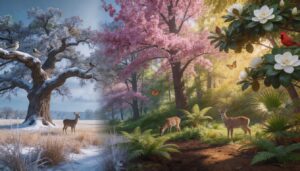
Where you live shapes everything.
Cold‑hardy selections like Bur Oak thrive in Zones 3–6, while heat‑tolerant species such as Southern Magnolia suit Zones 6–9.
Whatever your climate, pairing the right tree with pollinator-safe bird netting for fruit and flowering plants helps protect blooms without disrupting the bees your garden depends on.
Moisture‑adapted trees and soil‑pH compatible choices matter just as much as climate zone.
Regional native plant guides make this easier — matching fast‑establishing canopy species to your exact conditions turns your yard into real wildlife habitat.
Top Native Shrubs That Attract Birds and Pollinators
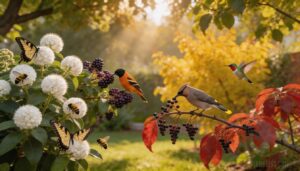
Shrubs are where a lot of the real wildlife action happens in your yard.
They work hard all season — offering flowers in spring, shelter in summer, and berries when temperatures drop.
Here are four native shrubs worth knowing, each one pulling its weight for birds and pollinators.
Berry-Producing Shrubs for Fall and Winter Bird Feeding
When food gets scarce in winter, native berry shrubs become lifelines for birds. Winterberry Persistence keeps robins, waxwings, and bluebirds fed when little else remains. Red Osier Dogwood and Cornus sericea attract chickadees and thrushes through the coldest months. Mountain Ash Berries carry high energy into late fall, while American Beautyberry and Highbush Blueberry round out your Cold Weather Berries toolkit.
- Winterberry holds its bright red fruit well into winter, delivering Late-Season Nutrients when birds need them most
- Red Osier Dogwood berries persist through frost, drawing thrushes and chickadees reliably
- Mountain Ash clusters feed finches and waxwings long after other food sources disappear
Flowering Shrubs That Draw Hummingbirds and Native Bees
Want to turn your yard into a hummingbird hotspot? A few well-chosen flowering shrubs do exactly that.
| Shrub | Wildlife Benefit |
|---|---|
| Weigela florida | Late-spring bloomers with red tubular blooms |
| Penstemon | Nectar-rich spikes for compact hummingbird shrubs |
| Red Flowering Currant | Bee-friendly foliage, early hummingbird nectar sources |
These pollinator-friendly landscaping picks keep bees and hummingbirds returning all season.
Drought-Tolerant Native Shrubs for Western Gardens
Western gardens don’t have to sacrifice wildlife value to survive dry summers.
Shrubs like Salvia apiana and Leucophyllum frutescens — Texas Sage — thrive across a wide Sun Exposure Range and varied Soil Texture Tolerances, from sandy flats to rocky slopes.
Their Drought-Resilient Foliage offers year-round Seasonal Wildlife Support, while Native Shrub Architecture provides natural cover.
These drought-tolerant picks genuinely earn their place.
Moist-Soil Shrubs for Streambanks and Wet Yards
Wet yards and soggy streambanks aren’t problems — they’re opportunities. Native moist-soil shrubs anchor these spaces through Root Stabilization and Erosion Control while building real Habitat Connectivity across wetland and Streambank Native Plant Communities.
- Cornus sericea stabilizes banks with deep fibrous roots and feeds birds through winter with red berries
- Lindera benzoin thrives in wet shade planting spots, offering early bee nectar and fall fruit for thrushes
- Vaccinium corymbosum manages soil moisture requirements beautifully, supporting both pollinators and birds
- Eutrochium dubium extends your Seasonal Food Supply into late summer along wetland edge planting zones
Together, they support Water Filtration and Habitat Restoration Using Native Shrubs and Grasses naturally.
Native Wildflowers and Perennials for Pollinator Gardens
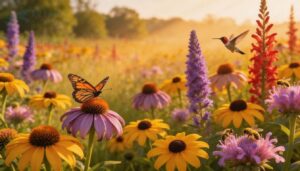
Wildflowers and perennials do some of the heaviest lifting in a pollinator garden. The right ones bloom in waves, keeping bees, butterflies, and birds fed from early spring straight into fall.
Here’s what to plant and why it works.
Spring and Summer Bloomers for Bees and Butterflies
Think of your garden as a relay race — someone always needs to carry the baton.
Early Nectar Sources like crocus and pussy willow hand off to midseason Purple Coneflower and Butterfly Milkweed.
Pollinator Succession Planning keeps bees and butterflies fed all season long.
| Bloom Period | Plant | Pollinator Benefit |
|---|---|---|
| Early Spring | Creeping Phlox | Native bees |
| Midsummer | Purple Coneflower | Butterflies, bees |
| Late Summer | Butterfly Milkweed | Monarchs, long-tongued bees |
Wildflowers That Feed Finches and Sparrows in Fall
Once nectar season winds down, your garden doesn’t have to go quiet.
Coreopsis, Black-eyed Susan, and Purple Coneflower are workhorses of fall seed accessibility — their bird-friendly seedheads stay upright and full through autumn.
Seed head timing matters: leave those stems standing. Finches and sparrows depend on this late season seed as regional seed sources thin out.
That’s what makes wildflower meadow ecology so powerful.
Shade-Tolerant Native Perennials for Woodland Gardens
Not every garden gets full sun — and that’s fine. Shade opens the door to a quieter kind of beauty.
Tiarella and Heuchera bring leaf texture variety and seasonal foliage color to dry shade planting beneath trees. As understory groundcover, they support low-light pollinator support while keeping soil moisture management steady.
Your shaded corner can still carry real wildlife and bird-friendly landscaping value.
Drought-Resistant Wildflowers for Desert and Sandy Soils
Sandy, dry soil doesn’t have to mean a bare, lifeless yard. Desert Marigold and Texas Sage thrive where other plants give up.
silvery leaf adaptations reflect heat and cut water loss naturally. Deep root systems and taproot water storage carry them through long dry stretches.
Rapid germination kicks in fast after rain, and seasonal bloom timing keeps your xeriscape buzzing with wildlife all season.
Native Grasses and Sedges That Support Ground-Level Wildlife
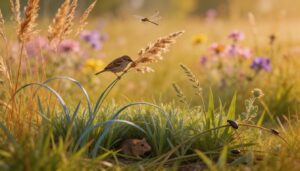
Grasses and sedges don’t get nearly enough credit for the wildlife they quietly support at ground level. They feed seed-eating birds, shelter small creatures, and host the insects that keep your whole garden ecosystem running.
Here’s a look at the native grass options worth knowing about.
Seed-Producing Grasses Favored by Finches and Juncos
When finches and juncos start moving through your yard in fall, seed head timing makes all the difference. Clump-forming grasses like Switchgrass (Panicum virgatum) and Prairie Dropseed ripen in late summer, delivering a high seed density that fuels winter seed supply well into cold months.
Drought resilient grasses maintain steady yields even in dry years, making them reliable anchors for bird-friendly gardens and backyard wildlife.
Tall Grass Species That Provide Bird Shelter and Cover
Seed heads fill bellies, but shelter keeps birds alive. Native grass species like Switchgrass and Big Bluestem do both — their layered cover and vertical corridors let birds dodge hawks and hide fledglings safely.
- Switchgrass grows 4–7 ft, offering predator concealment for ground foragers.
- Big Bluestem creates vertical corridors, birds navigate under pressure.
- Indian Grass provides layered cover, ideal for roosting.
- Little Bluestem provides nesting material supply, and winter stem retention.
Low-Growing Groundcovers That Host Beneficial Insects
What grows low to the ground works harder than you’d think.
Creeping thyme creates a Thyme Insect Habitat that shelters ground beetles and draws native bees with its tiny blooms. Ajuga Bee Nests support solitary ground nesters under canopy shade.
Sedum acts as a Sedum Predator Refuge for soil mites, while Woolly Groundcover Shelter and California Fescue Soil alternatives offer low-maintenance, drought-tolerant, pollinator-friendly landscaping that doubles as butterfly host plants.
Regional Grass Selections for Wet and Dry Conditions
Matching your grass to soil’s moisture level makes all the difference. Moisture Zoning and Soil Texture Matching guide which species truly thrive:
- Switchgrass — deep roots support Erosion Control Grasses in wetland and Streambank Native Plant Communities
- Buffalo grass — drought-tolerant, ideal for xeriscape gardening and low‑maintenance lawns
- Little bluestem — hybrid grass mixes for seasonal water use flexibility
- Woolly sedge — stabilizes wet banks naturally
- Blue grama — thrives in clay with minimal input
Native Vines That Create Habitat and Food for Wildlife
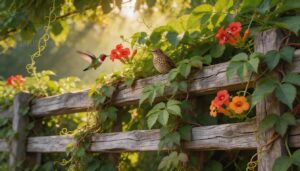
Vines often get overlooked, but they’re some of the hardest-working plants you can add to a wildlife garden. They climb fences, walls, and trellises to create layered habitat where birds nest, insects shelter, and pollinators feed.
Here are the best native vines to explore, broken down by what they offer and where they grow best.
Flowering Vines That Attract Hummingbirds and Bees
If you want hummingbirds visiting your yard daily, flowering vines are hard to beat. Coral Honeysuckle, Crossvine, and Trumpet Creeper are standout regional native plant selections for wildlife, offering tubular flower design that guides hummingbirds straight to the nectar. Nectar production peaks when vines get full sun, so sunlight exposure needs and soil moisture preferences matter.
These pollinator-friendly garden plants across the US support bees and wildlife through vining growth habits on sturdy trellises.
Berry-Bearing Vines as Winter Food Sources for Birds
Winter berry phenology makes berry‑bearing vines some of the most reliable bird‑friendly garden additions you can plant. As temperatures drop, persistent berry species become critical avian energy intake sources.
Here are four top choices for vertical food corridors:
- Virginia creeper feeds thrushes and cardinals
- American bittersweet sustains waxwings through late winter
- Moonseed offers dark berries for jays and sparrows
- Native grape relatives support diverse songbirds
Prioritize invasive vine management to protect these wildlife‑value plants.
Native Vines for Vertical Structure and Nesting Cover
Think of native vines as living architecture for your yard. Climbing hydrangea builds a layered Evergreen Canopy of Twining Support stems that small birds use for Nest Cavity Creation and roosting.
Crossvine and trumpet honeysuckle add Seasonal Cover while their dense foliage creates Arthropod Habitat beneath every leaf.
These bird-friendly gardens feature native plant selection that doubles as pollinator-friendly landscaping with real wildlife value.
Regional Vine Options by Sunlight and Moisture Needs
Your site’s sunlight and moisture levels are the real starting point for smart native vine selection. Trumpet vine and crossvine thrive with six-plus hours of sun and drought-resilient roots once established.
Virginia creeper manages shade-loving corners beautifully.
For wet spots, coral honeysuckle rewards consistent moisture with steady blooms. Zone pairing strategies — like riverbank grape with native clematis — increase wildlife value wherever your yard falls on the dry-to-wet spectrum.
Frequently Asked Questions (FAQs)
How do native plants reduce yard maintenance costs?
Native plants slash your yard work in several ways. Lower irrigation needs, reduced pesticide use, less mowing, and decreased fertilization all add up.
longer plant lifespan makes low-maintenance, low-water landscaping, and xeriscaping genuinely worth it.
Can native plants coexist with traditional garden plants?
Yes, they can.
Match soil and water needs first, then use layered planting to reduce competition. Seasonal bloom sequencing keeps color flowing, and thoughtful aesthetic integration makes the whole garden feel intentional.
How long before native plantings fully establish themselves?
Most native plantings find their footing within two to three years. Root development speed picks up fast in year one, and by year three, you’ll barely need to step in.
Where can I buy locally propagated native plant species?
Think of it like shopping local for food.
Your best sources include Local Nurseries, Garden Center Sections, Native Plant Societies, Municipal Plant Programs, and Regional Online Marketplaces — all stocked with regionally propagated species.
Conclusion
By choosing regional native plants for wildlife, you’re both beautifying your yard and rebuilding a haven for local species. Native trees, shrubs, wildflowers, grasses, and vines work together to create a thriving ecosystem.
As you plant, remember that every selection matters. A single tree can support hundreds of caterpillars, and a well-curated garden can become a wildlife sanctuary.
Make informed choices, and watch your outdoor space transform into a vibrant haven for generations to come, naturally.