This site is supported by our readers. We may earn a commission, at no cost to you, if you purchase through links.

A birdhouse looks perfect on the outside can quietly cook its occupants alive on a hot July afternoon. Interior temperatures in poorly designed wooden boxes regularly climb past 107°F—well above the threshold that kills developing eggs and exhausts adult birds trying to brood.
Most backyard birders focus on entry hole size or mounting height, never realizing that what’s missing isn’t a feature they added wrong, but one they left out entirely.
Wooden bird houses need ventilation holes, and the difference between a box with proper airflow and one without can determine whether a nest succeeds or fails.
Table Of Contents
- Key Takeaways
- Yes, Wooden Bird Houses Need Ventilation Holes
- Why Ventilation Protects Nesting Birds
- Best Ventilation Hole Placement
- Proper Vent Hole Size
- Drainage Holes Also Improve Airflow
- Keep Birdhouses Cool and Safe
- Frequently Asked Questions (FAQs)
- What are the common mistakes when building a birdhouse?
- Can baby birds get too hot in a birdhouse?
- Will birds sleep in a birdhouse in the winter?
- Can metal birdhouses replace wooden ones safely?
- How do predators enter through ventilation holes?
- Should vent holes be covered during winter months?
- How often should birdhouse wood be replaced?
- Conclusion
Key Takeaways
- Without ventilation holes, a wooden birdhouse can reach deadly interior temperatures above 107°F in under 30 minutes, killing eggs and exhausting adult birds.
- Pair upper exhaust holes just below the roofline with smaller lower intake holes near the floor to create steady cross-ventilation that moves heat and moisture out naturally.
- Drainage holes at the floor corners do double duty—they clear rainwater and pull in cool air from below, keeping humidity low enough to prevent mold and bacterial growth.
- Where and how you build matters too: untreated cedar, a light-colored exterior, a 2-inch roof overhang, and partial afternoon shade all work alongside ventilation holes to keep the nest cavity safe.
Yes, Wooden Bird Houses Need Ventilation Holes
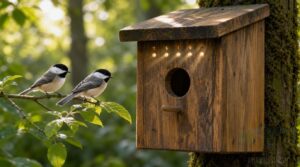
Yes, wooden bird houses absolutely need ventilation holes — and skipping them puts nesting birds at real risk. A sealed wooden box can turn into an oven on a warm day, faster than you might expect. Here’s why good airflow makes all the difference.
Think of those small gaps as a lifeline — proper bird house ventilation requirements are what stand between a safe nest and a heat trap.
Prevents Dangerous Heat Buildup
Think of an unvented birdhouse as a tiny oven on a hot summer day. Without ventilation holes, interior temperatures can climb 10–20 °C above the outside air.
That kind of dangerous heat buildup quickly becomes lethal for eggs and nestlings. Proper airflow regulates heat dissipation naturally, keeping temperature regulation for birds stable and the nest cavity safe.
Reduces Humidity and Mold
Heat isn’t the only threat hiding inside a poorly ventilated birdhouse. Stagnant, humid air creates the perfect conditions for mold and bacterial growth.
Maintaining the optimal indoor humidity range helps prevent mold inside birdhouses.
- Ventilation holes allow fresh air flow that pushes moist air out
- Drainage holes support condensation management at the floor level
- Cross-ventilation acts as a natural moisture barrier, keeping surfaces dry
Supports Healthy Nestlings
Good ventilation does more than cool the air — it directly shields nestling health. Proper airflow balance reduces moisture on feathers and skin, limiting bacterial blooms that can cause respiratory problems. It also promotes temperature stability, helping young birds regulate body heat before they’re fully developed.
| Ventilation Benefit | Effect on Nestlings |
|---|---|
| Humidity control | Slows mold and fungal growth |
| Airflow balance | Reduces bacterial buildup |
| Temperature regulation | Promotes healthy development |
| Nest cleanliness | Limits odors and waste gases |
Improves Breeding Success
All of that nestling protection adds up to something bigger: higher breeding success rates. When ventilation holes keep internal temperatures stable, egg viability improves noticeably. Studies show proper airflow in nesting boxes can cut interior heat by up to 15°F during peak afternoon hours.
- More eggs hatch when temperatures stay regulated
- Chicks grow stronger with consistent oxygen exchange
- Fewer nests get abandoned due to heat stress
Why Ventilation Protects Nesting Birds
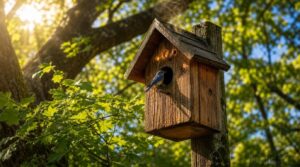
Ventilation isn’t just a design detail — it’s what keeps nesting birds alive through warm spring and summer days. To understand why it matters so much, it helps to look at what’s actually happening inside that small wooden box. Here are the key reasons good airflow makes all the difference.
Birds Run Naturally Hot
Birds are like little furnaces. Their core temperature runs between 102 and 109°F — several degrees hotter than ours. That natural warmth powers flight and metabolism, but it also means they’re always just a step away from overheating.
| Thermoregulation Method | How It Works |
|---|---|
| Bill radiator | Releases heat through exposed beak tissue |
| Panting behavior | Accelerates evaporative cooling via the airway |
| Wing and leg exposure | Increases blood flow to cool extremities |
| Evaporative cooling | Moisture evaporates from respiratory surfaces |
| Plumage adjustment | Fluffing or tucking controls insulation |
That’s why ventilation holes and steady airflow inside a birdhouse aren’t optional. Without them, heat stress builds fast, pushing bird health and thermal regulation to their limits.
Small top holes make a real difference — as explained in this guide to insulated birdhouse designs for winter warmth, good airflow and moisture control go hand in hand.
Eggs Can Overheat Quickly
What’s inside a sealed box on a sunny afternoon? Think of a car with the windows up — temperatures spike fast.
Inside an unvented birdhouse, nest cavity temperatures can cross 40°C (104°F) in under 30 minutes. At that point, egg proteins begin breaking down. Even brief temperature spikes to 38–39°C reduce hatch success, making proper ventilation holes essential from day one.
An unvented birdhouse can reach lethal temperatures in under 30 minutes, destroying eggs before they ever hatch
Chicks Need Steady Airflow
Once eggs hatch, the real work begins.
Young chicks rely on steady airflow to regulate body temperature, since they can’t do it themselves yet. Proper ventilation holes supply the oxygen their rapidly growing bodies demand.
Good air circulation also reduces stress, keeping nestlings calmer and supporting healthy growth through consistent air exchange and a gentle cross breeze.
Stale Air Encourages Bacteria
Stale air is basically a petri dish waiting to happen. Without proper ventilation holes, moisture builds up fast — and where there’s trapped humidity, mold and mildew follow.
- Airborne bacteria spread easily in still, damp air
- Poor air circulation lets moisture cling to wood surfaces
- Fresh air dilution pushes bacteria out before colonies form
- Ventilation limits bacteria by disrupting the humid conditions they need
Adults May Abandon Nests
Poor ventilation doesn’t just make a birdhouse uncomfortable — it can push adults to leave entirely. When nest overheating goes unchecked, parents instinctively flee to protect themselves.
Combined with predation pressure, human disturbance, or food scarcity nearby, a hot, stuffy box becomes the final straw.
Simple ventilation holes give adults one less reason to abandon their eggs.
Best Ventilation Hole Placement
Where you put the ventilation holes matters just as much as having them in the first place. A few simple placement choices can make the difference between a cool, comfortable nest and one that traps heat or lets in rain. Here’s what works best.
Upper Side-wall Exhaust Holes
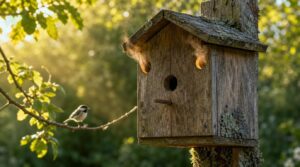
Think of upper side-wall exhaust holes as your birdhouse’s built-in heat release valve. Warm air naturally rises, and upper ventilation holes give it somewhere to go.
Without them, heat gets trapped near the roofline and turns the cavity into a slow oven. These holes drive airflow dynamics that pull cooler air upward through lower openings, creating steady circulation that protects nesting birds.
Just Below The Roofline
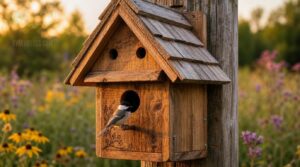
Placement matters more than most people realize. Just below the roofline is the sweet spot for exhaust vents.
Hot air rises and collects right there, so that’s where you want it to escape. A roof overhang of one to two inches shields these openings from direct rain, giving you solid moisture management without sacrificing airflow.
Lower Intake Holes Near Floor
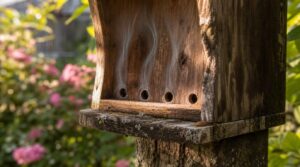
While upper vents push hot air out, lower intake holes near the floor pull cool air in at the base of the birdhouse.
This creates a vertical ventilation path — fresh air rises steadily through the cavity, carrying heat and moisture upward and out.
Small drilled out holes on the base keep airflow gentle without letting in cold drafts.
Avoid Rain-facing Openings
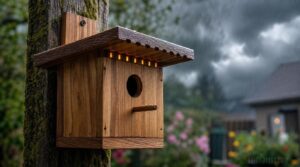
Now that you’ve got cool air coming in from below, where you place those openings matters just as much as their size. Avoid rain-facing sides entirely. Positioning vents toward prevailing wind and rain means water gets driven straight inside.
- Face openings away from storm winds
- Use a roof overhang to shield upper vents
- Add drip edges above each opening for water diversion
Maintain Gentle Cross-ventilation

Once your vents are shielded from rain, the next step is making sure air actually moves through the house. Cross breeze management comes down to coordinating openings on opposite walls so fresh air enters low and warm air exits high. Think of it like a gentle pump — cool air in, stale air out.
| Vent Feature | Lower Intake | Upper Exhaust |
|---|---|---|
| Position | Near floor | Just below roofline |
| Hole Size | Smaller | 5/8 inch |
| Purpose | Draw in cool air | Release warm, humid air |
This balanced airflow design keeps the nest microclimate stable without creating harsh drafts on eggs or nestlings.
Proper Vent Hole Size
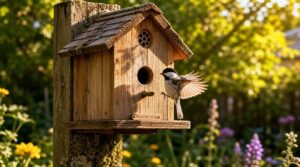
Getting the hole size right makes a bigger difference than most people expect. Too small and the air barely moves; too large and you’re inviting cold drafts or unwanted guests. Here’s what the right sizing looks like for each type of vent.
Two Side Vents Per Wall
For most small to medium cavity nesters, two side vents per wall strike the right balance. This paired layout creates balanced airflow design across the nest cavity, letting warm air rise and escape while cooler air flows in below.
Think of it as vertical air channels working quietly on each side, keeping the nest microclimate stable without creating disruptive drafts.
Use 5/8-inch Upper Holes
A drill bit set to 5/8 inch is your go-to for upper ventilation holes in a wooden birdhouse. That specific size gives you the right balance — wide enough to work as effective Heat Escape Vents and Moisture Release Holes, but not so large that cold drafts sneak in during cooler nights.
Place these as Oxygen Flow Paths just below the roofline, where rising warm air naturally exits. This simple Summer Airflow Design choice keeps interior temperatures close to outdoor levels, protecting both eggs and nestlings from dangerous heat buildup.
Smaller Lower Intake Holes
Lower intake holes should be 1/8 to 1/4 inch in diameter — noticeably smaller than the upper exhaust holes. That size difference is the key to Airflow Balance. Cool air draws in gently from below without creating the kind of draft that chills a nestful of young birds.
- Draft Minimization keeps airflow steady, not sudden
- Position holes slightly above the floor to avoid moisture splashes
- In hot climates, add a second small lower opening for better cooling
Avoid Oversized Openings
Bigger isn’t always better in relation to ventilation holes.
An oversized opening throws off your airflow balance and can turn a cozy nest cavity into a wind tunnel. It also weakens structural strength along the walls and creates gaps that compromise predator proofing.
Stick to the recommended opening dimensions — they’re sized specifically to protect bird health and ventilation without sacrificing safety.
Add More in Hot Climates
Hot climates call for a little extra. If summer temperatures in your area regularly climb past 90°F, add one extra side vent on the far wall to boost cross breeze design.
This simple upgrade can drop interior temperatures by up to 12°F, giving nestlings real relief from heat stress and keeping summer airflow steady all day.
Drainage Holes Also Improve Airflow
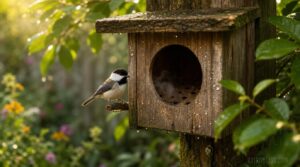
Most people think about ventilation holes and forget that the floor plays a role too. Drainage holes aren’t just for rainwater — they also move stale, humid air out of the nest cavity. Here’s what to know about getting them right.
Four Floor Drainage Holes
The floor of your birdhouse does more than support the nest. Four drainage holes, one drilled near each corner at the base, let rainwater and condensation escape before they can pool beneath nesting material.
These drilled out holes on the base also pull double duty as ventilation holes, allowing cooler air to enter from below and quietly improving moisture control throughout the cavity.
Use 1/4–1/2 Inch Holes
For drainage holes, size really matters. Holes drilled between 1/4 and 1/2 inch in diameter hit the sweet spot — large enough to let air and moisture escape, small enough to keep predators and heavy rain out.
In hot climates, the 1/2-inch option moves more air. In cooler spots, 1/4-inch holes provide gentle, steady ventilation without creating cold drafts.
Place at Lowest Corners
Where you place those holes matters just as much as their size. Drill them at the lowest corners of the floor — not the center.
Water naturally flows to the corners, so that’s where it needs an exit. This corner drainage design also opens a lower ventilation pathway, pulling fresh air in from the bottom while warm air rises and escapes above.
Prevent Trapped Condensation
Corner placement solves the water problem, but it also confronts something less obvious: trapped condensation. Without proper air exchange balance, moisture from droppings, dew, and breathing nestlings has nowhere to go.
That damp air lingers, hits cooler wood surfaces, and turns into water droplets. Humidity control vents working alongside drainage holes keep interior humidity below 60 percent, stopping condensation before it starts.
Keep Holes Clear Yearly
Keeping those holes clear is just as important as drilling them in the first place. Build a yearly cleaning routine into your calendar — ideally after fledglings leave.
Clear spider webs, leaf litter, and compacted debris with a soft brush. Blocked vents trap heat and moisture just as surely as having none at all.
Keep Birdhouses Cool and Safe
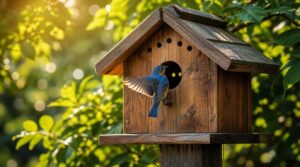
Ventilation holes do a lot of the heavy lifting, but they can’t work alone. The materials you use, where you hang the box, and how you care for it all play a role in keeping things cool and safe inside. Here’s what you can do to give nesting birds the best shot.
Use Untreated Thick Wood
The wood you choose matters more than most people realize. Untreated thick wood — ideally cedar or redwood — acts like a natural insulator, buffering the nest cavity against temperature swings.
It also breathes, letting moisture escape through the grain and keeping humidity in check. That steady moisture regulation pairs directly with your ventilation holes to protect nestlings from mold and heat stress.
Choose Light Exterior Finishes
Think of your birdhouse exterior like a sun hat — the lighter the color, the cooler everything underneath stays.
Light exterior paints with high LRV values (60–90) reflect solar heat instead of absorbing it, helping your ventilation holes do their job more effectively.
Dark finishes trap heat and can turn a well-vented box into an oven despite your best airflow design.
Add Protective Roof Overhangs
A good roof overhang acts like a brim on a wide hat. It shields your ventilation holes and drainage holes from direct rainfall, reducing moisture intrusion without blocking essential airflow.
Aim for 2 inches of overhang on each side. This also limits solar heat hitting the walls directly, giving your weatherproofing and birdhouse safety a quiet, reliable boost.
Mount in Partial Shade
Shade is one of the simplest things you can do to protect your birdhouse. Partial shade placement keeps interior temperatures from spiking on hot afternoons. Partial shade can drop peak heat by 10–15°F compared to full sun, which dramatically reduces heat stress in birds and promotes better airflow through your birdhouse ventilation holes.
Aim for a spot with morning sun exposure and afternoon shade — ideally beneath a tree canopy. That early warmth helps during cool spring mornings, while the afternoon cover keeps the nest cavity from turning into an oven when it matters most.
Clean Vents After Fledging
Once a nest goes quiet, your job isn’t done. Fledgling vent cleaning is one of the most overlooked steps in birdhouse care — and skipping it sets you up for problems next season.
Here’s what to tackle within a week of fledging:
- Remove vent debris by hand or with a handheld vacuum
- Wipe the vent housing clean and dry it thoroughly
- Check external guards for gaps that could invite blockages
A simple maintenance schedule — clearing vents every one to two months during active seasons — keeps mold and mildew from taking hold and ensures your ventilation holes keep working as intended.
Frequently Asked Questions (FAQs)
What are the common mistakes when building a birdhouse?
Common mistakes include missing ventilation holes, skipping drainage holes, wrong entrance hole size, poor predator proofing, incorrect entrance direction, and using the wrong construction materials — each one quietly stacking the odds against nesting success.
Can baby birds get too hot in a birdhouse?
Yes, baby birds absolutely can overheat. Without proper ventilation, rising internal temperatures trigger heat-induced fledging delays and even death. Ventilation holes allow warm air to escape, protecting nestlings from dangerous hyperthermia.
Will birds sleep in a birdhouse in the winter?
Absolutely — many birds do sleep in birdhouses during winter. Chickadees, bluebirds, and wrens seek out cavities on cold nights to conserve energy and stay sheltered from wind and freezing temperatures.
Can metal birdhouses replace wooden ones safely?
Metal birdhouses can work, but heat transfer is a serious concern. Metal heats up fast in direct sun, putting eggs and chicks at risk without proper ventilation and shading.
How do predators enter through ventilation holes?
Small gaps invite big problems. Mice squeeze through openings as tiny as 1/4 inch, while squirrels chew weak covers wider. Use metal mesh guards to block predator access without restricting airflow.
Should vent holes be covered during winter months?
Covering vent holes in winter feels logical, but don’t seal them completely. Moisture, heat, and stale air still build up. Keep vents slightly open for moisture escape and draft control without losing cold weather protection.
How often should birdhouse wood be replaced?
Inspect your birdhouse every spring. Replace wood when you spot soft spots, cracks, or fungal growth. Cedar lasts 10–15 years; pine may need replacing in 5–8 years, sooner in wet or sunny climates.
Conclusion
birdhouse without airflow isn’t just imperfect—it’s a quiet trap.
Do wooden bird houses need ventilation holes? Absolutely, and skipping them costs more than you’d expect.
A few small holes drilled near the roofline and floor create the steady air exchange that keeps temperatures livable and nestlings thriving.
Think of it as giving wildlife a fair chance under your care.
Build it right once, and the birds will show their approval every spring.
- https://digitalcommons.usf.edu/cgi/viewcontent.cgi?article=2135&context=ffn
- https://www.birdfy.com/blogs/blogs/birdhouse-hole-size-chart-by-species
- https://www.audubon.org/magazine/how-keep-nest-boxes-turning-lethal-extreme-heat
- https://nestwatch.org/learn/all-about-birdhouses/features-of-a-good-birdhouse
- https://woodworking.stackexchange.com/questions/1085/are-drain-holes-in-a-wooden-bird-house-necessary-and-if-so-whats-the-best-way