This site is supported by our readers. We may earn a commission, at no cost to you, if you purchase through links.

A bird gripping the wrong perch during recovery can mean the difference between healing and a setback that undoes weeks of care. Pressure sores, tail feather damage, and re‑injury from unstable footing are frustratingly common in rehab settings—and the perch is usually the culprit nobody thinks to question.
What works fine for a healthy pet parrot falls short when you’re dealing with a post‑surgical raptor or a songbird rebuilding grip strength.
Choosing the right bird perches for rehabilitation centers means thinking in species, injuries, and sanitation cycles all at once.
The five options below cover that full range.
Table Of Contents
- Key Takeaways
- 5 Best Bird Rehab Perches
- Key Features for Rehab Perches
- Materials and Designs That Aid Recovery
- Choosing Perches for Different Patients
- Frequently Asked Questions (FAQs)
- What is a bird perch called?
- Can I make my own bird perches?
- How do I mentally stimulate my bird?
- How often should rehabilitation perches be replaced?
- Can outdoor perches work for recovering birds?
- Which perch materials resist mold and bacteria best?
- Do wild birds need different perches than pets?
- How do you introduce new perches to stressed birds?
- Conclusion
Key Takeaways
- The wrong perch can undo weeks of rehab work — pressure sores, tail feather damage, and re-injury all trace back to surfaces designed for healthy pets, not recovering patients.
- Perch diameter, surface texture, and mounting stability aren’t minor details — they’re species-specific decisions that directly shape whether a bird heals or backtracks.
- Easy disassembly and non-toxic, non-porous materials aren’t optional upgrades in a rehab setting; they’re what keep your sanitation cycles fast and your patients safe between rotations.
- No single perch fits every patient — raptors, songbirds, and bumblefoot cases each need a different setup, and rotating perch types as recovery progresses is just as important as the initial choice.
5 Best Bird Rehab Perches
The right perch can make a real difference during a bird’s recovery — supporting foot health, reducing stress, and keeping vulnerable patients safe.
For birds with joint issues or reduced mobility, pairing the right perch with bird toys designed for elderly birds helps maintain both physical comfort and mental engagement during recovery.
These five options stand out for their materials, design, and suitability across a range of species and conditions. Here’s what each one brings to your rehab setup.
1. Hamiledyi Natural Parrot Perch Stand
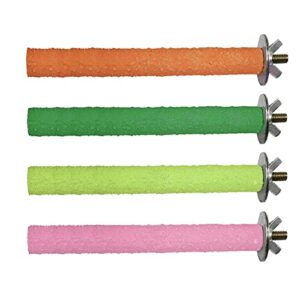
The Hamiledyi Natural Parrot Perch Stand is a solid pick for small-bird recovery setups. Each set comes with four natural wood perches coated in quartz sand — a surface that quietly works double duty, supporting foot exercise while keeping nails and beaks in check. At roughly 5.5 inches long and under an inch wide, they fit neatly into most small-parrot cages.
Simple wing-nut hardware means you can reposition or remove them fast during daily care rounds.
| Best For | Small-parrot owners — lovebirds, cockatiels, parakeets — who want a simple, affordable way to support foot health and reduce nail trimming trips. |
|---|---|
| Material | Natural wood with quartz-sand coating |
| Price | $12.99 |
| Mounting Type | Bolt, washer, wing nut |
| Bird Size Suitability | Small parrots |
| Beak/Nail Care | Yes, quartz-sand surface |
| Pieces Included | 4 perches |
| Additional Features |
|
- Four perches for $12.99 is genuinely good value, and the quartz-sand coating does real work keeping nails and beaks naturally trimmed
- Super easy to install and reposition — the wing-nut hardware takes about 30 seconds, which matters when you’re cleaning a cage daily
- The colorful pastel shades tend to catch a bird’s attention and encourage them to actually use the perches
- The sand-coated surface is a pain to clean, especially when wet droppings get into the texture
- The included washers run small, so if your bird is on the larger end, the perches can sag or shift
- Colors are random, so if you care about a coordinated cage setup, you’re rolling the dice on what you get
2. Penn Plax Multicolor Rope Bird Perch
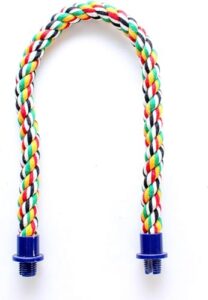
Where the Hamiledyi manages grip and beak maintenance, the Penn Plax Multicolor Rope Perch brings something softer to the recovery cage.
At 21 inches long with a 5/8-inch diameter, it gives small and medium birds — budgies, cockatiels, lovebirds — a cushioned place to rest tired feet.
The flexible rope bends into gentle curves, so you can route it away from tail feathers without fuss.
Blue mounting caps thread onto cage bars without tools, making repositioning quick during busy care rounds.
| Best For | Birds recovering from foot or leg issues, and owners of budgies, cockatiels, or lovebirds who want a soft, flexible perch that’s easy to reposition. |
|---|---|
| Material | Cotton-like rope fibers |
| Price | $7.61 |
| Mounting Type | Plastic screw-on caps |
| Bird Size Suitability | Small to medium birds |
| Beak/Nail Care | No |
| Pieces Included | 1 perch |
| Additional Features |
|
- Soft, cushioned surface is gentle on sensitive or injured feet
- Bends into curves so you can work around tail feathers and tight cage layouts
- Tool-free mounting caps make installation and repositioning quick and painless
- Rope can be stiff and may fray with frequent reshaping over time
- Loose fibers can snag toes or get chewed and ingested — not great for heavy chewers
- Mounting caps grip a single bar, so stability depends on your cage’s build quality
3. BILLIOTEAM Natural Wood Bird Perch
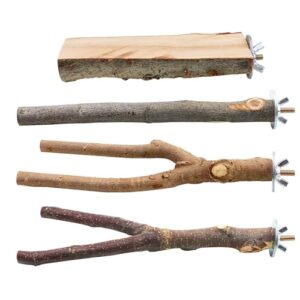
When you need something sturdier under those active little feet, the BILLIOTEAM Natural Wood Bird Perch set earns its place. You get four pieces — two straight perches, two forked branches, and a 5.1 × 2-inch platform — all made from unpainted, bark-on wood that provides natural grip and beak conditioning.
Diameters range from 0.6 to 1 inch, giving recovering budgies and cockatiels different footing options.
Wing-nut hardware means no tools, no fuss — just quick repositioning between care rounds.
| Best For | Small bird owners — budgies, cockatiels, conures, and finches — who want a natural, enriching perch setup that’s easy to install and move around. |
|---|---|
| Material | Natural solid wood with bark |
| Price | $9.99 |
| Mounting Type | Bolt and wing nut |
| Bird Size Suitability | Small to medium birds |
| Beak/Nail Care | Yes, bark texture |
| Pieces Included | 4 pieces |
| Additional Features |
|
- Four-piece variety (straight, forked, and platform) gives birds real options for perching and resting
- Bark-on texture keeps beaks worn naturally and satisfies chewing instincts
- Tool-free wing-nut installation makes repositioning quick between care sessions
- Perches are on the shorter side at 7.9 inches, which may feel cramped in larger cages
- Some buyers have reported missing or duplicate hardware right out of the box
- Natural wood soaks up moisture over time, so you’ll need to check it regularly for splinters
4. Natural Wooden Bird Perch Stand
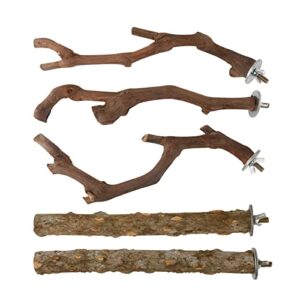
If quick reassembly after cleaning matters to your workflow, the Natural Wooden Bird Perch Stand delivers. Its snap-together design breaks down in under five minutes — a real advantage when you’re managing multiple patients.
Pair it with the right tools from this guide to affordable bird cage cleaning supplies to keep your whole setup clinic-ready between patients.
The untreated wood base sits comfortably on tabletops or cage surfaces at roughly 20 by 25 cm, while perches at multiple heights encourage light stepping movement during recovery.
Smooth-finished contact surfaces mean no splinters catching on fragile feathers, keeping vulnerable birds safer while they heal.
| Best For | Bird owners with cockatiels, parakeets, conures, or similarly sized birds who want a natural, cage-friendly perch that supports foot health and beak activity. |
|---|---|
| Material | Grape wood, untreated |
| Price | $14.99 |
| Mounting Type | Metal washers and wing-nut screws |
| Bird Size Suitability | Small to medium birds |
| Beak/Nail Care | Yes, natural wood texture |
| Pieces Included | 5 pieces |
| Additional Features |
|
- Made from untreated grape wood — no paint, chemicals, or artificial coatings, so it’s safe for chewing birds
- Varied perch shapes and diameters help keep your bird’s feet healthy and engaged
- Easy to install anywhere in the cage with the included hardware — no tools needed
- Natural wood variation means pieces won’t always look or feel identical, which some owners find inconsistent
- May be too bulky for very small cages or tiny bird species
- Untreated wood can occasionally harbor insects, so a quick boil before first use is a good idea
5. Multi Color Wood Bird Perch Stand
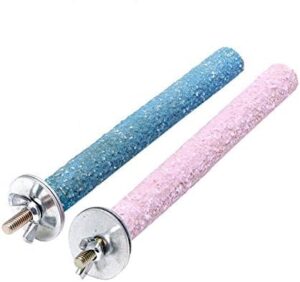
Color does more than brighten a cage — it actively engages recovering birds and helps staff track perch rotation for hygiene.
The Multi Color Wood Bird Perch Stand brings both.
Removable perches at varying heights encourage gentle movement without overwhelming a stressed patient, while the non‑toxic finish keeps chemical exposure off the table entirely.
Stainless hardware resists corrosion from droppings and humidity, and the wide base won’t tip when a bird shifts or flaps unexpectedly during a session.
| Best For | Bird owners with small pets like parakeets or finches who want a simple, natural perch that helps keep beaks and nails trim. |
|---|---|
| Material | Sanded wood |
| Price | $7.47 |
| Mounting Type | Cage bar mount |
| Bird Size Suitability | Small birds |
| Beak/Nail Care | Yes, sanded surface |
| Pieces Included | 1 perch |
| Additional Features |
|
- Natural wood with a sanded finish gives small birds a comfortable, textured grip
- Multi-color design adds a little visual stimulation to the cage environment
- Compact size fits easily in smaller cages without taking up much room
- Only one perch comes per package, so outfitting a larger cage gets pricey fast
- The perch is quite small, which may not work well for longer perching sessions
- Some buyers found the product didn’t quite match what they expected from the listing
Key Features for Rehab Perches
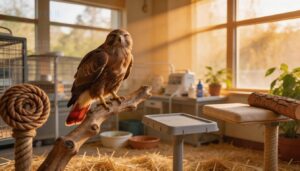
every perch works for every bird in recovery, and the differences really do matter. A few key features separate a genuinely useful rehab perch from one that just fills space in an enclosure.
what to look for before you buy.
Flat and Platform Surfaces for Resting Birds
A flat perch can be a real significant improvement for birds in recovery. Platform perches support Toe Spread and even Weight Distribution, reducing pressure on sensitive feet. In any rehab setting, Rest Zone Design matters — and flat surfaces deliver consistent Foot Balance without constant grip effort.
Research shows that wild birds prefer flat perches provide ideal balance.
Key benefits of flat and platform perches:
- Allow full Toe Spread for relaxed resting
- Promote even Weight Distribution across the entire foot
- Improve Surface Traction without sharp or painful edges
- Support bird foot health and aid in preventing bumblefoot through perch design
- Create a dependable Rest Zone Design for recovering birds
Adjustable Perch Diameter for Species Fit
diameter right matters more than most people realize. A Species Size Chart takes the guesswork out — finches need 3/8 to 7/8 inches, while large macaws require up to 3½ inches.
Adjustable Mechanism Options and Variable Diameter Swapping let you match Customizable perch sizes for different bird species without rebuilding everything.
Follow Measurement Guidelines carefully, because foot stress impact from poor perch diameter selection quietly contributes to bumblefoot and chronic bird foot health issues.
Stable Mounting for Injured or Weak Birds
A wobbly perch is the last thing a recovering bird needs. Stable mounting starts with a Wide Base Footprint that keeps the structure grounded when your patient shifts or flaps unexpectedly.
- Anti-rocking Brackets prevent micro-movement that throws off weak legs
- Vibration Damping mounts absorb impact when birds re-grip
- Pinch-free Hardware keeps claws and skin safe during repositioning
Secure Fastening isn’t optional — it’s the foundation of perch durability and safety.
Off-ground Designs to Protect Tail Feathers
Tail feathers tell the whole story of a bird’s recovery. Off-ground perch design keeps those feathers clear of abrasive surfaces — a simple fix that makes a real difference in avian rehabilitation outcomes.
| Design Feature | Why It Matters |
|---|---|
| Tail Sheath Clearance | Keeps vent and oil gland uncovered |
| Low-Profile Guard | Reduces bird awareness and stress |
| Edge Wrapping Protection | Prevents feather barb abrasion |
| Vent-Guard Clearance | Protects cloaca during perch use |
| Adjustable Height Perches | Matches patient size and species |
Perch design with proper feather health priorities built in enhances perch durability and safety across your entire patient rotation.
Non-toxic Materials and Stainless Fittings
Every material touching your patient matters.
Non-toxic wood sealants won’t off-gas or flake, while food grade stainless hardware — passivated metal rated 304 or 316L — resists corrosion even through repeated bleach cycles.
Nickel-free coatings reduce sensitivity risk during long recovery stays.
For avian rehabilitation, nontoxic birdsafe materials and stainless steel hardware aren’t optional extras — they’re the baseline for preventing bumblefoot through perch design and keeping birds safe.
Easy Disassembly for Cleaning and Disinfection
Clean perches save lives — and that starts with how fast you can break them down.
Look for these disassembly features:
- Tool-Free Release connections that come apart between patients without losing small fittings.
- Modular Straight Sections that lay flat for full-surface disinfection procedures.
- Detachable End Caps that expose hidden edges during perch cleaning.
- No Hidden Joints so equipment sterilization reaches every surface.
Stackable Disassembly keeps your workflow moving.
Materials and Designs That Aid Recovery
The material a perch is made from can quietly make or break a bird’s recovery. Whether you’re working with an injured raptor or a fragile songbird, the right design does more than just give them somewhere to stand.
Here’s a look at the materials and structures that actually support healing.
Natural Wood for Grip and Foot Support
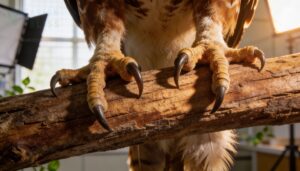
Natural wood earns its place in rehab settings because it actually works with a bird’s feet, not against them. Grain microtexture, wood density, and hardness consistency all influence how well claws find stable contact — key for bumblefoot recovery and general avian foot care.
| Feature | Natural Wood | Synthetic Perches |
|---|---|---|
| Grain Microtexture | Yes, varies naturally | Minimal or absent |
| Edge Rollover Geometry | Shapeable, consistent | Often fixed, uniform |
| Finish Selection | Non-toxic, pore-open options | Limited, often sealed |
Rope Perches for Cushioning and Movement
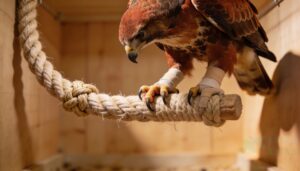
wood gives structure, rope gives support. Flexible rope perches cushion each grip with Breathable Texture and Springy Flex, bending slightly under your patient’s weight to ease pressure points — a real win for bumblefoot prevention.
Built-in Knot Security keeps sections stable during movement, while smart Fray Management and a simple Cleaning Protocol make avian foot care during rehabilitation practical and consistent.
Textured Surfaces to Reduce Slipping
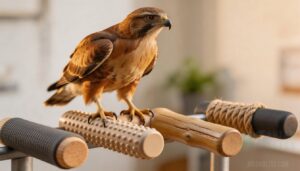
Where rope gives way to firmer ground, textured surfaces pick up the slack.
Micro Ridges, Rubberized Coatings, and Silicone Textures create reliable footholds — each one an antislip design that promotes foot health without irritating healing skin.
Ceramic Overlays resist wear through repeated disinfection cycles, while Debris Trap Grooves channel away particles that cause slips, quietly preventing bumblefoot through perch design and keeping material safety for birds front and center.
Flat Perches for Older or Disabled Birds
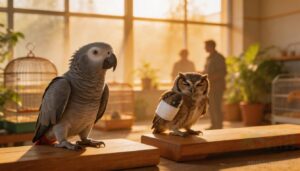
When a bird can’t grip the way it used to, flat perches quietly change everything. Their broad surfaces deliver real foot relaxation benefits and reduced grip fatigue — no tight wrapping required.
That means low stress perching for arthritic, elderly, or disabled birds, offering genuine arthritis pain relief through accessible perch placement. Therapeutic bird perches support injury mitigation and material safety for birds naturally.
Padded Options for Pressure Relief
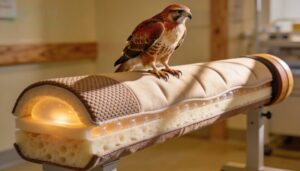
Padding a perch well makes all the difference for sensitive feet. At your wildlife rehabilitation center, these options support foot pad health and captive injury prevention:
- Gel Inserts redistribute weight to ease localized pressure
- Foam Layers add gentle give without collapsing underfoot
- Gel Bladder Systems conform around contact points for maximum relief
Removable Covers and Anti-slip Padding complete your perch safety considerations, supporting injury mitigation across every patient.
PVC Rehab Perches for Washable Setups
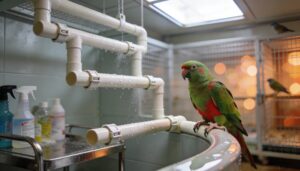
PVC pipe perches are a smart pick for any rehabilitation setup that needs quick, thorough cleanouts.
Their non-porous surface won’t hold bacteria, and modular snap joints let you take everything apart in seconds.
Wipe down with bird-safe cleaners, rinse, and follow the air drying process before reassembly.
UV stabilization keeps the material from breaking down under bright enclosure lighting — reliable, washable, and built to last.
Choosing Perches for Different Patients
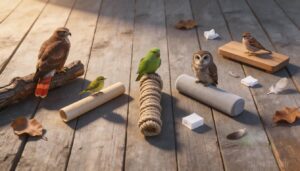
Not every bird that comes through your doors needs the same thing, and the perch you choose can make a real difference in how well they recover. A raptor, a songbird, and a parrot with bumblefoot each have different needs — different sizes, textures, and setups that work for them.
match the right perch to the right patient.
Small Parrots, Corvids, and Songbirds
Small parrots, corvids, and songbirds each bring different foot mechanics to your cage layout — and matching the perch to the patient makes a real difference in foot muscle rehab outcomes.
- Small parrots need diameters that let toes wrap without splaying
- Corvids benefit from textured surfaces that support walking‑style traction
- Songbirds do best on narrower, lighter perches scaled to foot span
- Quartz‑coated options support beak grinding and foot and beak health maintenance during seasonal molting
- Therapeutic bird perches with varied textures reduce grip fatigue across all three groups
Staff training on species‑specific sizing prevents common setup mistakes.
Raptors Needing Larger Diameters and Height
Raptors aren’t songbirds — their feet are built for power, not perching on a thin dowel.
Wide Perch Diameter matters here: Elevated Perch Placement and Raptor Tail Clearance give recovering hawks and owls room to reposition without scraping.
Weight Distribution Balance improves when your perch diameter selection matches talon span.
Whether you’re following Raptor TPerch Plans or DIY construction of bird perches for rehabilitation, Height Adjustability Mechanism and Larger TPerch sizing support natural Raptor perching posture throughout recovery.
Birds Recovering From Bumblefoot or Arthritis
Birds healing from bumblefoot or arthritis need more than just a place to land — they need the right surface under every toe. Therapeutic bird perches make a real difference here.
- Use flat, natural wood platforms for foot health and pressure relief.
- Monitor foot pad monitoring daily for heat or swelling changes.
- Support pain management with soft rope or padded perch options.
- Maintain humidity control to keep tissue from drying and cracking.
- Combine nutrition support and physical therapy with perch variety for arthritis recovery.
Multi-perch Setups for Movement and Enrichment
Once a bird’s feet are more comfortable, movement becomes the next goal.
Multi-perch setups with Vertical Level Variety give recovering birds natural reasons to climb, hop, and stretch.
Varying Ramping Paths and Interactive Foraging Perches turn the enclosure into a living environment — supporting foot exercise, mental stimulation, and Spatial Wing Stretching.
Adjustable Branch Angles and perch rotation keep things fresh, making multi-species perch suitability practical across your entire patient roster.
Rotation Schedules for Hygiene and Safety
Keeping perches clean is just as important as choosing the right ones. A solid perch rotation schedule covers Contact Time Tracking, Cross-Contamination Prevention, and Drying Protocols — protecting every patient from foot conditions like bumblefoot and arthritis.
- Assign dedicated perch sets per enclosure for Set Assignment Rotation
- Log each cleaning cycle for Cleaning Log Automation
- Allow full drying before return
- Follow Veterinary Guidance on Avian Foot Care when selecting Safe Materials and Toxicity Considerations for Bird Perches
When Custom-built Rehab Perches Make Sense
Sometimes a standard perch just won’t cut it.
When you’re working with a red-tailed hawk recovering from a wing injury or a corvid with severe pododermatitis, custom-built perches offer what no off-the-shelf option can — foot size matching, angle platforms designed for their posture, and step-height gradients that let weak birds move safely.
Custom-built perches give injured raptors and corvids what no standard option can: a precise fit for healing feet
| Custom Feature | Rehab Benefit |
|---|---|
| Pressure mapping surfaces | Reduces hotspots on painful feet |
| Hardware integration | Stable, stainless, disinfection-ready |
| DIY bird perch sections | Facilitates cleaning and disinfecting wildlife rehabilitation equipment |
| Safe Materials and Toxicity Considerations for Bird Perches | Durability testing ensures long-term patient safety |
Frequently Asked Questions (FAQs)
What is a bird perch called?
Perching perfectly describes both the act and the place — a bird perch is simply called a perch, your go-to landing spot, resting perch, and roosting point, all in one tidy, familiar term.
Can I make my own bird perches?
Yes, you can make your own bird perches.
With the right DIY bird perch materials and ideas, natural wood branches, PVC construction, and basic DIY Tool Kit, homemade perches support foot health well.
How do I mentally stimulate my bird?
Think of mental stimulation like a daily workout for your bird’s brain.
Rotate Foraging Toys, introduce Novelty Objects, use Training Cues, and offer Puzzle Feeding and Sensory Enrichment to support behavioral enrichment for pet birds.
How often should rehabilitation perches be replaced?
Replace perches based on condition, not just the calendar. Wood lasts 4–6 months, rope every 1–2 months. Swap immediately if you spot splinters, fraying, or slipping — safety thresholds matter more than schedules.
Can outdoor perches work for recovering birds?
Outdoor perches can work, but Weather Exposure, Wind Protection, and Temperature Regulation matter.
Natural wood risks UV Degradation and Parasite Management issues.
Prioritize bird foot health, durability, and bird welfare with supervised, weather-resistant setups for environmental enrichment.
Which perch materials resist mold and bacteria best?
Non-porous plastic and sealed wood finishes top the list.
Metallic fasteners resist rust, while moisture-resistant materials dry faster after cleaning.
Antimicrobial coatings add another layer of protection where disinfection procedures run daily.
Do wild birds need different perches than pets?
Yes — wild birds and pets have different needs. Wild vs captive recovery shapes everything.
Natural branch mimicry, foot health, and predation risk all demand habitat-specific perches that natural wood performs better than synthetic alternatives.
How do you introduce new perches to stressed birds?
Start slowly. Add the new perch during calm moments, like after feeding, and keep it near familiar spots. One change at a time helps stressed birds adjust without feeling overwhelmed.
Conclusion
Ironically, the secret to a successful bird rehabilitation center lies not in the birds, but in the perches. A well-chosen perch can make all the difference in a bird’s recovery.
When selecting bird perches for rehabilitation centers, consider the unique needs of your patients. With the right perches, you can provide a safe and supportive environment for healing.
The best bird perches for rehabilitation centers prioritize comfort, stability, and sanitation, ensuring a smooth recovery.
- https://learn.birdsittingtoronto.ca/how-to-choose-the-right-perch-size-for-your-bird/
- https://www.furrycritter.com/pages/articles/birds/perch_sizing.htm
- https://avianenrichment.com/staging/learn/physical-needs/environment/perch-size-one-size-doesn-t-fit-all?tmpl=component&print=1
- https://www.phoenixlanding.org/perches.html
- https://nwberryfoundation.org/perches/