This site is supported by our readers. We may earn a commission, at no cost to you, if you purchase through links.
seed choices they make determine whether a feeder attracts a single house sparrow or a rotating cast of cardinals, woodpeckers, and goldfinches.
But the wrong blend creates more work than reward: shells piling up beneath the feeder, bags too heavy to lift without strain, seeds sprouting into weedy patches across the yard.
Choosing wild bird seeds for senior hobbyists comes down to three things—nutritional value, feeder compatibility, and packaging that doesn’t fight you.
The right picks make the whole experience smooth, and the birds far more interesting.
Table Of Contents
- Key Takeaways
- Top 10 Wild Bird Seeds for Seniors
- 1. Kaytee No Mess Wild Bird Seed
- 2. Audubon Extreme Variety Bird Seed
- 3. Kaytee Ultimate Wild Bird Blend Seed
- 4. Cool Birds All Birds Seed Blend
- 5. Audubon Park Cardinal Blend Seed
- 6. Lyric Supreme Wild Bird Seed Mix
- 7. Kaytee Nut Fruit Wild Bird Seed
- 8. Happy Wings Nyjer Thistle Seed
- 9. Morning Song Sunflower Hearts Birdseed
- 10. Wagner Greatest Variety Bird Seed
- Senior-Friendly Seed Selection Factors
- Best Seeds for Backyard Birds
- Feeder Compatibility and Easy Refilling
- Storage, Freshness, and Clean Feeding
- Frequently Asked Questions (FAQs)
- Conclusion
Key Takeaways
- Hull-free blends like sunflower hearts and shelled peanuts eliminate shell mess entirely, making cleanup far easier on aging hands and backs.
- Matching your seed to your feeder type — nyjer in tube feeders, mixed blends in hoppers or platforms — cuts waste and keeps birds coming back consistently.
- Lightweight bags (under 10 lbs) with resealable packaging aren’t just convenient; they’re genuinely important for seniors managing feeders solo.
- Storing seed in airtight containers at humidity below 60% and rotating stock first-in-first-out is the difference between fresh, nutritious feed and moldy waste.
Top 10 Wild Bird Seeds for Seniors
Not all bird seeds are created equal, especially when you’re managing a feeder with arthritic hands or a bad back. The right blend makes feeding easier, cleaner, and more rewarding for both you and your backyard visitors. Here are ten seeds and mixes worth keeping in your shed this year.
Pairing the right seed with the right setup matters too — here’s a guide to hanging bird feeders for backyard wildlife that covers placement, height, and styles suited for different bird species.
The right bird seed blend makes backyard feeding easier, cleaner, and more rewarding — especially for aging hands
1. Kaytee No Mess Wild Bird Seed
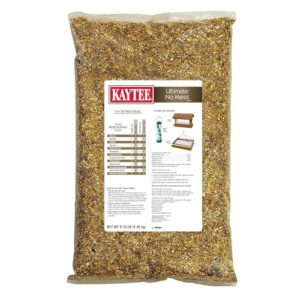
Kaytee No Mess Wild Bird Seed is one of the most practical picks for seniors who’d rather watch birds than sweep up shells. Every ingredient — hulled sunflower hearts, shelled peanuts, white millet — is fully edible, so nothing lands on your patio as waste.
The 9.75 lb resealable bag is easy to store and handle.
Cardinals, finches, chickadees, and nuthatches all show up regularly, making it a reliable, low‑maintenance choice.
| Best For | Seniors and backyard birders who want a clean, low-maintenance feeding setup without constantly sweeping up shell debris. |
|---|---|
| Net Weight | 9.75 lb |
| Feeder Compatibility | Hopper, gazebo, tube |
| Primary Ingredient | Hulled sunflower seed |
| Squirrel Risk | High |
| Species Attracted | Cardinals, finches, chickadees, woodpeckers |
| Filler-Free | Yes |
| Additional Features |
|
- Zero shells means no mess on patios, feeders, or flowerbeds — seriously cuts down on cleanup
- Attracts a solid variety of birds (cardinals, finches, chickadees, woodpeckers) so there’s always something to watch
- Every ingredient is fully edible, so nothing goes to waste
- High corn content can sprout if seed spills on the ground, leading to unwanted weeds
- Squirrels and larger birds may be drawn in, so feeder placement and storage matter
- May not appeal as strongly to birds in certain regions like parts of California
2. Audubon Extreme Variety Bird Seed
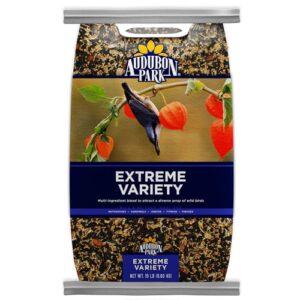
If you want more variety than a single-seed setup, Audubon Extreme Variety Bird Seed is worth a look. This 15 lb blend packs sunflower hearts, safflower, nyjer, almonds, walnuts, and dried raisins into one bag — so you’re drawing cardinals, finches, nuthatches, and juncos without juggling multiple feeders.
At $19.99, the price is reasonable. Just know that large nuts won’t fit through small tube feeder holes, so a platform or hopper feeder works best here.
| Best For | Backyard bird enthusiasts who want to attract a wide mix of species without managing multiple seed types. |
|---|---|
| Net Weight | 15 lb |
| Feeder Compatibility | Tube, hopper, platform |
| Primary Ingredient | Black-oil sunflower seed |
| Squirrel Risk | High |
| Species Attracted | Nuthatches, cardinals, finches, titmice, juncos |
| Filler-Free | No |
| Additional Features |
|
- Attracts a ton of different birds — cardinals, finches, nuthatches, juncos, and more
- Works in tube, hopper, or platform feeders, so it fits whatever setup you already have
- Good mix of seeds, nuts, and dried fruit gives birds well-rounded nutrition
- Large nuts can clog small tube feeder holes — a platform or hopper feeder works much better
- The nut and raisin mix is toxic to dogs, so keep it away from curious pups
- Squirrels love this blend just as much as the birds do
3. Kaytee Ultimate Wild Bird Blend Seed
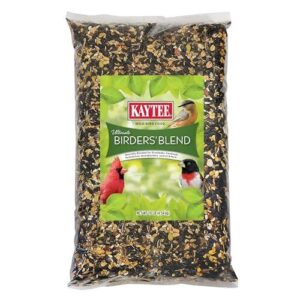
Another solid option from Kaytee, the Premium Wild Bird Blend is a 10 lb mix priced at $19.99. It combines safflower, peanuts, striped sunflower, white millet, and cracked corn — covering most of the birds you’ll see in a typical backyard. Cardinals, finches, woodpeckers, and blue jays all find something here.
One heads-up: it contains milo and cracked corn, which can leave ground mess. A platform feeder helps catch the debris and keeps cleanup simple.
| Best For | Backyard bird watchers who want to attract a wide variety of songbirds without buying multiple seed types. |
|---|---|
| Net Weight | 10 lb |
| Feeder Compatibility | Standard seed feeders |
| Primary Ingredient | Safflower seed |
| Squirrel Risk | Moderate |
| Species Attracted | Cardinals, woodpeckers, blue jays, finches |
| Filler-Free | No |
| Additional Features |
|
- Pulls in a great mix of birds — cardinals, woodpeckers, blue jays, and finches all show up
- Made in the USA with a solid blend of seeds including safflower, peanuts, and sunflower
- Works in standard feeders and suits birds at any life stage
- Milo and cracked corn can pile up on the ground and create a mess
- Peanuts may draw in squirrels more than you’d like
- Some buyers feel the sunflower seed content is lower than expected for the price
4. Cool Birds All Birds Seed Blend
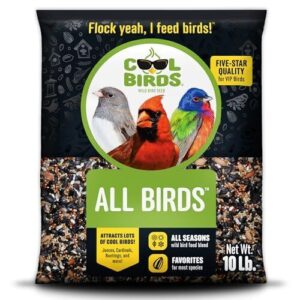
If Kaytee feels like a familiar brand on the shelf, Cool Birds is the fresh face worth noticing. The Cool Birds All Birds Seed Blend packs black-oil sunflower, safflower, white millet, and shelled peanuts into a 10 lb resealable bag for $19.99. That wide-mouth packaging makes refilling almost convenient — no wrestling with awkward seals.
It suits cardinals, finches, doves, and woodpeckers equally well. One note: white millet may go untouched depending on your local visitors.
| Best For | Backyard birdwatchers who want to attract a wide mix of species — from cardinals and doves to woodpeckers — without swapping feeders. |
|---|---|
| Net Weight | 10 lb |
| Feeder Compatibility | Tray, tube, hopper, platform |
| Primary Ingredient | Black-oil sunflower seed |
| Squirrel Risk | High |
| Species Attracted | Cardinals, doves, sparrows, woodpeckers |
| Filler-Free | No |
| Additional Features |
|
- Works with almost any feeder type, including tubes, trays, hoppers, and smart-camera feeders
- High-energy mix of sunflower hearts, peanuts, and safflower supports birds through winter and breeding season
- Attracts a solid variety of perching and ground-feeding birds year-round
- White millet often goes untouched, depending on which birds visit your yard
- The 10 lb bag can be a bit awkward to lift and store if you don’t go through seed quickly
- Won’t keep squirrels out on its own — you’ll need a squirrel-resistant feeder to go with it
5. Audubon Park Cardinal Blend Seed
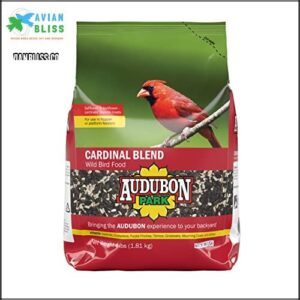
Cardinals are picky eaters — and Audubon Park Cardinal Blend knows that. This 4 lb bag combines black-oil sunflower and safflower seeds with no fillers, giving you a clean, targeted mix at just $7.99.
If you want to round out your winter setup, this guide to best bird seed mixes for winter feeding walks through which blends attract the most species while keeping waste low.
Safflower’s bitter taste naturally discourages squirrels, so you’ll spend less time chasing them off.
Cardinals, chickadees, titmice, and grosbeaks all visit regularly.
It works in hopper, tube, and platform feeders, making it flexible for whatever setup you already have.
| Best For | Backyard birders who want to attract cardinals and songbirds without constantly fighting off squirrels. |
|---|---|
| Net Weight | 4 lb |
| Feeder Compatibility | Hopper, tube, platform |
| Primary Ingredient | Black oil sunflower seed |
| Squirrel Risk | Low-Moderate |
| Species Attracted | Cardinals, titmice, chickadees, finches |
| Filler-Free | Yes |
| Additional Features |
|
- Pure sunflower and safflower blend with zero fillers — every seed actually gets eaten
- Safflower’s bitter taste keeps most squirrels from going through your supply
- Works with hopper, tube, and platform feeders, so no extra gear needed
- Squirrels and chipmunks can still get into it despite the safflower
- A bit pricier than generic mixed blends for a 4 lb bag
- Hull fragments and natural debris may show up in the mix
6. Lyric Supreme Wild Bird Seed Mix
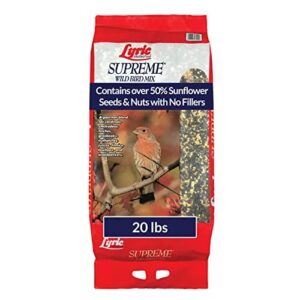
Lyric Premium Wild Bird Seed Mix delivers. This 20 lb bag packs black-oil sunflower, safflower, nyjer, shelled peanuts, pecans, pistachios, and cracked corn into one premium blend — over 50% sunflower seeds and nuts alone.
It works in tube, hopper, tray, and platform feeders with no adjustments needed. At $30.99, it costs more per pound, but the sheer variety of visitors — finches, woodpeckers, cardinals, jays — makes every dollar count.
| Best For | Backyard bird enthusiasts who want to attract a wide variety of songbirds and don’t mind paying a bit more for a high-quality, no-filler mix. |
|---|---|
| Net Weight | 20 lb |
| Feeder Compatibility | Tube, hopper, tray, window |
| Primary Ingredient | Black oil sunflower (50%+) |
| Squirrel Risk | Moderate |
| Species Attracted | Chickadees, finches, woodpeckers, jays |
| Filler-Free | Yes |
| Additional Features |
|
- Pulls in a great mix of birds — finches, woodpeckers, jays, cardinals, and more
- Works with almost any feeder type right out of the bag
- All-natural ingredients with no filler seeds taking up space
- Pricier per pound than basic seed blends
- Larger nut pieces can clog small-hole feeders and mean more cleaning
- Some customers have reported receiving the wrong blend, which means a customer service call
7. Kaytee Nut Fruit Wild Bird Seed
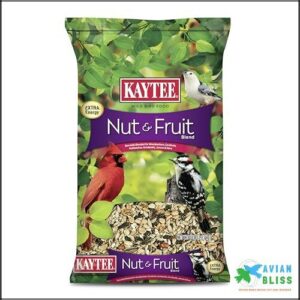
Kaytee Nut Fruit Wild Bird Seed brings something extra to your feeder — dried cherries, raisins, shelled peanuts, and sunflower seeds packed into a 5 lb cherry‑flavor blend.
It pulls in cardinals, chickadees, woodpeckers, and nuthatches regularly. At 38–42% crude fat, it delivers real cold‑weather energy.
The resealable bag keeps things fresh between fills.
Just know the nut and fruit pieces may attract squirrels, so a baffle helps.
| Best For | Backyard birders who want to attract a wide variety of songbirds year-round and don’t mind paying a bit more for a premium seed mix. |
|---|---|
| Net Weight | 5 lb |
| Feeder Compatibility | Tube, hopper, platform |
| Primary Ingredient | Sunflower seeds |
| Squirrel Risk | High |
| Species Attracted | Cardinals, chickadees, woodpeckers, nuthatches |
| Filler-Free | No |
| Additional Features |
|
- Pulls in a great mix of birds — cardinals, woodpeckers, chickadees, nuthatches, and more
- High fat content makes it especially solid for keeping birds fueled in colder months
- Works in tube, hopper, and platform feeders, so it’s flexible for most setups
- Pricier than basic seed mixes, which adds up if you’re filling feeders often
- Nut and fruit pieces are squirrel magnets — a baffle or squirrel-proof feeder is pretty much a must
- Some recent batches lean heavy on sunflower seeds, throwing off the blend that makes it special
8. Happy Wings Nyjer Thistle Seed
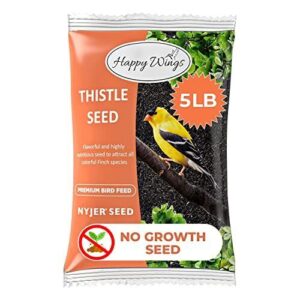
If goldfinches are your goal, Happy Wings Nyjer Thistle Seed is hard to beat. These tiny seeds pack around 30% fat and 16% protein — serious fuel for small songbirds through winter and migration.
The no-grow heat treatment prevents sprouting, so your yard stays clean. A resealable 5 lb bag keeps seed fresh between fills.
Pair it with a tube or sock feeder. Larger birds won’t bother, so you’ll get a focused, lively finch show.
| Best For | Backyard birders who want to attract goldfinches and other small songbirds without the mess of sprouting seeds. |
|---|---|
| Net Weight | 5 lb |
| Feeder Compatibility | Tube feeders |
| Primary Ingredient | Nyjer (thistle) |
| Squirrel Risk | Low |
| Species Attracted | Finches, goldfinches |
| Filler-Free | Yes |
| Additional Features |
|
- Nyjer seed is packed with fat and protein, giving small birds real energy through cold months and migration
- No-grow formula means no surprise seedlings popping up under your feeder
- Resealable bag keeps the seed fresh and cuts down on waste between refills
- Larger birds won’t touch it, so it’s a one-trick pony if you want variety
- Costs more than a standard mixed seed blend
- Needs the right feeder and placement to work well — sock or tube feeders only, and position carefully to avoid window strikes
9. Morning Song Sunflower Hearts Birdseed
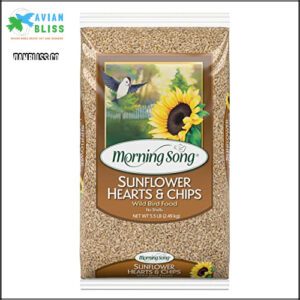
No shells, no mess, no fuss — Morning Song Sunflower Hearts Birdseed strips away the one thing that turns feeder cleanup into a chore. At 5.5 lb, the bag is light enough to handle comfortably, and the hull-free hearts pour cleanly into any tube, hopper, or platform feeder.
With over 30% fat content, these chips fuel finches, chickadees, cardinals, and nuthatches year-round. Smaller birds especially love them — fine beaks grab every piece with ease.
| Best For | Backyard birdwatchers who want to attract more species without dealing with shell mess and feeder cleanup. |
|---|---|
| Net Weight | 5.5 lb |
| Feeder Compatibility | Tube, hopper, platform |
| Primary Ingredient | Chipped sunflower seed |
| Squirrel Risk | Moderate |
| Species Attracted | Finches, chickadees, cardinals, nuthatches |
| Filler-Free | Yes |
| Additional Features |
|
- Zero shell waste means cleaner feeders and less time sweeping up underneath them
- Works with pretty much any feeder type — tube, hopper, platform, you name it
- High-energy nutrition that keeps birds coming back year-round
- Costs more than regular shell-on sunflower seed
- Only one ingredient, so it won’t replace a full mixed-seed blend
- The 5.5 lb bag might be more than you need if you only feed birds occasionally
10. Wagner Greatest Variety Bird Seed
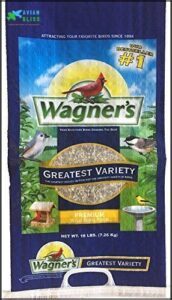
Wagner’s Greatest Variety lives up to its name. This 11-ingredient blend packs black-oil sunflower, nyjer, safflower, millet, cracked corn, and even raisins into one 15.87 lb bag — enough variety to pull in cardinals, finches, chickadees, doves, and woodpeckers at the same time.
One catch: the bag isn’t resealable, so transfer it to an airtight container right away. Store it cool and dry, and your birds stay well-fed without the waste.
| Best For | Backyard bird lovers who want to attract as many species as possible with a single, fuss-free blend. |
|---|---|
| Net Weight | 15.87 lb |
| Feeder Compatibility | Tube, hopper, platform |
| Primary Ingredient | Sunflower seeds (40%+) |
| Squirrel Risk | Moderate |
| Species Attracted | Cardinals, chickadees, finches, sparrows, doves |
| Filler-Free | No |
| Additional Features |
|
- 11-ingredient mix draws a wide range of birds — cardinals, finches, woodpeckers, doves, and more
- Works with tube, hopper, and platform feeders, so no extra gear needed
- Made in the US with quality grains, including sunflower, nyjer, safflower, and even raisins
- Bag has no reseal, so you’ll need an airtight container the moment you open it
- Not waterproof — moisture can cause mold if stored carelessly
- Costs more per pound than bulk generic blends, which adds up over time
Senior-Friendly Seed Selection Factors
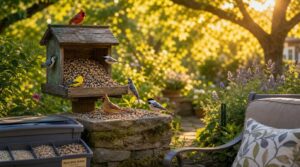
Picking the right seed isn’t just about the birds — it’s about making the whole experience easier on you. The best choices for senior hobbyists come down to a handful of practical factors that save time, money, and effort. Here’s what to look for before you buy.
Low-mess Seed Blends
If you’ve ever swept up a pile of seed shells after a feeding session, you know the hassle. Hull-free blends solve that problem entirely.
Seeds like shell-less sunflower hearts and shelled peanut pieces leave virtually nothing on the ground. No sprouting, no mess, no scrubbing.
That’s why no-mess formulas are the smartest pick for keeping your yard clean and your back happy. These shell‑free no‑mess blends also provide full weight value since no shells are wasted.
Easy-pour Packaging
Mess-free seeds are only half the battle — getting them into the feeder without a spill is the other half. That’s where easy-pour packaging earns its keep.
Spouted pouches with resealable flip-top lids let backyard birders refill feeders cleanly, even with limited grip strength.
Built-in venting and flow control keep seeds moving steadily; no shaking required.
Lightweight Bag Sizes
Packaging that pours well means nothing if the bag itself is a struggle to lift. Bag weight matters more than most people realize.
Small bags — usually 5 to 19 liters — weigh under 200 grams empty, making them ideal for seniors. Ultralight materials can cut carry weight by up to 40 percent, which adds up fast when you’re hauling bird seed regularly.
Budget-friendly Feeding Options
Lighter bags help with lifting — but keeping costs down matters just as much on a fixed income. Bulk purchase savings are real: a 40-lb black-oil sunflower bag runs around $20, far cheaper per pound than smaller packages. Watch for seasonal price discounts in late summer too.
- Economy seed mixes skip filler grains, stretching your dollar further
- Buying in bulk cuts cost per pound substantially
- No-mess blends reduce cleanup time and wasted seed
Local Bird Preferences
What you feed matters most when you know who’s visiting.
In Saxony, great tits and blue tits strongly favor sunflower heart-only blends, while goldfinches reliably seek out nyjer thistle.
Sparrows and doves prefer millet-based mixes at ground level.
Match your seed to your regular visitors, and you’ll get more birds with less waste.
Best Seeds for Backyard Birds
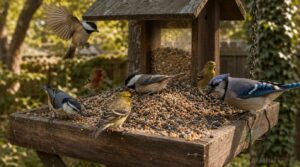
Not all seeds are created equal, and the wrong pick can mean empty feeders and a quiet backyard. A handful of tried-and-true options cover most of Colorado’s backyard birds without overcomplicating your routine. Here’s what actually works.
Sunflower Hearts
Sunflower hearts are the quiet workhorse of any backyard feeding setup. These shell-free sunflower hearts pack 40–44% fat and around 20% protein — serious fuel for finches, tits, and sparrows.
No husks mean no mess, no sprouting, and a cleaner feeder tray with almost zero effort.
Morning Song Sunflower Hearts Chips Wild Bird Food is a solid ready-to-use option worth keeping on hand.
Black-oil Sunflower
Black-oil sunflower seeds are the backbone of any serious backyard feeding setup. Each seed delivers 6–7 calories, with 40–50% oil by weight — serious winter fuel for chickadees, cardinals, and finches.
Here’s why they work so well:
- Thin hull — small birds crack it easily
- High linoleic acid content promotes bird health year-round
- Over 106 species visit black-oil feeders in Colorado
- 6–12 months shelf life in airtight, cool storage
Nyjer Thistle Seed
Nyjer thistle seed is tiny — barely 1–2 mm — but it punches well above its weight. With ~35% fat content, it’s one of the most energy-dense seeds you can offer, especially valuable in winter.
Goldfinches, Pine Siskins, and House Finches flock to it.
Store in an airtight container to prevent rancidity, and use mesh tube feeders to minimize mess.
Safflower Seed
Safflower seed is the quiet overachiever of the backyard feeder. It packs 35–50% oil content and up to 20% protein — solid nutrition that promotes feather growth and year-round energy. Here’s why it earns a spot in your seed rotation:
- Cardinals love it exclusively
- Squirrels and grackles avoid its bitter taste
- Hull waste stays minimal, keeping your deck cleaner
Shelled Peanut Pieces
Think of shelled peanut pieces as a Peanut Energy Boost in a small package. With over 45% fat and around 25% Peanut Protein Content, they’re calorie-dense, no mess, and loved by jays, woodpeckers, and chickadees. Watch for Peanut Aflatoxin Risk — store them dry. Follow Peanut Feeding Guidelines: limit to 2–3% of daily intake.
| Feature | Detail | Benefit |
|---|---|---|
| Fat Content | 45%+ | High energy in cold months |
| Protein | ~25% | Promotes feather growth |
| Feeder Compatibility | Platform or wide-port tube | Easy, no-clog refilling |
Feeder Compatibility and Easy Refilling
Picking the right seed is only half the equation — how you deliver it matters just as much. The feeder you use shapes how easy refilling is, how much seed gets wasted, and which birds actually show up. Here are five feeder setups worth matching to your seed of choice.
Platform Feeder Seeds
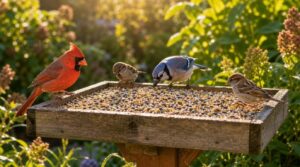
Platform feeders are one of the most senior-friendly feeder styles you can own. Their wide, open trays make refilling straightforward — no funnels, no tight openings, no frustration.
Here’s what makes them work so well:
- Hulless seed blends eliminate shell debris, keeping trays cleaner longer
- Moisture-resistant formulas help seeds stay dry and fresh after light rain
- Mesh tray drainage prevents soggy patches and mold buildup
- Wide platforms attract cardinals, jays, and sparrows — a solid bird attraction profile
- No-mess seed blends reduce cleanup to a quick weekly wipe
Position your platform at roughly 3 feet high for comfortable, bend-free refilling.
Tube Feeder Options
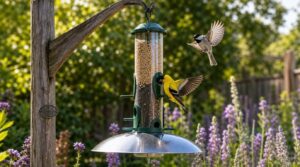
Tube feeders are a natural step up from platform designs. Their clear tube visibility means you can check seed levels at a glance — no lifting, no guessing.
Choose a model with port size options suited to your seed blend. Smaller ports work well for nyjer; medium ports handle sunflower hearts cleanly. Pair that with UV-resistant construction and a squirrel baffle, and you’re set.
Hopper Feeder Blends
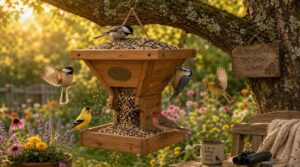
Hopper feeders take things up a notch. Their wide-mouth design means you can pour in a full blend without fussing over tiny openings.
- Blend Flow Design keeps mixed seeds moving smoothly through the chute
- Gravity Dispensing portions seed automatically — no buttons, no settings
- Seed Size Mix pairs sunflower hearts with nyjer for steady, clog-free flow
- Moisture Barrier packaging preserves that high-energy nutrition until refill day
Seed Cake Formats
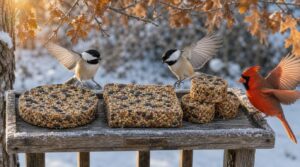
Seed cakes are a real asset if loose blends feel fiddly. Disc cake designs measure 3–4 inches across and sit neatly on platform feeders. Brick cake formats weigh 1–2 pounds — easy to handle, firm enough to resist wind and rain.
| Cake Format | Best Feature |
|---|---|
| Disc Cake | Compact, feeder-ready fit |
| Brick Cake | Weather-resistant, no-mess |
| Pelletized Cake | Low waste, smooth loading |
Fortified cake blends add calcium and vitamin A, supporting birds through cold months. Mixed seed cakes combine sunflower kernels, millet, and safflower — no separate seed storage needed.
Low-height Feeder Placement
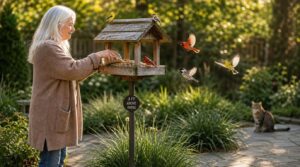
Where you place your feeder matters just as much as what you put in it. Aim for 2 to 4 feet above ground — low enough to refill comfortably, high enough to keep seeds away from cats and ground predators.
A stable pole or railing mount prevents tipping.
In winter, raise it slightly to avoid ice pooling under the tray.
Storage, Freshness, and Clean Feeding
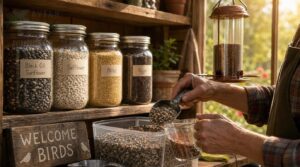
Good seed doesn’t stay good forever — and how you store it matters just as much as what you buy. A few simple habits can keep your supply fresh, your feeder clean, and your birds coming back all season. Here’s what every senior hobbyist should know about storing and managing seed the right way.
Airtight Seed Containers
The right container is half the battle. Airtight mechanisms — rubber gaskets, two-piece ventless lids, or vacuum-sealed jars — block humidity and slow oxidation, keeping seeds fresh far longer.
Here are five reliable seed storage tips:
- Glass mason jars — non-porous, chemical-inert, easy to inspect
- Food-grade Tritan plastic — lightweight, crack-resistant, senior-friendly
- Stainless steel tins — durable seals, pest-proof
- Silica gel desiccant pockets — maintain ideal seed moisture around 6–8%
- Clear labeling — note seed variety and storage date directly on the lid
Ideal seed storage means keeping containers in a cool, dry spot away from sunlight.
Moisture and Mold Prevention
Even airtight containers can’t help if moisture sneaks in first.
Humidity below 60% is your target — ideally closer to 50%. A simple hygrometer near your storage area tells you exactly where you stand.
| Risk Factor | Warning Sign | Fix |
|---|---|---|
| High humidity | Clumping seeds | Run a dehumidifier |
| Poor ventilation | Musty smell | Open storage area periodically |
| Moisture content above 9% | Mold spots visible | Discard and replace seed |
| Hidden leaks | Damp container base | Inspect and fix within 48 hours |
| No monitoring | Spoiled seed unnoticed | Check weekly with a hygrometer |
Mold prevention starts before you seal the lid.
First-in-first-out Rotation
Think of FIFO like a grocery store shelf — older stock moves to the front, newer bags go to the back. Mark each bag with its purchase date the moment it arrives.
A simple inventory log lets you track rotation without guesswork, so no seed quietly ages past its prime and loses nutritional value.
Cleaning Feeder Trays
A dirty tray is one of the fastest ways to ruin clean bird seed. Quick daily rinse with warm water keeps loose debris from hardening.
Weekly, do a deep weekly scrub using a soft brush on all crevices. A vinegar water soak — equal parts for 10–15 minutes — removes stubborn residue naturally.
Always air dry completely before refilling, and run a quick seal inspection routine monthly.
Reducing Hull Waste
Hull waste is the quiet mess that keeps piling up. Switching to shell-free sunflower hearts eliminates most of it instantly — no hulls, no cleanup.
Pellet seed formats cut loose debris by around 30 percent on windy days. Blends using hull separation techniques produce up to 25 percent less litter, keeping your feeding area genuinely tidier without extra effort.
Frequently Asked Questions (FAQs)
Can bird feeding attract unwanted pests or predators?
Yes, it can. Spilled seed draws mice and rats, while night feeding invites raccoons and foxes. Use predator guards, squirrel proof feeders, and practice spill cleanup to keep pests away.
Which seeds support birds during nesting and breeding?
During nesting and breeding, birds need high-fat seeds and protein-rich seeds most. Black-oil sunflower, nyjer, and shelled peanuts deliver the nesting nutrition and breeding energy to support egg production, incubation, and fast-growing chicks.
How do seasonal bird migrations affect seed choices?
Bird migration patterns shift seed demand fast. In fall, stock up on black-oil sunflower and nyjer — goldfinches flock to them. Spring migrants need calorie-dense blends to fuel long flights onward.
Are certain seeds toxic to pets or children?
Most bird seeds are safe to handle, but castor beans and rosary peas are deadly if children or pets ingest them. Always store seed blends in sealed, mold-free containers to prevent toxic mycotoxin growth.
How does weather affect seed quality in outdoor feeders?
Weather hits seed quality fast. Rain seed wetting causes mold within days. Heat rancid fats cut nutrition. Humidity above 60% spikes mold growth. Use covered feeders and rotate stock weekly.
Conclusion
Once you get the hang of it, choosing wild bird seeds for senior hobbyists is less like a chore and more like curating a tiny wildlife sanctuary outside your window.
Start with hulled sunflowers or a quality no-mess blend, match the seed to your feeder type, and store everything in an airtight container.
The birds will clock in reliably—cardinals, finches, woodpeckers—and your yard becomes the kind of place worth watching every single morning.