This site is supported by our readers. We may earn a commission, at no cost to you, if you purchase through links.
A bird’s feet never get a day off. Unlike most animals that alternate between walking and resting, parrots and other pet birds grip a perch for up to 12 hours at a time—sometimes longer. That constant contact between foot and perch isn’t passive. Every millimeter of diameter, every texture variation, every material choice shape how pressure distributes across the footpad tissue and tendons below.
Get those variables wrong, and conditions like pododermatitis, chronic arthritis, and nail deformities can develop quietly before showing obvious symptoms.
Understanding how perches affect bird foot health isn’t optional care knowledge—it’s foundational to keeping your bird sound and pain-free for life.
Table Of Contents
- Key Takeaways
- How Perches Directly Affect Bird Foot Health
- Bird Foot Anatomy Every Owner Should Know
- How Perch Diameter Impacts Foot Stress
- Perch Material Choices and Their Foot Health Effects
- Natural Vs. Concrete Perches: Key Differences
- Common Foot Conditions Caused by Wrong Perches
- How to Choose The Right Perch for Your Bird
- Perch Maintenance and Rotation Best Practices
- Common Mistakes Bird Owners Make With Perches
- Frequently Asked Questions (FAQs)
- Why are plastic perches bad for birds?
- How long does it take for a bird’s foot to heal?
- How do I tell a parrot I love you?
- Can perch height placement affect a birds posture?
- Do perch colors influence bird stress or behavior?
- How does cage size relate to healthy perching habits?
- Does seasonal temperature change how birds grip perches?
- Conclusion
Key Takeaways
- Perch diameter is one of the most critical variables in foot health — toes should wrap about three-quarters around the perch, with species-specific ranges from ¼ inch for small birds up to 1¼ inches for large parrots, and both under- and oversized perches cause distinct, progressive injuries.
- Natural wood branches outperform plastic, metal, and concrete perches because their irregular diameter and bark texture continuously shifts pressure across the footpad, which is your strongest defense against bumblefoot (pododermatitis).
- Offering a variety of perch materials and diameters rather than relying on a single uniform dowel prevents repetitive load concentration, tendon overuse, and the chronic joint inflammation that develops silently before visible symptoms appear.
- Daily foot inspections — checking for redness, unusual warmth, swelling, and toe positioning — combined with weekly perch cleaning and rotation every few months are the practical habits that catch problems early and keep foot conditions from becoming serious injuries.
How Perches Directly Affect Bird Foot Health
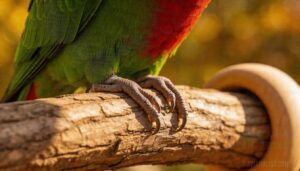
The perch your bird stands on isn’t just furniture — it’s the foundation of their foot health.
Choosing the right material makes a real difference, and this natural vs. artificial bird perch comparison breaks down exactly what your bird’s feet need to stay healthy long-term.
Everything from the diameter to the material plays a direct role in how their feet hold up over time.
Here’s how perches affect four key areas you’ll want to pay attention to.
Pressure Distribution Across Footpads and Toes
When your bird lands on a perch, load transfer mechanics kick in immediately — weight concentrates on footpad contact points rather than spreading evenly.
poor perch ergonomics shift pressure into tight hotspots, raising the risk of footpad ulceration and pressure sores.
frequent weight shifts happen constantly as your bird rebalances, so toe pad contact and footpad pressure mapping directly determine whether circulation stays healthy or breaks down.
Foot Muscle Exercise and Tendon Engagement
Every weight shift your bird makes isn’t just balancing — it’s Intrinsic Muscle Activation and Tendon Glide Training happening in real time.
Variable Grip Variation across different perch textures triggers Toe Splay Exercises naturally, keeping avian biomechanics healthy.
Perch Texture Cycling and smart perch ergonomics support foot muscle exercise, improve foot pad circulation, and maintain pressure distribution — without your bird ever "working out" intentionally.
Avoiding Abrasions, Cracks, and Traumatic Lesions
Skin damage is easier to prevent than to treat. Rough or poorly fitted perches create repetitive friction on the same contact points — leading to abrasions, dry cracks, and eventually Foot Pad Ulceration or Bumblefoot.
Rough or poorly fitted perches grind the same contact points daily, turning minor friction into abrasions, cracks, and eventually Bumblefoot
Watch for these four risk factors:
- Friction Management failures: Concrete Perches and Sandpaper Perches abrade skin continuously
- Moisture Control gaps: Dry scabs crack and reopen wounds
- Edge Rounding neglect: Sharp perch edges cause traumatic lesions on contact
- Barrier Application delays: Exposed abrasions invite bacterial entry fast
Hygiene and Bacterial Infection Risk
Open wounds don’t heal cleanly in a dirty cage. Bacterial infection can take hold fast when droppings land directly on perches — so Dropping-Free Perch Placement matters more than most owners realize.
Pair that with consistent perch cleaning using a birdsafe disinfectant, strict Hand Hygiene Practices between birds, and Tool Segregation per cage. Drying Time Importance can’t be overstated either — rehang only when fully dry.
Bird Foot Anatomy Every Owner Should Know
Before you can choose the right perch, it helps to understand what’s actually happening inside your bird’s foot. The structures underneath that scaly skin — from toe configuration to tendons to footpads — all play a direct role in how your bird grips, rests, and stays healthy.
Here’s what every owner should know about bird foot anatomy.
Zygodactyl Vs. Anisodactyl Foot Configurations
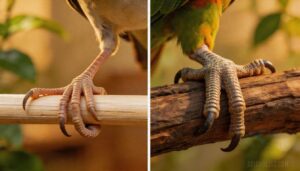
Your bird’s feet tell an evolutionary story.
Most pet birds fall into two camps: anisodactyl (three toes forward, one hallux back — digits 2, 3, 4 forward; digit 1 rear), common in songbirds; or zygodactyl (digits 2–3 forward, 1 and 4 back), seen in parrots.
Zygodactyl toe pairing mechanics create greater clamping force, directly influencing which perch size and diameter guidelines best protect foot health.
Role of The Tendon-Locking Mechanism in Perching
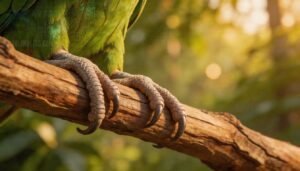
Think of your bird’s grip as a built-in locking system — no effort required.
When your bird squats onto a perch, Tendon Sheath Ridges intermesh as joint angle changes trigger Locking Engagement Threshold, activating automatic grip through pure bird biomechanics. This provides:
- Energy Conservation during sleep
- Automatic Grip Release when legs extend
- Consistent perching behavior across perch size and diameter guidelines
Research shows that the inverted U foot shape provides a stable platform for weight distribution.
How Footpad Tissue Absorbs and Distributes Weight
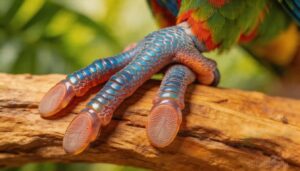
Your bird’s footpads aren’t just padding — they’re precision shock absorbers.
Through viscoelastic cushioning, the tissue deforms under load and rebounds when pressure eases, enabling energy return with each shift in posture. Microstructure spreading distributes foot pressure across a wider contact zone, while geometry matching helps the pad conform to perch surfaces.
This built-in tissue protection is why ergonomically designed perches directly support long-term foot pad health.
How Perch Diameter Impacts Foot Stress
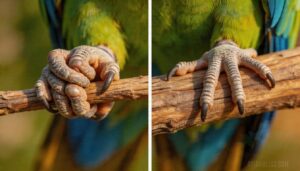
Perch diameter is one of those details that looks minor but quietly shapes your bird’s foot health every single day. Get it wrong — too thin or too thick — and you’re putting real stress on joints, tendons, and footpads without realizing it.
Here’s what you need to know about finding the right fit.
Optimal Diameter Ranges by Bird Size
Not all perches fit every foot the same way.
Perch diameter guidelines vary by species: finches and budgies do well with ¼–½ inch, cockatiels need ½–¾ inch, and larger parrots like amazons require 1–1¼ inches.
These species-specific perch recommendations follow footpad circumference guidelines, ensuring your bird’s toes wrap about three-quarters around — the grip comfort threshold that protects joints and prevents chronic pressure.
Dangers of Perches That Are Too Narrow
A perch that’s too narrow works against your bird’s foot in three compounding ways:
- Foot pressure spikes — weight concentrates on claw tips instead of spreading across footpads, accelerating calluses and corns.
- Toe pinching and nerve compression — awkward grip angles restrict blood flow and compress tissue daily.
- Behavioral reluctance — discomfort discourages normal perching, risking footpad necrosis from unrelieved pressure.
Match perch width to perch size guidelines before sores develop.
Risks of Oversized Perches and Joint Strain
Too wide is just as problematic as too narrow.
When perch diameter exceeds your bird’s natural grip range, reduced toe splay shifts weight into footpad hotspots, driving uneven pressure distribution.
Toe joint torque increases during every grip change stress event — landings, takeoffs, repositioning.
Tendon overuse follows repeated micro-corrections.
Over time, expect inflamed joints and foot pad ulceration if perch size goes unchecked.
Benefits of Offering a Range of Diameters
Variety solves what uniformity can’t. Offering different perch diameters lets your bird practice Enhanced Grip Variety, shifting toe angles and redistributing weight through Balanced Load Sharing across footpads.
Adjustable Perch Selection encourages Adaptive Foot Posture with each move, supporting Overuse Injury Prevention by breaking repetitive pressure patterns.
When perch size matters and perch rotation is routine, perch variety becomes your strongest tool for long-term foot health.
Perch Material Choices and Their Foot Health Effects
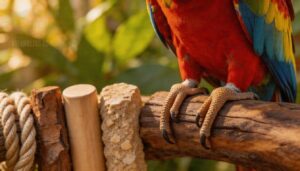
The material your bird stands on matters just as much as the size of the perch. Different materials put different kinds of stress on your bird’s feet, and not all of them are safe for daily use.
Here’s what you need to know about each option.
Natural Hardwood Branches and Their Advantages
Natural wood branches are one of the best investments you can make for your bird’s foot health.
Their Variable Diameter Taper encourages constant toe repositioning, while Textured Surface Grip and Bark Friction Benefits distribute pressure evenly across footpads.
Natural Shock Absorption softens landing impact, and Chewable Enrichment keeps beaks and minds active.
In avian podiatry, natural hardwoods consistently outperform manufactured alternatives for long-term comfort.
Risks of Smooth Plastic and Metal Dowels
Smooth plastic perches and metal dowels don’t offer your bird the grip security of natural branches. Surface Slip Risk increases when feet are even slightly damp, forcing tighter gripping and raising Localized Heat Stress on footpads.
Temperature Fluctuations make metal uncomfortably cold or hot, altering weight distribution. Biofilm Accumulation in micro-scratches and Micro-rail Wear create pressure points that quietly accelerate pododermatitis and bumblefoot risk.
Rope and Fabric Perches: Benefits and Safety Concerns
Rope and fabric perches offer something that plastic and metal simply can’t: a soft, flexible surface that encourages Micro-movement Stimulation as your bird constantly adjusts grip. That gentle engagement works foot muscles naturally throughout the day.
Key considerations for rope or fabric-covered perches:
- Cotton rope and sisal rope provide cushioned support that improves foot health by distributing pressure evenly.
- Chewing Enrichment is a real benefit — many birds actively chew fibers, which helps beak and behavioral needs.
- Entanglement Hazards rise quickly once fraying begins, especially for smaller birds whose toes can catch in loosened loops.
- Fiber Ingestion Risk increases when strands unravel, making regular inspection non‑negotiable.
- Unlike metal, fabric offers passive Temperature Regulation, staying neutral against footpads in both warm and cool environments.
Materials to Avoid for Primary Perching Surfaces
Some materials pose real risks you shouldn’t overlook. Treated wood and painted surfaces with peeling paint or lead coating can transfer toxic chemicals directly to your bird’s feet during normal contact. Cedar oil irritates airways even through brief perch exposure.
Sharp splinters from degrading wood, rough metal perches, and plastic perch hazards like zinc poisoning make these unsuitable as daily resting surfaces.
Concrete perches compound foot fatigue further.
Natural Vs. Concrete Perches: Key Differences
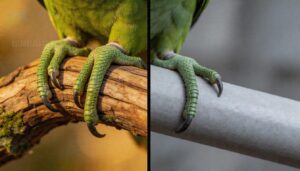
The perch material your bird stands on every day makes a bigger difference than most owners realize. Natural and concrete perches aren’t interchangeable — each one affects foot health in distinct ways.
Here’s what you need to know about both.
Why Natural Perches Reduce Bumblefoot Incidence
Think of a natural branch as a built-in foot therapist. Its Irregular Diameter Variation and Variable Surface Texture constantly shift where your bird’s footpad contacts the perch, enabling natural Weight Shifting that prevents any single pressure point from triggering bumblefoot.
| Natural Perch Feature | Foot Health Benefit |
|---|---|
| Natural Grip Traction | Reduces shear stress on footpad skin |
| Moisture-Wicking Wood | Limits bacterial growth at contact zones |
| Bark texture variation | Spreads load across multiple toe surfaces |
| Irregular branch diameter | Encourages muscle activation and grip rotation |
Benefits of natural perches for avian wellbeing are well-documented — birds using natural wood branches show considerably lower bumblefoot incidence. Preventing bumblefoot through proper perch selection starts here.
How Concrete Perches Cause Calluses and Fatigue
Unlike natural wood, concrete perches offer no give — and your bird’s feet pay the price. Their Shock Transmission drives repetitive impact into footpads, while poor Heat Retention and Thermal Conductivity stress the Skin Barrier Disruption cycle, leaving skin dry and vulnerable.
| Concrete Perch Problem | Foot Effect | Result |
|---|---|---|
| Hard surface friction | Skin thickening | Calluses |
| Shock Transmission | Tendon overload | Foot fatigue |
| Skin Barrier Disruption | Moisture loss | Fatigue Accumulation |
Fatigue Accumulation happens quietly — until foot health deteriorates visibly.
Practical Tips for Using Concrete Perches Safely
Concrete perches don’t have to be a foot health hazard — but placement and care matter enormously. Follow these essentials:
| Practice | What to Do | Why It Matters |
|---|---|---|
| Concrete Perch Placement | Position at varied heights, away from drafts | Reduces repetitive pressure points |
| Drying Time Protocol | Allow full drying after cleaning | Prevents moisture buildup and skin irritation |
| Edge Chip Removal | Inspect and replace chipped perches | Eliminates snag points and foot injury prevention |
Always have Backup Perch Availability ready, and prioritize Moisture Prevention around water dishes.
How to Transition Birds to New Perch Types
Switching perch types too fast can stress your bird more than the perch itself. Gradual introduction works best — keep the old perch in place while adding the new one nearby.
Texture matching and height consistency reduce hesitation and slipping.
| Change Step | What to Do |
|---|---|
| Week 1 | Place new perch alongside familiar one |
| Week 2 | Monitor using daily observation windows |
| Week 3 | Remove old perch if foot health looks stable |
| Ongoing | Continue stress monitoring for redness or limping |
Common Foot Conditions Caused by Wrong Perches
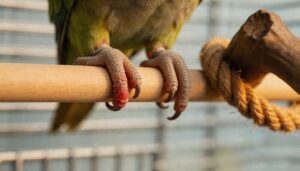
The wrong perch doesn’t just cause discomfort — it can lead to real, diagnosable conditions that affect your bird’s mobility and quality of life. Most of these problems develop gradually, which makes them easy to miss until they’ve progressed.
Here are the three most common foot conditions linked to poor perch choices.
Bumblefoot (Pododermatitis): Causes and Early Signs
Bumblefoot (pododermatitis) starts quietly — pad redness and footpad warmth are often the first clues that something’s wrong. Swelling hotspots develop where pressure concentrates on unsuitable perches, and limping onset follows as pain shifts your bird’s posture.
Reluctant perching is a red flag you shouldn’t ignore.
Poor perch hygiene accelerates bacterial entry once the skin breaks down. Preventing bumblefoot through proper perch selection remains your strongest defense.
Arthritis and Chronic Joint Inflammation
Persistent foot pressure doesn’t stop at the skin. Wrong perch diameter and perch material can push stress deep into joints, triggering synovitis progression — inflammation of the joint lining that quietly erodes cartilage over time.
Cartilage erosion and immune-mediated flare cycles follow, with morning stiffness, your clearest warning sign. Protecting your bird’s musculoskeletal health and long-term skeletal health starts with the right perch.
Nail Overgrowth and Callus Formation
Beyond joint stress, wrong perch diameter and perch material drive nail overgrowth and callus development—factors you shouldn’t overlook. Smooth, uniform perches limit toe position variability, so nails wear unevenly.
Perch spacing effects matter too — fewer repositioning opportunities mean less natural wear.
Nail base pressure builds where gripping repeats daily, thickening skin into calluses that can crack and invite infection.
How to Choose The Right Perch for Your Bird
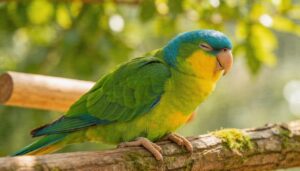
Choosing the right perch isn’t complicated, but it does require matching a few key factors to your bird’s specific needs. Get these right, and you’re giving your bird’s feet a solid foundation for long-term health.
what to look for.
Matching Perch Size to Species-Specific Needs
Every bird species has its own Species Footprint Metrics, and matching perch diameter to those specs matters more than most owners realize. A proper Toe Span Ratio keeps toes relaxed rather than straining.
Use these Species-Specific Perch Recommendations as your baseline:
- Small birds: 5–7 mm diameter
- Medium birds: 10–12 mm
- Large parrots: 15–18 mm
- Check Claw Curvature Fit — toes should wrap three-quarters around
- Heavier birds need wider perches to improve the Weight Distribution Index
Good Grip Comfort Zones directly protect long-term foot health.
Prioritizing Non-Toxic and Chew-Safe Materials
Once you’ve matched perch size to your bird’s species, material safety becomes the next priority.
Natural wood perches — untreated and unpainted — are your safest baseline.
Avoid treated wood entirely.
For synthetic options, look for BPA-Free Elastomers, Food-Grade Plastics, and Non-Toxic Sealants with Certified Chew Safety documentation.
Rope perches need strong Fiber Fray Resistance; loose strands become ingestion hazards fast.
Selecting Ergonomically Shaped or Contoured Perches
Shape matters just as much as size. Ergonomic perches with a Multi-Diameter Taper give your bird a natural Grip Angle Variation, so foot muscles stay active rather than being locked in one position.
Texture Gradient Benefits come from surfaces that shift grip slightly across the perch’s length, supporting Footpad Contact Mapping and reducing pressure buildup — genuine Ergonomic Perch Solutions for Avian Comfort that your bird will use daily.
Ensuring Sturdiness and Wobble-Free Installation
A wobbly perch isn’t just annoying — it actively strains your bird’s feet with every landing. Solid Mounting Hardware Selection and careful Leveling and Alignment prevent the lever-action rocking that wears joints down over time.
Add Anti-Slip Pad Usage beneath mounts, and spread attachment across two points for smart Load Distribution Strategies.
Good perch installation protects both perch durability and foot health long-term.
Species-Specific Considerations for Large or Heavy Birds
Large birds like macaws carry considerably more body mass, which changes everything about how you choose a perch.
Their Foot Pad Thickness, Toe Span Width, and Joint Load Capacity all demand wider perch diameter options and stricter perch weight capacity and sturdiness standards.
Factor in Body Mass Distribution, Perch Height Adjustment, and perch material selection and durability when following SpeciesSpecific Perch Recommendations — heavier birds need more support, not just bigger perches.
Perch Maintenance and Rotation Best Practices
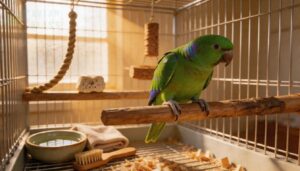
Choosing the right perch is only half the job — keeping it clean, safe, and well-positioned is what actually protects your bird’s feet long-term.
A good maintenance routine doesn’t have to be complicated, but it does need to be consistent.
Here’s what to focus on.
Daily Foot Inspections and What to Look For
Think of daily foot inspections as your bird’s first line of defense. Redness monitoring and swelling detection take under a minute, but catch foot pad inflammation before it becomes foot ulceration.
- footpad temperature for unusual warmth
- Blister observation reveals pressure damage early
- Nail condition and toe positioning signal joint stress
Regular monitoring keeps foot health monitoring simple and effective.
Weekly Cleaning Protocols for Different Perch Types
Each perch material needs its own cleaning approach.
For wood, scrub weekly with warm soapy water, then do a Wood Splinter Check before returning it to the cage.
Plastic and acrylic perches need thorough rinsing to eliminate Acrylic Soap Residue.
Apply the Concrete Brush Technique—a stiff brush plus baking soda paste—on rough surfaces.
Check rope perches for Rope Fray Detection and practice Branch Moisture Control by drying completely before reinstalling.
How Often to Rotate and Replace Perches
Rotating perches every few months—your Rotation Interval—prevents the same footpad areas from absorbing repeated pressure.
Use a simple Wear Assessment: if surfaces feel slick, cracked, or splintered, you’ve crossed the Replacement Threshold.
Wood lasts 6–12 months; rope needs replacing every 1–2 months.
Perch variety and material fatigue awareness keep rotating perches for foot health genuinely effective.
Safe Cage Flooring to Complement Perch Selection
Flooring matters just as much as what’s above it. Choose Non-Toxic Flooring with Slip-Resistant Surfaces so your bird doesn’t slide on landing.
Avoid wire mesh floors—they concentrate pressure and cause sores.
Solid tray bottoms with Waste-Drainage Design keep cage hygiene manageable, while Moisture-Wicking Materials prevent damp buildup that softens foot skin.
Cushioned Perch Zones beneath favorite spots reduce impact stress noticeably.
Common Mistakes Bird Owners Make With Perches
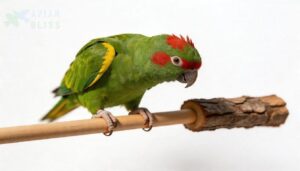
Even experienced bird owners slip into habits that quietly work against their bird’s foot health. Most of these mistakes aren’t obvious—they look fine on the surface until a problem shows up.
Here are the most common ones worth knowing about.
Relying Solely on Uniform Dowel Perches
Defaulting to uniform dowel perches is one of the most common oversights in bird care. Their single-radius stress and limited texture create load concentration on the same footpad areas every time your bird lands.
That repetitive stress triggers overgripping tendency, keeping tendons under constant strain. Static grip on one diameter simply doesn’t let your bird’s feet recover — perch variety isn’t optional for long-term foot health.
Using Sandpaper Perches as Primary Resting Surfaces
Sandpaper perches promise easy nail wear tradeoffs, but the cost to foot health is steep. The same grit that files nails strips footpad moisture, causing footpad hydration loss that leads to cracking and long-term strain.
Watch for these red flags:
- Dry, cracked footpad skin
- Bird comfort reluctance — shifting or avoiding the perch
- Early pododermatitis (bumblefoot) sores
- Worsening perch texture abrasions
- Perch temperature influence — grit retains heat, tightening grip further
Neglecting Perch Cleaning and Replacement Schedules
Even clean-looking perches hide trouble.
Biofilm Build-up, Odor Staining, and Surface Roughness Loss all develop quietly between cleanings, turning your bird’s perch into a Hidden Pathogen Reservoir.
Perch Stability Decline from loose mounts adds ongoing foot strain. Consistent hygiene protocols and timely replacement aren’t optional extras — they’re core to disease prevention and long-term foot health.
Ignoring Early Warning Signs of Foot Discomfort
Birds are good at hiding pain, so subtle limping or toe guarding during perch transitions can vanish the moment you look directly at them.
Red hot spots on footpads, uneven weight shifts, and behavioral indicators like perch reluctance all signal micro‑injuries forming beneath the surface.
Consistent foot health monitoring and early foot health assessment are your best tools for foot ulcer prevention before a minor foot condition becomes a serious foot injury.
Frequently Asked Questions (FAQs)
Why are plastic perches bad for birds?
Plastic perches concentrate pressure on the same foot spots repeatedly, causing Static Grip Stress, Microabrasion Damage, and Limited Toe Flexibility — all pathways to bumblefoot, material toxicity concerns, and chronic foot health decline from Heat Retention and Chemical Leaching.
How long does it take for a bird’s foot to heal?
Recovery timeline depends on injury severity.
surface wound may close in one to two weeks, while bumblefoot or fractures need four to ten weeks of healing stages, rehabilitation practices, and consistent treatment duration.
How do I tell a parrot I love you?
Tell your parrot "I love you" through slow blink cues, gentle voice praise, and preening affection. Let consent contact guide you — wait for them to lean in.
Body language signals say everything words can’t.
Can perch height placement affect a birds posture?
Yes, perch height placement directly affects posture.
Landing angle shift, jump distance stress, and roosting level preference all influence how your bird holds its body, impacting long-term foot health and foot condition.
Do perch colors influence bird stress or behavior?
Perch color does influence bird behavior.
Through color contrast preference and spectral stress response, birds shift perching location and vigilance.
Visual cue exploration and lighting-induced reactivity mean color choices genuinely support bird welfare and stress reduction.
How does cage size relate to healthy perching habits?
Ironically, the cage itself matters as much as what’s inside it.
More space means more movement, better footpad load distribution, and fewer pressure sores — cage enrichment starts with room to breathe.
Does seasonal temperature change how birds grip perches?
Seasonal shifts do affect grip. Cold tightens toe flexion and evens pressure across footpads.
Heat relaxation loosens the hold.
Keratin stiffness and diurnal grip shift mean perch texture variety and material hardness matter year-round.
Conclusion
What happens when you overlook the humble perch, a constant in your bird’s life?
Neglecting perch quality can lead to a lifetime of foot pain and health issues.
By understanding how perches affect bird foot health, you can take proactive steps to guarantee your feathered friend’s well-being.
Choose wisely, and your bird will thank you with energetic flights and happy chirps, thriving on a foundation of sound foot health and care.
- https://www.ncbi.nlm.nih.gov/books/NBK554465/
- https://ses-cab.org/how-to-properly-clean-and-care-for-abrasions-step-by-step-guide
- https://www.hansaplast-me.com/instant-help/health-and-protection/abraision
- https://my.clevelandclinic.org/health/diseases/25079-abrasion
- https://pmc.ncbi.nlm.nih.gov/articles/PMC3188212/