This site is supported by our readers. We may earn a commission, at no cost to you, if you purchase through links.
A bird that can’t move freely doesn’t stay healthy for long. In the wild, parrots and songbirds spend their days climbing, gripping uneven bark, and hopping between branches of every shape and size—each movement building the foot and leg strength that keeps them functional. Strip that away, and muscle atrophy sets in faster than most owners expect.
The perch isn’t decoration. It’s the primary tool for how perches help birds exercise naturally inside a cage, and the difference between one dowel rod and a thoughtfully varied setup can determine whether your bird stays physically conditioned or slowly stiffens from inactivity. Diameter, texture, placement, and material each play a distinct role—and getting them right is simpler than it sounds.
Table Of Contents
- Key Takeaways
- Why Perches Encourage Natural Exercise
- Varied Diameters Strengthen Feet
- Textures and Shapes Improve Balance
- Perch Placement Promotes More Movement
- Best Materials for Active Birds
- Perches Support Natural Bird Behaviors
- Perch Variety Reduces Stress and Boredom
- Safe Perch Care and Replacement
- Top 3 Natural Wood Perches
- Frequently Asked Questions (FAQs)
- Conclusion
Key Takeaways
- Varying perch diameters throughout the cage forces your bird’s toes to grip differently each time it lands, which builds foot and leg strength while reducing the pressure-point buildup that leads to bumblefoot.
- Natural wood perches—especially manzanita, applewood, and birch—support healthier feet than plastic or metal because their irregular textures demand constant grip adjustments and gentle nail abrasion without causing injury.
- Strategic placement across low, middle, and high zones naturally drives more daily movement, since birds will hop and make short flights between levels without any extra prompting from you.
- Rotating perch positions and materials every few weeks prevents muscle atrophy and stress-related behaviors—like feather plucking and repetitive screaming—that develop when birds stay in the same spot day after day.
Why Perches Encourage Natural Exercise
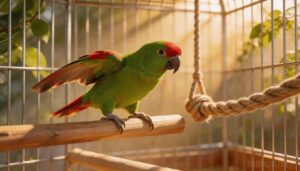
In the wild, birds climb, grip, and hop constantly — and their muscles stay strong because of it. A well-designed cage can replicate that same daily movement, keeping your bird active without any extra effort on your part.
Think of the cage layout as your bird’s daily workout routine — this guide to bird cage enrichment ideas and setup tips shows exactly how perch placement and toy variety keep those muscles working all day long.
Here’s how perches make that possible.
Mimicking The Climbing, Gripping, and Hopping Birds Do in The Wild
In the wild, your bird isn’t sitting still — it’s making active landings on irregular branches, adjusting to every branch angle, and pushing through vertical climbs between feeding spots. Those sensory footpads constantly read texture and tilt.
Replicating that means offering varied diameters, different textures, and multi-level flight paths inside the cage. Without climbing opportunities and vertical movement, muscles weaken fast. Research shows birds use rapid micro‑adjustments to improve perch stability.
Turning Cage Movement Into Daily Low-impact Exercise
Those micro-adjustments your bird makes on uneven branches translate directly into cage exercise when you set things up right. Micro-jump perches placed at gentle vertical steps spread movement across the day without demanding long flights.
Scheduled height shifts and changing perch rotation keep foot muscle conditioning active through repeated transitions.
Foot-friendly landing zones support:
- Short hops between levels that build leg strength gradually
- Physical exercise and muscle development through perch diversity at each stop
- Environmental enrichment through varied perch textures that demand constant grip adjustment
Preventing Inactivity, Stiffness, and Muscle Loss Indoors
Without a perch rotation schedule and varied placement, indoor birds default to the same spot all day — and that’s when muscle atrophy prevention becomes a real concern.
Foot conditioning drills built into micro-exercise intervals, like hopping between active cage zones, keep muscles from switching off. Physical exercise and muscle development through perch diversity, combined with environmental enrichment through varied perch textures, counters stiffness effectively.
Varied Diameters Strengthen Feet
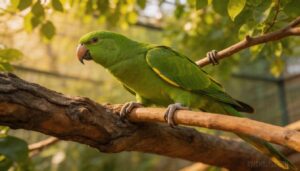
Not all perches are created equal, and diameter makes a bigger difference than most bird owners realize. The size of a perch directly shapes how your bird’s feet, tendons, and leg muscles develop over time.
Here’s what you need to know about getting those diameters right.
How Changing Grip Sizes Works Foot and Leg Muscles
Every time your bird shifts from a narrow branch to a thicker one, its toe flexion training resets — toes curl differently, ankle stabilizer activation kicks in to compensate, and muscle recruitment patterns adjust on the fly.
Varying perch diameter drives this grip shift timing throughout the day, spreading joint load distribution across changing contact points and building real foot muscle development without a single structured workout.
Why Birds Should Wrap Toes Around About Two-thirds of a Perch
Perch diameter determines more than comfort — it shapes how well your bird’s tendons and muscles actually work. Toe Wrap Efficiency peaks when toes curl around roughly two-thirds of the perch, enabling Tendon Grip Mechanics to lock naturally without constant micro-corrections.
This Balance Torque Optimization lets Claw Pairing Stability engage fully, while Pressure Distribution Comfort keeps foot muscles from overloading.
Natural wood perches support these different gripping needs best.
Using Multiple Diameters to Reduce Pressure Points
Rotating between at least two perch diameters — a simple Diameter Rotation Schedule — is one of the most practical tools for Pressure Point Mapping across your bird’s feet. Each switch triggers Grip Shift Frequency changes that drive Biomechanical Load Shifting away from overloaded toe zones.
For Foot Pad Relief, offer:
- One narrow perch (0.5–1 in)
- One medium perch (~1 in)
- One wider option (>1.5 in)
This keeps pressure sore prevention working passively throughout the day.
Supporting Healthier Joints and Lowering Bumblefoot Risk
Joint stress builds quietly — and varied perch diameters interrupt that process before it becomes a real problem. Switching grip sizes distributes mechanical load across different toe zones, which helps avian foot health and slows wear on tendons and cartilage.
Combined with weight management, ventilation control, and moisture reduction, this approach substantially lowers bumblefoot risk.
| Risk Factor | Impact on Foot Health | Perch-Based Solution |
|---|---|---|
| Repetitive pressure | Footpad inflammation | Varied diameters |
| Excess body weight | Increased joint load | Low-impact perch movement |
| Poor moisture reduction | Softened, infection-prone skin | Elevated, dry perch placement |
| Low ventilation control | Bacterial growth | Spaced perch positioning |
| Skipped regular health checks | Missed early lesions | Weekly foot inspections |
Textures and Shapes Improve Balance
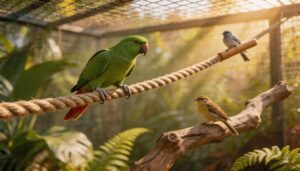
A perch’s texture and shape do more for your bird than you might expect. The way a surface feels underfoot, or how much it moves, directly affects how your bird balances, grips, and builds muscle over time.
Here are the key perch types that make the biggest difference.
Irregular Branches for Coordination and Proprioception
Natural wood branches don’t sit flat — their changing surface angles constantly shift how your bird places its feet, triggering angle-induced reflexes and joint position sensing with every step. This grip variation challenge drives real neuromuscular adaptation:
- Knots and curves demand constant balance training
- Varied textures sharpen proprioception through irregular contact
- Environmental enrichment through natural wood reduces behavioral stress
Balancing challenges like these build genuine coordination.
Rope Perches for Climbing and Toe Flexibility
Rope perches offer something rigid branches can’t — active grip training through fiber texture variation that shifts with every move your bird makes.
As birds climb, their toes alternate between crimping and wrapping, building toe joint mobility naturally.
Rope core design keeps surfaces consistent without fraying quickly, while adjustable rope length lets you position varied textures across different cage zones for genuine environmental enrichment.
Moving and Swinging Perches for Core Engagement
A swing isn’t just a toy — it’s a core strengthening tool. When your bird grips an oscillating perch, swing-induced muscle activation keeps it constantly correcting posture. That postural stability work engages the trunk, legs, and feet through every direction change.
Rotating perches add similar movement coordination demands, turning balance training into genuine physical exercise and muscle development through perch diversity that your bird can’t get from fixed surfaces.
Switching Surfaces to Improve Grip Endurance
Switching between different textures is how you build real grip endurance — not by keeping feet comfortable, but by keeping them adaptive.
Micro-Texture Variation across rough wood, rope, and smooth surfaces forces continuous Adaptive Grip Training, so foot muscles never lock into one pattern.
Active Grip Sequencing through deliberate Surface Change Timing prevents Grip Fatigue Management from becoming guesswork, turning perch placement into structured, progressive muscle development.
Perch Placement Promotes More Movement
Where you place perches matters just as much as which ones you choose. well-arranged cage naturally pulls your bird toward more movement throughout the day.
Here’s how smart placement can make that happen.
Creating Low, Middle, and High Perch Zones
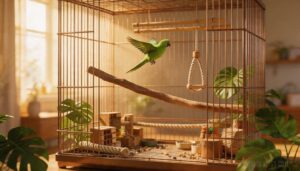
Dividing your cage into vertical zone hierarchy — low, middle, and high — turns static space into a functional exercise circuit. Zone-specific perches at each height tier give your bird distinct rest points that encourage regular repositioning throughout the day.
Cross-zone pathways and thoughtful shift step design make vertical space utilization purposeful, supporting muscle engagement and environmental enrichment through multiple perches placed at each level.
Encouraging Hopping and Short Flights Between Levels
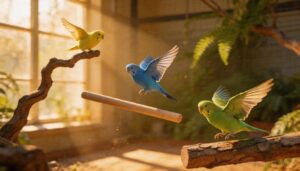
Once your low, middle, and high zones are set, the real payoff comes from how birds move between them.
Perch placement at varied heights naturally triggers Rapid Hop Sequences and Brief Wing Flaps throughout the day.
Thoughtful vertical space utilization builds Tiered Flight Routes and Vertical Hop Chains that support physical exercise and muscle development through perch diversity:
- Short perch height gaps encourage repeated hopping without long drops.
- Micro Flight Paths between levels keep takeoff and landing mechanics practiced.
- Offset perch placement creates natural routes birds follow instinctively.
- Staggered vertical levels reduce static resting and boost daily movement bouts.
Spacing Perches for Safe Wing Extension
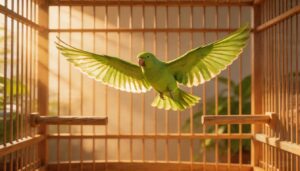
Movement between levels only works if birds have room to move freely.
Wing gap width matters here — each perch needs enough horizontal clearance so your bird can fully extend both wings without striking nearby perches or walls.
Perch-to-perch distance and your wall buffer zone should reflect the bird’s outstretched wingspan, keeping wing flapping unrestricted during repositioning and supporting safe, natural perch arrangement throughout the cage.
Positioning Perches Away From Food and Water
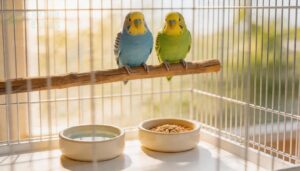
Where you place perches directly affects dropping contamination prevention and clean feeding zones. Position perches away from food and water dishes so droppings don’t foul supplies during normal movement.
This simplified maintenance approach also helps reduce dish crowding, since birds won’t cluster above bowls. Slippery mess avoidance follows naturally — drier floors mean better footing and safer gripping throughout the cage.
Building a Cage Layout That Invites Activity
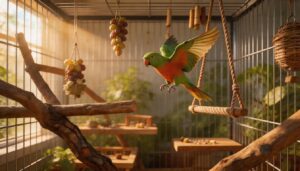
Think of your cage as a map of pathways, not just a box with sticks.
Modular perch systems that combine vertical flight corridors, zone enrichment stations, and varied obstacle courses give birds meaningful reasons to move.
Rotating multiple perches monthly, following perch placement and height guidelines, and weaving in interactive feeding stations transform cage design principles into environmental enrichment through perch diversity that actively combats inactivity.
Best Materials for Active Birds
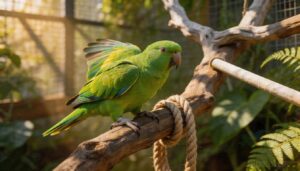
The material your bird stands on every day matters more than most people realize. Not every perch type works the same way — some build strength, some file nails, and some can quietly cause harm if overused.
Here’s a closer look at what each material actually does for your bird.
Why Untreated Natural Wood Supports Exercise Best
Untreated natural wood does more than just give your bird a place to stand — it actively facilitates exercise through five interconnected properties:
- Micro‑flex resilience keeps feet engaged with subtle branch movement
- Thermal foot comfort reduces grip tension near drafts or vents
- Moisture balance maintains surface traction without slickness
- Natural scent cue encourages exploratory interaction
- Gentle abrasion files nails while promoting muscle strengthening
Together, these qualities make natural wood perches essential for foot health and environmental enrichment.
Safe Wood Options Like Manzanita, Applewood, and Birch
Manzanita, applewood, and birch each bring something distinct to the perch rotation.
Manzanita’s grain tightness and moisture resistance make it one of the most durable options available, while its natural scent encourages exploratory chewing.
Applewood holds up well under daily use without cracking. Birch dries quickly, reducing mold risk.
All three support foot health through varied surface textures and sustainable sourcing.
When Rope Perches Add Useful Variety
Rope perches fill the gap that rigid wood can’t. Their flexible fibers and varied textures shift slightly under each grip, training your bird’s toes to constantly adjust — building strength without strain.
Swivel rope designs with angle adjustability let you configure routes that encourage climbing and stepping, adding movement variety that flat perches simply don’t offer.
- load distribution benefits reduce pressure concentration across toe joints
- Alternating rope thicknesses support balanced foot health across different grip placements
- Weaving sections at varied angles delivers subtle core engagement during daily movement
- Color pattern enrichment through braided designs adds low-stress visual stimulation
- Tension control lets you customize flexibility for environmental enrichment that matches your bird’s size and activity level
How Concrete Perches Can Help or Harm
Concrete perches offer real nail wear balance through natural abrasion, but the concrete abrasion risks are equally real. Hard surfaces create unforgiving foot pressure points, and prolonged contact raises bumblefoot susceptibility — concrete reportedly contributes to 70% of owner-reported foot injury cases.
Hygiene challenges compound this: debris lodges in rough pores quickly. Follow limited use guidelines — pair concrete with softer options to protect overall foot health.
Why Smooth Plastic and Metal Need Texture
Smooth plastic and metal perches present a different problem: without perch texture, your bird’s feet can’t get reliable traction. Slip Prevention matters because repeated sliding strains tendons and accelerates fatigue.
Textured surfaces distribute grip pressure more evenly — that’s Grip Enhancement working at the foot level. Look for options with Visual Tactile Quality that balance Wear Resistance with Adhesion Boost, protecting long-term foot health.
Perches Support Natural Bird Behaviors
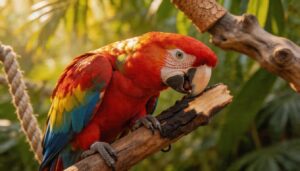
good perch does more than give your bird a place to stand — it gives them something to do. Natural branches, varied textures, and thoughtful placement tap into the behaviors birds are wired for, from gnawing bark to hunting down a hidden treat.
Here’s how the right perches support those instincts every day.
Chewing Bark and Branches for Beak Use
When your bird chews and splits natural branches with bark intact, that’s beak wear management happening in real time.
The rough bark texture stimulation abrades the beak tip, clears food debris, and facilitates chewing-induced beak trimming without intervention.
Bark texture benefits include both beak cleaning routine support and branch splitting mechanics that mirror wild foraging.
Natural wood satisfies chewing needs while keeping beak wear in check.
Climbing, Balancing, and Exploring Throughout The Cage
Beyond beak use, your bird’s daily climbing activity across Variable Gap Distances and Balance Beam Branches builds real strength. Varying Perch Angles challenge foot muscles with every grip shift, while Vertical Flight Paths through Exploratory Perch Networks keep birds mentally sharp.
Thoughtful perch placement transforms the cage into an environmental enrichment system — one that naturally encourages balance training, exploration, and continuous movement throughout the day.
Foraging With Treats Hidden in Natural Crevices
Natural wood perches with bark ridges and knots become foraging surfaces when you tuck small treats into crevices. Bark Texture Cues guide your bird’s beak toward hidden rewards, shifting feeding from passive to active.
Rotating treat placement — Hidden Treat Rotation — adjusts Crevice Difficulty Levels and Probe Depth Variation, making Natural Cavity Materials a practical environmental enrichment strategy that replicates natural habitat foraging behavior.
Giving Birds More Choice in Where to Rest and Move
When birds can’t choose where to land, they stop moving altogether. Offering multiple perches with Modular Height Adjustments and Rotating Perch Modules gives your bird genuine agency — and that agency drives activity.
- Use Preference Mapping to track which perches your bird uses most
- Apply Perch Position Feedback to guide smarter perch placement
- Introduce Seasonal Perch Changes for ongoing mental stimulation
- Distribute perches across height zones to support foot health
- Treat perch variety as environmental enrichment, not decoration
Perch Variety Reduces Stress and Boredom
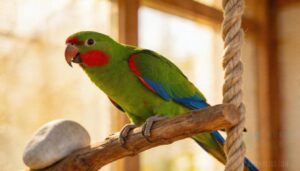
A bird that does same thing in the same spot every day isn’t thriving — it’s coping.
A bird doing the same thing in the same spot every day isn’t thriving — it’s coping
Perch variety breaks that cycle by giving your bird new surfaces to investigate, grip, and explore.
Here’s how mixing things up can make a real difference in your bird’s mental health.
How New Textures Keep Birds Mentally Engaged
Texture curiosity is something your bird acts on every time you introduce a new surface. Braided rope, rough manzanita, and smooth plastic each deliver distinct sensory enrichment that keeps your bird mentally engaged and actively exploring.
That novelty seeking behavior is a cognitive challenge in action — your bird adjusts its grip, tests balance, and investigates. Consistent environmental enrichment strategies like this are central to the mental stimulation and mental wellbeing of pet birds.
Lowering Feather Plucking, Screaming, and Repetitive Habits
Feather plucking, screaming, and repetitive habits often signal unmet behavioral needs — but veterinary screening should come first to rule out skin conditions or parasites. Once medical causes are cleared, trigger identification and predictable routines do the heavy lifting.
Perch variety delivers mental stimulation and boredom prevention that positive reinforcement alone can’t match, making environmental enrichment strategies and noise management measurably more effective.
Using Perch Changes to Refresh The Cage Environment
A stale cage is a bored bird. Rotating perch placements every two to four weeks acts as a reset — new vantage points, new movement challenges, and fresh mental stimulation without major disruption.
Think of it as seasonal perch themes for your bird’s environment.
Try these perch rotation strategies for consistent environmental enrichment:
- Swap perch heights weekly to create perch height puzzles that encourage full cage traversal
- Alternate rope and wood monthly to vary foot health pressure points
- Use color-coded perches to track rotation schedules and diameter changes
- Introduce scented perch rotation with bird-safe untreated woods for sensory novelty
- Apply varying lighting cues alongside repositioning to signal environmental shifts naturally
Combining Perches With Toys and Ladders for Enrichment
Perches don’t work alone — they work best as part of a connected system.
Pairing Interactive Toy Perches with ladders creates Vertical Play Pathways that pull birds upward through Active Enrichment Zones instead of staying fixed in one spot.
Ladder-Perch Integration links levels so movement feels purposeful. Add toy rotation and Rotating Play Structures to keep perch variety fresh and enrichment strategies for pet birds consistently effective.
Safe Perch Care and Replacement
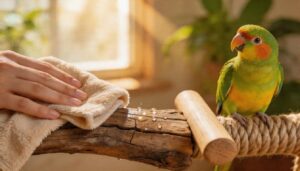
Keeping perches clean and in good condition is just as important as choosing the right ones. Even the best perch setup can work against your bird if surfaces become grimy, cracked, or worn down over time.
Here’s what you need to stay on top of.
Cleaning Routines That Keep Exercise Surfaces Hygienic
A dirty perch is a health hazard in plain sight. Wipe surfaces every one to three days using warm water or diluted white vinegar, and always follow disinfectant contact time guidelines so the product actually works.
Hand hygiene protocol matters too — wash up before and after cleaning.
Track tasks with a cleaning log, confirm surface material compatibility before applying any product, and rotate your cleaning tools regularly to avoid cross‑contamination.
Inspecting for Splinters, Cracks, Fraying, and Corrosion
Cleaning gets you halfway there — regular perch inspection closes the gap.
Run a quick Visual Inspection Checklist each session: look for splinter risk at cut ends, cracks along the grain, fraying rope fibers, and metal corrosion at mounting points.
- Flex Test Method: gently bend each perch to reveal hidden weak spots
- Damage Detection Signs: sharp edges, loose strands, pitting, or flaking surfaces
- Material Degradation Indicators: deep cracks, thinning rope core, or rust
- Replacement Timing Guidelines: remove damaged perches immediately to protect foot health
Rotating Perch Positions to Maintain Novelty
Once inspection confirms your perches are structurally sound, a Balanced Perch Rotation keeps things mentally stimulating.
Birds map their cages by habit, so Gradual Position Shifts — adjusting heights by 8–12 inches on a Rotational Enrichment Schedule — disrupt predictable routes without causing stress.
Variable Height Adjustments and Spatial Novelty Timing naturally encourage hopping, climbing, and grip-switching, delivering real foot health and perch variety benefits through environmental novelty alone.
Replacing Worn Rope and Damaged Wood Promptly
Rotation keeps things fresh, but even the best perch rotation can’t compensate for worn-out surfaces.
Replacement Timing matters: rope perches hit their Material Lifespan at four to six weeks, while natural wood perches last four to six months for lighter chewers.
Wear Indicators, like frayed fibers, splinters, or soft rot spots signal Health Hazards serious enough to require Emergency Removal.
Regular perch safety checks protect your bird’s feet.
Watching for Foot Soreness, Swelling, or Grip Changes
Even with fresh perches in place, keep watching your bird’s feet. Early Pain Indicators, like toe redness, warmth, or flinching when touched, point to pressure or friction building up. Swelling Assessment matters too — puffy toes affect grip strength and balance.
Behavioral Red Flags such as weight-shifting or avoiding high perches signal Foot Health and Injury Prevention in Birds start with catching changes early.
Top 3 Natural Wood Perches
Choosing the right natural wood perch doesn’t have to be complicated, but the options vary more than most people expect. Each of the three picks below** suits different cage sizes, bird weights, and chewing habits.
Here’s what’s worth considering before you buy.
1. Natural Wood Bird Perches Kit
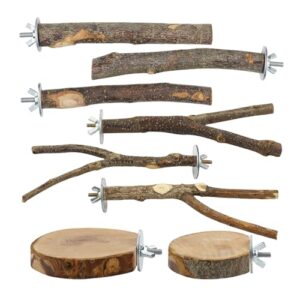
The Natural Wood Bird Perches Kit gives you eight mixed-style pieces — perch stands, fork toys, a hanging multi-branch platform, and a hammock swing — all made from untreated wood with no chemical coatings.
Perch diameters range naturally between 2.4 and 3.5 inches, so your bird shifts grip regularly across the set.
Wing nuts and washers make installation straightforward.
At $12.99, it’s a practical option for small to medium birds like budgies and parakeets needing diameter variety without a large investment.
| Best For | Small to medium bird owners — budgies, parakeets, and similar species — who want affordable variety in their cage setup without breaking the bank. |
|---|---|
| Material | Natural untreated wood |
| Piece Count | 8 pieces |
| Mounting Hardware | Washers and wing nuts |
| Bird Compatibility | Parakeets, budgies, small-medium birds |
| Price | $12.99 |
| Perch Variety | Stands, fork toys, platform, hammock |
| Additional Features |
|
- Eight mixed pieces for $12.99 is genuinely good value, especially if you’re outfitting a full aviary.
- Natural wood with no chemical coatings means safe chewing and gnawing all day long.
- The hammock swing and multi-branch platform mix things up, keeping birds active and mentally engaged.
- Not a great fit for larger birds like cockatoos — the perches run on the smaller side.
- Natural wood means slight size variations, so a piece might feel a bit smaller than you expected.
- A few buyers have reported a perch arriving broken, and returns can be a hassle.
2. Natural Wood Bird Perches for Cages
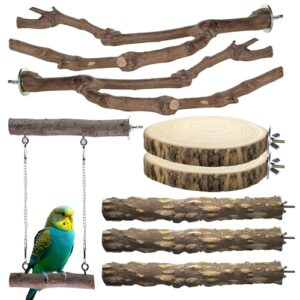
The CAMATET 8-piece kit takes a different approach — instead of one or two styles, it gives you six distinct perch types: Y-shaped grapevine, pepperwood claw perches, round platforms, and an applewood swing.
That variety matters because each shape demands a different grip angle, which works to separate muscle groups across your bird’s feet and legs.
Two length options, 5.9 in and 9.5 in, let you match perch size to your cage spacing.
At $18.99, it suits parakeets, budgies, conures, and cockatiels well.
| Best For | Bird owners with parakeets, budgies, conures, or cockatiels who want variety and value in a single kit. |
|---|---|
| Material | Grapevine, pepperwood, applewood |
| Piece Count | 8 pieces |
| Mounting Hardware | Bolts, wing nuts, metal washers |
| Bird Compatibility | Parakeets, cockatiels, budgies, conures |
| Price | $18.99 |
| Perch Variety | Y-shaped, claw, round platform, swing |
| Additional Features |
|
- Six different perch shapes keep feet and muscles working in different ways, which is genuinely better for your bird’s health than one flat dowel
- Natural grapevine, pepperwood, and applewood are safe to chew — no paint or chemicals to worry about
- At $18.99 for eight perches, it’s solid value, and setup is straightforward with the included hardware
- Some branch ends can be jagged out of the box and may need a quick trim before you put them in the cage
- The 5.9 in size is really only practical for smaller cages — larger parrots will find it cramped
- Wood wears down over time, especially if your bird is a heavy chewer, so expect to replace pieces eventually
3. Natural Wood Bird Perch Set
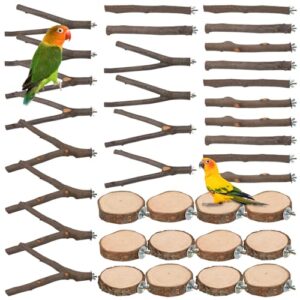
TORINALITAL GD-002 rounds out this list with nine apple wood pieces — three perch stands, three multi-branch perches, and three round platform perches — giving you more placement options than most single-style kits.
Apple wood’s natural grain texture promotes active gripping, which strengthens flexor tendons over time.
Built-in metal bolts make repositioning straightforward, so you can rotate layouts without extra hardware. $13.95 for nine pieces, it’s a practical choice for budgies, cockatiels, and lovebirds.
| Best For | Small bird owners — budgies, cockatiels, lovebirds, and finches — who want a natural, enriching cage setup without spending a lot. |
|---|---|
| Material | Natural apple wood |
| Piece Count | 9 pieces |
| Mounting Hardware | Metal bolts and wing nuts |
| Bird Compatibility | Budgies, cockatiels, lovebirds, finches |
| Price | $13.95 |
| Perch Variety | Perch stands, multi-branch, round platform |
| Additional Features |
|
- Nine pieces for $13.95 is a solid deal — way more variety than most single-style perch packs
- Apple wood is safe, non-toxic, and the texture actually helps with beak and foot health
- Built-in bolts make it easy to swap layouts whenever you want to mix things up
- Too small for larger parrots like macaws or cockatoos
- May arrive with bark debris or surface dirt, so a wash before use is a must
- Bar spacing on some cages might need minor hardware adjustments for a snug fit
Frequently Asked Questions (FAQs)
How many perches does my bird need daily?
Like a gym with just one machine, a single perch limits your bird’s movement all day.
Most birds do best with at least two to four perches, depending on cage size.
Can birds share perches safely with cage-mates?
Yes, birds can share perches safely when they’re bonded cage-mates with compatible temperaments and enough space to move away from each other without conflict or resource guarding.
At what age should young birds start perching?
Most young birds start perching around 7 to 10 days old, with confidence building by week three. Start with a low, easy-to-grip perch so falls don’t cause injury.
How do heated perches affect a birds health?
Heated perches can help birds stay warm in cold conditions, but they carry real risks.
Overheating or malfunction may cause burns, dry out foot skin, and increase injury susceptibility — so always offer a non-heated alternative nearby.
Conclusion
Picture a bird that never shifts its weight, never adjusts its grip, never climbs toward a higher branch—just stands, motionless, on a single smooth rod day after day. That’s where inactivity leads.
Understanding how perches help birds exercise naturally gives you the tools to prevent it. Vary the diameters, rotate the materials, and think deliberately about placement.
Your bird’s feet, joints, and mind are all shaped by what you put inside that cage.