This site is supported by our readers. We may earn a commission, at no cost to you, if you purchase through links.
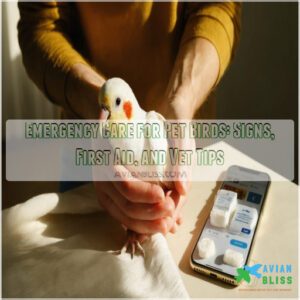
A bird can go from healthy to critical in under an hour. Broken blood feathers bleed faster than most owners expect, and a temperature drop during evening hours can tip a stressed bird into shock before morning.
Outdoor aviaries expose your flock to risks that indoor setups simply don’t—predator stress, weather swings, and injuries that happen when no one is watching.
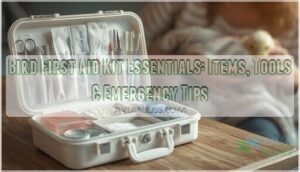
Having avian first aid kits for outdoor aviaries stocked and within reach isn’t cautious overthinking; it’s the difference between stabilizing a bird until you reach a vet and losing one overnight. The supplies, the organization, and the know-how all matter equally.
Table Of Contents
Key Takeaways
- Birds can crash fast — styptic powder, sterile gauze, saline, and electrolytes are the four supplies most likely to buy you the time you need to reach a vet.
- How you organize your kit matters as much as what’s in it: separate compartments by emergency type so your hands find the right supply before your brain catches up.
- A 10% weight drop or active bleeding that doesn’t slow in five minutes means you stop treating and start calling — home care has a hard ceiling.
- Check expiration dates every quarter and restock immediately, because a kit with expired saline or empty styptic powder is just a box when the moment arrives.
Essential Supplies for Outdoor Aviaries

A well-stocked first aid kit starts with the right supplies — not just anything off a pharmacy shelf, but items chosen specifically for birds. Every tool here has a clear purpose, and knowing what each one does helps you act fast when it counts.
For a deeper look at what belongs in your kit, top medications for injured birds covers the essentials worth having on hand before an emergency strikes.
Here’s what your outdoor aviary kit needs.
Styptic Powder, Cornstarch, and Gauze
Stopping a bleeding nail or broken blood feather fast is one of those moments where having the right supply already in your hand makes all the difference. If you notice heavy pulsing bleeding, seek immediate veterinary care.
Styptic powder is your first choice — apply it with a cotton swab for 30 seconds. No powder? Cornstarch works as a gentler backup. Follow either with a gauze pad held firmly in place.
Paper Tape and Nonstick Wound Coverage
Once bleeding slows, securing that gauze pad properly is what keeps the wound protected.
Use a hypoallergenic tape with a breathable adhesive — medical paper tape is your best option. It tears cleanly without bandage scissors, conforms gently, and won’t pull feathers during removal.
Pair it with a nonstick contact layer backed by an absorbent partner layer. Sterile gauze pads complete the setup.
Towels, Tweezers, and Locking Forceps
Once your wound layer is secure, the next step is control — and that’s where small towels, blunt-tipped tweezers, and locking forceps earn their place in every avian first aid kit.
Fold two or three absorbent cloth towels to gently wrap wings against the body. Towel material hygiene matters — keep them clean and dry.
Blunt-tipped tweezers handle splinters safely.
Locking forceps, with their ratcheting grip mechanism, hold without constant squeezing.
Penlight, Magnifier, and Gram Scale
After stabilizing your bird physically, your eyes become the next tool. A penlight gives you focused illumination techniques for checking the mouth, nostrils, and injury sites. Pair it with a magnifying glass set between 5x–10x magnification levels for spotting mites or wound edges.
- Test penlight batteries weekly — battery management prevents failure mid-exam
- Use a digital gram scale on a flat, stable surface
- Apply tare/zero before weighing for accurate weight monitoring
- Recalibrate monthly following proper calibration procedures
A 10% weight drop means call your vet today.
Saline, Electrolytes, Probiotics, and Feeding Support
When your bird stops eating or drinking, time matters. Oral Saline Prep starts with sterile 0.9% Saline Solution — flush eyes or mix into Electrolyte Solution for gentle rehydration. Offer small sips only.
| Supply | Purpose |
|---|---|
| Electrolyte Powder | Fluid Balance Assessment |
| Probiotic Powder | Gut support post-stress |
| HandFeeding Formula | Feeding formulas for sick birds |
| 1 ml Syringe | Syringe Feeding Technique |
Electrolyte Dosage to body weight. Choose Probiotic Strain Choice carefully — Lactobacillus-based powders work well. Never reuse prepared formula.
Heat Source, Thermometer, and Carrier
Temperature can make or break a recovery.
Your kit needs three things working together:
- Use a Ceramic Heat Emitter or Heating Pad with a Safe Heat Mount — never let it tip
- Aim for a Temperature Gradient so the bird can self-regulate
- Confirm readings with a calibrated Digital Thermometer
- Choose a Ventilated Carrier or Small Travel Carrier with airflow
- Apply Gradual Warming only — sudden heat causes shock
Build and Organize The Kit
Having the right supplies is only half the battle — how you store them matters just as much. A well-organized kit means you’re not scrambling through a jumbled box when every second counts.
Here’s how to put it all together the right way.
Choose a Waterproof Storage Box
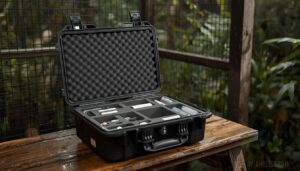
Your storage choice sets the foundation for everything else.
Look for a waterproof hard shell box with a reliable gasket seal and a latch mechanism that keeps the lid compressed during rain or transport. An IP67-rated weatherproof case manages splashes and humidity well.
UV resistance matters for outdoor aviaries.
Internal compartments prevent shifting, and a compact waterproof set stays portable without sacrificing organization.
Separate Supplies by Emergency Type
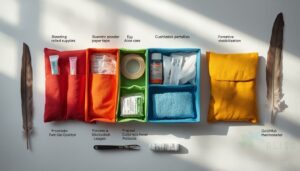
Think of your kit like a hospital triage bay — each zone addresses one crisis only.
- Dedicate a Bleeding Compartment for styptic powder, gauze, and paper tape — bleeding control in birds demands instant access.
- Assign a Burn Section with nonstick wound coverage and aloe gel for avian wound cleaning.
- Create an Eye Care Zone with saline and a penlight for flushing debris.
- Reserve a Fracture Stabilization Area with forceps, gauze, and a towel for cushioning.
- Pack a Dehydration Hydration Pack with electrolytes, probiotics, and a thermometer for bird dehydration and electrolyte replacement, plus temperature regulation for sick birds.
Add an Avian Vet Contact Card
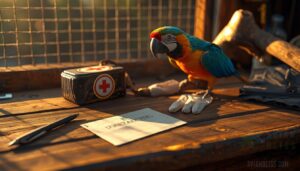
Your avian vet contact card is the card you’ll grab when your hands are shaking. Print it on Durable Waterproof Paper and design it for Glove-Friendly Access — large text, clean Card Layout Design. Include Essential Bird Info: species, sex, age, and presenting problem. Your Bird Emergency Information Card should list your Primary Veterinarian Contact with regular and after-hours numbers clearly separated.
| Card Section | What to Include | Why It Matters |
|---|---|---|
| Primary Veterinarian Contact | Clinic name, address, main phone | First call during any crisis |
| Emergency Veterinary Clinic Information | After-hours number, emergency access note | Covers nights and weekends |
| Essential Bird Info | Species, sex, age, current problem | Speeds triage on arrival |
Follow a simple Emergency Call Protocol: call your Avian veterinarian first, then consult your Emergency phone list if after‑hours.
Include Poison Control and Clinic Numbers
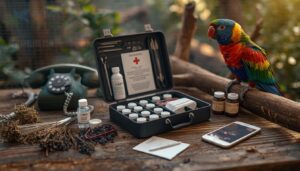
Your Bird Emergency Information Card isn’t complete without a full Poison Hotline List. Add Regional Vet Contacts alongside your Primary Veterinarian Contact and Emergency Veterinary Clinic Information.
In Germany, dial 112 for life‑threatening situations — otherwise, your nearest poison center provides guidance around the clock.
Use clear Poison Number Labeling on your Quick Reference Card so your Emergency Dialing Guide is readable under pressure.
Keep The Kit Lightweight and Portable
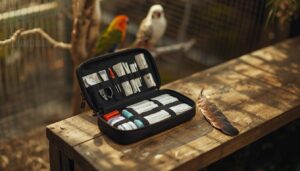
Once your emergency numbers are in place, think about the kit itself. A portable case with Modular Compartments keeps supplies sorted and ready.
Choose a lightweight design — thin plastic shells or waterproof nylon bag materials cut weight without sacrificing protection.
Collapsible Components like flat gauze packs support a Weight-Saving Design.
Compact Inventory inside a compact emergency kit or mini first aid kit stays well under two pounds.
Label Items for Fast Access
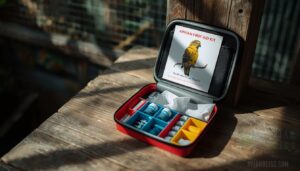
Labels turn a lightweight kit into a fast kit. Use Color-Coded Sections — one color per emergency type like bleeding, cleaning, or heat support. Add High-Contrast Text so you can read it in dim light without squinting.
A Quick-Grab Layout puts item names on top, short directions underneath. Note Expiration Visibility on every consumable. Action-Oriented Labels like "Apply with gauze" beat vague wording every time.
Your Bird Kit Direction Card and Avian first aid checklist live on the lid — front and center.
Top 5 Avian First Aid Kits
Not every kit off the shelf is built with birds in mind, but a few come close enough to work well as a starting base.
You’ll still need to add avian-specific items like styptic powder, electrolytes, and a contact card — but the right foundation saves you time.
Here are solid options worth considering.
1. Waterproof Compact First Aid Kit
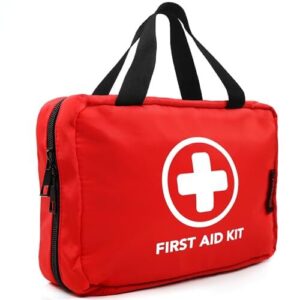
This kit packs 330 individual supplies into a 10.2 × 8.39 × 6.22‑inch bag that weighs just 1.61 pounds — light enough to hang inside your aviary shed or tuck into a backpack.
The thick nylon exterior and double-zipper closure hold up in outdoor conditions, and four transparent compartments keep gauze, bandages, gloves, and iodine pads easy to grab without digging.
You get a CPR face shield, tourniquet, and instant cold pack included.
It’s latex-free and internationally compliant.
| Best For | Hikers, campers, and anyone who wants a solid emergency kit for home, car, or outdoor adventures. |
|---|---|
| Piece Count | 330 pieces |
| Case Type | Nylon soft bag |
| HSA/FSA Eligible | Not specified |
| Gloves Included | Yes |
| Scissors Included | Yes |
| Weight | 1.61 lb |
| Additional Features |
|
- 330 supplies in a bag that weighs under two pounds — serious coverage without the bulk
- Transparent, labeled compartments mean you find what you need fast when it counts
- Latex-free and internationally compliant, so it works for most users and settings
- Repacking after use is fiddly — everything has a designated spot, and it takes patience to get it all back in
- No water-resistance rating listed, so don’t count on it surviving a dunking
- Doesn’t replace a doctor — specialized or prescription items aren’t included
2. First Aid Only OSHA Compliant First Aid Kit
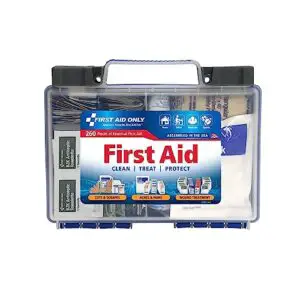
For shared spaces like classrooms or aviaries with multiple caregivers, the First Aid Only OSHA Compliant Kit earns its place. It holds 260 pieces — enough to cover up to 50 individuals — in a rigid plastic case with a clear front panel and individual compartments.
You can spot gauze, antiseptic towelettes, and butterfly closures at a glance. The slide-latch closure keeps everything secure.
It’s also HSA and FSA eligible, which makes restocking less painful on your budget.
| Best For | Offices, classrooms, or any shared space that needs an OSHA-compliant kit stocked for a crowd. |
|---|---|
| Piece Count | 260 pieces |
| Case Type | Rigid plastic case |
| HSA/FSA Eligible | Yes |
| Gloves Included | Yes |
| Scissors Included | Yes |
| Weight | Not specified |
| Additional Features |
|
- 260 pieces covering up to 50 people — plenty of supply for busy shared spaces
- Clear front panel and organized compartments let you grab what you need fast
- HSA and FSA eligible, so you can offset the cost through your health savings account
- Slide latch can be stiff and awkward to open one-handed
- Medium-grade plastic isn’t waterproof or rugged enough for harsh outdoor conditions
- Designed for minor injuries only — not a replacement for serious trauma supplies
3. Waterproof Mini First Aid Kit
Carrying a full kit into the field isn’t always practical. That’s where the Waterproof Mini First Aid Kit earns its spot.
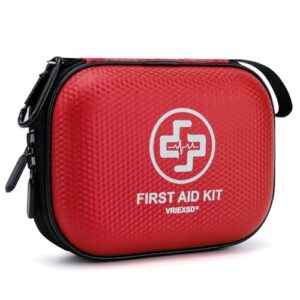
It packs 150 latex-free items into a hard EVA shell that weighs just 11.36 oz — light enough to clip onto your aviary bag with the included carabiner. Inside, smart compartments keep bandages, gauze, and antiseptic wipes sorted and easy to grab.
The waterproof case withstands rain without a problem. Small, but genuinely ready when you need it.
| Best For | Hikers, cyclists, and outdoor enthusiasts who need a compact, reliable kit they can toss in a bag or clip to their gear without adding bulk. |
|---|---|
| Piece Count | 150 pieces |
| Case Type | EVA hard-shell |
| HSA/FSA Eligible | Not specified |
| Gloves Included | Yes (latex-free) |
| Scissors Included | Yes |
| Weight | 0.73 lb |
| Additional Features |
|
- 150 latex-free items packed into a case that weighs under 12 oz — genuinely easy to carry anywhere
- Smart compartments keep everything sorted so you’re not digging around when it counts
- Waterproof hard shell holds up in rain and wet conditions, making it solid for water-adjacent adventures
- The compact size means bulkier supplies like large gauze rolls or splints just won’t fit
- Repacking everything neatly after use takes some patience — it’s a tight squeeze
- Waterproof doesn’t mean waterproof all the way down; full submersion can still get water inside
4. All Purpose Compact First Aid Kit
Sometimes you just need one kit that covers everything without overthinking it.
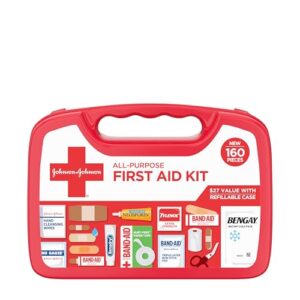
The All Purpose Compact First Aid Kit delivers exactly that — 160 branded pieces in a hard-plastic case measuring 9.5 × 7 × 3.25 inches and weighing just 1.19 lb.
Full-size Neosporin, Benadryl cream, Tylenol caplets, tweezers, and an instant cold pack come ready to go.
It’s HSA/FSA eligible, too.
One honest note: the case isn’t waterproof, so store it somewhere dry between uses.
| Best For | Anyone who wants a reliable, grab-and-go kit for home, car, or travel without having to piece one together themselves. |
|---|---|
| Piece Count | 160 pieces |
| Case Type | Hard plastic case |
| HSA/FSA Eligible | Yes |
| Gloves Included | Yes (2 disposable) |
| Scissors Included | Yes |
| Weight | 1.19 lb |
| Additional Features |
|
- Comes loaded with trusted brand-name products — BAND-AID, Neosporin, Tylenol, Benadryl — so you’re not settling for off-brand stuff when it matters
- Compact and lightweight enough to toss in a glove box, backpack, or dorm shelf without taking up much space
- HSA/FSA eligible, which means you can use pre-tax dollars to cover it
- The hard plastic case isn’t water-resistant, so moisture can sneak in and compromise the contents over time
- Only built for minor injuries — if you’re heading into the backcountry or a high-risk situation, you’ll want to supplement with trauma gear
- The 160-piece count sounds like a lot, but if you use it regularly, you’ll need to restock sooner than you might expect
5. First Aid Only All Purpose Kit
If you want one kit that covers nearly anything, the First Aid Only All Purpose Kit earns a hard look.
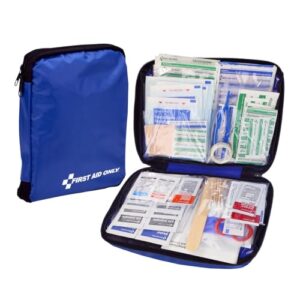
Its 298 pieces — bandages, gauze, burn cream, antiseptic wipes, a cold pack, gloves, scissors, and even acetaminophen — fit inside a soft-sided, two-layer zippered case weighing just 1 lb.
At 9.25 × 7 × 3 inches, it slides into a backpack or aviary cabinet without trouble.
It’s HSA/FSA eligible, but keep it dry — the case isn’t waterproof.
| Best For | Anyone who wants one reliable kit for home, car, travel, or the outdoors — especially people who like staying organized under pressure. |
|---|---|
| Piece Count | 298 pieces |
| Case Type | Soft zippered case |
| HSA/FSA Eligible | Yes |
| Gloves Included | Yes |
| Scissors Included | Yes |
| Weight | 1 lb |
| Additional Features |
|
- 298 pieces covers a wide range of situations, from cuts and burns to headaches and sprains
- The two-layer, compartmented case makes it easy to find what you need fast
- HSA/FSA eligible, so you can pay with pre-tax dollars
- The case isn’t waterproof, so wet environments are a real risk
- Plastic tweezers feel cheap and may not hold up when you actually need them
- Some items like analgesic packets expire around the one-year mark and need replacing
Use and Restock The Kit

Building the kit is only half the job — knowing how to use it under pressure is what actually saves birds. When something goes wrong, you need a clear sequence to follow, not a box of supplies you’re sorting through in a panic.
Building the kit means nothing if panic empties your mind when a bird’s life depends on you
Here’s exactly what to do, step by step.
Stop Bleeding and Stabilize The Bird
Bleeding moves fast in birds. Act faster.
- Pressure Application — Press sterile gauze pads firmly on the wound for 5 minutes without lifting.
- Clotting Agents — Apply styptic powder or cornstarch if bleeding continues.
- Bandage Layering — Add fresh gauze on top; never remove soaked layers.
- Breathing Monitoring — Keep pressure firm but make sure the bird breathes freely.
- Recheck Timing — Check at 5 minutes; call your avian vet immediately if bleeding persists.
Clean Minor Wounds Before Transport
A clean wound travels better than a dirty one.
Before loading your bird into the small carrier, put on disposable gloves — glove hygiene matters as much as the wound itself. Rinse gently using sterile saline for gentle irrigation, then use blunt tweezers for debris removal. Skip hydrogen peroxide; avoid irritants entirely. Pat dry, apply an antiseptic solution chlorhexidine around the edges, then cover with sterile gauze pads and nonstick bandaging.
| Step | What To Do |
|---|---|
| 1. Glove Up | Put on disposable gloves before touching anything |
| 2. Irrigate | Flush with saline 5–10 minutes for avian wound cleaning |
| 3. Remove Debris | Use clean tweezers; don’t probe deep |
| 4. Avoid Irritants | No iodine, no hydrogen peroxide |
| 5. Bandage | Cover with sterile gauze pads and nonstick bandaging |
Support Temperature and Hydration Safely
A stressed bird loses heat fast — and a cold bird can’t recover.
Support your bird with these three steps:
- Use gradual heat application via a heating pad wrapped in cloth; target 80–85 °F using a digital thermometer.
- Offer safe fluid offerings — diluted Pedialyte electrolyte solution, a few drops at a time while monitoring crop swallowing.
- Maintain humidity control with moisture-retaining wraps to prevent chilling during temperature management in avian emergencies.
Move The Bird to a Carrier
Once bird is stable and warm, it’s time to move fast.
Place your small carrier on a firm, non‑slip surface with the opening facing the bird.
Use a towel covering to reduce struggling during transfer — one confident motion gets them in.
Practice quick latch closure before any emergency.
For transport, seat belt securing keeps the carrier still, cutting flight risk reduction to nearly zero.
Call an Avian Veterinarian Quickly
Once your bird is in the carrier, grab your emergency information card — don’t wait. Run through your urgent symptom checklist: breathing trouble, active bleeding, collapse, or seizures, all mean call now.
Tell the clinic the species, age, and what you’ve already done. Vet locator tools from the Association of Avian Veterinarians help you find an avian specialist fast if your primary vet is unavailable.
Check Expiration Dates Every Quarter
Your kit is only as good as what’s still usable inside it. Set a Quarterly Inspection Schedule — January, April, July, October — and check the supplies every three months without skipping.
- Review every expiration date, including saline and gels
- Inspect each package for Seal Integrity and Temperature Impact damage
- Log removals with Lot Number Tracking in your kit’s Log Documentation
Seasonal checks of Avian first aid inventory keep your Avian first aid checklist reliable when seconds matter.
Frequently Asked Questions (FAQs)
What does the term avian mean?
Avian" is a Latin-derived adjective meaning "of or relating to birds." In veterinary terminology, it identifies everything bird-specific — from avian health diagnostics to avian emergency response protocols and medical classification.
Can outdoor birds self-medicate with natural plants?
Some birds do show zoopharmacognosy behavior — selecting plants with antimicrobial properties — but this isn’t reliable self-treatment. For real injuries, your avian first aid kit beats any plant remedy every time.
How do weather extremes affect aviary bird health?
Weather is a silent predator for outdoor birds. Heat stress, cold hypothermia, storm trauma, flood food scarcity, and poor air quality each push avian physiology past its limits — fast.
Which bird species need specialized emergency handling?
Raptors, large seabirds, cat-bite victims, powerline-exposed birds, and toxic-exposed birds all need specialized wild bird rescue protocols. Standard bird emergency care won’t cut it for these avian health emergencies.
When should you attempt CPR on a bird?
Only attempt CPR when your bird shows No Breathing Signs, an Absent Cardiac Pulse, and an Unresponsive State. Don’t wait. Immediate Veterinary Delay costs lives — start compressions now.
How do you prevent common outdoor aviary injuries?
Prevention starts with your setup. Solid Mesh Barrier Maintenance, smart Predator Proofing, safe Perch Design, clean Waterer Hygiene, and consistent Daily Safety Inspections stop most injuries before they start.
Conclusion
Like Pasteur’s quiet lab work that saved countless lives before anyone called it medicine, preparing avian first aid kits for outdoor aviaries is the unglamorous act that defines a serious keeper.
You won’t remember building the kit. You’ll remember the morning it mattered.
Stock it completely. Organize it clearly. Check it every quarter.
When a bird drops fast and the clock starts moving, everything you prepared in advance becomes the margin between loss and recovery.
- https://www.wrennz.org.nz/post/basic-first-aid-and-rescue-kit-for-birds
- https://birdsupplies.com/blogs/news/157076551-how-to-prepare-a-bird-first-aid-kit
- https://www.avianenrichment.com/learn/physical-needs/health/avian-first-aid-kit-essentials
- https://birdsnways.com/avian-first-aid-kit/
- https://petsweekly.com/bird-health/the-avian-first-aid-kit/