This site is supported by our readers. We may earn a commission, at no cost to you, if you purchase through links.
A hummingbird can beat its wings 53 times per second, but it won’t stick around your garden without the right fuel. The nectar in a single trumpet vine bloom contains enough sugar to power that wing speed for only a few minutes—which means these birds need a constant circuit of flowers to survive.
Most gardeners plant what looks pretty. The ones who attract birds plant what feeds them.
Spring nectar flowers work because they match what birds are hardwired to seek: tubular shapes, red and orange hues, and concentrated sugar.
Get those three things right, and your yard becomes a reliable stop on a hummingbird’s daily route.
Table Of Contents
- Key Takeaways
- Spring Nectar Flowers for Birds
- Top 5 Spring Nectar Flower Seeds
- Planting for Hummingbird-Friendly Gardens
- Keep Nectar Flowing Through Spring
- Frequently Asked Questions (FAQs)
- Why should you plant nectar-rich flowers in your garden?
- Do coneflowers attract birds?
- What flowers are good for bees & butterflies?
- What birds get nectar from flowers?
- Should I stop feeding hummingbirds in September?
- Which spring flowers attract both bees and birds?
- How do I protect nectar flowers from deer?
- Can container gardens support hummingbird feeding stations?
- Do hummingbirds return to the same garden yearly?
- Which spring flowers bloom earliest in cold climates?
- Conclusion
Key Takeaways
- Hummingbirds are hardwired to seek tubular, red or orange flowers with concentrated sugar, so matching those traits is what actually pulls them into your yard.
- Staggering bloom times across 8–12 weeks keeps nectar available all season, so birds don’t just visit once and move on.
- Pairing nectar flowers with seed-producing plants like coneflowers and black-eyed Susans turns your garden into a year-round stop for both hummingbirds and songbirds.
- Hummingbirds use spatial memory and return to the same gardens each year, so getting the setup right once pays off every season after.
Spring Nectar Flowers for Birds
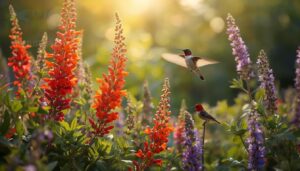
The right flowers do more than look good — they turn your yard into a feeding ground that birds actually seek out.
Pair those blooms with the right setup by checking out this guide on how to feed wild birds — it helps you match feeders to the birds your flowers are already drawing in.
Spring is the perfect time to get started, and you don’t need a big space to make it work.
Here are the best nectar flowers to plant this season.
Tubular Blooms That Attract Hummingbirds
Hummingbirds are basically built for tubular flowers. Their long beaks slide right into narrow blooms, reaching nectar that other birds simply can’t access. Tube length variation across species means different hummingbirds find their perfect match.
Nectar sugar concentration runs around 20–35%, enough to fuel those rapid wingbeats. Vertical bloom placement helps too — birds spot color contrast cues from a distance, homing in on their morning nectar peak.
red tubular flowers such as cardinal flower thrives in USDA zones 3‑9.
Bright Red, Orange, and Purple Flower Choices
Color does a lot of the heavy lifting in a bird-friendly garden. Red Begonia (Begonia interspecific) and Hummingbird Mint deliver strong pollinator visual cues, while Purple Lupine (Lupinus polyphyllus) adds cool seasonal color transitions. Orange Butterfly Milkweed (Asclepias tuberosa) pairs beautifully with purples for warm color contrast pairings.
Use garden height layers and compact container options to keep these bird-attracting blooms visible all spring.
Native Spring Flowers for Backyard Wildlife
Native plants pull double duty in a bird-friendly garden — they feed wildlife and support the whole pollinator habitat design without much fuss. Virginia bluebells and wild geraniums are reliable early season nectar sources, blooming right when birds arrive hungry.
native seed mixes with staggered bloom times for smart seasonal bloom sequencing.
These bird-friendly plantings work across a wide range of hardiness zones.
Top 5 Spring Nectar Flower Seeds
The right seeds can turn your yard into a regular hummingbird stop from the moment spring kicks in.
Each of these five picks offers something a little different — height, color, shade tolerance — so there’s a good fit no matter what your space looks like.
Here are the top spring nectar flower seeds worth growing this season.
1. Pacific Giant Delphinium Seed Mix
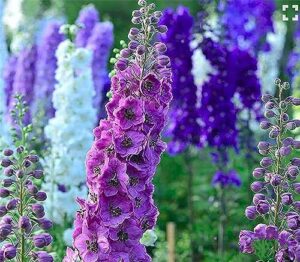
Few seeds pack as much visual drama as the Pacific Giant Delphinium Mix. These towering spires can reach 4 to 6 feet, showing off rosy lilac, royal blue, and white blooms that hummingbirds can’t resist.
Each packet from Marde Ross & Company contains around 250 non-GMO seeds, untreated with neonicotinoids.
One tip: don’t skip the cold stratification step — 4 to 12 weeks in the fridge gives your germination rate a real boost.
| Best For | Gardeners who love bold, cottage-style blooms and want stunning cut flowers or pollinator-friendly backdrops in their garden. |
|---|---|
| Price | $14.99 |
| Seed Count | 250 seeds |
| GMO Status | Non-GMO |
| Pollinator Support | Bees |
| Stratification Needed | 4–12 weeks |
| Bloom Color | Blue, white, pink |
| Additional Features |
|
- 250 non-GMO seeds per packet — great value at $14.99, and free of neonicotinoid treatments
- Beautiful mix of blue, pink, and white spikes that work wonderfully for bouquets, pressing, or just showing off in the garden
- Easy to sow directly on bare soil, and bees absolutely love them
- Germination needs 4–12 weeks of cold stratification in the fridge, so you’ll need to plan ahead
- Seeds dry out easily — you have to keep them consistently moist or germination suffers
- Tall stems (up to 36 inches) may need staking if your garden gets wind
2. Fireweed Seeds Willow Herb
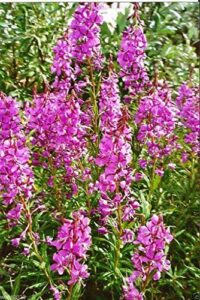
Fireweed is one of those wildflowers that does double duty — tall pink clusters that hummingbirds love, plus a plant that helps restore worn-out soil. Each package gives you 500 raw seeds ready for direct sowing.
One thing to plan for: these seeds need about 2 to 4 weeks of cold stratification before they’ll sprout reliably. Once they get going, though, fireweed grows fast and spreads freely, so give it room to do its thing.
| Best For | Gardeners, habitat restorers, and nature lovers who want to attract pollinators and bring life back to worn-out or open land. |
|---|---|
| Price | $3.36 |
| Seed Count | 500 seeds |
| GMO Status | Not specified |
| Pollinator Support | Bees, butterflies |
| Stratification Needed | 2–4 weeks |
| Bloom Color | Pink-purple |
| Additional Features |
|
- 500 seeds for just $3.36 — solid value for covering a decent patch of ground
- Great for pollinators — bees, butterflies, and hummingbirds all love it
- Tough and practical — helps stabilize soil and works well in restoration projects
- Needs 2–4 weeks of cold stratification before it’ll germinate reliably
- Spreads aggressively, so it needs some managing if you don’t want it taking over
- Not a great fit for extreme climates — it really prefers temperate zones
3. Purple Fuchsia Magellanica Flower Seeds
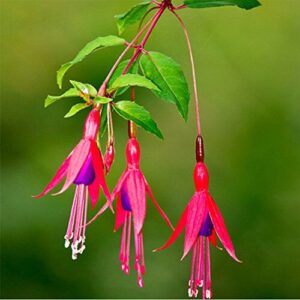
Each package of Purple Fuchsia Magellanica seeds comes with 100 non-GMO seeds — enough to get a serious start on a hummingbird-friendly corner of your garden.
These hardy shrubs grow 6 to 12 feet tall and produce pendant tubular flowers in rich purple and red tones from midsummer through autumn.
They do best in partial shade with moist, well-drained soil.
Just know that seedlings take 2 to 3 years to flower, so this one rewards patient gardeners.
| Best For | Patient gardeners who want to grow a hummingbird-friendly, shade-tolerant shrub and don’t mind waiting a few years for those stunning blooms to show up. |
|---|---|
| Price | $14.99 |
| Seed Count | 100 seeds |
| GMO Status | Non-GMO |
| Pollinator Support | Bees, birds |
| Stratification Needed | Not specified |
| Bloom Color | Purple |
| Additional Features |
|
- 100 non-GMO seeds per pack gives you plenty to work with for under $15
- Seeds stay viable for two growing seasons, so no pressure to plant everything at once
- Freshly harvested and properly stored, so germination rates should be solid
- You’re buying seeds, not plants — flowering can take 2 to 3 years
- Needs consistent care (right shade, moisture, drainage) or you’ll end up with brown leaves and dying blooms
- No live-plant guarantee, so success really depends on how well you manage growing conditions
4. Created By Nature Red Columbine Flower Seeds
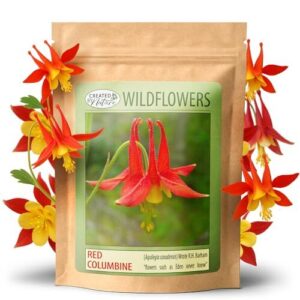
Created by nature’s red columbine seeds are a smart pick if you want fast results and real wildlife value. Each 2-oz packet holds 1,450 seeds — enough to cover about 25 square feet.
These native perennials bloom in vivid red with yellow‑throated flowers that hummingbirds genuinely can’t resist.
Scatter them in spring, keep the soil moist, and expect seedlings in around 21 days. They handle partial shade well, making them flexible for most backyard setups.
| Best For | Beginner gardeners and wildlife enthusiasts who want a low-maintenance perennial that pulls in hummingbirds and pollinators with minimal effort. |
|---|---|
| Price | $9.99 |
| Seed Count | 1,450 seeds |
| GMO Status | Non-GMO |
| Pollinator Support | Bees, butterflies, hummingbirds |
| Stratification Needed | Recommended |
| Bloom Color | Red with yellow |
| Additional Features |
|
- 1,450 seeds per packet gives you great coverage — about 25 sq ft — so you’re not skimping on density.
- Genuinely attracts hummingbirds, bees, and butterflies, making it a real boost for your local ecosystem.
- Easy to grow in full sun or partial shade, so most backyard spots will work just fine.
- Cold-moist stratification is often needed for good germination — skip it and you might be disappointed.
- Full blooms can take until the second year, so don’t expect a big show right away.
- Pricier than generic columbine seeds, which stings a bit if germination doesn’t go as planned.
5. Outsidepride Dark Red Begonia Seeds
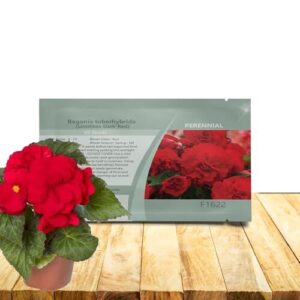
If you want continuous color from spring all the way through winter, Outsidepride Dark Red Begonia seeds deliver just that. Each pack holds 25 GMO-free seeds that grow into compact 12–15 inch plants with deep red blooms and striking bronze foliage.
They thrive in zones 9–10 and adapt to both sun and partial shade, so placement isn’t a headache. These begonias work beautifully in containers, hanging baskets, or garden beds — wherever you need reliable nectar and lasting visual appeal.
| Best For | Gardeners in zones 9–10 who want low-maintenance, long-blooming color in containers, hanging baskets, or small garden spaces. |
|---|---|
| Price | $7.49 |
| Seed Count | 25 seeds |
| GMO Status | GMO-free |
| Pollinator Support | Birds, butterflies |
| Stratification Needed | Not specified |
| Bloom Color | Dark red |
| Additional Features |
|
- Blooms from spring through winter, so you get color for almost the entire year
- Compact size and cascading habit make it a natural fit for pots, baskets, and tight spots
- Bronze foliage looks great even when the plant isn’t blooming
- Germination can be hit or miss — some buyers report damaged seeds or poor sprouting
- The seeds are tiny and delicate, so sowing takes a bit of patience and care
- Only reliable in zones 9–10; anywhere colder and you’ll need to bring them in or start over
Planting for Hummingbird-Friendly Gardens
Getting hummingbirds to show up is one thing — getting them to stay is another. The right plants in the right spots make all the difference.
what to focus on when setting up your garden.
Match Full Sun, Partial Shade, or Shade
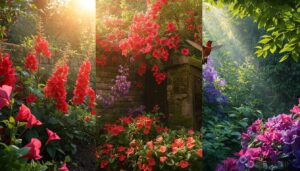
Getting the light right makes all the difference. Plants placed in the wrong Light Exposure Zones simply struggle — and a struggling plant won’t feed a single hummingbird.
Here’s a quick guide to Layered Plant Placement by sunlight:
- Full sun (6+ hours): Trumpet vine, delphinium — strong nectar source choices
- Partial shade (3–6 hours): Fuchsia, coral honeysuckle — reliable bird-attracting blooms
- Shade-Optimized Planting: Begonias and impatiens thrive with bright indirect sunlight
- Soil Moisture Adjustments: Shaded beds stay cooler and need less watering
- Seasonal Light Shifts: Watch how sunlight moves through your yard each month and adjust placement accordingly
Choose Plants for Your USDA Zone
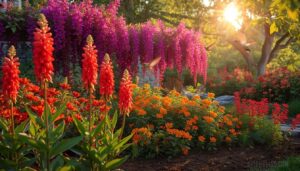
Your USDA Hardiness Zone is the starting point for every planting decision. Pick the wrong zone match, and even the most beautiful nectar source won’t survive winter.
| Plant | Hardiness Zone | Cold Tolerance |
|---|---|---|
| Cardinal Flower | 3–9 | Frost-hardy |
| Lantana | 8–11 | Heat‑tolerant choices |
| Fuchsia Magellanica | 6–9 | Moderate |
Microclimate Matching matters too — a sheltered wall can shift your effective zone. Aim for soil pH around 6.0–7.0 for steady, seasonal bloom timing for continuous nectar supply in your bird-friendly garden.
Place Flowers Near Birdbaths and Feeders
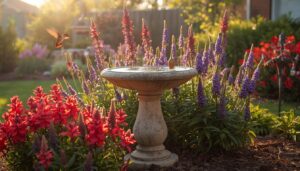
Once your zone is locked in, think about placement. Hummingbirds work a circuit — nectar source, water, repeat.
Set bird-attracting blooms within three to six feet of your birdbath. Use a color gradient design: bold red salvia up front, purple coneflower behind.
Tuck low groundcover perches at the base. Stick to water-safe plant selection and bird-safe mulch choices to keep the area clean and safe.
Use Trellises, Borders, and Layered Heights
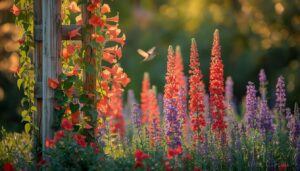
Now think think vertically. A trellis gives tall flowers like trumpet vine or cardinal flower a place to climb, boosting bloom exposure and creating real vertical interest in your pollinator-friendly garden.
Layer heights from low groundcovers up to six-foot spikes, and use border color contrast — bright reds up front, cooler purples behind — to guide birds naturally through the space.
Keep Nectar Flowing Through Spring
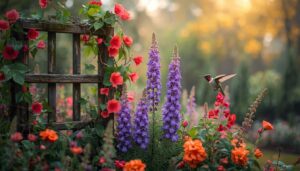
One great bloom fading doesn’t have to mean the hummingbirds leave, too. The secret is layering your garden so something new is always opening just as the last flower fades.
Here’s how to keep the nectar coming all season long.
Stagger Bloom Times for Longer Feeding
Don’t plant everything bloom at once. Staggered species selection is the real trick — pair early bloomers like cardinal flower with mid-season delphiniums, then let Russian sage carry extended nectar phases into fall.
Overlap bloom windows so hummingbirds always find something open. Layered bloom scheduling across 8–12 weeks keeps your garden a reliable stop, not just a one-week show.
Combine Nectar Flowers With Seed Plants
Nectar flowers bring hummingbirds in, but seed-producing garden perennials keep songbirds coming back. Layered Planting gives your bird-friendly garden a full seasonal rhythm — not just a spring burst.
Nectar flowers draw hummingbirds in, but seed-producing perennials are what keep songbirds coming back all season
Companion Seed Borders alongside your seasonal nectar blooms builds Pollinator Habitat Diversity that helps everyone from goldfinches to bees. Try these combinations for Seasonal Food Continuity:
- Purple coneflower beside cardinal flower
- Black-eyed Susan edging delphinium beds
- Blue vervain behind coral honeysuckle
Vertical Nectar Corridors naturally emerge from this kind of garden design.
Add Drought-tolerant Options for Easy Care
Drought-tolerant picks make the whole garden easier to run. Lantana, Hummingbird Mint, and Russian Sage deliver steady nectar through spring without constant watering. Smart Mulch Strategies and Drip Irrigation do the heavy lifting on Soil Water Retention.
| Plant | Water Need | Benefit |
|---|---|---|
| Lantana | Low | Bird-attracting blooms, zones 8–11 |
| Hummingbird Mint | Low–Moderate | Long-season nectar, zones 4–9 |
| Russian Sage | Low | Drought-tolerant, spring to fall |
Plant Grouping by water need and Seasonal Deadheading keeps these low-maintenance performers looking sharp all season.
Support Hummingbirds and Songbirds All Season
A garden that works for both hummingbirds and songbirds is really just about balance.
Pair tubular flowers and bright flower colors with smart Water Feature Placement to keep birds coming back.
Add Predator‑Safe Cover and Seasonal Insect Habitat so they feel at home beyond just feeding.
Microclimate Management and Pollinator Pathways tie it all together, turning seasonal nectar availability into a full season of life and movement.
Frequently Asked Questions (FAQs)
Why should you plant nectar-rich flowers in your garden?
Think of your yard as a living pantry.
Bird-attracting blooms boost pollinator health, increase biodiversity, and support bird nutrition — turning a simple pollinator-friendly garden into a seasonal nectar hub that reduces pest pressure naturally.
Do coneflowers attract birds?
Yes, coneflowers absolutely attract birds.
Purple coneflowers (Echinacea purpurea) work as both a nectar source and a winter food source — their seed heads draw goldfinches and sparrows long after summer ends.
What flowers are good for bees & butterflies?
Coneflowers, salvia, and bee balm are top picks.
These nectar-rich perennials double as butterfly host plants and bee-friendly native favorites, offering seasonal color variety and continuous nectar supply all season long.
What birds get nectar from flowers?
Hummingbirds get the most attention but they’re not alone. Sunbirds, honeyeaters, and lorikeets all drink nectar too.
Each bird has its own flower preferences based on bloom shape and nectar concentration.
Should I stop feeding hummingbirds in September?
Most hummingbirds start migrating in September, so you can begin winding down feeders then. Keep them clean and filled until visits stop for a full week.
Which spring flowers attract both bees and birds?
Like a well‑set table, tubular blooms in red, orange, and purple serve both bees and birds at once.
Early bloom nectar from native wildflowers keeps your pollinator‑friendly garden buzzing and alive all season.
How do I protect nectar flowers from deer?
Fence deer out with an eight-foot barrier, then apply garlic-based repellents every few weeks.
Strategic Plant Placement using aromatic deterrents like lavender keeps browsers guessing and your nectar source plants standing tall.
Can container gardens support hummingbird feeding stations?
Yes, container gardens work well.
Use deep pots with well-draining container soil mix, position for sunlight orientation, and keep a water source proximity nearby. Portable pot placement and drainage management keep tubular blooms thriving all season.
Do hummingbirds return to the same garden yearly?
They do.
Hummingbirds rely on spatial memory and site fidelity to return to the same pollinator-friendly garden yearly — often arriving with consistent migration timing, reusing perch structures and nesting spots they already know.
Which spring flowers bloom earliest in cold climates?
Snowdrop Timing leads the way — these delicate blooms push through frozen ground in USDA zones 3 to
Winter Aconite Emergence and Crocus Color Burst follow close behind, offering early nectar sources for hummingbirds.
Conclusion
Most people spend years chasing rare birds across county lines, binoculars in hand, never realizing the secret was always in their own backyard soil.
Plant the right spring nectar flowers, birds are hardwired to find, and the chase ends at your doorstep.
Tubular blooms, layered heights, staggered timing — these aren’t gardening tricks. They’re an open invitation.
Set the table correctly, and the guests will always show up.