This site is supported by our readers. We may earn a commission, at no cost to you, if you purchase through links.
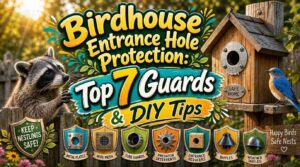
A raccoon needs less than a minute to widen a birdhouse opening enough to reach inside. That’s not a worst-case scenario—it’s a routine problem for backyard birders who skip entrance hole protection. Research shows nest success climbs 6.7% when guards are in place, a meaningful difference when you’re trying to support bluebirds or chickadees through a full breeding season.
The right guard does more than block predators; it keeps invasive starlings out and preserves the precise hole size each species needs to thrive.
Seven proven options and a handful of DIY solutions can help you choose what works for your setup.
Table Of Contents
- Key Takeaways
- Why Entrance Hole Protection Matters
- Top 7 Birdhouse Entrance Protectors
- Choose The Right Hole Size
- Compare Guard Materials
- Match Guards to Predator Risks
- Install Entrance Guards Safely
- Maintain Long-Lasting Nest Protection
- DIY Entrance Protection Tips
- Frequently Asked Questions (FAQs)
- What is a predator guard for a birdhouse hole?
- Should a birdhouse have a hole in the bottom?
- What are the common mistakes when building a birdhouse?
- Can entrance guards affect bird nesting behavior?
- Do guards work on hanging versus mounted birdhouses?
- How do guards perform in extreme cold climates?
- Are entrance guards safe for baby birds leaving?
- Can guards be painted or stained for aesthetics?
- Conclusion
Key Takeaways
- Adding a metal or copper entrance guard to your birdhouse can boost nest success by nearly 7%, giving native birds like bluebirds and chickadees a real fighting chance each breeding season.
- Hole size is everything — a 1.5-inch opening keeps bluebirds in and starlings out, while smaller species like wrens and chickadees need even tighter fits to stay safe.
- The best guard for your setup depends on your local threats: metal plates stop squirrels and raccoons, tunnel sleeves block reaching paws, and crescent guards deflect starlings right at the rim.
- Even the best guard fails without upkeep — check yours twice a year, tighten loose screws after storms, and replace any bent, chewed, or corroded parts before nesting season begins.
Why Entrance Hole Protection Matters
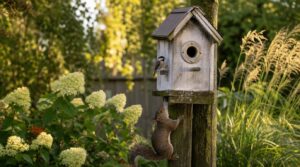
A birdhouse without entrance protection is like leaving your front door wide open. Squirrels chew holes wider, raccoons reach inside, and invasive birds push out the families you worked to attract.
Even birdhouses with extra-large entry holes need proper protection, since bigger openings only roll out a wider welcome mat for snakes and raccoons.
Here’s what actually works to stop that from happening.
Preventing Predators From Enlarging Birdhouse Holes
Squirrels and raccoons exhibit persistent predator behavior—once they target a birdhouse, they rapidly escalate efforts to breach it. They chew and claw at entrances until the openings are wide enough to raid. Metal predator guard plates and wire mesh or cage-style protectors serve as critical chewing deterrents, halting damage effectively.
Monitoring guard placement each season is essential, as effectiveness monitoring identifies vulnerabilities before they escalate into serious issues. Research confirms the impact of these measures, demonstrating a 6.7% increase in nest success when predator guards are deployed.
Protecting Eggs, Nestlings, and Adult Birds
A strong entrance guard does more than stop chewers — it keeps eggs, nestlings, and adult birds safe during every stage of nesting. Parent birds rely on nest protection to maintain their parental guard shifts without constant stress. Camouflage techniques, natural deterrents, and a stable nest microclimate all support their efforts.
Even egg relocation strategies become unnecessary when the entrance is properly secured from the start.
Reducing Damage From Squirrels, Raccoons, Cats, and Larger Birds
Once eggs are safe inside, the next threat comes from outside. Predator behavior doesn’t take breaks — squirrels chew, raccoons pry, cats wait, and larger birds bully their way in. Here’s what’s at stake:
- Squirrels can enlarge openings in a single season
- Raccoon paws reach deep through unprotected holes
- Cats patrol at dawn, when parents leave briefly
- Starlings evict smaller birds mid-nesting
- Seasonal activity spikes during spring nesting peaks
Smart guard placement height and predator deterrent features make all the difference.
Helping Native Cavity-nesting Birds Nest Successfully
Native cavity-nesting birds already face shrinking habitat. When you add smart Habitat Landscaping and Microclimate Management — like morning sun exposure and nearby shrubs — nest success rates climb noticeably.
Combining these with Seasonal Timing (put up boxes two to four weeks before breeding) and species-specific entry guard designs gives bluebirds, chickadees, and wrens a real fighting chance at raising a family.
Preventing Invasive Birds From Taking Over Nests
Invasive birds like European starlings are relentless opportunists — they’ll claim any nest box with a hole larger than 1.5 inches. Preventing invasive birds from taking over nests means being intentional about everything: habitat manipulation, nest box placement, and seasonal timing for installation. Species-specific entry guard designs make the biggest difference:
- Block starlings with 1.5-inch or smaller guards
- Support invasive bird control through community monitoring programs
- Use selective feeding to discourage aggressive species nearby
- Try DIY birdhouse entry protector projects for custom sizing
- Practice choosing the right birdhouse entry protector for each species
Top 7 Birdhouse Entrance Protectors
Not all entrance guards are built the same, and the right one depends on who’s threatening your birdhouse and which birds you’re trying to protect. There is a solid range of options out there — from copper plates to cedar blocks to wire cages — each designed with a specific job in mind.
Here are seven worth knowing about.
1. Metal Birdhouse Predator Guard
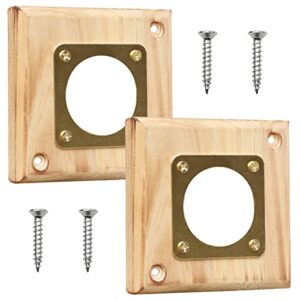
Think of this guard as a small shield that does a big job. It’s a metal-and-wood combo — a 3.5 × 3.5-inch wood panel backed by a 2 × 2-inch metal frame — built to stop squirrels, raccoons, and larger birds from widening your birdhouse opening.
The reinforced 1.5-inch entrance stays exactly that size, keeping Eastern Bluebirds and purple martins safe inside.
You get two guards per set, plus 12 screws, making installation straightforward even for beginners.
| Best For | Bird lovers and backyard hobbyists who want to protect cavity-nesting birds like Eastern Bluebirds and purple martins from squirrels, raccoons, and larger predatory birds. |
|---|---|
| Entry Hole Size | 1.5 in |
| Material | Metal and wood |
| Quantity Per Pack | 2 guards |
| Screws Included | 12 screws |
| Predator Protection | Squirrels, raccoons, crows |
| Target Bird Species | Bluebirds, purple martins |
| Additional Features |
|
- Comes as a set of two, so you can protect more than one birdhouse right out of the box.
- Metal-and-wood build feels solid and holds up well against persistent chewers like squirrels.
- Screws included and holes pre-drilled — setup is quick even if you’re not handy.
- Only works with 1.5-inch openings, so it won’t fit every birdhouse you might own.
- Smaller birds like house sparrows can still slip through the protected hole.
- Screw holes need to line up just right — a sloppy install can leave gaps that defeat the purpose.
2. Natures Way Cedar Bluebird House

The Nature’s Way Cedar Bluebird House offers protection built right into its design. Crafted from rot-resistant cedar, it features a built-in predator guard that extends the entrance hole, eliminating the need for separate hardware. The 1.5-inch opening ensures bluebirds can enter while blocking larger intruders.
For nest health management, the house includes ventilation vents, a mesh floor, and a clean-out door, making maintenance straightforward. These features prioritize airflow and hygiene without compromising safety.
Measuring 8.13 × 5.5 × 12 inches, the house fits standard pole or wall mounts comfortably, ensuring versatile installation options for bird enthusiasts.
| Best For | Backyard bird enthusiasts who want a durable, low-maintenance nesting option that actually keeps bluebirds safe and healthy season after season. |
|---|---|
| Entry Hole Size | Extended entrance |
| Material | Cedar and stainless steel |
| Quantity Per Pack | 1 birdhouse |
| Screws Included | None included |
| Predator Protection | Squirrels, house sparrows |
| Target Bird Species | Bluebirds, songbirds |
| Additional Features |
|
- Built from rot-resistant cedar with stainless-steel hardware, so it holds up through rain, heat, and years of use without rusting or warping.
- The predator guard, ventilation vents, and mesh floor work together to keep nests healthier and chicks safer with minimal effort on your end.
- Easy to clean out between seasons thanks to the front clean-out door — no tools, no hassle.
- Doesn’t come with any mounting hardware, so you’ll need to drill your own holes and source brackets or a pole separately.
- The mesh floor can arrive with a tacky coating that needs a good rinse before you put it up.
- It costs more than your average plastic birdhouse, and there’s no guarantee squirrels or house sparrows won’t try to move in first.
3. Hotop Copper Metal Birdhouse Guard
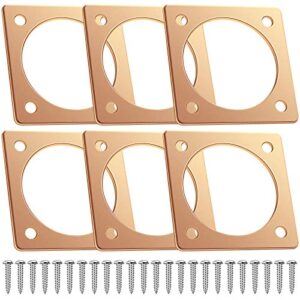
The Hotop Copper Metal Birdhouse Guard offers lasting protection with a polished look. Each pack includes six guards and 24 stainless-steel screws—enough to outfit multiple houses at once. The 1.5-inch opening is specifically designed to fit bluebird houses perfectly, ensuring compatibility with standard nesting boxes.
Constructed from a thick copper-alloy plate, the guard effectively resists squirrel chewing without harming visiting birds. Its durable material provides long-term defense against pests while maintaining a safe environment for wildlife.
Safety is prioritized with rounded edges that keep adults and fledglings safe from sharp protrusions. Over time, the copper finish naturally develops a patina, blending seamlessly into garden settings for an aesthetically pleasing, weathered appearance.
| Best For | Bird enthusiasts who want to protect multiple standard birdhouses from squirrels and woodpeckers while keeping things looking good in the garden. |
|---|---|
| Entry Hole Size | 1.5 in |
| Material | Rust-proof alloy metal |
| Quantity Per Pack | 6 guards |
| Screws Included | 24 screws |
| Predator Protection | Squirrels, woodpeckers |
| Target Bird Species | Cavity-nesting birds |
| Additional Features |
|
- Comes with six guards and 24 screws, so you can protect several houses in one shot
- Rounded edges are safe for birds brushing in and out, including young fledglings
- The copper-tone finish looks natural and blends nicely into outdoor spaces
- Only works with a 1.5-inch entrance hole — no flexibility for other birdhouse sizes
- It’s not solid copper, so long-term weather resistance isn’t guaranteed
- The included screws can be tricky with certain birdhouse materials and may need swapping out
4. Birdhouse Predator Guard Sleeve
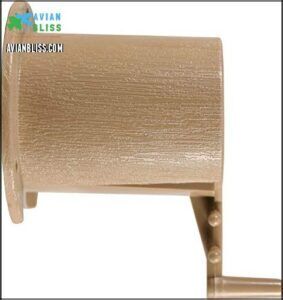
The Birdhouse Predator Guard Sleeve takes a different approach — instead of a flat plate, it wraps around and extends the entrance like a short tunnel. That extra depth makes it much harder for a raccoon paw or cat claw to reach inside.
It fits entry holes between 1 and 1.5 inches, so it works with most standard songbird houses. The beige plastic blends in naturally, ensuring the guard doesn’t disrupt the birdhouse’s appearance.
The small built-in ladder helps birds climb in and out with ease. At $12.99, it’s a simple, budget-friendly upgrade for protecting nesting birds.
| Best For | Bird lovers who want an affordable, easy-to-install way to protect small songbirds like sparrows, chickadees, and titmice from raccoons, cats, and other predators. |
|---|---|
| Entry Hole Size | 1–1.5 in |
| Material | Injection-molded plastic |
| Quantity Per Pack | 1 guard |
| Screws Included | Screw-on attachment |
| Predator Protection | Hawks, raccoons, cats |
| Target Bird Species | Sparrows, chickadees |
| Additional Features |
|
- The tunnel-style design makes it nearly impossible for predators to reach inside — way more effective than a flat plate
- Screws on in minutes and blends right in thanks to the beige coloring
- The little built-in ladder is a thoughtful touch that makes entry easier for small birds
- Some birds, like bluebirds, may actually avoid the box after installation because the extended entrance throws them off
- Only works with entry holes between 1 and 1.5 inches, so it won’t fit every birdhouse
- At $12.99 per unit, outfitting a whole yard full of birdhouses adds up fast
5. Derkerry Bluebird House Entrance Guard
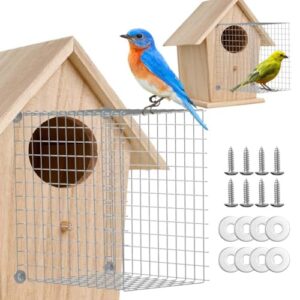
The Derkerry Bluebird House Entrance Guard is built around one simple idea — to keep bluebirds in and predators out. It extends about 0.75 to 1.0 inches beyond the original hole, creating a shield that stops raccoons and squirrels from gaining leverage around the opening. The conical profile concentrates protection right at the rim where it matters most.
Installation is straightforward, requiring only a small screwdriver. Metal versions hold up for 5 to 7 years, making it a solid long-term investment.
| Best For | Backyard birders who want reliable, long-term protection for their bluebird houses without a complicated setup. |
|---|---|
| Entry Hole Size | 0.53 in mesh opening |
| Material | Galvanized steel mesh |
| Quantity Per Pack | 2 guards |
| Screws Included | 8 screws |
| Predator Protection | Squirrels, raccoons, hawks |
| Target Bird Species | Bluebirds, cavity-nesters |
| Additional Features |
|
- Hot-dip galvanized steel means it can handle years of outdoor exposure without rusting out on you.
- Blocks the usual suspects — raccoons, squirrels, hawks — right at the entrance where they’d cause the most damage.
- Comes with two guards per kit, so you can protect more than one box without ordering twice.
- You’ll need to unscrew the whole guard just to clean out the birdhouse, which gets old fast.
- Some users found it doesn’t do much against aggressive species like English sparrows or starlings.
- A few people received kits with missing washers, so it’s worth doing a parts count before you start installing.
6. Stainless Steel Birdhouse Entrance Protector
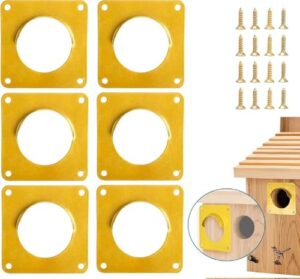
If you want something that quietly gets the job done season after season, this guard is worth a close look. Each stainless steel plate measures about 3.5 by 3.5 inches and holds a clean 1.5-inch opening—just right for bluebirds. You get two guards and 24 screws in one pack.
The flush-mount design protects the wood from chewing without snagging birds on entry.
Corrosion-resistant steel means you won’t be replacing it after the first hard winter.
| Best For | Bird lovers who want to protect bluebird houses from squirrels and larger birds without replacing their existing setup. |
|---|---|
| Entry Hole Size | 1.5 in |
| Material | Stainless steel |
| Quantity Per Pack | 2 guards |
| Screws Included | 24 screws |
| Predator Protection | Squirrels, larger birds |
| Target Bird Species | Bluebirds |
| Additional Features |
|
- Comes as a two-piece set with 24 screws—everything you need, no extra hardware runs
- Stainless steel holds up through rain, snow, and sun without rusting out
- The 1.5-inch opening is a perfect fit for bluebirds while keeping bigger intruders out
- The gold finish can look uneven—some pieces are only colored on the front
- The fixed 1.5-inch hole won’t work for species that need a different entrance size
- You’ll need to align and drill screw holes carefully, so it’s not a totally tool-free install
7. AQKILO Aluminum Birdhouse Predator Guard
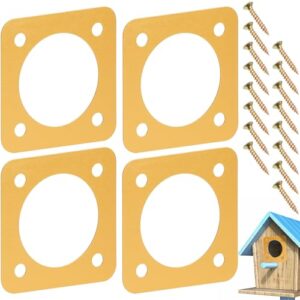
For a lightweight option that won’t let you down, the AQKILO aluminum guard is a smart pick. Each 2×2-inch plate fits a 1⅜-inch opening — sized just right for chickadees, wrens, and bluebirds. You get four plates and 16 screws for under five dollars.
The smooth edges won’t nick birds on entry, and the aluminum holds up through rain and sun without rusting.
One heads-up: the pre-drilled holes are a bit large, so grab some washers before you start.
| Best For | Bird lovers and conservation volunteers who want a simple, affordable way to protect small-bird nesting boxes like bluebird, wren, or chickadee houses. |
|---|---|
| Entry Hole Size | 1.375 in |
| Material | Aluminum alloy |
| Quantity Per Pack | 4 guards |
| Screws Included | 16 wood screws |
| Predator Protection | Predators, nest damage |
| Target Bird Species | Bluebirds, wrens, chickadees |
| Additional Features |
|
- Four plates for under five bucks — hard to beat the value
- Aluminum holds up in all weather without rusting or corroding
- Smooth edges keep birds safe as they come and go
- Pre-drilled holes are oversized, so you’ll likely need washers and different screws
- Only works with 1⅜-inch entry holes — won’t fit larger birdhouses
- No tools included, so have a drill ready before you start
Choose The Right Hole Size
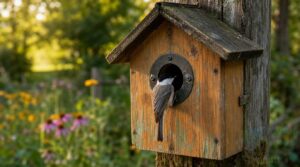
Getting the hole size right isn’t just a detail — it’s the whole game. The wrong diameter can let in predators, unwanted birds, or leave your target species with nowhere safe to nest.
Here’s how to match your guard to the bird you’re trying to protect.
Matching Guards to Existing Birdhouse Openings
Before you buy anything, measure your existing entrance hole — ideally with calipers for precision. Even a small gap matters. This ensures accurate sizing for the guard.
Guard sizing tolerance is tight, so use compatibility charts to match your box’s hole size guidelines with the right entry guard sizing. Proper alignment prevents installation issues.
Overlap clearance guidelines guarantee the guard seats flush without blocking access. Adhering to these specifications ensures seamless integration.
Adjusting guard depth and confirming size compatibility protects your target species without locking them out. This balance safeguards wildlife while maintaining functionality.
1.5. inch Openings for Eastern Bluebirds
Eastern Bluebirds require a 1 ½ inch opening—no bigger, no smaller. This precise specification ensures proper Entrance Depth Ratio, Floor Clearance, and Box Height Alignment, while maintaining Ventilation Balance and Thermal Regulation inside the nesting box. Adhering to these guidelines also enhances predator deterrence by effectively excluding starlings.
Look for guards matching these critical specifications:
- 1.5-inch inner diameter
- Flush-mount design
- Weather-resistant metal construction
1.0. inch Openings for House Wrens
House Wrens require exactly 1.0 inches—the optimal species-specific hole size. A clean hole edge finish ensures smooth wren entry behavior and prevents injuries.
Be mindful of seasonal expansion in wood, as it can alter hole guard sizing over time.
Size-specific hole protectors for wrens support temperature regulation and ventilation, making them essential year-round.
1⅛-inch Openings for Black-capped Chickadees
Black-capped chickadees need exactly 1⅛ inches — no more, no less. This species-specific entry guard design does three important things at once:
- Humidity Regulation keeps the nest microclimate stable by limiting air exchange
- Predator Size Limits block squirrels needing at least 1.5 inches to squeeze through
- Competition Dynamics discourage starlings and blue jays, protecting chickadee species preference
Size-specific hole protectors for chickadees make a real difference.
Why Holes Larger Than 1.5 Inches Invite Starlings
Once a hole exceeds 1.5 inches, starlings get a real starling entry advantage — and they don’t waste it. Larger cavity appeal draws these aggressive birds quickly, triggering competitive displacement of bluebirds and chickadees.
Their aggressive nest takeover behaviors improve starling breeding success while pushing native species out. Preventing invasive birds from taking over nests starts with species-specific hole size.
Invasive bird control really is that simple.
Using Commercial 1.375-inch and 1.5-inch Guard Sizes
Choosing the right entrance hole guards for birdhouses begins with selecting species-specific sizes, as compatibility depends on matching common dimensions. Two standard sizes dominate for critical safety and fit:
- 1.375-inch openings protect chickadees and wrens from larger intruders
- 1.5-inch openings give bluebirds safe entry while blocking starlings
- Both sizes guarantee fit verification before purchase to prevent costly mismatches
These dimensions ensure protectors align with birdhouse requirements, prioritizing both safety and accessibility for target species.
Compare Guard Materials
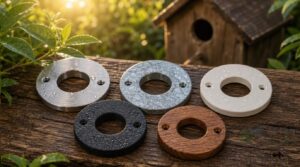
Not all guard materials are built the same, and picking the wrong one can leave your birds vulnerable.
The material you choose depends on your local predators, your climate, and how much upkeep you’re willing to do.
Here’s how the most common options stack up.
Stainless Steel for Rust Resistance and Durability
Stainless steel guards are built to last. A thin chromium oxide film forms on the surface, acting like invisible armor against rain and humidity. This passivation layer even self-heals after minor scratches.
Austenitic alloy strength keeps guards rigid season after season, while molybdenum enhancement and an electropolished finish add extra bite.
For rust-resistant stainless steel guards, their durability is simply unequaled.
Aluminum for Lightweight Weather Protection
Aluminum guard plates punch well above their weight — literally. Each one weighs under half an ounce, yet holds up remarkably well against rain, humidity, and UV exposure.
That self-healing oxide layer means minor scratches don’t compromise the protection. It’s a smart pick for DIY birdhouse entry protector projects where lightweight framing matters.
- Anodized finish resists corrosion for years
- Reflective coating reduces heat buildup inside the box
- Thermal dissipation keeps nestlings cooler in summer
- Weather-resistant and easy to handle during installation
Copper for Strong Bite Resistance
Copper takes protection up a notch. Where aluminum withstands weather, copper hardness resists teeth. Squirrels and raccoons that gnaw at wooden entries meet real resistance with a copper opening protector.
Its self-healing patina fills minor scratches over time, keeping the surface intact. This low wear means fewer replacements.
For UV and bite resistance combined, copper’s alloy bite resistance and wear-resistant coating deliver lasting metal guard durability.
Cedar Blocks for Natural Entrance Depth
Cedar brings something metals can’t — warmth and natural depth.
A wooden entrance hole reducer adds up to 0.75 inches of depth adjustment without enlarging the hole.
Eastern red cedar’s tight grain selection resists warping, while its aromatic benefits actually deter predators from recognizing the cavity.
For DIY birdhouse projects, it’s a smart, sustainable cedar choice with simple longevity maintenance.
Polymer Guards for Waterproof Protection
If cedar feels like a warm hug, polymer guards are the reliable raincoat.
These weatherproof, eco-friendly materials stay watertight through freeze-thaw cycles down to -20°C and resist UV breakdown for up to a decade, thanks to UV Stabilization additives.
The Low VOC Formulation ensures fumes remain safe for nesting birds, prioritizing environmental health.
Some even feature Self-Healing Coating technology, which automatically reseals minor scratches—delivering quiet, effective storm resistance.
Choosing Metal Versus Wood for Predator Pressure
When predator pressure is high, metal birdhouse guards win on almost every front. They hold up against biting, clawing, and moisture without warping or rotting.
Wooden entrance hole reducers are gentler on the budget upfront, but they demand more maintenance and wear down faster.
Think about your local threats first — then choose accordingly.
Match Guards to Predator Risks
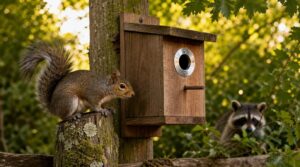
Not every predator calls for the same defense. The threat in your backyard — whether it’s a squirrel gnawing at the entrance or a raccoon fishing around inside — should guide the type of guard you choose.
Here’s how to match the right protection to the right problem.
Metal Plates for Squirrels and Raccoons
A sturdy metal birdhouse guard is one of the most effective squirrel deterrent devices you can add to any nest box. Squirrels and raccoons gnaw at wood relentlessly — but metal stops them cold.
- Thickness Selection: Choose plates 0.06–0.125 inches thick for anti‑bending reinforcement against raccoon pressure
- Flange Design: A lip around the hole removes claw grip points
- Fastener Materials: Use rust‑resistant stainless‑steel screws following proper installation guidelines
- Moisture Sealing: Seal plate edges to block water ingress
- Flush Fit: Mount plates flush to eliminate leverage spots
Tunnel-style Sleeves for Deeper Protection
When a metal plate is not enough, tunnel-style entry extensions take protecting nest boxes from predators a step further. These sleeves stretch 2–4 centimeters beyond the opening, disrupting a raccoon’s reach and leverage. Sleeve Length Optimization matters here — longer tunnels mean reduced access.
Material Coating Advances in stainless steel and aluminum resist chewing and weathering. This ensures durability against both animal interference and environmental conditions.
Ventilation Integration and Custom Fit Adjustments maintain healthy airflow for nesting birds while ensuring the extensions adapt securely to various nest box designs.
Crescent Guards for Starling Exclusion
Starlings are relentless nest thieves — and that’s exactly where starling‑resistant crescent entrance plates earn their keep. Their Curved Shield Design deflects a starling’s beak away from the opening, using Beak‑Size Restriction to block forced entry while letting bluebirds pass freely. Many feature Drill‑Free Mounting, so installation stays simple.
- Block starling leverage at the rim
- Fit species‑specific entry guard designs for 1.25–1.5 in openings
- Copper versions develop natural Patina Development for lasting durability
- Support Seasonal Performance Checks without tools
- Strengthen overall protection when protecting nest boxes from predators
Wooden Blocks for Cats and Larger Birds
Cats and larger birds can reach right into a shallow entrance. A cedar block guard doubles the depth to 1.5–2.25 inches — long enough to prevent a paw or beak from reaching the nest.
| Feature | Why It Matters |
|---|---|
| Size customization | Fits any birdhouse entrance |
| Chew-resistant designs | Withstands persistent cats |
| Safety finish standards | Non-toxic for nesting birds |
| Multi-texture surfaces | Discourages climbing grip |
| Interactive enrichment | Keeps cavity feel natural |
Cedar is your best pick for wooden birdhouses needing reliable predator exclusion.
Noel Wire Guards for Raccoon and Cat Paws
Raccoon paws are surprisingly nimble — they can reach several inches into a nest box opening. Noel wire guards shine as a predator deterrent, offering a solution through their wire mesh or cage-style protectors that surround the entrance hole. This design effectively blocks paw access without restricting your birds.
Monitor for long-term corrosion and clear any snow and ice accumulation regularly to maintain the guards’ efficacy throughout the season. This ensures paw blockage remains strong in all weather conditions.
Combining Entrance Guards With Pole Baffles
Think of entrance guards and pole baffles as a team — one blocks the hole, the other stops climbers before they even get close. Together, they create a continuous protective barrier that leaves almost no access path open.
Entrance guards block the hole; pole baffles stop climbers cold — together, nothing gets through
- Match Guard‑Baffle Alignment so the guard sits flush, eliminating wind-induced gaps
- Use compatible fasteners to achieve fastener corrosion prevention at metal baffles
- Confirm pole stability before completing entry guard installation
- Apply material compatibility between wood and metal for DIY installation of birdhouse protectors
- Layer both as predator deterrent strategies for bluebirds using installation methods for hole guard plates
Install Entrance Guards Safely
Installing an entrance guard the right way makes all the difference between a secure nest and one that’s still vulnerable. A few simple steps — done in the right order — keep both the birds and the birdhouse safe.
Here’s what to do before you drive in that first screw.
Removing Damaged Wood Around The Opening
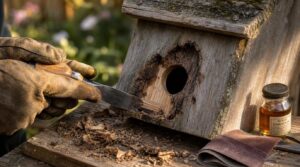
Before fitting any guard, assess wood integrity around the opening. Remove rotten sections using a sharp chisel — cut back until solid wood sounds firm when tapped. Apply wood hardener to exposed fibers, then complete your surface preparation with 120-grit sandpaper.
For wooden birdhouses with irregular damage, create a replacement template first. This ensures precise alignment for repairs.
This step-by-step installation approach gives your guard a clean, secure foundation.
Aligning The Guard Flush With The Hole
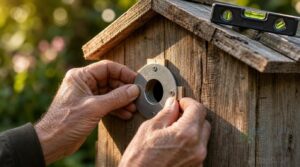
With your surface prepped, now comes the alignment step — and it matters more than you’d think.
Press the guard flat against the opening using pressure seating, checking level verification all the way around the rim. Seal integrity keeps gaps closed.
- Guards include a tolerance allowance for wood expansion
- Use shim placement to correct minor unevenness
- Confirm protective depth matches your hole guard sizing
Sanding Sharp or Rough Edges

Once the guard sits flush, run your finger around the edge. Feel anything sharp? Sand it down before a bird does.
Follow this grit progression:
| Grit | Purpose |
|---|---|
| 120 | Remove burrs fast |
| 150 | Smooth serrations |
| 180–220 | Bird-friendly finish |
| Wipe between passes | Dust removal prevents scratches |
A 1mm edge radius, non-metal abrasives for plastic rings, and a post-sanding seal keep your DIY modification safe for adult birds long-term.
Drilling Pilot Holes to Prevent Splitting
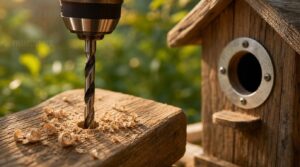
Smooth edges protect birds — but a cracked birdhouse hurts them just as much.
Before driving any screw, drill a pilot hole first. Match the pilot hole to your screw diameter: about 60% in softwood, 70% in hardwood.
Keep the edge distance at least one inch from the rim. Sharp bits matter — dull ones split wood instead of cutting it.
Securing Metal Guards With Corner Screws
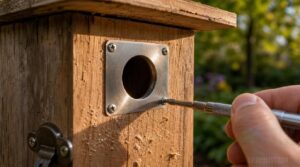
Once your pilot holes are ready, lock the metal birdhouse guard in place using four corner screws. Follow a simple Corner Screw Sequencing pattern — opposite corners first — to pull the guard flush evenly.
Use Torque-Limited Drilling to avoid bending the plate. For Anti-Galvanic Pairing, match rust-resistant metal screws to your guard material.
Countersink each screw head flush so nothing snags a bird entering or leaving.
Using Washers for Wire Cage Guards
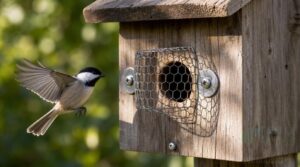
Attaching a wire cage guard takes a little more thought than snapping on a flat plate. Washers are your best friend here — they handle Washer Load Distribution, keeping screws from tearing through wood.
- Choose stainless or copper washers for Material Compatibility Choices and Corrosion-Resistant Coatings
- Apply Dual-Side Washer Mounting — one washer per side — for balanced pressure
- Stack washers for Spacer Thickness Tuning to keep the cage-like guard perfectly centered
Wire mesh or cage-style protectors stay firmly anchored this way, even after a raccoon’s determined investigation.
Checking Screw Heads for Bird Safety
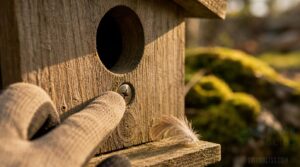
Once the guard is secured, take a close look at every screw head. Rounded head inspection matters more than most people realize — a burr or raised edge can snag feathers or injure nestlings. Run your finger across each head. Feel any roughness? That’s your cue for burr removal techniques: a quick file or fine sandpaper smooths it out.
Stainless steel heads resist corrosion best, but still incorporate building a corrosion detection routine into your twice-yearly checks. Even durable materials need monitoring to ensure longevity and safety.
Proper torque settings matter too — tight enough to hold, never so tight the head mushrooms. Over-tightening risks damaging the screw or surrounding material, compromising structural integrity.
Head type suitability tips toward countersunk styles; they sit flush and stay out of a bird’s way. This design minimizes interference with nesting activities while maintaining a secure fit.
Maintain Long-Lasting Nest Protection
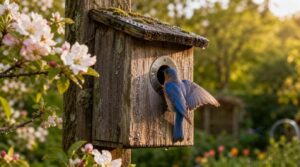
Once your guards are installed, the real work is keeping them effective season after season. A little routine attention goes a long way toward protecting the birds that depend on your birdhouse.
Here’s what to stay on top of throughout the year.
Inspecting Guards Twice Yearly
Think of your birdhouse entrance guard like a seatbelt — it only works if it’s in good shape.
Twice a year, run a full seasonal wear assessment: inspect for wear and rust, measure any gaps around the opening, and verify fastener torque so screws aren’t loose or over-tightened.
Track corrosion carefully, and log each visit for solid inspection record keeping.
Consistent maintenance tips like these keep your birds safe season after season.
Checking Guards After Storms
A big storm can undo weeks of careful prep in minutes. Right after the weather clears, walk out and do a quick post‑storm photo log — snap before-and-after shots to track damage over time.
Check for:
- Detect impact cracks along the entrance rim
- Evaluate corrosion spots on metal surfaces
- Check for water pooling behind the guard
- Review bracket stability for wind-loosened screws
- Clear debris blocking the opening
Your seasonal maintenance depends on catching these issues early.
Tightening Loose Screws and Fasteners
A loose screw is a quiet threat — one you won’t notice until a predator does. After any storm check, run a firm finger around every fastener. Use cross-pattern tightening to spread the preload evenly across the guard plate.
| Task | Tool | Why It Matters |
|---|---|---|
| Thread inspection | Screwdriver | Catches early wear |
| Screw fastening | Drill (low torque) | Prevents splitting |
| Lubrication strategies | Applicator brush | Reduces corrosion friction |
Replacing Bent, Chewed, or Corroded Parts
Once screws are secure, look at the bigger picture. Bent metal guards need straightening—or better yet, swap them out for rust-resistant stainless steel that withstands weather and rust season after season.
Chewed wood edges? Remove the damage, then seal fresh cedar with non-toxic outdoor sealant. Replace corroded fasteners with corrosion-resistant hardware immediately.
Small fixes now protect every nestling inside.
Clearing Debris Behind The Guard
Debris sneaks behind guards more than most people expect. Leaves, pine needles, and fine dust pack into hidden gaps, quietly undermining ventilation maintenance efforts. Regular debris identification is key to maintaining system efficiency.
For seasonal inspections, use these simple cleaning tools:
- Narrow flexible brush to dislodge packed material
- Small hand vacuum for fine dust and particles
- Soft-bristle tool to avoid scratching metal guards
- Damp cloth for moisture control around guard edges
Preventing Airflow Problems and Condensation
Good debris removal opens the door to the next concern: airflow. When guards sit too tightly against the wood, ventilation channels are blocked, and moisture has nowhere to go. That’s how condensation builds up inside the nest.
Look for guards with airflow beveling and proper guard clearance. Condensation monitoring twice yearly keeps humidity from quietly harming your nesting birds.
Knowing When Wooden Guards Need Replacement
Wooden guards don’t last forever — and staying ahead of wear keeps your nesting birds safe.
Here’s what tells you it’s time to swap one out:
- Crack length exceeds ¼ inch along any edge
- Rot spots or soft areas appear near fastener points
- Chew scars cover more than 20% of the opening edge
- Fastener corrosion causes wobbling or loosening beyond a quarter-turn
- Sun‑induced splitting leaves exposed, splintered wood fibers
DIY Entrance Protection Tips
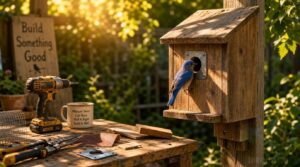
You don’t need to spend a lot to keep your birdhouse safe — a few simple materials and an hour of your time can make a real difference. Whether you’re starting from scratch or upgrading what you already have, there are solid DIY options worth knowing.
Here’s what you can do to protect that entrance hole yourself.
Making a Cedar Block Entrance Guard
Cedar is one of the best materials for outdoor projects. Its natural oil finish resists rot, and tight grain orientation prevents moisture from warping the block.
When preparing cedar, cut to a depth of 1–2 inches, drill the hole cleanly, and verify the fit before fastening. Refer to the table below for precise specifications:
For long-term durability, apply non-toxic sealants every 2–3 years as part of maintenance.
| Step | Detail |
|---|---|
| Depth measurement | 1–2 inches beyond hole edge |
| Hole sizing | Match existing entrance exactly |
| Non‑toxic sealants | Apply every 2–3 years |
| Fit verification | Test clearance before final screws |
Adding a Simple Metal Hole Plate
A metal hole plate is one of the simplest upgrades to protect nesting birds. Choose rust-resistant metal with proper edge deburring—smooth edges prevent injuries. Plate thickness also matters: thicker plates resist chewing better.
Assemble a basic tool checklist: drill, pilot bit, and corrosion-coated screws. Ensure all materials prioritize durability and safety for avian habitats.
Weight impact is minimal, so even lightweight aluminum metal hole protectors for wooden birdhouses work perfectly. This balance of strength and lightness ensures effective, long-lasting protection.
Creating Deeper Entrance Tunnels
Adding depth to your birdhouse entrance—like building a 1–3-inch extension—creates a tunnel that effectively deters raccoons and cats from reaching inside. This simple modification significantly enhances safety for nesting birds. Pairing this tunnel entrance with raccoon-proof bird feeder placement strategies gives nesting birds an even stronger layer of protection around their habitat.
Consider integrating ventilation improvements by angling the tunnel slightly. This design choice promotes airflow while blocking harsh winds, creating a more comfortable habitat.
During construction, prioritize precise sequencing: attach the extension flush to the entrance before securely fastening it. This ensures structural stability and proper alignment for optimal functionality.
Choosing Safe, Non-toxic Materials
What goes into your birdhouse matters just as much as its design. Birds are sensitive, and the wrong materials can quietly harm the very family you’re trying to protect.
Stick to these safe choices:
- FSC Certified Wood like untreated cedar or birch — natural wood with no chemical off-gassing
- Zero VOC Finishes or food-grade oils like beeswax to seal surfaces safely
- Lead-free coatings and powder-coated metals with no phthalates
- Natural fiber gaskets over synthetic adhesives for eco-friendly, nontoxic sealing
Avoiding Sharp Edges and Oversized Openings
Apply Edge Radius Standards — smooth every inner edge to at least a 2 mm curve. Run Micro Edge Checks after shaping, and use Protective Edge Coatings like a non-toxic sealant.
Respect Tolerance Limits on species-specific hole size: entry hole size compatibility matters. Gradual Diameter Tapers prevent sharp deterrents that injure birds or invite starlings.
Keeping DIY Guards Easy to Inspect
A guard you can’t easily check is a guard that will fail you. Build your DIY protector with a modular design so pieces come apart without tools. Use snap‑fit access panels, label all parts clearly, and keep a standard log sheet nearby.
Here’s your quick inspection routine:
- Shine an inspection light into the opening to spot debris or damage
- Check labelled parts in sequence to avoid missing anything
- Log findings on your standard log sheet with the date
- Tighten any loose fasteners before closing up
- Replace worn sections individually — modular design makes this simple
Frequently Asked Questions (FAQs)
What is a predator guard for a birdhouse hole?
A predator guard is a protective plate, tube, or mesh sleeve designed to fit around a birdhouse entry hole.
It blocks predators from reaching inside or enlarging the opening, safeguarding eggs and nestlings from harm.
Should a birdhouse have a hole in the bottom?
Yes, a birdhouse should have small drainage holes in the bottom.
They prevent water accumulation after rain, reduce condensation, and support humidity balance — keeping nests dry and nestlings healthy without creating harmful drafts.
What are the common mistakes when building a birdhouse?
Wrong wood, toxic paint, poor ventilation, bad mounting height, and missing predator guards top the list. Getting hole size wrong and skipping weather-resistant materials also hurt nesting success fast.
Can entrance guards affect bird nesting behavior?
Guards affect species selection, nest tunnel depth, and parental vigilance. Deeper tunnels lower chick mortality during incubation. Proper sizing facilitates nesting success without disrupting ventilation or stressing adult birds.
Do guards work on hanging versus mounted birdhouses?
Both setups work well — guard diameter differences and attachment method variance are what shift. Hanging boxes require lighter, flush-fitting rings, while mounted boxes utilize tunnel-style sleeves anchored to posts, which block predator access patterns more effectively.
How do guards perform in extreme cold climates?
Metal guards hold up well in extreme cold. Frost accumulation and snow load won’t crack rust-resistant metal, though plastic risks material brittleness below -20°C.
Regularly check for ice gaps to keep birds safe.
Are entrance guards safe for baby birds leaving?
Properly fitted entrance guards are safe for fledglings. Smooth edges prevent wing snags, and correctly sized openings maintain clear fledgling passage.
Giving baby birds full exit clearance when they’re ready to leave.
Can guards be painted or stained for aesthetics?
Yes, guards can be painted or stained. Use non-toxic finishes and UV-resistant coatings for color matching and finish longevity. Let them cure fully before birds arrive.
Conclusion
Picture a bluebird pausing at the entrance of your box, hesitating just long enough to decide it’s safe. That split-second trust took you all of 30 minutes to earn—one guard, a few screws, and a hole that fits like it was made for her.
Birdhouse entrance hole protection isn’t a minor detail; it’s the whole reason native birds return season after season.
Give them a front door worth trusting.
- https://kmwoodworking.com/collections/predator-guards/predator-guards?srsltid=AfmBOorAybv0bu1dsYl9wV5TNQmW7xjZS2_BOnx7wKLqkDj8IBEPgLJc
- https://totallyuniquelife.com/how-to-make-a-birdhouse-squirrel-proof-with-predator-guards/
- https://birdboxdiaries.boards.net/thread/224/entrance-hole-protective-covers
- https://nature-niche.com/blogs/news/got-a-fancy-bird-house-why-you-need-a-birdhouse-hole-protector?srsltid=AfmBOoofBeZhZWzUITEw8em05QGJCp0vf2hMRnpVZ6oyEIYIBIMfI46K
- https://nestwatch.org/learn/all-about-birdhouses/nest-box-placement/