
This site is supported by our readers. We may earn a commission, at no cost to you, if you purchase through links.
Something shifts the moment a kid spots a bird they can name. The random flutter at the window becomes a white-breasted nuthatch, and suddenly the backyard feels like a whole new world worth paying attention to. That recognition—matching a living creature to a page—is what pulls children into a lifelong habit of noticing.
The right bird watching field guides for kids make that moment happen faster and more often. A guide that’s too dense kills the excitement; one that’s too thin leaves kids guessing after the first dozen species. The nine guides and tools ahead cover every age, budget, and backyard.
Table Of Contents
- Key Takeaways
- Top 9 Kids Birdwatching Guides
- 1. National Audubon Society Bird Field Guide
- 2. Stokes Beginner Bird Guide Western Region
- 3. Obuby Mini 8×21 Kids Binoculars
- 4. Peterson Backyard Birds Field Guide
- 5. Identiflyer Lyric Bird Song Identifier
- 6. Backyard Bird Guide for Kids
- 7. My Awesome Kids North American Bird Field Guide
- 8. Kids Guide to Florida Birds
- 9. National Geographic Kids Bird Guide
- Choosing Age-Appropriate Bird Guides
- Kid-Friendly Identification Features
- Birdwatching Skills for Children
- Essential Tools and Activities
- Frequently Asked Questions (FAQs)
- What is the code 5 in birding?
- What is the best bird watching guide?
- What time of day are birds most active?
- How do migration patterns affect local bird sightings?
- Can birdwatching help children with sensory sensitivities?
- Which bird species are easiest for kids to spot?
- How do weather conditions impact birdwatching success?
- Conclusion
Key Takeaways
- The best kids’ bird guides match age and detail level — too much text kills excitement for young ones, while too little leaves older kids guessing about a dozen species.
- Features like color-coded tabs, QR-linked bird songs, and built-in sighting logs turn passive reading into hands-on discovery that actually sticks.
- A budget of $8–$20 covers most solid options, and pairing a good guide with kid-sized binoculars makes the whole experience click faster.
- Birdwatching quietly builds real skills — patience, observation, record-keeping, and even citizen science — without ever feeling like a lesson.
Top 9 Kids Birdwatching Guides
Finding the right guide can make all the difference between a kid who stares blankly at a bird and one who shouts "that’s a red-tailed hawk!" with total confidence.
A good starting point is this simple bird identification guide for kids, which turns total beginners into confident spotters faster than you’d expect.
These nine picks cover a range of ages, formats, and price points — so there’s something here whether your child is just starting out or already keeping a life list. Here’s what made the cut.
1. National Audubon Society Bird Field Guide
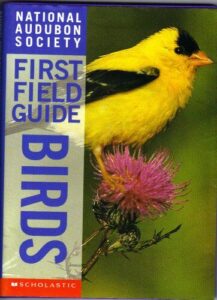
The National Audubon Society Bird Field Guide is a solid starting point for introducing kids to backyard birding. Its compact size (5.25 × 7.25 inches) and weight under nine ounces ensure it fits in a small backpack without complaint. The durable vinyl-coated cover withstands spills and rough handling effectively.
With around 50 common North American species, clear color photos, range maps, and habitat notes, the guide simplifies identification for ages 4–8 while maintaining educational integrity. This balance ensures accessibility without dumbing things down too much.
| Best For | Parents, teachers, and homeschoolers looking to get kids ages 4–8 excited about backyard birding without overwhelming them. |
|---|---|
| Species Count | ~50 species |
| Target Age | Ages 4–8 |
| Price | $18.52 |
| Color Photos | Yes |
| Portable Format | Yes |
| Geographic Focus | North America |
| Additional Features |
|
- Pocket-sized and tough — the vinyl cover handles whatever a kid’s backpack can throw at it
- Clear photos with range maps and habitat notes make identifying birds genuinely easy for young ones
- Great for classrooms or family hikes, giving kids a hands-on way to connect with nature
- Only covers about 50 species, so it falls short if you’re birding somewhere with more variety
- Published in 1998, meaning some range data and species classifications may be out of date
- Used copies might have water damage, which is a real concern for a guide meant to go outdoors
2. Stokes Beginner Bird Guide Western Region

If your child is just starting out and you’re in the West, the Stokes Beginner Bird Guide Western Region is worth every bit of its $8.27 price tag.
It covers 100 common western species, organized by plumage color so kids can flip straight to the right section without fumbling through pages. Large, full-color photos show males and females side by side, and each entry touches on voice, habitat, and feeder tips.
Compact at 4.8 oz, it slips easily into any pack.
| Best For | Kids and beginners in the Western U.S. who want a simple, visual guide for backyard birdwatching or family outings. |
|---|---|
| Species Count | 100 species |
| Target Age | All ages |
| Price | $8.27 |
| Color Photos | Yes |
| Portable Format | Yes |
| Geographic Focus | Western US |
| Additional Features |
|
- Color-tab layout makes it super fast to find a bird by what you see
- Large photos with male and female shots help with tricky IDs
- Tiny and light — easy to toss in a bag or backpack
- Only 100 species, so you’ll hit gaps pretty quickly as your interest grows
- Published in 1996, so some range maps may be out of date
- Coverage per bird is pretty thin — a sentence or two, not much more
3. Obuby Mini 8×21 Kids Binoculars
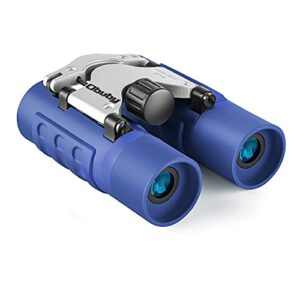
A good guide only gets you so far — you still need to actually see the bird. That’s where the Obuby Mini 8×21 Kids Binoculars earn their spot in any young birder’s kit. Built for ages 3–12, they weigh just 170 grams and fit small hands naturally, with a non-slip rubber grip and soft eye cups that won’t poke or fatigue.
BAK-4 prism optics keep images bright and clear. They come in 13 colors, too, which kids genuinely care about.
| Best For | Kids ages 3–12 who love the outdoors — budding birders, young hikers, or any child who gets excited about spotting things from a distance. |
|---|---|
| Species Count | N/A |
| Target Age | Ages 3–12 |
| Price | Not listed |
| Color Photos | N/A |
| Portable Format | Yes |
| Geographic Focus | General |
| Additional Features |
|
- BAK-4 prism optics deliver bright, color-rich images that hold up well for the price point
- Shock-absorbent rubber armor and polycarbonate body handle the inevitable drops and rough handling
- Comes in 13 colors and includes a carrying case, cleaning cloth, and storage bag — ready to gift right out of the box
- Low-light performance is modest, so dawn and dusk birding sessions will show the optical limits
- The included neck strap runs short and can get uncomfortable on longer outings
- Not waterproof or fog-proof, which limits use on rainy days or in humid conditions
4. Peterson Backyard Birds Field Guide
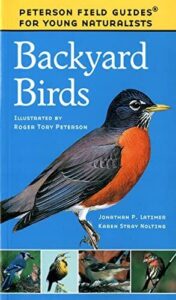
Once your kid can actually see the bird, they need to know what they’re looking at. The Peterson Backyard Birds Field Guide performs that job well.
At just $5.59 for a slim 48-page guide, it covers about 20 common backyard species using Roger Peterson’s original illustrations alongside color photos. Arrows point directly to key field marks — no guesswork needed.
It’s light, simple, and includes a sighting log in the back so kids can start tracking what they spot.
| Best For | Kids around 4 and up who are just getting into backyard bird watching and need a simple, visual guide they can actually use on their own. |
|---|---|
| Species Count | ~20 species |
| Target Age | Ages 4+ |
| Price | $5.59 |
| Color Photos | Yes |
| Portable Format | Yes |
| Geographic Focus | North America |
| Additional Features |
|
- Roger Peterson’s illustrations and arrows make identifying birds quick and intuitive — no reading required
- Lightweight and affordable at $5.59, easy to grab for a backyard session or a trip to the park
- Built-in sighting log gives kids a fun way to track and record what they spot
- Only covers about 20 species, so you’ll hit its limits pretty fast as interest grows
- No range maps or scientific names, which makes it a dead end for older kids or adults wanting more detail
- Soft-cover and slim — not really built to survive rough outdoor handling over time
5. Identiflyer Lyric Bird Song Identifier
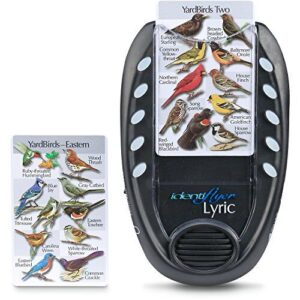
Hearing a bird before you see its half the game — and that’s exactly where the IdentiFlyer Lyric shines. This handheld device plays actual bird songs alongside clever mnemonic "lyrics" that help kids remember what each call sounds like.
Pair it with a family bird field guide and those songs quickly connect to real sightings you’ll want to log for life.
It comes with two double-sided SongCards covering 40 backyard species, plus a built-in volume knob and kickstand.
Fair warning: the headphone jack is a non-standard size, so standard earbuds won’t fit. Extra cards are sold separately.
It’s a genuinely fun audio companion for young birders.
| Best For | Kids and beginner birders who want a hands-on, audio-first way to learn bird calls in the backyard or on a trail. |
|---|---|
| Species Count | 40 species |
| Target Age | All ages |
| Price | Not listed |
| Color Photos | No |
| Portable Format | Yes |
| Geographic Focus | North America |
| Additional Features |
|
- Mnemonic "lyrics" make it genuinely easy to remember what each bird sounds like
- Comes ready to use — batteries included, 40 species right out of the box
- Great for outdoor use; playing calls can actually attract nearby birds
- Headphone jack is a non-standard size, so most modern earbuds won’t fit
- Only works with newer "lyric" cards — original IdentiFlyer cards are incompatible
- 40 species is a slim starting library, and expanding it means buying extra cards
6. Backyard Bird Guide for Kids
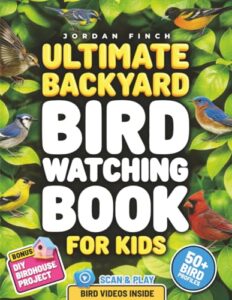
Spotting a robin or chickadee right outside your window is the perfect starting point — and this guide is built for exactly that. Published in February 2026 and co-created by parents and bird-watching experts, the Backyard Bird Guide for Kids offers an engaging entry into the world of birding.
The guide packs 50+ full-color profiles, QR-linked audio and video clips, simple range maps, and a DIY cardboard birdhouse project into just 81 pages. Priced at $16.99, it delivers an affordable, hands-on introduction to backyard birding for young enthusiasts.
| Best For | Kids and beginner birdwatchers who want a fun, affordable way to start identifying backyard birds — great as a gift for curious young nature lovers. |
|---|---|
| Species Count | 50+ species |
| Target Age | All ages |
| Price | $16.99 |
| Color Photos | Yes |
| Portable Format | Yes |
| Geographic Focus | Backyard/Local |
| Additional Features |
|
- QR codes link to real bird songs and video clips, so kids can match what they hear outside to what’s in the book
- 50 full-color profiles with visual cues make it easy to ID birds quickly, even for total beginners
- At $16.99, it’s an easy buy — and the DIY birdhouse project adds a hands-on bonus activity
- Only covers common backyard species, so it won’t help much if you spot something unusual or migratory
- QR features need internet access, which makes it less useful on remote hikes or trips without a signal
- 81 pages is pretty slim — kids who get really into birding will likely outgrow it fast
7. My Awesome Kids North American Bird Field Guide
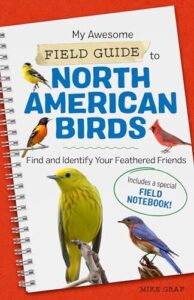
At just $7.73, My Awesome Kids North American Bird Field Guide punches well above its price. It covers 150 North American species with full-color photos, habitat-based organization, and step-by-step field marks — beak shape, wing bars, tail patterns — that help kids aged 8–12 actually tell birds apart.
The 50 blank log pages are a nice touch, giving young birders space to record dates, locations, and quick sketches.
The standard paperback binding means it won’t lie flat easily, but the content more than compensates.
| Best For | Kids ages 8–12 who are just getting into birdwatching and want a simple, affordable guide they can actually use outside. |
|---|---|
| Species Count | 150 species |
| Target Age | Ages 8–12 |
| Price | $7.73 |
| Color Photos | Yes |
| Portable Format | Yes |
| Geographic Focus | North America |
| Additional Features |
|
- Covers 150 North American species with color photos and clear ID tips that make it easy for kids to tell birds apart
- 50 blank log pages give young birders a built-in place to track sightings, dates, and locations
- At $7.73, it’s a genuinely great value for what you get
- Standard paperback binding doesn’t lie flat, which gets a little annoying when you’re trying to use it in the field
- Only 150 species — serious young birders will eventually outgrow it and want something more comprehensive
- Younger kids (under 8) may find the text and detail level a bit tough to follow
8. Kids Guide to Florida Birds
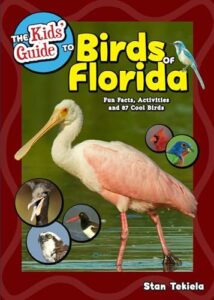
If you’re in Florida — or planning a trip there — this one’s worth grabbing. The Kids Guide to Birds of Florida covers 87 common species, organized by color with handy tabs so kids aged 5–10 can flip straight to what they spotted.
Each entry includes full-color photos, field marks, habitat notes, and a fun fact to make it stick. At $11.04, it’s a solid buy. Just know it’s Florida-only, so it won’t help much beyond state lines.
| Best For | Families with kids ages 5–10 who are exploring Florida’s wildlife through backyard birdwatching, nature trips, or homeschool nature studies. |
|---|---|
| Species Count | 87 species |
| Target Age | Ages 5–10 |
| Price | $11.04 |
| Color Photos | Yes |
| Portable Format | Yes |
| Geographic Focus | Florida |
| Additional Features |
|
- Color-coded tabs make it easy for young kids to find birds fast without any help
- 87 species with full-color photos, fun facts, and habitat notes keeps kids engaged, not just informed
- At $11.04 and pocket-sized, it’s a low-cost, grab-and-go field companion
- Only covers Florida birds, so it’s useless if you’re birdwatching anywhere else
- The introductory depth won’t hold the interest of older kids or anyone serious about birding
- No digital version, so if the book gets left at home, you’re out of luck
9. National Geographic Kids Bird Guide
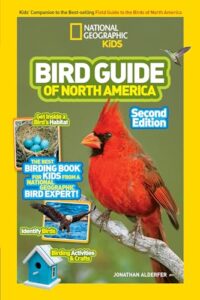
National Geographic Kids Bird Guide of North America is a great all-rounder for ages 8–10. At $10.49, it features 150 North American species—including 50 full profiles and 100 mini ones—organized by habitat. This allows kids to quickly locate birds spotted in "parks" or "fields".
Jonathan Alderfer’s photographs and illustrations simplify identification, making the process feel doable, not overwhelming. The guide’s structure and visuals prioritize clarity and engagement.
A standout feature is the inclusion of hands-on projects, like building a bird feeder, integrated directly into the content. This blend of practicality, visual appeal, and interactive elements ensures the book is actually fun to use.
| Best For | Kids ages 5–10 who are just starting to notice birds in the backyard and want a fun, easy-to-use guide they can actually enjoy on their own or with a parent. |
|---|---|
| Species Count | 150 species |
| Target Age | Ages 5–10 |
| Price | $10.49 |
| Color Photos | Yes |
| Portable Format | Yes |
| Geographic Focus | North America |
| Additional Features |
|
- Covers 150 North American species organized by habitat, so kids can flip straight to "parks" or "fields" and find what they just spotted
- Jonathan Alderfer’s photos and illustrations make ID feel simple and approachable, not like homework
- Hands-on projects like building a bird feeder keep things interactive and get kids outside
- Coverage skews heavily toward common U.S. species, so kids in Canada or less-populated regions may come up empty on local birds
- Only 50 species get full profiles — the other 100 are quick mini-entries, so detail runs thin fast
- It’s a kids’ book, not a field guide, so serious young birders will outgrow it pretty quickly
Choosing Age-Appropriate Bird Guides

Not every bird guide works for every kid — a toddler and a ten-year-old need completely different things from the same book.
The right match depends on age, attention span, and how much detail actually helps versus overwhelms.
What to look for at each stage.
Best Field Guide Features for Toddlers and Preschoolers
For toddlers and preschoolers, the best picture guides prioritize wonderfully simple design. Look for bright cover art, large icons beside species names, and color-coded sections that enable tiny hands to flip straight to a match. These features ensure effortless navigation and immediate engagement, requiring no reading.
Durability is key for little explorers: durable pages withstand sticky fingers, while spiral binding allows the guide to stay flat outdoors. Interactive elements like QR code audio bring bird songs to life instantly. Including regional range maps helps children visualize where each species thrives, fostering a deeper connection to nature.
Simple Bird Identification Books for Ages 4–8
Once kids hit age 4, they’re ready for a little more than just pictures. Simple identification keys, large print fonts, and storytelling illustrations make beginner guides for elementary students feel like an adventure rather than homework.
Look for children’s bird guides with spiral binding design and durable cover materials — they survive real outdoor use.
Interactive QR codes that play bird calls are a great bonus.
More Detailed Bird Guides for Ages 9–12
By ages 9 to 12, young birders are ready for the real thing. Guides like The Young Birder’s Guide to North America and the National Geographic Kids Bird Guide of North America cover 200–300 species with seasonal plumage charts, detailed range maps, and behavioral notes that actually explain why birds do what they do.
- Scientific name guides introduce early taxonomy without overwhelming
- Glossary highlights define tricky terms right on the page
- Detailed field marks sharpen identification skills fast
- Selecting appropriate bird field guides for kids at this age means prioritizing features of kid-friendly bird identification books — clear photos, range maps, and habitat context
Picture-heavy Versus Text-heavy Guide Formats
Picture-heavy guides excel in recognition speed — your child spots a robin, flips to the red-chested page, done. Text-heavy formats carry more cognitive load but build real identification skills over time.
Color-coded guides also help with multilingual accessibility, as visuals cross language barriers easily. For most young birders, a mixed format balances visual identification with just enough detail to make it stick.
Pocket-size Guides for Outdoor Birdwatching Trips
Once you’ve settled on the right format, portability becomes the next puzzle. A pocket field guide built with waterproof materials, UV-resistant ink, and spiral binding stays readable through sun, rain, and muddy hands. Pocket sleeve protection keeps pages crisp between outings, while one-handed use and size standardization make kid-friendly bird guides genuinely easy to carry.
Look for these five features in durable outdoor guide designs with portable designs:
- Waterproof or laminated pages
- Spiral or lay-flat binding
- Compact size around 4–5 inches tall
- Sunlight-resistant ink
- Built-in pocket sleeve or protective cover
Budget Considerations for Children’s Bird Guides
Most children’s bird guides land between $8 and $20, making budget birdwatching gear genuinely accessible.
Retail price ranges vary by content scope: local or state guides typically cost $10–$15, while comprehensive North American editions exceed $20.
Library acquisition costs reduce expenses to nearly nothing, and seasonal promotions at big-box stores can shave off an additional 20–30%.
Cost-effective features like laminated covers further maximize value for money.
Kid-Friendly Identification Features
A good field guide does more than list birds — it’s designed so kids can actually find what they’re looking for without getting frustrated.
The best ones use smart features that match how children naturally think and explore.
Here’s what to look for when you’re picking a guide your kid will actually use.
Color-coded Bird Organization for Faster Spotting
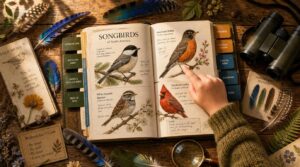
Think of a color-coded guide as a cheat code for bird spotting sessions. Quick-scan color blocks point your kid straight to the right habitat group — green for forest birds, blue for shoreline species.
Color intensity scales show how bold a field mark actually looks outdoors.
A solid color legend design keeps color-coded sections consistent, so the whole system clicks fast.
Photos Versus Illustrations for Young Birders
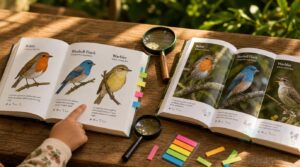
Both formats have real strengths, so the choice often comes down to age. Illustrations use standardized poses and visual consistency to highlight key features — perfect for early learning progression.
Photo guides bring lighting realism and natural habitat context that older kids can handle well.
Many kid-friendly guides mix both, which honestly gives you the best of comparing photographic and illustrated bird guides without committing to one.
Field Marks, Beak Shapes, and Wing Patterns

Field marks are basically your bird’s ID card. Good kid-friendly guides break down the essentials — eyebrow stripes, conical beaks on seed-eaters like finches, wing bar patterns across folded wings, and even underwing coloration visible mid-flight. Tail feather silhouette helps, too.
When bird anatomy gets this visual, key field marks stop feeling like homework and start feeling like a treasure hunt.
Habitat-based Bird Identification Sections

Where a bird lives reveals nearly as much about it as its appearance. A habitat-based guide teaches children to first interpret the landscape—then narrow down potential species. Most kid-friendly guides categorize bird habitats into four distinct zones:
- Wetland Habitat Cues — herons and egrets near reedy shorelines
- Grassland Species Keys — meadowlarks in open, sunny pastures
- Forest Understory Markers — warblers tucked inside shaded thickets
- Coastal Zone Indicators — piping plovers on grassy dunes
Elevation differences also play a critical role: alpine finches, for example, inhabit vastly different environments than lowland marsh birds. Mastering habitat identification accelerates the process of using any field guide effectively.
Bird Calls, Songs, and Sound-learning Tools
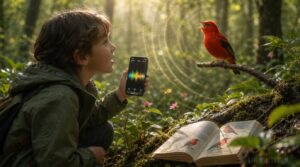
Hearing a bird before you see its half the skill. Birds produce two main sound types — songs and calls (for mating, territory, and warnings) — using the syrinx, a unique voice organ.
Apps like Merlin Bird ID for Families make bird call identification easy and fun.
Start recordings at dawn, when birds are most vocal, and use simple spectrograms to visualize patterns.
Checklists, Life Lists, and Sighting Trackers

Once your kid tunes into bird calls, tracking what they’ve spotted keeps that excitement alive. A simple species checklist — ticked after each outing — builds toward a life list, a personal record of every bird ever seen.
Many guides include Sighting Tracker Templates with space for date, location, and weather. Progress Bar Visuals and Family Sharing Features make birdwatching field journals feel like a real achievement.
Birdwatching Skills for Children

Birdwatching isn’t just a hobby — it’s actually a pretty solid way to build real skills kids carry into the classroom and beyond. The trick is knowing how to nurture those skills without turning a fun outing into a chore.
Here’s what to focus on as your child grows into a confident young birder.
Teaching Patience, Focus, and Quiet Observation
Teaching patience starts with something as simple as Mindful Breathing — two quiet minutes together before you even lift the binoculars. Try an Observation Timer: give kids a five-minute Silent Spotting Window and watch their focus sharpen.
Patience Games like "freeze when you spot movement" and short Focus Drills turn waiting into a skill, not a struggle.
Calm habits build real observation skills.
Using Journals for Field Notes and Sketches
Once kids have learned to sit still, put that quiet focus to work in a backyard bird journal. A waterproof notebook withstands drizzly mornings without complaint.
Encourage simple Sketch Layouts — quick outlines, labeled field marks, and a few color notes.
Add Symbol Legends for wind or cloud cover, and basic Page Indexing so favorite sightings are easy to find again.
Snap photos of pages for easy Digital Archiving.
Helping Kids Compare Size, Color, and Behavior
Once your child’s journal is filling up, those sketches become a handy reference for spotting patterns.
Start with these four quick wins:
- Size comparison games using silhouette cards — is it sparrow-sized or crow-sized?
- Color matching cards against real sightings for visual identification
- Behavior observation prompts tracking feeding, perching, or flight style
- Pattern spotting challenges using color-coded guide tabs
Kid-friendly guides make seasonal bird behavior surprisingly easy to notice.
Recording Dates, Locations, Weather, and Habitats
Once your child starts spotting patterns, good record-keeping turns casual walks into real science. Encourage precise date logging — day, month, year — plus observation time stamps in 24-hour format.
Jot exact GPS coordinates or descriptions of notable landmarks, detailed weather data like temperature and wind direction, and extensive habitat notes in their field notes.
These birdwatching field journals and life lists make every sighting genuinely meaningful.
Connecting Birdwatching With Science and Nature Study
Birdwatching quietly turns a backyard walk into a full science lesson. When your child logs species, behaviors, and habitats, they’re building real Behavioral Observation skills scientists actually use.
- Track food webs through foraging notes
- Submit counts to Citizen Science databases like eBird
- Map seasonal shifts for Migration Mapping practice
- Assess Habitat Quality by recording vegetation and water sources
- Explore Ecosystem Interdependence through predator-prey observations
Encouraging Conservation Awareness Through Bird Guides
Good field guides don’t just name birds — they tell their story. When a guide connects a warbler to the wetland it needs, or flags a threatened habitat near your town, something clicks. Your child starts seeing birds as neighbors worth protecting.
The best bird guides don’t just name species — they turn children into neighbors who care about protecting them
| Conservation Theme | What Kids Learn |
|---|---|
| Local habitat protection | Why nearby wetlands and woodlands matter |
| Native plant incentives | How backyard plants feed local food webs |
| Citizen science impact | That their sightings count toward real research |
| Conservation storytelling | How communities saved birds through action |
Kid-friendly guides weave this conservation information naturally into species pages — no lecture needed.
Essential Tools and Activities

A good field guide is just the starting point — the right tools and activities are what turn a walk outside into a real birding adventure.
From kid-sized binoculars to simple backyard projects, a few well-chosen extras make a big difference in keeping young birdwatchers engaged.
Here’s what you’ll want to have on hand.
Kid-sized Binoculars for Beginner Birdwatchers
The right pair of child-sized binoculars can turn a blurry backyard into a whole new world. When choosing birdwatching gear, look for:
- Optical clarity — fully multi-coated lenses and BAK4 prisms keep images bright and sharp
- Durable construction — rubberized armor withstands the inevitable drops
- Ergonomic fit — 8×21 models with adjustable focus and kid-friendly accessories work best for small hands
Bird Journals, Tally Cards, and Observation Worksheets
Notebooks do more than hold memories — they build real scientific habits. A Bird Observation Worksheet separates species ID, behavior, and habitat into clear sections, while a Birdwatching Tally Card uses Color-Coded Tallies and Habit Tracking Grids to make counting feel like a game.
Include Quick Sketch Templates, Seasonal Life Lists, Structured Data Sheets, and a Birdwatching Bingo Game to enhance engagement. Pair these with Nature Journal Supplies for a comprehensive toolkit.
Together, these resources ensure your kid’s Birdwatching field journals and record keeping practically run themselves.
Birding Apps for Guided Identification Practice
Your kid’s phone might already hold one of the best birding tools around. Apps like Merlin Bird ID use AI identification to name species from photos or live audio — no guessing required.
The eBird app transforms every outing into citizen science. Features like interactive quizzes, progress tracking, family sharing, and offline bird packs make digital bird identification apps genuinely useful educational tools, not just screen time.
Backyard Birdwatching Activities for Families
Apps are great, but the backyard is where birdwatching really clicks for families. Build Morning Observation Routines around early risers — sparrows and cardinals show up reliably at dawn.
Try a Kids Photo Hunt to spot six common yard visitors, or map a Seasonal Migration Calendar together. These activities encourage curiosity about local and migratory species.
Bird-Themed Storytime at dusk wraps the day nicely, connecting what kids saw with what they’re learning.
Simple Feeder Projects for Hands-on Learning
Building a DIY bird feeder brings kids birdwatching activities off the page and into the yard. Use eco-friendly materials like cedar wood, drill a drainage hole, and attach a weatherproof construction-ready hook.
Run seed preference tests, comparing sunflower versus mixed blends, and tie in measurement math integration by tracking daily quantities.
Community feeder sharing sparks neighbors’ curiosity too.
Safety Tips for Outdoor Birdwatching With Kids
Once your gear is up, getting outside is the real adventure — and a little prep goes a long way.
Sun protection starts with SPF 30+ sunscreen and a wide-brim hat. Hydration planning means packing at least a liter of water per child.
Footwear safety calls for closed-toe shoes on uneven trails. Toss a first-aid kit in your bag, stick to the buddy system, and you’re set.
Frequently Asked Questions (FAQs)
What is the code 5 in birding?
In birring, Code 5 is the rarity criterion for extremely rare species — recorded five or fewer times in the ABA Area.
This designation demands strict documentation requirements and careful reporting protocols before official acceptance.
What is the best bird watching guide?
The National Geographic Kids Bird Guide stands out for its illustration quality, audio integration, and cross-generational appeal — a durable, engaging pick.
This guide makes choosing age-appropriate bird guides for children genuinely easy.
What time of day are birds most active?
Ironically, the best time to spot birds is when most kids are still asleep.
The dawn chorus — that burst of bird song right after sunrise — marks peak activity, perfect for early morning outings.
How do migration patterns affect local bird sightings?
Migration patterns shape what birds you’ll spot and when.
Seasonal arrival timing shifts with temperature, wind-driven routes guide flocks overhead, and weather‑triggered surges can surprise you with rare visitors passing through your backyard stopover habitat.
Can birdwatching help children with sensory sensitivities?
Yes — surprisingly well. Sensory-friendly routes, calming auditory cues like birdsong, and controlled session length make screen-free birdwatching for children a gentle, grounding experience.
This approach promotes gradual exposure and real mindfulness for children, fostering a calming and engaging activity.
Which bird species are easiest for kids to spot?
Look for birds with vivid plumage first — cardinals, goldfinches, and bluebirds stand out instantly.
Frequent feeder visitors like chickadees, distinctive silhouettes like woodpeckers, and open-grass foragers like robins make species recognition easy for kids.
How do weather conditions impact birdwatching success?
Like a good fishing trip, timing is everything. Mild temperatures (10–21°C), light winds, and cloud cover keep birds active and visible — perfect conditions for young birders to rack up sightings.
Conclusion
You don’t need to live near a nature reserve or raise a future ornithologist to make bird watching field guides for kids worthwhile. A feeder outside the kitchen window and one good guide on the shelf is genuinely enough to start.
Kids don’t need perfect conditions—they need one moment where a bird stops, they look it up, and something clicks. That click, quiet as it sounds, has a way of sticking for life.
- https://www.weareteachers.com/bird-books-kids/
- https://www.wild-bird-watching.com/birding-books-beginners.html
- https://www.penguinrandomhouse.com/books/744060/bird-book-for-kids-by-katie-henries-meisner/
- https://bestreviews.com/education/outdoor-guides/best-bird-field-guides
- https://www.mcall.com/2021/11/04/the-best-bird-field-guide/