This site is supported by our readers. We may earn a commission, at no cost to you, if you purchase through links.
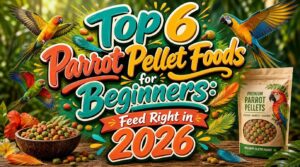
Most parrots fed a seed-only diet are quietly running on empty. Seeds taste great to birds, but they’re heavy on fat and light on the vitamins and minerals a parrot needs to stay healthy long-term. Feather problems, low energy, and a shortened lifespan often trace back to what’s sitting in that food bowl.
Pellets solve this by packing complete nutrition into every bite—no picking around the good stuff.
Choosing the right parrot pellet foods for beginners comes down to knowing your bird’s size, reading the ingredient list.
Making the switch without stressing your pet out.
Table Of Contents
Key Takeaways
- Seeds alone leave your parrot short on vitamins and minerals, quietly causing feather problems, low energy, and a shorter life over time.
- Pellets work best as 60–70% of your bird’s daily diet, paired with fresh veggies, small amounts of fruit, and the occasional nut treat.
- Match pellet size to your bird’s beak — too big or too small means wasted food, picky eating, or even a choking risk.
- Switch from seeds to pellets slowly over 7–14 days, and weigh your bird weekly to catch any weight loss before it becomes a real problem.
Top 6 Parrot Pellet Foods
Picking the right pellet brand doesn’t have to feel overwhelming. These six options are beginner-friendly, widely available, and trusted by parrot owners at every experience level.
Start with this guide to large bird food pellet brands to compare options and narrow things down before your first purchase.
Here’s what made the cut.
1. ZuPreem True Harvest Bird Pellets
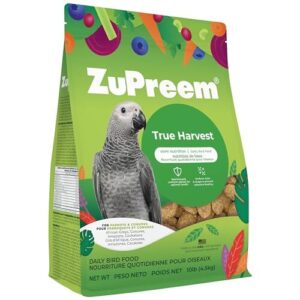
ZuPreem True Harvest is a solid starting point for those new to pellet feeding. It’s designed for small birds, including parakeets, budgies, and parrotlets, with pellet sizes tailored to their tiny beaks for comfortable consumption.
The formula incorporates real vegetables, fruits, and herbs, avoiding artificial colors or flavors entirely. This natural approach ensures a diet closer to what these birds might consume in the wild.
Nutritionally, it provides a full vitamin and mineral complex, covering essentials like vitamins A, D3, and calcium to support overall health.
However, the sugar content is a bit high, which could pose concerns for birds prone to weight gain. Monitoring intake is advisable for such cases.
| Best For | Small bird owners — especially those with parakeets, budgies, or parrotlets — who want a convenient, nutritionally complete daily pellet without the hassle of building a diet from scratch. |
|---|---|
| Target Species | Small birds (budgies, parakeets, parrotlets) |
| Package Weight | 10 lb (4.5 kg) |
| Life Stage | All life stages |
| Artificial Additives | No artificial colors, flavors, or preservatives |
| Vitamin Fortified | Yes (A, D3, E, K, B-complex, calcium, zinc, selenium) |
| Feeding Purpose | Daily staple diet |
| Additional Features |
|
- Made with real fruits, veggies, and herbs — no artificial colors or flavors, so it’s about as clean as a packaged pellet gets.
- Covers all the nutritional bases with a solid vitamin and mineral complex, including A, D3, calcium, and more.
- Works for all life stages, so you’re not swapping formulas as your bird ages.
- Sugar sits pretty high on the ingredient list, which can be a real issue for birds that are already prone to weight gain.
- Contains soy and wheat, so birds with grain sensitivities might not do well on it.
- A few users have noticed a stale oil smell close to the expiration date — definitely worth checking the bag before you buy.
2. ZuPreem FruitBlend Bird Pellets
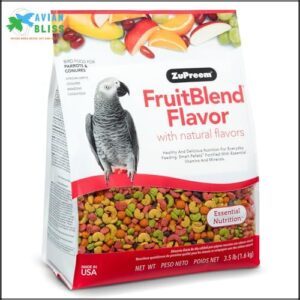
If your bird is on the larger side — think African Grey, Amazon, or cockatoo — FruitBlend might catch your eye. These colorful, fruit-shaped pellets come in banana, apple, orange, and grape flavors, which can tempt even stubborn seed lovers to give pellets a try.
They’re fortified with vitamins A, D3, E, and key minerals to support feathers and immunity.
Just know the artificial dyes may color your bird’s droppings, so don’t be alarmed when that happens.
| Best For | Medium to large parrots like African Greys, Amazons, and cockatoos — especially picky eaters that need a nudge away from an all-seed diet. |
|---|---|
| Target Species | Medium-large parrots and conures |
| Package Weight | 3.5 lb (1.59 kg) |
| Life Stage | All life stages |
| Artificial Additives | Contains artificial colors (Yellow 5, Red 40, Blue 1) |
| Vitamin Fortified | Yes (A, D3, E, K, B-complex, calcium, zinc, selenium) |
| Feeding Purpose | Daily sole diet |
| Additional Features |
|
- Real fruit flavors and fun shapes make mealtime engaging and help convert stubborn seed-only birds to pellets
- Packed with vitamins A, D3, E, and key minerals that support feathers, immunity, and overall health
- Formulated for all life stages, so it works as a complete daily diet without needing extra supplements
- Artificial dyes pass right through the digestive system and can leave brightly colored droppings that stain fabrics
- Contains soy, corn, and possible peanut/tree nut traces, which may not work for birds with sensitivities
- Some birds play favorites with certain pellet colors, which means parts of the bag go ignored
3. Wild Harvest Universal Bird Blend
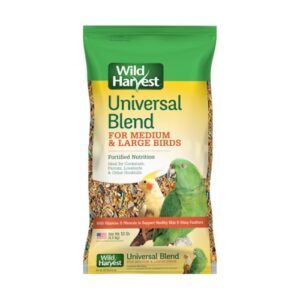
Not every bird owner wants to chase fruit-flavored pellets. If you’d rather keep things simple, Wild Harvest Universal Bird Blend is worth a look.
It mixes sunflower seeds, safflower seeds, and dried peas into a seed-and-vegetable blend that works well for cockatiels, conures, and similar medium to large birds.
It’s fortified with vitamins and minerals to support feathers and skin health.
At $12.78 for 10 pounds, it’s an affordable daily option — just store it in a cool, dry spot.
| Best For | Bird owners with cockatiels, conures, or similar medium to large birds who want a simple, affordable seed-based blend for daily feeding. |
|---|---|
| Target Species | Medium and large birds (cockatiels, parrots) |
| Package Weight | 10 lb (452 g) |
| Life Stage | All life stages |
| Artificial Additives | No artificial additives listed |
| Vitamin Fortified | Yes (added vitamins and minerals) |
| Feeding Purpose | Daily feeding staple |
| Additional Features |
|
- Good value at $12.78 for 10 pounds — one of the more budget-friendly options out there
- Fortified with vitamins and minerals that support feather health and skin condition
- Works across multiple bird species, so it’s easy if you’ve got more than one bird at home
- Some cockatiels are picky and may not love the blend compared to other seeds
- Batch quality can vary — occasional excess hulls or dust means you might need to sieve it
- Needs proper storage to stay fresh, and switching birds over to it too fast can cause digestive issues
4. TOPs Organic Parrot Food Pellets
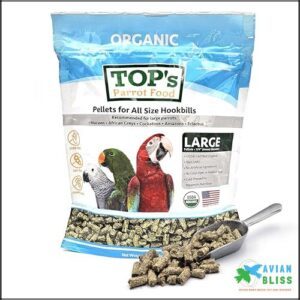
For bird owners seeking fully organic options, TOPs Organic Parrot Food Pellets are an excellent choice. USDA Organic certified and cold-pressed, they exclude corn, soy, artificial colors, and preservatives.
Instead, the formula features whole foods like organic alfalfa, quinoa, pumpkin, and millet — recognizable, natural ingredients. Natural rosemary and rose hips act as preservatives, ensuring freshness without synthetic additives.
Available in small, medium, and large sizes, these pellets cater to parrots of all sizes, from cockatiels to macaws.
| Best For | Bird owners who want a fully organic, additive-free diet for medium to large parrots, especially birds with sensitivities or those prone to feather issues. |
|---|---|
| Target Species | Medium-large parrots (African Grey, Macaw, Cockatoo) |
| Package Weight | 1 lb (453 g) |
| Life Stage | All life stages |
| Artificial Additives | No artificial colors, flavors, or preservatives |
| Vitamin Fortified | Yes (vitamins, minerals, amino acids, fatty acids) |
| Feeding Purpose | Primary or supplemental diet |
| Additional Features |
|
- USDA Organic certified with no corn, soy, or artificial anything — clean ingredients you can actually recognize
- Natural preservatives like rosemary and rose hips keep it fresh without synthetic additives
- Comes in small, medium, and large sizes, so it works for everything from cockatiels to macaws
- Pricier than conventional pellets, which adds up fast if you have multiple birds
- Picky eaters or birds used to sugary pellets may take weeks (or longer) to warm up to the natural flavor
- Some crumbling reported, which can make feeding messier and feel like wasted money
5. Kaytee Exact Rainbow Parrot Conure Food
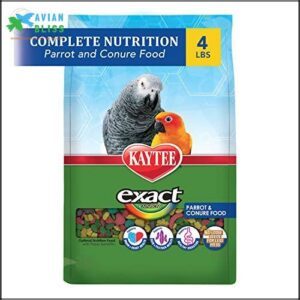
Kaytee Exact Rainbow is a solid pick if your conures need a nutritious, mess-free meal. Each extruded nugget is 100% consumable — no hulls, no shells, and no wasted food at the bottom of the cage.
It’s enriched with omega-3s for heart and brain health, plus prebiotics and probiotics to support digestion.
Protein sits at 15%, fat at 6%, and fiber at 5% — a balanced profile for active conures.
Just note it contains artificial colors, which some owners prefer to avoid.
| Best For | Conure and small-to-medium parrot owners who want a clean, nutritionally complete staple diet without the mess of seed hulls. |
|---|---|
| Target Species | Small-medium parrots and conures |
| Package Weight | 4 lb (1.81 kg) |
| Life Stage | Adult parrots |
| Artificial Additives | Contains artificial colors (Yellow 40, Blue 1) |
| Vitamin Fortified | Yes (vitamins, minerals, omega-3) |
| Feeding Purpose | Staple daily diet |
| Additional Features |
|
- No hulls or shells means less cage mess and zero wasted food
- Packed with omega-3s, prebiotics, and probiotics to support heart health and digestion
- Vet-recognized formula that covers your bird’s nutritional bases as a daily staple
- Contains artificial dyes (Yellow 40, Blue 1) that some bird owners would rather skip
- Can be dusty straight out of the bag — worth straining before you store it
- Nugget size isn’t great for larger parrots like African Greys who need bigger bites
6. TOP Organic Mini Bird Pellets
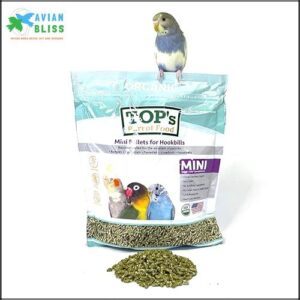
TOP Organic Mini Pellets were designed with your tiny bird in mind, catering to budgies, lovebirds, or parrotlets. At just 3/32 inch wide, these cold-pressed pellets fit small beaks perfectly. They are USDA-certified organic, free from soy, corn, artificial colors, and preservatives.
Since these pellets support your small bird’s daily nutrition, pairing them with guidance from exotic bird diet and health resources can help you spot early signs of imbalance.
Ingredients like quinoa, millet, kelp, and rose hips deliver real nutrition without fillers. The cold-press method ensures nutrients remain intact more effectively than traditional baking.
While they cost more, these pellets provide your bird with a genuinely clean, complete diet, prioritizing quality and health above all else.
| Best For | Small parrot owners—budgies, lovebirds, parrotlets, and parakeets—who want a clean, organic complete diet without fillers or artificial additives. |
|---|---|
| Target Species | Small parrots (budgies, lovebirds, parrotlets) |
| Package Weight | 1 lb (15.98 oz) |
| Life Stage | All life stages |
| Artificial Additives | No artificial colors, flavors, or preservatives |
| Vitamin Fortified | Yes (vitamins, minerals, amino acids) |
| Feeding Purpose | Sole daily diet or transitional |
| Additional Features |
|
- USDA Organic and non-GMO, with no soy, corn, artificial colors, or preservatives—just real ingredients like quinoa, millet, and kelp.
- Cold-pressed pellets preserve nutrients better than baked alternatives, so your bird gets more out of every bite.
- Mini 3/32" size works well for small beaks and cuts down on the mess and waste that bigger pellets cause.
- At around $19 per pound, it’s a noticeable step up in cost compared to standard seed mixes.
- Some owners of the tiniest birds—especially budgies—find the pellets are still a bit large and need crumbling or wetting first.
- Packaging quality has been an issue for some buyers, with reports of punctured bags and spillage on arrival.
What Parrot Pellets Provide
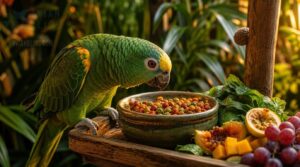
Pellets do more than just fill your parrot’s bowl — they’re built to cover almost everything your bird needs each day. Getting that balance right makes a real difference, especially when you’re just starting out.
Here’s a closer look at exactly what pellets bring to the table.
Complete Daily Nutrition for Beginner Parrot Owners
Think of pellets as your parrot’s daily multivitamin — packed into every bite. Complete balanced diets built around the best pellet foods for parrots cover nutritional balance from the ground up, supporting immune support and gut health without guesswork.
They follow species-specific needs and feeding guidelines, so dietary diversity, hydration strategies, and even seasonal planning become much easier to manage as a beginner.
For ideal nutrition, pellets should make up about 40% of a parrot’s total daily intake, as outlined in the pellet portion guideline.
Balanced Protein, Fat, Fiber, and Carbohydrates
Good pellets do not just fill your parrot’s bowl — they balance macronutrient ratios so protein, fat, fiber, and carbohydrates work together. Protein aids feather keratin and muscle maintenance. Fat delivers concentrated energy density without the seed-diet spikes. Fiber creates digestive synergy, slowing absorption for steadier nutrient timing.
Together, these nutrient-dense pellets meet species-specific balance and energy requirements better than any seed mix can.
Essential Vitamins and Minerals for Feather Health
Feathers don’t just look pretty — they reflect what’s happening inside your bird’s body. The right parrot pellet food delivers key nutrients that keep plumage strong and vibrant:
- Biotin benefits keratin formation, while vitamin A’s role keeps follicles healthy
- Zinc support maintains feather integrity during growth cycles
- Vitamin E antioxidant and selenium protection together shield follicle cells from damage
Choosing the right parrot pellet food makes all the difference in feather condition.
Calcium, Phosphorus, and Vitamin D Support
Strong bones do not happen by accident. Your parrot’s skeletal health depends on getting the calcium‑phosphorus ratio right — and that’s exactly where a quality parrot pellet food earns its place.
Vitamin D activation ensures the body absorbs dietary calcium rather than wasting it. This trio — calcium, phosphorus, and vitamin D — drives bone mineralization and maintains parathyroid hormone balance naturally.
Why Pellets Reduce Selective Eating
Selective eating is one of the trickiest habits to break. With seed mixes, your parrot can sort through the bowl and cherry-pick favorites — skipping the rest.
Pellets eliminate that game. Their single flavor profile and even bite composition mean every mouthful delivers the same nutrition. Adding mandatory chewing and a steady fiber load, your bird stays fuller, longer.
Pellets Versus Seed Diets
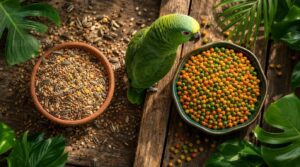
Seeds aren’t inherently bad, but relying on them alone is where things go wrong. A seed-only diet leaves real nutritional gaps that can quietly affect your parrot’s health over time.
Here’s what you need to know before deciding how pellets and seeds fit into your bird’s daily bowl.
Why Seed-only Diets Can Cause Deficiencies
Seeds might look like a complete meal, but they leave serious gaps in your parrot’s nutrition. Seed dependence is one of the leading causes of nutritional deficiencies in parrots.
Key deficiencies include:
- Calcium deficiency weakens bones and triggers seizures, especially in African Greys
- Vitamin A deficiency damages vision and lowers immune defense
- Essential amino acid gaps slow feather regrowth and tissue repair
- Trace mineral shortages and micronutrient variety loss compound over time
Obesity Risks From High-fat Seed Dependence
Beyond seed dependence creates real obesity concerns, fat-heavy seeds pack serious calories, and selective seed picking means your parrot keeps grabbing the tastiest, fattiest pieces. Calorie excess builds quickly, and polyunsaturated fat overload over time elevates fatty liver risk becomes very real.
Activity decline follows weight gain, exacerbating the problem. This downward spiral intensifies as reduced mobility further hinders calorie burning.
Switching to parrot pellet food genuinely promotes better weight management, offering a balanced alternative to seed-based diets.
How Pellets Support Consistent Nutrient Intake
Pellets solve the obesity problem from a different angle — consistency. Each piece of parrot pellet food shares the same uniform nutrient density, so there’s no "bad batch" days. Batch consistency means your bird gets predictable nutrient absorption every single meal.
A consistent feeding schedule delivers:
- Precise serving sizes without guesswork
- Ingredient sorting elimination — no cherry-picking favorites
- Reliable nutritional balance across every feeding routine
When Seeds Can Still Be Used Sparingly
Think of seeds as an occasional treat, not a staple. Limited seed treats — like a sunflower seed or two — can reward foraging behavior without wrecking nutritional balance.
Prioritize seed stock rotation and use older seeds first.
Seasonal seed inclusion works well when shifting parrots to pellet-based diets, maintaining feeding routine consistency intact while you gradually achieve seed mix reduction.
Beginner-friendly Feeding Ratio Guidelines
Start simple with a daily diet of 70–80% pellets and 20–30% fresh foods. Adjust calorie ratios based on your bird’s activity levels, age, and seasonal changes — life-stage needs vary significantly for juveniles, adults, and seniors. These tailored adjustments ensure nutritional balance across different phases of your parrot’s life.
Consistent weekly weight checks are essential to maintain a healthy feeding routine. This practice helps refine portion sizes and supports overall parrot well-being. Beginner guidelines for different parrot ages simplify meal planning, making portion control easier to manage effectively.
Match Pellets to Your Parrot
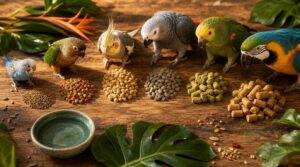
Not all pellets are created equal — and size matters more than you’d think. A pellet that’s too big or too small can lead to wasted food, picky eating, or even a choking risk.
Match the right pellet to your specific bird. Here’s how to ensure a proper fit for your feathered friend.
Choosing Pellets by Species and Beak Size
Not all pellets are created equal — and beak size is the first thing to match. Think of it as a cross-species size guide: wrong size means wasted food or worse, a choking risk. Choosing the best pellet foods for parrots starts here.
- Small to medium-sized birds need 4–6 mm pellets
- Medium to large parrots do best with 6–9 mm sizes
- Species pellet trials help identify pellet texture preferences
- Watch for beak wear assessment changes after switching sizes
- Beak growth monitoring catches problems early
Consistent observation ensures pellets remain safe and effective. Adjust sizes as needed to support your parrot’s health and prevent complications.
Mini Pellets for Budgies and Small Parrots
Budgies have tiny beaks — and that matters more than you’d think. Mini pellets, around 3/32 inches wide, give small to medium-sized birds like budgerigars safe, manageable bites while still supporting beak exercise.
TOPs parrot pellet food uses a cold-press process to protect nutrients, backed by USDA Organic Certification.
Pellet size compatibility with parrot beak shape reduces waste and keeps feeding stress-free.
Medium Pellets for Conures and Cockatiels
Conures and cockatiels are positioned in the middle of the parrot world, and their pellets should reflect this. Medium pellets, roughly 8 to 12 millimeters wide, support beak health and natural chewing behaviors for small to medium-sized birds. Pellet size compatibility with parrot beak shape is critical for feeding routine consistency and overall parrot health.
Brands like ZuPreem and TOPs prioritize ingredient transparency and meet protein requirements, ensuring easier flavor acceptance from the start. This focus on quality and nutritional precision helps maintain optimal health for these birds.
Large Pellets for Amazons, Greys, and Macaws
Big birds require substantial nutrition. Amazon parrots, African Grey Parrots, and Macaws rely on large pellets—approximately one inch long—designed for foot-held feeding. Utilizing Pellet Compression Tech and Energy Density Optimization, these pellets deliver Species-Specific Protein (13–20%) and balanced fats in every bite.
Key features include:
- Moisture Retention Control for freshness
- Packaging Airtight Standards to prevent spoilage
- Formulas tailored for medium to large parrots
Amazon Parrot and Macaw owners: this pellet size forms your essential nutritional foundation.
Avoiding Choking, Waste, and Picky Eating
Bite-size pellets that match your parrot’s beak prevent choking and reduce waste from oversized pieces. Proper sizing ensures safety and minimizes mess, making mealtimes safer and more efficient.
Portion Control keeps bowls from overflowing, while Moisture Management—replacing softened pellets every few hours—maintains freshness. These practices work together to create a balanced feeding environment, supporting your parrot’s health and hygiene.
Feeding Supervision, Foraging Incentives, and consistent routines reinforce positive habits. By prioritizing pellet size compatibility, you lay the foundation for reducing picky eating, ensuring your parrot thrives with every meal.
Check Ingredients and Nutrition
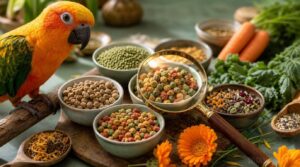
Reading an ingredient label might feel like decoding a foreign language at first, but it’s actually pretty straightforward once you know what to look for.
A few key things on that label can tell you whether a pellet is genuinely nutritious or just cleverly marketed. Here’s what to check before you buy.
Whole-food Ingredients to Look For
Every great pellet starts with what’s actually inside it. Look for whole-food ingredients listed first — things like quinoa, lentils, and whole grains. These deliver complete protein, dietary fiber, and real nutrition your parrot can use.
- Leafy greens like spinach and kale add vitamins A, C, and K
- Root vegetables like sweet potatoes bring beta-carotene and fiber
- Legume proteins support daily amino acid needs naturally
- Plant-based fibers from whole grains aid healthy digestion
Ingredient transparency matters. Fresh fruits and vegetables, along with high-quality ingredients near the top of the label, signal a pellet worth trusting.
Artificial Colors, Flavors, and Fillers to Avoid
Good ingredients matter — so do the bad ones. Watch for artificial additives like Red 40, Yellow 5, and sodium benzoate on labels. These Colorant Risks and Flavor Additives add nothing nutritional.
Filler concerns are real too — thickeners like carrageenan bulk up pellet without benefit.
Label transparency helps you spot trouble quickly. Regulatory Limits exist, but many bird owners still prefer skipping them entirely.
Organic and Non-GMO Pellet Considerations
Once you’ve cleared out the bad stuff, organic and non-GMO options are worth a look. These pellets skip synthetic pesticides and genetically modified ingredients entirely.
Certification verification and traceability documentation—like batch numbers and organic seals—confirm those claims are real.
Considering organic and non-GMO pellet options means choosing ingredient transparency and sustainable sourcing you can actually trust.
Added Omega-3s, Antioxidants, and Amino Acids
Some parrot pellet foods enhance their formulas by incorporating omega-3 fatty acids, antioxidants, and amino acids to promote overall health. Look for these key features on the label:
- Omega-3 stability matters — encapsulation technology keeps fats fresh longer
- Antioxidant sourcing protects cells from oxidative damage
- Amino acid balance fills protein gaps your bird cannot produce independently
Rigorous bioavailability testing ensures these essential nutrients are effectively absorbed by your parrot.
Matching Formulas to Age and Health Needs
Chick Growth Formula promotes rapid development, while Adult Maintenance Blend keeps weight steady.
Senior Bone Health options address aging muscle and calcium changes.
If your bird is breeding, Breeding Egg Formula covers higher energy demands.
Weight Management Pellets help overweight birds without risking nutritional deficiencies — a smart match for species-specific needs.
Transition Your Parrot Safely
Switching your parrot from seeds to pellets takes patience — most birds don’t embrace change overnight. A slow, steady approach makes all the difference between a smooth adjustment and a stressed, hungry bird.
Switching a parrot from seeds to pellets takes patience—most birds don’t embrace change overnight
Here’s exactly how to do it step by step.
Gradual Seed-to-pellet Conversion Timeline
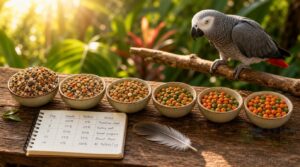
Switching parrots from seeds to pellets works best as a slow, structured process — not an overnight swap. Plan incremental ratio steps across 7–14 days, using checkpoint scheduling at early, mid, and late-week markers.
Morning appetite monitoring helps, as most birds eat most eagerly at first light.
Keep a simple progress log to stay on track and ensure nothing slips past unnoticed.
Starting With a 50:50 Food Mix
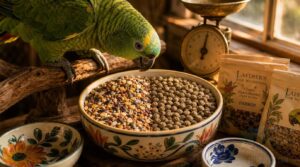
A 50:50 split is your launchpad — half pellets, half familiar seed, every single meal. Ratio consistency matters here, so measure by weight rather than guessing.
Stick to the same meal timing daily, because hunger patterns affect what your bird tries first.
Run a simple Observation Checklist: are pellets eaten, ignored, or tossed?
Gradual adjustment means holding this step until your parrot genuinely accepts both.
Crumbling Pellets Over Familiar Foods
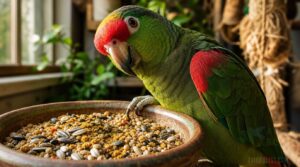
Think of crumbling pellets as a little trick that sneaks new nutrition into your bird’s comfort zone. Sprinkle crushed pellets over familiar seeds so your parrot can’t easily sort them out.
Watch for Humidity-Induced Powder — crumbles left too long attract moisture, causing Dust Nutrient Loss and potential Feather-Beak Irritation. Avoid rough feeders; Feeder Roughness worsens breakage.
This Behavioral Crumble Preference strategy assists moving parrots from seeds to pellets naturally.
Moistening Pellets for Reluctant Parrots
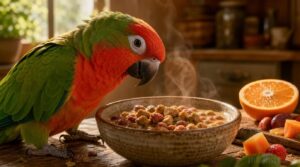
Some birds just won’t touch dry pellets at first — and that’s okay. Soak pellets in warm water for three to five minutes, watching soak duration carefully to ensure the texture remains soft, not mushy.
Flavor pairings like a small amount of fruit puree can enhance appeal. Always follow hygiene practices: remove moist pellets within two hours to prevent spoilage.
Use gradual drying weekly to transition birds back to dry pellets, maintaining consistency in their diet.
Using Foraging Activities to Encourage Tasting
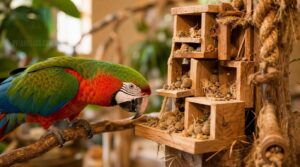
Once your parrot starts exploring moist pellets, foraging enrichment can take tasting further. Puzzle feeder design encourages natural foraging by spreading pellets across multiple spots instead of one bowl.
Place feeders at multiple heights to get your bird climbing and reaching. Texture variation — crumbled or whole pellets — keeps things interesting.
Positive reinforcement, like calm praise, combined with solid hygiene practices, builds confidence one small tasting win at a time.
Monitoring Body Weight During Conversion
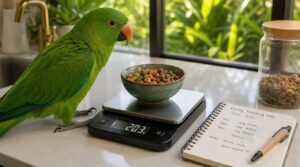
Weighing frequency matters more than most beginners expect. Establishing a consistent schedule—such as once a week, at the same time, before the first feeding—provides a reliable baseline for tracking weight trends throughout the conversion. Use a digital scale with proper calibration, zeroing it each session.
- Weigh before morning feeding for consistency
- Record every result immediately after each session
- Compare current weight to your starting baseline
- Watch for patterns, not single-day dips
- Adjust the ration if weight drops across multiple weigh-ins
Warning Signs Your Parrot is Not Eating Enough
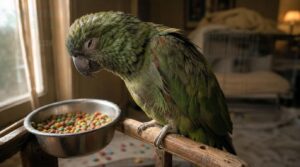
Even with a solid feeding routine, consistency is key, but watch for red flags. Lethargic behavior, dropping weight, and visible weight loss are classic malnutrition signs.
Dehydration cues like sunken eyes or a dull beak, along with difficulties with beak feeding — such as dropping pellets or refusing them — also signal trouble. Poor feather condition is another critical indicator.
If you observe any of these signs of nutritional deficiencies in parrots, contact your avian vet promptly.
Feed Pellets With Fresh Foods
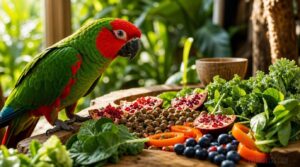
Pellets are the foundation, but they do not have to be the whole story. Pairing them with the right fresh foods keeps your parrot interested, healthy, and well-rounded.
Here’s what works, what to limit, and what to keep far away from the food bowl.
Ideal Pellet Percentage in a Daily Diet
Aim for 60–70% pellets daily — that’s your nutritional anchor. Metabolic rate considerations and health-condition modifiers mean age-adjusted percentages matter: juveniles need more, while seniors require less.
Balancing pellet and treat intake keeps weight stable, so monitor weight-loss thresholds carefully.
Consistency in feeding routines is everything for parrot health.
Pellets vs. seeds isn’t a debate — complete and balanced diets for birds always win long-term.
Safe Vegetables for Added Variety
Vegetables fill the gaps that pellets alone can’t cover. Leafy greens like spinach and kale deliver vitamin-rich greens your bird truly needs.
Colorful veggies — think red peppers and carrots — add carotenoids and crunch. Root veggie prep is simple: steam carrots or sweet potatoes until tender.
Cruciferous benefits come from small broccoli pieces.
Seasonal veggie rotation keeps meals interesting and ensures a varied selection of safe foods for parrots.
Fruits as Occasional Diet Additions
Fresh fruits make a great supporting act — not the star. Berries, mango, and apple offer antioxidant fruit benefits and natural vitamins that complement pellet nutrition.
For preparation safety, always wash thoroughly, remove seeds, and cut into small pieces.
Stick to fruit sugar limits of about 5–10% daily. When introducing new fruit, add one at a time and watch for any reactions.
Healthy Nuts as Limited Treats
A few nuts go a long way. Offer unsalted almonds or walnuts two or three times weekly — they deliver a real micronutrient boost, including selenium benefits and healthy unsaturated fats.
But fat balance matters: nuts are calorie-dense, so keep portions to about 14 grams daily. Smart portion control prevents obesity and keeps nutrient-dense nuts at the center of your bird’s diet.
Toxic Foods Beginners Must Avoid
Some foods are outright dangerous for parrots — no exceptions.
Keep these toxic foods to avoid for birds off the menu entirely:
- Avocado toxicity — Persin in avocado flesh, skin, and pit can be fatal
- Chocolate hazard — even crumbs contain methylxanthines that harm birds fast
- Alcohol risks — trace amounts can damage breathing and organ function
- Onion garlic danger — sulfur compounds destroy red blood cells
- Raw legume threat — undercooked beans carry natural toxins
Call your avian vet immediately if any of these are eaten.
Preventing Overfeeding Despite Balanced Pellets
Portion size still matters. Use these calorie tracking basics to keep your parrot healthy:
| Strategy | Why It Works |
|---|---|
| Weigh daily portions | Avoids guessing bowl quantity |
| Split into 2 meals | Aids feeding schedule consistency |
| Cap treats firmly | Controls treat budgeting and energy balance |
Meal portioning and meal portion control together make managing obesity and weight in companion parrots much more achievable.
Store Pellets and Monitor Health
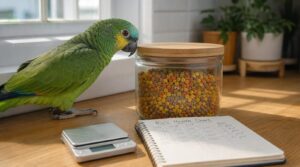
Buying the right pellets is only half the job — storing them well keeps every bite safe and nutritious.
You’ll also want to keep a close eye on your bird’s health as its needs change over time. Here’s what to watch for and how to stay ahead of problems before they grow.
Keeping Pellets Fresh After Opening
Once you open a bag, the clock starts ticking. Transfer pellets to airtight containers immediately — this is the single best thing you can do for managing pellet storage and freshness. Add desiccant packs inside to pull out hidden moisture.
Temperature stability matters too, so store them between 50–70°F.
Light shielding keeps those high-quality ingredients from breaking down.
Always practice stock rotation: oldest pellets are used first.
Preventing Moisture, Mold, and Spoilage
Moisture is your worst enemy here. Even a little dampness on pellet surfaces raises the risk of microbial growth in porous pellet feed fast.
Humidity control keeps mold away — use a dehumidifier if your storage space feels muggy.
Dry handling matters too: always use a dry scoop. Container sanitation means washing bins completely, then letting them air-dry before refilling.
Checking Expiration Dates Before Feeding
Fresh storage means nothing if the bag’s already expired. Before feeding any parrot pellets, check the date label types carefully — "best by" and "use by" mean different things. Never guess.
If the printed date has passed, replace it. Also scan for lot code tracking information and run quick package integrity checks.
An intact, clearly dated bag keeps food safety guidelines for birds simple to follow.
Tracking Droppings, Energy, and Feather Condition
Confirm your pellets are safe to feed, then shift your attention to your bird.
Start a simple log — jot down dropping colors, using basic Dropping Color Charts as a reference, and track Energy Level Logs daily. Watch for Feather Molt Monitoring cues and Hydration Indicators like dry or watery droppings. Behavioral Activity Scoring doesn’t need to be fancy — just note whether your parrot seems bright or dull.
When to Ask an Avian Veterinarian
Your daily log tells a story — and sometimes it tells you to call for help. Sudden weight loss, open-mouth breathing, abnormal droppings, visible injuries, or prolonged lethargy all mean one thing: contact an avian vet promptly.
Birds hide illness well. Regular avian vet checkups catch health risks of inadequate parrot diets early, making health monitoring and consulting avian veterinarians for dietary advice well worth it.
Adjusting Pellet Choices Over Your Bird’s Life Span
Your parrot’s nutritional needs shift at every stage of life — and so should their pellets. Think of it like adjusting a recipe as your bird grows and changes.
- Juvenile Protein Boost: Young birds need nutrient-dense pellets to support rapid growth
- Adult Energy Maintenance: Switch to maintenance formulas for stable daily needs
- Senior Fat Reduction: Older birds benefit from lower-calorie, easier-to-chew options
- Age‑Based Pellet Sizing: Smaller or softer pellets suit aging beaks
- Omega‑3 Tuning: Adjust fat balance as activity levels decline
Frequently Asked Questions (FAQs)
Can pellets cause allergic reactions in parrots?
Yes, they can — think of it as a "reaction" to certain ingredients. Protein sensitivities, additive intolerance, or mold contamination can trigger an immune response.
Choose pellets with high-quality ingredients and ingredient transparency to mitigate risks.
How do probiotics in pellets benefit digestion?
Probiotics in pellets support gut health by shifting microbiome balance toward beneficial microbes, boosting intestinal barrier strength, and cutting excess fermentation. Short-chain fatty acids produced aid digestive health naturally.
Do pellets affect a parrots water intake?
Think of pellets like dry crackers — they don’t carry much moisture. Because of low pellet moisture, your bird’s thirst regulation kicks in, increasing drinking frequency.
Always prioritize clean water bowl access alongside your feeding routine consistency.
Are pellets safe for breeding or pregnant parrots?
Pellets are safe for breeding birds when you choose a breeder-specific formula. These supply reproductive protein levels, calcium and phosphorus, and egg binding mitigation support — exactly what breeding pairs need.
How often should pellet brands be rotated?
Rotate brands every 3–6 months. A steady rotation schedule prevents flavor fatigue and ensures supply contingency. Always shift gradually to support digestive adaptation.
Conclusion
Feeding your bird well isn’t just smart — it’s the whole flocking point. Choosing the right parrot pellet foods for beginners sets the foundation for a longer, healthier life together.
Every seed you swap, every label you read, and every careful bite your bird takes adds up.
You don’t need to be perfect — just consistent. A well-fed parrot is an active, curious companion.
Start small, stay steady, and watch your bird truly thrive.
- https://hospital.cvm.ncsu.edu/services/small-animals/nutrition/parrot-nutrition/
- https://bestfriends.org/pet-care-resources/best-parrot-diet-and-toxic-foods-avoid
- https://topsparrotfood.com/collections/organic-pellets?srsltid=AfmBOopbsij39nfI_YS8EH1DBBc8t1wuCLp5FTgN--ZNBiHk0uNiYvQT
- https://parrotbliss.com/transitioning-your-parrot-to-pellets-vegetables/
- https://parrotessentials.co.uk/blog/what-do-parrots-eat-parrot-diet-plan