This site is supported by our readers. We may earn a commission, at no cost to you, if you purchase through links.
That bright goldfinch lighting up your feeder in August can look almost unrecognizable by October, fading to a dull olive-gray that fools plenty of birdwatchers. This transformation isn’t random.
Shorter days flip a hormonal switch in feather follicles, kicking off a process that demands serious energy, sometimes spiking a bird’s metabolism by nearly 30 percent. Fall bird plumage changes follow patterns shaped by age, species, and even stress levels, turning familiar backyard visitors into puzzling strangers.
Once you understand what’s driving these shifts, those drab fall birds start telling a clear story about survival, timing, and the year ahead.
Table Of Contents
Key Takeaways
- Shorter days in fall trigger hormone changes that kickstart molting, a process that can boost a bird’s metabolism by nearly 30 percent.
- Birds swap bright breeding colors for duller nonbreeding plumage because their diet of carotenoid-rich insects and fruit dries up after summer, and these muted tones help them blend in for winter survival.
- Different birds molt in different ways—some replace every feather at once, others stagger the process over months, and ducks go through a flightless "eclipse" phase where males temporarily look like females.
- Chronic stress raises corticosterone levels in birds, which can weaken new feathers and even affect their condition going into the next breeding season.
What Are Fall Plumage Changes?
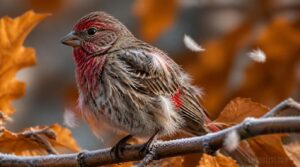
If you’ve ever noticed a bird looking oddly dull in fall and wondered if something was wrong, you’re actually seeing one of nature’s most reliable seasonal shifts.
This duller plumage is part of a post-breeding molt, and pairing your birdwatching with the best weather conditions for spotting birds can help you catch these subtle seasonal changes more easily.
Birds don’t just randomly change color — there’s a whole process behind it, and it starts with the feathers themselves. Here’s what’s actually happening when fall plumage kicks in.
Seasonal Feather Color Shifts
Have you ever noticed how the birds at your feeder look strikingly different come October? That’s seasonal plumage coloration at work.
As summer fades, many birds shift from bold breeding colors to softer, duller tones. Males especially show this change, trading vibrant hues for muted nonbreeding plumage that helps them blend in rather than stand out. This shift follows the period of vibrant breeding season coloration used to attract mates.
Fall Molt Basics
That color shift you just noticed? It’s driven by seasonal molt — the biological process of shedding and replacing feathers.
Each fall, most birds undergo what ornithologists call a prebasic molt, swapping out worn feathers for fresh ones. New feathers grow in with duller tones, producing nonbreeding plumage built for survival rather than attraction.
Breeding Versus Nonbreeding Plumage
Breeding plumage is built for attraction. Nonbreeding plumage is built for survival. That difference shapes everything you notice about fall birds.
Here’s what sets the two apart:
- Carotenoid display fades out — the reds, yellows, and oranges that catch your eye in spring simply aren’t needed once nesting ends
- Structural color shifts occur as worn feathers reduce how light reflects
- Nonbreeding camouflage takes over, helping birds blend into winter landscapes
- Molt timing strategies make sure fresh, durable feathers arrive before harsh weather
Why Birds Look Duller
So why do fall birds look so washed out? A few things are happening at once.
Carotenoid reduction is the biggest factor — once insects and ripe fruit become scarce, birds simply can’t replace those vibrant pigments. No bright diet, no bright feathers.
Add feather abrasion over summer, and you’re left with worn, faded colors heading into fall.
Why Birds Molt in Fall
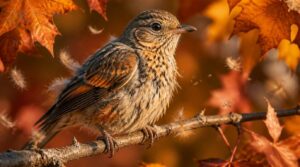
Fall molt isn’t random—there are real reasons it happens when it does. Everything from the angle of the sun to what’s happening inside a bird’s body plays a role. Here’s what actually drives birds to molt in fall.
Shorter Daylight Triggers
Daylight is the hidden clock behind your bird’s wardrobe change. As summer fades, shorter days trigger a hormonal cascade that tells feather follicles to get to work. Here’s what’s driving that shift:
- Melatonin increase — longer nights boost melatonin, signaling molt season has arrived
- Photoperiod shift — the day length cue overrides temperature as the primary trigger
- Thyroid response — hormonal regulation activates follicles for new feather growth
- Synchronized timing — photoperiod shifts align molt timing across entire populations
Post-breeding Feather Renewal
Once breeding wraps up, a bird’s body shifts its focus entirely to feather renewal.
Flight feather sequence matters here — most passerines replace wing feathers from innermost to outermost, preserving flight control throughout. Hormonal timing drives the process, with melatonin and prolactin signaling follicles to shed worn feathers and grow fresh basic plumage over several weeks.
Energy Demands of Molting
Molting is expensive work. During the molting period, a bird’s resting metabolic rate can spike nearly 30 percent higher than normal.
This burst of energy fuels the growth of fresh feathers, and once it’s done, you can spot the seasonal shift by checking out how plumage color changes signal breeding versus winter season.
Feather growth energy comes largely from protein, since feathers are almost pure keratin. Fat reserves also get mobilized when foraging slows. Particularly, nighttime energy use rises more than daytime — your body doesn’t rest when it’s rebuilding.
Hormones and Feather Growth
Think of hormones as the behind-the-scenes directors cuing the whole molt process.
As days shorten in autumn, melatonin secretion rises and signals the brain to shift thyroid and prolactin release. Prolactin then teams up with insulin-like growth factors to stimulate feather follicle cell division, while thyroid hormone drives the actual elongation of each new feather shaft.
Stress Effects on Molt
Stress quietly sabotages molt. When a bird faces chronic stress, its body releases elevated corticosterone levels, which suppress keratin synthesis — the protein-building process feathers depend on. This leads to feather quality decline, patchier coloration, and extended molt duration. Energy shifts away from feather growth toward basic survival, creating real energetic trade-offs that ripple into the next breeding season.
Chronic stress floods a bird with corticosterone, quietly stalling feather growth and trading future plumage for present survival
- Chronic stress slows new feather production
- Poor feather quality reduces insulation and flight efficiency
- Prolonged molt increases predation risk
- Stress effects can carry over into spring breeding condition
Common Fall Molting Patterns
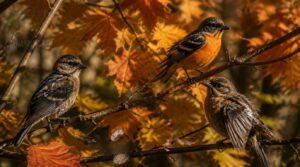
Not every bird molts the same way, and fall is when those differences really start to show. Some swap out every feather at once, while others take a slower, more selective approach. Here are the main patterns you’ll see playing out this season.
Complete Prebasic Molt
The complete prebasic molt is the most thorough feather replacement a bird undergoes each year. Every single feather goes — body, wings, tail.
It follows the breeding season and works in sequence: body feathers first, then wing coverts, then primaries outward. Day length shortening kicks it off. The whole process can take weeks, costing the bird nearly 30% more metabolic energy than usual.
Partial Feather Replacement
Not every bird goes all-in during fall. Some species practice partial feather replacement, swapping out only select feathers while keeping others intact.
- Inner primaries renew first
- Outer flight feathers stay active
- Wing coverts replace in sequence
- Body contour feathers molt separately
- Old and new feathers coexist
This mosaic feather pattern — a mix of fresh and worn feathers — keeps the bird airborne while still renewing its look.
Gradual Molt Patterns
Some birds take molt even slower — spreading feather renewal across months rather than weeks. This is gradual molt, and it’s basically a slow-motion makeover.
| What Changes | How Slowly |
|---|---|
| Primary feathers | A few per season |
| Secondary feathers | After primaries begin |
| Body contour feathers | Across multiple months |
| Overall plumage | Years in some species |
Molt pace variation depends on age, body condition, and food availability — meaning no two birds molt on exactly the same schedule.
Synchronous Duck Molts
Ducks and swans take a different approach. As synchronous molters, they drop most flight feathers within a two-week window. This means a flightless period, so they pick secluded molting sites for predator avoidance.
Body fat reserves fuel rapid feather regrowth, restoring flight quickly. Seasonal variation in timing reflects each species’ breeding schedule and habitat needs.
Eclipse Plumage in Males
Male ducks take molting further with eclipse plumage, a temporary disguise after breeding. Bright greens and blues fade into dull brown, mimicking females.
This camouflage during eclipse cuts predation risk while flight feathers regrow.
- Body feathers molt first, wing feathers follow
- Some flight capability stays intact
- Lasts weeks to a few months
- Reduces mate-competition aggression
- Bright colors return by autumn
Fall Plumage by Bird Age
Not every bird molts on the same timeline, and age plays a big role in that. A young bird’s first fall looks nothing like its fifth. Here’s how plumage changes shift as birds grow up.
Juvenile First Basic Plumage
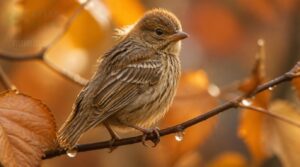
That fluffy first set of feathers doesn’t last long. Soon after fledging, young birds molt into juvenile plumage, often streaked or dull for camouflage. This first basic plumage includes new juvenile flight feathers, though shorter than adult ones. Look closely and you’ll spot microwear from clumsy landings.
First basic timing varies, but most finish before fall’s seasonal plumage changes set in.
Young Males Resembling Females
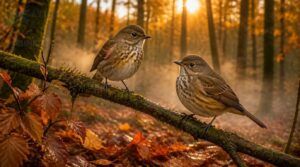
Ever mistaken a young male for his mate? It’s common. Sexual dimorphism timing lags behind hatching, so subadult plumage often mirrors females:
- Softer body contours
- Muted feather tones
- Smaller overall frame
- Subtler vocal pitch
This plumage gender convergence fades as hormones kick in, eventually separating juvenile camouflage from true adult coloration.
Songbird Plumage Development
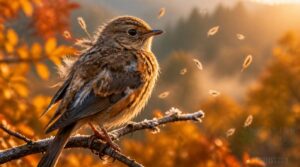
Most songbirds settle into adult plumage within a single year, faster than you’d think. That first fall molt swaps juvenile plumage for basic plumage, guided by Daylight Hormone Regulation.
| Stage | Timing |
|---|---|
| Hatching | Spring |
| Juvenile plumage | Summer |
| First molt | Late summer/fall |
| Basic plumage | Within 1 year |
| Sexual Dimorphism Timing | Year 1-2 |
Carotenoid Color Fade and Feather Wear Coloration shape these seasonal cycles.
Gulls and Delayed Maturity

Patience is the name of the game for gulls. Unlike most songbirds, Gull Plumage Progression can take up to four years.
- Juvenile plumage starts brownish and mottled.
- Subadult plumage shows gray and white patches.
- Prealternate molt refines breeding looks yearly.
- Definitive plumage arrives by year three or four.
Age Based Coloration aids Social Learning Gulls at colonies, while Hormonal Molt Timing and Hybridization Effects influence each plumage change.
Raptors and Slow Transitions
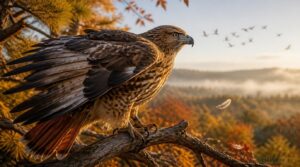
Hawks and eagles take their time. Raptors stretch their seasonal molt across months, replacing wing and tail feathers gradually instead of all at once. This wing feather stagger preserves flight strength for hunting and camouflage during migration.
Hormonal Molt Regulation and shorter daylight trigger the change. Younger birds show Age-Related Plumage Delay, with subadults holding juvenile patterns longer as Raptor Molt Phases unfold through partial seasonal changes.
Species With Noticeable Fall Changes
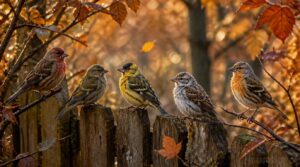
Some birds make these seasonal shifts more obvious than others. Their fall changes are easy to spot once you know what to look for. Here are five species that show this transformation in their own distinct way.
American Goldfinch Color Fading
Picture a goldfinch losing its sunshine-yellow coat almost overnight—well, almost. After breeding, males swap bright yellow and black for olive-gray tones during seasonal molt.
This age-related color loss ties to carotenoid intake: poorer fall diets mean duller feathers. Unlike cardinals, goldfinches don’t rely on feather abrasion. Winter diet quality and molting timing variation both shape just how faded that breeding plumage becomes.
Male Duck Eclipse Plumage
Goldfinches fade their color, but male ducks go further—they vanish into disguise. After breeding, mallards trade their glossy green heads for eclipse plumage, a drab brown camouflage.
This sexual dimorphism temporarily disappears, making males resemble females. Their bright bill dulls to gray-yellow. Wing feathers replace gradually, so flight capability stays intact during this seasonal molt before brighter alternate plumage returns.
Cardinal Feather Tip Wear
Ducks hide their colors with new feathers. Cardinals do it differently—they wear theirs away.
Brown tips abrade through fall and winter, revealing the vivid red beneath. This feather wear and abrasion comes from brush, snow, and frost. No new molt needed: just friction, time, and a sharper-looking cardinal by spring.
Starling Winter Speckling
European Starlings take a different approach. Their glossy black winter feathers get pale tips, creating speckles across the chest and wings from melanin-rich bases.
Juveniles show heavier speckling than adults. Speckle density varies by region and food availability.
As winter wears on, wear causes speckle loss, revealing darker feathers underneath—while that glossy sheen gets a metallic sheen enhancement in sunlight.
Snow Bunting Seasonal Contrast
Snow Buntings show one of the boldest seasonal shifts around. Their Winter White Pattern turns into a striking Spring Black Reveal through feather wear, not new growth.
- Brown fringes wear off, exposing black centers
- Facial Mask Development sharpens in males
- Snow Habitat Contrast highlights this Snow Bunting gray-to-black change
Juvenile Plumage Fading leaves young birds duller, a clear seasonal adaptation between winter versus breeding plumage.
Identifying Birds During Fall Molt
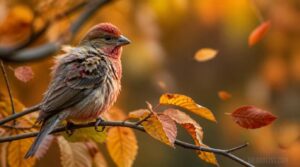
Fall molt can turn a familiar bird into a real puzzle. Faded colors, mismatched feathers, and odd patches all play a part in that confusion. Here are a few things to watch for when you’re trying to figure out who’s who.
Drab Colors and Confusion
Ever squint at a brown bird and think, "could be anything"? That’s cryptic coloration at work. Olive drab tones blend with leaf litter—classic camouflage through dullness.
| Clue | What to Check | Why It Helps |
|---|---|---|
| Shape | Bill, tail length | ID by shape works when color fails |
| Wear | Faded tips | Feather wear impact reveals age |
| Habitat | Surroundings | Habitat color blending narrows options |
Juvenile plumage mismatch and staggered molt phases add to mixed winter plumage confusion.
Sex Differences in Plumage
Why do males often look flashier than females, even in fall? Sexual dimorphism shapes plumage through sexual selection pressure—males rely on male UV reflectance and melanin for bold signals, while females keep female cryptic colors for safety.
Hormonal pigment control and genetic color expression drive these plumage variations. Females also start molting earlier, so duller, scruffier birds in fall are often females.
Abnormal Color Variations
Spot a bird that looks "off" this fall? You might be seeing color abnormalities, not just molt.
- Albinism in birds strips melanin, leaving white feathers and pink eyes.
- Leucistic patterns create patchy white spots.
- Melanistic plumage turns birds darker than normal.
- Carotenoid deficiency dulls yellows and oranges.
- Structural color defects wash out blues and greens.
Feather Wear Clues
Sometimes the best clues aren’t color, but condition.
Look closely at wing tip wear—glassy, worn edges often mean a bird’s been flying hard during migration. Tail edge fraying points to time spent in dense brush. Covert luster loss signals fresh molt timing, while shaft damage and neck abrasion show feather degradation from stress or weather.
These abrasion patterns tell a story of a bird’s recent life.
Habitat and Behavior Tips
Where a bird forages tells you almost as much as its feathers do.
Watch for these cues:
- Food patch selection—shrubby edges over open lawns
- Water bathing habits—frequent splashing keeps new feathers supple
- Roost shelter choices—dense conifers signal molt-time caution
Add migration flyway timing and predator vigilance, and backyard birding gets a whole lot richer.
Frequently Asked Questions (FAQs)
Who has a beautiful tail?
Nothing on Earth tops the Peacock Tail Display, with its iridescent eye-spots fanning wide for courtship. Widowbird tail length doubles their body size, while birds of paradise flutter elaborate sails—true tail shape diversity in action.
Why do Painted Buntings show such strong dimorphism?
Painted Buntings show strong plumage dimorphism because mating selection favors male bright colors for courtship, while females need female camouflage for nesting. Diet influence, melanin levels, and genetic variation shape these striking breeding plumage differences between sexes.
Do Blue Jays look the same in fall?
Mostly, yes. Blue Jay fall colors stay recognizable—blue wings, white belly, black necklace—but molt timing dulls body feathers slightly.
Juveniles show duller tones, and wing pattern identification still works best for confirming an individual despite minor seasonal changes.
Can berries actually change a birds feather color?
Funny enough, yes. Berry pigment deposition during molt can shift feather hue toward red and yellow. Carotenoids from fruit get built into new feathers’ keratin, creating a real, if temporary, dietary color influence on plumage.
Does sunlight fading affect feather color over time?
Yes. UV radiation breaks down pigments, fading carotenoid reds and yellows fastest, while melanin holds up better. Sun-exposed feathers look paler than shaded ones, and preen oil offers a UV shield, slowing this gradual color loss.
Why do male Red-winged Blackbirds stay so bright?
Their epaulets stay vivid thanks to melanin and carotenoid pigments, plus structural color retention.
Pre-breeding molt renews worn feathers, while good diet boosts carotenoid intake—keeping male plumage brightness sharp for territorial display and mate attraction all season long.
Conclusion
New feathers grow, hormones shift, energy spikes, and colors fade—each step in fall bird plumage changes follows a purpose you can now recognize.
That goldfinch isn’t hiding from you; it’s preparing for winter’s demands, trading bright color for warmth and survival.
Next time a familiar visitor looks like a stranger at your feeder, look closer. You’re not seeing a different bird. You’re watching the same one, dressed for a season that asks something different of it.
- https://oaklandnaturalareas.com/2018/09/10/photos-of-the-week-prepping-for-change-the-fall-molt
- https://www.allaboutbirds.org/guide/American_Goldfinch/id
- https://birdsoftheworld.org/bow/species/amegfi/cur/appearance
- https://academy.allaboutbirds.org/plumage-variations
- https://woburn.wbu.com/goldfinches-are-molting